
On a warm Crown Point evening, the patio lights come on, the grill is hot, and the mosquitoes start finding ankles, wrists, and necks before the first plate even hits the table. That's when a mosquito net suit starts looking less like novelty gear and more like a practical tool. It won't solve a whole yard problem by itself, but it can make gardening, cleanup, fishing, and quick outdoor jobs a lot more tolerable when bites are relentless.
What a Mosquito Net Suit Actually Is
A mosquito net suit is a full-body mesh garment designed to keep biting insects off the skin while still letting air move through. The better versions include a headnet or a brimmed hat setup so the mesh stays off the face instead of clinging to it, which matters because contact with skin defeats part of the barrier.
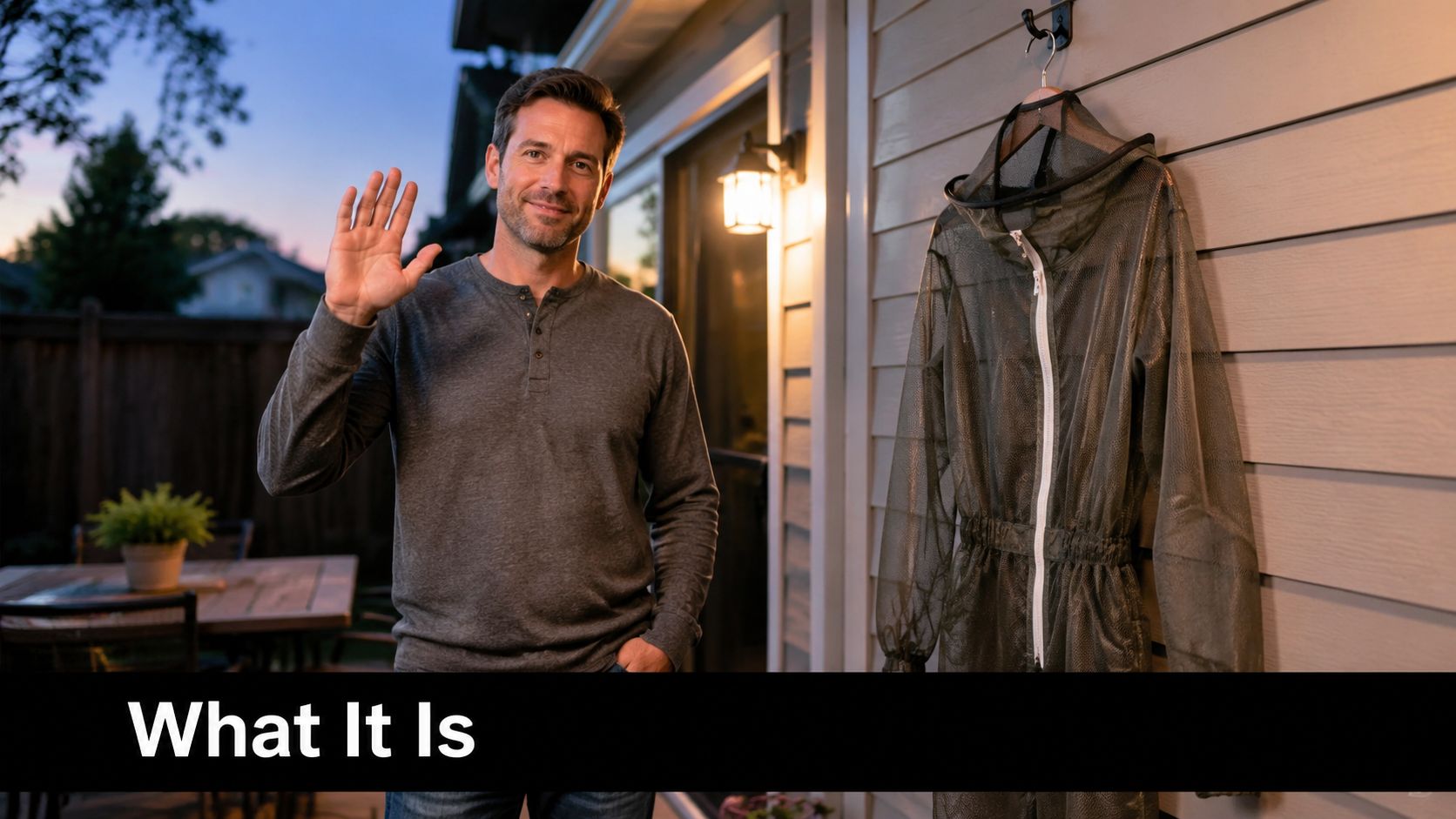
A lot of homeowners confuse it with a hooded bug jacket or a regular bed net. Those are different tools. A bug jacket usually covers less of the body, a bed net is meant for sleeping space, and a suit is built to move with you outdoors, head to ankles, while you work, walk, or stand around the yard.
The important part is that a suit blocks mosquitoes instead of repelling them. That makes it useful where chemical products aren't wanted, or where you want another layer on top of repellents and treated clothing. If you want a quick local breakdown of which biting pests are active around the property, this guide on mosquito species in Northwest Indiana is worth a look.
A suit only works if the mesh stays off the skin. If it presses tight at the shoulders, calves, or forearms, mosquitoes can still reach through.
In practice, people around Crown Point reach for this gear when they're gardening, fishing, mowing around wet edges, or hosting an evening outside and don't want to spend the whole time swatting. It's a barrier, not a cure, and that's the right way to think about it.
Choosing the Right Mesh, Material, and Fit
Mesh geometry matters more than the label
The first thing I check on any net garment is whether the mesh is fine enough for the biting pressure you're dealing with. The CDC recommends mosquito nets with 156 holes per square inch for untreated nets, and a technical buying guide recommends checking for at least 180 holes per square inch when you want finer mesh and better visual consistency (CDC mosquito net guidance, mesh selection guide). Those numbers matter because fewer, larger holes leave more room for bugs to get through.
Mesh alone isn't enough if it lays flat on the skin. A proper suit needs stand-off distance, which means the cut, the hood, or a brimmed support keeps fabric away from the body. That gap is the difference between a useful barrier and a shirt that just feels itchy.
Material and treatment trade-offs
Polyester is common because it's light, easy to manage, and usually holds up well for repeated outdoor use. Some products use coated or treated netting, and permethrin-treated options can add another layer because treated nets provide more protection than untreated ones. In humid Northwest Indiana weather, breathability matters, but so does durability, because a flimsy mesh that stretches or frays fast won't stay protective for long.
What to check before you buy
| Feature | What to Look For | Why It Matters |
|---|---|---|
| Mesh density | 156 holes per square inch minimum for untreated nets, or finer mesh when available | Smaller openings block more biting insects |
| Fit around body | Roomy cut with stand-off space | Keeps mesh from pressing into skin |
| Wrist and ankle closures | Elastic, drawcords, or snug cuffs | Cuts down on entry points |
| Zipper coverage | Full closure with overlap or flap | Prevents gaps at the front opening |
| Material quality | Smooth, even weave with no frayed edges | Uneven openings are an early sign of weak protection |
Practical rule: if the net looks loose but still hangs close to your face or forearms, it's not loose enough.
Fit is part of the product, not an afterthought. Sleeve length, waist adjustability, and ankle closure all matter because mosquitoes don't need a big gap to make the suit ineffective.
How to Wear a Mosquito Net Suit the Right Way
Start with light base layers, not bare skin. Long sleeves and pants create a small buffer so the mesh doesn't cling to you, and that extra air space helps comfort as much as protection. A brimmed hat or the suit's hood should go on early so the face coverage stays separated from your cheeks and forehead.
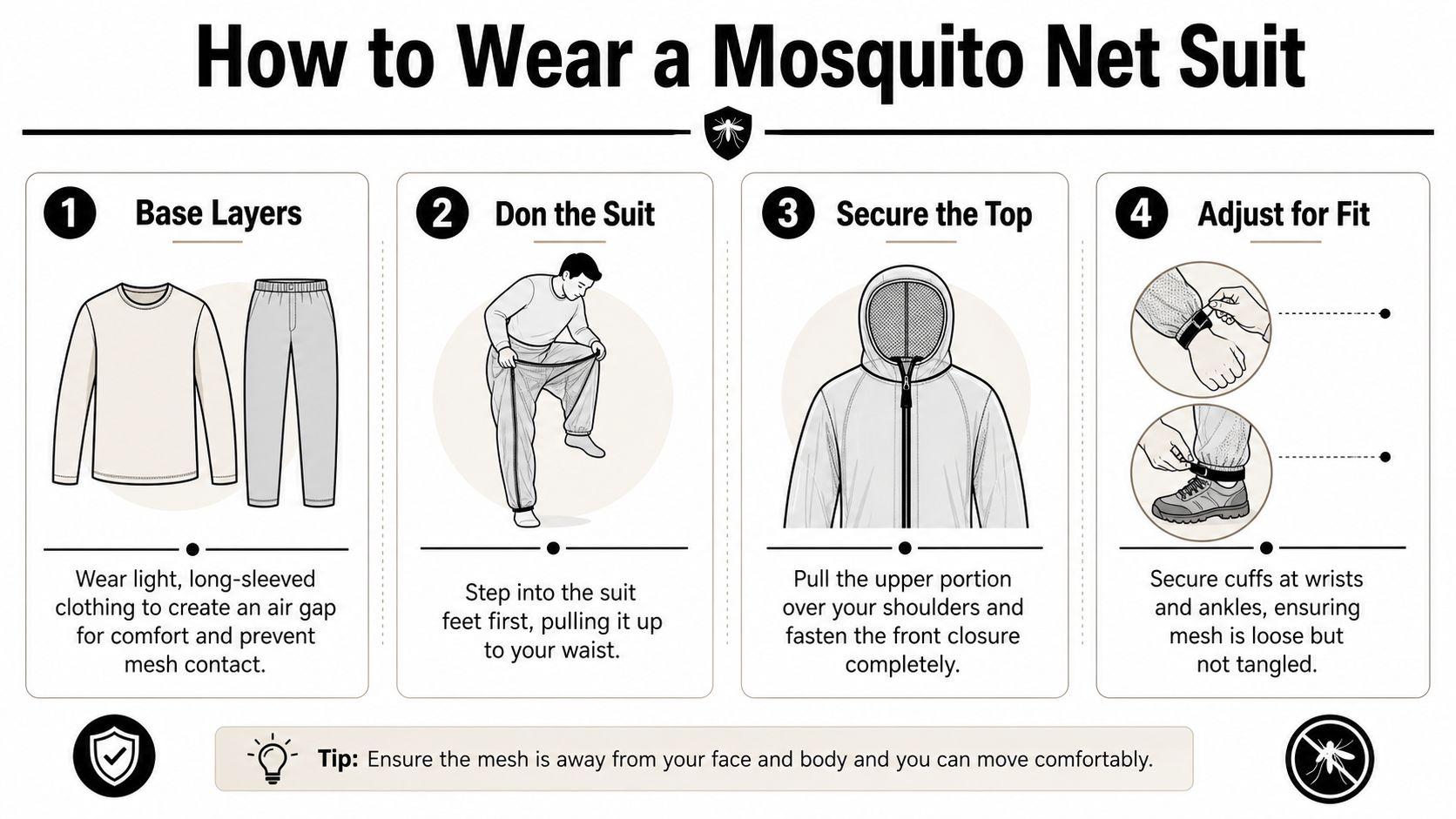
Pull the suit on so the torso hangs a little away from your body, then snug the waist drawcord just enough to keep the fit controlled without flattening the mesh. The wrists and ankles need special attention. If the cuffs are loose, mosquitoes will find the opening, especially when you're bending, kneeling, or reaching into shrubs.
Use a skin-safe repellent on any exposed areas, including hands, the face if product directions allow it, and the back of the neck. The suit is a barrier, not a repellent, so exposed skin still needs separate protection. That layered approach works better than expecting mesh alone to do everything.
Crown Point summers can be rough for heat, so lighter colors and scheduled shade breaks help. Mesh traps less heat than heavy fabric does, but it can still feel warm fast when you're moving around the yard or working near still water.
If the shoulders hug tight, the wrists flare open, or the ankles keep riding up, the fit needs adjusting. A suit that stays still is doing its job. One that shifts, gaps, or sticks to the body isn't.
Real-World Scenarios Around the Yard
Gardening and pruning
A mosquito net suit makes sense when you're weeding beds, trimming perennials, or harvesting vegetables at dusk. It gives you enough freedom to move without spending every minute batting bugs away from your face. The catch is low, damp planting beds, because mosquitoes often hover where the air stays still and the ankles stay exposed.
Mowing, cleanup, and pondside work
Mowing can pull mosquitoes toward you because of movement and noise, and a suit plus a hat is usually the simplest personal setup for that kind of work. Around ponds, drainage swales, or other wet edges, the brimmed headnet style helps because it keeps the mesh off your face while still letting you see where you're stepping. That matters when you're carrying tools or moving over uneven ground.
Outdoor dining is different. A suit works well for setting up tables, hauling trash, lighting torches, or cleaning up afterward, but it's not the thing you want to wear while everyone else is eating. It's protective, not social.
The best use case for a suit is a task, not a whole evening.
Hunters, walkers, and anyone spending time near tree cover or standing water can treat the suit as a base layer and add treated clothing or repellent where needed. Kids and pets need different solutions, though, because this gear is sized for adults and doesn't replace child-safe or pet-safe protection.
When a Mosquito Net Suit Is Not Enough
Even a well-made suit has three weak points in real Northwest Indiana conditions. First, mosquitoes can still reach through mesh where it presses tight against skin. Second, the wrists, ankles, and face openings can leave small gaps no matter how careful the design is. Third, heat builds up fast when you wear the suit for hours, and tired people start loosening closures or skipping the gear entirely.
That's why layered protection makes more sense than betting everything on one garment. A suit works better when it's paired with treated base layers and targeted repellent on exposed skin. The same idea shows up in more complete outdoor protection systems, where people use clothing coverage, treated textiles, and small construction details like overlap and secure cuffs instead of relying on a single mesh layer. Practical field guidance for backpacking mosquito season makes that layering point clearly.
A suit also only protects one person. It doesn't lower mosquito pressure for the yard, the dog, the kids playing outside, or guests on the patio. That's where broader mosquito reduction becomes the smarter move, because it addresses the breeding and resting areas that keep the pressure high in the first place. For more on that yard-wide approach, see how mosquito breeding and mosquito control connect.
Caring for Your Suit So It Lasts
Treat the mesh gently, or it won't keep its shape. Wash it in cool or lukewarm water with mild soap, skip bleach and harsh detergents, and avoid the dryer if the suit has any heat-sensitive coating. Strong chemicals and high heat wear down fibers faster than expected.
After washing, hold the suit up to bright light or the sky and check for stretched holes, frayed edges, or uneven openings. Those are the warning signs that protection is slipping. If the mesh starts looking tired in patches, replacement is usually smarter than hoping one more season will be fine.
Store it hanging or folded loosely in a dry, ventilated spot. A sealed bag traps moisture, and moisture leads to mildew. Prolonged sun exposure also breaks down mesh fibers, so keeping the suit out of direct sunlight extends its life.
For homeowners who like keeping seasonal gear in order, the same storage mindset used for outdoor furniture works well here too, especially in the off-season. The notes in comparing winter storage methods are a useful reminder that dry, protected storage usually beats cramming things into a damp corner.
Pull the suit out in late spring, inspect it before each summer use, deep clean it at season's end, and give it a final look before storing it away. That rhythm keeps the gear ready when mosquitoes come back.
Pairing Personal Gear with The Green Advantage in Crown Point
A mosquito net suit is useful for a job, a walk, or a short stretch outside, but it's only one piece of the solution. Homeowners in Crown Point get better long-term results when personal gear is paired with mosquito reduction across the property, especially in yards where breeding pressure keeps coming back.
When you call The Green Advantage, you're talking with a local team that looks at the property itself, not just the symptom. That includes residential and commercial pest control, pest inspections, and mosquito reduction programs built for Northwest Indiana conditions. The point is simple, personal protection helps, but a well-planned property program lowers the pressure on everyone outside.
If you're ready to get serious about bites, schedule a pest inspection, request a quote, or contact The Green Advantage in Crown Point, IN to talk through a mosquito reduction program that fits your property.
A CTA for The Green Advantage.