
A standard residential service in the United States generally costs about $108 to $261 per visit. Your final number still depends on the pest, the home, and the scope of work.
In Crown Point, IN, that visit is only one piece of a 12-month cost of keeping pests out. Older houses with crawl spaces, brick or stone walls, and gaps around pipes need more labor than a tight newer build. Spring mosquitoes and fall rodents change how many trips the year really takes. If you are comparing pest control near me or an exterminator in Crown Point, IN, read every quote as a year of control, not a single spray. The Green Advantage serves Crown Point and nearby Northwest Indiana, and for most homes we can price the job by phone once you describe what you are seeing.
Typical Residential Pest Control Prices in Northwest Indiana
A typical residential pest control visit costs about $108 to $261, based on 2024 national service figures from GorillaDesk. A separate 2025 consumer-cost analysis covered by Forbes Home puts the wider range at roughly $50 to $500 per service, with an average near $172. It estimates routine preventive visits at $250 to $600 a year. These are national reference points, not a Crown Point price list.
| Service | Typical price | What it usually covers |
|---|---|---|
| One-time general treatment (ants, spiders, roaches) | $100 to $300 | Single visit and treatment of visible activity |
| Ongoing annual plan | $300 to $900 per year | Scheduled visits and monitoring |
| Routine annual preventive visits | $250 to $600 per year | Preventive treatments on a set schedule |
| Emergency bed bug or termite work | $300 to $800 | Urgent inspection and targeted treatment |
| Termite fumigation | $2,000 to $8,000 | Whole-structure treatment |
| Wood-boring beetle treatment | Up to $5,000 | Structural treatment for beetle damage |
| Mosquito yard program | No reliable national range | Treatment from eggs to flying adults |
How to read the ranges
Green pest control has its own market ranges. A 2025 report from DataIntelo puts basic visits at $100 to $250, monthly mid-range service at $350 to $600, and monthly premium service at $800 to $1,400. These figures describe the broader market, not The Green Advantage's service tiers. Compare them by the work included: a recurring treatment for ants or spiders is a different scope from termite fumigation or beetle treatment in structural wood. Forbes estimates termite fumigation at $2,000 to $8,000 and wood-boring beetle treatment as high as $5,000.
A national price range is not available for mosquito yard programs. The lot's conditions and the work proposed matter, including standing water, screens, and how often source reduction is needed. The Green Advantage's outdoor mosquito control targets pests at every life stage, from eggs to flying adults.
In the Forbes survey, 45% of respondents said they would spend, or had spent, up to $200 to prevent pests; 24% set their limit at $99. Structural pest work can exceed those amounts, so compare the inspection findings and written scope with the price, not just the lowest number.
For most residential situations, The Green Advantage can normally give an estimate by phone after you describe the pest and the home. The estimate reflects the home's size, pest type, service required, and materials used.
How Residential Pest Control Is Billed Across Four Models
The same work can land at very different totals depending on how it is billed. Per-visit billing charges each time a technician comes out, which fits one problem, such as a single ant trail or a wasp nest. A quarterly or recurring plan spreads a set number of visits across the year, often four, and fits a home that wants steady prevention. Per-square-foot pricing scales with the home or the lot and shows up most often on whole-home or termite work, so ask whether the figure covers the building or the whole property. Flat-rate pricing sets one price for a job with a stated scope.

| Model | How you are charged | Best fit | Watch for |
|---|---|---|---|
| Per visit | Charged each time a technician visits | One problem, such as one ant trail or a wasp nest | Repeat calls add up if the cause remains |
| Quarterly or recurring plan | Set charge per visit on a schedule, often four a year | Steady general prevention | Whether callbacks and exclusion repairs are extra |
| Per square foot | Price scales with home or lot size | Whole-home, termite, or large property work | Whether square footage means the building or the whole lot |
| Flat rate | One price for a defined job | A clearly scoped treatment | Guarantee and retreatment terms |
Say four separate visits are priced at $120 each. That is $480 for the year. A quarterly plan at $110 a visit totals $440, but it may leave out callbacks or sealing. The lower sticker is not automatically the better deal.
Practical rule: Compare the annual total, the included visits, and the retreatment terms, not the price of one visit.
EPA integrated pest management guidance treats pricing as a total cost of control, not a one-time pesticide application. Prevention, meaning food, water, shelter, entry points, clutter, standing water, and excess vegetation, can take more labor up front and still cost less over time because it hits the cause. A complete estimate should separate inspection, exclusion or sanitation, materials, follow-up, and monitoring. A low first price misleads you when it skips the repairs that let pests return.
For a Northwest Indiana home with repeat ants, rodents, cockroaches, or moisture pests, ask whether the quote covers entry-point sealing, moisture correction, a follow-up check, and retreatment if activity continues. Our pest control service plans are built around that year-long view. Commercial customers can request a free quote as well, and after that call we identify the pest and design a program aimed at problem areas so you are not paying for treatments you do not need.
What Drives Your Pest Control Price in Crown Point
The price follows the work, not the common name of the bug.
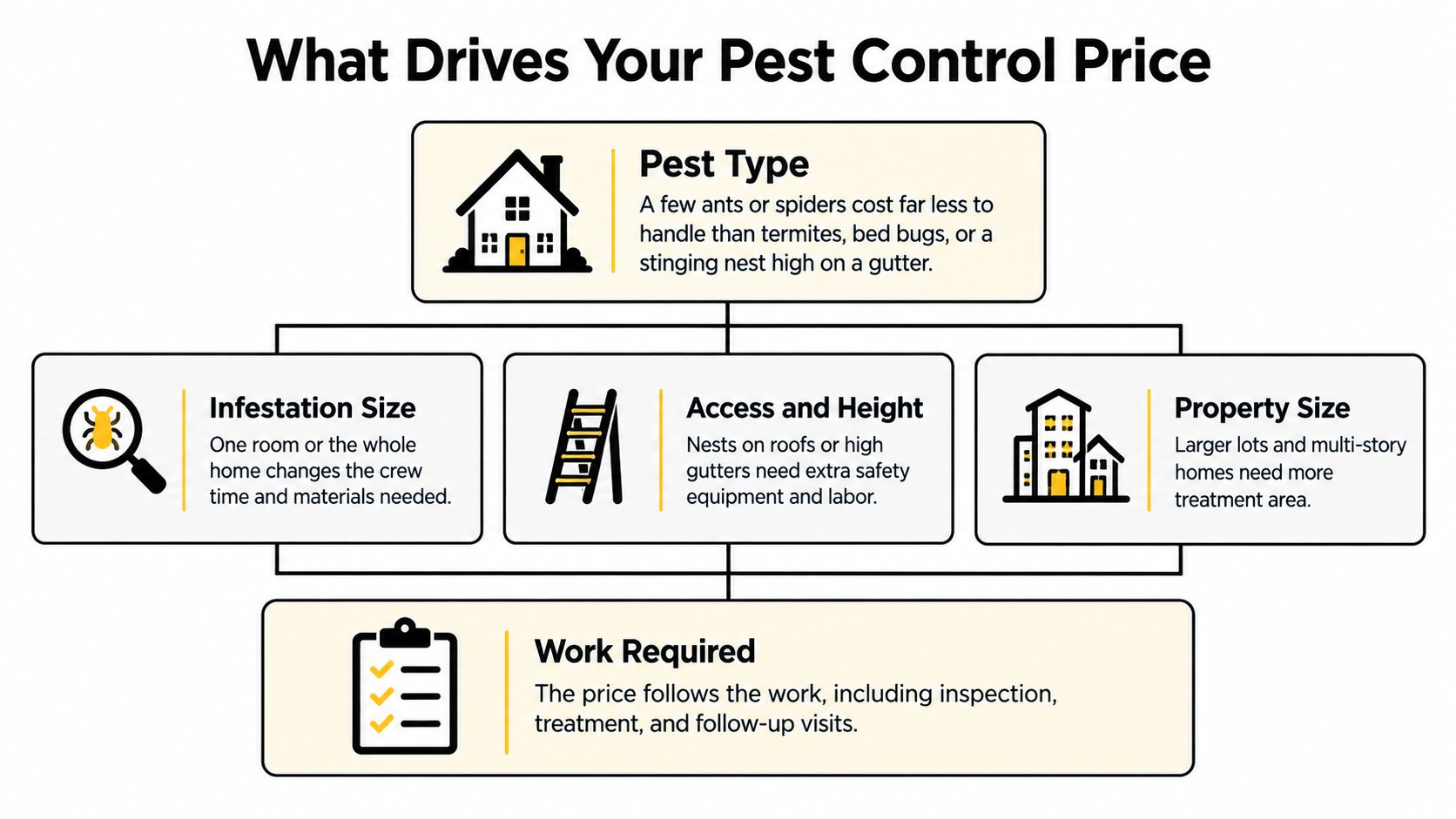
Pest type is the first split. A few ants or spiders take far less time than termites, bed bugs, or a stinging nest high on a gutter. Wasp removal on a second-story eave needs ladders and more labor than a nest at eye level.
Infestation severity comes next. One early sighting is a short visit. An established colony with hidden harborages needs staged inspection and return trips. Waiting a season is how a small ant problem becomes a campaign.
Home size and layout change crew time. A larger or multi-level house needs more product and more walking. Construction changes access. A slab with a sealed foundation is simpler than an older Crown Point house with a crawl space, stone or brick, and gaps around pipes and wiring.
Season changes both the calendar and the urgency. Spring and summer bring insects and mosquitoes. Rodents push indoors as temperatures drop in fall and winter. An emergency call in peak season costs more than a scheduled visit made before activity starts. Clutter, locked rooms, and shrubs tight against the siding add labor before any product goes down.
This short walk-through shows how those factors stack on a typical service call.
The hidden driver is how often you need us back
Treatment frequency moves the bill more than people expect. EPA housing guidance frames the job as identification, control, and prevention: seal cracks and utility penetrations, fix moisture, improve sanitation, and protect food and trash. Those steps cut the chance that survivors or new invaders re-establish, which is what sets the number of follow-ups.
A useful quote names the pest, life stage, harborages, food and water, access points, and the monitoring interval. It does not stop at a square-foot rate. Interior problems with ongoing reproduction need staged checks. An exterior perimeter issue can need less monitoring once exclusion and habitat changes hold.
The benchmark that matters is cost per infestation you actually get under control over a set period, not cost per visit.
Place your own house on that scale. A small condo with one ant trail sits at the low end. An older two-story Crown Point home with rodents in the crawl space sits at the high end, because exclusion, attic or wall-void work, and repeat checks are part of the job.
What a Fair Pest Control Quote Should Include
Two quotes for the same Crown Point home can cover different work. Compare the full 12-month cost, not just the opening price: inspection, planned visits, repairs, monitoring, and retreatments all affect what you pay. A low initial price can cost more if follow-up or entry-point repairs are billed separately.
Use this checklist to compare the written scope:
- Inspection findings: Name the pest, its life stage, and where it is active.
- Harborages and entry points: List gaps, utility penetrations, and moisture sources by location.
- Treatment method and materials: State which areas will be treated and what precautions to follow around children and pets.
- Follow-up visits: Give the number of visits and the interval between them.
- Repairs: Say whether sealing, screen repair, or moisture correction is included or priced separately.
- Guarantee: Put its duration and retreatment terms in writing.
- Prevention advice: Include steps you can take at the house to reduce the chance of recurrence.
The 12-month comparison
Add the first invoice, scheduled visits, repairs, and likely extras over 12 months. For example, a quote that excludes sealing may look cheaper at first, but repeat charges can raise the total if ants, mice, or roaches return. Landlords and homebuyers should check that a pest inspection and a treatment quote describe the same scope.
Getting several written estimates and checking each company's experience is a sensible way to compare bids. Use the same checklist for each one.
Watch for these red flags:
- A price before anyone looks: The quote gives no indication that the home was inspected.
- One flat number with no return terms: The quote does not say whether follow-up visits or retreatments are included.
- A verbal guarantee: Nothing explains in writing what “covered” means.
- Pressure to sign for a large job immediately: You have no time to read the scope.
- A promise to treat every pest: No specific pest or work is named, leaving room for the scope to change.
Ask for missing details in writing before deciding. For structural work, including termite treatment, get the price and scope in writing before you agree.
DIY Pest Control Versus a Licensed Professional
DIY is reasonable for a small, contained problem when the source is obvious, such as a few sugar ants on a counter or a single spider. A licensed professional earns the fee when the problem is structural, keeps returning, or you cannot name the pest.
| Factor | DIY with store products | Licensed professional |
|---|---|---|
| Upfront cost | Low, often tens of dollars for sprays, traps, and baits | Higher per visit, with diagnosis and scope included |
| Diagnosis | Usually based on what you can see | Inspection finds the pest, harborage, and entry points |
| Termites and structural pests | Not a reliable fix | Specialized inspection and treatment |
| Rodents | Traps can miss entry points and nests | Exclusion plus placement in wall voids, attics, or bait stations |
| Safety around children and pets | You must read and follow every label | Trained application with precautions explained first |
| Follow-up | Repeated trial and error | Scheduled follow-ups and a defined guarantee |
Store aerosols and baits treat what you can see. They do not map a harborage behind an appliance or a gap where a pipe enters the sill. EPA IPM principles say preventive pesticide use should be limited when exposure may outweigh the benefit, especially when nonchemical methods can do the same job. Control choices should weigh effectiveness, cost, and hazard. A low advertised price may be one application. A broader plan can include identification, inspection, exclusion, sanitation advice, monitoring, targeted treatment, and follow-up, which also fits commercial pest control in a shop or office, not only a house.
All of our technicians are licensed for structural pest control by the Department of Public Health. The work covers ants, roaches, rodents, termites, bees, spiders, silverfish, earwigs, and other common pests. For rodents we place treatments where mice and rats travel, including deep wall voids, dark attics, or locked bait stations. For cockroaches, treatment goes into wall cracks and behind heavy kitchen appliances. Before cockroach or rodent work starts, the technician explains the process and the precautions to follow. Keep store traps and bait stations out of reach of children and pets, and follow every label even on a small DIY try.
If the problem is back within two weeks of a DIY attempt, or you find droppings, wood damage, or a nest you cannot reach, call a licensed technician.
Seasonal Prevention Steps That Lower Repeat Service Costs
Many repeat calls start with conditions around the house that keep feeding pests. You can fix a lot of that between visits, and it is the cheapest way to shrink next year's service count.
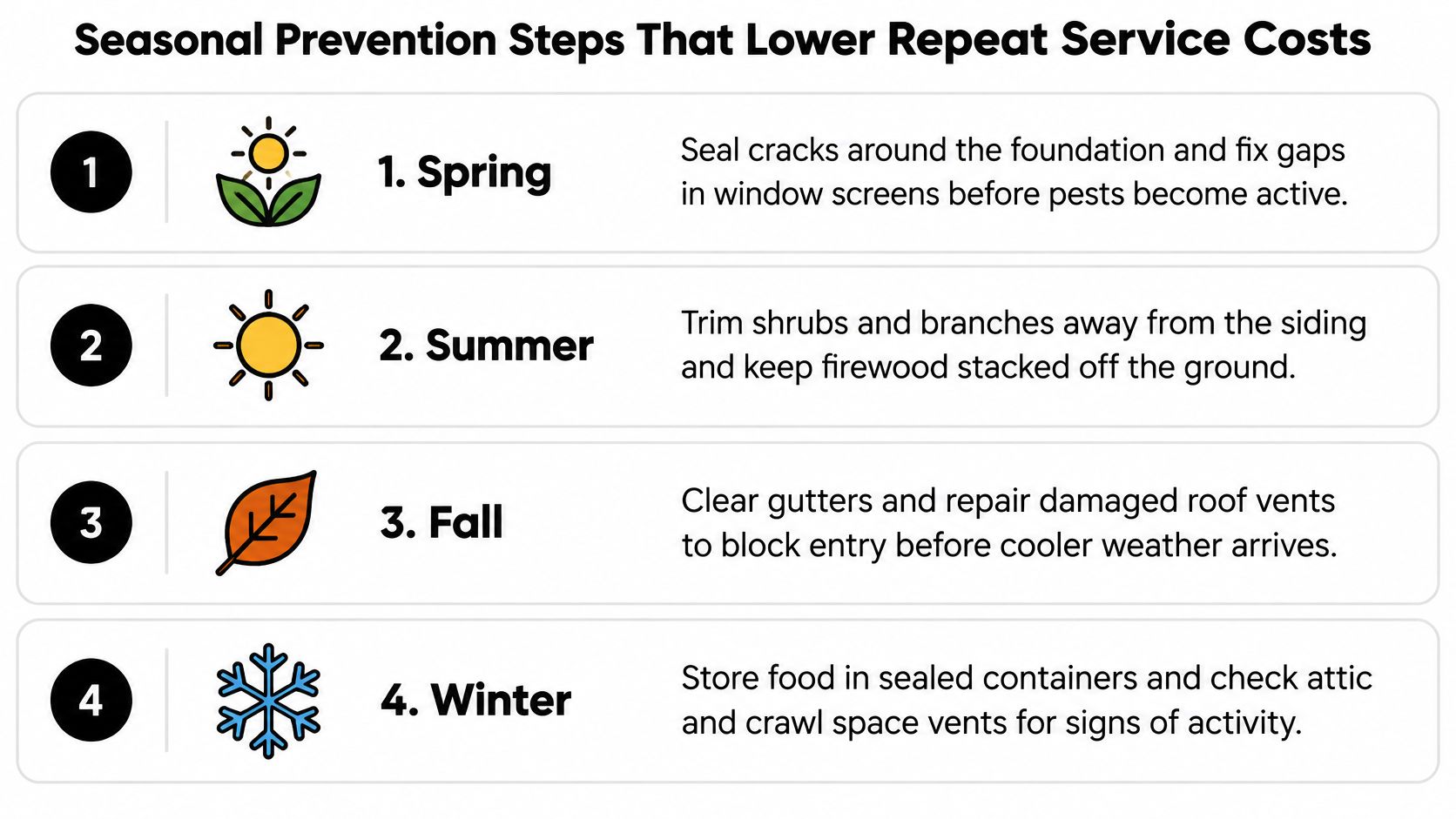
- Spring. Empty, scrub, turn over, cover, or throw out anything that holds water each week: tires, buckets, planters, toys, birdbaths, flowerpot saucers, and trash containers. Cover rain barrels, buckets, and cisterns tightly so mosquitoes cannot lay eggs. That weekly habit is what CDC home mosquito guidance asks for, and it changes the yard plan more than lot size alone.
- Late spring. Repair or replace window and door screens, and keep doors shut, including the garage. A torn screen undoes a clean interior treatment.
- Summer. Trim shrubs and vines off the siding and foundation, fix leaking outdoor faucets and drains, and dry out basements and crawl spaces. Moisture is why the same pests return to one corner of the house.
- Early fall. Seal gaps around pipes, wires, and vents with caulk or mesh, and check weatherstripping before the cold arrives. Rodents are looking for warmth, and an older Northwest Indiana foundation gives them plenty of options.
- Year-round. Store food in sealed containers, clear garage and basement clutter, and keep trash lidded.
Licensed technicians can assess a Crown Point or Northwest Indiana home and build a customized rodent control plan when sealing the obvious gaps is not enough. The inspection report lists prevention steps for that property, so you are not guessing which gap matters. More ideas sit in our pest prevention tips. Call when a pest returns after you have closed the entries you can see. That is the point where another bottle from the hardware store stops paying for itself.
Get an Accurate Price and Book Your Inspection
You will get a tighter residential pest control prices comparison if you show up to the call with the facts, not a guess from a national chart.
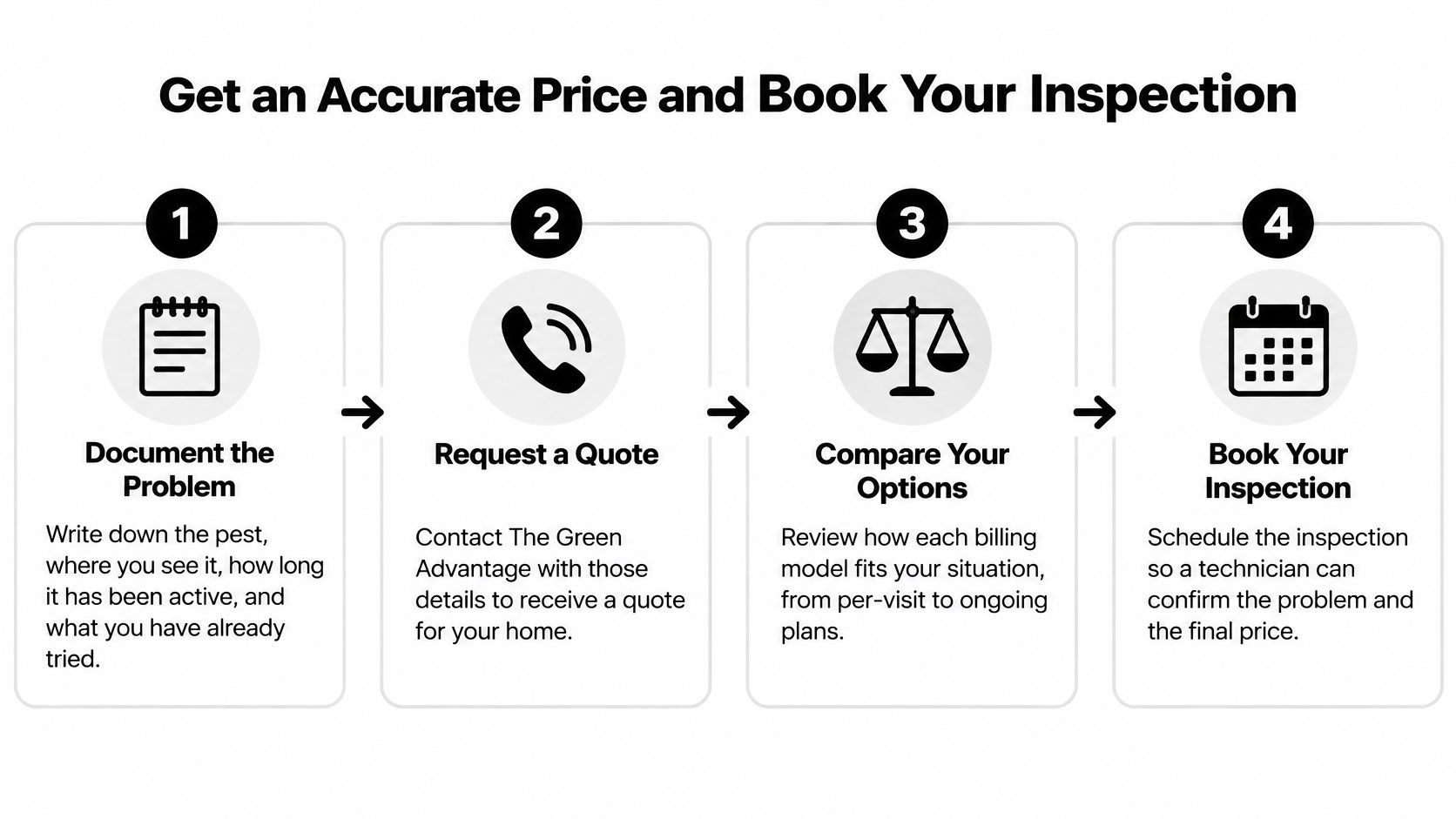
- Write it down. Note the pest, where you see it, how long it has been active, and what you already tried.
- Ask for a quote. For most residential situations we can give a price estimate over the phone after you describe the situation.
- Compare the year, not the first bill. Use the checklist: visits, sealing, retreatment terms, and the 12-month total.
- Schedule. For general pest issues we typically book the same day or the next business day, based on what works for you.
- Meet the technician. They inspect, explain the plan, and treat. For most general services you do not need to leave the house.
Office staff handle scheduling and questions about the pest problem so the field technicians can stay on diagnosis and treatment. The Green Advantage serves Crown Point, IN and surrounding Northwest Indiana communities. Looking for an exterminator near me or pest control in Crown Point, IN? Request a residential quote or schedule a pest inspection at thegreenadvantage.biz before the next season brings a new wave of activity.
The Green Advantage helps Crown Point and Northwest Indiana homeowners price pest control as a full year of inspections, treatment, and prevention, not a single unexplained spray. We cover residential and commercial service, rodent exclusion, termite work, and mosquito reduction, with licensed technicians and a phone estimate for most homes. Visit The Green Advantage to request a quote or book your inspection before the next season starts.