
You finish up a summer evening in the yard in Crown Point, head inside, and spot a red bump on your arm while getting ready for bed. Now the guessing starts. Was it a mosquito from the backyard, or a spider hiding somewhere closer to the house?
That question worries a lot of homeowners, and for good reason. A bite usually happens fast, the pest is rarely caught in the act, and irritated skin can look similar at first. By the time the area turns red, itchy, or sore, you are left trying to read clues from a small patch of skin, a little like trying to identify muddy footprints after the person is already gone.
This uncertainty is common, and it is why many homeowners start looking for pest control in Crown Point, IN after one too many nights of guessing what is buzzing, crawling, or nesting around the home. Sometimes a bite is only a bite. Sometimes it is an early warning that standing water, overgrown landscaping, clutter, or entry points are making your property more inviting to pests than it should be.
The goal here is simple. Help you figure out what to do next.
You will get a practical path for Northwest Indiana homes, starting with how mosquito and spider bites often differ, then moving into symptom timing, basic first aid, signs that call for medical care, and the home and yard conditions that tend to keep these pests around. If the pattern points to a bigger pest issue, a professional treatment plan can help protect your family and make the outside of your home feel usable again.
A Homeowner's Guide to Pest Bites in Crown Point IN
You get through a normal evening in Crown Point, lock up the house, and notice a new red bump while washing up for bed. That is when the questions start. Was it a mosquito from the yard, or a spider you never saw indoors?
That kind of guessing is common around Northwest Indiana. Our mix of humid summer weather, shaded yards, standing water after rain, and tucked-away storage areas gives both mosquitoes and spiders plenty of places to stay close to people. One bite can be minor. A pattern of bites usually means the home or yard is giving pests what they need.
The first thing to know is simple. A bite mark is only one clue.
Early on, mosquito and spider bites can overlap enough to confuse anyone. Both may show up as a small red, irritated spot. The difference often becomes clearer the way a tool works after you turn it on, not the second you pick it up. Mosquito bites usually trend toward itching. Spider bites are more likely to feel painful, tender, or hot first, and some develop in a less predictable way.
Why homeowners misread bites
Skin reacts with a limited set of signals. Redness, swelling, itching, and soreness are your body's alarm bells. Different pests can trigger similar alarms, especially in the first several hours.
That is why trying to identify a bite too quickly can send you in the wrong direction. If you did not see what bit you, it helps to look at the full situation. Where were you earlier? Did the bite show up after yard time, garage cleanout, or pulling clothes from storage? Are other family members getting similar bumps, or is it a one-time spot?
Those details matter because the next step is not only "What bit me?" It is also "What should I do about the area on my skin, and what around my home may be causing this to keep happening?"
Why this matters in Crown Point homes
In this area, mosquitoes often build up around clogged gutters, birdbaths, low spots that hold water, and dense landscaping that stays damp and shaded. Spiders tend to show up where insects are already active, especially in garages, basements, sheds, wood piles, storage bins, and quiet corners around the foundation.
So the bite is sometimes the symptom, not the whole problem.
A single bump does not automatically point to a serious pest issue. Repeated bites on the patio, bites after time near one section of the yard, or bites that seem to happen indoors more than once deserve a closer look. That is the point where practical home care and pest control start to overlap.
For homeowners dealing with recurring pest pressure, residential pest control is often a sensible next step, not an overreaction. The goal is to reduce the conditions that keep pests close to your family, not just to treat one itchy spot and hope it does not happen again.
If you are also sorting through other possible causes of skin irritation, this comparison from Vanish Canada bed bug solutions can help you rule out look-alike problems before you decide what to address at home.
Visual Signs and Symptom Timelines
When people ask me about a mosquito or spider bite, I tell them to compare two things first. Look at the skin, then pay attention to the timeline. Those two clues usually tell you more than the initial panic does.
Here's the fastest side-by-side view.
Mosquito Bite vs. Spider Bite At a Glance
| Characteristic | Typical Mosquito Bite | Typical Spider Bite |
|---|---|---|
| Appearance | Small raised bump with redness around it | More variable, sometimes with two puncture marks |
| Main sensation | Usually itch first | Often pain or burning first |
| Timing | Appears quickly after the bite | May be noticed later, especially if symptoms build |
| Skin changes over time | Often becomes more itchy before fading | Can blister or look target-like in more serious cases |
| Common clue | Outdoor exposure in areas where skin is uncovered | Bite may happen when a spider is trapped in clothing, bedding, storage, or hidden areas |
| What to watch | Itching that peaks later | Worsening pain, unusual skin breakdown, or whole-body symptoms |
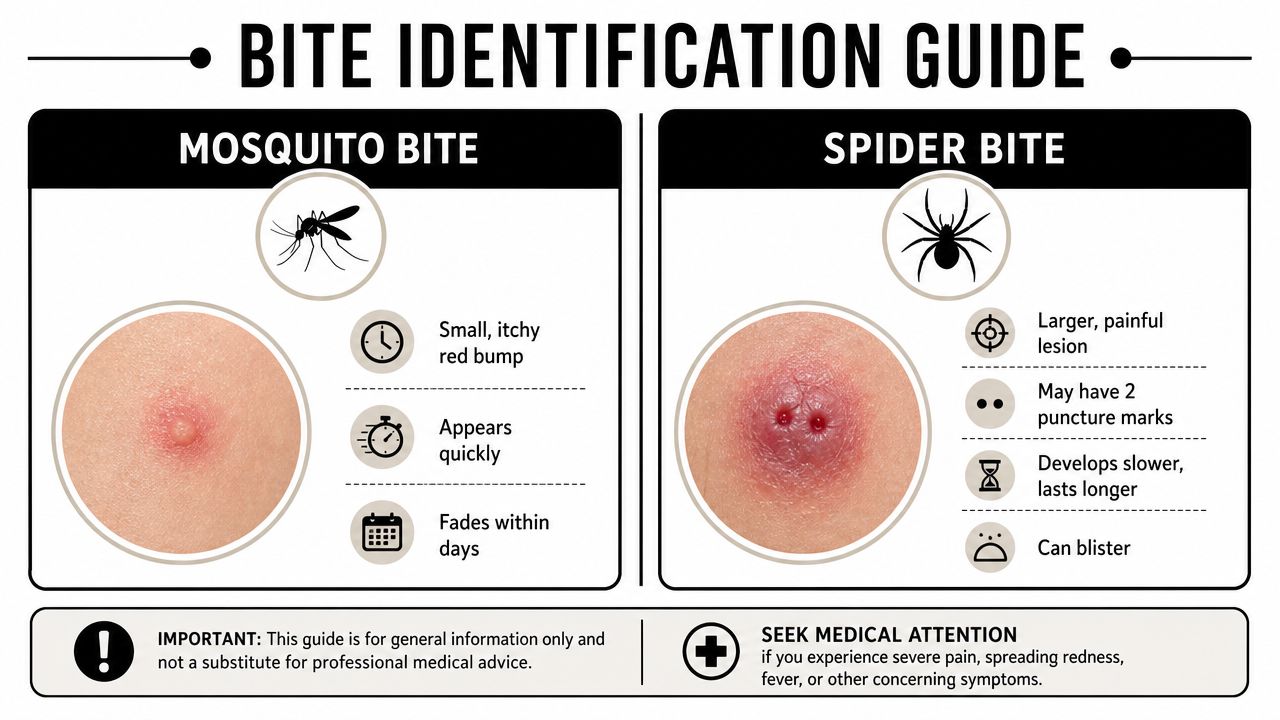
A visual can help if you're trying to compare what you're seeing at home.
What a mosquito bite usually does
Mosquito bites often follow a pretty recognizable pattern. A review in PMC on mosquito bite reactions describes a two-phase immune response. First comes an immediate wheal with surrounding redness that peaks in about 20 to 30 minutes. After that, a delayed itchy papule tends to peak at 24 to 36 hours and usually settles down over several days.
That helps explain why a bite can seem tolerable at first, then become much itchier the next day. The itch is largely tied to histamine-related and IgE-related pathways, not direct tissue damage. In plain language, your body's reaction is doing most of the irritating.
What a spider bite may look and feel like
Spider bites don't follow one neat script. Some are mild. Some are painful. Some are mistaken for other skin issues entirely. What often throws people off is that they expect a spider bite to look dramatic right away, and that isn't always how it starts.
A more useful question is this: is the spot mainly itchy, or is it painful and getting stranger-looking?
For readers trying to sort out other look-alikes too, this guide on Vanish Canada bed bug solutions is a helpful companion, especially when the concern isn't just mosquito versus spider but whether the skin reaction may be from another source entirely.
A mosquito bite usually annoys you. A concerning spider bite tends to demand your attention.
A simple 48-hour way to think about it
If the bump appears fast, itches strongly, and doesn't do much beyond redness and swelling, mosquito is often the better fit.
If it becomes more painful, shows blistering, looks target-like, or seems out of proportion to a normal itchy bump, don't assume it's “just a bug bite.” That's the point where symptom severity matters more than guessing the exact pest.
Bite Severity Red Flags and When to See a Doctor
Most bites are minor. That's the reassuring part. The important part is knowing when a bite stops being a home-care issue and becomes a medical question.
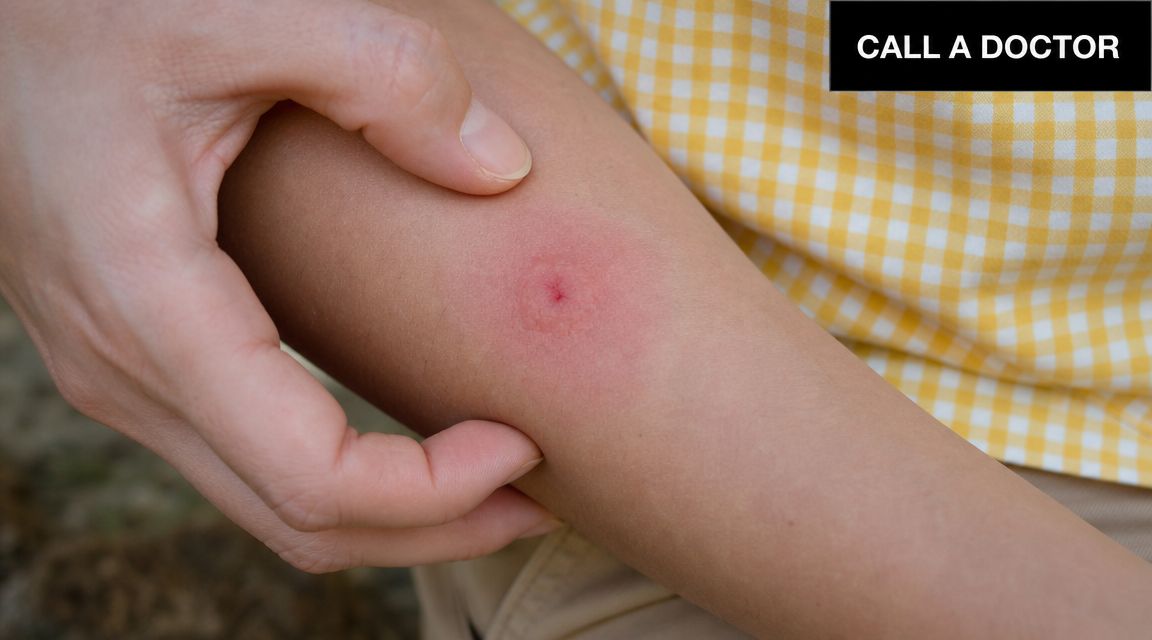
Spider bites, in particular, are better judged by severity, not by whether you can spot two tiny marks. According to Poison Control's guidance on insect and spider bites, spider bites may involve pain or burning, blistering, a target-like lesion, and in venomous cases can progress to muscle cramps, fever, chills, nausea, or tissue necrosis. Poison Control advises urgent evaluation if symptoms worsen significantly or if black widow or brown recluse exposure is suspected.
Get medical help right away if you notice these symptoms
- Breathing trouble or throat symptoms. Any trouble breathing, swallowing, or signs of a severe allergic reaction need immediate care.
- Rapidly worsening pain. Itching is common with mosquito bites. Escalating pain is more concerning.
- Muscle cramps, fever, chills, or nausea. Those whole-body symptoms matter more than the bite's appearance.
- Blistering or tissue breakdown. If the skin starts to ulcerate, darken, or break down, don't wait it out.
- Strong suspicion of a black widow or brown recluse bite. If you know or strongly suspect that type of exposure, seek urgent evaluation.
When a mosquito bite deserves more attention
Most mosquito bites are itchy, annoying, and temporary. Still, use common sense if a reaction seems out of line with a normal bump, especially if you develop significant swelling, generalized hives, or feel unwell.
If mosquito-related illness is on your mind, this local resource on mosquito-borne illnesses in Indiana gives a useful overview for homeowners in our area.
Don't measure seriousness by size alone. A small spot with strong systemic symptoms is more urgent than a larger itchy bump that's otherwise stable.
A practical decision guide
Call your doctor or urgent care if the bite is getting worse instead of gradually calming down.
Go sooner rather than later if:
- Pain keeps increasing
- The skin looks unusual, not just red
- You have fever, chills, nausea, or cramps
- You suspect a venomous spider
- You're seeing signs that worry you beyond a routine itchy bite
That's not alarmist. It's just smart triage.
First Aid and Home Treatment for Mild Bites
If the bite is mild and there are no red flags, home care usually focuses on one job. Calm the skin down and avoid making it worse.
Start simple and keep it clean
Wash the area gently with soap and water. That helps remove surface irritants and gives you a clean starting point if you need to monitor the spot later. Pat it dry instead of rubbing it.
Then use a cold compress for short stretches. Cool temperature can take the edge off swelling and itching, and it often works faster than people expect.
Use familiar over-the-counter options
For many mild bites, homeowners do well with a short list of basics:
- Cold compress. Good for swelling, itch, and that hot irritated feeling.
- Hydrocortisone cream. Often helpful when the main problem is itch.
- Calamine lotion. Useful if the skin feels irritated and you want a soothing topical option.
- Oral antihistamine. Sometimes helpful if the itching is keeping you up or if you tend to react strongly.
If the bite seems more painful than itchy, the best first move is still gentle cleaning and cooling while you watch how it develops.
What not to do
Don't scratch it open. That's one of the easiest ways to turn a simple bite into a more complicated skin problem.
Don't squeeze a suspected spider bite. And don't keep layering random home remedies on irritated skin if one basic step isn't helping.
Mild bites usually improve with boring care, not aggressive care.
Watch the trend, not the minute-to-minute look
A mild bite can look a little angry before it improves. What you want is a general trend toward less itching, less swelling, and less irritation. If the opposite is happening, or the bite starts acting less like a nuisance and more like a medical issue, stop self-treating and get advice.
Preventing Bites with Smart Home and Yard Care
You come in from a summer evening in Crown Point, and by bedtime someone is scratching again. At that point, prevention stops feeling abstract. You want to know what to change tomorrow.
The good news is that bite prevention usually comes down to interrupting two simple pest needs. Mosquitoes need water to start the next round. Spiders need quiet hiding spots, a steady supply of insects, and small openings that let them slip inside. Once you look at your home through that lens, the job gets more manageable.
Mosquito prevention starts with small water sources
A lot of homeowners look for a big standing-water problem and miss the little ones. Around here, the usual trouble spots are flowerpot saucers, toys left in the yard, clogged gutters, low spots near downspouts, and anything covered with a sagging tarp. Small pockets of water can do more than people expect.

A simple yard check works well:
- Empty standing water from buckets, planters, toys, pet items, tarps, and birdbath edges.
- Clean gutters and downspouts so rainwater can move out instead of sitting.
- Trim back dense, damp growth where adult mosquitoes rest during the day.
- Keep grass and edges maintained so the yard dries out faster after rain.
If you only have ten minutes, walk the property the day after a storm. That one habit catches a surprising number of mosquito sources.
Spider prevention is really about cutting off shelter and entry
Spiders act more like quiet squatters than aggressive invaders. They settle where they are left alone and where other bugs are already available to eat. That is why garages, basements, storage corners, crawl spaces, and gaps around doors or utility lines matter so much.
Start with the house itself. Reduce clutter, pull stored items a little away from walls, seal obvious cracks, and check door sweeps. Screens matter too. If yours are bent, torn, or loose, this guide on how to install new window screens is a useful place to start.
Outdoor conditions count as well. Shrubs pressed against siding, stacked firewood near the foundation, and porch clutter all give spiders protected transition zones close to the house. If you want more local examples, this article on creating spider-free spaces in Crown Point matches what technicians commonly find on Northwest Indiana properties.
The best routine is one you can repeat every week
Perfection is not the goal. Consistency is.
Use a simple weekly reset:
- Check the yard after rain.
- Empty anything holding water.
- Look over screens, thresholds, and door sweeps.
- Cut back growth touching the house.
- Clear out undisturbed clutter in garages, sheds, and storage areas.
That routine lowers the odds of bites now and reduces the conditions that keep bringing pests back. For many Crown Point homes, that is the point where prevention starts to feel less like guesswork and more like a plan.
Professional Mosquito and Spider Control in Crown Point
You clean up the yard, dump the standing water, and still end up scratching bites after ten minutes on the patio. Or you clear out a basement corner and keep finding the same kind of spider activity near windows and storage. That is usually the point where home prevention has done what it can, and the property needs a closer look.
Professional mosquito control and spider control work like troubleshooting a house problem at the source. The job is to find where pests are resting, breeding, feeding, and slipping indoors, then reduce those conditions in a way that holds up longer than a one-time spray.

Why mosquito problems can ramp up fast
Analysts at StatPearls explain that mosquito-borne disease remains a major global health issue, and that adult mosquitoes have a short life cycle, which helps populations build quickly when water and weather line up, as noted in StatPearls on mosquito-borne disease.
For homeowners in Crown Point, the practical takeaway is simpler than the science. If you are seeing heavy mosquito activity around the yard, the cycle usually started earlier in places you may not notice right away, such as low spots, clogged drainage areas, shaded damp edges, or containers that keep refilling after rain.
What professional service changes
A technician is not just looking at the bite itself. They are reading the property the way a mechanic reads an engine sound. Where does water sit? Where do mosquitoes rest during the day? What corners of the structure are giving spiders shelter and access to insects?
That wider view often helps most with:
- Recurring bites outdoors in the same parts of the yard
- Deck, patio, or play areas people are starting to avoid
- Spider activity indoors around garages, basements, window areas, and storage spaces
- Business properties where outdoor comfort and appearance both matter
One local option for residential pest control and commercial mosquito spraying services in Northwest Indiana is The Green Advantage, which offers mosquito reduction programs, inspections, and broader pest management support.
When an exterminator makes sense
The right time to call an exterminator in Crown Point, IN is usually before the problem becomes part of your normal routine. Repeated bites, steady mosquito pressure near the house, or spiders returning to the same indoor areas are good signs that cleanup alone is not solving the full problem.
A professional visit can help answer the "what next?" question. First, reduce the immediate pest pressure around your family and the places you use every day. Then address the property conditions that keep restarting the issue, especially in Northwest Indiana yards where summer moisture, shade, and dense growth can keep pests close to the home.
The goal is to stop your home and yard from staying attractive to biting pests.
What to Expect When You Work With The Green Advantage
A lot of homeowners hesitate to call because they assume pest control will be complicated, pushy, or vague. It doesn't have to be.
The process should feel straightforward. You call, explain what's happening, and talk to someone who can help sort out whether you're dealing with a likely mosquito issue, spider activity, or a broader pest pattern around the property.
The first conversation
Usually, the first step is simple. You describe what you've noticed. Maybe it's bites after being in the backyard. Maybe it's webs in the basement and a painful bite that happened while moving storage. Maybe it's both.
A good office team helps schedule the right kind of visit and gets your questions moving quickly instead of bouncing you around.
The on-site inspection
Once a technician arrives, the focus is on conditions, not guesses. They'll look for the kind of details homeowners often miss because they see the property every day: standing water sources, clogged drainage points, overgrown edges, harborage around foundations, screen issues, cluttered storage, and likely pathways pests use to get close to people.
That inspection matters because a bite on your skin doesn't always tell the full story. The property usually does.
The treatment plan and follow-up
You should expect a clear explanation of what was found, what can be handled with homeowner maintenance, and what treatment makes sense if service is needed. No one benefits from mystery language.
For families in Crown Point and nearby Northwest Indiana communities, that clarity is what turns pest control from a stressful call into a manageable home maintenance decision. Whether the issue points to mosquito reduction, spider control, or a broader prevention plan, the process should leave you knowing what's happening and what comes next.
If you're comparing options for pest control in Crown Point, IN, look for that transparency. It matters just as much as the treatment itself.
If bites keep showing up around your home, yard, or business, it may be time to stop guessing and get a professional assessment. The Green Advantage serves Crown Point and nearby Northwest Indiana communities with practical pest inspections, mosquito reduction, and spider control that help protect your family, property, and peace of mind. Reach out to request a quote or schedule an inspection.