
You hear scratching in the wall after midnight. By breakfast, ants have found the sink. Two days later, mosquitoes take over the backyard. In Richmond, that pattern is common because pest problems here usually build from house conditions, not bad luck.
Richmond gives pests plenty to work with. Humid summers stretch activity well beyond what many homeowners expect. Older housing stock often has loose trim, settling foundations, aging weather seals, and hidden gaps around utility lines. Crawl spaces stay damp, basement corners hold moisture, and both create steady pressure for insects and rodents.
Homeowners often waste time treating the pest they can see. That misses the cause. A few roaches, ants, or mice usually point to moisture, entry points, food access, or cover around the structure. Until those conditions are addressed, the problem returns.
Quick relief matters. Lasting control matters more. Richmond has needed pest service for generations, which says a lot about the local climate, the age of many homes, and the upkeep they require over time.
Start with the right question: Why does this keep happening at this house?
In Richmond, the answer is usually practical and specific. Moisture under the home. Humidity around the foundation. Openings at doors, vents, crawl space access points, and utility penetrations. Storage clutter inside. Dense landscaping and leaf litter outside. Once you identify those patterns, pest control gets clearer, and the next step is easier to choose.
Your Guide to a Pest-Free Home in Richmond
You hear scratching in the wall one night, find a roach under the sink the next morning, and spend the weekend wondering what else you have not seen yet. That is a familiar Richmond pattern. Pest trouble here rarely starts with one stray insect. It usually starts with house conditions that keep inviting pests back.
Pests do more than create disgust. They change how your home feels. You start checking corners, avoiding the patio, and second-guessing every sound in the wall.
Richmond homes often deal with more than one pressure point at a time. That is common in a city with humid summers, older housing, crawl spaces, aging seals, and plenty of shaded lots. A small ant issue can point to moisture. A mouse sighting can point to gaps at utility lines or doors. Roaches often show up where water and hiding spots stay consistent. Treating only what you can see is how people end up paying for the same problem twice.
Why Richmond homes get repeat infestations
Richmond has a combination that pests like.
- Historic construction details leave openings around trim, windows, foundations, and older penetrations.
- Crawl spaces and basements hold moisture, especially during long humid stretches.
- Mature landscaping and close-set homes give pests cover and easy travel routes.
- Seasonal humidity keeps insect activity going longer and makes moisture control harder.
A repeat infestation usually means the house is still offering food, water, shelter, or access. Start there.
Practical rule: If the same pest comes back after treatment, assume a house condition still needs to be fixed.
What actually works
Start with diagnosis. A good pest plan answers three questions:
- What pest is active right now
- Where it is getting in or living
- What condition keeps supporting it
That approach leads to lasting control. In Richmond, the right service should identify entry points, check moisture-prone areas, recommend sanitation or storage changes where needed, and treat the problem with a clear plan for follow-up. Homeowners get better results when they ask better questions. Ask what is attracting the pest, what needs to be sealed or corrected, and how the home will be monitored over time.
Common Pests and Seasonal Threats in Richmond
Richmond pest pressure changes with the season, but it never really disappears. That's why year-round service is common in this market. Richmond-area providers actively market ongoing management for ants, roaches, rodents, spiders, termites, and other pests, which reflects a local need for continuous control rather than a one-season fix, according to Orkin's Richmond pest control page.
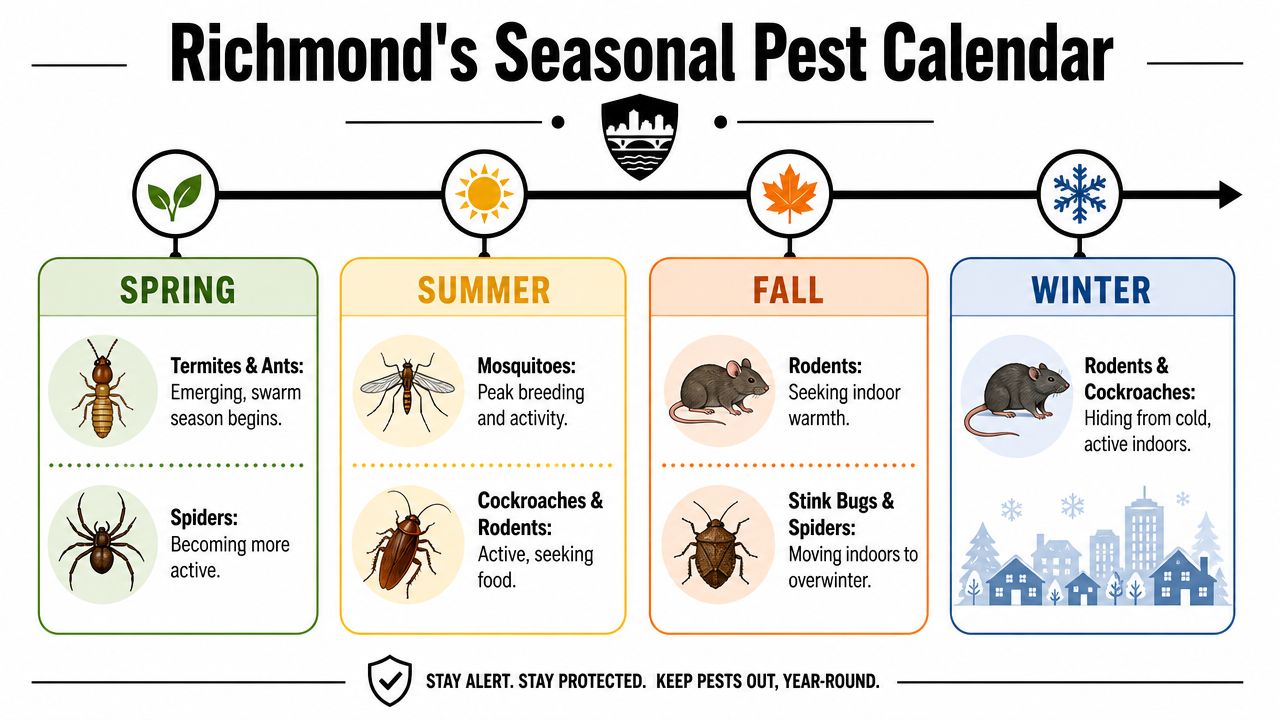
Spring pressure starts below and around the house
Spring is when many homeowners first notice activity. Ants start trailing, spiders become more visible, and termite season moves back into focus. Warmth wakes things up, but moisture is usually the primary accelerator.
If you have a crawl space that stays damp or mulch piled too high against the foundation, spring pests don't need much invitation. They already have shelter close to the structure.
A few spring warning signs deserve fast attention:
- Winged insects near windows could point to termites or ants, and they shouldn't be guessed at.
- Fine dirt lines or unexplained wood concerns deserve an inspection, not a store-bought shortcut.
- Activity after rain often points to moisture-linked access routes.
Summer is when neglect gets expensive
Summer in Richmond tends to expose houses that have unresolved entry and moisture issues. Mosquitoes take over yards with standing water and dense shade. Roaches become more visible in kitchens, utility areas, and lower levels. Rodents stay active where food and water are easy to reach.
This is also when homeowners get fooled by surface calm. The yard looks fine. The house feels dry enough. Then pests show up because hidden conditions stayed in place from spring.
Summer pests don't just respond to heat. They respond to water, shelter, and the easiest route to food.
Fall and winter push pests indoors
When outdoor conditions shift, rodents start testing structures harder. Spiders and other nuisance invaders also move toward protected spaces. In winter, many people assume pest activity stops. It doesn't. It moves inside walls, attics, basements, garages, and kitchen voids.
Here's the practical seasonal pattern to watch:
| Season | Common pressure | What to inspect first |
|---|---|---|
| Spring | Ants, termites, spiders | Crawl spaces, mulch lines, foundation gaps |
| Summer | Mosquitoes, roaches, rodents | Standing water, kitchens, exterior doors |
| Fall | Rodents, spiders, overwintering pests | Garage sweeps, attic vents, utility penetrations |
| Winter | Indoor rodents and roaches | Food storage, wall voids, moisture areas |
The local why matters more than the pest list
A Richmond home with persistent pest trouble usually has one of these conditions in play:
- Moisture below the home
- Gaps at the foundation or siding transitions
- Tree limbs or vegetation touching the house
- Storage clutter in garages, crawl spaces, or utility rooms
If you fix only the visible pest, you'll keep paying for the same lesson.
Effective Pest Treatment and Prevention Solutions
A Richmond pest problem usually starts before you see the pest. Moist crawl spaces, aging wood, loose utility penetrations, and long stretches of summer humidity create the conditions first. Treatment works best when it matches that reality.
A spray can reduce activity. It cannot fix why pests keep finding your house.
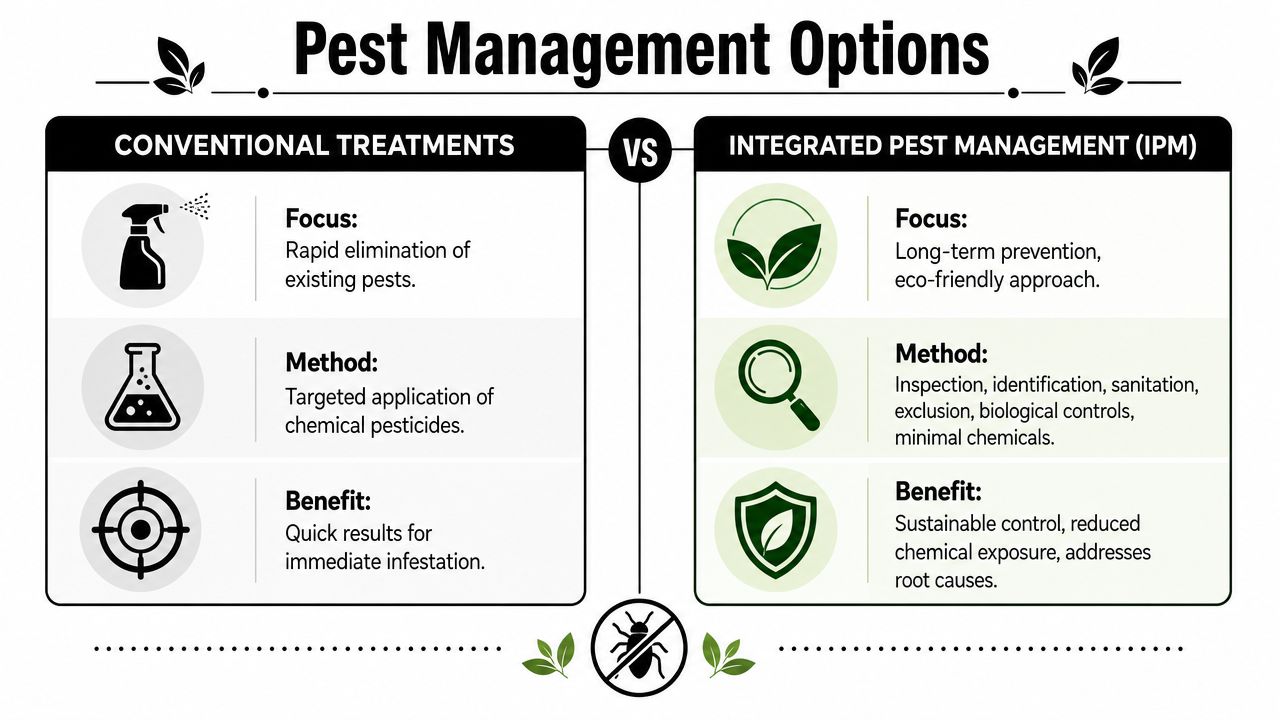
Conventional treatments versus integrated pest management
Direct treatment has a clear role. If roaches are active in the kitchen, ants are trailing indoors, or wasps have built near an entry, targeted product application brings pressure down fast. Homeowners need relief, and fast knockdown is part of good service.
For long-term control in Richmond, integrated pest management, or IPM, is the better standard. Richmond homes often have recurring conditions that invite pests back: damp crawl spaces, settling gaps, dense shade, clogged gutters, and older construction details that never seal tightly. IPM addresses those conditions through inspection, pest identification, sanitation changes, exclusion work, monitoring, and limited product use where it belongs. That approach fits the city better than repeated blanket treatments.
Here's the practical difference:
| Approach | Best use | Limitation |
|---|---|---|
| Conventional treatment | Quick control of active pest activity | Short-term relief if entry points and moisture stay the same |
| IPM | Repeat pest issues and prevention | Needs a real inspection and homeowner follow-through |
| Exclusion and moisture correction | Rodents, ants, roaches, crawl-space driven infestations | Slower payoff if pests are already well established indoors |
If you are comparing local options, this guide to pest control companies near Richmond homes helps you see which providers build treatment around inspection and prevention.
Termite control should start with the structure
Termites are a Richmond housing problem as much as an insect problem. Older homes, crawl spaces, wood trim close to grade, and chronic moisture create ideal conditions for hidden activity. A serious termite plan starts with the structure itself.
The inspection should answer a few direct questions:
- Where is moisture staying too high
- Where does wood sit too close to soil or mulch
- What evidence confirms current or past activity
- Which treatment method fits this foundation and layout
Home Paramount's Richmond termite page explains that termite service should be built around inspection and site-specific conditions, not a generic pitch for one treatment type: Home Paramount's Richmond termite service page.
A provider who cannot explain why a bait system, liquid barrier, or monitoring plan fits your home is guessing.
Prevention work that actually lowers repeat infestations
The best pest control work is usually the least dramatic. It closes gaps, dries out trouble spots, removes shelter, and makes the house harder to exploit. That matters in Richmond because many recurring infestations are driven by the house itself, not by a one-time spike in pest activity outside.
A solid prevention plan usually includes several of these steps:
- Exterior treatment around active entry zones
- Targeted baiting for specific insect problems
- Sealing around doors, pipes, vents, and utility lines
- Crawl-space or drainage recommendations where moisture is fueling activity
- Scheduled follow-up based on pest pressure and season
The Green Advantage offers residential and commercial pest services, inspections, mosquito reduction, and recurring service plans. That matters less than the standard you should hold every provider to. The plan should explain the cause, the treatment, and the steps that keep the problem from returning.
How to Choose a Licensed Pest Control Provider in Richmond
You call a pest company after seeing roaches in the kitchen or hearing scratching above the ceiling. A key assessment begins when the technician explains why it is happening. In Richmond, recurring pest problems usually trace back to moisture, crawl-space conditions, aging construction, and plenty of hidden entry points in older homes. Hire the company that can diagnose those conditions clearly and build a plan around them.

A licensed provider should understand Richmond houses, not just Richmond zip codes. Fan District rowhomes, older Northside properties, houses with additions, and homes with vented crawl spaces all create different pest pressure. Humid summers keep wood damp, crawl spaces stay attractive to insects, and small foundation gaps let ants, roaches, mice, and spiders keep finding their way back inside. If a company treats every house the same, expect repeat problems.
What to verify before you hire anyone
Start with the basics, then ask harder questions.
- License and insurance. Ask for confirmation. If they dodge it, move on.
- Experience with Richmond housing types. Older brick homes, settled foundations, and crawl spaces change the inspection and treatment plan.
- A real inspection process. You want specific findings tied to your structure, not a generic sales talk.
- Written scope of work. It should say what they are treating, where they found activity, what method they will use, and what follow-up is included.
- Clear communication. Good companies explain the cause in plain language and tell you what needs to change at the house.
One more thing matters. The provider should connect the pest issue to the condition that supports it. Moisture around a sill plate, mulch packed against the foundation, a loose crawl-space door, or gaps around plumbing penetrations are often the reason the infestation keeps returning.
Questions that separate professionals from pretenders
Ask these and listen closely to the answers:
- What signs confirmed the pest activity?
- Where is the pest getting in or nesting?
- What about this house is supporting the problem?
- What result should I expect after the first visit?
- What repairs or cleanup should I handle between services?
A good answer is specific. “We found German roach activity near moisture under the sink” is useful. “We spray for that all the time” is not.
If you are comparing nearby options, this guide to how to evaluate pest control companies near Richmond gives you a practical checklist for judging who is qualified.
Here's a quick visual overview before you call around:
A licensed pest company should be able to explain why the problem started, where it is coming from, and what will keep it from coming back.
Understanding Pest Control Costs and Service Plans
Pest control pricing depends on the problem, the property, and the amount of labor required to get control that lasts. Anyone who gives you a flat answer without asking questions is guessing. That's not helpful to you.
The biggest cost drivers are usually the pest type, how established the infestation is, where technicians need to work, and whether the solution includes only treatment or also exclusion and monitoring. A small ant issue at the exterior edge of a home is different from rodents in an attic or termites requiring a specialized response.
What changes the price most
You can usually expect cost to move based on these factors:
- Pest type because termites, mosquitoes, rodents, and general insects require different methods
- Severity because early activity takes less labor than a long-running infestation
- Structure size and layout because larger homes and complex access points take more time
- Treatment method because some jobs rely on direct application while others add baiting, trapping, sealing, or repeat visits
- Service frequency because one-time relief and recurring prevention are priced differently
For a fuller consumer breakdown, this overview of how much pest control services cost gives a practical framework for comparing quotes.
One-time service versus recurring plans
A one-time service makes sense when the problem is narrow and clearly defined. Think a wasp nest, a localized ant flare-up, or a visible issue with a straightforward correction. It's reactive. Sometimes that's enough.
Recurring service plans are usually the better fit when the house has repeat exposure. In Richmond, that often means moisture, vegetation contact, crawl-space conditions, or seasonal pressure that rotates from one pest to another. In those cases, a plan isn't just buying more visits. It's buying monitoring and earlier intervention.
A smart recurring plan should answer these questions:
| Question | Why it matters |
|---|---|
| What pests are covered | You need to know whether common local issues are included |
| How often they return | Frequency affects prevention quality |
| What happens between visits | Some plans include call-backs or retreatments |
| Whether inspection is ongoing | Problems change as seasons shift |
Where homeowners waste money
The most expensive option is often the cheap service that doesn't solve the cause. If the provider never addresses entry points, food sources, moisture, or follow-up, you're likely paying again for the same issue later.
That doesn't mean every home needs a premium plan. It means the service should fit the problem. Good value in pest control comes from accuracy, not from the lowest starting number.
What to Expect During Your Pest Service Visit
A professional pest visit shouldn't feel confusing. It should feel organized. You should know what's happening, why it's happening, and what you need to do before and after the appointment.
Most solid service visits follow the same broad sequence. The details change with the pest, but the process shouldn't be mysterious.
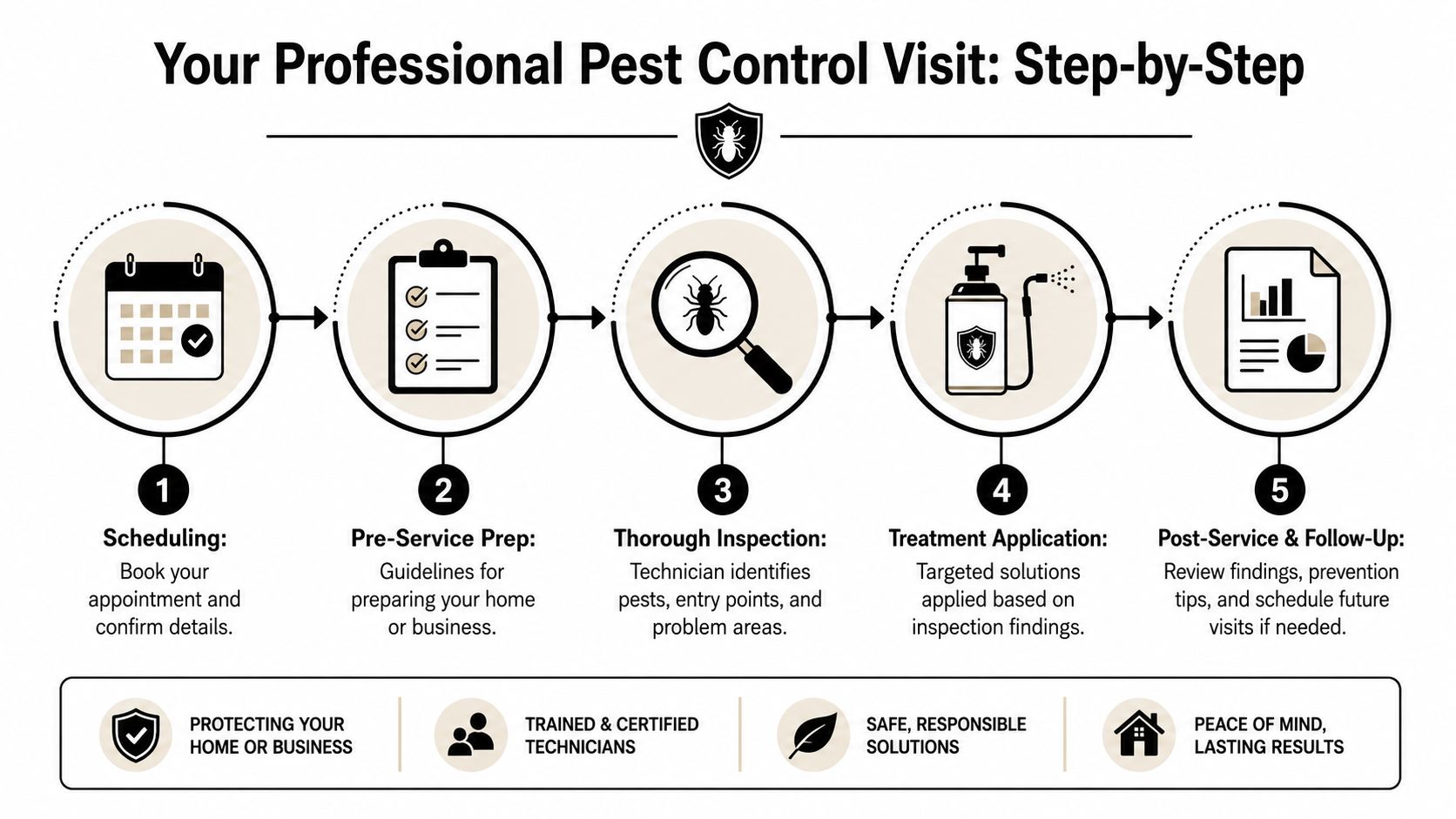
Before the technician arrives
The company will usually ask what you've seen, where you've seen it, and how long it's been happening. Give specifics. “Bugs in the kitchen” is less useful than “small roaches near the dishwasher at night.”
You may also get prep instructions. These can include clearing access to baseboards, sinks, crawl-space entries, utility rooms, garage walls, or attic hatches. If food handling areas are involved, they may ask for basic cleanup and storage steps beforehand.
What happens on site
The inspection comes first, or at least it should. The technician should look for pest evidence, entry points, moisture issues, conducive conditions, and harborage areas. Then they should explain what they found in plain language.
Treatment should match the findings. That might mean a perimeter application, targeted interior placement, baiting, trapping, exclusion recommendations, or a combination. You should also hear what not to expect. Some treatments don't create immediate silence, and some pest activity can remain visible for a short period while control is taking hold.
After the service
The provision of clear instructions distinguishes good companies. You should leave the visit with instructions.
A proper post-service conversation usually includes:
- What was treated
- What pests were identified
- What changes you should make
- Whether follow-up is recommended
- What signs to watch for next
If a technician leaves without explaining what they found and what happens next, the service wasn't complete.
Some issues need monitoring, not just one appointment. That's especially true when pest activity is tied to a crawl space, hidden moisture, repeated exterior access, or changing seasonal pressure.
Local Health Regulations and Pest Management
Pest control in Richmond isn't only a comfort issue. It also connects to public health and neighborhood conditions. That matters most with rodents, standing water, insects, and sanitation complaints that affect more than one property.
The Richmond City Health Department's Environmental Health Division investigates approximately 500 complaints each year involving concerns such as rodents, insects, nuisance birds, obnoxious odors, and standing water, according to Richmond City Environmental Health guidance. That volume tells you pest-related conditions are recurring city issues, not rare exceptions.
The same city guidance also tells residents to contact a licensed pest control company for rodents on private property. That's an important point. When the issue is inside your structure or on your lot, the city expects professional control and prevention, not wishful thinking.
Why this matters for homeowners and landlords
Rodent control, in particular, isn't just about killing what you see. Richmond's public guidance frames it around rat killing, rat-proofing, and sustained control measures. That's exactly how property owners should think about it.
If you own or manage a property, your responsibility isn't just to react when tenants complain. It's to correct the conditions that keep inviting pests back. That includes trash handling, moisture, exterior maintenance, and structural access points.
Frequently Asked Questions About Richmond Pest Control
A Richmond pest problem usually starts with the house itself. Older homes with crawl spaces, damp basements, wood trim, and small foundation gaps give pests exactly what they need. Add summer humidity, heavy rain, and mild winters, and infestations don't stay isolated for long.
Are pest control treatments safe for children and pets
Yes, when the product fits the pest problem and the technician applies it correctly. Ask what will be used, where it will go, and how long children and pets should stay out of treated areas. A licensed professional should answer clearly and give you plain instructions before treatment starts.
Do I need to leave during service
Sometimes, but not for every visit. Many routine exterior treatments and targeted interior applications let you stay home with simple precautions. More intensive work, especially for heavy infestations or specialty treatments, may require temporary re-entry time.
How fast will I see results
It depends on the pest and the treatment method. Ant activity may drop fast. Roaches, termites, and rodents often take longer because control depends on baiting, nesting patterns, exclusion work, and follow-up. Focus on lasting control, not just quick knockdown.
Is one visit enough
One visit works for some problems. A single wasp nest or a localized ant trail may be handled in one service call. Richmond homes with crawl-space moisture, older siding, loose door sweeps, or recurring gaps around utility lines usually need more than one treatment. In those homes, a service plan paired with repairs and moisture control is the smarter choice.
What should I do before calling a company
Write down what you've seen and where you've seen it. Take photos. Check under sinks, around water heaters, at crawl-space doors, along baseboards, and outside near mulch beds or standing water. That information helps a technician find the source faster, especially in homes where pests are following moisture instead of food.
What's the biggest mistake Richmond homeowners make
They treat the visible pest and ignore the reason it showed up. In Richmond, that reason is often damp wood, high crawl-space humidity, clogged gutters, leaf buildup, open foundation vents, or gaps around aging doors and windows. Spray alone will not fix a house that keeps inviting pests in.
If recurring pests keep showing up, contact The Green Advantage. Ask for an inspection that identifies entry points, moisture issues, and the pressure points around your home, then choose a plan that fixes the cause instead of chasing the same infestation again.