
You lift the welcome mat and a scorpion is underneath it. Or you hear scratching above the garage at night and start wondering if something moved into the attic. In Phoenix, those moments are common enough that most homeowners know the feeling right away. You want the problem handled fast, but you also want it handled correctly.
That's where local knowledge matters. Desert pest pressure isn't the same as what homeowners deal with in milder climates. Heat drives pests indoors, irrigation creates moisture pockets, monsoon conditions can trigger sudden activity, and different pests respond to very different treatment methods. A roach plan is not a termite plan. A mosquito issue after rain is not the same as a scorpion issue around block walls and entry points.
Your Trusted Partner for Pest Control in Phoenix
A lot of homeowners start searching for pest control in Phoenix after one bad sighting. One scorpion in the bathroom. Roaches in the kitchen after dark. Bites that show up overnight and make you worry about bed bugs. The stress isn't only about the pest itself. It's about not knowing whether you're looking at a one-time problem or the start of a larger infestation.
Phoenix is the kind of place where pest problems can look quiet at first. A few ants near a sink may point to an outdoor colony using the home as a water stop. A single roof rat sighting can mean activity around palms, citrus, or utility lines. Termites often stay hidden until damage is already underway. That's why calm, methodical inspection matters more than panic spraying.
Why Phoenix homes need a local approach
Phoenix has a high-diversity urban pest mix that includes scorpions, termites, bed bugs, roaches, mosquitoes, ants, spiders, earwigs, millipedes, crickets, bees, rodents, and pigeons, according to Phoenix-area pest overviews. That matters because no single treatment style works across all of them.
A good service plan starts by answering a few practical questions:
- Where is the activity starting. Indoors, at the foundation, in the yard, in the attic, or around plumbing penetrations?
- What is attracting the pest. Moisture, food residue, harborage, wall voids, pet areas, trash storage, or standing water?
- What kind of control fits the pest. Exclusion, monitoring, dust application, baiting, crack-and-crevice treatment, habitat reduction, or perimeter work?
Practical rule: In Phoenix, the right treatment is usually narrower than homeowners expect. Broad spraying may knock down some activity, but it often misses the reason the pest showed up in the first place.
What worried homeowners usually need most
Customers don't need a lecture. They need straight answers. Is this dangerous? Will it spread? Can I stay in the house? What should I do before service?
The reassuring part is that most Phoenix pest issues become much more manageable once the pest is identified correctly and the treatment is matched to the site. That's the difference between temporary relief and real control. If you're searching for Pest Control Phoenix, the useful answer isn't just “yes, we treat that.” It's understanding why that pest chose your home and what keeps it from coming back.
Understanding Common Pests in the Phoenix Area
You walk into the garage after sunset in July, and something moves along the base of the wall. A week later, you notice roaches near the kitchen sink after a monsoon storm. In Phoenix, that pattern is common. The desert climate does not keep pests away. It changes where they hide, when they move, and how treatment needs to be done.
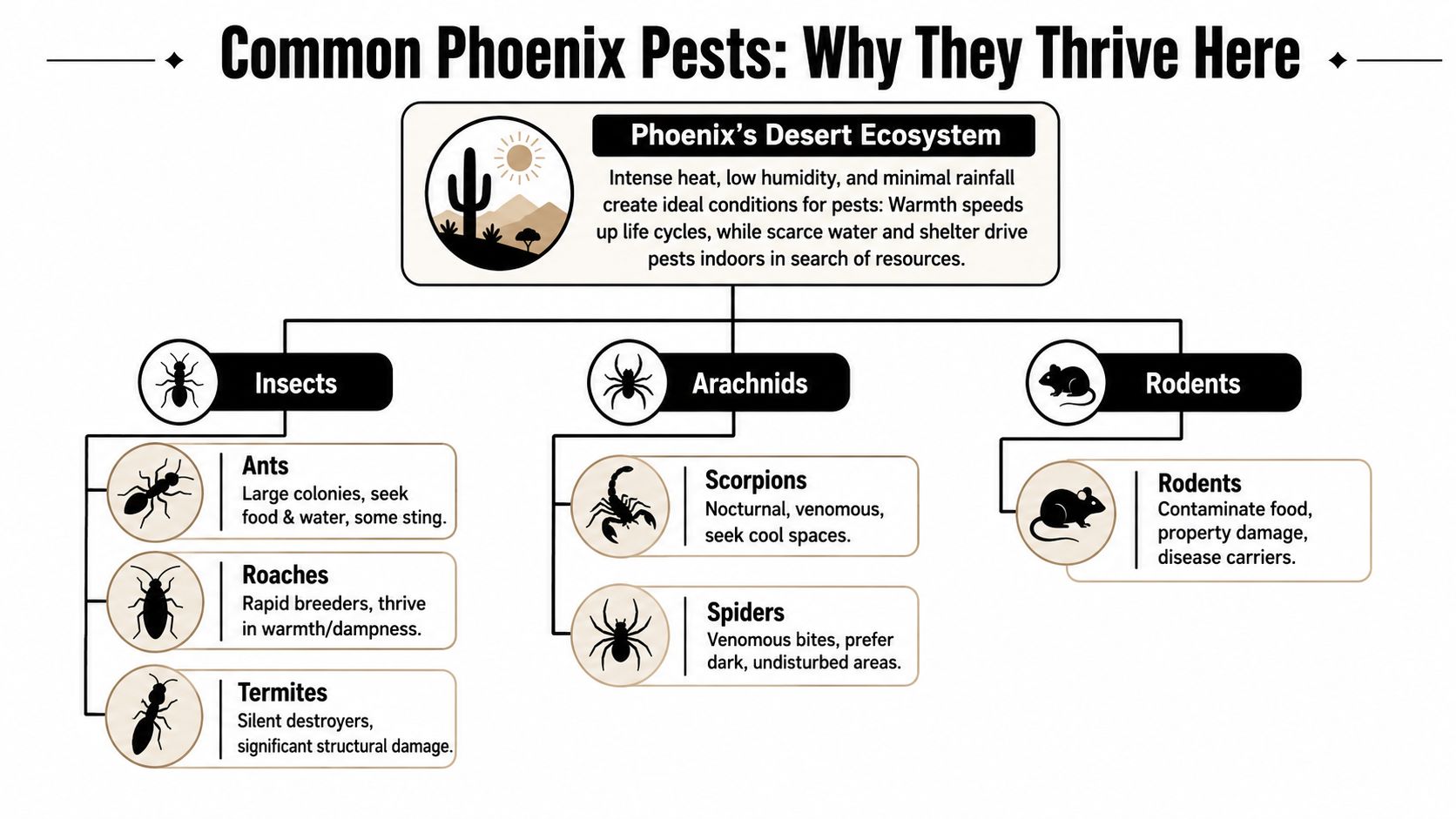
Heat drives pest behavior here. During extreme summer temperatures, many pests push into cooler, protected spaces such as wall voids, garages, bathrooms, and shaded foundation lines. Then monsoon humidity shifts the pressure again. Moisture wakes up activity that stayed hidden during the driest part of the season, especially around irrigation, drains, block walls, and dense ground cover.
The pests Phoenix homeowners deal with most
Scorpions get the most calls, especially in neighborhoods with block fencing, rock mulch, palm debris, and desert-edge construction. They spend daylight hours in tight, cool hiding spots and come out at night to hunt. If the yard supports crickets, roaches, or other insects, scorpions have a food source nearby. That is why scorpion control usually works best when the treatment plan also reduces prey insects and seals common entry points.
Termites are less visible but often cost more in the long run. Phoenix homes face steady subterranean termite pressure, particularly where soil meets stucco, slab cracks, expansion joints, or wood contact points. National termite damage and control costs are substantial, as noted in Invader's Phoenix pest guide. Locally, the practical issue is access. If termites can move from soil to structure without being noticed, damage can build before a homeowner sees any sign indoors.
Roaches are a year-round problem here because Phoenix gives them two things they need. Heat outside and moisture inside. German roaches usually point to an indoor infestation around kitchens, bathrooms, appliances, or plumbing voids. American and Turkestan roaches often start outdoors in irrigation boxes, sewers, planter beds, and garage perimeters, then move inside when temperatures spike or water sources shift.
Some pests surge with the season.
Bed bugs tend to follow travel, used furniture, apartment turnover, and shared-wall housing. They are difficult because hiding spots are small and scattered, and missed areas turn into repeat activity. Quick spray-and-go treatments usually fail.
Mosquitoes catch homeowners off guard in the desert, but I see the same pattern every monsoon season. A yard with overwatered planters, clogged drains, pet bowls, or standing water around patio items can produce activity fast. In Phoenix, mosquito control is less about broad yard spraying and more about finding every place water collects after rain or irrigation.
Rodents also change with the weather. Roof rats and mice look for water, shade, and protected nesting sites when outdoor conditions get harsh. Attics, garages, storage rooms, and citrus-heavy yards are common trouble spots, especially when tree limbs give easy roof access.
Why elimination can be difficult
Phoenix pest control is rarely a one-visit fix because the environment keeps applying pressure. Desert landscaping creates harborage. Irrigation creates moisture. Monsoon shifts trigger sudden movement. A treatment can be technically correct and still underperform if the property keeps offering shelter, water, or food.
That trade-off matters. A homeowner may want the fastest knockdown possible, but long-term control usually depends on slower, less visible work such as sealing gaps, reducing clutter, adjusting watering, and treating the exact zones where pests are entering or nesting.
What this means for treatment
The right plan depends on the pest and the property.
- Scorpions usually require exterior treatment, entry-point sealing, and cleanup around rock beds, block walls, and stored items.
- Termites require a careful inspection and structural protection plan based on how the home is built and where soil contact exists.
- Roaches and ants respond best to targeted baiting, crack-and-crevice work, sanitation improvements, and outdoor source reduction.
- Bed bugs require detailed inspection, room-specific treatment, and homeowner prep that is properly followed.
- Mosquitoes improve when standing water is removed and treatment is timed around rainfall, shade, and breeding sites.
- Rodents stay gone only when openings are closed and roofline or yard access is corrected.
One-size-fits-all service misses how Phoenix pests behave. Local conditions decide where the pressure starts, how fast it builds, and what kind of treatment holds up.
Our Pest Control Services for Phoenix Homes
A Phoenix service plan has to hold up in triple-digit heat, dust, and the sudden moisture swings that come with monsoon season. Products break down faster here than many homeowners expect, and pest pressure can spike after a storm or a stretch of heavy irrigation. Good service accounts for those conditions from the start.
Residential service that addresses the whole property
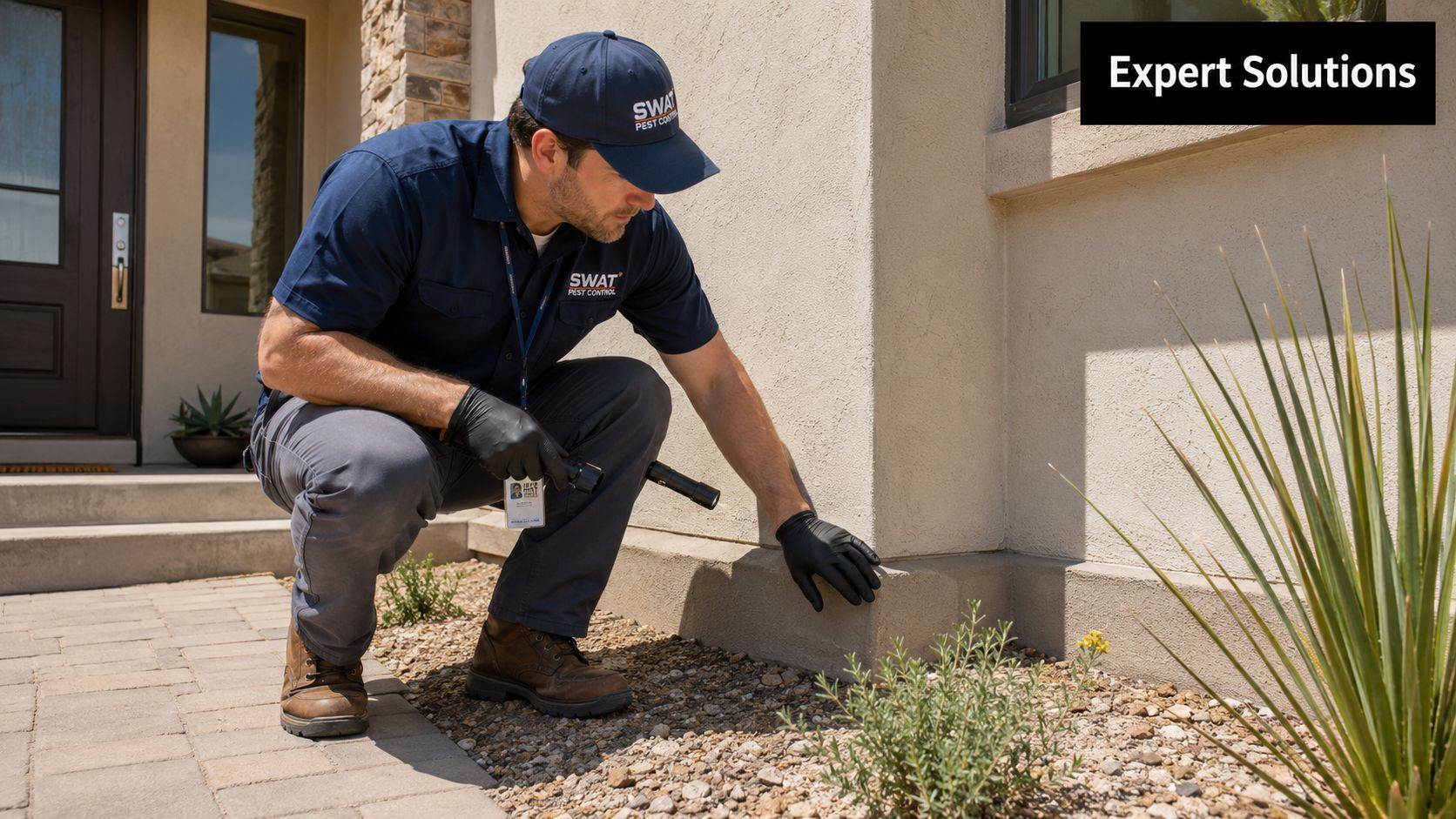
The best home programs in Phoenix start outside, because that is where pressure usually begins. Technicians should inspect block walls, weep screeds, door thresholds, garage gaps, roofline access, shaded patios, and drip-irrigated planting beds. Inside treatment has its place, but it works better when the exterior pressure is reduced first.
A strong residential visit often includes:
- Perimeter treatment around likely entry zones where desert pests travel before coming indoors.
- Interior work as needed for active infestations, kitchens, garages, baseboards, or other problem areas.
- Exclusion guidance for gaps at utility penetrations, torn screens, worn sweeps, and attic or roof access points.
- Property-specific prevention based on how your yard, watering schedule, and storage setup are attracting pests.
Homeowners who want a clearer picture of what pest control companies do during inspection and treatment should look for that same level of site-specific detail from any provider. The Green Advantage offers residential pest management, inspections, mosquito reduction, and treatment plans built around the property itself. In Phoenix, that approach usually performs better than a one-visit spray service.
Commercial pest control requires consistency
Commercial properties create a different kind of pressure. Restaurants deal with drains, grease, and deliveries. Warehouses deal with pallets, roll-up doors, and harborage along walls. Multifamily properties add shared walls, trash enclosures, and turnover between units.
The job is not just to reduce visible activity. It is to document where pests are getting in, correct sanitation and storage problems, and keep recurring issues from spreading through the building. That takes scheduled inspection, clear reporting, and follow-up that matches the use of the property.
Termite and mosquito work need separate treatment plans
General pest service and termite service are different jobs. A termite plan should be based on inspection findings, foundation type, soil contact, and risk around the structure. If a company treats termites like a routine spray visit, that is a warning sign.
Mosquito work also changes with local conditions. In Phoenix, breeding often starts in shaded, irrigated pockets that homeowners overlook, especially after summer rain. Planters, drains, toys, pet bowls, and irrigation leaks can all support activity. Adult mosquito treatments help, but source reduction is what makes control last longer through the season.
Low-impact and conventional options each have a place
Phoenix homeowners often ask for lower-impact treatments, especially around kids, pets, and frequently used outdoor areas. That is a reasonable request. The trade-off is that softer approaches may need tighter sanitation, better exclusion, and more follow-up to get the same level of control.
| Pest issue | Softer approach can help | Stronger intervention is often needed |
|---|---|---|
| Ants and some occasional invaders | sanitation, sealing, targeted baiting | if colonies are established indoors or around the structure |
| Mosquitoes | source reduction, water management | if outdoor pressure remains high after habitat work |
| Rodents | exclusion and trapping | if populations are active in wall voids or attic spaces |
| Bed bugs and termites | monitoring supports control | direct professional treatment is usually the deciding factor |
Ask what the company plans to use, where it will be applied, how long it should hold up in Phoenix heat, and what you need to change on the property for the service to work. Those answers matter more than labels.
Homeowners who already schedule exterior upkeep often see the benefit of pairing pest prevention with other maintenance, such as trimming access points and keeping glass and frames clear enough to spot activity early. If you are comparing vendors for that side of home care too, these top window washing service options can help.
How to Choose a Reputable Phoenix Pest Control Company
Phoenix is a large pest market. The U.S. pest control industry includes over 33,000 businesses, and Grand View Research identifies North America as the largest market while describing the category as a large, growing service sector in its pest control services market analysis. With that many providers in the broader market, choosing carefully matters.
Start with what you can verify
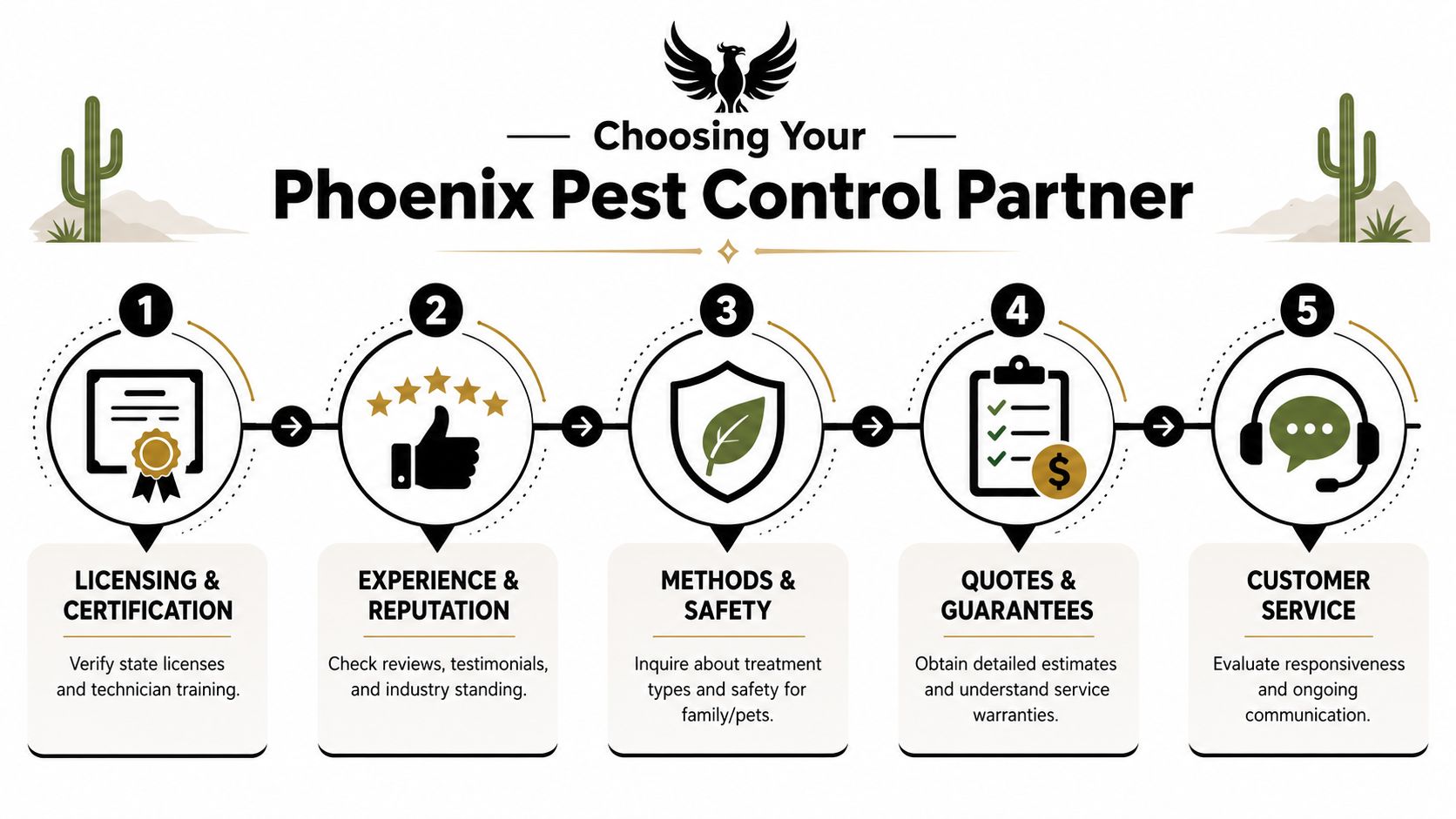
Licensing and insurance come first. If a company can't explain its credentials clearly, move on. Pest control involves products, application methods, and safety procedures that require training. You want a provider that can explain what the technician is looking for and what happens if follow-up is needed.
Then look at how they communicate. Strong companies answer questions directly. They don't dodge the difference between a general service plan and a specialized treatment for termites, bed bugs, or rodents.
Questions worth asking before you book
Use the first phone call to narrow the field. Ask practical questions like these:
- What pests do you handle regularly in Phoenix and how do you treat them differently?
- Will you inspect before quoting or are you selling a preset package without seeing the site?
- What prep is required from me before treatment?
- Do you offer follow-up service or a warranty structure for the issue I'm calling about?
- How do you handle safety questions around children, pets, or sensitive rooms?
A reputable company should be comfortable answering all of that in plain language.
If the estimate sounds simple but your pest issue isn't, keep asking questions.
Watch for professionalism beyond the pest treatment
Homeowners often focus only on the treatment itself, but overall property care matters too. If you're preparing a home for sale or cleaning up after exterior nesting or debris issues, related maintenance can support pest prevention. For example, homeowners sometimes review top window washing service options when improving visibility around eaves, sills, and exterior inspection points.
It also helps to understand how service companies structure their work. If you want a plain-language overview, this guide on what pest control companies do is useful for understanding inspection, treatment planning, and follow-up expectations.
Signs you've found a solid provider
The good companies tend to share a few traits:
- Clear scope instead of vague promises.
- Realistic expectations instead of claiming every pest disappears instantly.
- Local familiarity with scorpions, termites, roof rats, and moisture-driven surges.
- Consistent follow-through after the initial visit.
That combination usually tells you more than flashy advertising ever will.
Understanding Pest Control Costs in Phoenix
A Phoenix homeowner usually calls about price after a very specific moment. A scorpion shows up in the bathroom after a hot week. Roof rats start moving over the patio at night. Monsoon moisture brings roaches out fast, and what looked minor on Tuesday feels urgent by Friday.
That urgency is real, but pricing still depends on what is happening on the property. A routine exterior service for general desert invaders costs far less than bed bug treatment, rodent exclusion, or a termite plan built around active findings and long-term monitoring.
What drives pest control pricing in Phoenix
Phoenix homes do not all have the same pest pressure. Block walls, gravel yards, dense irrigation, citrus trees, foam roofs, older door sweeps, and attic heat all change how pests live around a property and how much work it takes to control them.
| Cost factor | Why it matters |
|---|---|
| Property size | Larger homes and yards require more inspection time, more product, and more exclusion work |
| Pest type | Termites, bed bugs, mosquitoes, rodents, and German roaches usually need specialized treatment methods |
| Infestation severity | Early activity is easier and less expensive to address than a well-established infestation |
| Access difficulty | Attics, crawl spaces, wall voids, garages, and rooflines add labor and inspection time |
| Service format | One-time service, follow-up visits, and recurring plans are priced differently |
Season matters too. In Phoenix, monsoon season can turn a manageable exterior issue into an interior problem quickly. Rodent work often rises in cooler months when roof rats and mice look for shelter. Scorpion control often costs more when the home also has strong cricket activity, because prey reduction is part of getting the result.
That is why phone quotes can miss the mark. Without seeing the structure, the harborage areas, and the pest pressure, a low number is often just an incomplete number.
Why the cheapest option often costs more
Cheap service usually cuts out inspection time, follow-up, exclusion, or both. That is where homeowners get stuck paying again.
I see this with scorpions all the time. A spray-only treatment may knock down activity for a short stretch, but if door sweeps are worn out, weep holes are open, and block wall gaps are left alone, the problem keeps cycling. The same pattern shows up with rodents when roof access points are missed, and with roaches when moisture and hiding areas inside the home are never addressed.
Termites are another good example. As noted earlier, termite damage is expensive enough that prevention usually makes more financial sense than waiting for visible wood damage, a real estate inspection issue, or a larger treatment footprint later.
One overlooked cost is cleanup and repair around the home. If pigeons or other birds are nesting in rooflines or eaves, that debris can support mites, insects, and sanitation problems. In some cases, homeowners end up pairing pest work with bird nest removal in Phoenix to fully correct the conditions attracting activity.
How to compare estimates without guessing
A useful estimate should explain the work, not just the price. Ask these questions:
- What pests are being treated right now
- How many visits are included
- What follow-up happens if activity continues
- What correction work is recommended for entry points, moisture, or sanitation
- What parts of the plan are treatment, and what parts are exclusion or prevention
That last point matters in Phoenix. A service can be fairly priced and still fail if it only treats the symptom. Good value comes from matching the method to the pest, the season, and the way your home is built.
If you want a clearer picture of what homeowners can handle on their own versus what usually needs professional service, this guide to DIY home pest control steps for Arizona homeowners helps set expectations before you compare quotes.
DIY Pest Prevention for Arizona Homeowners
Professional treatment works better when the home itself is harder for pests to use. In Phoenix, prevention is mostly about removing access, moisture, and hiding places. Those are the conditions that turn a passing pest into a repeat problem.
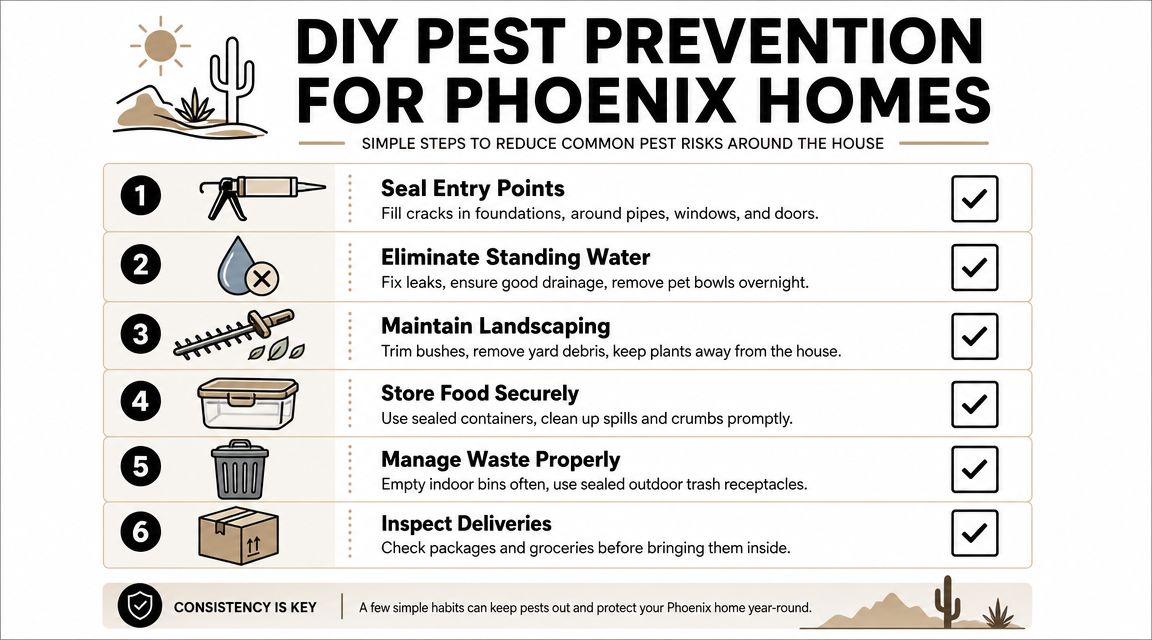
A homeowner checklist that actually helps
- Seal entry points around pipes, cable lines, door sweeps, window frames, and garage edges. Scorpions, roaches, and rodents only need a small opening.
- Cut off water sources by fixing leaks, correcting drainage, and emptying standing water after rain or irrigation overflow.
- Trim landscaping back so plants, stored items, and ground cover aren't touching the structure and creating hidden travel lanes.
- Store food tightly in sealed containers and clean pet areas, pantry shelves, and crumbs around appliances.
- Reduce clutter in garages, storage rooms, and patios where pests like to stay undisturbed.
- Check boxes and deliveries before bringing them inside, especially if you're concerned about roaches or bed bugs.
For a more detailed homeowner perspective, this resource on home pest control DIY is a practical companion to basic prevention steps.
The video below gives a useful visual overview of common prevention habits.
Don't ignore roofline and exterior nesting issues
Phoenix homeowners sometimes focus on insects at ground level and miss what's happening above them. Birds nesting in roof areas, vents, or ledges can contribute to mess, noise, and secondary pest problems. If that's part of what you're dealing with, this guide to bird nest removal in Phoenix is worth reviewing alongside pest prevention steps.
Small exterior corrections often matter more than another can of spray from the hardware store.
Phoenix Pest Control FAQ
Are pest control treatments safe for kids and pets
They can be, when the treatment is selected and applied correctly. The right question to ask is what product is being used, where it will be applied, whether drying time or temporary avoidance is needed, and what non-chemical steps are part of the plan. A good provider will answer all of that clearly before service starts.
How often do I need pest control in Phoenix
That depends on the pest pressure around your property. Some homes need occasional service for isolated issues. Others do better with ongoing prevention because of landscaping, block fencing, nearby open land, irrigation patterns, or repeated scorpion, ant, or rodent activity. In Phoenix, recurring service is often less about convenience and more about maintaining a barrier in a high-pressure environment.
What's the difference between pest control and an exterminator
Most homeowners use the terms interchangeably. In practice, modern pest control usually means inspection, identification, targeted treatment, exclusion, and prevention. The older idea of an exterminator suggests a one-time kill approach. For most Phoenix pest problems, especially termites, rodents, mosquitoes, and scorpions, prevention and follow-up matter just as much as the initial treatment.
When should I call a professional instead of trying DIY first
Call when the pest can sting, bite, damage the structure, contaminate food, or multiply out of sight. Scorpions, termites, bed bugs, roof rats, and recurring roaches are the most common examples. DIY efforts can help with prevention, but once activity becomes consistent, professional inspection usually saves time and frustration.
If you're dealing with unwanted pests and want a clear plan instead of guesswork, contact The Green Advantage. The team can help you schedule an inspection, review treatment options, and build a practical pest management plan for your home or property.