
You walk into the kitchen in Crown Point, flip on the light, and there they are. A thin line of ants running from the sink to a crumb you didn't even know was there. You wipe them up, spray the counter, and for a few hours it looks handled. Then the trail comes back.
That's how ant problems usually start in Northwest Indiana. Small at first, then strangely persistent. What makes ants so frustrating isn't just the number you can see. It's that the visible ants are usually only the working part of a larger colony problem.
That's why pest control for ants needs to focus on the reason they're inside, not just the ants crossing your countertop right now. In Crown Point, IN, seasonal changes, moisture, food access, and hidden entry points all push ant activity indoors. Homeowners often want a fast kill. What they really need is a plan that stops the colony from sending more ants tomorrow.
An Ant Trail in the Kitchen? Your First Step to a Pest-Free Home
A lot of homeowners feel embarrassed when they find ants in the kitchen. They shouldn't. Ants are common, stubborn, and good at exploiting tiny gaps around windows, doors, plumbing lines, and foundations.
Industry reports say about 50% of American households will experience an ant issue each year, which helps explain why ant calls are so common in places like Crown Point and the rest of Northwest Indiana (2024 household pest statistics). If ants keep showing up in your home, that doesn't mean your house is dirty. It usually means the colony found a dependable route to food or moisture.
Why the problem feels so sudden
Ant infestations often seem to appear overnight. In reality, a few scout ants likely found access first. Once they locate food, the activity becomes easier to notice because more workers start following that route.
That's why homeowners often tell me the same thing: “We didn't have any ants, and then all at once we had a lot.” In many cases, the colony was active nearby before the kitchen trail ever became obvious.
Ants don't need a wide-open door. A tiny gap, a damp spot, and one food source can be enough.
What to do first
Before you reach for a strong repellent spray, slow down and look at the pattern. Try to answer a few basic questions:
- Where are they showing up first. Sink edge, pantry shelf, pet bowl area, baseboard, or window sill.
- What are they after. Sugar, grease, crumbs, standing water, or something under an appliance.
- Are they only in one room. Or are you now seeing them in bathrooms, laundry rooms, or along the foundation too.
Those details matter because different ant species behave differently. The right treatment for ants trailing to a sweet spill isn't always the right treatment for ants nesting in damp wood or under concrete.
If you're trying to cut off the obvious attractants while you decide on next steps, these kitchen ant prevention tips are a good place to start.
For homeowners searching for pest control near me, exterminator near me, or pest control in Crown Point, IN, the key is to stop treating ants like a one-day cleaning problem. They're usually a colony access problem, and that takes a more deliberate fix.
Know Your Enemy Identifying Common Ants in Northwest Indiana
Not all ants in Northwest Indiana create the same risk. Some are mostly nuisance invaders. Others can point to moisture issues or damaged wood. If you want lasting pest control for ants, species identification matters.
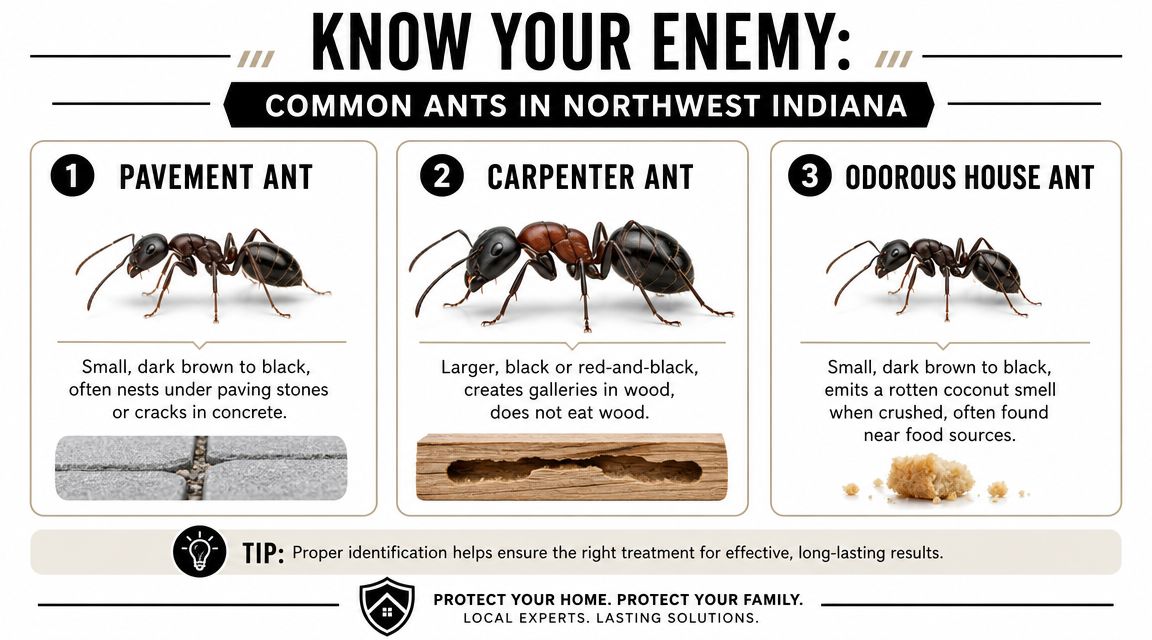
Here's a quick visual guide to the ants homeowners in Crown Point most often ask about.
Common signs that help you narrow it down
Pavement ants usually show up as steady indoor trails and often nest near cracks in concrete, sidewalks, patios, and foundations. They're small, dark, and persistent around kitchens.
Carpenter ants are larger. If you're seeing big black ants, especially around damp areas, window frames, garages, or wood structures, don't shrug that off. Carpenter ants don't eat wood, but they do excavate galleries in it, which can signal a bigger moisture-related issue.
Odorous house ants are another common nuisance species. Homeowners often notice them around sweets, sinks, and countertops. A classic clue is the smell when crushed. Many people describe it as rotten coconut.
Common Ants in Crown Point, IN at a Glance
| Ant Species | Size & Color | Common Location | Key Threat |
|---|---|---|---|
| Pavement Ant | Small, dark brown to black | Under paving stones, cracks in concrete, along foundations | Nuisance trails into kitchens and living spaces |
| Carpenter Ant | Larger, black or red-and-black | Damp or damaged wood, wall voids, window frames, garages | Wood excavation and hidden moisture-related activity |
| Odorous House Ant | Small, dark brown to black | Near food sources, kitchens, sinks, baseboards | Recurring indoor foraging and hard-to-stop trailing |
Why identification changes the treatment
A homeowner might call every infestation “sugar ants,” but that label can hide important differences. If the ants are pavement ants, the plan often centers on exterior nest pressure, trail management, and entry points around masonry. If they're carpenter ants, you also need to think about wet wood, leaks, or structural voids.
Field rule: If the ants are larger than expected and activity is tied to damp wood or window trim, treat it like a carpenter ant question until proven otherwise.
A simple pattern can help:
- Small ants from cracks near sidewalks or the slab often suggest pavement ants.
- Large ants near moisture-damaged wood raise concern for carpenter ants.
- Small ants around sweet foods with a noticeable odor when crushed often point to odorous house ants.
For homeowners looking for an exterminator in Crown Point, IN, professional diagnosis saves time. A spray that seems to help one ant species can miss the nest location or behavior pattern of another.
Beyond the Spray Bottle The Professional Ant Control Approach
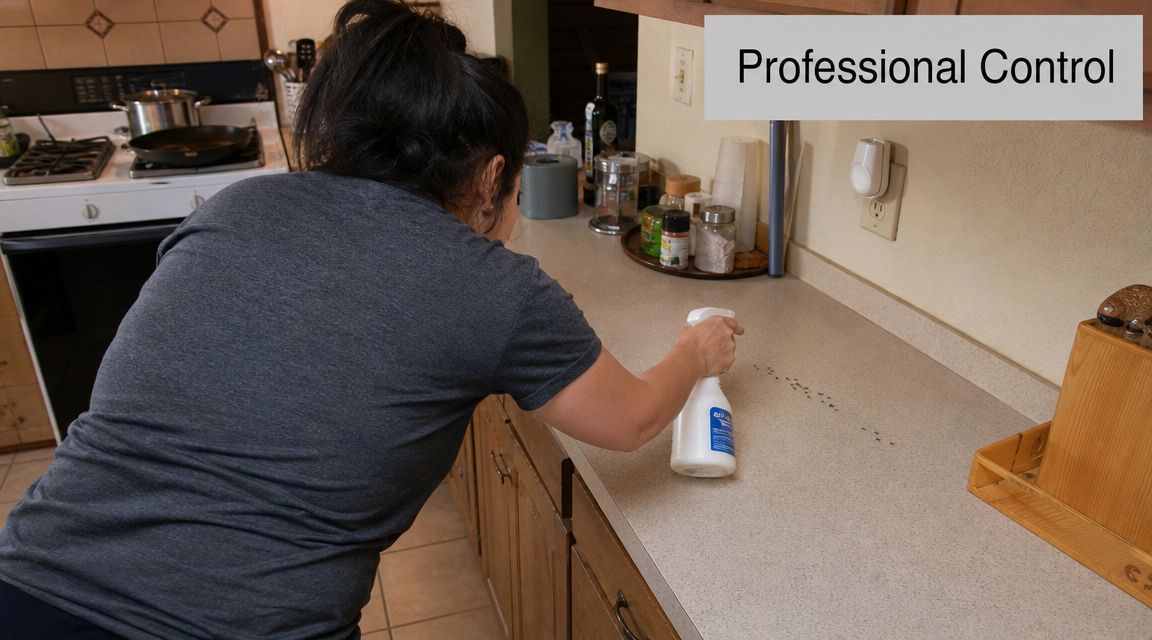
The first mistake many individuals make is understandable. They see ants, grab a spray bottle, and try to kill everything moving. It feels productive because the trail disappears fast.
The problem is that quick knockdown and lasting control aren't the same thing.
Why DIY sprays often disappoint
Repellent sprays can kill the ants you see, but they may also disrupt the trail before the colony takes a treatment back where it needs to go. That's one reason homeowners get frustrated. The ants vanish for a day or two, then show up again from a slightly different spot.
University guidance on ant management emphasizes an integrated approach, with slow-acting baits and habitat changes offering better long-term control than contact sprays alone because workers carry the bait back to the colony and queen (UC IPM ant management guidance).
What a professional approach does differently
Professional ant work usually combines several pieces at once rather than relying on one product:
- Species ID first so the treatment matches the ant.
- Targeted bait placement where foraging ants will pick it up.
- Entry-point correction around doors, utility lines, windows, and foundation gaps.
- Moisture and sanitation review because leaks and food residue keep reinfestation going.
- Selective treatment choices that aim at the colony instead of just surface activity.
This is the basic logic behind IPM, or integrated pest management. It's practical, not fancy. Use the least disruptive method that solves the underlying problem. For ants, that usually means avoiding the “spray everything” mindset.
If the goal is colony control, don't judge the treatment by how dramatic it looks in the first hour. Judge it by whether activity declines and stays down.
A broad review published in Proceedings of the Royal Society B analyzed 52 studies across 17 crops and 308 cases from 15 countries and found ants often provide net benefits in managed environments, while some disservices were smaller in comparison (meta-analysis on ant management trade-offs). For homeowners, the practical takeaway is simple. Ant control should be selective and informed, not indiscriminate.
If you want a closer look at how structured home service addresses recurring infestations, this page on residential ant control in Crown Point breaks down the process in plain language.
The Green Advantage offers ant service as part of residential and commercial pest management in Northwest Indiana, using inspection, treatment, and follow-up as a combined system rather than relying on a single spray.
Creating an Ant-Proof Barrier Proactive Prevention Tips
The best ant job is the one that has less to fight next month. Prevention doesn't replace treatment when a colony is active, but it does make the treatment hold.
For homes in Crown Point and nearby Northwest Indiana communities, ant pressure usually rises when changing weather pushes activity around foundations, patios, mulch beds, kitchens, and utility penetrations. Prevention works when you make the house harder to enter and less rewarding once ants get in.
The indoor checklist
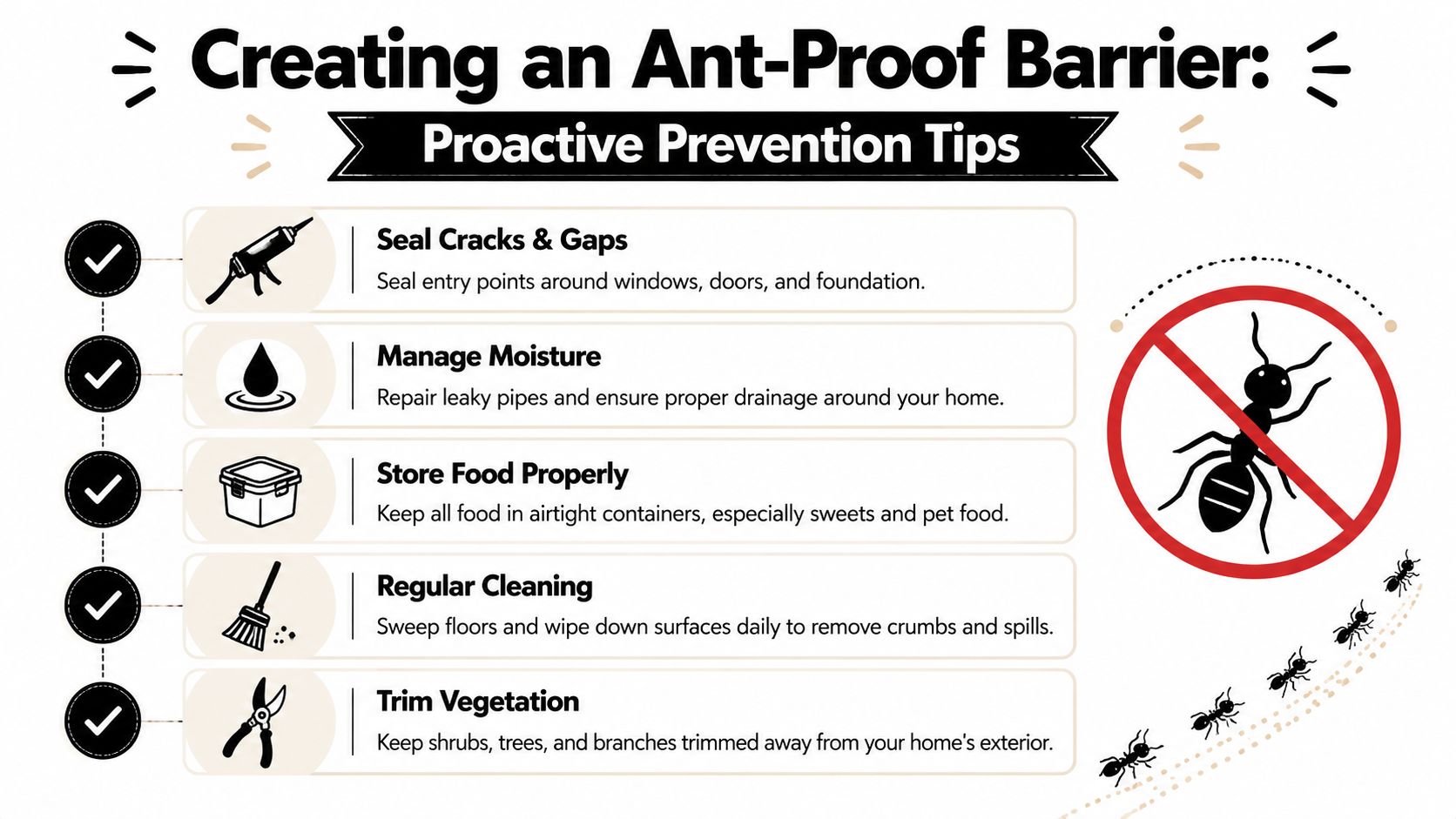
Most indoor prevention comes down to reducing what ants came inside to find.
- Food control: Store sweets, cereal, snacks, and pet food in sealed containers. Don't leave ripe fruit or sticky residue on counters.
- Fast cleanup: Wipe spills, sweep crumbs, and check under the toaster, stove, and fridge. Ants do well on small food sources people miss every day.
- Moisture correction: Fix drips under sinks, around dishwashers, and near refrigerator water lines. Damp areas attract certain ants and support ongoing activity.
The exterior checklist
Outside the home, the goal is to interrupt access before trails become indoor problems.
- Seal gaps: Caulk around windows, doors, and visible foundation cracks.
- Trim vegetation: Branches and shrubs touching the house can act like bridges.
- Reduce easy nesting zones: Keep mulch, debris, and clutter from piling right against the structure.
- Watch drainage: Water that lingers near the foundation can make the perimeter more attractive.
A practical place to reinforce the exterior envelope is your screens and openings. Homeowners who want more ideas on shutting down bug entry points can review Sparkle Tech's bug proofing advice, especially around doors, windows, and damaged screens.
This short video is also useful if you want a homeowner-friendly walkthrough of basic prevention habits before ants get established.
Seasonal habits that matter in Northwest Indiana
Spring and fall tend to catch people off guard. In spring, foraging picks up. In fall, indoor shelter becomes more attractive. That doesn't mean every ant problem is seasonal, but seasonal shifts often expose weak points in the structure.
Clean homes still get ants. Usually the difference is access, moisture, and timing.
For homeowners managing broader pest concerns, the same prevention work helps with other common services too, including spider control, wasp removal, rodent control, and general residential pest control around the home's perimeter.
What to Expect from The Green Advantage Pest Control
Hiring a pest company shouldn't feel like handing your house over to a mystery process. Most homeowners want to know three things. What are you finding, what are you doing, and what should we expect next?
That's a fair standard.
What the visit usually looks like
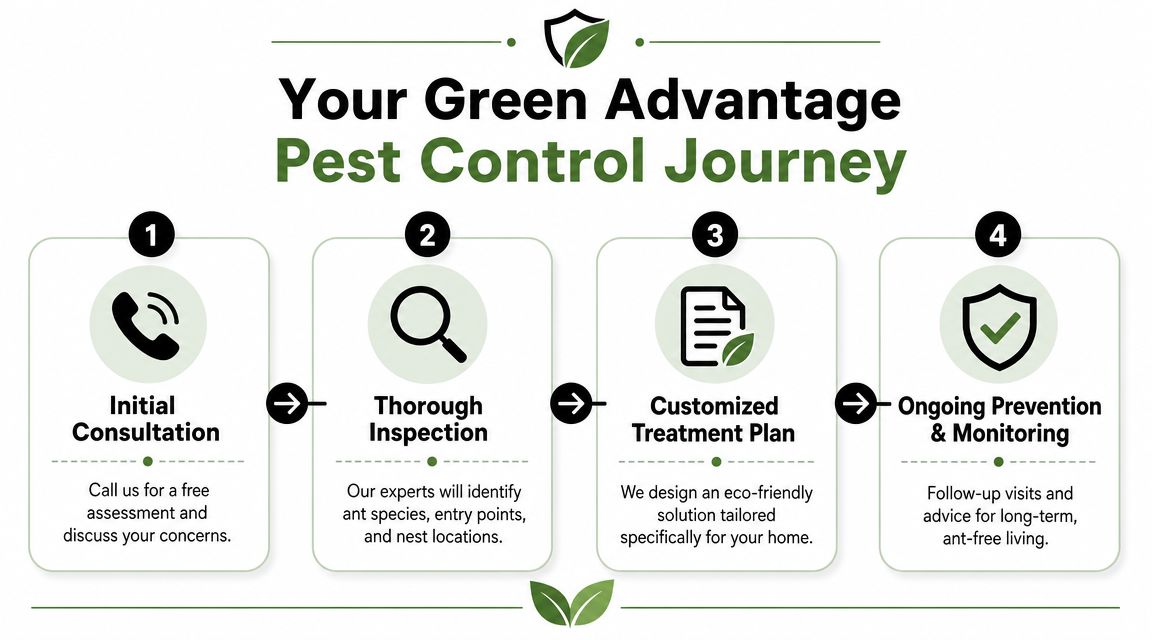
It starts with the conversation. You describe where ants are showing up, how long it's been happening, and whether you've already tried sprays, traps, or store-bought bait. That background helps narrow the inspection.
On site, the technician checks where ants are active and how they're getting in. Kitchens, bathrooms, laundry areas, garages, exterior foundations, window lines, and utility penetrations all matter. The goal isn't just to confirm that ants exist. It's to connect the activity to entry points, conditions, and likely nesting behavior.
What happens after the inspection
A good service plan should feel specific to your property, not copied from a generic checklist. That means the treatment may include interior bait placement, exterior work, sanitation recommendations, exclusion suggestions, or follow-up timing based on what the inspection found.
You should also expect plain-English communication. If the issue looks like nuisance ants, say that. If the activity suggests a moisture problem or possible carpenter ant involvement, say that too. Homeowners make better decisions when they know what kind of problem they're dealing with.
A straightforward service experience usually includes:
- A clear explanation of the ant activity and why it's happening where it is.
- A customized treatment plan based on species, access points, and site conditions.
- Guidance for the homeowner on cleaning, moisture correction, and what not to do between visits.
- Monitoring and follow-up if the problem calls for it.
Why this matters for homes and businesses
Ant issues aren't limited to houses. Restaurants, offices, rental properties, and retail spaces in Crown Point can all have recurring ant pressure when food, moisture, and exterior access line up. That's why commercial pest control and residential pest control both depend on inspection and consistency, not guesswork.
For many families, one of the biggest benefits of professional service is peace of mind. You stop wondering whether each new ant means the colony survived, moved, or split. Instead, you get a treatment process with a diagnosis behind it.
Deciding When to Call an Exterminator in Crown Point
Some ant problems are minor and temporary. Others keep circling back because the colony is established nearby, the species was misidentified, or the house still gives ants what they want. The hard part is knowing when you've crossed from “annoying” into “time to call.”
A useful rule is this. If ants are recurring, spreading, or tied to possible structural concerns, it's worth bringing in a professional.
Signs you shouldn't keep guessing
Here are the situations where DIY usually stops being efficient:
- Ants in multiple rooms: If the kitchen trail becomes ants in bathrooms, laundry spaces, or along several baseboards, the issue is broader than one spill.
- Repeated failure of sprays or traps: If treatments seem to help briefly and the ants return, the colony likely isn't being reached.
- Large ants or signs near wood: That raises concern for carpenter ants and possible moisture-related conditions.
- Outdoor activity pushing indoors: Heavy activity around sidewalks, patios, or foundations often turns into repeated interior sightings.
- Property management concerns: In rentals or shared buildings, recurring ant activity can spread frustration fast and needs a coordinated fix.
Industry guidance for ant infestations notes that professional service often involves diagnosing moisture sources, food access, nesting sites, and entry points, plus follow-up visits. It also notes that ant management is often a recurring maintenance issue rather than a one-time fix (professional ant inspection and follow-up overview).
Choosing help carefully
Homeowners often put more research into hiring someone for a remodel than for pest work, but the same caution helps here too. If you want a useful general checklist for vetting service providers, this article on avoiding homeowner contractor nightmares offers smart questions to ask about communication, process, and expectations.
The right exterminator in Crown Point, IN should be able to explain the problem in plain language, not hide behind vague treatment talk.
If you've been searching for exterminator near me, pest control near me, or pest control in Crown Point, IN, the decision usually comes down to time and certainty. You can keep reacting to the ants you see, or you can find out why they're there and close the loop.
If ants keep showing up in your kitchen, bathrooms, garage, or around the foundation, it's time to get a real diagnosis and a treatment plan built for your home. Contact The Green Advantage to schedule a pest inspection, request a quote, and get practical help with residential or commercial ant control in Crown Point, IN and nearby Northwest Indiana communities.