
You hear it at the worst time. Scratching in the wall after dark. A line of ants near the sink before coffee. A wasp circling the porch when the kids want to go outside. Most homeowners in Crown Point don't panic because they saw one bug. They panic because they don't know what happens next.
That concern is reasonable. You want the problem handled, but you also want to be careful about what goes into your home, around your pets, and near the places your family uses every day. Natural pest control for home makes sense for that reason. It focuses on reducing what pests need to survive, then using lower-toxicity options carefully instead of reaching for broad sprays first.
Your Guide to Natural Pest Control in Crown Point
In Crown Point and across Northwest Indiana, pest issues usually start with ordinary conditions. A little moisture under a sink. Gaps around a door sweep. Pet food left out overnight. A woodpile close to the siding. Most infestations don't begin because a house is dirty. They begin because a house gives pests food, water, shelter, or access.
That prevention-first mindset matters because pest treatment at home happens at a huge scale. Approximately 4.4 billion pesticide applications are made each year to American homes, gardens, and yards, which shows how common household pest management is and why smarter, prevention-based methods matter for everyday homeowners, according to healthy housing guidance on pesticides and pest prevention.
A homeowner looking for pest control in Crown Point, IN or an exterminator near me usually wants two things at once. They want relief now, and they want confidence that the fix won't create a new problem. That's where natural methods can help, if they're used with a clear plan.
What homeowners usually mean by natural control
For most homes, natural control doesn't mean ignoring the issue or trying random internet remedies. It usually means:
- Stopping access by sealing cracks, gaps, and utility openings
- Removing attractants like standing water, open trash, crumbs, grease, and clutter
- Making the yard less inviting by moving woodpiles, trimming back growth, and reducing harborage
- Using targeted products carefully when a pest has been correctly identified
Practical rule: If a method doesn't address food, water, shelter, or entry, it usually won't hold up for long.
Why local conditions matter in Crown Point
Homes in Northwest Indiana deal with shifting seasons, wet periods, freeze-thaw cycles, and pest pressure that changes through the year. Ants may trail indoors when outdoor conditions change. Spiders show up where they find insect activity. Rodents look for warmth and shelter as temperatures drop. Mosquitoes take advantage of standing water in yards and containers.
That means residential pest control isn't just about killing what you can see. It's about understanding why a pest chose your property in the first place and fixing that reason before the problem grows.
First Line of Defense Preventing Pests Naturally
The strongest form of natural pest control for home is prevention. That's not a slogan. It's how professionals keep low-toxicity strategies effective over time.
Extension guidance describes the most technically sound approach as an integrated pest management, or IPM, workflow: identify the pest, monitor activity, set a damage threshold, choose a control method, and evaluate results. It also notes that low-toxicity control works best when it starts with exclusion and sanitation, as explained in South Dakota State University Extension's guidance on organic pest control methods.
Think like a pest before you treat like a homeowner
Pests don't enter at random. They follow conditions.
Ants follow food residue and moisture. Spiders stay where insects are already present. Rodents look for small openings, protected nesting spots, and a dependable food source. Mosquitoes need breeding water. Wasps prefer sheltered areas where a nest can stay undisturbed.
If you solve those conditions first, you often shrink the problem before any product comes out of the garage.
A practical prevention checklist
Start outside and work in. That's the fastest way to spot the reasons pests keep returning.
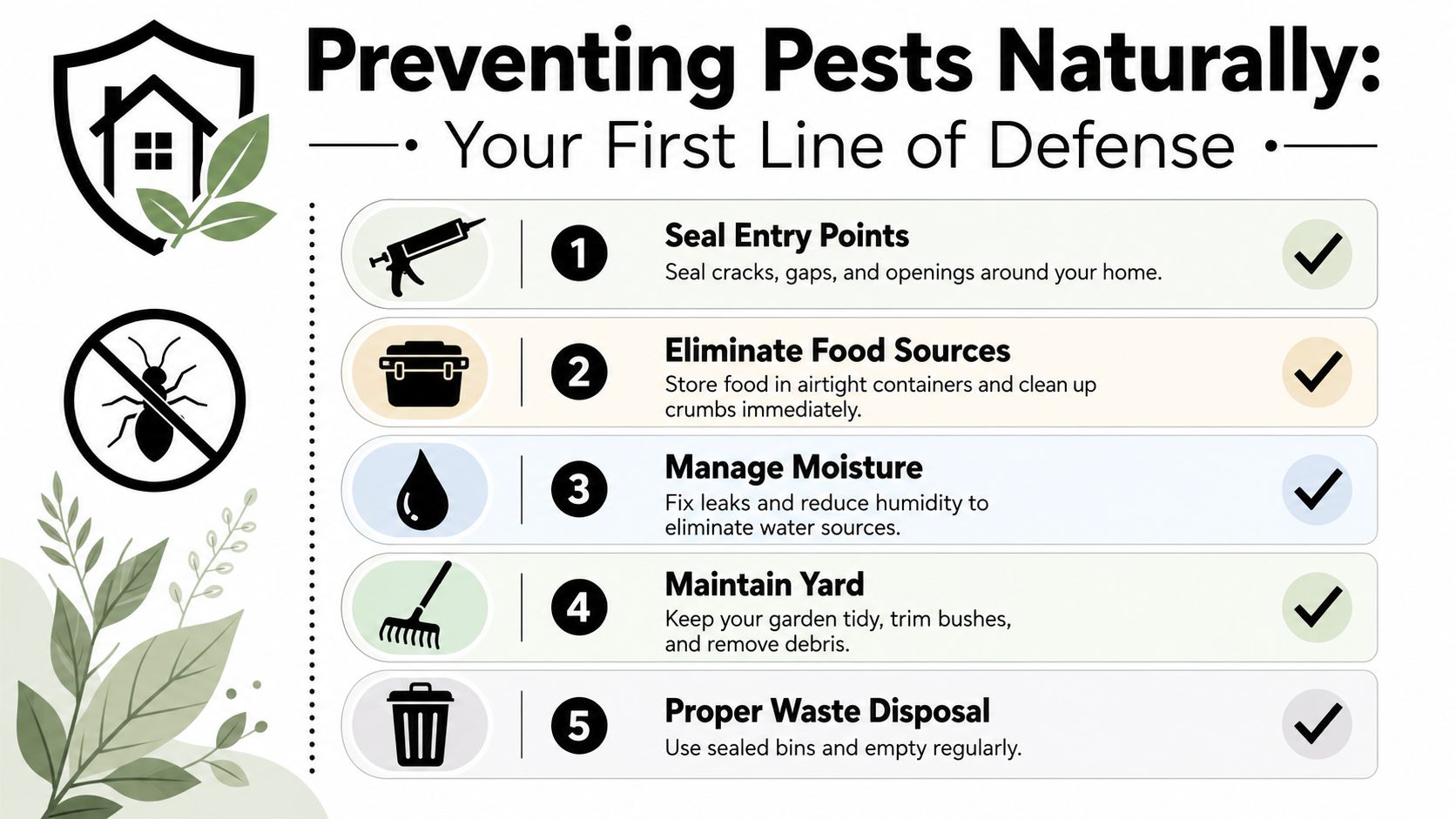
- Seal entry points: Check door sweeps, window frames, utility penetrations, vents, siding gaps, and foundation cracks. Even a small gap can turn into a regular access route.
- Manage moisture: Repair plumbing leaks, improve drainage, clean gutters, and reduce damp areas in crawlspaces, basements, and under sinks.
- Control food sources: Store pantry goods in sealed containers, wipe up grease, vacuum crumbs, and don't leave pet food out overnight.
- Reduce yard shelter: Move mulch and woodpiles away from the structure, trim vegetation back from the house, and remove debris that gives pests cover.
- Handle waste correctly: Use sealed trash cans and don't let garbage or recycling sit open near entry doors.
Where homeowners often miss the real issue
A lot of people focus on the room where they saw the pest. The underlying issue is often nearby, but not visible. A dripping hose bib can support ants outside the wall. A clogged gutter can support mosquitoes in the yard. Dense shrubs against the home can create a shaded highway for insects.
Screens matter too. If you're comparing screen options for keeping flying insects out of outdoor living spaces, it's worth reviewing this guide on find the best Florida bug screens from Rescreen Rescue. The climate is different, but the basic screening principles are useful anywhere bugs exploit openings.
Prevention works best when you make the home harder to enter and less rewarding to stay in.
When prevention needs monitoring
IPM isn't a one-time cleanup. It works because you keep checking the result. If ants disappear from one corner and reappear at another window, that tells you access changed, not that the problem is solved. If spiders come back, look for the insect activity feeding them. If rodents stop making noise but droppings remain fresh, the entry point is still open.
For homeowners searching for pest control near me in Crown Point, this is often the biggest difference between a short-term fix and real control. Natural methods work better when they're part of a repeatable system.
Safe and Simple DIY Natural Pest Treatments
A homeowner in Crown Point often reaches this stage after doing the right early work. The crumbs are cleaned up, the trash is under control, the obvious gaps are sealed, but ants still show up at the sink or flies keep gathering by the back door. That is usually the point where natural DIY treatment makes sense. Used carefully, it can lower pest activity enough to tell you whether the problem is small and accessible or larger and hidden.
Soap sprays for the right pests
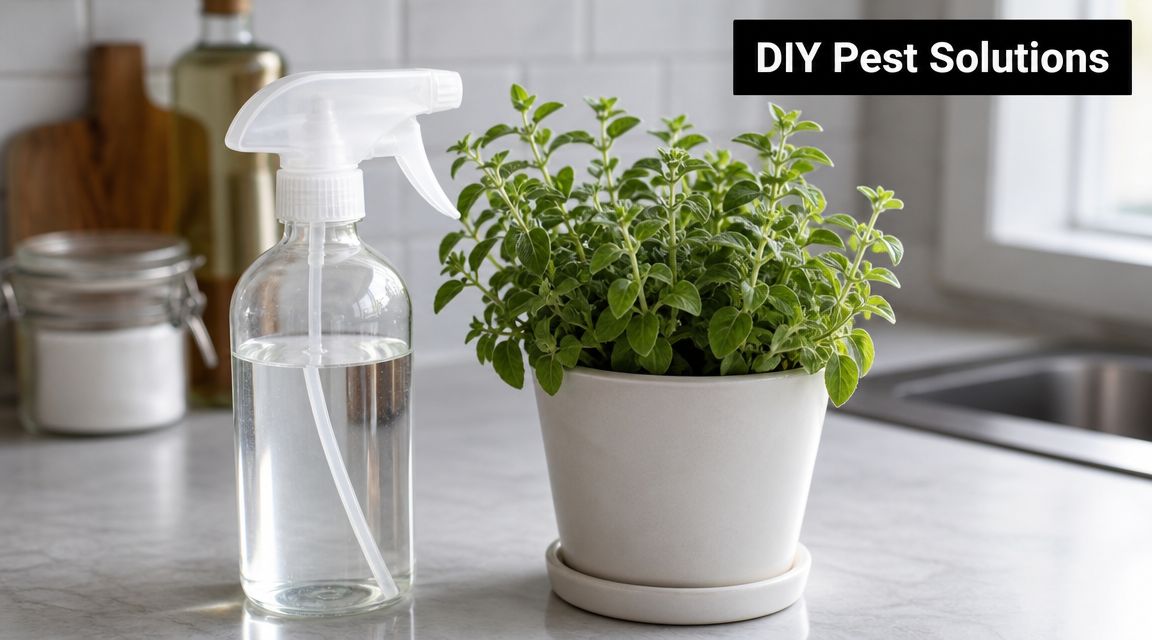
Soap and oil sprays are contact tools. They work on exposed, soft-bodied insects. They do not perform the same way on harder-bodied pests or insects sheltering in cracks, wall voids, or nests. A common mix is 1 tablespoon of soap per quart of water, and this University of Florida natural pest control overview explains why results depend so much on the insect type and the way the spray is applied.
That matters in a home setting. If the issue is small insects on patio plants or a limited cluster of pests you can see and hit directly, soap spray may help. If you are dealing with roaches under appliances, ants entering through hidden exterior gaps, or wasps working from a protected nest site, a contact spray usually falls short.
Use it with a little discipline:
- Mix with suitable water: Hard water can reduce performance. Distilled water is often a better choice.
- Apply where insects are active: Spraying baseboards, air, or large room surfaces rarely solves much.
- Test surfaces first: Plants, finished wood, and delicate materials can react.
- Expect reapplication: Soap sprays do not leave much residual protection.
Repellents are support tools
Peppermint, citronella, eucalyptus, and similar oils can make an area less attractive for some pests. Basil, lavender, rosemary, and marigolds can also help around patios and entry points. Those methods are useful for reducing pressure in a specific area, especially outdoors, but they do not remove the reason pests are there.
If ants have a moisture source under the siding, or flies are breeding near trash, drains, or pet waste, the scent changes the traffic pattern more than the infestation. Homeowners notice this all the time. One corner gets quieter and another starts up.
For outdoor fly pressure, how to use neem oil for flies is a practical example of how plant-based products are commonly used. Neem can have a place in a lower-toxicity plan. It still works best as one piece of the job, not the whole job.
Use a simple decision rule before you treat
The safest DIY approach is to match the treatment to the pest and to stop once the risk changes.
Use natural DIY methods when:
- You can identify the pest with reasonable confidence
- Activity is light and limited to one area
- You can reach the source without climbing, opening walls, or handling a nest
- No one in the home is at risk from stings, bites, or allergen exposure
Stop DIY and call for help when:
- Activity keeps returning after two or three focused attempts
- You see droppings, grease marks, gnawing, or damage
- The pest is stinging, wood-damaging, or hard to identify
- The source appears to be in a wall, attic, crawl space, roofline, or underground
That decision point saves homeowners a lot of frustration. It also avoids the common mistake of applying one natural product after another while the underlying source keeps growing.
Where DIY fits best
DIY natural pest control works best in a narrow range of problems. It can reduce pressure and buy time. It rarely solves a hidden infestation.
| Situation | DIY may help | DIY probably won't be enough |
|---|---|---|
| Ants | Wiping trails, storing food tightly, spot-treating visible activity | Repeated trails from the same entry area or hidden colony activity |
| Spiders | Removing webs, vacuuming, cutting down the insects they feed on | Frequent return tied to ongoing insect activity in garages, basements, or eaves |
| Mosquitoes | Emptying standing water, trimming damp shaded areas | Ongoing yard-wide pressure with multiple breeding spots nearby |
| Wasps | Monitoring early paper wasp activity from a safe distance | Active nests near doors, soffits, decks, or play areas |
| Rodents | Cleaning up food spills, reducing clutter, securing stored goods | Noises in walls, fresh droppings, chewing, or repeat entry signs |
Homeowners who want a broader low-toxicity plan can review these environmentally friendly pest control methods to see how targeted products, inspection, and follow-up work together.
A short visual walkthrough can help if you're sorting through options before taking the next step.
When DIY Is Not Enough The Professional Advantage
DIY usually fails for one simple reason. It targets the pest you saw, not the system supporting it.
A few ants at the sink may be the visible edge of a larger access pattern outside. A wasp on the porch may mean a nest tucked into a roofline. Rodent droppings in a utility room may point to multiple entry routes plus nesting activity you can't safely inspect on your own. By the time homeowners search for an exterminator in Crown Point, IN, they often aren't dealing with a single bug problem. They're dealing with a recurring property problem.
Signs you've crossed the DIY line
Some situations call for professional help quickly, even if you prefer natural methods.
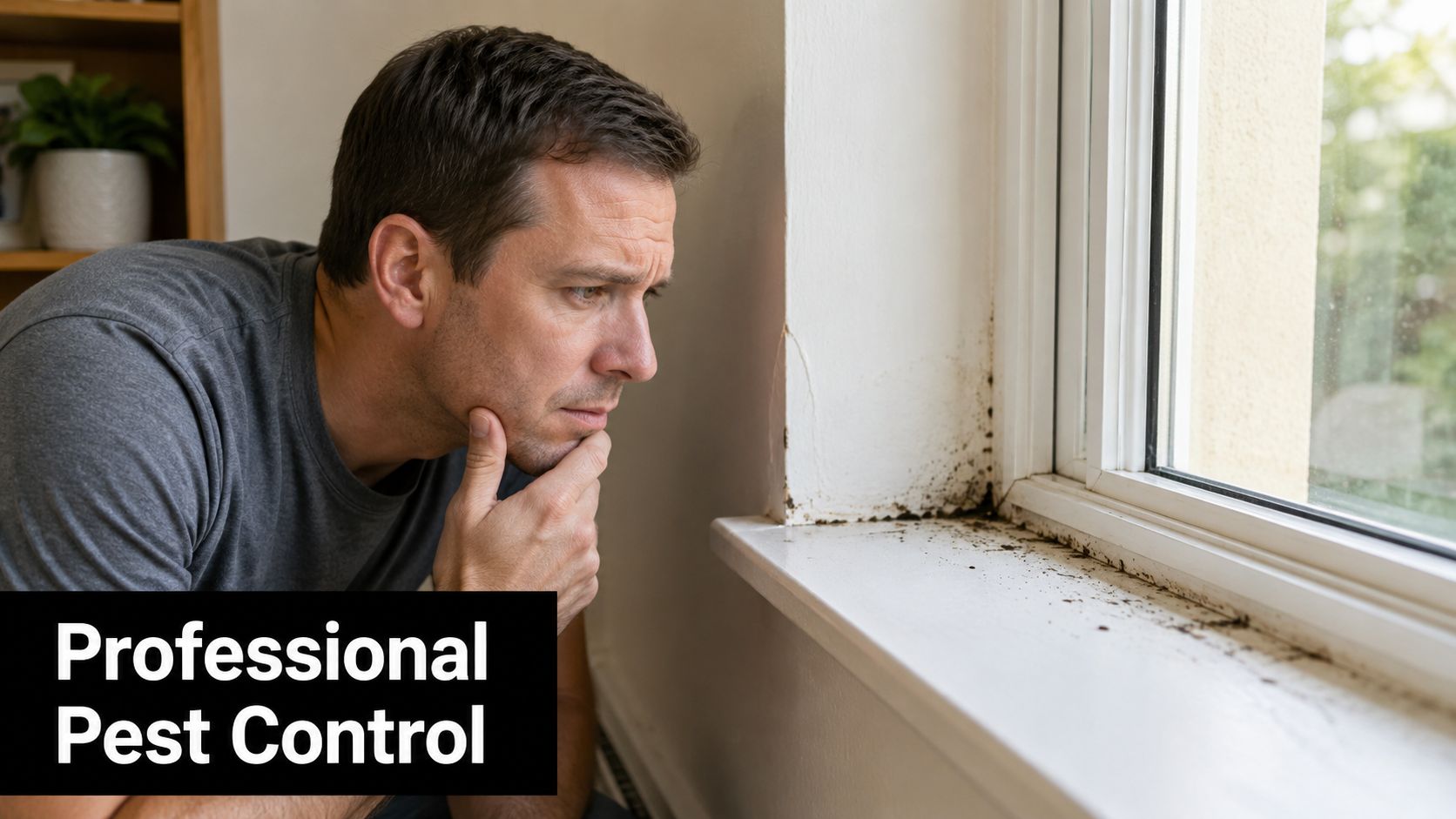
- Recurring activity: You clean, seal, spray, and the pests keep returning to the same area or spread to new ones.
- Hidden pests: You hear movement in walls, see droppings, notice grease marks, or find damage without seeing the source.
- Stinging insects near people: Wasp nests near entries, patios, play spaces, or work areas create a direct safety issue.
- Wood-damaging concerns: Suspected termite activity isn't a trial-and-error project.
- Multi-point infestations: When the kitchen, basement, garage, and yard all show signs at once, the issue needs a coordinated plan.
What a professional actually adds
Professional pest control isn't just stronger products. Its primary value is diagnosis.
A trained technician identifies the pest correctly, looks at life cycle and pressure points, maps likely entry routes, and matches treatment to the actual problem. That's a very different process from buying a general spray and hoping it covers everything.
For homeowners comparing natural methods with professional service, the most useful model is still IPM. This overview of integrated pest management benefits explains how inspection, exclusion, monitoring, and targeted treatment work together instead of relying on blanket applications.
The right treatment applied to the wrong pest is still the wrong treatment.
Why professional service brings peace of mind
With persistent pests, confidence matters almost as much as control. You want to know someone checked the crawlspace entry, the sill plate gap, the damp area under the bathroom, the nest location under the eave, and the conditions outside that keep drawing pests back.
For commercial pest control, that need is even sharper because businesses also have to protect staff, customers, inventory, and reputation. But it's just as important in a family home. A good service plan should reduce uncertainty, not add to it.
The Green Advantage provides residential and commercial pest management in Crown Point and nearby Northwest Indiana communities, with service built around inspection, identification, and site-specific treatment rather than one-size-fits-all guessing.
What to Expect from Your Local Pest Control Partner
Most homeowners feel better once they know what the process looks like. A good pest service visit shouldn't feel mysterious or rushed. It should feel methodical.
When you call for pest control near me in Crown Point, you're usually trying to answer three questions. What is it. How bad is it. What needs to happen now versus later. A local pest partner should help you sort those out clearly.
The process from first call to follow-up
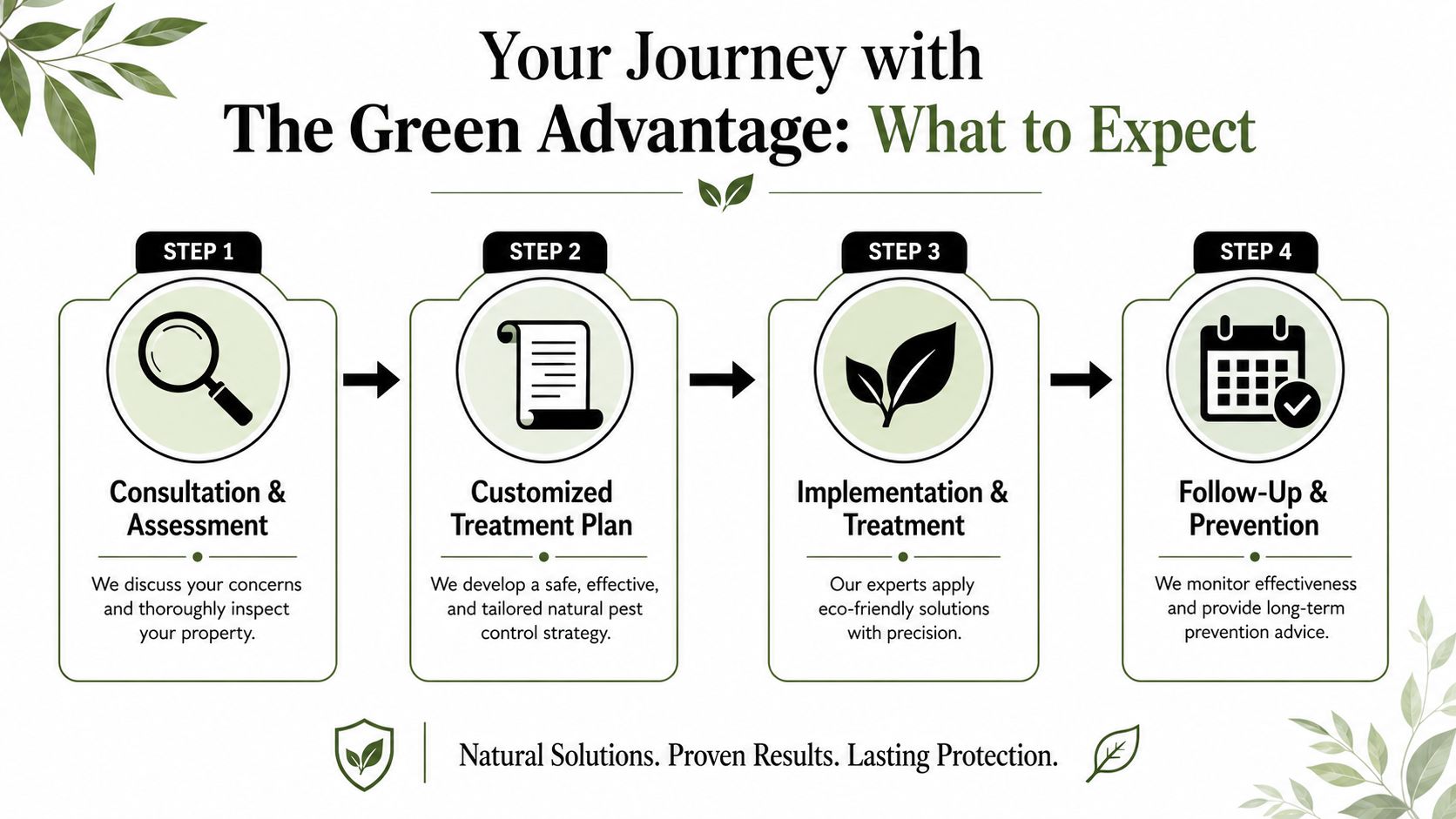
A straightforward service experience usually follows a sequence like this:
Initial conversation
You describe what you've seen, where you've seen it, and how long it's been happening. That helps prioritize urgency and identify likely pest patterns before the visit.On-site inspection
The technician checks active areas, likely entry points, moisture sources, exterior conditions, and any signs of nesting or structural access. Good inspections look beyond the obvious room.Treatment plan
You get a clear explanation of what the pest is, what conditions are supporting it, which steps you can handle, and which steps need professional treatment.Follow-up and prevention
Ongoing pests require reinspection, adjustment, and confirmation that the plan is working.
What you should ask during the visit
Homeowners sometimes focus only on the product. That's understandable, but better questions usually get better results.
Ask things like:
- Where is the pest likely entering
- What conditions are keeping it active
- What can I change right away
- What should improve after treatment, and how soon should I monitor
- What would tell us the problem is not fully resolved
Those questions keep the conversation practical. They also help separate a temporary knockdown from a lasting solution.
A good local partner should be clear, not vague
You shouldn't leave a service visit wondering what happened. A reliable pest company explains the likely cause, the treatment choice, the safety considerations, and the next steps in plain language.
A calm explanation is part of the service. Homeowners make better decisions when they know why a pest problem started.
That matters for common household issues such as ant control, spider control, rodent exclusion, mosquito reduction, and wasp removal. It also matters for landlords, property managers, and homebuyers who need an inspection process they can understand and document.
In Crown Point and nearby Northwest Indiana communities, local knowledge makes a difference. Seasonal pressure, yard conditions, drainage patterns, and building style all affect how pests behave around a property.
Protect Your Home and Peace of Mind Today
You notice ants along the kitchen trim again after wiping them up all week. Then you hear scratching in the wall at night, or spot wasps starting to build near the front entry. That is usually the point where a few natural fixes stop feeling reassuring and start feeling like guesswork.
Natural pest control for home works best as a clear decision process. Start with prevention that makes your house less inviting. Use low-risk DIY options for small, visible problems. If activity keeps coming back, spreads, or points to a hidden nest, it is time to bring in a professional who can identify the cause and fix the conditions allowing it to continue.
Homeowners in Crown Point often want the same thing. They want sensible treatment choices, less unnecessary product use, and a home that feels normal again. That goal matters more than chasing one quick fix after another.
Fewer pests are only part of the outcome. What homeowners want is confidence. You should be able to use your kitchen, sleep through the night, and let the kids or dog into the yard without second-guessing what is hiding nearby.
Natural methods have a place. I recommend them for prevention, light activity, and early intervention. But there is a trade-off. Some pests respond well to sanitation, exclusion, and targeted natural products. Others, especially rodents, carpenter ants, stinging insects, and moisture-driven infestations, often keep advancing until someone finds the entry point, nesting area, or structural condition behind the problem.
That is usually the line. If you are seeing repeat activity, droppings, new damage, strong outdoor pressure, or signs that pests are inside walls, attics, crawl spaces, or voids, schedule service. Early action usually means a smaller problem, a safer treatment plan, and less disruption to your home.
For homeowners and businesses searching for pest control in Crown Point, IN, residential pest control, commercial pest control, or an exterminator near me, a property-wide inspection is the smart next step. It should cover the pest you are seeing, where it is coming from, what is sustaining it, and what needs to change for lasting control.
If you want a clear plan for safer, more reliable pest control in Crown Point and Northwest Indiana, contact The Green Advantage. A professional inspection can identify the pest, locate the conditions causing the problem, and outline the most practical next steps for lasting control.