
If you're reading this because your dog won't stop scratching, you're finding itchy bites around your ankles, or you just spotted tiny dark specks hopping across the carpet, you're not overreacting. Fleas can turn a comfortable home into a stressful one fast, and they rarely stay confined to one room.
Around Crown Point and the rest of Northwest Indiana, flea issues catch homeowners off guard all the time. Some start with pets. Some show up after wildlife moves under a porch or near the foundation. Some even appear in homes without pets at all. The hard part isn't just seeing a few fleas. It's figuring out why they keep coming back, even after vacuuming, sprays, and repeated cleaning.
If you've been searching for how to get rid of fleas in house without wasting more time or making the problem worse, the answer is a combination of smart prep, realistic expectations, and the right treatment plan. This includes effective methods, approaches that typically fail, and guidance on when professional pest control in Crown Point, IN is advisable.
Recognizing a Flea Problem in Your Crown Point Home
Most flea problems don't begin with seeing a flea. They begin with symptoms that feel vague at first. A cat starts grooming constantly. A dog chews at the base of its tail. Someone in the house notices a cluster of itchy bites around the feet or lower legs. Then one afternoon, while sitting on the living room rug, you catch a tiny jumping insect out of the corner of your eye.
That pattern is common in homes across Northwest Indiana. Fleas are small, quick, and easy to miss until the population builds. By the time you notice them in a carpeted room, along a sofa cushion, or near a pet bed, they've usually already spread beyond the spot where they first came in.
Common signs homeowners notice first
Some clues show up on pets, and others show up in the house itself.
- Persistent scratching: Dogs and cats often react before people do.
- Ankle and lower leg bites: Fleas commonly bite where they can easily reach exposed skin.
- Dark specks in pet resting areas: Flea dirt often looks like tiny black crumbs.
- Jumping insects on rugs or furniture: Adults are the stage typically seen.
- Activity in vacant or pet-free spaces: This surprises people, but it does happen.
Flea problems often feel bigger overnight, but they usually built quietly in carpets, furniture, cracks, and pet resting areas first.
Why this feels so frustrating
Homeowners usually try the obvious things first. They wash the dog. They vacuum once or twice. They use a store-bought spray on the carpet. Then fleas show up again a few days later, which makes it seem like nothing worked.
In many cases, something did work. It just didn't work thoroughly enough or long enough to break the full infestation. That's the part that leaves people exhausted and unsure whether they need a DIY reset or an exterminator near me who deals with this every day.
For homeowners in Crown Point, IN, the main thing to know is this. Fleas are manageable, but they aren't a one-step pest. Once you know what you're dealing with, the next decisions get clearer.
Why Fleas Are So Hard to Eliminate
A Crown Point homeowner will often tell me the same story. They treated the dog, sprayed the carpet, washed a few blankets, and for two or three days it looked better. Then the bites started again.
That rebound is what makes fleas so frustrating. The problem is usually spread through the house before the adults are easy to notice, and the stages causing the repeat activity are tucked into carpet fibers, upholstery, floor cracks, pet bedding, and low-traffic areas.
According to the CDC flea control guidance, adults make up just 5% of an infestation, while 95% are eggs, larvae, and pupae hidden in the environment. The same guidance also explains why treatments need follow-up timing 5 to 10 days apart, because one pass rarely catches every stage at the right moment.
The flea life cycle in plain terms
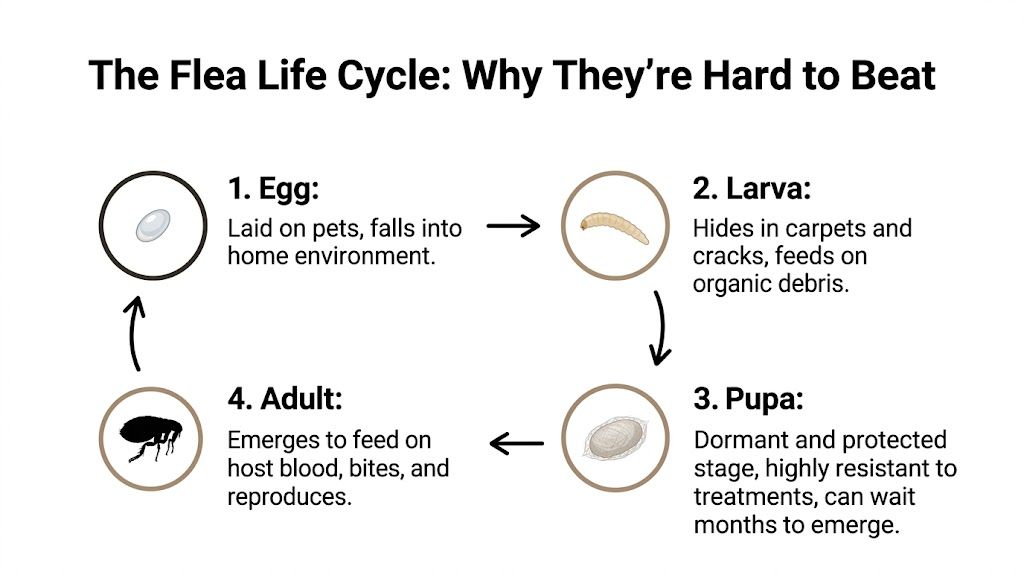
The life cycle is the whole reason flea jobs fail or succeed.
| Stage | Where it hides | Why it matters |
|---|---|---|
| Egg | Falls off pets into carpets, bedding, and furniture | Starts the environmental infestation |
| Larva | Hides deep in fibers and crevices | Avoids light and is easy to miss |
| Pupa | Protected inside a cocoon | Resists single treatments and can emerge later |
| Adult | On pets or jumping in living spaces | Bites, feeds, and reproduces |
The pupal stage causes the most callbacks. A cocoon protects the developing flea from many one-time products, so a house can seem improved and then flare back up after vibration, foot traffic, or normal daily activity triggers more adults to emerge. That is why flea control requires timing, not just a strong spray.
Practical rule: If the plan only targets the fleas you can see, the plan is incomplete.
Why one-and-done treatments fail
Store-bought products can knock down adult fleas fast. That part is real. The trade-off is that fast relief often gets mistaken for full control.
In the field, I see four common gaps:
- Only the worst room gets treated: Fleas often spread into bedrooms, closets, under furniture, and along baseboards.
- Follow-up gets skipped: The next wave emerges after the first treatment has already done what it can do.
- The pet gets attention, but the house does not: Eggs and larvae stay active in the environment.
- The house gets treated, but the source stays active: Untreated pets, visiting animals, or wildlife pressure can restart the cycle.
Soft items matter too. Fleas and flea dirt collect in pet blankets, cushion seams, and bedding people forget to rotate or wash. A simple upgrade like a dog bed with washable cover does not solve an infestation by itself, but it does make ongoing cleanup and prevention easier after treatment.
Yes, you can get fleas without pets
This surprises plenty of homeowners in Northwest Indiana. A home does not need a resident dog or cat to develop a flea issue.
I have seen flea activity tied to wildlife near the structure, rodents in crawlspaces, pets from a previous tenant, and guests bringing hitchhiking fleas in on clothing or belongings. In Crown Point, those risk points often show up around garages, mudrooms, porches, basements, attics, sheds, and homes with thicker brush along the lot line.
That matters because some flea problems are not just flea problems. If animals are nesting under a deck, inside a crawlspace, or around the foundation, indoor treatment may stop the current activity while the outside source remains. In those cases, flea work overlaps with exclusion and longer-term prevention, which is why it helps to understand how to prevent fleas in house after the immediate outbreak is under control.
What flea pressure looks like locally
Homes in Crown Point and the surrounding Northwest Indiana area give fleas plenty of hiding spots. Wall-to-wall carpet, upholstered furniture, pet resting areas, changing indoor humidity, and attached garages all add to the problem.
Some infestations stay concentrated near pet beds. Others spread into rooms no one suspects right away, especially under beds, behind furniture, and in spaces that sit unused for part of the week.
That does not make fleas impossible to eliminate. It means the job has to match the biology of the pest and the layout of the home. That is the gap between exhausting DIY attempts and a treatment program from The Green Advantage that is built to finish the cycle, not just reduce it for a few days.
Your At-Home Action Plan Before Treatment
If you've been vacuuming, washing bedding, and still getting bitten, you're not doing anything foolish. Fleas are very good at surviving partial cleanups. In Crown Point homes, I often see people put in a lot of work but miss the few areas that keep the infestation going. Good prep lowers the flea load and helps the treatment reach the stages you cannot easily see.
The EPA's guidance on controlling fleas around your home puts vacuuming at the center of home prep. It removes fleas from carpet and furniture and helps bring hidden adults out of cocoons so they can be controlled during the treatment cycle.
Start with the pet, but get product advice from your veterinarian
If pets live in the home, they have to be part of the plan from day one. Use your veterinarian to choose the right product and timing, especially for puppies, kittens, senior pets, small breeds, or animals with skin issues.
At home, handle the basics well:
- Use a flea comb: Check around the neck, along the back, and at the base of the tail.
- Bathe if your veterinarian says it's appropriate: A soap bath can remove adult fleas on the animal.
- Wash soft pet items: Blankets, collars, crate pads, and washable bedding all need attention.
- Treat every pet in the home: One untreated pet can keep the cycle active.
Vacuum with purpose
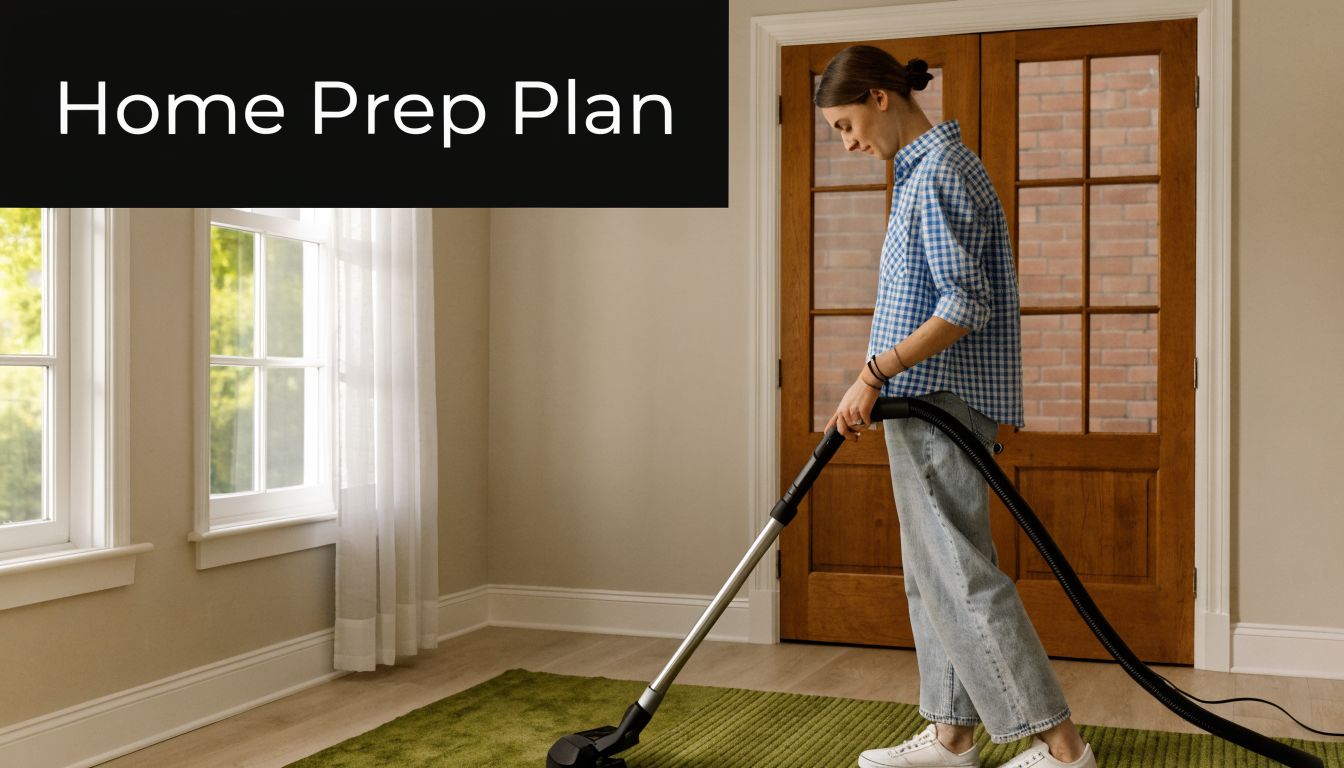
A fast pass through open floor space will not do much. Fleas build up where fabric, dust, and pet traffic meet. In Northwest Indiana homes, that usually means carpet edges, under beds, around sofas, inside closets, and the spots where a dog or cat settles every day.
Work through the house in a deliberate order:
Carpets and rugs first
Move slowly. Give extra time to bedrooms, living rooms, pet areas, and any room that stays closed up during the week.Upholstered furniture next
Vacuum under cushions, along seams, and where the back and arms meet the frame.Baseboards and floor edges
Debris collects here, and that debris helps immature fleas develop.Under beds and larger furniture
These quiet zones are easy to miss and often stay active longer than the middle of the room.Pet zones last
Crates, mats, beds, and the flooring around food and sleeping areas need a second look.
Vacuuming is physical removal, not busywork.
After each session, get the vacuum contents out of the house right away. Bagged units should be sealed and discarded outdoors. With a bagless vacuum, empty the canister outside immediately.
Wash the fabrics that let fleas hang on
Soft materials protect fleas from light and routine cleaning. Wash pet bedding, throw blankets, washable rugs, slipcovers, and any linens pets sleep on. Use hot water if the fabric allows it, then dry on high heat.
If your dog's bed is hard to clean thoroughly, switching to a dog bed with washable cover can make future cleanup much easier.
Use steam where it actually helps
Steam can be useful in the right places. Focus on pet sleeping areas, rugs near sofas or beds, and carpeted rooms where bites are showing up the most. The same EPA guidance notes that heat and soap can help kill fleas in concentrated areas.
Do not oversaturate the carpet. Heat helps. Extra moisture can create a different problem.
Prepare the rooms so treatment can reach the right spots
Professional flea work depends on access. If floor edges are blocked by piles of clothing, stored items, or tight furniture placement, some of the areas that matter most stay hard to reach.
Before your appointment, make it easier to treat the home well:
- Pick up loose items from the floor
- Clear under beds where possible
- Move pet bowls, toys, and beds temporarily
- Pull furniture out slightly if your technician asks
- Make sure everyone in the home knows the schedule
After the infestation is under control, this guide to preventing fleas in the house can help you avoid going through the same cycle again.
If there are no pets, inspect the home differently
Pet-free homes still get fleas. In Crown Point and nearby Northwest Indiana communities, I pay closer attention to wildlife activity, rodent issues, stored items, and overlooked entry points when no indoor pet is present.
Check these areas closely:
| Area | What to check |
|---|---|
| Basement corners | Rodent activity, droppings, nesting, and debris |
| Attic access points | Wildlife entry, insulation disturbance, and stored fabric items |
| Porch and foundation lines | Gaps, cracks, and sheltered spots near the structure |
| Vacant rooms | Quiet carpeted areas that do not get regular cleaning |
If fleas are coming from wildlife under a porch, in an attic, or near the foundation, indoor prep helps but will not solve the source by itself.
What to skip
A few shortcuts waste time and leave people frustrated.
- Do not rely on flea bombs alone: They often fail to reach the protected spots where immature fleas develop.
- Do not stop after one cleaning round: Repeated vacuuming and laundering matter.
- Do not treat only the room where bites are noticed: Fleas spread beyond the obvious hot spot.
- Do not leave vacuum debris inside the home: That can put fleas right back into the space.
Clean prep gives treatment a better shot at finishing the job. That is the primary goal.
How Professional Flea Extermination Delivers Results
By the time a Crown Point homeowner calls us, they have usually done plenty already. They have washed bedding, vacuumed hard, treated the pets, and tried store products. The part that gets missed is not effort. It is coverage, timing, and treating every stage of the flea life cycle in the places fleas develop.

One of the hardest conversations I have with homeowners in Northwest Indiana is explaining why the house still has fleas after a full weekend of cleaning. Fleas are built for delay. Adults may die quickly, while eggs, larvae, and pupae stay protected in carpet, cracks, under furniture, and along room edges. That is why a house can seem better for a few days, then suddenly feel active again.
Professional treatment gets results because it addresses the whole cycle at once and plans for what hatches next.
What a professional treatment does differently
A proper flea service starts with inspection. We look at where pets rest, where foot traffic drops off, where carpeting meets baseboards, and where vibration and warmth are likely to trigger new adults to emerge. In homes without pets, we also look harder at garages, porch entry points, utility areas, and any signs that rodents or wildlife may be part of the problem.
Then the treatment is built around those findings, not around a one-size-fits-all spray pattern.
Professional flea work usually includes:
- Focused inspection of problem zones: Pet beds, upholstered furniture, closet edges, under beds, baseboards, and quiet carpeted rooms
- Targeted application: Products are placed where flea activity develops, not just where bites are noticed
- Use of insect growth regulators: These help stop immature fleas from developing into the next biting stage
- Scheduled follow-up: Return timing matters because newly emerged fleas can appear after the first visit
- Source correction: Yard activity, rodent pressure, wildlife access, and structural gaps are checked if the pattern suggests an outside source
A single treatment can help a lot. A treatment plan with inspection, proper placement, and follow-up is what finishes the job.
Why insect growth regulators matter
Many over-the-counter products focus on the fleas you can see. Professional flea programs also target the stages you do not see yet. Insect growth regulators, or IGRs, interfere with development so the infestation cannot keep rebuilding in the background.
That matters in real homes with real routines. A family in Crown Point may vacuum well for several days, then life gets busy, kids are back to school, pets are in and out, and the schedule slips. Fleas take advantage of those gaps. A treatment plan that includes an IGR gives the home a better chance of breaking the cycle instead of just knocking it down.
Why fleas seem to "come back"
In many cases, they never left. New adults emerged from protected areas that were not fully addressed the first time.
The spots that cause trouble are usually the same ones homeowners do not enjoy treating:
- Under sectionals and recliners
- Along bed frames and headboards
- Inside closet carpet edges
- Behind dressers and nightstands
- In attached garages and mudroom transitions
- Around pet crates, laundry rooms, and utility spaces
If the carpeting needs restorative cleaning as part of the process, homeowners sometimes also coordinate certified carpet cleaning services around treatment timing, based on the service plan and how much debris is built up in the fibers.
Outside pressure can keep the problem active
Indoor work may not hold if fleas are also developing outdoors. Around Northwest Indiana homes, I see that most often in shaded yard edges, under porches, near brush lines, and in places where stray animals, rodents, or wildlife bed down. If that sounds familiar, it helps to pair interior work with a yard flea and tick control service for shaded outdoor areas.
That is one reason flea control often overlaps with other pest issues. The same inspection may point to rodent activity in the basement, wildlife access near the roofline, or a problem area where pets rest after spending time outside. In Crown Point, The Green Advantage handles flea treatment as part of broader residential pest management, which helps when the source is not limited to one room.
A short overview of the treatment process can help make the timing clearer:
The trade-off most homeowners face
DIY flea control can reduce pressure. It also asks the homeowner to be the cleaner, inspector, scheduler, product researcher, and follow-up coordinator at the same time.
Professional service still depends on good prep, but it removes the guesswork. Homeowners get a treatment plan that matches the house, the pets, and the source of the infestation. For a lot of families in Crown Point and nearby communities, that is the point where flea control finally stops feeling like a losing battle.
Protecting Your Northwest Indiana Home and Family
You usually feel the stress of a flea problem before you see the full scope of it. The dog keeps scratching. Someone in the house wakes up with bites around the ankles. Then a normal evening in the living room starts to feel uncomfortable.
That is why flea control is about more than comfort. In a Crown Point home, fleas can keep pets irritated, turn carpeted rooms into problem areas, and make it hard for a family to relax in its own space. The longer activity continues, the more likely it is that daily routines start revolving around laundry, vacuuming, and checking for bites.
Quick action helps limit how far the problem spreads through the home and how long people and pets stay exposed. That matters most in the places families use every day:
- Bedrooms, where bites can interrupt sleep
- Living rooms and basements with carpet or upholstered furniture
- Pet resting areas, including crates, rugs, and favorite corners
- Play spaces where children spend time close to the floor
- Entry points and shaded outdoor spots where fleas may be getting started
In Northwest Indiana, I also tell homeowners to look beyond the room where they first noticed bites. Fleas often reflect a bigger property issue. Outdoor shade, wildlife traffic, stray animals, and pet hangout spots can all keep pressure on the house. If that sounds familiar, pair indoor treatment with yard flea and tick control for shaded outdoor areas so you are not treating one half of the problem.
A good protection plan also helps you avoid the cycle that frustrates so many homeowners. The bites slow down for a few days, everyone relaxes, then activity starts again because the source was never fully addressed. In homes with pets, kids, or frequent visitors, that stop-and-start pattern wears people out fast.
The bigger goal is stability. A careful flea program protects the rooms you use, reduces the chance of reinfestation, and helps you spot related issues around the property before they get worse. In Crown Point and the rest of Northwest Indiana, that often means looking at the house and yard together instead of treating fleas like a one-room nuisance.
What homeowners want is straightforward. Fewer bites. Less stress. A home that feels normal again.
What to Expect with The Green Advantage in Crown Point
Most homeowners don't call for flea service because they want to. They call because the problem has crossed the line from annoying to disruptive. The process should feel simple from the first conversation, not confusing.
A typical service experience starts with a call or message about what you're seeing. Maybe it's bites in one bedroom. Maybe the dog has been scratching for days. Maybe it's a vacant property that still has flea activity after a tenant moved out. From there, the focus shifts to inspection, preparation, treatment timing, and follow-up.
The first conversation and inspection
The first step is usually getting a clear picture of the situation. That includes whether pets are in the home, where activity is strongest, whether wildlife or rodents may be involved, and what cleaning or treatment has already been attempted.
Once that information is gathered, the next steps become more practical:
- Identify likely hot spots indoors
- Review prep requirements before service
- Set expectations for follow-up
- Discuss whether exterior pressure may also need attention

What service day usually looks like
By the time treatment day arrives, the homeowner has usually already done the hard prep work. Floors are accessible, bedding is washed, and pets are being handled through the veterinarian's plan. That sets up the treatment to reach the places that matter.
On service day, homeowners can expect a straightforward approach:
| Step | What happens |
|---|---|
| Review | Confirm where flea activity has been seen |
| Treatment | Address interior target areas based on inspection |
| Instructions | Get clear guidance on reentry, cleaning, and follow-up |
| Next visit planning | Schedule around the flea life cycle, not guesswork |
Clear instructions after treatment matter just as much as the treatment itself. If the homeowner doesn't know what to do next, the plan breaks down.
Aftercare and follow-through
The days after treatment are often when people feel most anxious. They may still see some activity as hidden fleas emerge into the treatment cycle. That doesn't automatically mean the service failed. It often means the life cycle is being worked through the right way.
Good follow-through includes:
- Keeping up with vacuuming as instructed
- Watching pet resting areas
- Reporting unusual activity if it continues
- Completing follow-up service on schedule
For homeowners in Crown Point, IN searching for pest control near me or an exterminator near me, the most reassuring part is usually knowing there is a process. You don't have to guess what the next step is. You just have to follow it.
Your Flea Questions Answered
Are flea treatments safe for my children and pets
Safety starts with using the right products in the right places and following the reentry guidance given after service. Pets should also be treated through a veterinarian-approved plan. If you have small children, senior pets, or specific sensitivities in the home, mention that before treatment so instructions can be customized clearly.
How long does it take to get rid of fleas completely
It usually takes more than one treatment cycle because fleas develop in stages. Professional protocols cited earlier show results in 21 to 42 days when the full process is followed, including preparation, treatment, and follow-up.
Do I need to leave my house during treatment
That depends on the treatment plan and the areas being addressed. You'll be told exactly what to do before service starts, including whether people or pets need to be out temporarily and when it's fine to return.
Can fleas live in a house without pets
Yes. Fleas can be introduced by wildlife, clothing, shoes, or previous animal activity around the structure. Pet-free homes still need thorough inspection, cleaning, and treatment if fleas are present.
If fleas are taking over your carpets, furniture, or pet areas, it's time for a clear plan. Contact The Green Advantage to schedule a pest inspection, request a quote, and get practical help for flea control in Crown Point, IN and nearby Northwest Indiana communities.