
TL;DR: No, bug zappers don't work well during the day. Sunlight overwhelms the zapper's UV light, making it far less noticeable to insects, and research found that only 0.25% of nearly 14,000 insects killed by bug zappers were biting mosquitoes or gnats, while over 99.75% were beneficial or harmless non-biting insects.
If you're standing in your Crown Point backyard on a bright summer afternoon, hearing almost no zaps and still swatting at mosquitoes, your bug zapper probably isn't broken. It's doing what bug zappers usually do in daylight. Very little.
That can be frustrating because the idea sounds simple. Hang a light, attract bugs, kill the pests, enjoy the yard. In practice, daytime mosquito control doesn't work that way. The insects you want gone aren't strongly drawn to UV light, and the sun makes the trap even less useful during the hours when many homeowners hope it will help most.
For families in Northwest Indiana, that matters. You don't want to spend the season relying on a device that gives a false sense of protection while disrupting the helpful insects your yard needs.
The Real Science Behind Bug Zappers and Mosquitoes
A bug zapper works on a straightforward principle. It emits ultraviolet light, insects fly toward that light, and an electrified grid kills them on contact. That mechanism does attract some flying insects.
The problem is that the bug you care about most in summer isn't using the same cues.

What bug zappers actually attract
Many insects show phototaxis, which means they're drawn to light. Moths, beetles, and other insects that move in low-light conditions are much more likely to head toward a UV bulb.
That's why bug zappers often seem busy at night. The device can kill insects. It just isn't selective about which ones.
A lot of homeowners assume that if the unit is zapping, it must be taking care of mosquitoes. That's the core misunderstanding.
Why mosquitoes ignore the trap
Mosquitoes don't mainly hunt by looking for UV light. They find people by sensing carbon dioxide, body heat, and human odors. A bug zapper doesn't produce those signals, so it isn't speaking the mosquito's language.
Research summarized by HowStuffWorks on bug zappers and mosquitoes reported that out of nearly 14,000 insects killed by bug zappers, only 0.25% were biting mosquitoes or gnats. That tiny share tells you the issue isn't placement or brand preference. It's a mismatch between the trap and the pest.
Practical rule: If a device doesn't mimic how mosquitoes actually locate a host, it won't be a dependable mosquito-control tool.
This is why bug zappers often create a misleading result. You see dead insects. You hear activity. But the mosquitoes around your patio, deck, or garden in Crown Point may be mostly untouched.
The takeaway for mosquito season in Northwest Indiana
In Northwest Indiana, homeowners usually aren't shopping for random flying insect control. They're trying to reduce bites around backyards, pools, patios, grilling areas, and play spaces.
For that goal, species-specific tools matter. A trap built around UV attraction isn't built around mosquito behavior. If you're comparing options, it's worth reviewing guides on outdoor mosquito traps with that distinction in mind.
A bug zapper may kill some insects after dark. It just won't solve the mosquito problem you bought it for.
Why Sunlight Makes Your Bug Zapper Useless During the Day
Daytime performance falls apart for a simple reason. The sun outshines the zapper.
Imagine trying to notice a small flashlight in the middle of a bright parking lot at noon. The flashlight is still on, but it doesn't stand out. A bug zapper faces the same problem with its UV bulb during the day.
The sun overwhelms the bulb
During sunny conditions, ambient UV radiation from the sun overwhelms the zapper's artificial light. That makes the device much less visible to insects. As noted in Mosquito Joe's explanation of how bug zappers work, user reports and expert observations also line up with that reality, with the audible zap happening far less often during the day than at dusk or overnight.
That part matters because bug zappers depend on contrast. They need their light source to stand out in the environment. At night, they can. In broad daylight, they usually can't.
Why the daytime yard still feels buggy
Homeowners often notice a frustrating pattern. The zapper is plugged in all afternoon, but mosquitoes still hover near shaded seating areas, landscaping, mulch beds, and damp corners of the yard.
That's because the device isn't competing well with the sun, and mosquitoes aren't strongly pursuing UV light anyway. So you're dealing with two separate failures at once:
- Weak attraction signal: The bulb doesn't stand out in daylight.
- Wrong attraction signal: Mosquitoes are looking for host cues, not a UV lamp.
- Poor practical payoff: You use electricity and get very little meaningful protection where people gather.
A daytime bug zapper can make you feel like you're treating the problem when you're mostly just running a light.
Does shade help at all
Some homeowners try moving the zapper under a porch roof, beneath a tree canopy, or near a shaded fence line. That can make the bulb slightly more noticeable than it would be in direct sun.
But even then, the improvement is limited. Insects still have abundant natural light around them, and the mosquito biology problem doesn't go away. Shade may change visibility a bit. It doesn't transform a UV trap into a mosquito control system.
A better question isn't whether a bug zapper works during the day under ideal placement. It's whether the result is strong enough to protect your outdoor living space in any reliable way. For most Crown Point properties, it isn't.
The Unseen Ecological Cost of Running a Bug Zapper
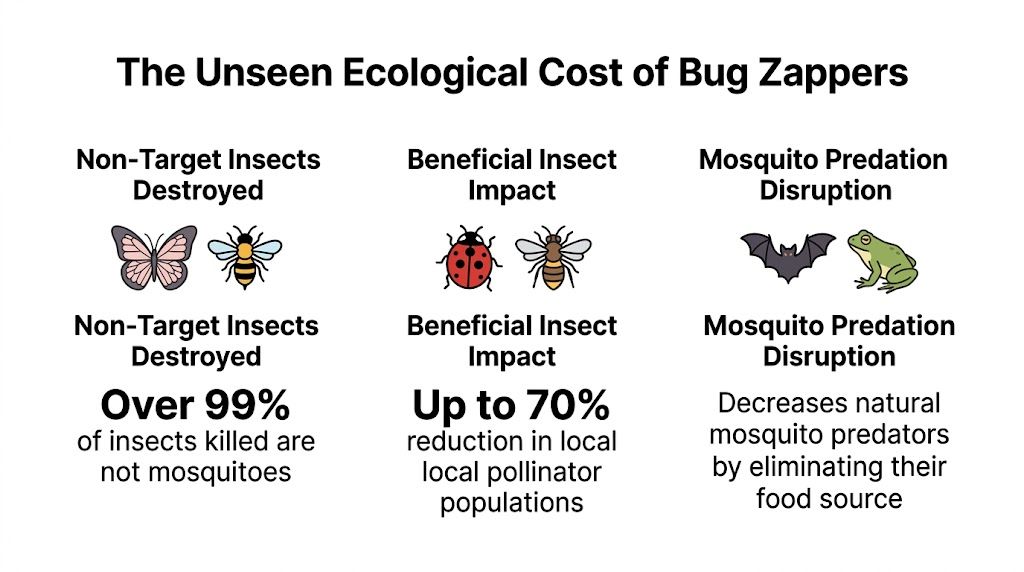
The biggest issue isn't only that bug zappers miss mosquitoes. It's that they kill so many of the wrong insects.
When homeowners look at a tray full of dead bugs, it can feel like progress. In reality, that pile often represents pollinators, harmless insects, and species that help keep the yard balanced.
Most of the kill isn't your target pest
A landmark University of Delaware study, summarized by the San Gabriel Valley Mosquito and Vector Control District, found that over 99.75% of insects killed by bug zappers were beneficial or harmless non-biting species.
That's the part most product packaging doesn't emphasize. The machine isn't acting like a precision tool. It's acting like an indiscriminate trap.
What that means in a Crown Point yard
Your yard works better when beneficial insects are active. Pollinators support flowers and gardens. Predatory insects help limit other pests. The local food web depends on those species staying in place.
When a zapper kills large numbers of non-target insects, the effects show up in ways homeowners do notice:
| Yard feature | What helpful insects do | What happens when they're removed |
|---|---|---|
| Flower beds | Support pollination | Plants can lose some natural pollination support |
| Vegetable gardens | Contribute to a healthier garden ecosystem | Pest pressure can become harder to manage naturally |
| Landscape balance | Feed birds and other beneficial wildlife | The food web gets thinner around the property |
| Natural pest control | Some species prey on nuisance insects | Fewer beneficials can mean more imbalance |
The zapper may look active, but the activity isn't necessarily helping the space where your family spends time.
Daytime use adds another problem
Running a bug zapper during the day can expose more daytime-active beneficial insects. According to the YouTube source provided in the verified data, daytime use is particularly harmful to pollinators like bees and butterflies, and it can also kill pest controllers like predatory wasps and up to 30% of helpful hoverflies in treated areas, as discussed in this video on bug zapper ecological impact.
That's a serious trade-off for a device that still doesn't address mosquito behavior well.
Killing beneficial insects to avoid mosquito bites is a bad bargain when the mosquitoes are barely responding to the trap in the first place.
Why this matters more than many homeowners realize
A healthy yard isn't just grass and shrubs. It's a living system. When you remove the insects that pollinate, prey on pests, or feed birds and other wildlife, you can create problems that don't look connected at first.
A homeowner might say, "The zapper catches a lot, so it must be helping." But volume isn't the same as value. If almost everything it catches is the wrong insect, the device is working against the kind of outdoor environment most families in Northwest Indiana want to maintain.
A Smarter Mosquito Control Strategy for Your Crown Point Home
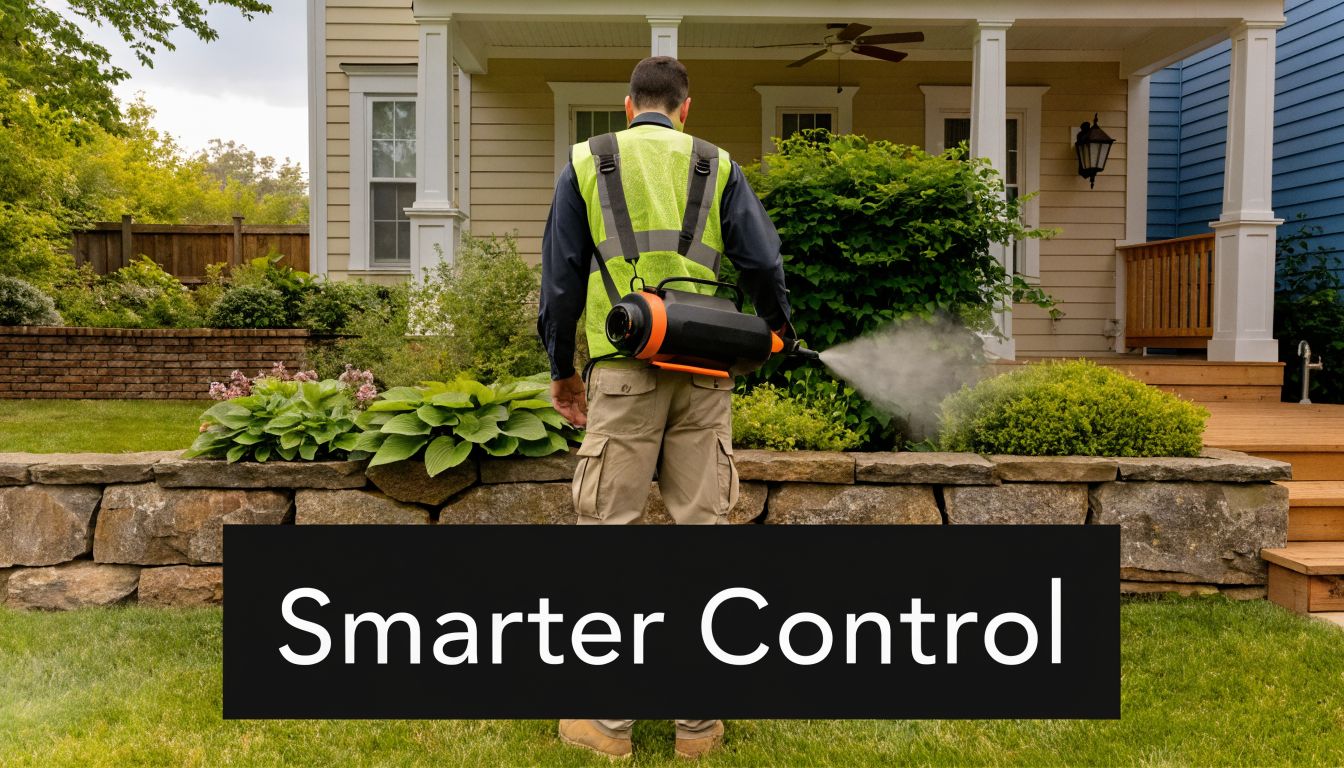
If bug zappers fail because they target the wrong cue, the answer is to use a mosquito strategy built around how mosquitoes live, breed, and rest.
That approach is more practical. It focuses on where the problem starts and where adult mosquitoes spend time between bites.
Start with breeding sites
Mosquito control begins with inspection. Female mosquitoes need standing water to reproduce, so the first job is finding the places on a property that hold water after rain or irrigation.
On many Crown Point properties, that includes:
- Low spots in the yard: Depressions that stay wet after storms
- Containers and accessories: Buckets, toys, plant saucers, tarps, and clogged gutters
- Outdoor features: Decorative items or drainage trouble spots that hold water
- Hidden problem areas: Edges of sheds, fence lines, and dense plantings where moisture lingers
Removing or correcting those sites matters more than hanging another gadget near the patio.
Treat the places mosquitoes use
Some water sources can't be dumped or eliminated. In those cases, a professional mosquito plan can address those sites directly and then target adult resting areas in a measured way.
A real program differs from a bug zapper. Instead of waiting for insects to fly into one device, the treatment strategy follows mosquito habits:
- Inspect where activity begins. Standing water and moisture issues get identified first.
- Reduce the source when possible. Property conditions get corrected before relying on treatment alone.
- Target resting zones. Mosquitoes often hold in shaded foliage, dense shrubs, and humid border areas.
- Maintain the result. Ongoing service keeps pressure down during the active season.
According to the verified data summarized by Seacoast Turf Care on bug zappers and mosquito populations, bug zappers are estimated to kill over 70 billion non-target insects annually in the U.S. while having no measurable effect on reducing mosquito populations. That's why targeted control is the smarter route.
For homeowners looking at automated options for ongoing coverage, a mosquito misting system can also fit into a broader property-specific plan when the site and use pattern make sense.
Why professional service feels different
A professional mosquito visit shouldn't feel like someone just shows up and sprays everything in sight. It should feel deliberate.
The best plans account for family use, pets, high-traffic outdoor spaces, and the layout of the property. They also connect mosquito work to the bigger picture. Drainage, vegetation, and seasonal pest pressure all matter.
That same practical thinking often helps with related concerns homeowners search for when they need pest control near me or residential pest control in Northwest Indiana. Mosquito issues rarely exist in total isolation from other outdoor pest conditions.
Protect Your Family with The Green Advantage
Homeowners in Crown Point don't just want fewer bugs. They want to enjoy the yard without second-guessing every evening outside.
That means choosing a provider that understands local conditions, explains the plan clearly, and treats mosquito control as part of protecting the whole property. For families comparing pest control in Crown Point, IN or searching for an exterminator near me, that local knowledge matters.
What homeowners should expect from a local pest professional
A good service experience starts before the treatment truck arrives. You should be able to ask questions, describe what you're seeing, and get straightforward guidance about what is and isn't likely to work.
You should also expect a provider to think beyond one symptom. If a company treats mosquitoes, it should understand how that work fits with broader residential pest control and even commercial pest control needs across Northwest Indiana properties.

Why the eco-minded difference matters
Families often ask for solutions that work without creating new problems in the yard. That's a reasonable concern.
A mosquito plan should reduce nuisance pressure while respecting the outdoor environment around your home. That matters even more when you know daytime bug zapper use can harm beneficial pollinators like bees and butterflies, kill predatory wasps, and affect up to 30% of helpful hoverflies in treated areas, as noted earlier from the verified video source.
The best mosquito control protects people first, but it also avoids the careless, broad collateral damage that bug zappers can create.
The value of working with a trusted local team
The Green Advantage serves Crown Point and nearby communities in Northwest Indiana with licensed, certified pest management focused on practical results and environmentally mindful service. For homeowners, that means you aren't left guessing whether an off-the-shelf device is enough.
A reliable local provider helps with more than mosquitoes, too. The same property may also need help with ant control, spider control, wasp removal, rodent control, or seasonal pest prevention around the home's exterior.
Many homeowners want this from the process:
- Clear communication: Real answers about what the pest is and what's driving it
- Customized treatment: Service shaped to the layout and pressure of the property
- Consistent follow-up: Ongoing support instead of one quick visit and silence
- Peace of mind: Confidence that someone local is paying attention to the problem
If you're comparing options for pest control near me or exterminator in Crown Point, IN, that combination of local experience and clear guidance is often what separates a lasting solution from another seasonal frustration.
Take Back Your Yard This Summer
So, do bug zappers work during the day. Not in the way most homeowners hope.
The science points in the same direction. Mosquitoes don't primarily use UV light to find you. Sunlight makes a zapper's bulb much less visible during the day. The insects most likely to die in the unit often aren't the pests you're trying to eliminate.
That leaves you with a familiar Northwest Indiana problem. You spend money on a device, hear a few occasional zaps after dark, and still deal with mosquito pressure around the spots that matter most. Meanwhile, the yard can lose beneficial insects that support pollination and natural balance.
A better approach is more targeted and more grounded in how mosquitoes behave. Reduce breeding sites. Address the wet areas and hidden water sources on the property. Treat the places adult mosquitoes use. Keep the plan consistent through the season.
For homeowners, landlords, and property managers in Crown Point, that's the difference between a gadget and a real pest-control strategy. It also lines up with what people are usually looking for when they search for pest control in Crown Point, IN, residential pest control, or an exterminator near me. They want relief that lasts and guidance they can trust.
If your yard still isn't comfortable during the day or at dusk, don't assume you need a bigger zapper. You probably need a smarter plan.
If you're ready for practical, local help, contact The Green Advantage to schedule a pest inspection or request a quote for your Crown Point property. Their team can help you move past ineffective bug zappers and toward a mosquito control plan that protects your yard, your family, and your peace of mind.