
You find a line of ants under the kitchen window, or a few spiders showing up in the basement corners, and the search usually starts the same way. You want something quick, affordable, and safe to use around the house. Before long, diatomaceous earth pest control pops up in your search results as the popular DIY answer.
That appeal makes sense in Crown Point and across Northwest Indiana. Homeowners want practical solutions, not harsh guesswork. Landlords and property managers often want something they can try before calling in service, especially when they're already juggling maintenance, turnover, and tenant communication. If you manage rentals, this overview on solving pest issues for landlords gives good context on why pest problems tend to become bigger operational headaches when they're handled too late.
The issue is that diatomaceous earth, often called DE, isn't a magic powder. It can work in specific situations, but it also has limits that many DIY articles skip over. If you use it in the wrong place, in the wrong amount, or for the wrong pest, you can end up with dusty rooms, lingering activity, and no real answer to the source of the infestation.
Your Local Guide to Pest Control in Crown Point IN
Why homeowners keep trying DE first
A lot of pest problems begin with a small sighting and a simple hope. Maybe it's ants near the dishwasher, crickets in the garage, or a spider problem that seems to get worse whenever the weather changes. For many, a complicated process is undesirable. They want the pests gone without turning the house upside down.
DE sounds like that kind of solution. It's commonly described as a more natural option, and that alone makes many homeowners feel more comfortable trying it than a conventional over-the-counter spray. That's especially true in family homes where kids, pets, or sensitive indoor spaces are part of the decision.
Local reality: In Crown Point, a pest problem usually isn't just about the insects you can see. It's about where they're nesting, how they're getting in, and what conditions are letting them stay.
What usually gets missed
The part that DIY advice often leaves out is that pests don't live where you notice them. Ants may trail through the kitchen while the colony sits deeper in a wall void or outside near the foundation. Spiders may collect in a basement because other insects are already active there. Fleas may still be developing in overlooked areas even after an owner dusts a few visible spots.
That's why a one-product approach often falls short. A dust can only do so much if the infestation source stays active, moisture conditions keep helping pests survive, or entry points are still open around doors, utility lines, and foundation gaps.
Why a broader pest control plan matters
Residential pest control works best when the treatment matches the pest and the location. Commercial pest control needs that same logic, just with more attention to traffic patterns, sanitation pressures, storage areas, and ongoing monitoring. Whether someone searches for pest control near me, exterminator near me, or pest control in Crown Point, IN, what they usually need isn't just a product recommendation. They need a reliable diagnosis.
That matters for common Northwest Indiana issues beyond crawling insects too. The same property may also need rodent control, wasp removal, spider control, mosquito control, termite control, or seasonal preventative pest treatments. DE can be one small tool in the conversation, but it isn't a complete pest management strategy.
What Is Diatomaceous Earth and How Does It Work
The basic idea
Diatomaceous earth is a fine powder made from fossilized microscopic aquatic organisms. In pest control, it isn't used as a chemical poison. It works as a contact insecticide. Formal pesticide use in the modern United States began in 1960, and there are now over 150 registered products for indoor and outdoor use. Regulatory guidance also identifies it as most useful on hard-bodied arthropods such as bed bugs, fleas, cockroaches, ticks, spiders, and crickets because it works by absorbing oils from the insect cuticle and abrading the exoskeleton, as explained by the National Pesticide Information Center fact sheet on diatomaceous earth.
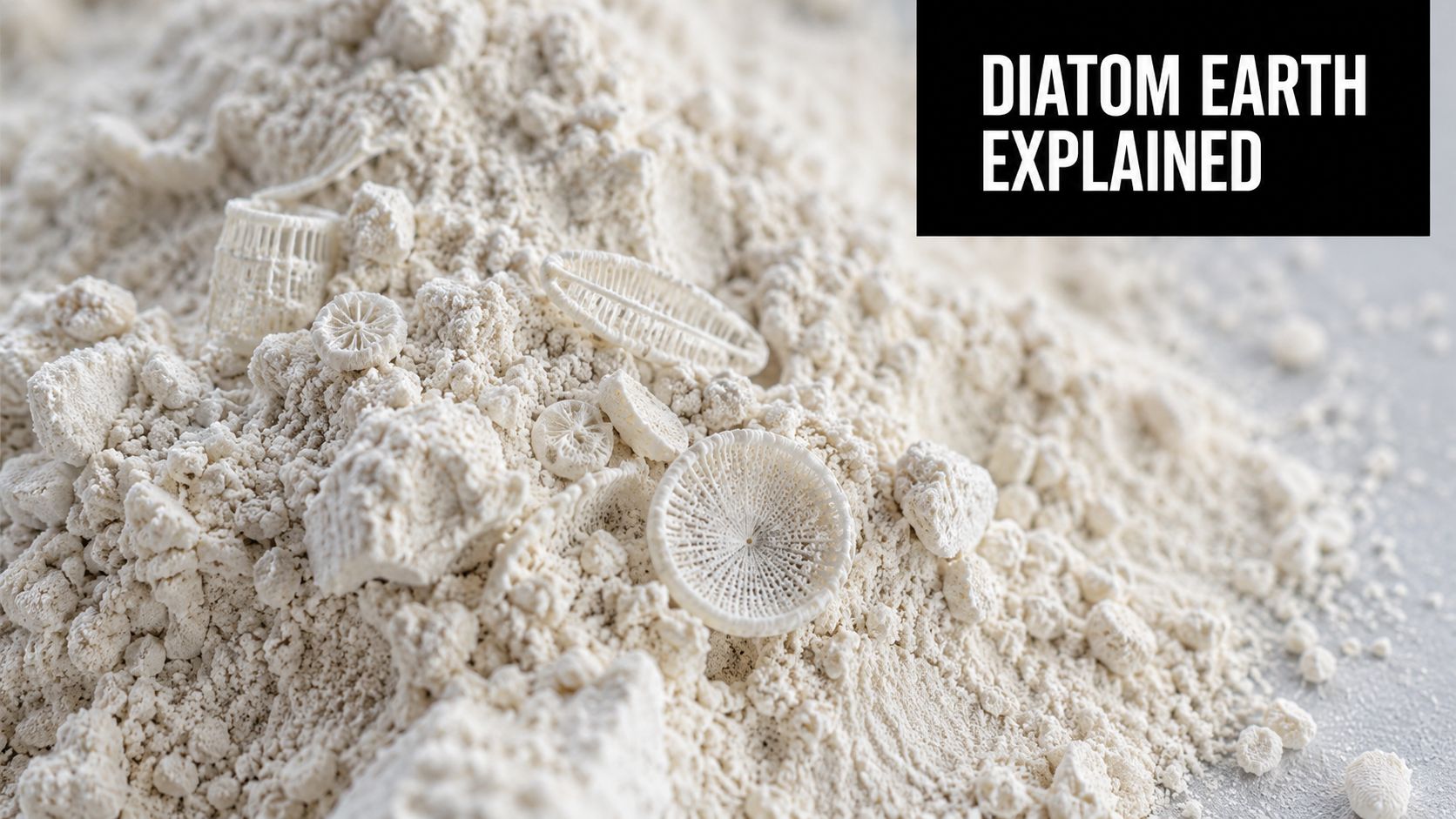
A simple way to think about it is this. DE doesn't poison pests after they eat it. It has to get on their bodies.
How the powder affects insects
When a crawling pest moves through a thin layer of DE, the particles damage the protective outer layer and pull away oils that help the insect retain moisture. Over time, that pest loses water and dries out. The action is physical.
That matters because it explains several things homeowners often find confusing:
- It isn't instant. Pests usually don't drop dead on the spot.
- It requires contact. If insects avoid the dust, nothing happens.
- It favors certain pests. Hard-bodied crawling pests are better targets than insects that don't spend much time moving through treated zones.
- It depends on placement. A light, well-placed application works better than dumping visible piles around the room.
A more detailed explanation of that physical action is available in this overview of how diatomaceous earth works in pest control.
Why light application matters more than heavy application
Many DIY users make the same mistake. They assume more powder means more control. In practice, insects may avoid thick piles, and heavy application creates more mess than benefit.
Controlled research on Tribolium castaneum found that DE's insecticidal effect is dose- and exposure-time dependent, with 2 days of exposure significantly increasing insect mass loss. The study also showed higher water emission and signs of increased cuticle permeability and lipid absorption, supporting the idea that DE works through sustained dehydration rather than immediate knockdown, as reported in the PubMed study on DE exposure and water loss.
A short visual helps if you've never seen DE discussed in practical terms:
A thin dust in the right harborage beats a thick white line in the middle of the floor.
The True Effectiveness of DE on Household Pests
Where DE can help
DE has a place in pest control, but it has a narrow one. It can help when the target is a crawling pest, the powder stays dry, and the insects keep crossing the treated area. In real homes, that usually means protected cracks, voids, and harborage paths rather than open room surfaces.
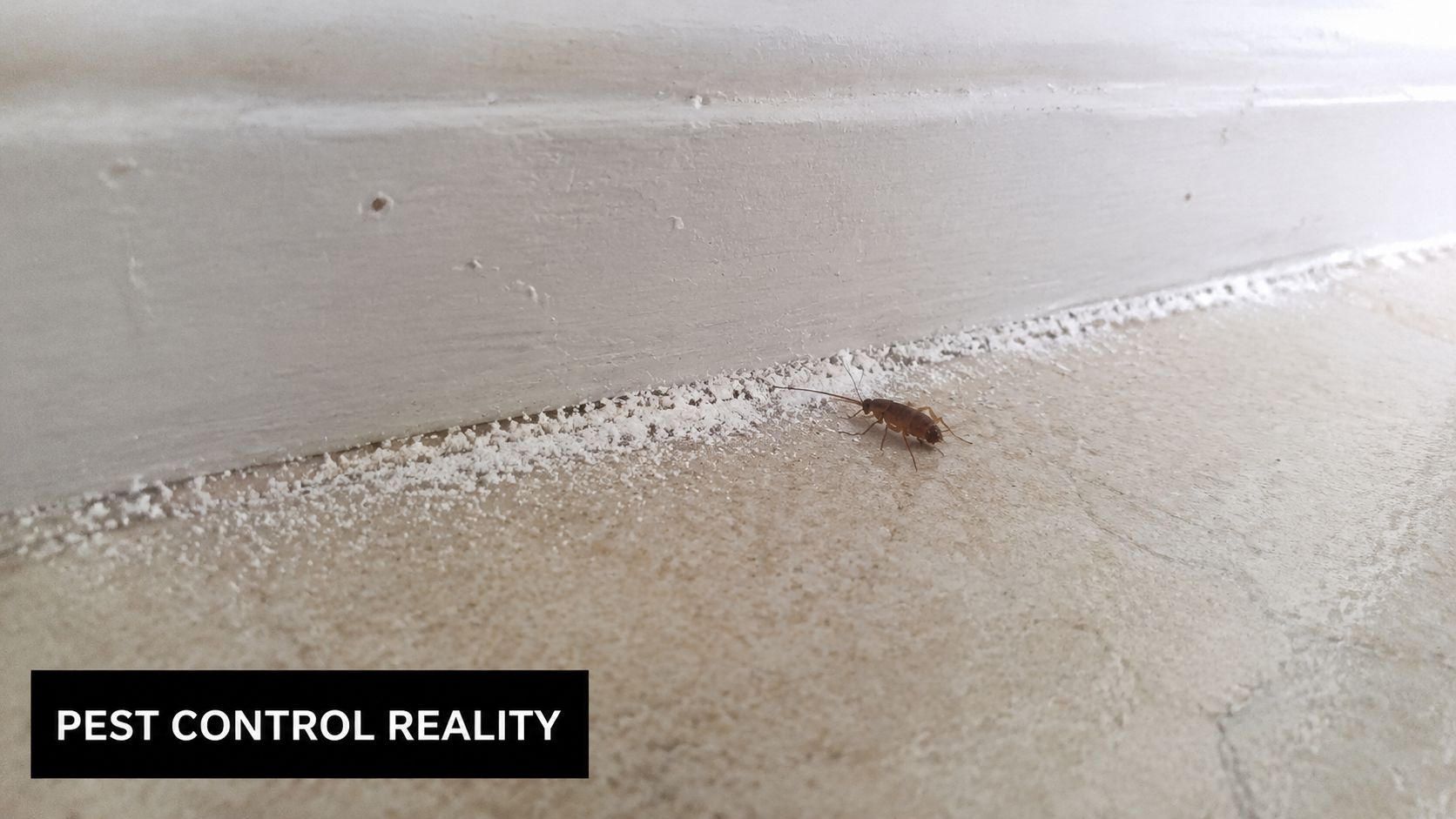
For example, some homeowners try it for:
- Cockroaches in protected edges behind appliances or inside wall voids
- Spiders in less-disturbed basement or crawl space edges
- Fleas in limited dry-contact areas as part of a broader cleanup effort
- Crickets and similar crawling pests where travel routes are predictable
It can also fit into a broader low-impact strategy when used carefully. If you're exploring non-broadcast options, this page on natural pest control for home is a useful starting point for understanding where selective methods make sense.
Where it commonly disappoints
The biggest weakness of DE is that the environment controls the outcome. It is less effective when humidity is high because moisture weakens the desiccation process, and it works best as a dry, residual dust in cracks and voids, not on damp or exposed surfaces, according to this explanation of environmental limits of diatomaceous earth.
That becomes a real problem in lived-in homes. People mop floors. Air moves through rooms. Pets track through treatment areas. Basements get damp. Bathrooms hold moisture. Indiana weather doesn't always cooperate with products that need dry, undisturbed conditions.
Bed bugs are the clearest warning sign
Bed bugs are a good example of why internet claims about DE can be misleading. In a 2019 peer-reviewed synthesis, diatomaceous-earth-based bed bug treatments produced results over a 4-week period ranging from 29.1% to 97.5%, depending on the product and application conditions, according to the peer-reviewed review on arthropod control and DE performance.
That range is huge. It tells you the material itself isn't the whole story. Conditions and application quality drive the result.
Practical rule: If a treatment only works well when it stays dry, thin, undisturbed, and exactly in the pest's travel path, many households won't get the result they expect.
Why flea control often needs more than dust
Fleas are another area where people overestimate what DE can do. Even when it plays a role, the bigger job is sanitation, pet treatment guidance, and repeated attention to the places fleas develop and hide. Homeowners looking for broader housekeeping support can review this guide on preventing flea infestations at home, which helps explain why vacuuming, fabrics, pet bedding, and follow-through matter so much.
The short version is simple. DE isn't useless. It's just highly conditional, and pest problems in Crown Point homes rarely stay inside ideal conditions for long.
DIY Risks vs The Green Advantage Professional Pest Control
The part DIY guides soften
A lot of articles say food-grade DE is safe, then stop there. That's incomplete. Food-grade DE is considered low-toxicity, but it should not be inhaled, and guidance emphasizes masks, gloves, sparing application in protected areas, and avoiding airborne dust, especially in homes with children, pets, or people with respiratory sensitivities, as noted in this consumer safety guidance on using diatomaceous earth at home.
That doesn't mean every DE application is dangerous. It means homeowners should stop thinking of it as harmless dust they can spread freely across carpet, baseboards, mattresses, or open floors.
Common DIY mistakes include:
- Overapplying it: Heavy visible piles create more airborne dust and are easier for pests to avoid.
- Using it in active living spaces: Disturbance from walking, sweeping, or pets breaks up the deposit.
- Treating symptoms instead of the source: Seeing ants by the sink doesn't mean the nest is there.
- Repeating the same failed approach: More dust rarely fixes a placement or moisture problem.
DIY dust vs a complete service plan
Professional pest control starts with identification and inspection. That's the main difference. Instead of asking, "What powder should I buy?" the better question is, "Why are these pests active here in the first place?"
For some homes, the answer is moisture. For others, it is food access, hidden entry points, cluttered harborage, an exterior condition near the foundation, or a seasonal pattern that calls for preventative treatment rather than repeated spot reactions.
If you want a fuller picture of low-impact methods beyond one DIY product, this guide to environmentally friendly pest control methods shows how targeted, environmentally mindful approaches work best when they're part of a real plan.
A surprisingly helpful comparison comes from outside pest control. This London House Cleaners' expert guide reflects the same principle seen in many home services. Surface-level cleaning or treatment often looks easier at first, but hidden buildup and missed areas are what keep problems coming back.
Diatomaceous Earth vs. Professional Pest Control
| Factor | DIY Diatomaceous Earth | The Green Advantage Professional Service |
|---|---|---|
| Pest identification | Homeowner has to guess the pest and choose placement | Service begins with identifying the pest and activity pattern |
| Safety handling | Dust exposure is easy to underestimate | Application decisions account for occupied spaces, children, pets, and sensitivities |
| Moisture and environment | Product performance drops when conditions aren't right | Treatment plan is adjusted to the environment and infestation pressure |
| Coverage | Usually limited to visible areas | Inspection includes hidden harborage, entry points, and contributing conditions |
| Long-term control | Often symptom-focused | Strategy addresses source, pressure points, and prevention |
| Time and cleanup | Reapplication and dust management often fall on the homeowner | Service is structured, targeted, and easier to maintain over time |
The hidden cost of DIY isn't just the product. It's the time spent treating the wrong place while the infestation keeps going.
Why professional help is usually more reliable
A seasoned exterminator in Crown Point, IN doesn't rely on one trick. Real pest control combines inspection, targeted treatment, monitoring, exclusion advice, and prevention. That's what gives homeowners better peace of mind than trial-and-error dusting.
The same logic applies whether you're dealing with ant control, spider control, rodent control, wasp removal, or recurring seasonal pests. A reliable plan protects the house, reduces indoor stress, and keeps a small problem from turning into a stubborn one.
What to Expect from Your Local Crown Point Exterminator
When homeowners search for exterminator in Crown Point, IN or residential pest control, they're often unsure what the visit will look like. A good service call should feel straightforward, not confusing.
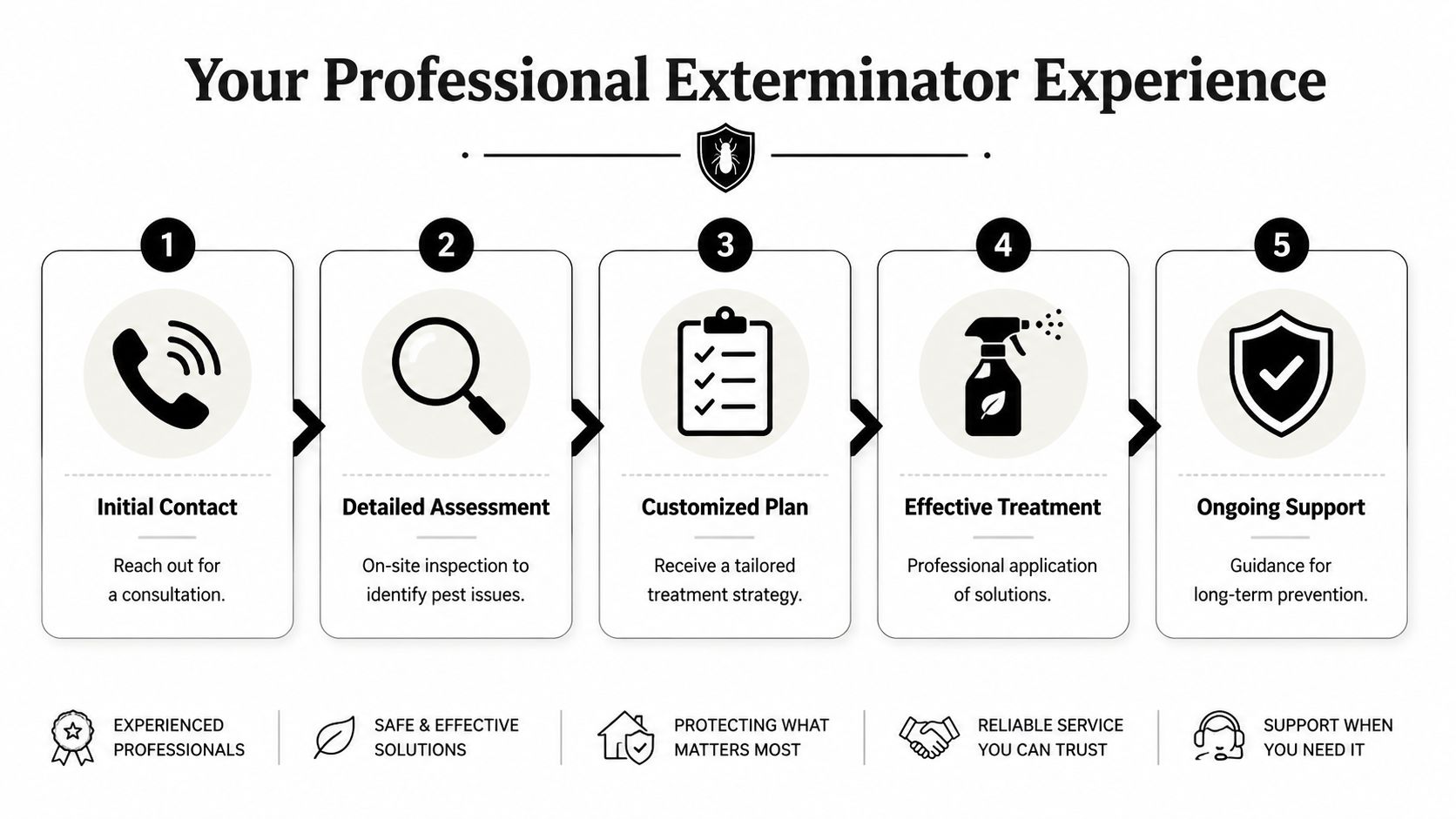
The visit starts with diagnosis
A professional inspection looks at more than the insects you noticed first. The technician checks where pests are active, where they may be entering, what conditions are helping them survive, and whether there are signs of broader pressure elsewhere on the property.
That could include:
- Interior clues: Baseboards, utility penetrations, under-sink areas, basements, garages, crawl spaces, and storage zones
- Exterior contributors: Foundation gaps, mulch lines, door sweeps, moisture areas, and nearby harborage
- Pattern recognition: Whether the problem points to ants, spiders, roaches, fleas, rodents, or a different pest entirely
Treatment is tailored, not generic
A good exterminator near me should never force every problem into the same treatment style. Different pests need different tactics, and the same pest may require a different plan in two different homes.
That often means using an integrated approach rather than a one-product approach. A technician may combine targeted materials, exclusion recommendations, sanitation guidance, habitat corrections, and follow-up support based on what the property needs.
Some infestations need dust in a protected void. Others need exterior treatment, entry-point correction, or a full prevention plan. The right tool depends on the pest and the site.
Ongoing support matters
Professional service offers a distinct advantage over DIY trial and error. If you're dealing with recurring ant activity, spider pressure around the home, seasonal mosquito issues in the yard, termite concerns, or rodent activity around a structure, consistency is the primary value.
Homeowners and businesses in Northwest Indiana often benefit from services such as:
- Preventative pest treatments for seasonal pressure before it grows
- Mosquito control for outdoor areas where family time matters
- Termite control when property protection is the priority
- Commercial pest control for offices, retail spaces, storage areas, and facilities that need routine oversight
Communication should be clear
You shouldn't have to guess what was found or what happens next. A reliable pest professional explains the issue in plain language, outlines the treatment plan, and gives practical advice for what you can do between visits. That's especially important for families, landlords, and business owners who want confidence that the problem is being handled responsibly.
Frequently Asked Questions About Pest Control
Can diatomaceous earth get rid of bed bugs by itself
It might help in limited circumstances, but it isn't something to count on as a standalone bed bug solution. Peer-reviewed studies on bed bug control with DE showed 4-week results ranging from 29.1% to 97.5%, which shows how heavily success depends on ideal application conditions in a problem that's already difficult to control.
Is food-grade DE safe around kids and pets
Low-toxicity doesn't mean risk-free in daily use. The main concern is dust inhalation and overapplication in occupied areas. If a home includes children, pets, or anyone with respiratory sensitivity, broad DIY dusting is a poor choice.
Why didn't DE work when I used it for ants
Usually because ants were not forced through the right deposit, the treated area got disturbed, or the visible trail wasn't the true source of the infestation. Ant control often fails when people focus on the countertop or floor activity but miss the colony location and entry pattern.
Does DE work better indoors or outdoors
It tends to make more sense in protected, dry spaces where it can stay undisturbed. Open, damp, or frequently cleaned areas usually work against it. That's one reason homeowners who search for pest control near me often move on from DIY products after trying them.
When should I call a professional exterminator
Call when the activity keeps returning, when you're seeing pests in multiple rooms, when the problem involves bites or health concerns, or when you've already tried store-bought products without a clear result. That applies to ants, spiders, fleas, roaches, rodents, wasps, and many seasonal pests common in Crown Point, IN.
Is professional pest control only for severe infestations
No. Many calls are preventative, especially for homeowners who want to avoid repeat issues. Early service is often simpler, cleaner, and easier than chasing a more established infestation later.
If you're tired of guessing with DIY dusts and want a safer, more dependable answer, contact The Green Advantage for help in Crown Point, IN and nearby Northwest Indiana communities. Whether you need a pest inspection, recurring residential pest control, commercial pest control, mosquito control, rodent control, spider control, or a full prevention plan, their team can help you solve the problem at the source and restore peace of mind.