
Your Guide to Pest Control Cost Per Month in Crown Point, IN

When pests show up in your Crown Point home, one of your first thoughts is likely, "What's this going to cost me?" For a standard, preventative monthly plan, you can generally expect to invest somewhere between $40 to $75. It might seem like just another bill, but this consistent care from a trusted local provider like The Green Advantage is a far smarter—and more affordable—approach than waiting for an emergency.
What Is the Real Cost of Pest Control Per Month?

It helps to think of professional pest control less like a one-off repair and more like home insurance. You pay a predictable, manageable fee to protect your property’s value and your family’s health from local Northwest Indiana pests like ants, spiders, and rodents. A proactive plan from The Green Advantage gives you year-round peace of mind without a surprise hit to your wallet.
The alternative—waiting until you have a full-blown infestation—is almost always more expensive. A single emergency call to an exterminator for a severe ant or roach problem can easily run you hundreds of dollars. Worse yet, that one-time fee often doesn't cover the crucial follow-up visits needed to make sure the pests are truly gone for good.
Proactive Care vs. Reactive Emergencies
A monthly pest control plan is all about prevention. Our technicians create a protective barrier around your home and address potential entry points before pests get inside. It's a simple strategy, but it’s incredibly effective at stopping problems before they ever begin. This approach keeps your home consistently pest-free and helps you completely sidestep the stress and high cost of a sudden infestation.
When you look at major U.S. markets, including right here in Northwest Indiana, a comprehensive plan often lands in the $50-$100 range. This is especially true for services that cover both general pests and more destructive ones like termites.
Thinking about the numbers this way really highlights the financial sense behind a monthly plan. A small, predictable payment is much easier to handle than a sudden, large bill for an emergency cleanup.
Monthly Plan vs. One-Time Service Cost Comparison
Here’s a quick look at how the costs stack up when you compare a proactive monthly plan to a reactive, one-time service for common household pests in the Crown Point area.
| Service Type | Typical Monthly Plan Cost | Typical One-Time Emergency Cost |
|---|---|---|
| General Pest Control (Ants, Spiders) | $40 - $75 | $250 - $400 |
| Rodent Control (Mice, Rats) | Included in most plans | $300 - $600+ |
| Cockroach Infestation | Included in most plans | $350 - $700+ |
As you can see, the cost of a single emergency service can quickly exceed what you'd pay for an entire year of preventative care.
Understanding the True Value
The real value of monthly pest control goes far beyond just getting rid of bugs. It’s a vital part of your overall home maintenance strategy, one that actively safeguards your biggest investment. When you budget for homeownership, pest control is a key line item right alongside other rental property maintenance costs that protect your asset.
A consistent service plan from The Green Advantage in Crown Point delivers on multiple fronts:
- Property Protection: We stop wood-destroying insects like termites and carpenter ants before they can cause thousands of dollars in structural damage.
- Health and Safety: Our services reduce your family's exposure to pests like rodents and cockroaches that can carry diseases and trigger allergies.
- Peace of Mind: You can relax knowing your home is protected by local experts who truly understand the specific pest pressures we face in Northwest Indiana.
At the end of the day, a predictable monthly cost is far easier to budget for than a surprise four-figure bill. It transforms pest control from a reactive headache into a proactive, valuable investment in your home’s well-being.
Key Factors That Determine Your Monthly Pest control Price
One of the first questions people ask when looking for an exterminator in Crown Point, IN, is "How much will it cost?" It's a fair question, but the honest answer is: it depends. There’s no simple, one-size-fits-all price because every home and every pest problem is different.
Think of it like hiring a landscaper. A tiny, square lawn is a much different job than a sprawling yard with gardens, trees, and a steep hill. Residential pest control works the same way. The price is tailored to the specific work your property needs, ensuring you get effective protection without paying for services you don't require.
Let’s break down the main factors that go into your monthly pest control quote.
Your Property’s Size and Layout
The most basic starting point for any estimate is the size of your home. A larger home, especially one over 2,000 square feet, simply has more area to cover. Our technicians need more time and product to create a solid defensive barrier around a bigger foundation and treat all the potential entry points.
But it’s not just about raw square footage. The complexity of your home's layout is a big piece of the puzzle. We often see these features affecting the final price:
- Multiple Stories: A two or three-story home takes more time and specialized equipment to service than a single-level ranch.
- Crawl Spaces and Basements: Here in Northwest Indiana, these are notorious hotspots for pests. They require careful inspection and specific treatment methods.
- Attached Garages or Outbuildings: Every extra structure on your property is another potential home for pests, so we need to inspect and treat them for complete coverage.
Key Takeaway: The larger and more complex your home's footprint, the more resources are needed for thorough coverage. This is a fundamental principle in many home services. For instance, a look at the various factors affecting residential window cleaning costs shows a similar logic where size and complexity are major price drivers.
Type of Pest and Infestation Severity
Next, we have to consider what we're actually fighting. A general preventative plan that keeps common nuisances like spiders, silverfish, and most ants at bay is going to be your most affordable option.
Things change when you’re dealing with more challenging pests. A stubborn German cockroach problem, for instance, requires a far more intensive strategy than managing a few spiders in the basement. Similarly, services for wood-destroying insects like termite control are in a class of their own. Because termites can cause immense structural damage, their treatment is highly specialized and priced separately from general pest plans.
Just as important is the severity of the problem. A few ants wandering across your kitchen counter is one thing; a massive, established colony living inside your walls is another challenge entirely. A heavy, active infestation will almost always need a more aggressive initial service to knock the population down. This can make the first bill higher, but it allows us to get the situation under control before we settle into a predictable monthly maintenance fee. It’s always cheaper to tackle a pest issue early on.
Service Frequency and Treatment Methods
How often we visit your home also shapes your monthly cost. Here at The Green Advantage, we offer different schedules to fit your specific situation, from monthly to quarterly visits. A monthly plan is the gold standard for continuous protection, especially for homes that seem to be pest magnets. While the total annual cost is higher, the price for each visit is lower, and you get unbeatable peace of mind.
The methods we use also play a role. We are committed to eco-friendly pest control, which means we lean heavily on Integrated Pest Management (IPM). This isn't about blanketing your property in chemicals. It's a smarter approach that uses targeted applications and long-term prevention. We always use the safest, most effective products available, but some tough cases—like bed bugs or certain aggressive wasps—may call for specialized treatments that can affect the cost.
It’s all about finding the right balance between a fair price and high-quality, lasting results. We believe in being transparent about this, and you can learn more about how we approach the balance between price and quality in our detailed guide on the topic.
What's the Right Pest Control Schedule for You?
Figuring out how often you need an exterminator is just as crucial as picking the right company. Should you get a monthly plan, have someone come out quarterly, or just wait until you see a bug? There's no single right answer—the best choice for your Crown Point home really comes down to your budget, your peace of mind, and just how much you can tolerate creepy crawlies.
Here in Northwest Indiana, the seasons dictate which pests are knocking at your door. Spring brings those relentless ant trails to the kitchen. Summer means mosquitoes crashing your backyard cookouts. And as soon as it gets cold, spiders and mice start looking for a warm place to spend the winter. It’s a never-ending cycle, which is why a consistent, preventative plan almost always makes the most sense.
Monthly Pest Control Plans: Your Ultimate Defense
A monthly service offers the most thorough protection you can get, creating a solid, unbroken shield around your home. This frequency is a great fit for people who want zero surprises and for properties that just seem to be pest magnets.
- Who it's for: Homes with a history of stubborn pest problems, larger properties with lots of potential entry points, or anyone who simply wants the strongest protection available.
- The biggest plus: It’s incredibly effective against fast-breeding bugs like ants, roaches, and spiders. With monthly visits, our technicians can spot trouble and adjust treatments immediately, stopping a small problem from becoming a nightmare infestation.
Think of it like tending a garden. A little bit of water on a regular basis keeps everything healthy and strong. A monthly plan is that same kind of consistent care for your home, making sure pests never even get a chance to settle in.
Quarterly Pest Control Plans: The Proactive Sweet Spot
For most homeowners in the Crown Point area, a quarterly plan hits that perfect sweet spot between effective prevention and a friendly budget. A visit every three months allows us to tailor treatments to whatever pest is most active that season, keeping you ahead of the game.
- Who it's for: The majority of single-family homes around here that aren't dealing with a severe, active infestation. It’s a fantastic, proactive way to maintain a pest-free home.
- The biggest plus: Quarterly service establishes a powerful, preventative barrier. The schedule is specifically designed to interrupt pest life cycles, so populations never get a foothold in the first place. It delivers outstanding value throughout the year.
This visual guide can help you see how factors like your home's size and the severity of the issue point toward the right service frequency.
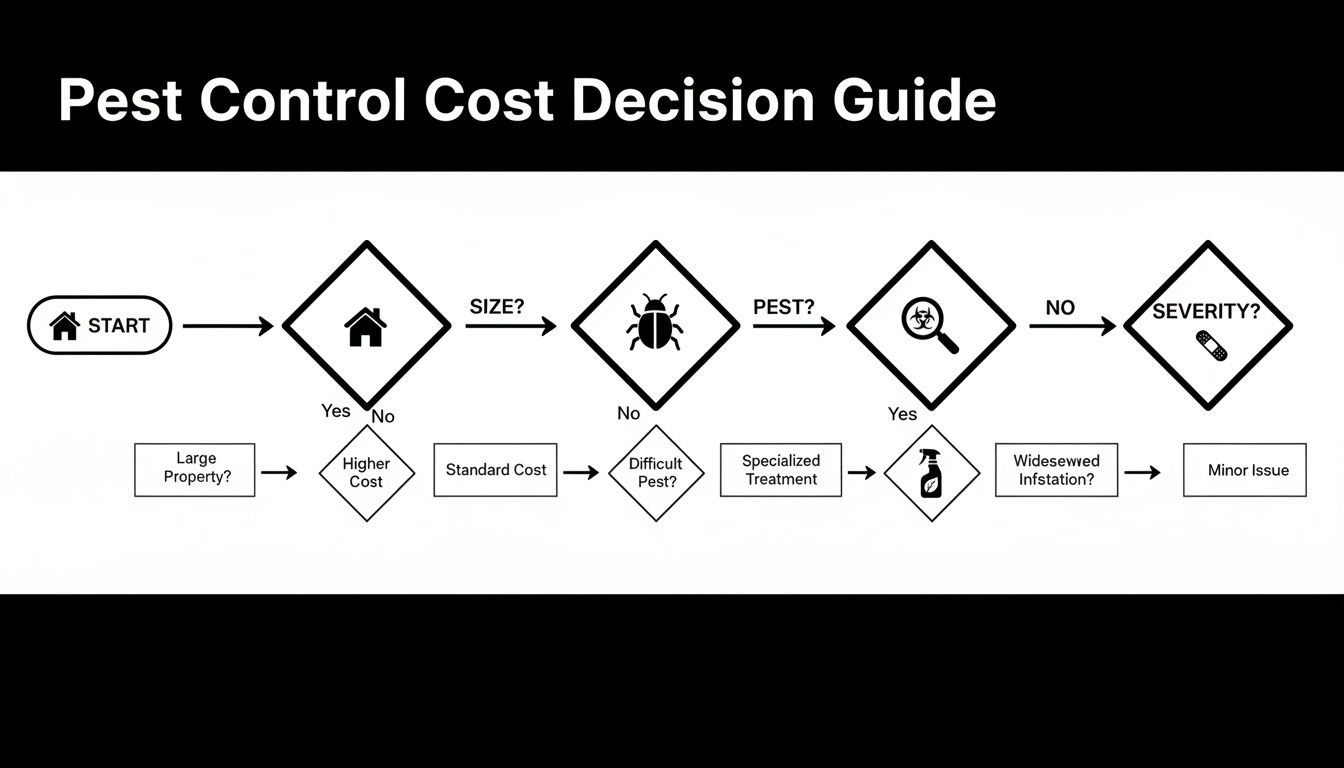
As you can see, the bigger the property or the worse the pest problem, the more a frequent service schedule just makes sense.
One-Time Services: The Reactive Fix
A one-time, or "as needed," service is exactly what it sounds like: a targeted treatment for a single, immediate problem. You see pests, you call us, we fix it. While this works for isolated incidents, it’s a purely reactive strategy.
Important Consideration: A one-time treatment is often a more expensive, short-term fix. It solves the problem you can see right now, but it does nothing to prevent the next pest from showing up. You might pay $250-$400 for a single ant treatment, which is often more than what several months of preventative care would cost.
This approach is like only going to the doctor when you’re sick instead of getting regular check-ups. It works in a pinch, but it doesn't address the underlying cause and leaves you vulnerable to the next thing that comes along. At The Green Advantage, our goal is to help you choose the plan that truly fits your needs, whether that’s a quick fix or a long-term partnership for total peace of mind.
What a Standard Monthly Pest Control Plan Includes
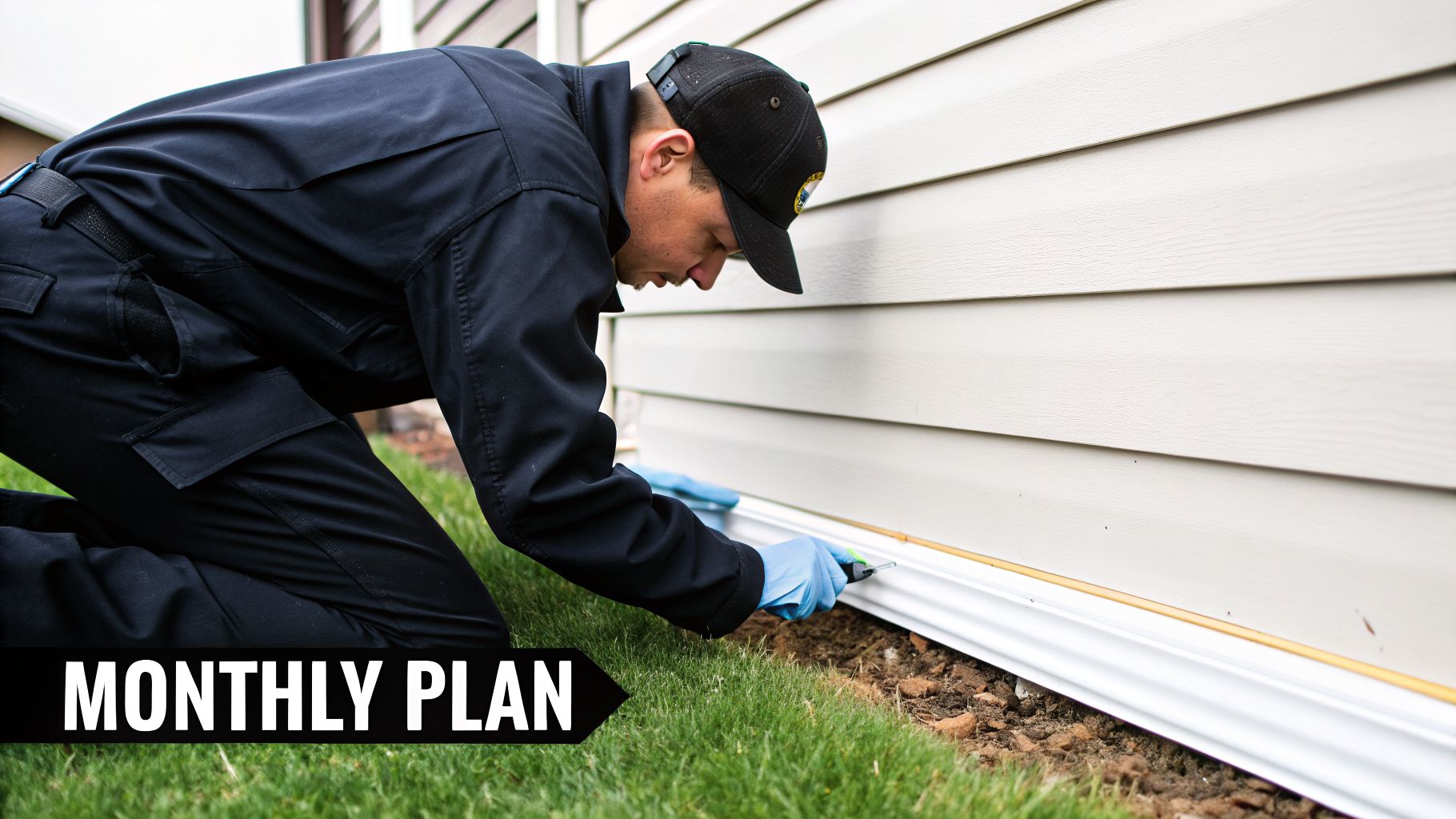
When you sign up for a monthly pest control service, you’re getting much more than just a quick spray. Think of it as an ongoing partnership to keep your Crown Point home healthy and bug-free. The real value is in the consistent protection that adapts to our changing Northwest Indiana seasons and the specific critters that come with them.
A good plan, like the one we offer at The Green Advantage, acts as a complete shield for your property. It’s all about being proactive instead of just reacting to a problem. Across the country, homeowners typically spend between $40 to $75 per month for professional services, usually with an annual agreement. This is a growing trend—market forecasts show a potential 42.5% growth share in North America alone, a testament to how many people are choosing prevention over infestation. You can read more about this growing demand on OpenPR.com.
So, what does that monthly investment actually get you? Let's walk through what a standard residential pest control plan should always cover.
A Thorough Initial Inspection
Our work always begins with a deep dive into your property. A certified technician will perform a complete top-to-bottom inspection of your home, inside and out. This isn't just a quick peek—it's a detailed diagnostic to figure out exactly where your home is vulnerable.
During this first visit, we’re looking for a few key things:
- Pest Hotspots: We find where pests are currently living, eating, or nesting. This could be anywhere from behind your kitchen appliances to the quiet corners of your basement or attic.
- Entry Points: We identify all the tiny cracks and gaps pests use as a personal doorway into your home, like openings around pipes, window frames, and the foundation.
- Conducive Conditions: We search for anything that might be attracting pests in the first place, such as moisture problems, woodpiles stacked against the house, or overgrown bushes.
Application of a Protective Exterior Barrier
The heart of any good pest control strategy is a strong barrier around the outside of your home. This is your first and best line of defense. Our technicians apply a long-lasting, eco-friendly treatment around the entire foundation, paying special attention to entry points like doors, windows, and utility lines.
Our Proactive Approach: Think of this exterior barrier like a security system for your house. It’s designed to stop pests before they ever get a chance to set foot inside, giving you peace of mind all year round.
This treatment is formulated specifically for the common pests we deal with here in Crown Point, IN, including ants, spiders, and centipedes. By focusing our efforts on the exterior, we dramatically reduce the need for chemicals inside your home.
Targeted Interior Treatments and Web Removal
While our main goal is to keep pests out, we’ll tackle any existing problems inside with precision and care. If some critters have already found their way indoors, our technician will use targeted treatments to eliminate them right at the source. We always rely on family-friendly products and Integrated Pest Management (IPM) techniques to ensure the safety of your kids and pets.
A simple but satisfying part of every visit is also the physical removal of spider webs and wasp nests from your eaves, porches, and other accessible spots. This instantly cleans up your home's appearance and gets rid of the very structures these pests use to thrive. It’s an immediate improvement you’ll notice right away.
Ongoing Monitoring and Follow-Up
A monthly plan isn't a one-and-done deal. It’s a continuous cycle of protection. With every visit, our technician is checking for new pest activity, making sure the exterior barrier is holding strong, and adjusting our approach based on the season.
This ongoing relationship is what makes a monthly plan so effective. If you spot any pests between our scheduled services, our guarantee means we’ll come back to take care of it at no extra charge. That's the promise of a true pest control partnership—we handle the pests, so you can simply enjoy your home.
The Hidden Costs of DIY Pest Control
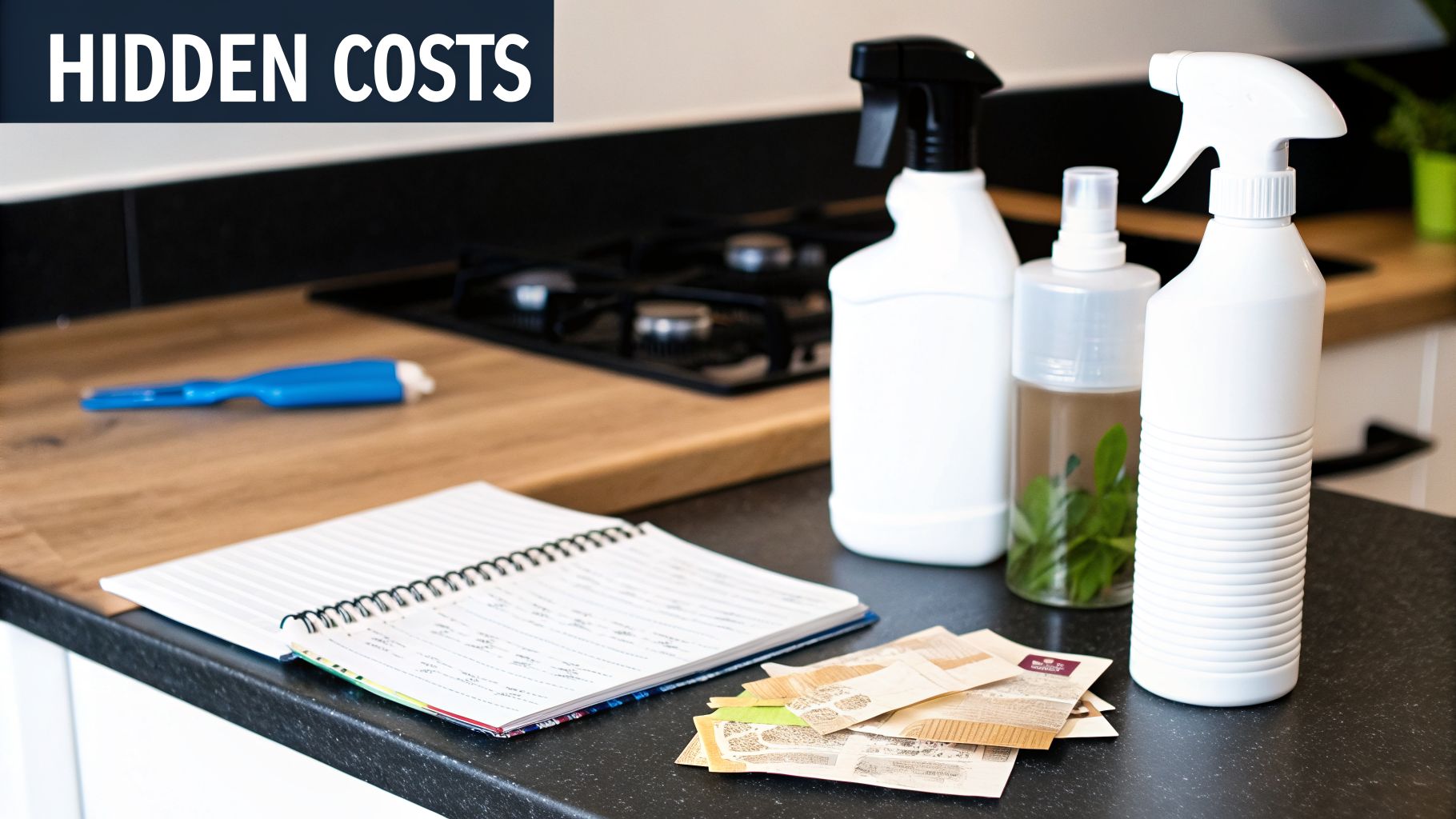
When you see that first line of ants marching across the kitchen counter, your first instinct is probably to run to the store. It makes sense. A quick trip for a $15 can of bug spray feels like a cheap, easy fix. But what we see time and time again is that this "quick fix" ends up being a frustrating and surprisingly expensive rabbit hole.
The real cost of going it alone isn't what you pay for that first can of spray. It's all the hidden costs that creep in when those off-the-shelf products just don't work. Trying to play exterminator yourself often turns into a cycle of buying more traps, more sprays, and more baits that only knock down the pests you can see, leaving the real problem—the nest—to thrive and grow.
Ineffective Products and Recurring Infestations
Those one-size-fits-all products from the hardware store are made for a general audience. They simply don't have the targeted strength to wipe out a stubborn, established colony, especially with resilient pests like the ant species and cockroaches we see all over the Crown Point area.
This weakness creates a vicious cycle. You spray, the bugs disappear for a week, and you think you’ve won. Then they're back. Why? Because you only got the foragers, not the source of the problem hiding in your walls or deep in the soil. This constant battle has a real price tag.
- Endless Repurchasing: You're back at the store every few weeks, and those small purchases start to add up to more than a single professional treatment would have cost.
- Wasted Time and Effort: Your weekend is now a mission of setting traps and spraying baseboards when you could be enjoying your home.
- Escalating Problems: While you’re busy with your DIY experiments, the infestation is only getting bigger, making it that much harder (and costlier) to eliminate later.
The Risk of Property Damage and Health Hazards
It's not just about the money you're wasting on ineffective products. There’s a much bigger financial risk: your property. Using the wrong chemicals can stain your carpets, warp your hardwood floors, or peel paint. Even worse, if you mis-treat something like carpenter ants, you’re just giving them more time to chew through the structure of your home.
And then there's the safety of your family. Mixing different chemicals or using them in the wrong places can create a real health hazard for your children and pets. Store-bought products don't come with a trained expert who can make sure they’re applied safely.
Professional pest control isn't just about killing bugs; it's an investment in expertise. A licensed technician from The Green Advantage knows exactly what products to use, where to apply them, and how to do it safely, protecting both your property and your loved ones.
Professional Service Is the Most Cost-Effective Choice
When you step back and compare the hamster wheel of DIY spending against the guaranteed results from a professional, the smarter financial choice becomes obvious. A predictable monthly pest control cost is an investment in a real solution, not just a band-aid. It breaks the cycle of repurchasing and shields you from the risk of expensive property damage.
Instead of guessing, you’re hiring a local expert who knows the specific pest pressures here in Crown Point, IN, and can build a plan that actually gets the job done. You can read more in our guide on why DIY pest control is a false economy. In the long run, bringing in a pro is the most reliable and genuinely affordable way to protect your home and reclaim your peace of mind.
Why Crown Point Homeowners Choose The Green Advantage
When you're looking for someone to handle pests in your Crown Point home, what really matters? It’s not just about getting rid of bugs—it’s about trusting the people you let into your home and knowing they have the right expertise for our area. We live and work right here in Northwest Indiana, so we're not some big, faceless corporation. We're your neighbors, and we’re committed to protecting our community.
Our whole approach is built on a simple idea: keeping your family and home safe. We know the thought of bringing treatments into your living space can be a real concern, which is why we've focused on eco-friendly pest control methods from day one. These solutions are tough on pests but gentle on your home environment.
A Focus on Family Safety and Local Knowledge
Nothing is more important than your family's well-being. That’s why we specialize in solutions that are mindful of children and pets, using an Integrated Pest Management (IPM) approach. This isn't just a buzzword for us; it’s a philosophy that helps us get maximum results with minimal product use.
Our deep roots in Northwest Indiana also give us a huge advantage. We know the specific pest pressures that homeowners in Crown Point deal with throughout the year—from the ants that march into kitchens every spring to the spiders trying to find a warm spot in the basement come fall.
This local knowledge means we can be proactive, not just reactive.
- We Know the Pests: We’re experts on the specific ant species, wasps, and other critters that are common in our region and how to best deal with them.
- We Know the Seasons: Our strategies change with the seasons, targeting the pests that are most active right now in Northwest Indiana.
- We Know the Homes: From historic houses to new construction, we understand the common building styles in the area and, more importantly, all the places pests love to hide.
What really seems to make a difference for our clients is the personal experience. When you call us, you get a friendly, knowledgeable person on the line, not a call center thousands of miles away. Our technicians take the time to actually listen to your concerns and walk you through the entire solution.
Honest Pricing and a Simple Process
Nobody likes surprise fees or getting locked into a confusing contract. We believe in being completely transparent with our pricing so you know exactly what your monthly pest control cost covers. We've designed our entire process to be as simple and stress-free as possible, from the first phone call to our guaranteed follow-ups.
Ready to solve your pest problems for good? Partner with the local exterminator your Crown Point neighbors have come to trust. We'll protect your home with expertise you can count on and service you can feel good about.
Answering Your Questions About Pest Control Costs
It’s only natural to have a few questions before investing in professional pest control, especially around the cost and whether it’s truly necessary. We get it. Here are some straightforward answers to the questions we hear most often from homeowners here in the Crown Point area.
Is Monthly Pest Control Really Necessary In Northwest Indiana?
For our region, the short answer is yes. The thing about Northwest Indiana is that our four distinct seasons keep pests on the move all year long. A proactive monthly plan is about staying one step ahead.
It stops the spring ant invasion before it starts, keeps summer mosquitoes from taking over your yard, deals with the fall spiders trying to move in, and prevents winter rodents from seeking warmth in your walls. It’s far more effective—and less stressful—than dealing with one full-blown infestation after another.
Will I Be Locked Into a Long-Term Contract?
We don't believe in locking our customers into rigid, long-term contracts. At The Green Advantage, we’d rather earn your business with every single visit.
We use flexible service agreements that we can tailor to what you actually need. Our goal is to give you peace of mind with service that works, not to tie you down with a signature. We'll always work with you to find a plan that feels right for your home and your budget.
Are Your Pest Control Products Safe For Kids And Pets?
Absolutely. The safety of your family is our top priority. It's why we specialize in eco-friendly pest control methods that are both effective and responsible.
Our certified technicians are trained in Integrated Pest Management (IPM), a strategy that focuses on solving pest problems with minimal product use. We apply treatments smartly and safely.
We always take a moment to explain what we’re using and point out any simple precautions, like letting a treated area dry completely. This keeps you informed and comfortable, which is why so many families trust us as their exterminator in Crown Point, IN.
How Quickly Will I See Results After The First Treatment?
You should see a dramatic reduction in pest activity within the first 24 to 48 hours. Some pests are gone almost immediately, while others may take a day or two.
But remember, a good pest control plan is about long-term prevention, not just a one-time fix. The protective barrier we create around your home is designed to last for weeks, and our regular follow-ups ensure it stays that way. This approach is what stops new pests from ever getting a foothold in the first place.
Ready to protect your home with a plan that fits your family and your budget? The Green Advantage provides expert, family-safe pest control throughout the Crown Point area. Get your free, no-obligation quote today.
Mosquito Control in Crown Point, IN: 10 Natural Ways to Repel Pests
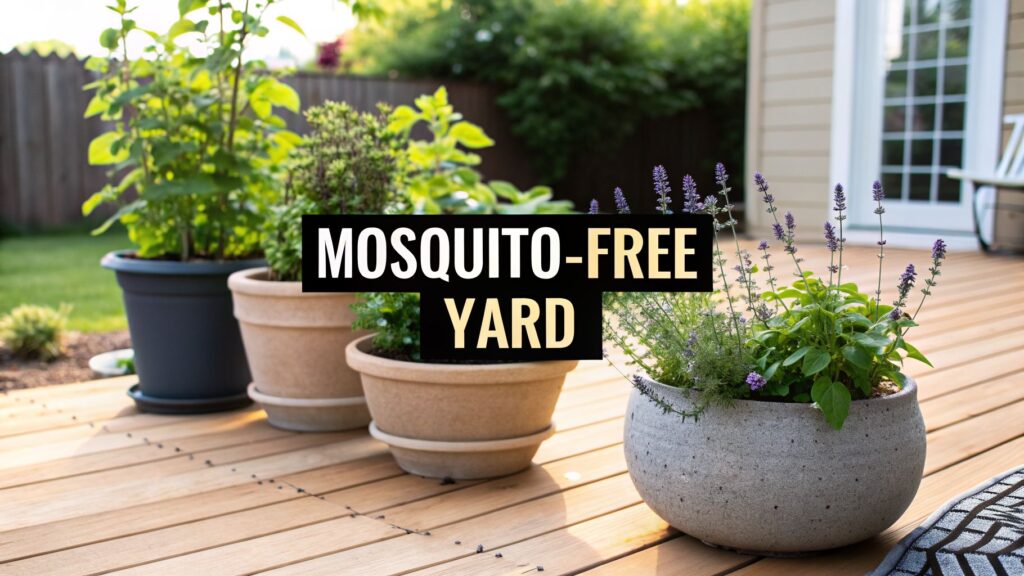
The unmistakable buzz of a mosquito often signals the end of a pleasant evening outdoors in Crown Point, Indiana. For homeowners, reclaiming a yard from these persistent pests is a top priority. A few mosquitoes are a simple nuisance; a full-blown infestation, however, can disrupt family gatherings, limit outdoor activities, and pose health concerns for your family. If you're a homeowner concerned about pests, you need a solution you can trust.
Many residents in Northwest Indiana searching for "pest control near me" or a trustworthy "exterminator in Crown Point, IN" want to understand their options, from DIY remedies to professional intervention. This guide is built to provide just that. We will cover a complete range of natural ways of repelling mosquitoes, offering actionable steps you can take today to protect your family and enjoy your outdoor spaces.
This list explores everything from strategic planting and essential oils to habitat modification and biological controls. We’ll also explain when a persistent mosquito problem requires the expertise of a professional pest control service. The Green Advantage, your local Crown Point pest control specialist, is committed to helping you find the right balance between immediate relief and effective long-term prevention. Let’s explore the most effective natural methods to make your yard a sanctuary once again.
1. Essential Oil-Based Repellents
Harnessing the power of plants is one of the most popular natural ways of repelling mosquitoes. Essential oils are concentrated botanical extracts containing aromatic compounds that insects, including mosquitoes, find unpleasant. These potent oils work by masking the carbon dioxide and lactic acid scents that humans emit, which are primary attractants for mosquitoes. Instead of killing them, the strong aroma effectively confuses their olfactory receptors, making it difficult for them to locate you as a target.
This method offers a DEET-free alternative for personal protection, making it a favored choice for families in Northwest Indiana looking for gentler solutions for their skin. Common and effective oils include citronella, lemon eucalyptus, peppermint, and lavender. Among the many essential oils effective against mosquitoes, understanding the properties and uses of lavender oil can provide a valuable insight into its repellent capabilities and other natural wellness benefits.
How to Use Essential Oils for Mosquito Control
- Topical Application: Never apply pure essential oils directly to your skin, as they can cause irritation. Dilute them with a carrier oil like coconut, jojoba, or almond oil. A safe and effective mixture is typically 10-20 drops of essential oil per ounce of carrier oil. Apply this blend to exposed skin, such as your arms, legs, and neck, but be sure to avoid your face and any open cuts.
- DIY Repellent Spray: Create your own spray by mixing about 40-50 drops of your chosen essential oil(s) with 4 ounces of distilled water and a splash of witch hazel in a spray bottle. Shake well before each use and spritz on clothing and skin, reapplying every couple of hours or after swimming.
- Patio Diffusion: For localized protection in outdoor living spaces like a porch in Crown Point, IN, use an essential oil diffuser. Add a few drops of citronella or peppermint oil to the water reservoir to create a mosquito-repelling zone for you and your guests.
Important Safety Note: Before using any new essential oil mixture, always perform a patch test on a small area of skin to check for sensitivity or allergic reactions. Store your oils in dark, glass bottles away from sunlight to preserve their potency.
2. Mosquito-Repelling Plants
Strategic landscaping with specific greenery is an effective natural way of repelling mosquitoes by creating a living barrier around your home. Certain plants, such as marigolds, basil, rosemary, and citronella, produce natural aromatic compounds that mosquitoes find offensive. These scents interfere with a mosquito's ability to smell the carbon dioxide you exhale, effectively camouflaging you and making your yard a less inviting target.

This approach not only adds a layer of pest defense but also enhances the beauty and function of properties across Northwest Indiana. Commercial businesses can use rosemary hedges for privacy and pest control, while homeowners in Crown Point have seen success with marigold borders. When selecting greenery for your yard, understanding what plants keep mosquitoes away can significantly contribute to a more pleasant outdoor experience. For a deeper look into the best species for our local climate, explore our guide to mosquito-repelling plants.
How to Use Plants for Mosquito Control
- Strategic Placement: Plant repellent species in areas where you spend the most time, such as near patios, decks, and entryways. Place marigolds along garden beds and property perimeters to create a defensive line. Grow basil and rosemary in sunny spots to maximize their oil production and repellent strength.
- Container Gardening: Use containers for plants like citronella geraniums. This allows you to move them to high-traffic outdoor areas when needed and bring them indoors to survive the harsh Indiana winters, ensuring you have them ready for the next season.
- Layered Landscaping: Combine plants of varying heights to create comprehensive coverage. For instance, use low-growing marigolds in front of taller rosemary bushes. Just be sure to space plants about 12-18 inches apart to allow for proper growth and air circulation.
Important Safety Note: While many repellent plants are safe, some, like catnip, can be invasive. It's best to plant catnip in contained areas or pots to prevent it from taking over your garden. Always check if a plant is toxic to pets or children before adding it to your landscape.
3. Mosquito Dunks and Bacillus Thuringiensis (Bti)
Targeting mosquitoes at their source is one of the most effective natural ways of repelling mosquitoes before they can mature into biting adults. This approach uses Bacillus thuringiensis israelensis (Bti), a naturally occurring soil bacterium that specifically targets and eliminates mosquito larvae. Bti is the active ingredient in Mosquito Dunks, which are small, donut-shaped solids designed to float in standing water. The bacteria release a protein that is toxic only to the larvae of mosquitoes, black flies, and fungus gnats, making it a safe choice for use around pets, wildlife, and beneficial insects.
This larvicidal method provides continuous control without introducing harsh chemicals into the environment, making it a responsible choice for homeowners in Northwest Indiana. Approved for organic pest management, Bti products like Mosquito Dunks disrupt the mosquito life cycle in common breeding sites such as bird baths, rain barrels, and ornamental ponds. Rather than repelling adult mosquitoes, this technique prevents them from ever emerging, significantly reducing the local population around your property.
How to Use Bti and Mosquito Dunks
- Target Standing Water: Conduct a weekly inspection of your property for any containers holding water. Apply Mosquito Dunks to bird baths, rain barrels, gutters, plant saucers, unused tires, and ornamental ponds where water collects.
- Proper Dosing: One Mosquito Dunk effectively treats up to 100 square feet of surface water for 30 days. For smaller containers like a 25-gallon rain barrel or a plant saucer, a small piece of a dunk is sufficient. The dunks will slowly release the Bti as they dissolve.
- Consistent Application: For reliable mosquito reduction in places like Crown Point, IN, reapply Dunks every 30 days throughout the mosquito season, which typically runs from April through October. This ensures that any new eggs laid in the treated water will not develop.
Important Safety Note: While Bti is non-toxic to humans, pets, and wildlife, always store Mosquito Dunks in their original, sealed packaging until you are ready to use them. For maximum effectiveness, combine this method with other strategies, like eliminating as much standing water as possible from your yard.
4. Citronella Candles and Torches
Creating an ambient, mosquito-free zone for outdoor gatherings is a classic challenge, and citronella candles and torches are a time-tested solution. These products work by releasing smoke and vapors containing citronella oil, a well-known natural insect repellent derived from lemongrass varieties. The strong, citrus-like scent functions as a spatial repellent, interfering with a mosquito's ability to detect the carbon dioxide and other chemical cues that draw them to humans. This makes them a great addition to other natural ways of repelling mosquitoes.
This method is particularly effective for creating a comfortable atmosphere on patios and decks, combining soft lighting with pest control. For homeowners in Northwest Indiana looking to enjoy summer evenings, strategically placed citronella products can make outdoor entertaining in places like Crown Point much more pleasant. The scent barrier they create is most effective in a localized area, making them ideal for stationary gatherings rather than activities that involve a lot of movement.
How to Use Citronella Candles and Torches
- Strategic Placement: Don't just place one candle in the middle of your table. For best results, create a perimeter by placing multiple candles or torches about 6-8 feet apart around your seating area. This establishes a more complete scent barrier.
- Pre-Light for Effectiveness: Light your candles and torches approximately 15-20 minutes before you or your guests plan to be outside. This allows enough time for the citronella scent to permeate the air and establish a protective zone.
- Mind the Wind: These products are most effective in calm weather. A steady breeze can quickly dissipate the protective smoke and scent, reducing their effectiveness by 50% or more. Consider using them in a sheltered area or combining them with an oscillating fan to help circulate the scent.
Important Safety Note: Always place candles and torches on a stable, non-flammable surface away from foot traffic, overhanging branches, and flammable materials. Never leave them unattended, and ensure they are fully extinguished after use. Store torch fuel in a cool, dry place away from direct sunlight and out of reach of children and pets.
5. Fans and Air Circulation
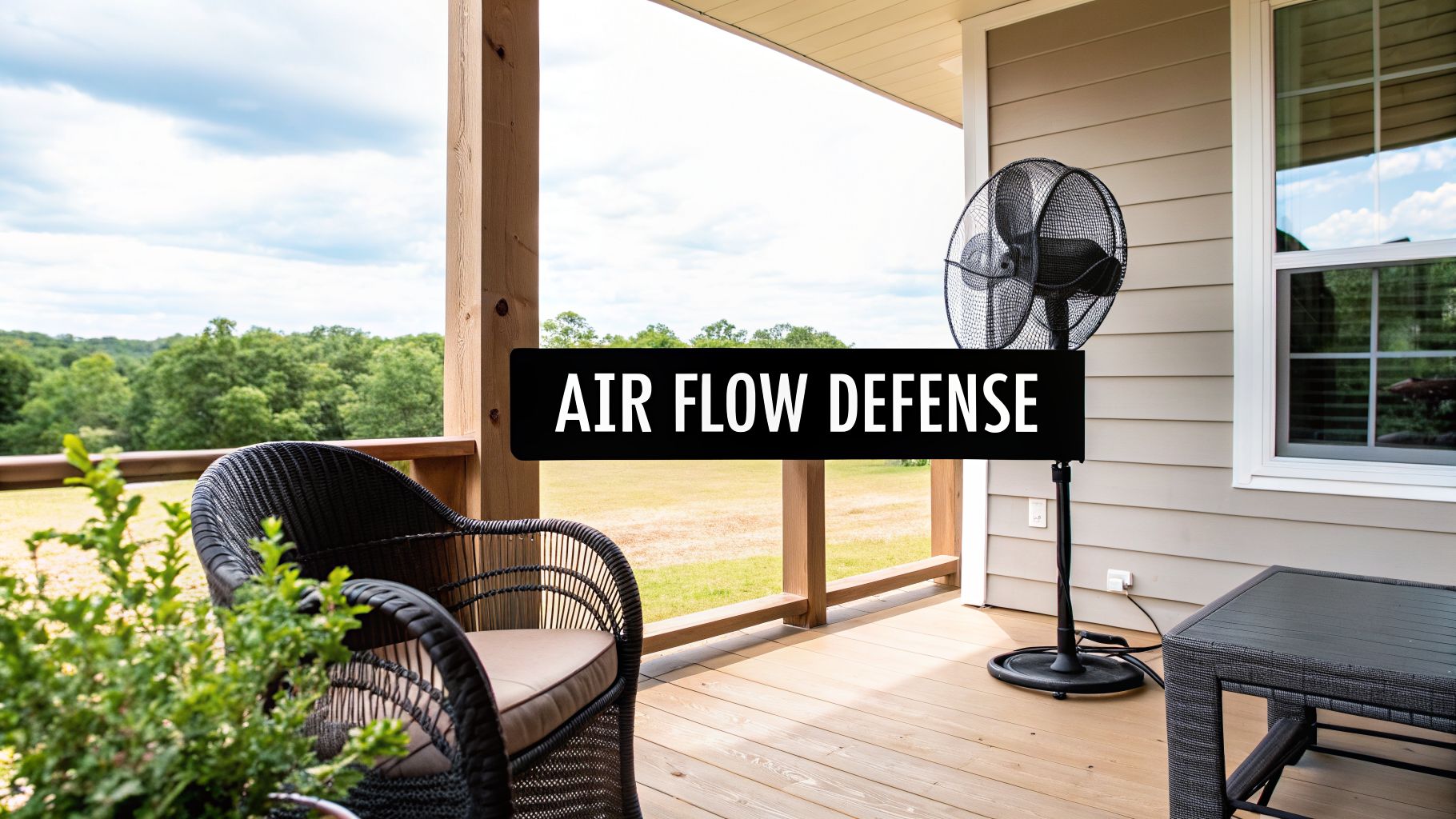
One of the simplest and most effective natural ways of repelling mosquitoes involves something many people already use during warm Northwest Indiana summers: a fan. Mosquitoes are notoriously weak fliers and struggle to navigate in wind speeds greater than a gentle breeze. By generating consistent airflow, fans create a turbulent environment that makes it nearly impossible for these pests to approach and land on you. This mechanical method physically blows them off course, providing a safe, chemical-free zone of protection.
This approach is highly effective for outdoor living spaces and offers the dual benefit of cooling relief on hot, humid days. On a deck in Crown Point, IN, the simple addition of a ceiling fan or a couple of powerful standing fans can drastically reduce mosquito encounters. The constant air movement disrupts their flight patterns and helps disperse the carbon dioxide and other human scents that attract them in the first place, making you a much harder target to find.
How to Use Fans for Mosquito Control
- Strategic Placement: Position fans to create a continuous cross-breeze over your primary seating area. If you have one fan, place it upwind of your location so it blows toward and across you, pushing mosquitoes away before they can reach you.
- Opt for Power: For effective mosquito deterrence, choose a fan that is at least 20 inches in diameter or has a high CFM (cubic feet per minute) rating. Small, weak fans may not generate enough wind to disrupt a determined mosquito.
- Use Multiple Fans: For larger patios or gatherings, using multiple oscillating fans can create a more comprehensive no-fly zone. Position them at different angles to ensure there are no calm spots where mosquitoes can take refuge and find a target.
- Install Ceiling Fans: If you have a covered porch or patio, installing a weatherproof outdoor ceiling fan is an excellent long-term solution. Mount it 7-9 feet above the ground to create a widespread, downward draft that keeps the area clear of flying insects.
Important Safety Note: Always use fans that are rated for outdoor use when placing them in uncovered or partially covered areas. Ensure cords are placed safely to prevent tripping hazards, and keep the fans away from direct exposure to rain.
6. Neem Oil Spray
Derived from the seeds of the neem tree (Azadirachta indica), neem oil is a powerful tool in the world of organic gardening and one of the most effective natural ways of repelling mosquitoes. The oil contains a compound called azadirachtin, which acts as a potent insect repellent and growth disruptor. Unlike chemical pesticides that kill on contact, neem oil works by interfering with the mosquito life cycle, repelling them from treated areas and inhibiting their ability to feed and reproduce. This makes it an excellent choice for managing pest populations over time.
For homeowners in Northwest Indiana, using neem oil on ornamental plants, shrubs, and non-edible vegetation provides a protective barrier that reduces the overall mosquito presence in their yards. It is particularly valued by those practicing eco-friendly pest control for its dual-action benefits: it controls pests while being gentle on plants and beneficial insects when used correctly. Products certified by the Organic Materials Review Institute (OMRI) confirm its status as a trusted solution for eco-conscious property management.
How to Use Neem Oil Spray for Mosquito Control
- Create the Solution: To make your spray, mix 2-3 tablespoons of 100% cold-pressed neem oil with one gallon of water. Since oil and water don't mix, add a teaspoon of mild, biodegradable liquid soap to act as an emulsifier. Shake the mixture vigorously in a garden sprayer until it is well combined.
- Proper Application: The best time to spray is during the cooler parts of the day, either in the early morning or late evening, to prevent leaf burn. Thoroughly coat all plant surfaces, paying special attention to the undersides of leaves where mosquitoes often rest during the day. Avoid spraying during hot, sunny conditions or when temperatures exceed 85°F.
- Reapplication Schedule: For consistent control, reapply the neem oil spray every 7-14 days. You will also need to reapply after heavy rainfall, as the water will wash the oil off the plant surfaces.
Important Safety Note: Before treating your entire garden or landscape, test the spray on a small section of a few different plants and wait 24-48 hours to check for any signs of sensitivity. Always wear gloves during application and wash your hands thoroughly afterward. Store unused neem oil in a cool, dark place to preserve its effectiveness.
7. Biological Predators and Habitat Enhancement
Transforming your yard into a balanced ecosystem is one of the most sustainable natural ways of repelling mosquitoes. This approach involves introducing and encouraging natural mosquito predators, turning your property into a less hospitable environment for pests. By establishing a habitat that supports these beneficial species, you create a self-regulating system of biological control. Instead of just repelling mosquitoes, you actively reduce their populations at the larval stage, preventing adults from ever emerging.
This long-term strategy is perfect for property owners in Northwest Indiana who want an ecological solution for ponds, water gardens, and other standing water features. Key predators include mosquito fish, which consume larvae, and dragonflies, which hunt adult mosquitoes. Creating habitats for other beneficial predators, such as bats, can further strengthen your property's natural defenses. For an in-depth look at this, discover how bat houses contribute to mosquito control and enhance your local ecosystem.
How to Use Predators for Mosquito Control
- Stock Mosquito Fish: For ponds and water features, introduce mosquito fish (Gambusia affinis), which are voracious consumers of mosquito larvae. A good starting point is stocking 5-10 fish per 100 square feet of water surface. Add them in the spring (April-May) to allow their population to grow before mosquito season peaks. Ensure your pond has a depth of at least 18-24 inches for the fish to survive Indiana winters.
- Create a Dragonfly Haven: Design water features with dragonflies in mind. Shallow ponds (18-24 inches deep) with gently sloped sides are ideal. Plant native emergent plants like arrowhead and pickerelrush around the edges and add riparian vegetation within 15 feet of the water to provide perching spots for adults and habitat for nymphs. Avoid stocking fish that prey on dragonfly nymphs if this is your primary goal.
- Support Local Wildlife: Beyond aquatic predators, encouraging birds and bats can significantly impact adult mosquito populations. Install birdhouses and bat boxes to invite these natural allies into your yard, providing them with shelter while they work to keep pest numbers down.
Important Safety Note: Before introducing any new species like mosquito fish to your property, consult the Indiana Department of Natural Resources (DNR) for local regulations. Partner with local native plant nurseries to select appropriate vegetation that will thrive in the Crown Point, IN, area and support a healthy predator habitat.
8. Eliminating Standing Water
One of the most effective and fundamental natural ways of repelling mosquitoes is to attack their life cycle at its source. Eliminating standing water on your property denies mosquitoes the essential environment they need to lay eggs and for their larvae to develop. Since it only takes a tiny amount of stagnant water and about a week for a new generation of mosquitoes to mature, proactively removing these breeding grounds is a powerful, non-chemical method to significantly reduce local mosquito populations.
This source reduction strategy is highly promoted by public health organizations and is a cornerstone of professional pest management. For residents in Northwest Indiana, a small amount of diligence can make a massive difference. A clean yard not only looks better but is also a critical part of any residential pest control plan in Crown Point, IN, helping prevent not just mosquitoes but other pests as well.

How to Eliminate Mosquito Breeding Sites
- Weekly Inspections: From March through October in Northwest Indiana, walk your property weekly and look for any place water has collected. Common culprits include buckets, toys, tarps, and even bottle caps.
- Routine Emptying: Empty and clean bird baths, pet water dishes, and plant saucers every one to two days. This simple habit disrupts the breeding cycle before larvae can mature.
- Gutter Maintenance: Clean your gutters and downspouts regularly to prevent clogs that create pools of stagnant water. Ensure downspouts direct water away from the house to avoid pooling.
- Landscape Management: Fill in low-lying areas in your yard that collect rainwater. Keep your grass mowed and clear away brush, as tall vegetation can hold moisture and create damp, shady spots that attract mosquitoes.
- Secure Water Storage: If you use rain barrels, ensure they are covered with a fine mesh screen to prevent mosquitoes from accessing the water to lay eggs.
Important Safety Note: Even well-maintained pools can become breeding grounds if not properly cared for. Ensure your pool pump and filter are running correctly and that water is properly chlorinated. Regularly check and repair any leaking outdoor faucets or irrigation systems that can create persistent puddles.
9. Garlic and Sulfur-Based Repellents
Utilizing the pungent properties of common kitchen ingredients and natural minerals offers a surprisingly effective way to deter mosquitoes. Garlic extract and sulfur compounds create powerful repellent barriers by overwhelming the olfactory receptors of mosquitoes. The strong, distinctive odor disrupts their ability to detect the carbon dioxide and lactic acid that guide them to you, making these natural options particularly effective for treating larger areas around Northwest Indiana properties.
This method provides a strong, non-chemical barrier, ideal for homeowners looking to protect outdoor living spaces without resorting to synthetic pesticides. The potent aroma of garlic, while noticeable to humans initially, dissipates quickly to our senses but remains a persistent irritant for mosquitoes, making it a clever tactic among natural ways of repelling mosquitoes. It's a key part of an eco-friendly pest control strategy.
How to Use Garlic and Sulfur for Mosquito Control
- DIY Garlic Spray: Create a simple yet potent spray by blending 3-4 cloves of fresh garlic with about one cup of water. Strain the mixture thoroughly through a cheesecloth or fine sieve to remove all solid particles, then transfer the liquid into a spray bottle for a fine mist application.
- Topical and Clothing Application: Lightly mist the garlic spray on your skin, clothing, and patio furniture about 20-30 minutes before heading outdoors. This allows the most intense aroma to fade for you while still being effective against pests. Reapply every 2-4 hours, or more frequently if you've been swimming or sweating.
- Property-Wide Treatment: For enhanced potency, especially around garden perimeters or near entertaining spaces in areas like Crown Point, IN, you can combine the garlic spray with sulfur powder. Lightly dust sulfur powder along plant beds and lawn edges to create a broader defensive zone that mosquitoes will avoid crossing.
Important Safety Note: Always test the garlic spray on a small patch of skin first to check for any irritation or sensitivity. When using sulfur, apply it carefully and avoid direct contact with delicate ornamental plants, as it can cause damage.
10. Professional Mosquito Reduction Programs
While DIY natural ways of repelling mosquitoes offer temporary relief, there are times when an infestation is too significant for individual efforts. When you need a more robust and lasting solution, professional mosquito control programs provide expert-level service. Licensed specialists, like The Green Advantage, integrate multiple advanced and nature-inspired approaches to manage mosquito populations effectively, restoring peace to your outdoor living spaces in Northwest Indiana. These programs go beyond simple spraying by addressing the entire mosquito life cycle.
This method is ideal for homeowners and businesses in Crown Point, IN, who find that despite their best efforts, mosquitoes continue to disrupt their outdoor activities. By combining property inspections, source elimination, and targeted treatments, professional exterminators can achieve a significant reduction in mosquito presence. This expert approach ensures that your property receives a strategic plan designed for maximum impact and long-term prevention, giving you back your yard.
How Professional Pest Control Solves the Problem
- Schedule a Property Inspection: The first step is to have a certified professional from The Green Advantage conduct a thorough inspection of your property. They will identify mosquito breeding grounds, locate resting areas in foliage, and assess environmental factors contributing to your specific pest problem.
- Implement a Custom Treatment Plan: Based on the inspection, our team will create a written plan. This involves eliminating standing water sources, applying larvicides to water that cannot be drained, and using targeted, eco-friendly adulticide treatments on vegetation where mosquitoes rest during the day.
- Maintain a Regular Service Schedule: Mosquito control is not a one-time event. Effective programs require regular service appointments, especially during the peak mosquito season from late spring through early fall in Northwest Indiana. This ensures continuous protection and prevents new populations from establishing themselves.
Important Safety Note: Always choose a licensed and insured pest control company that specializes in mosquito management, like The Green Advantage. We ensure the products we use are applied according to label directions to guarantee the safety of your family, pets, and the local ecosystem.
10 Natural Mosquito Repellents Compared
| Method | Implementation complexity | Resource requirements | Expected outcomes | Ideal use cases | Key advantages |
|---|---|---|---|---|---|
| Essential Oil-Based Repellents | Low — simple DIY application but frequent reapplication | Small supplies: essential oils, carrier oil or spray, diffuser | Short-term personal protection; reduces bites for hours | Personal use, small patios, short outdoor activities | Natural, pleasant scent, safe when diluted |
| Mosquito-Repelling Plants | Moderate — planning, planting and seasonal care | Plants, soil, garden space, regular maintenance | Long-term localized reduction; seasonal variability | Landscape borders, long-term garden solutions | Aesthetic benefit, supports pollinators, low chemical use |
| Mosquito Dunks (Bti) | Low — place in standing water; monthly replacement | Mosquito Dunks/Bti products, access to water sources | 30-day larval control; prevents emergence of adults | Bird baths, rain barrels, ornamental ponds | Targets larvae only, safe for non-target wildlife, organic-certified |
| Citronella Candles & Torches | Very low — light and position around area | Candles/torches/fuel, replacements; low setup | Temporary short-range repellency (~10–15 ft); ambiance | Small gatherings, decks, patios, evening events | Dual lighting and repellent function; no skin application |
| Fans & Air Circulation | Low–Moderate — placement/installation for best airflow | Fans (standing/ceiling/portable), power source | Immediate reduction in mosquitoes near seating (5–10 ft) | Covered patios, screened porches, outdoor seating zones | Chemical-free, provides cooling, one-time equipment cost |
| Neem Oil Spray | Moderate — proper mixing and timed applications | Neem oil, sprayer, protective gear; reapplication every 7–14 days | Reduces mosquitoes on vegetation; controls multiple pests | Gardens, landscaping, integrated pest management | Organic, multi-pest control, supports plant health |
| Biological Predators & Habitat Enhancement | High — design, species selection and habitat creation | Water features, native plants, fish/stocking, monitoring | Sustainable long-term population control once established | Ponds, retention basins, large properties, restoration sites | Self-sustaining, enhances biodiversity, no chemicals |
| Eliminating Standing Water | Low–Moderate — routine inspections and property fixes | Time and labor, minor drainage materials | Most effective long-term prevention; cuts breeding at source | All property types; foundational IPM activity | Cost-effective, eliminates root cause, environmentally safe |
| Garlic & Sulfur-Based Repellents | Low — simple DIY or ready-made sprays; frequent reapplication | Garlic/sulfur extracts, sprayer; frequent reapplications | Short-term repellency with variable efficacy; strong odor | Property perimeter treatments, users tolerant of garlic scent | Inexpensive, natural, food-grade options available |
| Professional Mosquito Reduction Programs | High — requires coordination with licensed providers | Service fees, access for treatments, recurring seasonal contracts | Significant, monitored reductions (often 70–90%) with ongoing care | Severe infestations, commercial properties, hands-off homeowners | Customized plans, professional equipment, guaranteed follow-up |
When DIY Isn't Enough: Partner with The Green Advantage for Lasting Relief
Arming yourself with an arsenal of natural ways of repelling mosquitoes is a powerful first step toward reclaiming your outdoor spaces in Northwest Indiana. From strategically placing mosquito-repelling plants like lavender and marigolds around your patio to deploying the targeted power of Bti dunks in standing water, you now have a robust toolkit to disrupt the mosquito life cycle. Mastering these methods means you can enjoy more evenings outside, protect your family from itchy bites, and create a more pleasant environment around your home.
True success comes from combining several strategies. For instance, you can create a powerful, synergistic effect by planting a border of repellent herbs, running an oscillating fan on your deck during gatherings, and diligently eliminating any sources of stagnant water after a rainfall. This integrated approach addresses mosquitoes at multiple points in their life cycle and is the cornerstone of effective, sustainable pest management.
The Limits of DIY and The Power of Professional Intervention
While the natural methods we've explored can drastically reduce mosquito populations, there are times when DIY efforts fall short. A persistent, overwhelming infestation may indicate hidden breeding grounds you can't locate or a problem that has become too widespread for home remedies to control effectively. This is particularly true for properties in Crown Point, IN, that are near natural water sources or have complex landscaping features.
When you find that you're still being driven indoors despite your best efforts, it's a clear signal that it's time to find a professional "exterminator near me." This is where expertise becomes not just a convenience, but a necessity for restoring your peace of mind and the full use of your property.
Why The Green Advantage is Your Local Solution
As your trusted local "exterminator in Crown Point, IN," The Green Advantage offers a comprehensive solution that goes beyond temporary fixes. Our approach is built on a deep understanding of the local Northwest Indiana ecosystem and the specific challenges homeowners face each season. We don't just spray and leave; we partner with you to create a lasting barrier against pests.
What to Expect When Working With The Green Advantage:
- A Thorough Property Inspection: Our technicians will meticulously inspect your property to identify both obvious and hidden mosquito breeding sites. We locate areas that even the most diligent homeowner might miss.
- Source Reduction and Habitat Modification: We provide actionable recommendations and assistance in eliminating standing water sources, which are the root cause of mosquito problems.
- Targeted, Eco-Conscious Treatments: We apply targeted, family- and pet-friendly treatments to key areas where mosquitoes rest and breed, such as dense foliage and under decks. This creates a protective zone that offers peace of mind.
Our commitment extends beyond just mosquitoes. Whether you're dealing with ant control, need termite control to protect your investment, or require rodent control services, we are your all-in-one resource for residential and commercial pest control. Don't let pests dictate your outdoor plans or compromise your comfort. Take control of your yard and enjoy the beautiful Indiana seasons to the fullest.
Ready to enjoy your yard without the constant buzz and bite of mosquitoes? The Green Advantage combines the principles of natural pest management with professional-grade solutions to create a safe and comfortable outdoor space for your family in Crown Point, IN. Visit our website at The Green Advantage to schedule a pest inspection and request a quote for your property today.
Bed Bug Exterminator Crown Point IN

Bed Bug Exterminator Crown Point, IN: Protecting Your Home from Hidden Infestations
In the charming community of Crown Point, IN, residents take pride in maintaining comfortable and safe homes. However, a growing concern has been quietly disrupting this peace of mind: bed bugs. These elusive pests are not just a nuisance found in travel hubs or hotels; they have increasingly made their way into residential neighborhoods, causing stress and discomfort for families. The rise in local infestations highlights the reality that no home is entirely immune to these hitchhikers, regardless of cleanliness or location. Because bed bugs are experts at staying out of sight, many homeowners remain unaware of an intrusion until the population has grown significantly, making the situation far more difficult to manage. Hidden infestations pose a unique challenge because early detection requires a keen eye and specific knowledge of insect behavior. Unlike other pests that might scurry across the kitchen floor in broad daylight, bed bugs prefer to remain concealed in the deepest crevices of furniture and bedding, emerging only to feed. This stealthy nature often allows them to establish a strong foothold before residents even notice the first bite mark or spotting on a sheet. The psychological toll of knowing one's sanctuary has been invaded can be overwhelming, leading to sleepless nights and anxiety. While the discovery of bed bugs can be alarming, proactive prevention and professional intervention offer a clear path to resolution. Attempting to handle these resilient insects without expert assistance often leads to frustration and wasted resources, as over-the-counter solutions rarely address the root of the problem. Professional bed bug exterminators bring the necessary tools, strategy, and experience to fully eradicate infestations rather than just treating surface-level symptoms.Understanding Bed Bugs: What Makes Them So Hard to Detect
Behavior and Habits
Bed bugs are notoriously difficult to spot primarily because they are nocturnal creatures that have evolved to avoid detection. They spend the vast majority of daylight hours tucked away in tight, dark cracks and crevices where they are protected from disturbances and predators. Their activity peaks between midnight and 5 a.m., coinciding with the deepest sleep cycles of their human hosts, allowing them to feed without interruption. This survival instinct means that a casual visual inspection during the day will rarely reveal live insects unless the infestation has reached severe levels.Signs of Infestation
Since seeing a live bug is rare in the early stages, residents must learn to recognize the subtle physical evidence left behind. The most common indicators include small, itchy, red welts on the skin, often arranged in a line or cluster, which appear after waking up. Beyond bites, homeowners should look for tiny, rust-colored blood spots on bed sheets or pillowcases, caused by crushed bugs or the aftermath of feeding. Another telltale sign is the presence of dark fecal spots, which look like ink dots, on mattress seams, tags, or surrounding furniture.Why They Multiply Quickly
One of the most alarming aspects of a bed bug problem is the speed at which a minor introduction can turn into a full-blown infestation. A single female bed bug is capable of laying hundreds of eggs over her lifetime, typically depositing one to five eggs each day. These eggs are tiny, sticky, and hard to see, often hidden in safe crevices where they can hatch undisturbed within a week or two. Because the nymphs can begin feeding immediately and reach maturity in as little as a month under favorable conditions, the reproductive cycle accelerates rapidly. [caption id="attachment_500" align="aligncenter" width="550"] Bed Bug Exterminator Crown Point IN[/caption]
Common Hiding Spots in Crown Point Homes
Bedroom and Furniture
The bedroom serves as the primary epicenter for bed bug activity simply because it provides easy access to their food source during the night. Mattresses and box springs are the most common hiding spots, specifically along seams, piping, and under tags where the fabric folds over. However, checking the bed itself is often not enough; headboards and bed frames—especially those made of wood—offer countless cracks and screw holes where bugs can nestle deeply. Nightstands and dressers placed close to the bed are also prime real estate, allowing the insects to commute short distances to feed before retreating to safety.Living Areas
While the bedroom is the most likely location for an infestation, living rooms and dens are increasingly becoming hotspots, especially in homes where family members spend time resting on sofas or recliners. Upholstered furniture provides an ideal environment for bed bugs, with deep crevices between cushions and underneath fabric folds offering secure harborage. Baseboards and the spaces behind electrical outlets also serve as transit highways and nesting grounds, allowing pests to move between rooms unnoticed.Luggage and Personal Items
Bed bugs are famously termed "hitchhikers" because they do not fly or jump; instead, they travel by latching onto personal belongings. Luggage, backpacks, and purses are common vectors for bringing these pests into a Crown Point home, especially after travel or visits to infested locations. Once inside, the bugs will migrate from the luggage to nearby furniture or clothing piles, effectively bypassing exterior barriers.DIY Detection and Prevention Tips
Regular Inspection Techniques
Homeowners can take a proactive stance against infestations by incorporating regular pest inspections into their cleaning routines. A high-quality flashlight is an essential tool, as bright light causes bed bugs to scatter, making movement easier to spot in dark crevices. Using a magnifying glass or a smartphone camera with a zoom function can help identify tiny eggs or translucent nymphs that are otherwise invisible to the naked eye. Running a credit card or a stiff piece of paper along the cracks of baseboards and furniture joints can force hiding bugs out into the open.Vacuuming and Steam Cleaning
Vacuuming is a highly effective, immediate way to reduce the number of visible bugs and eggs on surface areas. Using a vacuum with a strong suction and a crevice tool allows homeowners to reach deep into mattress seams, carpet edges, and furniture interiors to physically remove the pests. However, the vacuum bag or canister must be emptied into a sealed plastic bag and disposed of outside immediately to prevent escapees from returning.Early Warning Systems
To supplement visual inspections, homeowners can install passive monitoring devices that act as early warning systems. Interceptors are small, dish-like traps placed under the legs of beds and furniture; their slippery surfaces trap bugs attempting to climb up or down, confirming their presence. Mattress and box spring encasements are another crucial tool; these specialized, zipper-locked covers trap existing bugs inside while preventing new ones from nesting in the mattress’s complex folds.Why DIY Treatments Often Fail
Limited Reach
One of the primary reasons self-treatment efforts fall short is the inability of consumer-grade products to reach the pests where they actually live. Bed bugs are masters of concealment, often residing deep within walls, under floorboards, or inside the internal mechanisms of electronics. Store-bought sprays and foggers typically only coat surface areas, leaving the vast majority of the population untouched in their protected sanctuaries. Because these insects can survive for months without feeding, those hidden away simply wait until the chemical residue dissipates before re-emerging. This "surface-only" approach creates a false sense of security while the infestation continues to thrive out of sight.Resistance to Chemicals
Over the past few decades, bed bugs have developed a significant genetic resistance to many of the common pesticides available to the general public. Research has shown that the pyrethroids found in most over-the-counter bug sprays are increasingly ineffective, with some populations virtually immune to their effects. When homeowners apply these products, they may kill a few vulnerable insects, but the resistant survivors continue to breed, passing those strong genes to the next generation.Incomplete Solutions
Successful bed bug eradication requires a comprehensive strategy that addresses every life stage of the insect, from egg to adult. DIY attempts often focus on killing the visible adults while neglecting the tiny, resilient eggs that are glued to hidden surfaces. If even a few eggs survive the treatment, a new generation will hatch within weeks, restarting the cycle and leading to recurring infestations. This "yo-yo" effect of knocking down the population only to see it bounce back is a common source of frustration for homeowners. [caption id="attachment_310" align="aligncenter" width="550"] Bed Bug Extermination Crown Point IN[/caption]
Professional Bed Bug Extermination in Crown Point
Inspection and Assessment
When a professional team like The Green Advantage is called in, the process begins with a rigorous and systematic inspection of the property. Licensed technicians possess the training to identify subtle signs of activity that an untrained eye would likely miss, mapping out the full extent of the infestation. This assessment goes beyond just the bedroom; it includes analyzing traffic patterns in the home, adjacent rooms, and potential entry points to ensure no harborage area is overlooked.Treatment Options
Professional exterminators have access to a wide arsenal of advanced treatment methods that are not available to the general public. Heat treatment is one of the most powerful options, involving specialized equipment that raises the temperature of the affected area to levels that are lethal to bed bugs and eggs instantly. Alternatively, chemical treatments using commercial-grade insecticides with residual effects can be applied to key harborage zones, creating a long-lasting barrier against re-infestation. Often, an integrated pest management (IPM) approach is utilized, combining chemical and non-chemical methods to attack the problem from multiple angles while minimizing risks to health and property.Follow-Up Services
The job of a professional exterminator does not end once the initial treatment is applied; follow-up is a critical component of success. Because of the bed bug's elusive nature and resilient life cycle, a secondary inspection or treatment is typically scheduled to catch any stragglers or newly hatched nymphs. This ensures that the reproductive cycle is completely broken and that the home remains pest-free in the long term. The Green Advantage prioritizes this continuity of care, offering peace of mind to clients that the investment they made in professional services yields permanent results rather than temporary relief.Eco-Friendly Solutions by The Green Advantage
Safe Chemicals and Treatments
For many families in Crown Point, the safety of children and pets is a top priority when considering pest control. The Green Advantage addresses this concern by utilizing eco-friendly products and application methods designed to be tough on pests but gentle on the household environment. These treatments focus on targeted application rather than indiscriminate spraying, reducing the overall chemical load in the home.Preventive Programs
Beyond immediate bed bug extermination, The Green Advantage emphasizes the importance of ongoing prevention to keep homes safe year-round. Customized maintenance programs are available, providing regular inspections and proactive treatments that create a protective shield around the property. These services are particularly valuable for frequent travelers or those living in multi-unit buildings where the risk of re-introduction is higher.Sustainable Practices
Sustainability is at the core of The Green Advantage's philosophy, influencing every aspect of their service delivery. The company is committed to using methods that minimize environmental impact, such as heat remediation which relies on thermal energy rather than chemicals. This approach not only aligns with the values of eco-conscious homeowners but also proves to be highly effective against pesticide-resistant bed bug strains.Protecting Your Home After Extermination
Cleaning and Decluttering
Once the professional treatment is complete, the homeowner plays a vital role in maintaining a pest-free environment through rigorous cleaning and decluttering. Removing piles of clothing, old magazines, and unused items eliminates potential hiding spots, forcing any remaining pests out into the open where they can be detected or exposed to residual treatments. Washing all bedding, curtains, and clothing in hot water and drying them on high heat ensures that any lingering bugs or eggs are destroyed.Preventive Measures
To safeguard the home against future invasions, specific physical barriers should remain in place long after the exterminators have left. High-quality mattress and box spring encasements should be kept on permanently to protect the bed, which is the most vulnerable area in the house. When returning from trips, luggage should be kept off the bed and inspected outside or in a garage before being brought inside.Ongoing Monitoring
Vigilance is the final key to long-term protection; residents should not assume the problem is gone forever without verification. Periodic spot checks of the mattress seams, headboard, and interceptor traps should become a routine habit, perhaps done every time the sheets are changed. If any suspicious signs reappear, such as new bites or blood spots, contacting The Green Advantage immediately allows for a swift response before the population can rebuild. [caption id="attachment_717" align="aligncenter" width="550"] Bed Bug Extermination[/caption]
When to Call a Bed Bug Exterminator Immediately
Early Warning Signs
Waiting to see if a bug problem "goes away" is a strategy that almost always results in a larger, more expensive crisis. If residents notice persistent, unexplained bites that appear in clusters or lines, it is a strong indication of active feeding. Finding cast skins (exoskeletons shed by growing nymphs) or actual live bugs during a cleaning session warrants an immediate call to a professional. These early signs suggest that the bugs are already reproducing and feeding, meaning the window for a quick, localized treatment is closing rapidly.Rapid Infestation Scenarios
There are certain scenarios where the speed of professional intervention is critical to preventing a household disaster. If bed bugs are discovered in multiple rooms or if the infestation has spread to shared walls in a duplex or apartment complex, the situation is considered a rapid infestation emergency. In these cases, the pests are utilizing the structure of the building to move freely, and DIY methods will simply chase them from one area to another.Choosing a Trusted Local Exterminator
When facing the stress of a bed bug infestation, choosing the right service provider makes all the difference in the outcome. Crown Point residents are encouraged to look for a company with a proven track record, proper licensing, and specific experience in bed bug remediation. The Green Advantage offers the local expertise and dedicated customer service that national chains often lack, providing personalized attention to every unique situation. BConclusion
Bed bug infestations are a hidden danger that can disrupt the sanctity of any home in Crown Point, turning a place of rest into a source of anxiety. The challenge lies not only in the resilience of these pests but in their ability to remain undetected until their numbers have surged. Ignoring the subtle warning signs or relying on ineffective DIY remedies often allows the problem to escalate, leading to greater emotional and financial costs. However, by understanding the habits of these insects and recognizing the importance of early detection, residents can take back control of their environment. Ultimately, the most effective defense against bed bugs is a partnership with knowledgeable professionals who possess the tools and expertise to eliminate the threat completely. The Green Advantage offers a beacon of hope for those struggling with infestations, providing eco-friendly, reliable solutions that prioritize the safety of families and pets. There is no need to face this battle alone or live in discomfort. Homeowners are encouraged to reach out to The Green Advantage at the first sign of trouble, ensuring that small intrusions are dealt with swiftly before they become major, life-disrupting problems.Stink Bug Control in Crown Point, IN: How to Get Rid of Stink Bugs
When you find a stink bug inside your Crown Point home, the goal is simple: get it out without releasing that awful smell. Dealing with these pests effectively involves a two-part plan: first, remove the ones you see, and second, stop more from getting in. The best way to handle the immediate problem is by vacuuming them up or dropping them into a container of soapy water. Both methods are quick, clean, and—most importantly—odor-free. But for a lasting solution, you need a professional strategy.
The Unwanted Houseguests Arriving in Crown Point
If you're a homeowner in Northwest Indiana, you know the scene. As soon as the weather turns crisp in the fall, suddenly your home’s siding, windows, and doors are covered with brown, shield-shaped insects. Seeing this unfold at your home in Crown Point doesn't mean it's dirty; it's just your turn to deal with the annual stink bug migration. This is a common issue our community faces, and a professional exterminator near you can help.
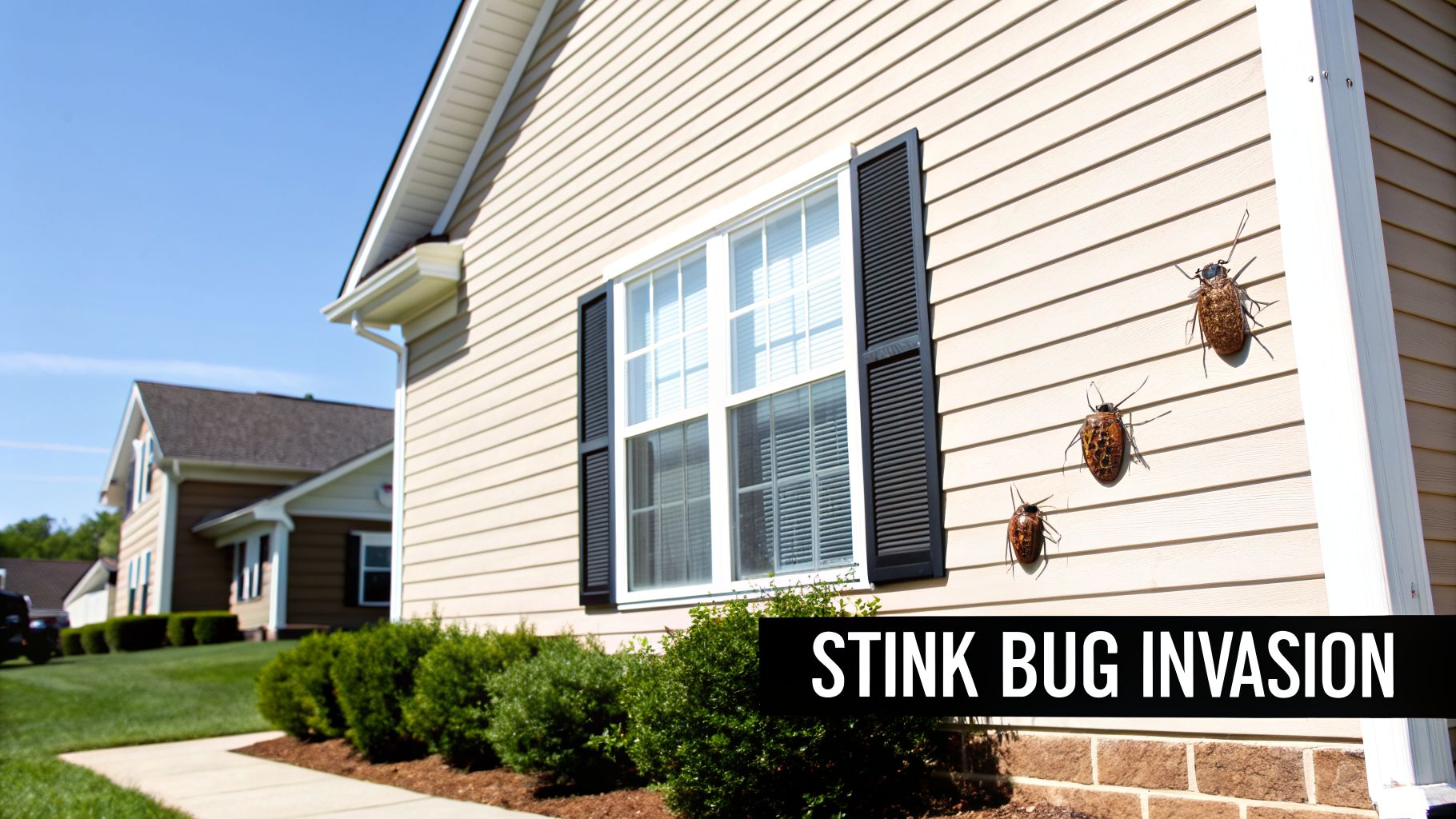
These are brown marmorated stink bugs, an invasive species that has become a huge nuisance across the region. As a trusted local provider of residential and commercial pest control, The Green Advantage has seen this problem grow firsthand. We want to share our field-tested strategies to help you tackle the bugs you have now and prevent them from coming back.
A Growing Problem Across Indiana
It can feel like an overnight invasion. One day everything is fine, and the next you have hundreds of these pests looking for a warm place to spend the winter—inside your walls. Since they first showed up in the U.S. in the late 1990s, their population has absolutely exploded.
They are now a confirmed pest in 47 states and 4 Canadian provinces, a real testament to how resilient they are. Here in Indiana, the National Pest Management Association is forecasting a major surge. Warmer, drier autumns give them more time to thrive outdoors before they make a run for our homes.
Milder winters are a big factor. Without a sustained hard freeze, local stink bug populations in northern states like ours could balloon by as much as 70%. This is why proactive pest control is no longer optional for homeowners.
This population boom explains why a minor seasonal annoyance has turned into a major headache for homeowners from Crown Point to Valparaiso. You can even see just how far they've spread by looking at this state-by-state stink bug tracking map.
Quick Guide to Handling Stink Bugs Indoors
When you find stink bugs inside, your first instinct might be to swat or crush them. That's the one thing you don't want to do. The table below outlines the right way to handle them and the common mistakes to avoid.
| Action | Best Practice (What to Do) | Common Mistake (What to Avoid) |
|---|---|---|
| Immediate Removal | Use a vacuum with a hose attachment to suck them up. Dispose of the bag or empty the canister outside immediately. | Crushing or swatting them, which releases their defensive, foul-smelling odor. |
| Trapping | Place a shallow dish of soapy water under a light source at night. They are attracted to the light and will fall into the trap. | Using ineffective sticky traps that can also catch beneficial insects or leave a residue. |
| Disposal | Flush them down the toilet or seal them in a plastic bag and place them in an outdoor trash can. | Throwing them in an indoor, unsealed trash can, where the smell can linger and escape. |
| Observation | Take note of where you are finding them most often (e.g., a specific window, a light fixture). This can help you pinpoint entry points. | Ignoring the problem and assuming they will just go away on their own. They won't. |
Following these simple do's and don'ts will make managing the occasional indoor stink bug much less stressful and a lot less smelly.
Why Professional Pest Control Is Your Best Defense
While you can certainly manage a few stragglers with a vacuum, a full-blown invasion requires a more strategic approach. This is where professional help really shines and why so many homeowners opt for professional pest control in Crown Point, IN. A professional treatment protects your property, health, and peace of mind.
At The Green Advantage, our experience has shown us what works:
- Exterior Barrier Treatment: The most effective defense is stopping them before they breach your home. We apply a targeted treatment to your home’s exterior in the early fall, right when they start looking for winter shelter. This perimeter defense is key to preventing infestations of stink bugs, spiders, and ants.
- Local Expertise and Timing: We live and work here, so we know the pest pressures of Northwest Indiana. Our stink bug applications are timed perfectly with their migratory patterns to ensure maximum impact.
- Long-Term Prevention: A professional service isn't a one-time fix; it's an investment in keeping your home pest-free. We break the cycle, preventing them from coming back season after season.
Instead of fighting a losing battle against a constant stream of bugs all winter, let our team put a stop to it. Our residential pest control services are designed to handle persistent invaders like stink bugs, giving you and your family true peace of mind.
Getting to Know Northwest Indiana's Unwanted Guest: The Stink Bug
If you've noticed swarms of shield-shaped insects crawling on the sunny side of your Crown Point home in the fall, you've met the brown marmorated stink bug (Halyomorpha halys). These pests aren't native to the U.S., but they've certainly made themselves at home here in Northwest Indiana.
Before you can get rid of them, you need to be sure that's what you're dealing with.
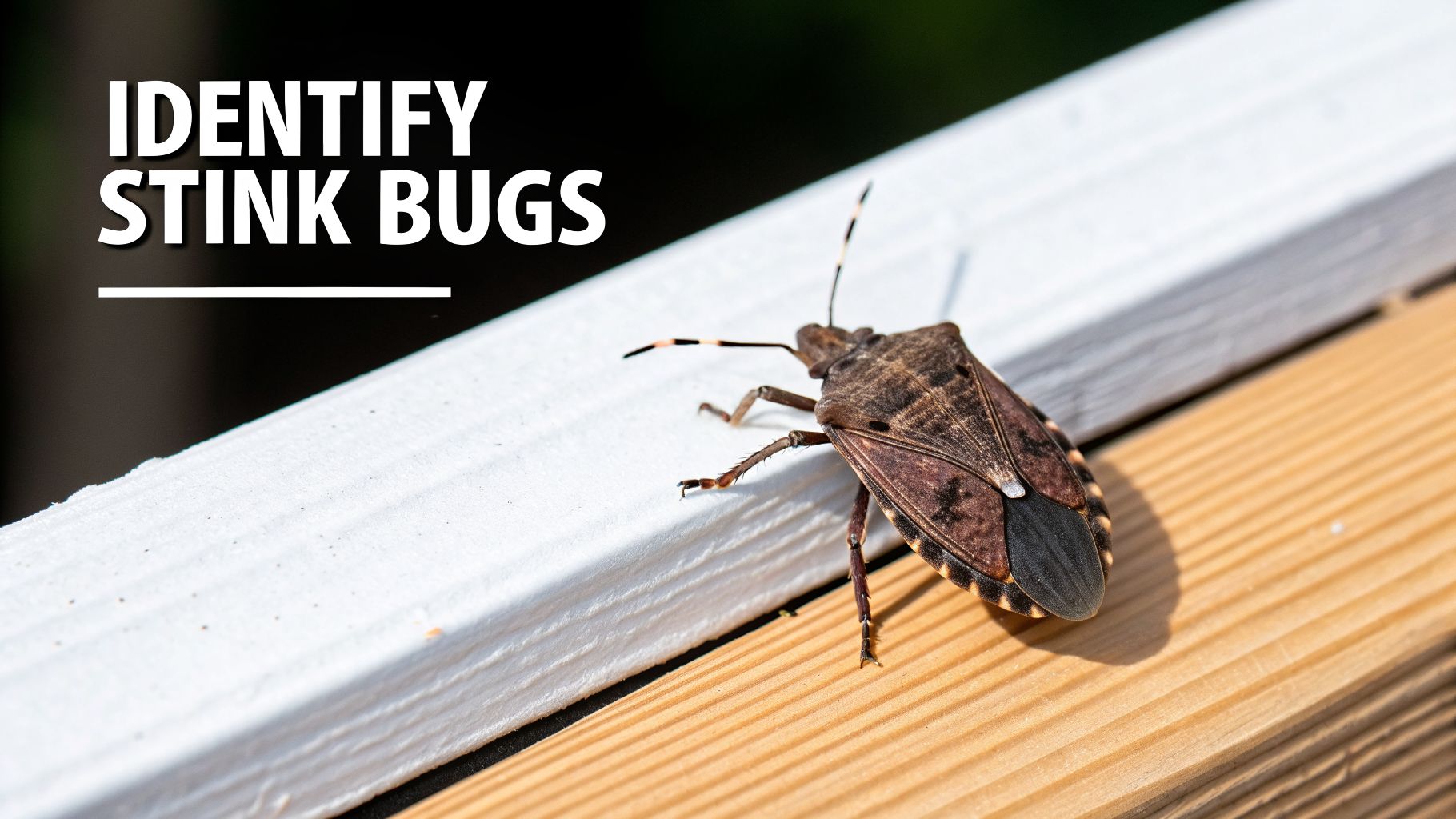
Look for a distinctive shield shape that's about a half-inch long. They have a mottled, almost marbled brown-and-gray pattern. The key giveaways are the light-colored bands on their antennae and along the edges of their abdomen—details that help separate them from other local look-alikes.
Why Your Home Becomes Their Winter Getaway
That autumn invasion isn't random. As the days get shorter and a chill hits the air, a stink bug’s instinct screams one thing: find shelter. They're not looking to raid your pantry or start a family in your living room. Their goal is to find a safe, quiet place to ride out the winter.
This dormant state is called diapause, and your home's walls, attic, and crawl spaces are the perfect five-star resort. They’ll congregate on warm, sun-drenched siding, methodically searching for any tiny crack or gap that lets them inside.
Here's the key thing to remember: They aren't in your house to feed or breed. They're just waiting for spring. This is why a sudden warm, sunny day in February can trigger a flurry of activity—they get confused and think it's time to head back outside.
The "Stink" Is a Warning, Not a Weapon
Of course, their most famous feature is that unforgettable smell. When a stink bug feels threatened or gets crushed, it releases a pungent chemical from glands on its abdomen. It’s a purely defensive move meant to ward off predators.
People describe the odor in a lot of ways, from old cilantro to burnt rubber. Whatever you call it, it’s effective, and it lingers.
This is exactly why grabbing a shoe or magazine is the worst way to handle one. Squashing a stink bug not only unleashes that awful smell, but there's also some thought that the scent may signal danger, attracting other stink bugs in the area. Your one-bug problem could quickly get worse. For a closer look at their biology, check out our deep dive on The Brown Marmorated Stink Bug.
A Major Nuisance, But Not a Direct Threat
Let’s be clear: stink bugs won’t hurt you. They don't bite people or pets, and they won't chew through your home's foundation like termites. Their mouthparts are designed strictly for sipping juice from plants.
But that doesn't mean they're harmless. Their droppings can leave behind ugly stains on curtains, walls, and furniture. A full-blown infestation creates a constant, unpleasant odor and the unnerving feeling of sharing your space. For most homeowners in Crown Point, the sheer annoyance is more than enough reason to call in a professional exterminator and stop the invasion before it starts.
Safely Removing Stink Bugs From Your Home
You see it out of the corner of your eye—a small, shield-shaped bug crawling up the curtains. Then you see another one buzzing around a lamp. When stink bugs make their way inside, your first instinct is to get them out, and fast, without triggering that notoriously awful smell.
Good news: you can do this without resorting to harsh chemical sprays. The secret is to avoid crushing or startling them. A calm, deliberate approach is all you need to keep your home pest-free and, more importantly, odor-free.
The Vacuum Method and The Sock Trick
One of the best tools for the job is probably already in your hall closet. A vacuum cleaner with a hose attachment lets you suck up stink bugs from a safe distance, whether they’re high up on the ceiling or hiding behind furniture.
But just vacuuming them up can create a new problem. The bugs can release their odor inside the canister, and that smell will blast out every time you turn the vacuum on. To get around this, we always recommend the "sock trick."
- Grab an old tube sock and slide it into the vacuum hose.
- Fold the cuff of the sock over the end of the nozzle.
- Secure the cuff tightly with a rubber band.
Now, when you turn the vacuum on and suck up the bugs, they'll be trapped inside the sock, not in your vacuum’s main compartment. When you're finished, just carefully pull the sock out, tie it in a tight knot, and toss it in your outdoor trash bin. It's a clean, simple, and smell-free solution our technicians use all the time for interior cleanups in homes around Crown Point.
The DIY Soapy Water Light Trap
Stink bugs are naturally drawn to light, a behavior you can easily use to your advantage. A homemade light trap is an incredibly effective and hands-off way to capture dozens of them overnight, especially in a dark room where it's the only light source.
Here’s the simple, field-tested trap we swear by:
- Get a wide, shallow dish. An aluminum foil roasting pan is perfect for this.
- Fill it with an inch of water and add a good squirt of dish soap. A quick stir is all you need. The soap breaks the water's surface tension, meaning any bug that lands in it will sink and drown instead of just floating on top.
- Set up a light source. A small, battery-operated desk lamp or even a book light aimed directly at the water's surface is ideal.
Place the trap in the room where you’ve seen the most bugs. Turn off all the other lights in the room, shut the door, and leave it overnight. In the morning, you’ll be surprised at how many you’ve caught. You can just flush the contents down the toilet.
A Note on Store-Bought Sprays: Many homeowners in Northwest Indiana grab aerosol pest sprays from the hardware store, but we’ve found these are a poor choice for stink bugs. They’re contact-killers, which means you have to spray each bug directly—a losing battle when you have a real infestation. Worse, they introduce unnecessary chemicals into your home and do absolutely nothing about the hundreds of bugs still hiding in your walls, waiting to emerge all winter long.
The Best Approach Is a Two-Part Strategy
While these removal methods work great for the bugs you can see, they are only half the battle. A true, lasting solution combines immediate removal with professional prevention.
Getting rid of bugs one by one is a temporary fix. To actually stop the endless cycle, you need an exterminator in Crown Point, IN, to apply a preventative treatment to your home's exterior. This creates an invisible barrier that stops new bugs from ever getting inside in the first place, saving you from the daily chore of vacuuming and setting traps. It’s the only way to address the root of the problem and get real peace of mind.
Your Guide to a Pest-Proof Home This Fall
The absolute best way to handle a stink bug problem is to stop it before it even starts. Sure, you can deal with the bugs you see inside, but that’s just a temporary fix. If you want real, lasting peace of mind, you have to prevent them from getting in in the first place. Think of it as a critical fall project for your Crown Point home—investing a weekend now will save you from a winter-long headache.
Sealing up your home against these persistent pests is the single most effective strategy you can use. This means taking a good, hard look at your home’s exterior and closing off all the tiny cracks and gaps they use as their personal doorways.
Your Weekend Pest-Proofing Checklist
First things first, grab a notepad and take a slow walk around the outside of your house. Your mission is to find and jot down every potential entry point, no matter how small it seems. I'm not kidding when I say they can squeeze through cracks just 3.5 millimeters wide, so you need to be thorough.
Here are the hotspots you'll want to inspect carefully:
- Windows and Doors: Check the seals around every single window and door frame. Look for any caulk that's cracked or peeling away. Worn-out weather stripping is another major culprit, creating just enough of a gap for a bug to slip through.
- Siding and Foundation: Pay close attention to where your siding meets the foundation. As a house settles over time, gaps frequently open up here. While you're down there, look for any cracks in the foundation itself.
- Utility Entry Points: Take a close look at every spot where pipes, wires, and vents enter your home. This includes your gas lines, electrical conduits, outdoor faucets, and dryer vents. These areas are notorious for having unsealed gaps around them.
Once you’ve got your list, it's time to get to work. Use a high-quality silicone or silicone-latex caulk to fill the cracks around windows, siding, and those utility penetrations. For any larger gaps, you might need to stuff some steel wool or use expandable foam first, then caulk over it for a perfect seal.
This whole process is what we in the business call "exclusion." It's absolutely critical. While vacuuming up a few stragglers inside helps, the real victory is preventing the hidden masses from setting up camp in your wall voids for the winter.
For any bugs that do manage to sneak past your defenses, the infographic below shows a couple of simple, odor-free ways to get rid of them.
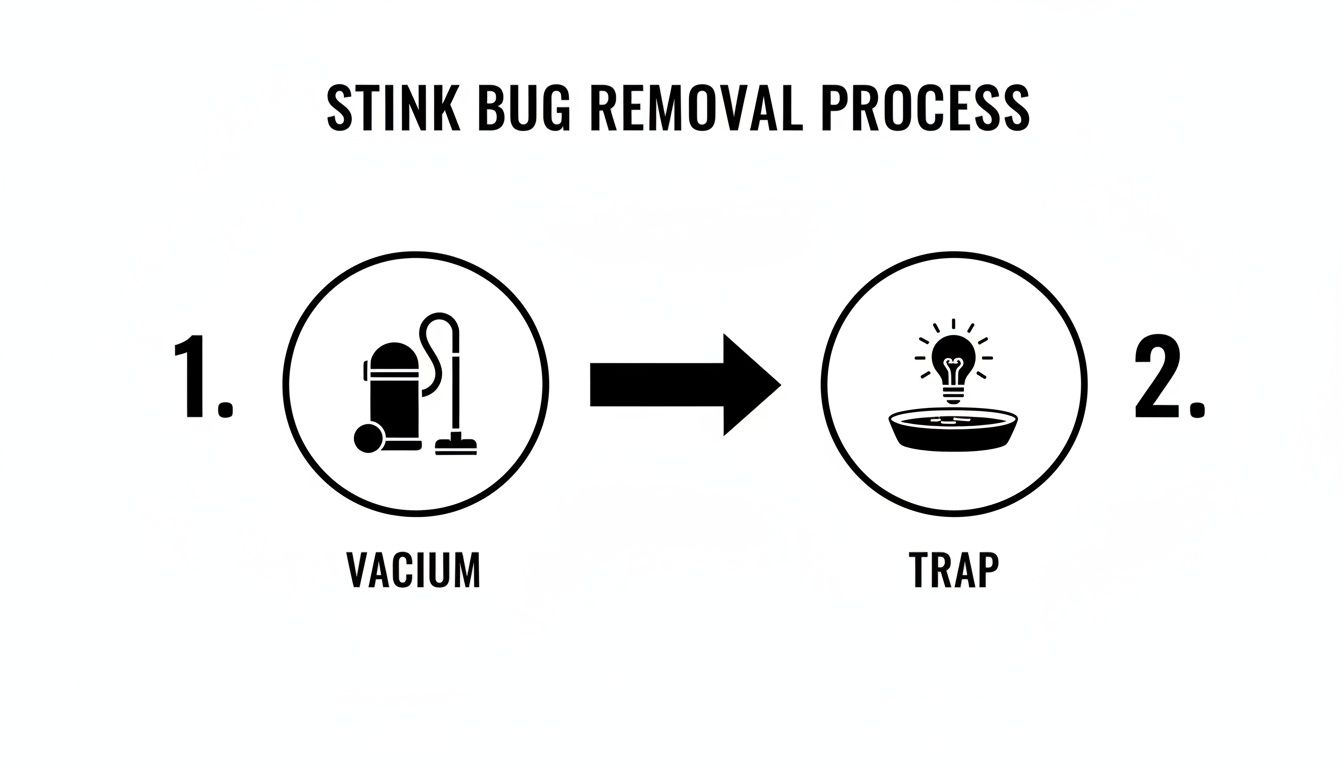
Just remember, while these indoor methods are handy for the ones you see, proactive sealing is your primary line of defense against a full-scale invasion.
Overlooked Entry Points for Stink Bugs
Beyond the usual cracks, there are a few other weak spots on a home that give pests an easy way in. From my experience, many homeowners in Northwest Indiana miss these vulnerabilities during their fall prep.
Damaged Window and Door Screens: A tiny tear or a small hole in a screen is basically an open invitation. Make sure to repair or replace any damaged screens before the stink bugs start their fall migration.
Attic and Soffit Vents: These are essential for airflow, but if they aren't properly screened, they become superhighways for stink bugs. Check that all your vents have intact, fine-mesh screening.
Fireplace Chimneys: An open chimney flue is like leaving the front door wide open for pests. Always ensure your chimney is capped and that the damper is closed tight when it's not in use.
A huge part of keeping unwanted guests out is just maintaining your home's exterior. Taking a moment to understand what a window seal is and how to spot a failing one can head off a lot of pest problems before they even begin.
Why Sealing Your Home Is a Non-Negotiable Step
Stink bugs are more than just a smelly annoyance; they're considered economic pests known to damage over 100 different types of crops. The EPA is clear: getting rid of them starts with exclusion. In fact, field tests have shown that securing weather stripping, caulking crevices, and screening vents can block 85-95% of potential entry points. Spraying aerosols might kill on contact, but it's a poor long-term strategy—the survivors simply retreat into your walls to wait you out.
Sealing your home is the most powerful DIY action you can take. It doesn't just stop stink bugs; it also helps prevent other pests like spiders, ants, and rodents from moving in. As a bonus, it makes your home more energy-efficient, too.
Of course, sealing a home perfectly is a tough job. If you've sealed every crack you can find but are still seeing bugs, or if the whole task just feels overwhelming, that's a clear sign you need a professional strategy. A company offering pest control in Crown Point, IN, can supplement your hard work with a protective barrier treatment, giving you the comprehensive defense your home truly needs.
When Your Stink Bug Problem Needs a Professional Solution
Vacuuming up the occasional stink bug is one thing. But when you start to feel like you're fighting a losing battle, it's a clear sign that the DIY approach isn't cutting it anymore. If you're overwhelmed, that's your cue to call in a professional exterminator in Crown Point, IN.
Recognizing When DIY Isn't Enough
So, how do you know when you’ve gone from a nuisance to a full-blown infestation? For most homeowners we talk to in Crown Point, it comes down to a few familiar stories. If you're spotting dozens of bugs every single day, the problem is almost certainly bigger than what you can see.
The real giveaway is where you find them. Are they showing up in strange places like inside light fixtures, emerging from behind baseboards, or dropping from attic vents? That means they've already set up shop inside your wall voids. At that point, you're only seeing the tip of the iceberg, and no amount of vacuuming will reach the source.
The most common reason we get a call is simple frustration. A homeowner has spent weeks sealing cracks and setting traps, but the bugs just keep coming. That kind of persistence tells us a significant population has already breached the home's defenses, and only a professional treatment will break the cycle for good.
How Professional Stink Bug Control Is Different
At The Green Advantage, our approach isn't just about reacting to the bugs inside your home. It’s about proactive prevention. We focus on a targeted exterior treatment that creates a protective barrier, which is the key to effective, long-term relief from stink bugs.
When working with The Green Advantage in Crown Point, IN, you can expect our licensed technicians to apply a specially formulated, family-safe product to the key weak points on your home's exterior. This includes:
- Around all window and door frames: We treat the most common entry points from the outside.
- Beneath eaves and soffits: These are classic gathering spots for stink bugs right before they sneak their way indoors.
- Along the foundation: This creates a ground-level barrier to stop them from climbing up your siding.
We time this application to coincide perfectly with their fall migration here in Northwest Indiana. By treating your home before they start their desperate search for winter shelter, we stop the invasion before it can even begin. Our goal isn't just to get rid of the stink bugs you have, but to prevent them from becoming a problem in the first place.
The Green Advantage Commitment for Crown Point
We get it. The idea of spraying products around your property can be a bit unsettling. As a local, family-owned business, we value the safety of our community. That’s why we’re committed to using the most effective eco-friendly pest control solutions on the market—products that are tough on pests but gentle on your family, pets, and the environment.
Our entire process is built on clear communication. When you call us, we don't just show up and start spraying. We take the time to inspect your property, pinpoint the specific pressures your home is facing, and walk you through our treatment plan. We want you to feel confident from start to finish.
If you're still on the fence, our guide on choosing between DIY or professional pest control offers some great insights to help you decide.
Ultimately, calling in an expert provides a reliable solution that DIY efforts just can't match. Instead of spending another fall and winter chasing bugs, you can rest easy knowing your home is truly protected.
Common Questions from Indiana Homeowners About Stink Bugs
Working in pest control here in Crown Point, we get a lot of the same questions every fall. Stink bugs drive everyone nuts, so if you're feeling overwhelmed, you're not alone. Let's get right to it—here are the honest answers to the questions we hear most often from your neighbors.
Do Stink Bugs Bite or Damage My House?
This is always the first question, and I get it. The good news is, no. Stink bugs are what we call a nuisance pest. They aren’t built to bite or sting people or pets; their mouthparts are more like a tiny straw for sipping plant juices.
They also won't chew up your house like termites or gnaw on wires like mice. Stink bugs are just looking for a warm, quiet spot to ride out the Indiana winter. The real problem is what they leave behind. Their droppings can create small, yellowish-brown stains on walls and curtains, and that unmistakable odor from a large group is just awful. Mostly, it's about the constant, unsettling presence of bugs where they don't belong.
Why Is My House a Magnet for Stink Bugs?
Ever feel like your house gets slammed with stink bugs while your neighbor’s is fine? It's not just in your head. Certain homes, especially around Northwest Indiana, are definitely more appealing to them.
- Sun Exposure: Stink bugs crave warmth. If you have a side of your house that gets blasted with the afternoon sun (usually south- or west-facing), that's where they'll congregate in the fall.
- House Color: This might sound odd, but they seem to prefer lighter colors. We see it all the time. A white, tan, or light gray home often attracts more stink bugs than a dark brown or forest green one.
- Proximity to Nature: If your property bumps up against a cornfield, a wooded lot, or even just a large open field, you're in the front row. They spend their summer in those areas, and your house is the closest and most convenient hotel when the weather turns cold.
If you have a light-colored home that gets a lot of sun and backs up to a field, you've basically hit the stink bug jackpot—and not in a good way.
Are Professional Stink Bug Treatments Safe for My Family?
This is a big deal, and we take it seriously. The safety of your family and pets is priority number one. Our entire eco-friendly pest control approach is built around that principle.
At The Green Advantage, we specifically use products that are tough on pests but have low toxicity for people. The exterior barrier treatment is applied strategically right where bugs try to get in—around windows, doors, and utility lines—which keeps the product outside and away from your living spaces. Our licensed technicians know exactly where and how to apply these solutions for maximum effect and minimal exposure.
We're an open book. Before we do anything, we’ll walk you through what we’re using, where it’s going, and any simple precautions, like keeping your dog inside for a bit while the treatment dries. Protecting your home has to include protecting everyone inside it.
Is It Possible to Get Rid of Stink Bugs for Good?
Let me give it to you straight: we are not going to eliminate the brown marmorated stink bug from Northwest Indiana. They're an invasive species, and they are here to stay.
The real goal isn't eradication; it's exclusion. The win is keeping them out of your house, so you don't have to live with them all winter.
And that is 100% achievable. A smart strategy that combines diligent home sealing with a professional preventative treatment works wonders. By caulking cracks, fixing screens, and having a residential pest control expert apply a barrier treatment in the fall, you can stop the invasion before it starts. You'll still see them outside, but they won't be able to make your home their winter hideout.
Don't let another season go by fighting a losing battle against stink bugs. If you're looking for an exterminator near you, the team at The Green Advantage has the local expertise and effective, family-safe solutions to protect your Crown Point home. Contact us today to schedule your pest inspection and enjoy a pest-free winter with complete peace of mind. https://thegreenadvantage.biz
Pest Control in Crown Point, IN: Will Bleach Kill Ticks?

When you find a tick crawling on your child, your pet, or even yourself, your first instinct is to get rid of it immediately. In that moment of panic, many homeowners in Crown Point reach for what seems like the strongest solution under the sink: bleach.
So, does bleach kill ticks? The straightforward answer is yes. However, using it for tick control is a prime example of a solution that creates more problems than it solves. For homeowners concerned about the safety of their family and property, relying on harsh chemicals like bleach is a risky and ineffective strategy. The Green Advantage offers a safer, more comprehensive approach to pest control in Crown Point, IN, ensuring your peace of mind.
Why Bleach Is the Wrong Tool for Tick Problems

Spotting a single tick is enough to make any Crown Point, IN homeowner's skin crawl, especially from late spring through fall when they’re most active. While dousing the pest in a harsh chemical might feel like a quick victory, this approach is incredibly short-sighted. It’s not a practical or safe way to protect your family from the real threat: the ticks you don't see lurking in your yard.
Bleach Only Works on Contact
Household bleach is undeniably powerful. If you've already removed a tick and drop it into a capful of bleach, it will be killed instantly. The effectiveness for a single, contained tick is 100%.
However, this only addresses one tick. It does absolutely nothing to manage the larger population hiding in the tall grass, leaf litter, or shrubs around your property. A single tick is often a warning sign of a much larger infestation that requires a professional solution.
For homeowners in Northwest Indiana, finding one tick is often a warning sign of a much larger population. Relying on bleach is like swatting one mosquito while a whole swarm is buzzing around your head—it solves nothing.
A Hazard to Your Family, Pets, and Property
Using a potent chemical like bleach for DIY pest control introduces a range of risks that our trained professionals are equipped to avoid.
Here’s what you’re up against:
- Health Risks: Bleach fumes are harsh and can easily irritate the lungs and airways. Contact with skin or eyes can cause chemical burns. For a curious dog or cat, ingesting even a small amount is extremely toxic.
- Property Damage: Spraying bleach on your lawn will kill grass and other plants, creating ugly brown patches. It can also discolor your home's siding, stain your deck, and corrode metal patio furniture.
Bleach vs Professional Tick Control at a Glance
| Feature | Household Bleach | Professional Tick Control (The Green Advantage) |
|---|---|---|
| Scope of Treatment | Kills one captured tick | Targets entire tick lifecycle across your property |
| Safety | High risk to people, pets, plants, and surfaces | Regulated, pet- and family-friendly treatments |
| Long-Term Effect | Zero. Offers no future prevention. | Provides a protective barrier to reduce populations |
| Expertise | DIY guesswork | Identifies and treats tick habitats and hot spots |
| Peace of Mind | Low. The bigger problem remains. | High. Comprehensive protection for your family. |
Ultimately, while the answer to "will bleach kill ticks" is technically yes, it’s a firm "no" for anyone seeking a safe and effective solution. For real peace of mind and effective tick management in Crown Point, IN, nothing beats a professional pest control service.
How Professional Pest Control Services Solve the Problem
So, you've heard that bleach can kill a tick. It's true. But to really understand why this is such a terrible idea for your home and yard, it helps to know what's actually happening on a microscopic level. It's a brutal, messy bit of chemistry.
The powerhouse in household bleach is a chemical called sodium hypochlorite. This stuff is a potent oxidizer, which is a scientific way of saying it aggressively steals electrons from whatever it touches. This process causes other substances to break down—fast.
For a tick, contact with bleach is catastrophic. Its main line of defense is a tough, waxy outer shell, known as an exoskeleton. Sodium hypochlorite obliterates this protective coating almost on contact, leaving the tick’s soft insides completely exposed.
The Breakdown Process
Once that exoskeleton is gone, the real damage begins. The bleach goes to work on the tick’s cells, and the oxidizing reaction literally rips apart cell membranes and proteins. This triggers a complete and fatal system meltdown.
Think of it like pouring a powerful acid on a finely tuned watch—the gears don't just stop; they are physically dissolved and destroyed.
This chemical assault is incredibly fast. If you were to drop a tick into a small cup of bleach, it wouldn't stand a chance.
The reaction is so violent that the tick is essentially unmade at a molecular level. That's why, on direct contact in a controlled setting, bleach is considered 100% lethal to ticks.
Why Professional Service is the Safer Choice
This isn't just a theory; the science backs it up. The active ingredient in bleach, sodium hypochlorite, is a well-documented destroyer. One study analyzing different decontamination methods found that a 5% sodium hypochlorite solution—which is right in line with household bleach—was incredibly effective at neutralizing ticks. For those interested in the raw data, you can review the complete study on its effects to see just how potent it is.
But here’s the critical takeaway for homeowners in Crown Point: what works in a lab is rarely a safe or practical solution for your home. The very chemical power that makes bleach so deadly to a single tick is precisely what makes it a huge risk to your lawn, your pets, and your family. It’s a sledgehammer, not a scalpel, and has no place in a responsible residential pest control plan.
A much smarter approach involves methods that target ticks where they live and breed without endangering everything else. This is where professional services, like the mosquito control and tick programs from The Green Advantage, offer a solution that’s both effective and responsible. Our licensed technicians understand how to apply treatments that are tough on pests but mindful of your family’s well-being.
Benefits of Professional Pest Control
Sure, a drop of bleach will kill a tick. But just because you can do something, doesn’t mean you should. The real question isn't whether it works, but whether it's safe—and the answer is a hard no.
Thinking of using bleach for pest control is a dangerous gamble. The very properties that make it a powerful disinfectant are what make it a significant hazard to your family, your pets, and your home itself. For any Crown Point homeowner, understanding these risks is the first step toward choosing a professional service that protects your property, health, and peace of mind.
Protecting Your Health and Property
Let's be blunt: bleach is a harsh, caustic chemical. When you use it around your home, you're releasing strong fumes that can quickly irritate your throat and lungs. Get it on your skin, and you’re looking at redness, irritation, or even a chemical burn.
For our pets, the risks are magnified. A curious dog or cat can easily be poisoned by licking a surface you've sprayed or by grooming bleach off their fur. Ingesting it can cause severe internal damage—and can even be fatal. It should go without saying, but we'll say it anyway: never, ever apply bleach directly to your pet to kill an attached tick.
Bleach is also incredibly destructive to your property. Here’s a quick look at the kind of collateral damage you can expect:
- Lawn and Garden: Spraying bleach on grass will kill it, leaving ugly brown patches across your yard.
- Siding and Decks: Bleach is notorious for stripping the color from vinyl siding, wood stains, and composite decking.
- Corrosion: It's also highly corrosive to metals. Patio furniture and railings can begin to rust and weaken after exposure.
Worst of all, after all that risk and damage, bleach offers zero residual protection. It might kill the ticks it touches, but it does absolutely nothing to stop the next wave from moving in an hour later. For a solution that actually works without compromising the safety of your home, you need a targeted approach from an exterminator in Crown Point, IN. At The Green Advantage, we focus on solutions that protect your family first, effectively managing pests like spiders, wasps, and ticks.
What to Expect From The Green Advantage in Crown Point, IN
So, we've established that grabbing the bleach bottle to deal with ticks is a bad idea. The real question is, what should you do when you find one latched onto you, a family member, or a pet? It's completely normal for any Crown Point homeowner to feel a bit of panic, but having a calm, steady plan is your best tool.
Knowing the right way to remove and get rid of a tick isn't just about protecting yourself from disease; it’s about giving yourself some much-needed peace of mind.
This infographic lays out exactly why bleach is the wrong tool for the job, highlighting the risks it poses to your family and home.

As you can see, the downsides—from causing respiratory irritation in people to poisoning pets and corroding your property—are serious. That's why our professional methods always prioritize safety and effectiveness above all else.
How to Properly Remove an Attached Tick
When you find a tick that has already bitten down, please don't reach for old-school remedies like a hot match or petroleum jelly. These methods often do more harm than good by stressing the tick, which can cause it to regurgitate saliva into the bite wound and increase the risk of disease.
Instead, stick to this proven, expert-approved technique:
- Use Fine-Tipped Tweezers: Grab the tick as close to your skin as you possibly can, gripping its head, not its body.
- Pull Upward Steadily: With even, consistent pressure, pull the tick straight out. Avoid twisting or jerking.
- Clean the Bite Area: Once the tick is out, clean the bite area and your hands with rubbing alcohol or soap and water.
Safe Disposal Methods
After you've removed the tick, dispose of it properly. A capful of bleach would kill it, but it's an unnecessary chemical risk. A common question we get is about ticks and water; while they are surprisingly tough, there are better ways to get rid of them. You can learn more in our guide on whether ticks can live in water.
Here are a few safe and easy disposal options:
- Pop it into a sealed bag or a small container.
- Wrap it up tightly in a piece of tape.
- Flush it right down the toilet.
Following these steps handles the immediate problem safely. But remember, removing a single tick doesn't solve a bigger issue. If you're finding them regularly, it’s time for a comprehensive residential pest control strategy for your property in Crown Point.
Creating a Tick-Resistant Yard in Crown Point

The best way to protect your family and pets here in Crown Point is to be proactive. By making your yard less hospitable to ticks, you can significantly reduce their numbers. A well-kept yard is your first line of defense.
Essential Landscaping Tips for Tick Prevention
Ticks love damp, shady spots and overgrown brush. By creating a clean, dry, and sunny environment, you make your property a terrible place for them to live.
Here are a few practical things you can do right now to make a huge difference:
- Keep Your Grass Mowed: Ticks climb tall blades of grass to wait for a host to brush past. Keeping your lawn short eliminates these ambush points and allows more sunlight to dry out the soil.
- Clear Away Leaf Litter: Piles of damp leaves are a five-star resort for ticks. Regularly rake up and remove leaves, grass clippings, and other yard waste.
- Create a Barrier: If your yard backs up to a wooded area, lay down a 3-foot-wide strip of wood chips or gravel between your lawn and the woods. This dry border is surprisingly effective at stopping ticks from migrating into your yard.
A sunny, open lawn is a tick’s worst enemy. By simply letting the light in and keeping things tidy, you are actively making your Crown Point yard a safer place for your family and pets.
Manage Wildlife and Reduce Tick Hosts
In Northwest Indiana, animals like deer, raccoons, and mice are common carriers of ticks. Making your yard less appealing to these critters will naturally reduce the number of ticks they leave behind.
- Secure Your Garbage Cans: Use lids that lock down to keep scavengers away.
- Rethink Bird Feeders: Spilled birdseed is a magnet for rodents like mice, which are significant hosts for young ticks.
- Use Fencing or Deer-Resistant Plants: If deer are regular visitors, a fence is your most effective tool for keeping them out.
These DIY steps are an excellent foundation for tick management. For a truly robust defense, the best results come from combining these habits with a professional treatment plan. Our approach uses integrated pest management, which combines smart environmental fixes with targeted, responsible treatments to give you the ultimate peace of mind.
The Professional Solution for Tick Control in Northwest Indiana
Landscaping and knowing how to remove a single tick are good defensive moves. But to truly reclaim your yard and stop worrying every time the kids or pets play outside, it’s time to go on the offensive with a professional.
For homeowners in Crown Point, IN, this is about getting lasting peace of mind. A professional service like The Green Advantage provides a reliable, property-wide solution that DIY attempts with bleach can't deliver. We shift the focus from reacting to individual ticks to implementing a comprehensive prevention strategy for your entire yard.
Our Targeted and Responsible Treatment Process
Your family's safety is our top priority. That’s why our residential pest control approach is the exact opposite of using hazardous chemicals like bleach. We use specially formulated, eco-friendly products that are potent against pests but designed for residential landscapes. Our licensed technicians are experts in the Northwest Indiana ecosystem and know precisely where ticks hide and breed.
This expertise allows us to apply treatments with surgical precision right where they’ll have the biggest impact.
It’s the difference between using a sledgehammer and a scalpel. This targeted approach is not only far more effective for long-term control, but it also minimizes the impact on your family, pets, and the beneficial insects you actually want in your garden.
What to Expect When You Work With Us
When you call The Green Advantage for tick control, you’re getting a partner committed to making your home safer. If you've ever wondered how local companies connect with homeowners, many use online strategies detailed in articles like this one on Local SEO for Pest Control to ensure they can be found when you need them most.
Our process is straightforward and built on delivering real results:
- Thorough Property Inspection: We walk your entire property to pinpoint tick habitats and high-risk zones, looking for overgrown brush, poor drainage, and signs of wildlife.
- Customized Treatment Plan: We map out a tailored treatment plan that fits the specific layout and challenges of your yard.
- Expert Application: Our technicians apply proven control products to key areas, creating a protective barrier that knocks down the tick population all season long.
- Ongoing Support and Advice: We provide clear instructions and practical advice for keeping your yard less attractive to ticks in the future.
Choosing a professional exterminator near me is an investment in your family’s health and your ability to enjoy your own backyard. Contact The Green Advantage today to schedule an inspection and take the first real step toward a tick-free summer.
Schedule Your Pest Inspection in Crown Point Today
When it comes to ticks, homeowners around the Crown Point area have plenty of questions, and rightfully so. We get it. To give you some clarity, we've put together answers to a few of the most common concerns we hear at The Green Advantage.
Are DIY Tick Sprays With Essential Oils Actually Effective?
While certain essential oils like lemon eucalyptus have some repellent properties, they are only a temporary fix. They might keep a few ticks at bay for a short time, but they evaporate quickly and do nothing to reduce the actual tick population thriving in your yard. For real, lasting protection in Northwest Indiana, you need a professional-grade product that interrupts the tick life cycle, which is what a licensed exterminator in Crown Point, IN provides.
How Often Will My Yard Need Professional Tick Treatment?
The right treatment schedule depends on your specific property and the severity of the tick problem. Ticks are most active from spring through fall in Indiana. Because of this, our residential pest control programs typically involve several strategically timed applications throughout this peak season. An expert from The Green Advantage can assess your yard and create a plan that keeps your family and pets protected when they need it most.
Is Professional Tick Control Safe for My Kids and Pets?
Absolutely. This is the most important question we get. Our process is built around safety. We use environmentally mindful products and apply them strategically in areas where ticks live, minimizing contact with people and pets. We simply ask that you keep children and pets off treated areas until the application is dry, and our certified technicians will always provide clear instructions after each service.
Ready to take back your yard from ticks and other pests? For a professional solution that puts your family’s safety first, trust the local experts. Contact The Green Advantage today to schedule your pest inspection and enjoy peace of mind all season long.
Pest Control in Crown Point, IN: A Homeowner’s Guide to Ticks and Water

It's a common question we hear from homeowners in Crown Point, IN: can a good rainstorm or even a swimming pool take care of a tick problem? You'd think so, but the reality is quite surprising. While ticks certainly don't live in water, they are incredibly good at surviving it. This stubborn resilience is exactly why they are such a persistent nuisance for local families and why professional pest control is so critical.
At The Green Advantage, we're your local experts dedicated to protecting homes across Northwest Indiana from pests like ticks. We understand their behavior and have the solutions to keep your family safe.
The Shocking Truth About Ticks and Water

For anyone in Crown Point, IN, a summer downpour or a poorly drained lawn creates more than just a soggy mess. These wet conditions might seem like a natural pest deterrent, but ticks are built differently. They don't swim, but they are masters of survival when submerged.
That means a flooded corner of your yard or even a quick dip in the family pool won't necessarily drown them. This is a primary reason why DIY methods often fall short and why a trusted exterminator in Crown Point, IN is your best defense.
A Tick’s Secret to Survival
So, how do they do it? Ticks have a fascinating trick up their sleeves. They can trap a thin bubble of air around their bodies, which essentially acts like a tiny, personal scuba tank. This allows them to continue breathing long after they've been submerged.
It’s why you might pull a tick off your dog after a swim, think it’s dead, only to see it start moving again once it dries out. They are just playing possum, waiting for their chance to get back to business.
Because ticks can easily survive being underwater, natural events like heavy rain or morning dew do almost nothing to control their population. This makes professional pest management a crucial line of defense for properties in Northwest Indiana.
This incredible endurance is especially relevant here in the Midwest. One landmark study from 1986 uncovered something truly astonishing: some tick species, like the Lone Star tick common in our area, could survive being completely underwater for up to 19 weeks.
This finding drives home why the periodic flooding from Indiana's spring and summer storms has little to no long-term effect on the local tick population. They just wait it out. At The Green Advantage, our approach to residential pest control in Crown Point is based on a deep understanding of this pest behavior, letting us provide far more effective services than just hoping the weather cooperates.
How Professional Pest Control Solves the Tick Problem
It’s a common question we get from homeowners in Crown Point: how can a tick survive being submerged in water? It seems like a simple dunk in the pool or a heavy rainstorm should finish them off, but these pests are surprisingly resilient. Their survival isn't magic; it's a fascinating bit of biology that makes them so tough to get rid of without professional help.
Imagine a tick's body is covered in a microscopic, waterproof coat made of tiny, waxy hairs. When a tick ends up in water, these hairs trap a super-thin layer of air right against its body. This "air bubble," known as a plastron, essentially works like a built-in scuba tank. This trapped air allows the tick to pull dissolved oxygen directly from the surrounding water, letting it breathe long after it goes under. It’s a brilliant evolutionary trick and the reason why finding a tick at the bottom of your pool doesn't mean it's dead. It's likely just waiting it out.
The Low-Power Mode Advantage
On top of their personal air supply, ticks have another incredible survival mechanism: an extremely slow metabolism. Think of it as a form of hibernation or an ultra-low-power mode. When they aren't actively questing for a host, they burn almost no energy.
This slow metabolic rate means they need very little oxygen to survive in the first place. When submerged, this trait works perfectly with their plastron.
- Minimal Oxygen Needs: They barely sip the oxygen from their trapped air bubble, making it last an incredibly long time.
- Extended Survival: The combination allows them to survive being underwater for hours, sometimes even days.
- Playing Possum: To conserve every last bit of energy, a submerged tick will often go completely still and appear dead. Don't be fooled. Once it's out of the water and has a chance to dry, it can "wake up" and walk away.
This is something every homeowner in Northwest Indiana needs to understand. That tick you skimmed out of the birdbath or found floating in the dog's bowl is probably just fine. Flushing it might seem like a permanent solution, but its ability to survive in water means it could easily live through the journey down the drain.
The tick’s ability to use a plastron to breathe and slow its metabolism to a crawl completely debunks the myth that water will kill them. Their biological hardiness is exactly why a professional treatment plan is so crucial for actually protecting your yard.
This is why DIY methods that rely on water just don't work. At The Green Advantage, we know you can't just hope a rainstorm or the garden hose will solve a tick problem. Our tick control services in Crown Point are built on understanding this science. We target ticks where they live, hide, and breed with proven methods that get to the root of the infestation—offering real protection that a puddle or a pool simply can't provide.
Which Ticks Are a Threat in Northwest Indiana?
When it comes to surviving a dunk in the water, not all ticks are created equal. You might think a heavy rainstorm would be the end of them, but that's rarely the case. For homeowners here in Northwest Indiana, knowing which ticks are crawling around your yard—and what they can endure—is the first step to keeping your family and pets safe.
Some ticks are just built differently. A Deer tick might be the first one that comes to mind because of Lyme disease, but other species common to our area are the true marathon survivors when submerged. This biological difference is a huge deal when you're trying to protect your property in places like Crown Point.
The Lone Star Tick Reigns Supreme
If there were a gold medal for aquatic endurance, the Lone Star tick would win it, hands down. This aggressive biter, which we're seeing more and more of in Indiana, is the undisputed champion of underwater survival.
Its ability to hold on through prolonged submersion makes it a relentless threat, especially in yards with poor drainage or near water features. This isn't just a nuisance; the Lone Star tick is linked to several nasty diseases and, famously, the alpha-gal red meat allergy.
A Stark Contrast in Survival Times
To really grasp the threat, you need to see just how wildly different these ticks are. Most can hang on for 48-72 hours underwater, but some take it to a whole other level. They manage this feat using a fascinating biological trick.
The diagram below shows how they do it. It’s a combination of a low-energy state and a clever breathing apparatus.

Essentially, their water-repellent hairs trap a thin layer of air around their bodies (called a plastron), which acts like a personal scuba tank. Paired with a dramatically slowed metabolism, it’s the perfect kit for waiting out a flood.
Just how long can they last? Lab studies are pretty eye-opening. The Lone Star tick has been observed surviving for an incredible 70 days in freshwater. Compare that to an unfed American dog tick, which tapped out after about 15 days. You can read more about these tick survival studies to see how they fare in different conditions.
The takeaway here is simple but crucial: water is not a tick-control solution. For the most resilient species threatening our community, a puddle or flooded lawn is little more than a temporary inconvenience.
This is exactly why a generic, one-size-fits-all approach to pest control in Crown Point, IN, almost always fails. You have to know your enemy. At The Green Advantage, our local expertise is built on understanding the specific tick pressures your property faces, allowing us to design a targeted strategy that actually protects your yard. Our technicians can also help you with spider control, mosquito control, and rodent control to ensure your entire property is protected.
Practical Steps To Protect Your Crown Point Property

So, we know ticks can survive a dunking. A good rainstorm won't wash them away. This means for Crown Point homeowners, it’s time to get proactive. The single most powerful thing you can do is make your yard an unwelcome place for them to hang out.
These practical landscaping tips are all about denying ticks the two things they need most: moisture and cover. When you start managing your property with these pests in mind, you can drastically cut down their chances of thriving.
Manage Moisture and Debris
Ticks are always on the hunt for damp, shady spots where they can lie in wait for a host without drying out. While a flood won't kill them, a consistently moist yard is like rolling out the welcome mat. Your best defense is to make your property as dry and inhospitable as possible.
- Fix Your Drainage: Take a look around your yard after it rains. Do you have low spots where water pools? Fixing poor drainage eliminates the damp conditions ticks absolutely love.
- Clear Out Leaf Litter: Get that rake out and clear away piles of old, wet leaves. Pay special attention to the edges of your property, fencelines, and under decks—these are prime tick real estate.
- Mow Often: Keeping your lawn short is a game-changer. Tall grass holds moisture near the soil and gives ticks the perfect cover they need for "questing" (waiting for a person or pet to brush past).
Create Tick-Safe Zones
You can also put up some simple physical barriers that stop ticks from migrating out of the woods and into your lawn. It’s surprising how well these simple landscaping tricks work.
Creating a clear, dry barrier is one of the most effective DIY strategies you can use. Ticks hate crossing open, sunny ground. A 3-foot-wide border of wood chips or gravel between your lawn and any wooded areas acts as a "no-tick zone."
This simple feature creates a dry, hot path that ticks are hard-wired to avoid. It helps keep them in their natural habitat and out of the areas where your family and pets spend the most time. It’s also a good idea to move swing sets, sandboxes, and patio furniture away from the tree line and into sunnier parts of the yard.
While these proactive steps are a fantastic start for any homeowner in Northwest Indiana, they are just one piece of the puzzle. Ticks are incredibly resilient, and their ability to survive in water makes them a uniquely stubborn pest. For total peace of mind, a professional approach is still the most reliable solution. The exterminator in Crown Point, IN, you bring in should understand these specific local challenges. Here at The Green Advantage, our tick reduction program is designed to complement your hard work in the yard. We apply targeted treatments to create a comprehensive defense, giving you the confidence to truly enjoy your outdoor space again.
Why Professional Tick Control Protects Your Health and Home

While keeping your yard tidy is a fantastic first step, it often isn't enough to get rid of a stubborn, established tick population. We’ve seen how these pests can survive being submerged and simply wait out a storm, which tells you that a truly effective strategy has to go beyond basic landscaping.
For most homeowners, the surest way to reclaim their yard is by trusting the professional pest control services that offer a comprehensive solution. It’s about creating a truly tick-free environment, not just hoping for the best. The benefits of choosing a professional like The Green Advantage extend beyond just eliminating pests; they provide lasting peace of mind.
Benefits of Professional Pest Control
- Protect Your Family’s Health: Ticks are vectors for serious illnesses like Lyme disease and Rocky Mountain spotted fever. Professional treatments drastically reduce your family's exposure to these health risks.
- Safeguard Your Property: A well-managed pest control plan not only handles ticks but also addresses other damaging pests like termites and carpenter ants that can threaten the structure of your home.
- Regain Your Peace of Mind: Knowing your yard is protected by experts allows you to enjoy your outdoor space without constantly worrying about pests. This is the ultimate goal for any homeowner in Crown Point.
When you partner with a professional exterminator, you're not just buying a service; you're investing in a comprehensive strategy designed to protect your property, your health, and your peace of mind.
What to Expect from The Green Advantage in Crown Point, IN
When you call us, our goal is to make the entire process clear, professional, and reassuring. We focus on providing lasting protection with eco-friendly pest control solutions that are tough on pests but mindful of your family and pets. As your trusted local provider for residential and commercial pest control, we have a process designed for success.
Here’s a look at what our partnership involves:
- A Thorough Property Inspection: It all starts with a detailed walk-through of your property. We’ll identify all the high-risk areas—like damp, shady spots, dense ground cover, and the transition zones between your lawn and wooded areas where ticks love to hide.
- A Customized Treatment Plan: Using what we find, we develop a plan tailored specifically for your yard. This allows us to target tick habitats with precision, focusing on the perimeter, under decks, and other known hotspots.
- Ongoing Support and Prevention: True control isn't a one-and-done deal. We provide follow-up treatments as needed to maintain a strong, protective barrier around your property, so you can enjoy your outdoor space without a second thought all season long.
Protect Your Home With The Green Advantage
Realizing that ticks can easily survive in water is a real eye-opener for homeowners in Crown Point. It means that all the spring rain we get in Northwest Indiana and those soggy patches in the yard aren't wiping them out. If anything, it highlights just how resilient they are, which is why professional pest management is your best bet for a truly safe yard.
As a family-owned business with deep roots in this community, we at The Green Advantage are dedicated to keeping our neighbors safe. We don't do one-size-fits-all services because we know every property is different. What we offer is peace of mind, built on decades of experience dealing with the exact pests that thrive right here in our region. You can see more about our customer-first philosophy and find out why you should choose The Green Advantage for your home.
Your family’s safety is our top priority. We believe in building trust through clear communication and results you can count on, from the first time you call us until your pest problem is a distant memory.
Our process is direct and effective. We take our in-depth knowledge of local pest behavior and combine it with the industry's most reliable treatments to create a barrier around your home. We know precisely where ticks are hiding out and how to stop them at the source, effectively breaking their life cycle to prevent them from coming back.
Don't let ticks and other pests ruin your time outdoors. Contact us today and take the first step toward a worry-free summer.
Common Questions We Hear About Ticks and Water
Once people learn just how resilient ticks are, the questions start piling up, especially when water is involved. As experts serving Crown Point, we've heard them all. Here are our answers to some of the most common concerns.
Can Ticks Survive In A Swimming Pool?
Finding a tick floating in your pool is a nasty surprise, and it begs the question: can they even survive in there? The short answer is yes, for a surprisingly long time. Chlorine will eventually get them, but it’s far from an instant solution.
Ticks are incredibly buoyant and can float on the surface for hours, just waiting for someone to swim by. Don't assume the pool water has neutralized the threat. Your best bet is always to grab a skimmer and physically remove the tick right away.
Does Washing Clothes In Cold Water Kill Ticks?
It’s a common misconception that a good wash cycle will take care of any ticks that hitched a ride on your clothes. Unfortunately, a tick can easily survive a trip through your washing machine, even on a warm setting. Their hardy exoskeleton and ability to hold their breath underwater make them resistant to drowning.
The real weapon is your dryer. To kill ticks on clothing, you need to run them through a dryer on a high-heat setting for at least 30 minutes. It's the intense, dry heat that does the job, not the water.
Pro Tip: Heat is the only reliable way to kill ticks on your clothes. After spending time outdoors, always toss your clothes in the dryer on high before washing.
If My Yard Floods Will The Ticks Be Gone?
We get this question a lot, especially for homeowners in Northwest Indiana where spring storms can leave a yard completely waterlogged. You'd think a flood would solve a tick problem, but the reality is quite the opposite. Ticks are built to survive being submerged for long periods.
In fact, you might see more tick activity after the floodwaters recede. The survivors will be on the move, actively searching for dry ground and a new host. Relying on the weather is a gamble; professional residential pest control is the only sure way to handle a yard infestation.
Ready to protect your Crown Point home from these stubborn pests? The Green Advantage offers expert tick control services tailored to our local environment. Schedule your pest inspection today!
Your Guide to Pest Control in Crown Point, IN: How to Get Rid of Carpenter Ants

That line of big, black ants marching across your kitchen counter is more than just a nuisance. It’s a sign. For homeowners and business owners in Crown Point, Indiana, seeing carpenter ants means it's time to pay attention, because the ants you see are only a fraction of the real problem. The real goal isn't just killing the foragers; it's finding and eliminating the hidden nest that's damaging your property. The Green Advantage is your trusted local provider for residential and commercial pest control, ready to protect your home and peace of mind.
Your Guide to Carpenter Ant Control in Crown Point
Let’s be honest—spotting a carpenter ant indoors is unnerving. Unlike other ants that are just after crumbs, these pests are a genuine threat to your home's structure. They tunnel through wood to build their nests, and what starts as a small colony can lead to significant, expensive damage over time.
Here in Northwest Indiana, we know this problem all too well. As a local pest control company serving Crown Point and the surrounding communities, we've seen how our humid springs and damp summers create the perfect breeding ground for carpenter ants. They are drawn to the very conditions common in our area, making professional pest control from a trusted exterminator a smart investment, not an afterthought. This guide is built from our hands-on experience to give you a clear, no-nonsense plan for taking back your home.
Why Carpenter Ants Are Such a Common Headache
It's not just your imagination; these ants are a huge issue. A major survey from the National Pest Management Association found that carpenter ants were the single most-treated nuisance pest in the country, accounting for a staggering 66% of all professional ant jobs in one year.
That study hit close to home for us. It showed that single-family homes were infested 80% of the time, often with ants emerging from damp basements or around leaky windows—a scenario we see constantly in Northwest Indiana. The report also confirmed what we’ve practiced for years: an Integrated Pest Management (IPM) approach of thorough inspection and targeted treatment is the most effective strategy. You can read more about these findings on America's top nuisance pest.
From Seeing Ants to Taking Action
This guide will walk you through everything you need to know. We’ll cover how to be sure you're dealing with carpenter ants, why they’re drawn to homes in our area, and how our eco-friendly approach gets rid of them for good.
For homeowners in Crown Point, recognizing the signs of carpenter ants early is the first step toward protecting your most significant investment. The difference between a small, manageable nest and widespread structural damage often comes down to timely, professional intervention.
So You Think You Have Carpenter Ants? Here’s How to Be Sure.
Finding a few big, black ants marching across your kitchen floor is enough to make any homeowner's heart skip a beat. But before you jump to conclusions or reach for a generic bug spray, it's crucial to confirm you’re actually dealing with carpenter ants. Here in Northwest Indiana, getting the identification right from the start is the single most important step. It’s the difference between a quick fix and a drawn-out, costly battle.
As a trusted pest control company in Crown Point, we've seen it countless times—homeowners spend weeks trying to treat for the wrong pest. They might mistake carpenter ants for simple house ants or, even worse, termites. Let’s walk through what you, as the property owner, can look for to get a clear answer.
The Telltale Signs of a Carpenter Ant Invasion
Unlike a lot of pests that stay completely out of sight, carpenter ants leave a trail of evidence if you know what you’re looking for. A little detective work now will save you a massive headache later. Your best bet is to check areas with wood and moisture, especially after one of our classic spring rainstorms.
Here’s what to keep an eye out for:
- Spotting the Ants Themselves: This one’s obvious, but size matters. Carpenter ants are giants in the ant world, often measuring ½” to ⅝” long. They’re usually black or a mix of reddish-brown and black. If you see ants this large foraging in your kitchen, bathrooms, or near windows, it’s a major red flag.
- Piles of "Sawdust": This is probably the most definitive sign. Carpenter ants don't eat wood; they chew through it to build their nests. They are meticulous housekeepers and push the wood shavings out of their tunnels. This material, called frass, looks like fine sawdust and often contains insect parts. You’ll find it in little piles along baseboards, on window sills, in your basement, or in the crawl space directly below a nest.
- Faint Rustling in the Walls: This one can feel a little creepy. On a quiet night, you might hear faint crinkling or scratching sounds from inside a wall or ceiling. That’s the sound of hundreds of worker ants carving out their galleries. It's an unmistakable sign of a hidden, active infestation.
This flowchart can help you think through the first steps of your investigation.

Think of this as your starting point. If you're seeing big ants, it's time to dig a little deeper.
Is It a Carpenter Ant, a Termite, or Something Else?
One of the most common mix-ups we see in the Crown Point area is confusing carpenter ants with termites. Both can cause serious wood damage, but they look and act very differently. To help you tell them apart at a glance, we've put together this simple comparison chart.
Carpenter Ants vs Other Pests in Crown Point
| Characteristic | Carpenter Ants | Termites | Common Black Ants |
|---|---|---|---|
| Size | Large, ½” to ⅝” long | Smaller, about ¼” long | Much smaller, about ⅛” long |
| Waist | Pinched and narrow | Broad and undefined | Pinched and narrow |
| Antennae | Bent or "elbowed" | Straight and beaded | Bent or "elbowed" |
| Wood Damage | Smooth, clean galleries (like sandpapered) | Rough, messy galleries filled with mud | Do not damage wood |
| Evidence | Sawdust-like frass | Mud tubes and damaged wood | Foraging for food scraps |
Correctly identifying the pest is everything. If you see signs of wood damage but aren't sure, our guide on the differences between carpenter ants and termites offers a more detailed look.
A key takeaway for homeowners is that carpenter ant galleries are smooth and clean, almost like they've been sanded. Termite galleries, in contrast, are rough and filled with mud and soil, as they consume the wood they excavate.
Don't underestimate these pests. A 2012 survey from the National Pest Management Association found that carpenter ants accounted for 66% of all ant treatments by professionals and were found in 80% of infested single-family homes. They absolutely thrive in the humid conditions we get in Northwest Indiana, slipping in through tiny gaps around windows, decks, and pipes. This is exactly why we use an Integrated Pest Management (IPM) approach here at The Green Advantage, focusing on finding frass, sealing entry points, and applying targeted treatments that actually work. For more on this, check out these carpenter ant facts and trends.
If you’ve spotted several of these signs, the time to act is now. A small satellite nest can grow surprisingly fast, and getting a professional inspection is the surest way to protect your home.
Why Carpenter Ants Target Northwest Indiana Homes

When homeowners in Crown Point find carpenter ants, it's never just a random occurrence. It's a clear sign pointing to a bigger problem, one that’s often tied directly to our local climate. While these pests don't eat wood, they are incredibly picky about where they build their nests. Their one absolute must-have? Moisture.
Our distinct seasons in Northwest Indiana create the perfect setup for water-damaged wood. Between the humid summers, heavy spring rains, and deep winter snowmelt, the wood in and around your home gets a constant soaking. This softened, damp wood is exactly what an ant colony needs to start its construction project.
In the wild, carpenter ants are nature’s cleanup crew, breaking down dead, wet trees. The problem is, they can't distinguish between a fallen log in the woods and the water-damaged frame of your house.
The Connection Between Moisture and Nests
Carpenter ants are masters at finding and exploiting any source of moisture. After years of service in the region, our exterminators know exactly where to look first, because the same trouble spots appear time and time again.
These are the most common culprits we find providing the damp, soft wood that ants love:
- Clogged Gutters: When your gutters back up, water pours down the siding, soaking the fascia boards and seeping into the wall voids behind them.
- Leaky Flashing: Damaged or poorly installed flashing around your chimney, roof vents, or skylights is a classic entry point for rainwater.
- Damp Basements & Crawl Spaces: That persistently musty smell in a basement or crawl space means high humidity, which can soften floor joists and sill plates over time.
- Stacked Firewood: Piling firewood right up against your foundation is like building a bridge for ants. It traps moisture against the siding and gives them a convenient, pre-built home to move into.
Here's the key takeaway: carpenter ants are basically moisture-seeking missiles. If you want to solve the ant problem for good, you have to solve the water problem first. This is a fundamental part of our Integrated Pest Management (IPM) approach.
Understanding Parent vs. Satellite Nests
One of the trickiest parts of carpenter ant control—and why so many DIY efforts fall short—is understanding their nest structure. A mature colony doesn't just live in one spot. It often has a main parent nest and several satellite nests.
The parent nest is the colony's headquarters. This is where you'll find the queen, her eggs, and the youngest larvae. They need extremely high humidity to survive, so this main nest is almost always found in wood with a serious moisture problem, usually outdoors. Think of places like:
- An old tree stump
- Rotting landscape timbers
- A water-damaged section of your deck or fence
In fact, getting rid of potential outdoor nest sites through services like tree stump removal is a smart first step in protecting your home.
Satellite nests are the expansion franchises. Once the parent colony gets big enough, it sends out workers, older larvae, and pupae to establish these secondary nests. Since the queen isn't here, they can get by with much less moisture, making the drier wood inside your walls, attic, and floors a perfect new location. The ants you see trailing across your kitchen floor? They are almost certainly foragers from an indoor satellite nest.
Getting rid of a carpenter ant infestation for good means you have to find and destroy both types of nests. This complex relationship is exactly why professional pest control in Crown Point, IN is so important for complete elimination. Just spraying the ants you see is a band-aid solution that leaves the hidden colony to continue chewing away at your home. A truly effective plan to prevent carpenter ants has to tackle the problem from both inside and out.
How Professional Treatment Eliminates Entire Ant Colonies

When you spot a line of large black ants marching across your kitchen floor, it’s tempting to grab the nearest can of bug spray. While you might get some immediate satisfaction, that spray only takes care of the foragers you can see. The real problem—the hidden queen and her colony—remains safe and sound, ready to send out more workers.
To get rid of carpenter ants for good, you have to think beyond a quick fix and target the source. This is exactly where professional pest control comes in. At The Green Advantage, we don’t believe in just "spraying and praying." We employ a proven Integrated Pest Management (IPM) strategy that systematically dismantles the entire colony, from the indoor satellite nests to the main parent colony outside. This is how we solve the problem for good and protect your property and health.
How We Tackle the Entire Colony
Our approach isn't about dousing your Crown Point home in chemicals. It's a precise, targeted process developed over years of dealing with pests right here in Northwest Indiana. We focus on three core components to make sure we're not just treating symptoms, but solving the root problem.
Meticulous Inspection to Find the Nests
It all starts with a deep dive into your home's structure. A trained technician knows the subtle signs carpenter ants leave behind. We're not just doing a casual walkthrough; we're on a mission. We follow faint foraging trails, use moisture meters to find the damp wood they love, and trace their paths to identify entry points. This diagnostic work allows us to map out their activity, locate hidden satellite nests in your walls, and figure out where the main parent colony is hiding outside.
Targeted, Eco-Friendly Treatments
Once we know where they are, we can be strategic. Instead of broad, unfocused spraying, we use specialized products that are designed for maximum impact on the ants and minimal impact on your home environment.
Insecticidal Dusts: We carefully apply fine dusts directly into wall voids, behind trim, and into the galleries the ants have carved out. As they move through these areas, they pick up the dust and carry it deep into the nest, spreading it to the rest of the colony.
Specialized Baits: We also place professional-grade baits along their known travel routes. The ants think it's a food source and carry it back to share with the queen and her young. The bait is slow-acting by design, giving the workers plenty of time to deliver it to the heart of the colony.
Long-Term Prevention and Expert Advice
Getting rid of the current infestation is only part of the job. To keep them from coming back, our technicians will give you practical, actionable advice tailored to your property. We'll point out moisture problems that need addressing, foundation cracks that should be sealed, and even landscaping tips like trimming tree branches that touch your house and act as a bridge for pests.
The goal of professional treatment isn't just to kill ants—it's to break the cycle. By combining targeted treatments with preventative strategies, we ensure the long-term protection of your property, health, and peace of mind.
Why Targeting the Parent Colony is Essential
Simply treating a satellite nest you find inside your house won't solve the problem for long. A mature carpenter ant colony can contain 10,000 to 20,000 workers, with massive nests sometimes exceeding 50,000 individuals. If the main nest is overlooked, a reinfestation is almost guaranteed.
That’s why our technicians use their local knowledge of the Crown Point ecosystem to find and treat the outdoor parent colony, which is often in a tree stump, firewood pile, or old landscape timber. By eliminating the queen and her primary nest, we shut down the source of any future colonies.
This comprehensive strategy is why calling an exterminator in Crown Point, IN, is the most effective choice. We offer a complete system for not only getting rid of carpenter ants but also keeping them away for good. From ant and termite control to seasonal mosquito control, our services are designed to handle the specific pest pressures we see every day across Northwest Indiana.
The Green Advantage Promise: Your Crown Point Partner in Pest Control
Choosing a pest control company means inviting someone into your home. It’s a decision built on trust. You need to know the person showing up is an expert who will respect your property, protect your family, and give you straight answers.
At The Green Advantage, we get it. As a local pest control business serving Crown Point, IN, that trust is the cornerstone of our reputation. We’re not a big, faceless corporation; when you work with us, you’re not just another address on a route. You’re our neighbor.
From the first time you call, you'll talk to someone who actually knows the pest challenges we see every day in Northwest Indiana. We’ll listen to what you’re seeing, answer your questions, and find a time for a visit that actually works with your schedule. It’s a simple, personal approach that’s getting harder to find.
What Happens When We Arrive at Your Home
We know that finding something like carpenter ants is stressful. Our job is to replace that worry with a clear, effective plan. When you choose The Green Advantage, you can expect a professional, reassuring experience from start to finish.
Here’s a look at how we tackle the problem:
- A Real Introduction: Our technician shows up on time, in a clean uniform and a clearly marked truck. They’ll introduce themselves and, more importantly, listen. We want to hear what you’ve seen and what your biggest concerns are before we even get started.
- Digging for the "Why": This is where real expertise comes in. We don’t just spot-treat the ants you can see. Our technician performs a deep-dive inspection to find out why they’re there in the first place—pinpointing the specific pest, tracking down nests, and identifying the hidden moisture problems or tiny entry points that are inviting them in.
- A Clear, No-Nonsense Plan: Once we have the full picture, we’ll walk you through our recommendations. We’ll explain exactly what we’re going to do, the eco-friendly products we’ll use, and why that specific strategy is the right one for your situation. This is your time to ask anything and everything. An informed homeowner is our best ally.
- Smart, Targeted Treatment: Our technicians are skilled at applying treatments with surgical precision. Whether that means carefully applying dust into wall voids to stop carpenter ants in their tracks or strategically placing baits, our methods are designed for maximum impact on pests and minimum disruption to your family and home.
When you hire The Green Advantage, you’re not just getting a one-time spray. You’re getting a local partner dedicated to finding and fixing the root of the problem for good. We’re here to build a relationship that keeps your home and family protected, season after season.
More Than Just Carpenter Ant Control
Our knowledge goes far beyond a single pest. We understand the entire pest ecosystem around your home. While treating for carpenter ants, our technician might spot the beginnings of a wasp nest under your eaves or notice signs of rodent activity near the foundation.
Because we offer comprehensive residential and commercial pest control, we’re equipped to handle these issues before they turn into full-blown infestations.
Our services are built to defend your home from all the common pests in Northwest Indiana, including:
- Termite Control
- Mosquito Control
- Rodent Control and Exclusion
- Spider Control and Wasp Removal
This holistic view is what sets us apart. When you search for an "exterminator near me" in Crown Point, you need a team that sees the big picture, not just the immediate bug. That’s our promise to you—delivering true peace of mind, not just a temporary fix.
Your Top Questions About Carpenter Ant Control Answered
Even after you've spotted the signs of carpenter ants, a lot of questions probably pop into your head. We get calls from homeowners all across the Crown Point area, and most of them share the same concerns. To clear things up, here are the answers to the questions we hear most often at The Green Advantage.
How Long Does It Take to Get Rid of a Carpenter Ant Infestation?
That’s the million-dollar question, isn't it? The honest answer is: it really depends on the size and age of the colony. If we're dealing with a small, single satellite nest inside your home, you'll see a huge drop-off in ant activity within just a few days of our professional treatment.
But for a bigger, more established colony—one with a parent nest outside and several satellite nests inside—complete elimination can take several weeks. Our specialized baiting strategies are designed to be carried back to the queen and eradicate the entire colony from the inside out, and that process takes time. Once we’ve done a full inspection of your property, we can give you a realistic timeline and let you know if any follow-up visits will be needed.
Is Your Carpenter Ant Treatment Safe for My Kids and Pets?
Absolutely. Keeping your family safe is the cornerstone of our entire approach. We founded The Green Advantage on the principle that effective pest control shouldn't come at the expense of your family's health or the environment.
We do this by using a smart, modern strategy called Integrated Pest Management (IPM). Forget about old-school, indiscriminate spraying. We focus on low-impact, targeted solutions.
- Precise Application: We use baits and dusts that are applied directly into wall voids, behind baseboards, and deep in the cracks where ants hide—places your kids and pets can't access.
- Clear Communication: Before we do anything, we’ll walk you through the products we’re using and any simple safety measures, like keeping a pet out of one room until a treatment has dried.
Our goal is to be tough on carpenter ants while giving you complete peace of mind.
Can Carpenter Ants Cause Serious Damage to My House?
Yes, and the damage can become severe if the colony is left unchecked. It's a common misconception, but carpenter ants don't actually eat wood like termites do. They chew through it and excavate it, creating clean, smooth tunnels (called galleries) to build their nests.
A brand-new colony might only create some cosmetic issues. But a mature colony that's been burrowing for years can hollow out the critical bones of your house, including:
- Support beams
- Floor joists
- Window and door frames
- Porch columns
This damage happens silently, hidden inside walls and floors, so it can go unnoticed for a long time. That’s why it’s crucial to act fast at the first sign of trouble. A professional exterminator in Crown Point, IN, can pinpoint the activity and help you avoid what could turn into thousands of dollars in structural repairs.
The longer a carpenter ant colony is left untreated, the more extensive the network of tunnels becomes. This weakens the wood from the inside out, silently compromising your home's integrity.
How Can I Prevent Carpenter Ants From Coming Back?
Prevention is, without a doubt, your best long-term defense for how to get rid of carpenter ants and keep them out for good. The number one thing you can do is eliminate moisture.
Make it a habit to check for and fix any leaks in your roof, under your sinks, and around windows. You’ll also want to keep your gutters clear and make sure your downspouts are channeling water well away from your foundation.
Next, take a walk around your house and trim back any tree limbs or shrubs that are touching the siding—these are perfect superhighways for ants. Finally, seal up any cracks you find in the foundation or siding with caulk. For the ultimate defense, The Green Advantage offers preventative residential pest control plans tailored for Crown Point homes, creating a protective barrier that keeps carpenter ants and other local pests out all year.
Ready to protect your Crown Point home from carpenter ants and other pests? At The Green Advantage, we provide expert inspections and effective, eco-friendly treatments tailored for Northwest Indiana homes. Don't wait for the damage to get worse—contact us today to schedule your service.
Your Expert Guide to Pest Control in Crown Point, IN

When you see a line of ants marching across your kitchen counter or spot a mouse dashing along the wall, your first instinct is to get it gone—fast. But a quick chemical spray is often just a temporary fix. For homeowners in Crown Point, IN, the most significant integrated pest management benefits come from a much smarter, more proactive approach that gives you long-term prevention and real peace of mind.
This complete strategy keeps your home and family safe from common Northwest Indiana pests. It’s a more reliable and cost-effective solution than calling an exterminator for the same recurring problems again and again. At The Green Advantage, we're here to provide a permanent solution.
Your Local Guide to Pest Control in Crown Point IN
Finding a great exterminator in Crown Point, IN, isn't just about getting someone to show up. It’s about finding a local partner who truly understands the pest pressures we face here in Northwest Indiana. We all know the routine: the ants that invade kitchens every spring, the wasps that build nests under our eaves in summer, and the mice looking for a warm place to hide when the fall chill sets in.
That’s where local knowledge really counts. At The Green Advantage, we’re a family-owned company born and raised in this community. Protecting our neighbors' homes and businesses in Crown Point isn't just our job—it's personal.
We don't just spray and leave. Our entire approach is grounded in a forward-thinking method called Integrated Pest Management, or IPM. Don't let the name fool you; it's a common-sense wellness plan for your property. It’s a modern strategy that focuses on figuring out why pests are there in the first place, then using that knowledge to build a defense that lasts.
A Smarter Approach to Pest Prevention
Instead of immediately reaching for the sprayer, our IPM process follows a cycle of thorough inspection, practical prevention, and—only when necessary—targeted control. This allows us to deliver effective residential and commercial pest control that’s much safer for your family and our local environment.
For homeowners here in Crown Point, that means you get significant advantages:
- Less Reliance on Chemicals: Our first move is always to use non-chemical solutions, like sealing tiny cracks where pests get in or removing food and water sources they’re drawn to. This dramatically reduces your family's and pets' exposure to pesticides.
- Long-Term Solutions: By getting to the root of the problem, we help stop pests like spiders, wasps, and rodents from coming back. It’s the difference between patching a leaky pipe and replacing it altogether.
- Protection for Your Property: An ounce of prevention is worth a pound of cure, especially with destructive pests like termites. Our termite control stops them before they can cause thousands of dollars in structural damage to your biggest investment.
At The Green Advantage, we believe effective pest control can and should be safe for your family and sustainable for our Northwest Indiana environment. Our IPM services solve your immediate pest headaches while creating a protective shield that offers true, lasting security.
In the end, our mission is to give you a pest-free home without putting your health, or our community's, at risk. This intelligent, responsible approach is how we tackle everything from seasonal mosquito control to stubborn ant infestations, ensuring your property stays safe and comfortable all year round. If you’re searching for "pest control near me" that cares as much about your family’s well-being as they do about results, you’ve found us.
What Is Integrated Pest Management Really?
Ever see a single ant and reach for a can of bug spray, only to feel like you’ve gone overboard? That’s the old way of thinking about pest control—a reactive, one-size-fits-all approach that often feels like using a sledgehammer to crack a nut. It doesn't get to the heart of the problem.
Integrated Pest Management, or IPM, flips that script entirely. Think of it less like a blind attack and more like a detective investigation for your Crown Point home. It’s a smarter, proactive strategy that focuses on one simple but powerful question: Why are the pests here in the first place?
Instead of defaulting to chemical treatments, IPM is a collaborative process between you and your technician at The Green Advantage. We work together to build a strong, lasting defense for your property. This partnership allows us to deliver far more effective and sustainable results than just spraying on a schedule, all while protecting your family, your home, and our local Northwest Indiana environment.
The Green Advantage IPM Process
At The Green Advantage, we’ve honed our IPM strategy into a clear, common-sense cycle. We don't just chase pests out; we build a fortress to keep them from coming back. Our process always prioritizes non-chemical solutions first, reserving targeted treatments only for when and where they are absolutely necessary.
Our IPM framework is a continuous loop built on four key pillars:
- Thorough Inspection & Monitoring: It all starts with a complete picture. Our certified technicians perform a detailed inspection of your property to identify pests, find where they're nesting, and pinpoint how they're getting in—from tiny cracks in the foundation to gaps around utility lines.
- Strategic Prevention: Once we know their entry points, we focus on sealing them off. This could mean closing gaps, offering advice on landscaping to remove pest-friendly habitats, or improving sanitation to cut off food and water. Prevention is the bedrock of effective, long-term residential pest control.
- Targeted Controls: If a pest problem already exists, we start with the most precise and least disruptive methods available. For problems like ant control or spider control, we might use carefully placed baits, traps, or pinpoint treatments applied directly where pests hide, instead of broad spraying. This maximizes results while minimizing your family's exposure.
- Ongoing Evaluation: Pest activity in Northwest Indiana changes with the seasons, so our job is never a one-and-done deal. We constantly monitor the situation and review our plan's success, making smart adjustments to ensure your home stays protected year-round.
This simple flowchart shows how we approach pest management in a smart, cyclical way.

As you can see, figuring out the "why" and preventing entry are the foundational steps that make any control measures more successful and sustainable.
Think of IPM as a complete wellness plan for your home. By focusing on observation and prevention, we make your property naturally unwelcoming to pests. The result is lasting peace of mind.
This intelligent system ensures we aren't just putting a temporary band-aid on a pest problem. We're creating an environment where they are far less likely to show up again. It’s the very core of how we provide superior pest control in Crown Point, IN—a solution that is both responsible and incredibly effective.
The Long-Term Financial Benefits of an IPM Strategy
When you discover a pest problem, your first thought is probably about the cost of getting rid of it right now. But one of the most powerful, and often overlooked, benefits of Integrated Pest Management is how much money it saves you over the long run. A smart IPM strategy isn't a one-time fix; it’s a long-term investment in your property's health and your financial well-being.
For homeowners here in Crown Point, IN, this means moving away from the cycle of panic and reaction—calling an exterminator near me for an emergency service after an infestation has already taken hold. Instead, you adopt a preventative approach that keeps your home protected and your budget intact, year after year.
Think of it like this: you can keep patching the same leaky spot in your roof every time it rains, or you can invest in a solid, new roof that prevents the leaks from ever happening. IPM is the new roof.
Preventing Costly Damage Before It Starts
The most obvious way IPM saves you money is by stopping pests before they have a chance to do serious, expensive harm. Pests like termites, carpenter ants, and rodents are infamous for causing structural damage that can run into thousands of dollars in repairs.
- Termite Damage: A single termite colony can chew through the wooden framework of your house undetected, leading to massive repair bills that your homeowner’s insurance likely won’t cover. Our termite control services are designed to prevent this.
- Rodent Destruction: Mice and rats are not just a nuisance; they gnaw through drywall, shred insulation, and can even chew on electrical wiring, creating a genuine fire hazard. Our rodent control focuses on exclusion to keep them out for good.
- Carpenter Ant Excavation: These ants don't eat wood, but they hollow it out to create their nests. Over time, they can weaken critical support beams, door frames, and flooring.
Our IPM approach focuses on cutting these problems off at the source. By sealing up entry points, managing moisture, and making your property less inviting to pests, we build a defensive barrier that prevents these costly emergencies from ever occurring.
Reducing Unnecessary Treatment Costs
Traditional pest control services often fall back on a "spray and pray" method, applying broad chemical treatments on a fixed schedule, regardless of whether they’re truly needed. IPM is different. Every action we take is deliberate and based on real-time monitoring.
We only apply treatments when and where they are absolutely necessary. This targeted approach means you stop paying for chemicals and services you simply don’t need.
The financial logic behind IPM is straightforward: It is always cheaper to prevent a problem than it is to fix one. By investing in practical, long-term solutions, you avoid the high price of emergency calls and the wasted money on ineffective, repetitive sprays.
This isn't just a theory; it's a principle proven to work on a massive scale. In agriculture, where a single pest outbreak can ruin an entire crop, IPM strategies have produced incredible financial results. For example, the adoption of specific IPM practices in U.S. corn farming generated an estimated $6.8 billion in economic benefits over 14 years by moving away from blanket pesticide use. You can read more about these impressive results in this in-depth assessment of IPM strategies.
At The Green Advantage, we bring that same smart, cost-effective thinking to homes across Northwest Indiana, cutting down on unnecessary treatments and saving families money.
To give you a clearer picture, here’s how the costs can stack up over time for a typical homeowner in Crown Point.
IPM vs. Traditional Pest Control Cost Comparison Over 3 Years
This table illustrates the potential long-term financial savings for a Crown Point homeowner by comparing the typical costs associated with a proactive IPM plan versus a reactive, traditional treatment approach.
| Expense Category | Traditional Reactive Plan | The Green Advantage IPM Plan |
|---|---|---|
| Initial Inspection & Setup | $0 - $150 (often "free") | $200 - $350 (comprehensive) |
| Quarterly Prevention | $120/quarter ($1,440 total) | $150/quarter ($1,800 total) |
| Reactive "Emergency" Calls | 2-3 calls @ $250 avg. ($750 total) | $0 (included in plan) |
| Specialized Treatments (Ants, Wasps) | 1-2 treatments @ $300 avg. ($600 total) | $0 (covered under IPM) |
| Potential Damage Repair (e.g., Rodents) | $500 - $2,000+ | $0 (prevented) |
| 3-Year Total Estimated Cost | $3,290 - $4,790+ | $2,000 - $2,150 |
As you can see, the initial cost of a thorough IPM plan is quickly offset by eliminating the need for expensive, one-off emergency treatments and preventing the kind of damage that leads to major repair bills.
Ultimately, choosing a professional IPM plan from The Green Advantage isn’t just another household expense. It's a strategic investment that protects your property value, cuts down your long-term costs, and delivers lasting peace of mind—and that's a return every homeowner in Crown Point, IN can appreciate.
The Health and Safety of Your Family Comes First

When it comes down to it, nothing matters more than the well-being of your family and pets. For decades, the standard approach to pest control involved blanketing homes with chemicals, leaving many Crown Point families feeling uneasy about what was being sprayed in their living spaces. This is where the single most important of all integrated pest management benefits comes into play: it's a smarter, safer approach built from the ground up with your family’s health in mind.
At The Green Advantage, we’ve completely moved on from the old "spray and pray" mentality. Our modern IPM strategy puts your family's safety at the very center by drastically reducing our reliance on pesticides, especially inside your home. We're firm believers that a pest-free home can—and should—be a healthy one.
Designing a Healthier Home Environment
The entire point of IPM is to solve pest problems while taking on the absolute minimum risk to people and the environment. So, instead of reaching for a chemical sprayer right away, our certified technicians start with non-chemical solutions. Our first job is always prevention.
We act like detectives, finding and sealing the tiny entry points pests use to sneak inside. We'll show you how to clear away outdoor attractants and eliminate the indoor food and water sources they depend on. This proactive work is the bedrock of effective residential pest control and, quite often, it's enough to solve the problem without any chemicals at all.
Think of it like this: Traditional pest control treats the symptoms of an infestation over and over. An IPM plan from The Green Advantage diagnoses the root cause to create a long-term cure, resulting in a healthier home for everyone in Crown Point.
Of course, sometimes a treatment is needed to knock out a stubborn ant colony or a wasp nest. Even then, our approach is precise and targeted. For pests like spiders and ants, we apply products exactly where they are living and breeding—deep inside wall voids or along hidden travel paths—never in your open living areas. This surgical precision wipes out pests while keeping your loved ones out of harm's way.
Less Exposure to Unnecessary Chemicals
The old way of doing things often meant routine, calendar-based spraying, whether it was needed or not. This outdated method can expose children and pets to chemicals unnecessarily. An IPM plan, by contrast, achieves superior pest control while using far fewer pesticides overall. It’s a smarter strategy that even helps preserve the beneficial insects in your yard that naturally prey on pests, creating a more balanced ecosystem in your own Crown Point neighborhood.
This health-first mindset is especially critical for services like our mosquito control programs. Rather than fogging your entire yard on a set schedule, we disrupt the mosquito life cycle right where it starts. This targeted method dramatically cuts down their population without drenching your outdoor space in chemicals.
The Peace of Mind You Deserve
Ultimately, our goal with IPM is to give you total confidence in the safety of your home. You should never be forced to choose between getting rid of pests and protecting your family’s health. With The Green Advantage, you won’t have to.
Our commitment to a health-conscious pest management plan means you can expect:
- Fewer Chemicals Inside: We lean heavily on baits, traps, and targeted applications tucked away in places like wall voids and crevices, far from where your family lives and breathes.
- A Safer Yard for Play: Our eco-friendly pest control methods mean your kids and pets can enjoy the lawn without you worrying about unnecessary chemical exposure.
- Total Transparency: We always take the time to explain what we’re doing and why. You’ll feel informed and confident in every step of your pest control plan.
When you choose our expert IPM services, you aren't just hiring an exterminator in Crown Point, IN; you're partnering with a team that puts your family’s health and safety above all else.
Preserving Our Northwest Indiana Environment
Making the switch to Integrated Pest Management (IPM) is more than just a smart move for your home or business—it’s a commitment to the health of our shared Northwest Indiana community. We’ve all seen the old-school approach: broad, indiscriminate chemical spraying. That method often does more harm than good, wiping out beneficial insects, impacting local wildlife, and risking contamination of our soil and water. With our deep roots in the region, we've seen firsthand just how delicate our local ecosystem is.
At The Green Advantage, we consider ourselves stewards of the environment. Our entire philosophy is built on working with nature, not waging war against it. This is what puts the "Green" in our name and anchors our promise to keep Crown Point beautiful and healthy for generations.
Working With Nature, Not Against It
Think about it—blanketing an area with pesticides is a blunt instrument. It can easily harm the bees and butterflies our gardens rely on for pollination, and it disrupts the natural food chain for birds and other animals. That's why our approach to sustainable pest management protects your family and our local ecosystem, much like how quality landscaper services contribute to a healthier environment.
Instead of reaching for the harshest chemicals first, we look for smarter, more sustainable solutions.
- Habitat Modification: Pests are there for a reason—usually food, water, or shelter. We’ll show you how to eliminate a pest’s welcome mat by addressing things like excess moisture, overgrown vegetation, or entry points around your home.
- Targeted Applications: When a treatment for spiders, ants, or other pests is necessary, we apply it with surgical precision. This ensures we’re only targeting the problem, leaving the surrounding environment and non-target species untouched.
- Protecting Beneficial Insects: Not all bugs are bad! Many insects, like ladybugs and lacewings, are your allies, preying on common pests. Our methods are designed to leave these helpful critters to do their job.
Our goal has always been to solve your pest problem while leaving the smallest possible footprint on the Crown Point environment. It's a core part of the promise we make to our community.
This is the kind of thoughtful, responsible approach that defines the best eco-friendly pest control services.
A Sustainable Model for a Thriving Community
On a global scale, the stakes are high. Pests are responsible for destroying up to 40% of food crops annually, and the typical chemical response can leave behind a trail of damage to soil, water, and wildlife. IPM offers a powerful, common-sense alternative by putting prevention first and using biological agents and minimal, targeted pesticides only when absolutely needed.
Here in Northwest Indiana, we apply these principles directly. Our background gives us an intimate understanding of the local ecosystem, allowing us to integrate nature-based practices like habitat manipulation to solve tough infestations others can't. The result is greater biodiversity and a more stable, resilient local environment.
It’s sustainability that actually works, leading to less chemical use and a healthier community for all of us in the Crown Point area. This is the foundation of modern, effective pest control.
Finally, A Real Solution for Long-Term Pest Prevention

Does it ever feel like you're fighting the same pest problem over and over again? You spray, they disappear for a bit, and then they're back. It's a frustrating cycle for many of us here in Crown Point, and there's a real biological reason for it: pest resistance. When pests like ants or spiders are repeatedly exposed to the same chemicals, the strongest ones survive and pass that resilience on, making future treatments less effective.
Integrated Pest Management completely sidesteps this problem. Instead of relying on a single chemical hammer, IPM uses a whole toolbox of smart, common-sense control methods. By mixing things up, we create a sustainable defense that pests can't adapt to. For homeowners, this is one of the biggest integrated pest management benefits—it delivers true, lasting prevention, not just a temporary break.
Defending Your Home from Costly Damage
The best way to appreciate long-term prevention is to think about what happens without it. Pests are more than just a nuisance; they can cause real, expensive structural damage to your property. A smart IPM strategy from The Green Advantage is your best line of defense, safeguarding the value of your biggest investment.
- Termite and Carpenter Ant Damage: These wood-destroying insects are notorious for working behind the scenes. They can eat away at your home's framework, causing thousands in repairs that home insurance almost never covers. Our termite control is vital for preventing this.
- Rodent Destruction: Mice and rats will shred insulation for their nests, chew through drywall, and even gnaw on electrical wiring—a serious fire hazard. The key is to seal up their entry points so they can't get in to begin with. Our rodent control services are designed to do just that.
Here at The Green Advantage, our residential pest control in Crown Point, IN isn't about quick fixes. We focus on making your home an unwelcome place for these destructive pests to settle down.
IPM isn’t just about getting pests out; it’s about building a fortress so they can’t get back in. This proactive mindset is the key to protecting your home’s value and your family’s peace of mind.
A Strategy That Adapts With the Seasons
Pest activity in Northwest Indiana isn't the same all year long—it changes right along with the weather. We see more spiders in the fall as they look for warmth, while wasps and mosquitoes become a major headache in the summer. A truly effective IPM plan has to be flexible enough to keep up.
This is where monitoring and adaptation come in. Our guide on how often pest control should be done explains how a professional plan stays ahead of these seasonal shifts.
Rather than just repeating the same treatment every visit, our certified technicians keep an eye on your property and adjust the strategy based on what's happening right now. This ensures you’re always protected against the most likely threat, whether that's an ant invasion in the spring, a need for wasp removal in summer, or rodents trying to move in for the winter.
This constant vigilance is what separates a genuine pest management plan from a simple spray-and-go service. It’s our commitment to delivering durable, reliable results that keep your Crown Point home protected, season after season. By stopping problems before they get out of hand, we provide the lasting security you deserve.
What to Expect from Our IPM Service in Crown Point
We know that dealing with pests can be stressful, and the last thing you need is a confusing or complicated service experience. At The Green Advantage, we’ve built our entire process around clear communication, so you know exactly what’s happening every step of the way. From the moment you pick up the phone, you’re in the driver’s seat.
When you call The Green Advantage, you won't get a random call center. You’ll talk to one of our friendly team members right here in Northwest Indiana who will actually listen to your concerns. We’ll get the details, answer your questions, and work with your schedule to book a comprehensive on-site inspection for your home or business.
Your Comprehensive On-Site Inspection
This is where the real work begins. One of our licensed and certified technicians will visit your Crown Point property to perform a thorough evaluation. Think of it less as a quick glance and more like a full diagnostic—we’re pest detectives trying to solve a mystery.
During this inspection, your technician will:
- Properly Identify the Pest: We’ll figure out precisely what you're up against, whether it’s a common ant issue, spiders, mice, or something more unusual.
- Trace Their Entry Points: Pests are experts at finding a way in. We meticulously search for those tiny cracks, gaps around pipes, or other vulnerabilities they’re exploiting.
- Find What’s Attracting Them: We’ll uncover the root causes that are inviting pests in, like hidden moisture problems, unintended food sources, or ideal nesting spots.
The goal of our inspection is to understand the why behind your pest problem. This detective work allows us to create a solution that provides lasting results, not just a temporary fix.
Creating Your Custom IPM Plan
After the inspection, your technician will sit down with you to talk through our findings—no jargon, just a straightforward explanation. We will then present a proposed IPM plan tailored specifically to your property and the pest issue at hand.
This plan will map out a clear strategy, always starting with non-chemical solutions like sealing entry points (exclusion) and making the area less attractive to pests (habitat modification). If a product application is needed, we’ll tell you exactly what we recommend, where it will be applied, and why it’s the most effective and responsible choice for your situation. We want you to feel completely confident in the plan before we move forward.
Common Questions About Integrated Pest Management
As the go-to pest control experts in Crown Point, IN, we get a lot of great questions from homeowners trying to understand Integrated Pest Management. It’s a different way of thinking about pest control, so it’s natural to be curious. Here are some straightforward answers to the questions we hear most often.
Is IPM Really As Effective As Traditional Spraying?
It is, and in the long run, it's actually more effective. Think of it this way: repeatedly spraying for pests is like bailing water out of a leaky boat. You get rid of the water for a little while, but you haven't fixed the leak, so it always comes back.
IPM focuses on finding and patching the leak. We identify and seal up the entry points pests are using and remove the food or water sources that attracted them in the first place. This approach provides lasting protection by stopping infestations before they even start.
Is It Safe For My Kids and Pets?
Absolutely. Safety is the heart of the IPM philosophy. A huge benefit is that we dramatically reduce the amount of chemicals used in and around your home because our first step is always to look for a non-chemical solution.
When a product is needed for a stubborn problem like an ant invasion or a spider issue, we use very targeted, low-impact applications. We place them in areas your family and pets can't reach, like deep inside wall voids or hidden cracks, keeping everyone safe while still getting the job done right.
IPM isn’t just about eliminating pests—it’s about creating a healthier home for your family. You should never have to compromise on your family’s well-being to live pest-free.
Does IPM Cost More Than Regular Pest Control?
While the initial setup for a full IPM plan can sometimes be a bit more than a one-time spray, it is significantly more cost-effective over the long haul.
By preventing expensive structural damage from termites or avoiding repeat emergency calls for a mouse problem, you end up saving hundreds, if not thousands, of dollars. It’s a smart investment in protecting your property and your peace of mind.
Ready to see how a smarter, safer approach to pest control can benefit your home? Contact The Green Advantage today to schedule your comprehensive pest inspection in Crown Point, IN. Visit us online at https://thegreenadvantage.biz to request a quote and protect your home for good.
Pest Control Near Me Saint John IN

Pest Control Near Me Saint John IN
For homeowners in Saint John, Indiana, few things disrupt the peace of daily life quite like an uninvited guest scurrying across the kitchen floor or the discovery of a wasp nest near the front porch. This community, known for its beautiful neighborhoods and strong local spirit, offers a wonderful quality of life. However, living in the Midwest means experiencing distinct seasons, and with each season comes a new set of pest challenges. As residents search for "pest control near me," it becomes clear that generic advice often falls short. However, protecting a home does not have to be a constant battle. By combining local knowledge with smart, preventative strategies, residents can significantly reduce the risk of infestation. This guide aims to empower the community with actionable steps to secure properties against unwanted intruders. From sealing the exterior to understanding when professional intervention is necessary, the following information provides a comprehensive roadmap to a pest-free environment. When local expertise meets proactive home maintenance, families can enjoy their living spaces with confidence and comfort.Understanding Saint John's Common Pests
Identifying Seasonal Intruders
- Spring: As temperatures rise and the ground thaws, ants often become the first nuisance. They march into kitchens in search of sugar and moisture. Simultaneously, stinging insects like wasps and hornets begin constructing nests on eaves, under decks, and in sheds.
- Summer: The humid months create a breeding ground for mosquitoes, making backyard gatherings a challenge. Fleas and ticks also become a concern, especially for pet owners enjoying the many local parks and green spaces.
- Fall: The arrival of autumn triggers the "overwintering" instinct in many creatures. Spiders, boxelder bugs, and Asian lady beetles often congregate on sunny exterior walls before slipping inside to find a warm place to spend the winter.
- Winter: This is prime rodent season. Mice and rats are desperate to escape the freezing temperatures and will exploit even the tiniest gaps to find warmth and food within your walls.
Recognizing Signs of Infestation
- Droppings: Homeowners should keep a keen eye out for physical evidence such as small, dark droppings in cupboards, behind appliances, or along baseboards. These typically indicate a rodent issue.
- Chew Marks: Unexplained chewing marks on food packaging, wires, or wooden structures are a major red flag. Rodents need to chew constantly to keep their teeth from overgrowing.
- Grease Marks: Rodents often leave smudge marks (sebum) along walls or baseboards where they frequently travel.
- Auditory Clues: In quieter moments, scratching, gnawing, or scurrying sounds coming from inside walls or attics can signal that larger pests have taken up residence.
- Nesting Material: Finding shredded paper, fabric, insulation, or dried plant matter in dark, secluded corners suggests a nest is being built nearby.
The Health Risks Pests Pose
- Disease Vectors: Cockroaches and rodents are notorious carriers of bacteria like Salmonella and E. coli. They can contaminate food preparation surfaces and pantry items simply by walking across them.
- Allergens: The dander, droppings, and shed skins from pests like roaches and dust mites are potent allergens. These airborne particles can trigger asthma attacks and respiratory issues, particularly in children and the elderly.
- Structural Damage: Termites and carpenter ants can silently destroy the structural integrity of a home, while rodents chewing on electrical wires pose a significant fire hazard.
Pest Control Near Saint John IN[/caption]
Your First Line of Defense: Sealing Your Home's Exterior
Inspecting for Cracks and Gaps
Pests are opportunists that can squeeze through incredibly small openings. A mouse, for example, needs a hole only the size of a dime to gain access, while insects need gaps no thicker than a credit card. Homeowners are encouraged to walk the perimeter of the foundation, looking for settling cracks or gaps where the siding meets the foundation wall. Using a high-quality exterior caulk, steel wool, or expanding foam to seal these breaches is a simple yet powerful preventative measure.Securing Windows and Doors
- Weather Stripping: Replace old or damaged weather stripping around all windows and doors.
- Door Sweeps: Install high-quality door sweeps on all exterior doors, including the one leading to the garage. A tight seal at the bottom of the door is essential.
- Screens: Inspect window and door screens for tears or holes. Even a small rip allows mosquitoes and flies to enter.
Protecting Utility Entry Points
One frequently overlooked avenue for pest entry is the space surrounding utility lines where they penetrate the walls of the house. Pipes for water, gas lines, air conditioning units, and electrical conduits often have small gaps around them that serve as a highway for ants, spiders, and mice. These areas are particularly attractive to pests because they often emit warmth or condensation. Homeowners should check these entry points thoroughly. Seal any visible gaps using appropriate materials like copper mesh or steel wool—which rodents cannot chew through—followed by a layer of durable sealant or caulk to hold it in place.Landscape and Yard Maintenance for Pest Prevention
Creating a Pest-Resistant Yard Zone
Vegetation, shrubs, and tree branches should be trimmed back so they do not touch the siding or roof. Branches that make contact with the house act as natural bridges for ants, squirrels, and raccoons to bypass the foundation and access the upper levels or the attic. Keeping a clear strip of gravel or stone (about 18-24 inches wide) between the foundation and any mulch or grass can also deter pests, as it removes the cover and moisture they need to move unseen.The Importance of Proper Water Drainage
Moisture is the number one attractant for a wide variety of pests, including destructive termites and nuisance mosquitoes. Standing water in the yard, whether from clogged gutters, leaky spigots, or poor grading, creates an ideal breeding ground and drinking source for pests. Residents should ensure that downspouts direct water at least several feet away from the foundation to prevent the soil around the home from becoming overly saturated.Choosing the Right Plants and Mulch
- Mulch Alternatives: Consider using alternatives like rubber mulch, crushed stone, or cedar mulch—which has natural insect-repelling properties—in garden beds adjacent to the house.
- Repellent Plants: Planting aromatic herbs like lavender, mint, marigolds, and rosemary near entryways can act as a natural deterrent. Many insects find these strong scents unappealing and will avoid the area.
Kitchen and Interior Strategies for a Pest-Free Home
Smart Food Storage Solutions
Leaving food in its original cardboard or paper packaging is rarely sufficient. Rodents can easily chew through boxes, and pantry moths can invade paper sacks. To combat this, pantry staples such as flour, sugar, cereal, pasta, and pet food should be transferred into sturdy, airtight plastic or glass containers immediately after purchase. This practice not only keeps food fresher for longer but also blocks the scent trails that attract pests in the first place. If a pest does get into a container, the infestation is contained and does not spread to the rest of the pantry.Daily Cleaning Habits That Deter Pests
- Dishes: Leaving dirty dishes in the sink overnight provides a feast for cockroaches and ants.
- Countertops: Wiping down surfaces after meal prep removes invisible food residue.
- Floors: A quick nightly sweep or vacuum of the kitchen floor can disrupt the pheromone trails that pests use to signal food sources to the rest of their colony.
- Hidden Areas: Regularly clean under the toaster, behind the fridge, and between the stove and counter where crumbs accumulate unnoticed.
Managing Indoor Trash and Recycling
- Lids: All indoor trash cans should have tight-fitting lids.
- Regular Disposal: Garbage should be taken out regularly before it begins to decompose and smell.
- Rinsing: Recyclables, particularly soda cans and food jars, should be rinsed thoroughly before being placed in the bin to remove sticky residues that attract ants, flies, and wasps.
 Pest Control Saint John IN[/caption]
DIY vs. Professional Pest Control: Knowing When to Call for Help
The Limits of Store-Bought Solutions
Walking down the aisle of a local hardware store reveals countless sprays, traps, and baits, but these do-it-yourself solutions often have significant limitations. Most over-the-counter products are designed as contact killers, meaning they eliminate the bug you see but fail to address the hundreds or thousands hiding in the nest or colony. Furthermore, incorrect application of these chemicals can lead to pests building up a resistance or scattering to other parts of the home (a process called "budding"), which actually makes the infestation harder to treat in the long run.Signs That an Infestation Requires an Expert
- Wood-Destroying Organisms: Signs of termites or carpenter ants demand expert intervention to prevent structural damage that could cost thousands of dollars to repair.
- Stinging Insects: Discovering a large wasp or hornet nest near high-traffic areas creates a safety hazard best handled by those with protective gear.
- Rodents: Dealing with aggressive rodents or infestations inside walls requires specialized trapping and exclusion techniques.
- Recurring Issues: If pests return immediately after DIY treatments, it indicates a deeper issue that requires professional assessment.
What to Expect from a Professional Consultation
Engaging a professional service typically begins with a thorough inspection that goes far deeper than just looking for bugs. A licensed technician will assess the entire property to identify not just the pest, but the root cause of the infestation, such as structural deficiencies or environmental factors. Homeowners can expect a detailed report of the findings, followed by a customized treatment plan that targets the specific lifecycle and behavior of the invading pest.The Green Advantage: Your Local Saint John Partner
A Commitment to the Community
The Green Advantage is not just a business; it is a neighbor dedicated to the well-being of the Saint John community and surrounding areas. Being locally rooted means understanding the specific challenges that residents face, from the unique soil composition that affects termite activity to the local climate patterns that drive rodent behavior. The team takes pride in building lasting relationships with customers, treating every home with the same care and respect as if it were their own. Every customer who signs up for services communicates directly with helpful staff for scheduling and information about the pest problem.An Integrated Pest Management (IPM) Approach
Rather than simply spraying chemicals and hoping for the best, The Green Advantage utilizes an Integrated Pest Management (IPM) methodology. This thoughtful process focuses on long-term prevention and sustainable solutions by combining biological, cultural, physical, and chemical tools in a way that minimizes risks to human health and the environment.The goal is to manage pest damage by the most economical means, and with the least possible hazard to people, property, and the environment.Decades of Experience and Continuous Learning
The Green Advantage brings decades of experience dedicated to quality services. Working with nature is a passion that goes beyond being a career. Beginning as a small lawn maintenance company, the business evolved as it dealt more and more with problems that others had difficulty solving. The knowledge of nature that was gained both in the field and by hobby began to transform the business. Today, the team is constantly researching ways to improve services offered to customers, working hard to find solutions where many have surrendered.Preparing for Your Pest Control Service
Simple Steps to Take Before the Technician Arrives
- Access: Move furniture away from walls or declutter baseboards to allow for thorough pest inspection and treatment of perimeter areas.
- Kitchen Prep: Clear countertops and cover open food items. This protects them from any potential exposure and allows the technician to treat cracks and crevices where pests hide.
- Pet Items: Store pet food bowls and toys to keep them out of the treatment area.
Keeping Pets and Family Safe During Treatment
Safety is a top priority, and communication regarding safety protocols is a standard part of the service process. Before treatment begins, the technician will provide clear instructions on whether pets need to be secured in a different room or if the family should vacate the area for a short period. The Green Advantage utilizes products and methods designed to be safe for residential environments, but following these specific guidelines ensures that everyone, including furry family members, remains safe and comfortable.What Happens After the Service is Complete
Once the service is finished, the technician will provide a summary of what was done and what to expect in the coming days. It is common to actually see a slight increase in pest activity immediately following a treatment, as pests are flushed out of their hiding spots and react to the products. Detailed instructions may be provided regarding when it is safe to mop floors or clean treated areas to avoid washing away the protective barrier. [caption id="attachment_565" align="aligncenter" width="800"] Pest Control Service Saint John IN[/caption]
Maintaining a Pest-Free Home Year-Round
Creating a Seasonal Pest Control Checklist
Maintenance is easier when broken down into manageable seasonal tasks. Creating a checklist helps homeowners stay organized.- Spring: Inspect the exterior for winter damage, seal cracks, and check screens.
- Summer: Monitor for standing water to prevent mosquitoes and keep landscaping trimmed.
- Fall: Check door sweeps, seal utility gaps, and prepare for rodent pressure.
- Winter: Organize the basement and attic to remove clutter where pests might nest.
The Benefits of a Regular Service Plan
While one-time treatments can solve immediate problems, a regular service plan offers the best protection against recurring infestations. Ongoing professional monitoring creates a protective shield around the home, catching potential issues before they spiral into full-blown emergencies. Regular visits allow technicians to adjust treatments based on the season and specific pest pressures, saving homeowners stress and money on costly repairs in the long run.Spotting and Reporting New Pest Activity Early
Even with the best defenses, nature is unpredictable, so homeowners are empowered to be the eyes and ears of their property between service visits. Noticing a new ant trail or hearing a noise in the attic early allows for a swift response that is often easier and cheaper to resolve than a delayed one. The Green Advantage encourages open communication; if something looks amiss, reaching out for advice or a spot treatment is always the right move.Conclusion
Keeping pests out of a home in Saint John isn’t just about reacting when a problem arises—it’s about understanding the local pest activity unique to the area and taking steps to prevent issues before they start. From seasonal weather changes to common entry points around homes, local knowledge plays a key role in long-term pest prevention. By building simple, proactive habits—like sealing cracks, managing moisture, and keeping indoor and outdoor spaces clean—residents can dramatically reduce the chances of pests settling in. Consistent prevention throughout the year is far more effective (and less stressful) than dealing with a full-blown infestation later on. If early warning signs appear or if peace of mind year-round is the goal, now is the time to act. Are you experiencing a pest issue? Would you like to have a local, knowledgeable licensed professional assist in eradicating pests? The Green Advantage is here to help! The team can guide you through the process to ensure that the service received is the best fit for your household needs. Addressing small issues today can save costly, disruptive infestations tomorrow—and help keep the home comfortable, protected, and pest-free.Mosquito Control in Crown Point, IN: How to Reclaim Your Yard

There's nothing quite like trying to enjoy your yard in Northwest Indiana, only to have your evening cut short by a swarm of mosquitoes. The secret to winning this battle isn't just one magic trick—it's about creating a multi-layered approach that combines personal protection, a smart seating area setup, and getting rid of their favorite breeding spots.
For a truly lasting solution, though, a professional treatment is what creates that season-long barrier so you can finally relax. At The Green Advantage, we provide the expert mosquito control Crown Point homeowners trust to enjoy their outdoor spaces all season long.
Reclaiming Your Crown Point Yard from Mosquitoes

That perfect Crown Point evening on the deck can be ruined in an instant by the high-pitched whine of a mosquito. For homeowners just trying to grill, unwind after a long day, or watch the kids run through the grass, it's a frustratingly common problem. You end up feeling trapped, forced to choose between retreating indoors or covering yourself in bites.
At The Green Advantage, we understand. As a local, family-owned business, we're not just pest control experts—we're your neighbors right here in the Northwest Indiana community. We’ve spent years helping families solve this exact problem, moving them past temporary fixes toward real, lasting peace of mind. We provide the professional pest control near you that protects your family's health and comfort.
Your Immediate Defense Plan
When you want to enjoy your patio tonight, you need strategies that deliver immediate results. The best way to do this is by creating a protective "bubble" around you and your family. This goes way beyond just lighting a citronella candle; it’s about making your space actively unwelcoming to mosquitoes.
Here's what you can do right now for some relief:
- Personal Repellents: Your first line of defense is always an EPA-approved insect repellent applied directly to your skin and clothing.
- Area Control: Mosquitoes are surprisingly weak fliers. A powerful oscillating fan is often enough to physically blow them away from your seating area.
- Habitat Disruption: Take a quick walk around your yard and dump out any standing water you see—think flower pots, kids' toys, or clogged gutters. It doesn't take much water for them to breed.
- Professional Intervention: For the most reliable, season-long protection, nothing beats a professional mosquito control service.
By layering these methods, you're creating multiple barriers that a mosquito has to cross to get to you. This strategy is far more effective than just relying on one product, giving you the best shot at an evening without all the swatting.
For a quick overview of what you can do right now, this chart breaks down the immediate defense layers. It's a great starting point for any Crown Point homeowner who’s tired of being on the menu.
Immediate Mosquito Defense Strategies at a Glance
| Defense Layer | Method | Best For |
|---|---|---|
| Personal | Apply an EPA-approved insect repellent. | Direct protection for skin and clothing. |
| Immediate Area | Use a powerful oscillating fan near your seating area. | Disrupting weak mosquito flight patterns. |
| Environment | Perform a quick scan to empty any standing water. | Eliminating nearby breeding hotbeds. |
| Professional | Schedule a professional mosquito reduction service. | Comprehensive, long-term yard protection. |
While these DIY methods can certainly help in a pinch, keep in mind they offer temporary relief. An experienced exterminator provides a more powerful and enduring solution, helping ensure your yard remains a true sanctuary for your family, not for pests.
Fortifying Your Patio: Creating a Mosquito-Free Zone

When you just want to enjoy your coffee or a quiet dinner on the deck, you need a plan that creates a protective bubble around your immediate seating area. This is all about making the space actively hostile to mosquitoes.
Of course, a beautiful space is the first step. If you're still in the planning stages, there are great resources for designing a captivating patio that you and your guests will love. Once you're set up, these targeted tactics will help you actually enjoy it.
Put the Wind on Your Side
One of the best tricks our technicians recommend is also one of the simplest: use a fan. Mosquitoes are clumsy, weak fliers. A strong, steady breeze from a high-velocity oscillating fan can make it physically impossible for them to land on you.
Just place one or two fans around your seating area and angle them to create a bit of a cross-breeze. It does more than just blow the bugs away; it also helps scatter the carbon dioxide you exhale, which is the main signal mosquitoes use to hunt you down. It’s an easy, non-chemical fix that works right away.
The Real Story on Mosquito-Repelling Plants
We get this question all the time from homeowners in Crown Point: "What about mosquito-repelling plants like citronella or marigolds?" While it’s true that these plants contain oils that mosquitoes hate, their effect is widely misunderstood.
Simply having these plants in your garden won’t create a magical forcefield. The repellent oils are only released when the leaves are crushed or burned.
For them to provide any real protection, you'd have to crush the leaves and rub them on your skin (but please test for skin sensitivity first!) or toss them into a campfire. They look great in the yard, but they aren't a serious solution for an active mosquito problem on their own.
Using Area Repellents the Right Way
Devices like Thermacells or similar heat-activated diffusers are fantastic for protecting a small, defined space. They work by warming up a repellent-infused mat, creating a protective zone that's usually around 15 to 20 feet.
To get the most out of them, follow a few simple tips from the field:
- Start It Early: Get the device running a good 15 minutes before you head outside. This gives it enough time to build up that invisible zone of protection.
- Play the Wind: On breezy evenings, the repellent vapor can get carried away. Our technicians always recommend placing the device upwind of where you’re sitting so the breeze naturally pushes the repellent toward you and your guests.
- Check Your Supplies: There’s nothing worse than running out of fuel or realizing your repellent mat is spent just as the sun goes down. Always do a quick check before you get comfortable.
Combining a powerful fan with an area repellent creates a layered defense that can make a huge difference for a single evening. But if you're dealing with a yard-wide infestation, these patio-focused solutions are just a temporary fix. For a lasting solution that targets where mosquitoes live and breed, a professional service is your most reliable bet. If you're tired of fighting the losing battle, The Green Advantage provides the expert residential pest control that homeowners in Northwest Indiana count on.
Getting Rid of Mosquito Breeding Grounds on Your Property
Fans and repellents are great for a quick fix, but the real, long-term solution to reclaiming your yard is getting rid of the places where mosquitoes breed. This is the absolute foundation of any effective mosquito control strategy, and it’s where you can make the biggest difference. We talk to homeowners in Crown Point, IN, all the time who feel overwhelmed by the problem, but it almost always starts with something surprisingly small.
Think about this: a single female mosquito can lay hundreds of eggs in a puddle of water no bigger than a bottle cap. That’s why a thorough "mosquito audit" of your own property is so powerful. Once you understand their life cycle and take away the standing water they need to survive, you break the cycle before the next wave of pests even has a chance to hatch.
Why Professional Pest Control is the Most Effective Solution
Most yards have far more spots for mosquitoes to breed than people realize. It’s time to take a walk around your property with a critical eye, looking for any and every source of standing water. From our experience doing property inspections all over Northwest Indiana, these are the offenders we find again and again.
Make it a habit to check these areas at least once a week, especially after it rains:
- Clogged Gutters: Out of sight, out of mind, but packed with wet leaves, your gutters are a mosquito paradise.
- Kids' Toys: That little red wagon, the sand-and-water table, and plastic buckets are notorious for collecting rainwater.
- Birdbaths: A lovely feature, but the water needs to be changed at least twice a week or treated with a safe larvicide.
- Planter Saucers: The trays sitting under your potted plants are one of the most common mosquito nurseries we see.
- Tarps and Covers: Check any tarps over your firewood pile, grill, or boat. The little folds and dips are perfect for trapping water.
Even something as innocent as an overturned wheelbarrow or a forgotten watering can can become a serious problem in just a few days. The simple act of dumping out that water is one of the most effective things you can do to slash the mosquito population in your own backyard. For a deeper look into this, you can learn more about how mosquito breeding impacts control efforts from our team of experts.
How Professional Services Solve the Problem
Getting rid of standing water is step one. Step two is looking at your landscaping. The choices you make in your yard can either invite mosquitoes to hang out or send them packing. During the heat of the day, adult mosquitoes are looking for cool, damp, shady places to rest. A few smart tweaks to your yard care routine can make your property much less comfortable for them.
Mosquitoes love to hide out in dense, overgrown plants. When you increase sunlight and airflow, you’re basically evicting them from their favorite daytime resting spots, forcing them to find somewhere else to go.
Our professional service includes these critical steps:
- Keep Your Grass Trimmed: Long, damp grass is a cool, welcoming haven for mosquitoes. Mowing regularly makes a big difference.
- Thin Out Your Shrubbery: Get in there and prune those dense bushes. Letting more sunlight and air move through the foliage is key.
- Manage Water Features: If you have a swimming pool, proper upkeep is non-negotiable for preventing it from becoming a giant mosquito breeding ground. This ultimate guide to pool maintenance has fantastic tips to keep your pool clean and mosquito-free.
Taking these steps to reduce their habitat is the cornerstone of managing mosquitoes long-term. But let’s be realistic—mosquitoes don’t respect property lines, and they can easily fly in from a neighbor's yard. If you’ve done all this and you’re still getting swarmed, it’s a good sign you need to call in the professionals. As an exterminator in Crown Point, IN, The Green Advantage offers targeted treatments that get mosquitoes where they live and rest, creating a protective barrier that DIY methods just can't replicate. Our mosquito control service is designed to handle this for you, ensuring your yard is treated effectively and safely.
Your Personal Mosquito Shield: Repellents and Clothing
Even after you've made your yard less inviting, the moment you step outside, you become the main attraction for any mosquitoes still lingering. This is where personal protection comes in—it’s your final and most immediate shield against bites.
Your best friend for keeping mosquitoes off your skin is a good, EPA-approved insect repellent. These have all been thoroughly tested for safety and effectiveness, so you can trust they work.
Finding the Right Repellent for Your Family
When you're staring at the wall of options in the store, it can feel overwhelming. But it really just comes down to a few key ingredients. Knowing what they are helps you pick the perfect one for your situation.
- DEET: This is the classic, tried-and-true ingredient that has been the gold standard for years. It's incredibly effective and lasts a long time, which makes it perfect for those buggy evenings or trips into wooded areas.
- Picaridin: A fantastic alternative to DEET, Picaridin is virtually odorless and doesn't have that greasy feel. It works just as well, and many parents prefer it for kids and anyone with sensitive skin.
- Oil of Lemon Eucalyptus (OLE): If you're looking for a plant-based option, this is the one to get. It provides solid protection, but you'll probably need to reapply it more often than DEET or Picaridin.
When it comes to kids, never spray repellent directly on their face. The best way is to spray it on your own hands first, then gently apply it to their skin, making sure to avoid their eyes and mouth.
The secret to using repellents is understanding that a higher concentration doesn't mean it's "stronger"—it just means it lasts longer. A product with 10% DEET is just as effective at repelling mosquitoes as one with 30% DEET. The 30% formula just gives you more hours of protection before you need to reapply.
This simple decision tree gets to the heart of what truly prevents mosquitoes in the first place: eliminating their breeding grounds.

As you can see, the most direct path to a safer yard starts with a simple question about standing water. Tackling that is the number one thing you can do to stop a mosquito problem at its source.
Dress for Less Stress
You might be surprised how much your clothing choices can act as a form of mosquito armor. Mosquitoes are drawn to dark colors and can easily bite through tight clothing like yoga pants or thin t-shirts.
On evenings when the bugs are out, try these simple wardrobe adjustments:
- Go light: Opt for whites, beiges, and other light pastel colors. Mosquitoes have a harder time spotting them compared to dark blues, blacks, or reds.
- Stay loose: Loose-fitting, long-sleeved shirts and pants are your best bet. That little bit of space between the fabric and your skin is often enough to stop a mosquito's proboscis from reaching you.
- Level up with treated clothing: If you spend a lot of time outdoors hiking or camping, look into clothing pre-treated with permethrin. It provides fantastic, long-lasting protection that doesn't wash out for many cycles.
Finally, think about timing. Mosquitoes are most active at dawn and dusk. If you can, shifting your patio time to the middle of the day can make a big difference.
While repellents and the right clothes are must-haves for immediate relief, they are only one part of the solution. If you feel like you're constantly reapplying spray just to enjoy your own backyard, it’s a clear sign you have a bigger issue. For season-long peace of mind, the professional mosquito control services from The Green Advantage are the most reliable way for Crown Point residents to take back their yard.
What to Expect from Professional Pest Control in Crown Point, IN
Let's be honest. You can do everything right—dump every bit of standing water, get fans blowing on the patio, and douse yourself in repellent—and still find yourself swatting away mosquitoes all evening. It’s incredibly frustrating.
Often, the problem isn't even in your yard. If a neighbor's property has unmanaged breeding grounds, you're fighting a losing battle. Mosquitoes don't respect property lines. This is that point of diminishing returns, where your best efforts just aren't cutting it against a truly stubborn mosquito problem here in Crown Point, IN.
When an infestation really takes hold, the sheer number of mosquitoes is just too much for citronella candles and personal sprays. They find hiding spots during the day—deep in shrubs, under decks, in dense groundcover—that are nearly impossible for a homeowner to treat effectively or safely. Your yard starts to feel off-limits.
Why Professional Mosquito Reduction Protects Your Property
Hiring a pro for mosquito control is a world away from just grabbing a sprayer from the hardware store. At The Green Advantage, our approach to residential pest control is a targeted strategy, not a "spray and pray" tactic. It's a system we've refined based on how pests actually behave here in Northwest Indiana.
It all starts with a thorough inspection. One of our technicians will walk your property, using a trained eye to spot not just the obvious buckets of water, but the subtle, hidden breeding spots you'd likely miss. We're looking for where the adult mosquitoes hang out during the day to escape the heat.
The real game-changer is how we apply the treatment. We don't just fog the entire yard. We focus on the underside of leaves on bushes, shrubs, and other foliage. That’s where adult mosquitoes rest, and by treating these specific surfaces, we create a barrier that eliminates them where they live.
Our comprehensive service is a multi-step assault on the mosquito life cycle:
- Property Inspection: We find all the unique breeding and resting areas on your property.
- Larvicide Application: For any standing water you can't get rid of (like in decorative ponds or drainage areas), we use special larvicides that stop young mosquitoes from ever becoming biting adults.
- Barrier Treatment: We apply a professional-grade mist to foliage and other key resting spots, creating a protective shield around your yard that keeps working for weeks.
This systematic approach provides a level of control that DIY methods simply can't match. To see exactly how we reclaim outdoor spaces, you can get the full details on our professional mosquito treatment for your lawn.
Working with The Green Advantage in Crown Point, IN
Opting for professional mosquito control is about more than just convenience—it's about taking back your yard. As a local company serving Crown Point and the surrounding communities, we're your neighbors. We’re deeply committed to using products that are tough on pests but mindful of your family, pets, and our local environment. Our services also extend to other common issues like ant control and spider control.
If you feel like you've tried everything and you're still the main course on the menu every time you step outside, it’s time to call in the experts. Stop wasting money on temporary fixes and invest in a solution that lets you enjoy your entire season, bite-free.
Benefits of Professional Pest Control
When you partner with The Green Advantage, you're not just getting rid of pests; you're protecting your home, health, and peace of mind. Professional pest control offers significant benefits over DIY methods:
- Protect Your Health: Mosquitoes, rodents, and other pests can carry dangerous diseases. Our treatments help safeguard your family.
- Protect Your Property: Pests like termites and rodents can cause expensive structural damage. Preventative treatments protect your biggest investment.
- Lasting Peace of Mind: Instead of constantly fighting pests, you can relax knowing your home is protected by professionals. Our scheduled services ensure your home is covered year-round.
Schedule Your Pest Inspection in Crown Point, IN Today
If you’ve tried the DIY route and are still swatting, it might be time to bring in the pros. Contact The Green Advantage today to schedule a full pest inspection. We can show you how our professional mosquito services will help you take back your yard for the whole season. Let our team provide the reliable, local pest control you need. https://thegreenadvantage.biz