
The unmistakable buzz of a mosquito often signals the end of a pleasant evening outdoors in Crown Point, Indiana. For homeowners, reclaiming a yard from these persistent pests is a top priority. A few mosquitoes are a simple nuisance; a full-blown infestation, however, can disrupt family gatherings, limit outdoor activities, and pose health concerns for your family. If you're a homeowner concerned about pests, you need a solution you can trust.
Many residents in Northwest Indiana searching for "pest control near me" or a trustworthy "exterminator in Crown Point, IN" want to understand their options, from DIY remedies to professional intervention. This guide is built to provide just that. We will cover a complete range of natural ways of repelling mosquitoes, offering actionable steps you can take today to protect your family and enjoy your outdoor spaces.
This list explores everything from strategic planting and essential oils to habitat modification and biological controls. We’ll also explain when a persistent mosquito problem requires the expertise of a professional pest control service. The Green Advantage, your local Crown Point pest control specialist, is committed to helping you find the right balance between immediate relief and effective long-term prevention. Let’s explore the most effective natural methods to make your yard a sanctuary once again.
1. Essential Oil-Based Repellents
Harnessing the power of plants is one of the most popular natural ways of repelling mosquitoes. Essential oils are concentrated botanical extracts containing aromatic compounds that insects, including mosquitoes, find unpleasant. These potent oils work by masking the carbon dioxide and lactic acid scents that humans emit, which are primary attractants for mosquitoes. Instead of killing them, the strong aroma effectively confuses their olfactory receptors, making it difficult for them to locate you as a target.
This method offers a DEET-free alternative for personal protection, making it a favored choice for families in Northwest Indiana looking for gentler solutions for their skin. Common and effective oils include citronella, lemon eucalyptus, peppermint, and lavender. Among the many essential oils effective against mosquitoes, understanding the properties and uses of lavender oil can provide a valuable insight into its repellent capabilities and other natural wellness benefits.
How to Use Essential Oils for Mosquito Control
- Topical Application: Never apply pure essential oils directly to your skin, as they can cause irritation. Dilute them with a carrier oil like coconut, jojoba, or almond oil. A safe and effective mixture is typically 10-20 drops of essential oil per ounce of carrier oil. Apply this blend to exposed skin, such as your arms, legs, and neck, but be sure to avoid your face and any open cuts.
- DIY Repellent Spray: Create your own spray by mixing about 40-50 drops of your chosen essential oil(s) with 4 ounces of distilled water and a splash of witch hazel in a spray bottle. Shake well before each use and spritz on clothing and skin, reapplying every couple of hours or after swimming.
- Patio Diffusion: For localized protection in outdoor living spaces like a porch in Crown Point, IN, use an essential oil diffuser. Add a few drops of citronella or peppermint oil to the water reservoir to create a mosquito-repelling zone for you and your guests.
Important Safety Note: Before using any new essential oil mixture, always perform a patch test on a small area of skin to check for sensitivity or allergic reactions. Store your oils in dark, glass bottles away from sunlight to preserve their potency.
2. Mosquito-Repelling Plants
Strategic landscaping with specific greenery is an effective natural way of repelling mosquitoes by creating a living barrier around your home. Certain plants, such as marigolds, basil, rosemary, and citronella, produce natural aromatic compounds that mosquitoes find offensive. These scents interfere with a mosquito's ability to smell the carbon dioxide you exhale, effectively camouflaging you and making your yard a less inviting target.

This approach not only adds a layer of pest defense but also enhances the beauty and function of properties across Northwest Indiana. Commercial businesses can use rosemary hedges for privacy and pest control, while homeowners in Crown Point have seen success with marigold borders. When selecting greenery for your yard, understanding what plants keep mosquitoes away can significantly contribute to a more pleasant outdoor experience. For a deeper look into the best species for our local climate, explore our guide to mosquito-repelling plants.
How to Use Plants for Mosquito Control
- Strategic Placement: Plant repellent species in areas where you spend the most time, such as near patios, decks, and entryways. Place marigolds along garden beds and property perimeters to create a defensive line. Grow basil and rosemary in sunny spots to maximize their oil production and repellent strength.
- Container Gardening: Use containers for plants like citronella geraniums. This allows you to move them to high-traffic outdoor areas when needed and bring them indoors to survive the harsh Indiana winters, ensuring you have them ready for the next season.
- Layered Landscaping: Combine plants of varying heights to create comprehensive coverage. For instance, use low-growing marigolds in front of taller rosemary bushes. Just be sure to space plants about 12-18 inches apart to allow for proper growth and air circulation.
Important Safety Note: While many repellent plants are safe, some, like catnip, can be invasive. It's best to plant catnip in contained areas or pots to prevent it from taking over your garden. Always check if a plant is toxic to pets or children before adding it to your landscape.
3. Mosquito Dunks and Bacillus Thuringiensis (Bti)
Targeting mosquitoes at their source is one of the most effective natural ways of repelling mosquitoes before they can mature into biting adults. This approach uses Bacillus thuringiensis israelensis (Bti), a naturally occurring soil bacterium that specifically targets and eliminates mosquito larvae. Bti is the active ingredient in Mosquito Dunks, which are small, donut-shaped solids designed to float in standing water. The bacteria release a protein that is toxic only to the larvae of mosquitoes, black flies, and fungus gnats, making it a safe choice for use around pets, wildlife, and beneficial insects.
This larvicidal method provides continuous control without introducing harsh chemicals into the environment, making it a responsible choice for homeowners in Northwest Indiana. Approved for organic pest management, Bti products like Mosquito Dunks disrupt the mosquito life cycle in common breeding sites such as bird baths, rain barrels, and ornamental ponds. Rather than repelling adult mosquitoes, this technique prevents them from ever emerging, significantly reducing the local population around your property.
How to Use Bti and Mosquito Dunks
- Target Standing Water: Conduct a weekly inspection of your property for any containers holding water. Apply Mosquito Dunks to bird baths, rain barrels, gutters, plant saucers, unused tires, and ornamental ponds where water collects.
- Proper Dosing: One Mosquito Dunk effectively treats up to 100 square feet of surface water for 30 days. For smaller containers like a 25-gallon rain barrel or a plant saucer, a small piece of a dunk is sufficient. The dunks will slowly release the Bti as they dissolve.
- Consistent Application: For reliable mosquito reduction in places like Crown Point, IN, reapply Dunks every 30 days throughout the mosquito season, which typically runs from April through October. This ensures that any new eggs laid in the treated water will not develop.
Important Safety Note: While Bti is non-toxic to humans, pets, and wildlife, always store Mosquito Dunks in their original, sealed packaging until you are ready to use them. For maximum effectiveness, combine this method with other strategies, like eliminating as much standing water as possible from your yard.
4. Citronella Candles and Torches
Creating an ambient, mosquito-free zone for outdoor gatherings is a classic challenge, and citronella candles and torches are a time-tested solution. These products work by releasing smoke and vapors containing citronella oil, a well-known natural insect repellent derived from lemongrass varieties. The strong, citrus-like scent functions as a spatial repellent, interfering with a mosquito's ability to detect the carbon dioxide and other chemical cues that draw them to humans. This makes them a great addition to other natural ways of repelling mosquitoes.
This method is particularly effective for creating a comfortable atmosphere on patios and decks, combining soft lighting with pest control. For homeowners in Northwest Indiana looking to enjoy summer evenings, strategically placed citronella products can make outdoor entertaining in places like Crown Point much more pleasant. The scent barrier they create is most effective in a localized area, making them ideal for stationary gatherings rather than activities that involve a lot of movement.
How to Use Citronella Candles and Torches
- Strategic Placement: Don't just place one candle in the middle of your table. For best results, create a perimeter by placing multiple candles or torches about 6-8 feet apart around your seating area. This establishes a more complete scent barrier.
- Pre-Light for Effectiveness: Light your candles and torches approximately 15-20 minutes before you or your guests plan to be outside. This allows enough time for the citronella scent to permeate the air and establish a protective zone.
- Mind the Wind: These products are most effective in calm weather. A steady breeze can quickly dissipate the protective smoke and scent, reducing their effectiveness by 50% or more. Consider using them in a sheltered area or combining them with an oscillating fan to help circulate the scent.
Important Safety Note: Always place candles and torches on a stable, non-flammable surface away from foot traffic, overhanging branches, and flammable materials. Never leave them unattended, and ensure they are fully extinguished after use. Store torch fuel in a cool, dry place away from direct sunlight and out of reach of children and pets.
5. Fans and Air Circulation
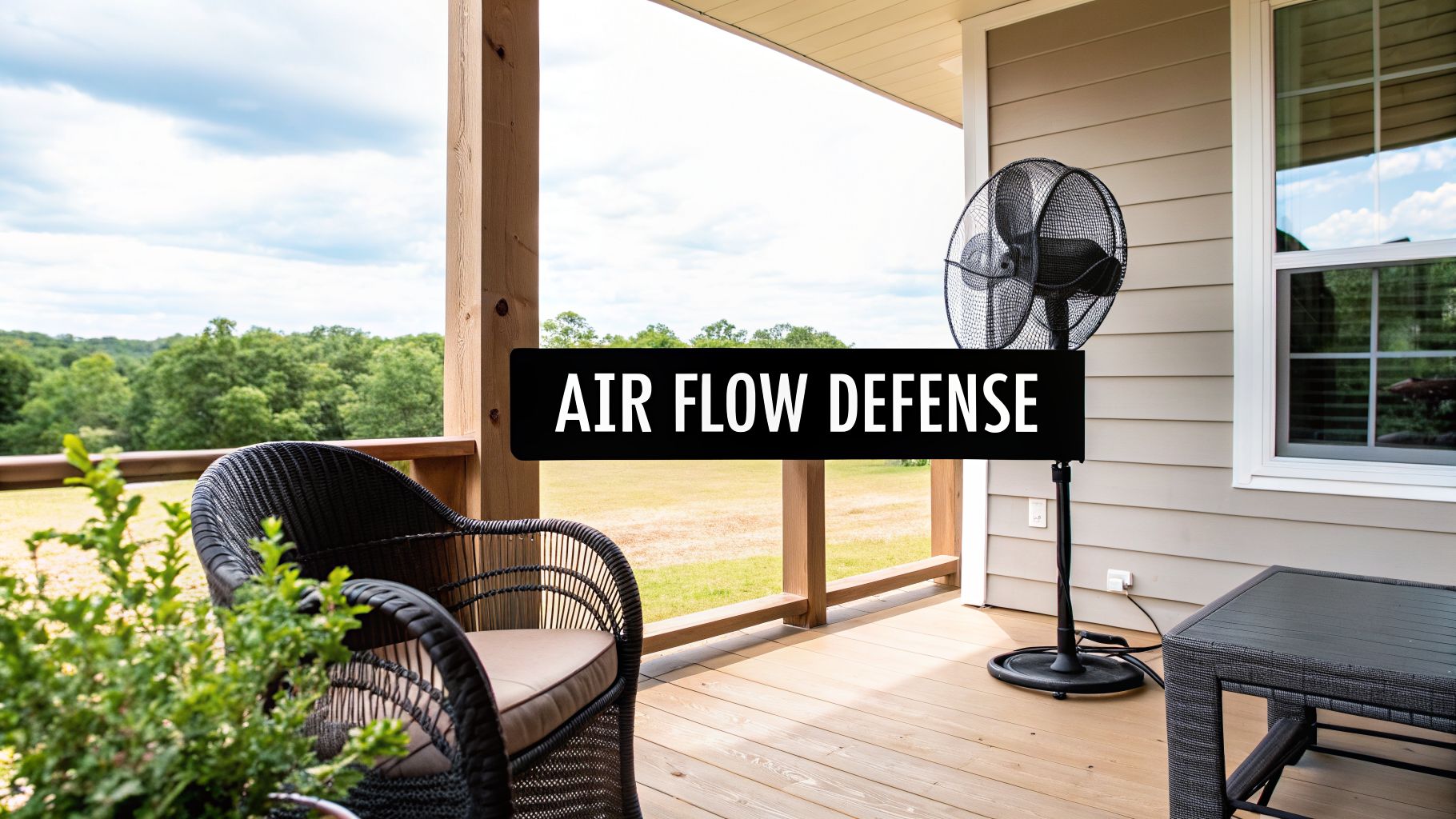
One of the simplest and most effective natural ways of repelling mosquitoes involves something many people already use during warm Northwest Indiana summers: a fan. Mosquitoes are notoriously weak fliers and struggle to navigate in wind speeds greater than a gentle breeze. By generating consistent airflow, fans create a turbulent environment that makes it nearly impossible for these pests to approach and land on you. This mechanical method physically blows them off course, providing a safe, chemical-free zone of protection.
This approach is highly effective for outdoor living spaces and offers the dual benefit of cooling relief on hot, humid days. On a deck in Crown Point, IN, the simple addition of a ceiling fan or a couple of powerful standing fans can drastically reduce mosquito encounters. The constant air movement disrupts their flight patterns and helps disperse the carbon dioxide and other human scents that attract them in the first place, making you a much harder target to find.
How to Use Fans for Mosquito Control
- Strategic Placement: Position fans to create a continuous cross-breeze over your primary seating area. If you have one fan, place it upwind of your location so it blows toward and across you, pushing mosquitoes away before they can reach you.
- Opt for Power: For effective mosquito deterrence, choose a fan that is at least 20 inches in diameter or has a high CFM (cubic feet per minute) rating. Small, weak fans may not generate enough wind to disrupt a determined mosquito.
- Use Multiple Fans: For larger patios or gatherings, using multiple oscillating fans can create a more comprehensive no-fly zone. Position them at different angles to ensure there are no calm spots where mosquitoes can take refuge and find a target.
- Install Ceiling Fans: If you have a covered porch or patio, installing a weatherproof outdoor ceiling fan is an excellent long-term solution. Mount it 7-9 feet above the ground to create a widespread, downward draft that keeps the area clear of flying insects.
Important Safety Note: Always use fans that are rated for outdoor use when placing them in uncovered or partially covered areas. Ensure cords are placed safely to prevent tripping hazards, and keep the fans away from direct exposure to rain.
6. Neem Oil Spray
Derived from the seeds of the neem tree (Azadirachta indica), neem oil is a powerful tool in the world of organic gardening and one of the most effective natural ways of repelling mosquitoes. The oil contains a compound called azadirachtin, which acts as a potent insect repellent and growth disruptor. Unlike chemical pesticides that kill on contact, neem oil works by interfering with the mosquito life cycle, repelling them from treated areas and inhibiting their ability to feed and reproduce. This makes it an excellent choice for managing pest populations over time.
For homeowners in Northwest Indiana, using neem oil on ornamental plants, shrubs, and non-edible vegetation provides a protective barrier that reduces the overall mosquito presence in their yards. It is particularly valued by those practicing eco-friendly pest control for its dual-action benefits: it controls pests while being gentle on plants and beneficial insects when used correctly. Products certified by the Organic Materials Review Institute (OMRI) confirm its status as a trusted solution for eco-conscious property management.
How to Use Neem Oil Spray for Mosquito Control
- Create the Solution: To make your spray, mix 2-3 tablespoons of 100% cold-pressed neem oil with one gallon of water. Since oil and water don't mix, add a teaspoon of mild, biodegradable liquid soap to act as an emulsifier. Shake the mixture vigorously in a garden sprayer until it is well combined.
- Proper Application: The best time to spray is during the cooler parts of the day, either in the early morning or late evening, to prevent leaf burn. Thoroughly coat all plant surfaces, paying special attention to the undersides of leaves where mosquitoes often rest during the day. Avoid spraying during hot, sunny conditions or when temperatures exceed 85°F.
- Reapplication Schedule: For consistent control, reapply the neem oil spray every 7-14 days. You will also need to reapply after heavy rainfall, as the water will wash the oil off the plant surfaces.
Important Safety Note: Before treating your entire garden or landscape, test the spray on a small section of a few different plants and wait 24-48 hours to check for any signs of sensitivity. Always wear gloves during application and wash your hands thoroughly afterward. Store unused neem oil in a cool, dark place to preserve its effectiveness.
7. Biological Predators and Habitat Enhancement
Transforming your yard into a balanced ecosystem is one of the most sustainable natural ways of repelling mosquitoes. This approach involves introducing and encouraging natural mosquito predators, turning your property into a less hospitable environment for pests. By establishing a habitat that supports these beneficial species, you create a self-regulating system of biological control. Instead of just repelling mosquitoes, you actively reduce their populations at the larval stage, preventing adults from ever emerging.
This long-term strategy is perfect for property owners in Northwest Indiana who want an ecological solution for ponds, water gardens, and other standing water features. Key predators include mosquito fish, which consume larvae, and dragonflies, which hunt adult mosquitoes. Creating habitats for other beneficial predators, such as bats, can further strengthen your property's natural defenses. For an in-depth look at this, discover how bat houses contribute to mosquito control and enhance your local ecosystem.
How to Use Predators for Mosquito Control
- Stock Mosquito Fish: For ponds and water features, introduce mosquito fish (Gambusia affinis), which are voracious consumers of mosquito larvae. A good starting point is stocking 5-10 fish per 100 square feet of water surface. Add them in the spring (April-May) to allow their population to grow before mosquito season peaks. Ensure your pond has a depth of at least 18-24 inches for the fish to survive Indiana winters.
- Create a Dragonfly Haven: Design water features with dragonflies in mind. Shallow ponds (18-24 inches deep) with gently sloped sides are ideal. Plant native emergent plants like arrowhead and pickerelrush around the edges and add riparian vegetation within 15 feet of the water to provide perching spots for adults and habitat for nymphs. Avoid stocking fish that prey on dragonfly nymphs if this is your primary goal.
- Support Local Wildlife: Beyond aquatic predators, encouraging birds and bats can significantly impact adult mosquito populations. Install birdhouses and bat boxes to invite these natural allies into your yard, providing them with shelter while they work to keep pest numbers down.
Important Safety Note: Before introducing any new species like mosquito fish to your property, consult the Indiana Department of Natural Resources (DNR) for local regulations. Partner with local native plant nurseries to select appropriate vegetation that will thrive in the Crown Point, IN, area and support a healthy predator habitat.
8. Eliminating Standing Water
One of the most effective and fundamental natural ways of repelling mosquitoes is to attack their life cycle at its source. Eliminating standing water on your property denies mosquitoes the essential environment they need to lay eggs and for their larvae to develop. Since it only takes a tiny amount of stagnant water and about a week for a new generation of mosquitoes to mature, proactively removing these breeding grounds is a powerful, non-chemical method to significantly reduce local mosquito populations.
This source reduction strategy is highly promoted by public health organizations and is a cornerstone of professional pest management. For residents in Northwest Indiana, a small amount of diligence can make a massive difference. A clean yard not only looks better but is also a critical part of any residential pest control plan in Crown Point, IN, helping prevent not just mosquitoes but other pests as well.

How to Eliminate Mosquito Breeding Sites
- Weekly Inspections: From March through October in Northwest Indiana, walk your property weekly and look for any place water has collected. Common culprits include buckets, toys, tarps, and even bottle caps.
- Routine Emptying: Empty and clean bird baths, pet water dishes, and plant saucers every one to two days. This simple habit disrupts the breeding cycle before larvae can mature.
- Gutter Maintenance: Clean your gutters and downspouts regularly to prevent clogs that create pools of stagnant water. Ensure downspouts direct water away from the house to avoid pooling.
- Landscape Management: Fill in low-lying areas in your yard that collect rainwater. Keep your grass mowed and clear away brush, as tall vegetation can hold moisture and create damp, shady spots that attract mosquitoes.
- Secure Water Storage: If you use rain barrels, ensure they are covered with a fine mesh screen to prevent mosquitoes from accessing the water to lay eggs.
Important Safety Note: Even well-maintained pools can become breeding grounds if not properly cared for. Ensure your pool pump and filter are running correctly and that water is properly chlorinated. Regularly check and repair any leaking outdoor faucets or irrigation systems that can create persistent puddles.
9. Garlic and Sulfur-Based Repellents
Utilizing the pungent properties of common kitchen ingredients and natural minerals offers a surprisingly effective way to deter mosquitoes. Garlic extract and sulfur compounds create powerful repellent barriers by overwhelming the olfactory receptors of mosquitoes. The strong, distinctive odor disrupts their ability to detect the carbon dioxide and lactic acid that guide them to you, making these natural options particularly effective for treating larger areas around Northwest Indiana properties.
This method provides a strong, non-chemical barrier, ideal for homeowners looking to protect outdoor living spaces without resorting to synthetic pesticides. The potent aroma of garlic, while noticeable to humans initially, dissipates quickly to our senses but remains a persistent irritant for mosquitoes, making it a clever tactic among natural ways of repelling mosquitoes. It's a key part of an eco-friendly pest control strategy.
How to Use Garlic and Sulfur for Mosquito Control
- DIY Garlic Spray: Create a simple yet potent spray by blending 3-4 cloves of fresh garlic with about one cup of water. Strain the mixture thoroughly through a cheesecloth or fine sieve to remove all solid particles, then transfer the liquid into a spray bottle for a fine mist application.
- Topical and Clothing Application: Lightly mist the garlic spray on your skin, clothing, and patio furniture about 20-30 minutes before heading outdoors. This allows the most intense aroma to fade for you while still being effective against pests. Reapply every 2-4 hours, or more frequently if you've been swimming or sweating.
- Property-Wide Treatment: For enhanced potency, especially around garden perimeters or near entertaining spaces in areas like Crown Point, IN, you can combine the garlic spray with sulfur powder. Lightly dust sulfur powder along plant beds and lawn edges to create a broader defensive zone that mosquitoes will avoid crossing.
Important Safety Note: Always test the garlic spray on a small patch of skin first to check for any irritation or sensitivity. When using sulfur, apply it carefully and avoid direct contact with delicate ornamental plants, as it can cause damage.
10. Professional Mosquito Reduction Programs
While DIY natural ways of repelling mosquitoes offer temporary relief, there are times when an infestation is too significant for individual efforts. When you need a more robust and lasting solution, professional mosquito control programs provide expert-level service. Licensed specialists, like The Green Advantage, integrate multiple advanced and nature-inspired approaches to manage mosquito populations effectively, restoring peace to your outdoor living spaces in Northwest Indiana. These programs go beyond simple spraying by addressing the entire mosquito life cycle.
This method is ideal for homeowners and businesses in Crown Point, IN, who find that despite their best efforts, mosquitoes continue to disrupt their outdoor activities. By combining property inspections, source elimination, and targeted treatments, professional exterminators can achieve a significant reduction in mosquito presence. This expert approach ensures that your property receives a strategic plan designed for maximum impact and long-term prevention, giving you back your yard.
How Professional Pest Control Solves the Problem
- Schedule a Property Inspection: The first step is to have a certified professional from The Green Advantage conduct a thorough inspection of your property. They will identify mosquito breeding grounds, locate resting areas in foliage, and assess environmental factors contributing to your specific pest problem.
- Implement a Custom Treatment Plan: Based on the inspection, our team will create a written plan. This involves eliminating standing water sources, applying larvicides to water that cannot be drained, and using targeted, eco-friendly adulticide treatments on vegetation where mosquitoes rest during the day.
- Maintain a Regular Service Schedule: Mosquito control is not a one-time event. Effective programs require regular service appointments, especially during the peak mosquito season from late spring through early fall in Northwest Indiana. This ensures continuous protection and prevents new populations from establishing themselves.
Important Safety Note: Always choose a licensed and insured pest control company that specializes in mosquito management, like The Green Advantage. We ensure the products we use are applied according to label directions to guarantee the safety of your family, pets, and the local ecosystem.
10 Natural Mosquito Repellents Compared
| Method | Implementation complexity | Resource requirements | Expected outcomes | Ideal use cases | Key advantages |
|---|---|---|---|---|---|
| Essential Oil-Based Repellents | Low — simple DIY application but frequent reapplication | Small supplies: essential oils, carrier oil or spray, diffuser | Short-term personal protection; reduces bites for hours | Personal use, small patios, short outdoor activities | Natural, pleasant scent, safe when diluted |
| Mosquito-Repelling Plants | Moderate — planning, planting and seasonal care | Plants, soil, garden space, regular maintenance | Long-term localized reduction; seasonal variability | Landscape borders, long-term garden solutions | Aesthetic benefit, supports pollinators, low chemical use |
| Mosquito Dunks (Bti) | Low — place in standing water; monthly replacement | Mosquito Dunks/Bti products, access to water sources | 30-day larval control; prevents emergence of adults | Bird baths, rain barrels, ornamental ponds | Targets larvae only, safe for non-target wildlife, organic-certified |
| Citronella Candles & Torches | Very low — light and position around area | Candles/torches/fuel, replacements; low setup | Temporary short-range repellency (~10–15 ft); ambiance | Small gatherings, decks, patios, evening events | Dual lighting and repellent function; no skin application |
| Fans & Air Circulation | Low–Moderate — placement/installation for best airflow | Fans (standing/ceiling/portable), power source | Immediate reduction in mosquitoes near seating (5–10 ft) | Covered patios, screened porches, outdoor seating zones | Chemical-free, provides cooling, one-time equipment cost |
| Neem Oil Spray | Moderate — proper mixing and timed applications | Neem oil, sprayer, protective gear; reapplication every 7–14 days | Reduces mosquitoes on vegetation; controls multiple pests | Gardens, landscaping, integrated pest management | Organic, multi-pest control, supports plant health |
| Biological Predators & Habitat Enhancement | High — design, species selection and habitat creation | Water features, native plants, fish/stocking, monitoring | Sustainable long-term population control once established | Ponds, retention basins, large properties, restoration sites | Self-sustaining, enhances biodiversity, no chemicals |
| Eliminating Standing Water | Low–Moderate — routine inspections and property fixes | Time and labor, minor drainage materials | Most effective long-term prevention; cuts breeding at source | All property types; foundational IPM activity | Cost-effective, eliminates root cause, environmentally safe |
| Garlic & Sulfur-Based Repellents | Low — simple DIY or ready-made sprays; frequent reapplication | Garlic/sulfur extracts, sprayer; frequent reapplications | Short-term repellency with variable efficacy; strong odor | Property perimeter treatments, users tolerant of garlic scent | Inexpensive, natural, food-grade options available |
| Professional Mosquito Reduction Programs | High — requires coordination with licensed providers | Service fees, access for treatments, recurring seasonal contracts | Significant, monitored reductions (often 70–90%) with ongoing care | Severe infestations, commercial properties, hands-off homeowners | Customized plans, professional equipment, guaranteed follow-up |
When DIY Isn't Enough: Partner with The Green Advantage for Lasting Relief
Arming yourself with an arsenal of natural ways of repelling mosquitoes is a powerful first step toward reclaiming your outdoor spaces in Northwest Indiana. From strategically placing mosquito-repelling plants like lavender and marigolds around your patio to deploying the targeted power of Bti dunks in standing water, you now have a robust toolkit to disrupt the mosquito life cycle. Mastering these methods means you can enjoy more evenings outside, protect your family from itchy bites, and create a more pleasant environment around your home.
True success comes from combining several strategies. For instance, you can create a powerful, synergistic effect by planting a border of repellent herbs, running an oscillating fan on your deck during gatherings, and diligently eliminating any sources of stagnant water after a rainfall. This integrated approach addresses mosquitoes at multiple points in their life cycle and is the cornerstone of effective, sustainable pest management.
The Limits of DIY and The Power of Professional Intervention
While the natural methods we've explored can drastically reduce mosquito populations, there are times when DIY efforts fall short. A persistent, overwhelming infestation may indicate hidden breeding grounds you can't locate or a problem that has become too widespread for home remedies to control effectively. This is particularly true for properties in Crown Point, IN, that are near natural water sources or have complex landscaping features.
When you find that you're still being driven indoors despite your best efforts, it's a clear signal that it's time to find a professional "exterminator near me." This is where expertise becomes not just a convenience, but a necessity for restoring your peace of mind and the full use of your property.
Why The Green Advantage is Your Local Solution
As your trusted local "exterminator in Crown Point, IN," The Green Advantage offers a comprehensive solution that goes beyond temporary fixes. Our approach is built on a deep understanding of the local Northwest Indiana ecosystem and the specific challenges homeowners face each season. We don't just spray and leave; we partner with you to create a lasting barrier against pests.
What to Expect When Working With The Green Advantage:
- A Thorough Property Inspection: Our technicians will meticulously inspect your property to identify both obvious and hidden mosquito breeding sites. We locate areas that even the most diligent homeowner might miss.
- Source Reduction and Habitat Modification: We provide actionable recommendations and assistance in eliminating standing water sources, which are the root cause of mosquito problems.
- Targeted, Eco-Conscious Treatments: We apply targeted, family- and pet-friendly treatments to key areas where mosquitoes rest and breed, such as dense foliage and under decks. This creates a protective zone that offers peace of mind.
Our commitment extends beyond just mosquitoes. Whether you're dealing with ant control, need termite control to protect your investment, or require rodent control services, we are your all-in-one resource for residential and commercial pest control. Don't let pests dictate your outdoor plans or compromise your comfort. Take control of your yard and enjoy the beautiful Indiana seasons to the fullest.
Ready to enjoy your yard without the constant buzz and bite of mosquitoes? The Green Advantage combines the principles of natural pest management with professional-grade solutions to create a safe and comfortable outdoor space for your family in Crown Point, IN. Visit our website at The Green Advantage to schedule a pest inspection and request a quote for your property today.