
Many common mosquitoes are most active at dawn and dusk, while Culex mosquitoes are active from dusk through dawn with a late-evening peak around 10 to 11 p.m. The exact window depends on species, so the mosquito biting you at lunch in the shade may not follow the same schedule as the one at your patio after dark.
Why do you still get bitten at midday if you've been told to avoid sunset? That gap is where most yard plans fail in Crown Point, IN. When repellent and a citronella candle aren't enough and you need pest control near me, start by matching your bites to a species window, then check shade, lighting and standing water. The Green Advantage helps Northwest Indiana homeowners do that with residential pest control and mosquito control built around how a property is used.
Peak Mosquito Hours by Species at a Glance
Many common mosquitoes peak at dawn and dusk, but there's no single hour that fits every species on your property. The CDC guidance on mosquitoes, ticks and other arthropods identifies Aedes aegypti and Aedes albopictus as crepuscular biters with primary peaks around dawn and dusk, while Culex quinquefasciatus commonly shows a pronounced late-evening peak around 10 to 11 p.m.
A 2025 report from the International Conference on Aedes-borne Diseases states that Aedes mosquitoes showed two peak biting periods, 5 to 9 a.m. and 4 to 7 p.m. Those are the daytime container breeders. They develop in small water holders near homes and can keep biting in shade between peaks.
| Mosquito group | Typical peak window | Activity pattern | Most exposed residents |
|---|---|---|---|
| Aedes (daytime container breeders) | 5 to 9 a.m. and 4 to 7 p.m. | Two peaks at dawn and dusk, can bite in shade during the day | Yard users at both ends of the day |
| Culex (house and northern house mosquitoes) | Around 10 to 11 p.m. | Dusk through dawn, resting in cool shaded vegetation | Porch and patio users, and sleepers with open windows |
| Anopheles | Dusk to 11 p.m., or 1 to 3 a.m. depending on species | Night-active or crepuscular, varying by species | Campers and late-night outdoor users |
| Mixed or unidentified bites | Late afternoon through early morning | Confirm species before choosing a window | Any property with repeated bites |
How to Read Your Own Bites
Culex pressure builds after sunset and continues overnight, so a quiet afternoon doesn't mean the yard is clear. Anopheles timing splits by species, which is why one property feels worst before bedtime and another feels worst well after midnight.
Simple check: Write down when bites happen for a few days, then match that time to the closest row before you change your schedule or buy a treatment.
If bites land in several rows, plan for a mixed population. That means coverage from late afternoon through early morning, plus shaded resting sites during the day, not just a spray timed for sunset. For pest control in Crown Point, IN, that distinction decides whether treatment focuses on containers, vegetation, drainage water, or all three.
How to Tell Which Mosquito Is Biting Your Family
A bite welt alone rarely names the species. Gather clues first, then use our guide to local mosquito species to compare what you found.
- Note the time for three days. Daytime and early morning biting points toward Aedes. Late-evening biting points toward Culex.
- Note where you were. Record whether you were on an open sunny lawn, along the shrub line, under a deck, or near a porch light after dark.
- Photograph an adult if you can. Aedes are small and dark with bold white bands on their legs. Culex are plain brownish with no leg banding. Anopheles rest with the rear end angled up and have spotted wings.
- Match time, place and appearance to the closest row in the species table.
- Treat a mismatch as information. A mixed or unclear pattern means you should plan protection for the whole day, not one window.
If the pattern stays unclear, a technician can set a carbon dioxide trap at dusk and collect it after dawn. That overnight catch identifies what's active while you're asleep, which daytime sightings miss.
Why Mosquito Peaks Shift With Shade, Light and Weather
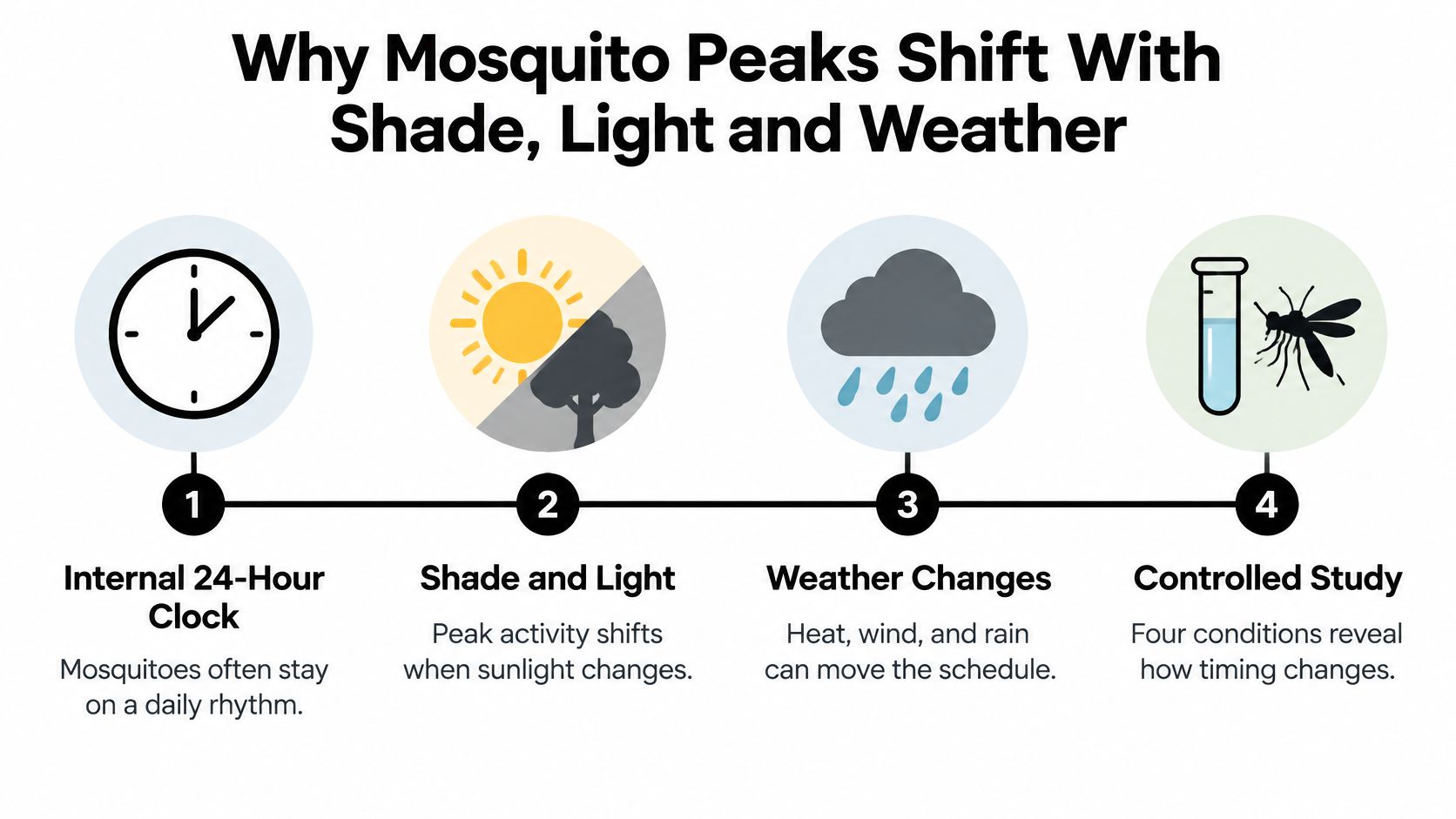
Think of a mosquito as a commuter with a fixed route. It leaves at roughly the same hours each day, unless weather, shade or light changes the conditions enough to move the trip.
That internal schedule is a 24-hour circadian rhythm. In a controlled study of four Aedes albopictus strains, the PLOS ONE study of Aedes albopictus biting activity recorded two clear daily biting peaks, approximately 06:30 to 09:30 in the morning and 18:30 to 20:30 in the evening. Lower light and cooler air at twilight make flight easier and help mosquitoes follow carbon dioxide and body heat to a host.
Why Midday Isn't Always Safe
Dawn and dusk move with the seasons, so the clock time shifts even when the pattern holds. Shade creates twilight conditions early. A sunny Crown Point lawn can feel quiet at noon while the hedge beside it stays cool, humid and busy.
The NIOSH West Nile virus update reports that some mosquitoes are also active during the day, particularly in weedy, brushy, wooded, or shaded settings. Dense shrubs, tall grass, irrigated beds, drainage areas and spaces under decks give adults a resting place close to where people sit.
- Still, humid evenings: Calm air lets weak fliers reach you and land.
- Windy, dry afternoons: Open areas feel better, but sheltered corners may not.
- Thick vegetation: Shade and moisture protect adults between feeding periods.
How Lighting Extends the Evening
Porch and patio lights can extend biting for day-active Aedes after dusk, while night-active species are already programmed for darkness. A lit patio next to a thick hedge combines host cues, shelter and low airflow in one spot, which explains bites long after sunset beside an otherwise comfortable yard.
Don't judge the whole property by the sunniest patch of grass. Check the hedge, the fence corner and the shaded side of the house.
That's the trade-off with simple clock advice. Avoiding sunset helps with one group, but it won't solve daytime shade biting or late-night activity. Check the whole property, not just the hour.
When Mosquito Activity Peaks Through the Northwest Indiana Year
Season matters as much as time of day. Warmth, rainfall and standing water drive the rise and fall, so a wet year in Northwest Indiana won't match a dry one.
In early spring, check before warm weather settles in. Clear clogged gutters, empty containers and fix low spots that hold water, because those become breeding sites once temperatures climb.
Summer Through Early Fall
During warmer months, bites often increase after warm, wet stretches that leave water pooled in yards and drainage areas. Mid-summer heat and humidity keep shaded resting sites active through the day, so tall grass and dense shrubs remain risky even when open lawn feels quiet.
Late summer and early fall bring a gradual taper as nights cool. Warm evenings can still produce biting, especially near sheltered vegetation. The dawn and dusk windows also move earlier as daylight shortens, so a dinner that felt safe in June may land in peak activity later in the season.
I recommend a property check before peak season and again in late summer. You'll catch new water holders, overgrowth and drainage changes that a spring-only check misses.
Timing Outdoor Activities Around Mosquito Peaks
For most families, the lowest-risk window for yard work is midday in open sun with a breeze. Use that window for the jobs and play sessions you can't move indoors, and treat shade as higher risk at any hour.
| Activity | Lower-risk window | Higher-risk window | Practical tip |
|---|---|---|---|
| Breakfast or coffee outside | After 9 to 10 a.m. in open sun | 5 to 9 a.m. | Sit away from shrubs and close to a fan |
| Yard or garden work | Midday in full sun | Early morning and 4 to 7 p.m. | Wear long sleeves and repellent during peak hours |
| Kids playing outside | Before 4 p.m. | 4 to 7 p.m. and dusk | Move play to open lawn away from hedges |
| Dinner or grilling | Early evening in a screened, fan-cooled space | Dusk through 10 p.m. | Use fans and screened spaces |
| Night gatherings or camping | Finish by 10 p.m. | Late evening to 3 a.m. | Keep lights low and use screened areas |
Breakfast outside gets easier after the morning Aedes peak fades, provided you're not sitting against a hedge. Garden work at midday avoids both Aedes peaks, but brushy beds still call for sleeves and repellent because you're entering resting habitat.
Kids playing after school run into the late afternoon rise. Moving play to open lawn helps more than moving it by thirty minutes, since distance from shrubs reduces contact with resting adults.
Habits That Lower Every Window
- Trim shrubs near seating: Less dense cover means fewer cool resting spots beside chairs and play areas.
- Empty containers weekly: Saucers, toys, buckets and tarps shouldn't hold water long enough for development.
- Keep screens closed and repaired: Porch screens only work if doors latch and mesh has no gaps.
- Run an outdoor fan: Moving air makes landing harder around a small seating area.
Schedule important outdoor work for midday or early afternoon when you can. Keep evening use to covered, fan-cooled spaces, and don't rely on a fan to fix breeding water elsewhere in the yard. It improves comfort where you sit. It doesn't reduce the population producing new adults.
How Professional Mosquito Control Times Treatment
Professional mosquito control starts with a survey, not a sprayer. A technician looks for breeding water and resting shade first, because treating open lawn while missing a clogged gutter wastes your money.
Look at the kinds of hidden water an inspection targets before any product is applied.
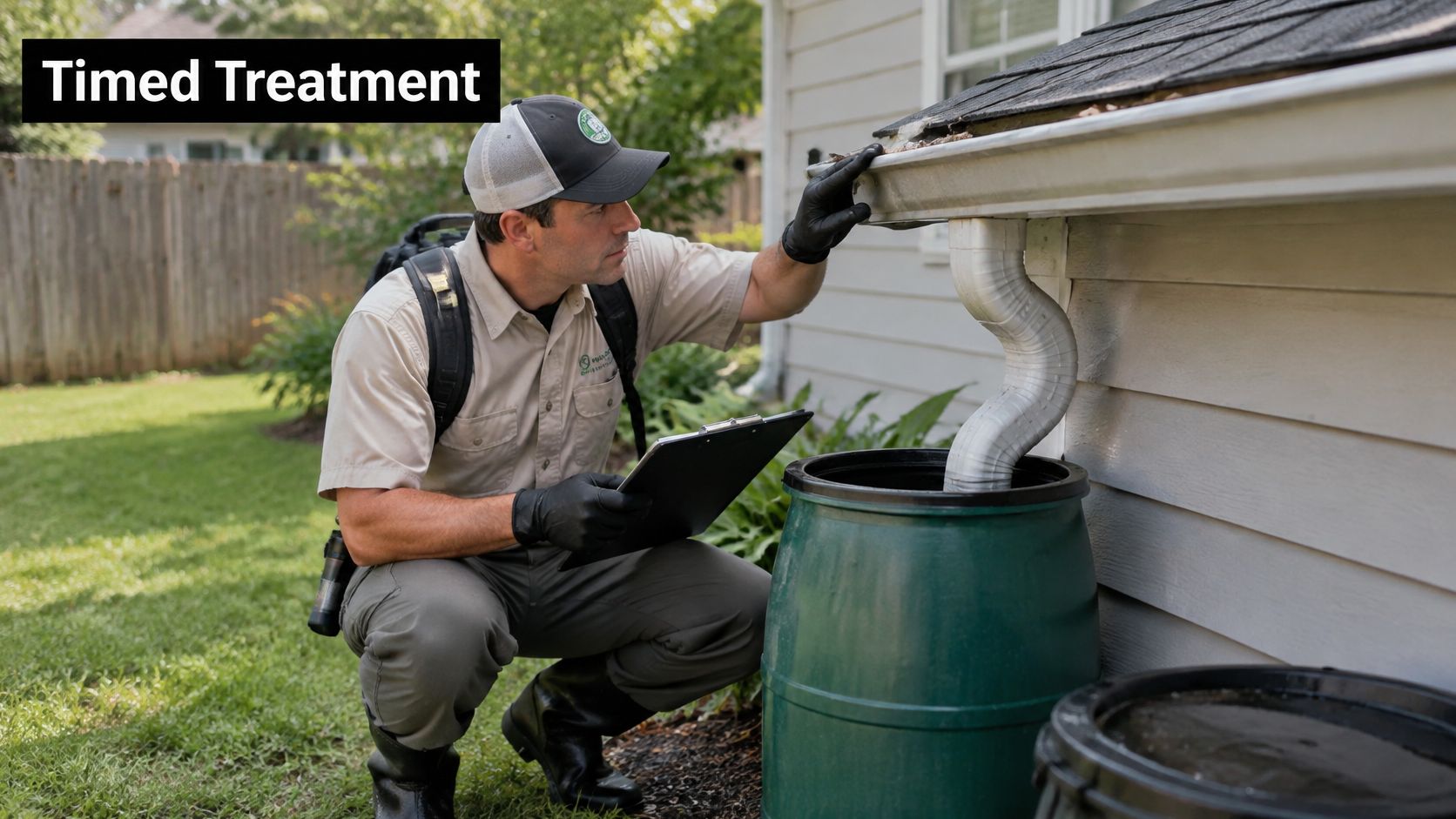
Breeding sites include standing water in containers, gutters, low areas and drainage features. Resting sites include dense shrubs, tall grass, ground cover and sheltered areas under decks. The survey also notes when your family uses the yard, since a breakfast patio and a late-night fire pit face different species windows.
Matching Treatment to the Species Window
Outdoor treatments target places adults rest during the day and routes they use toward seating areas at dusk. Larval control addresses suitable water before adults emerge. A sunset-only approach can miss daytime Aedes resting in vegetation, so a sound plan covers breeding, resting and active periods together.
Our breakdown of the best time to spray for mosquitoes explains how application timing fits those windows. Weather, wind and the property layout still shape the final schedule on the day of service.
Watch how a technician connects inspection findings to treatment placement in the video below.
- Survey the property for breeding water, resting shade and outdoor use areas.
- Match treatment to the likely species mix and the hours your family is outside.
- Schedule follow-up to check results and adjust as vegetation, rainfall and daylight change.
The Green Advantage adjusts Crown Point plans as the season shifts from spring to fall. That matters for commercial pest control too, where planted entrances and outdoor seating need site-specific timing, not a generic evening visit.
What to Expect From a Crown Point Mosquito Inspection
Start by telling us when bites happen. That one detail saves time and points the technician toward the right species window before the yard walk begins. For general pest control issues, we typically schedule service the same day or the next business day, depending on your convenience.
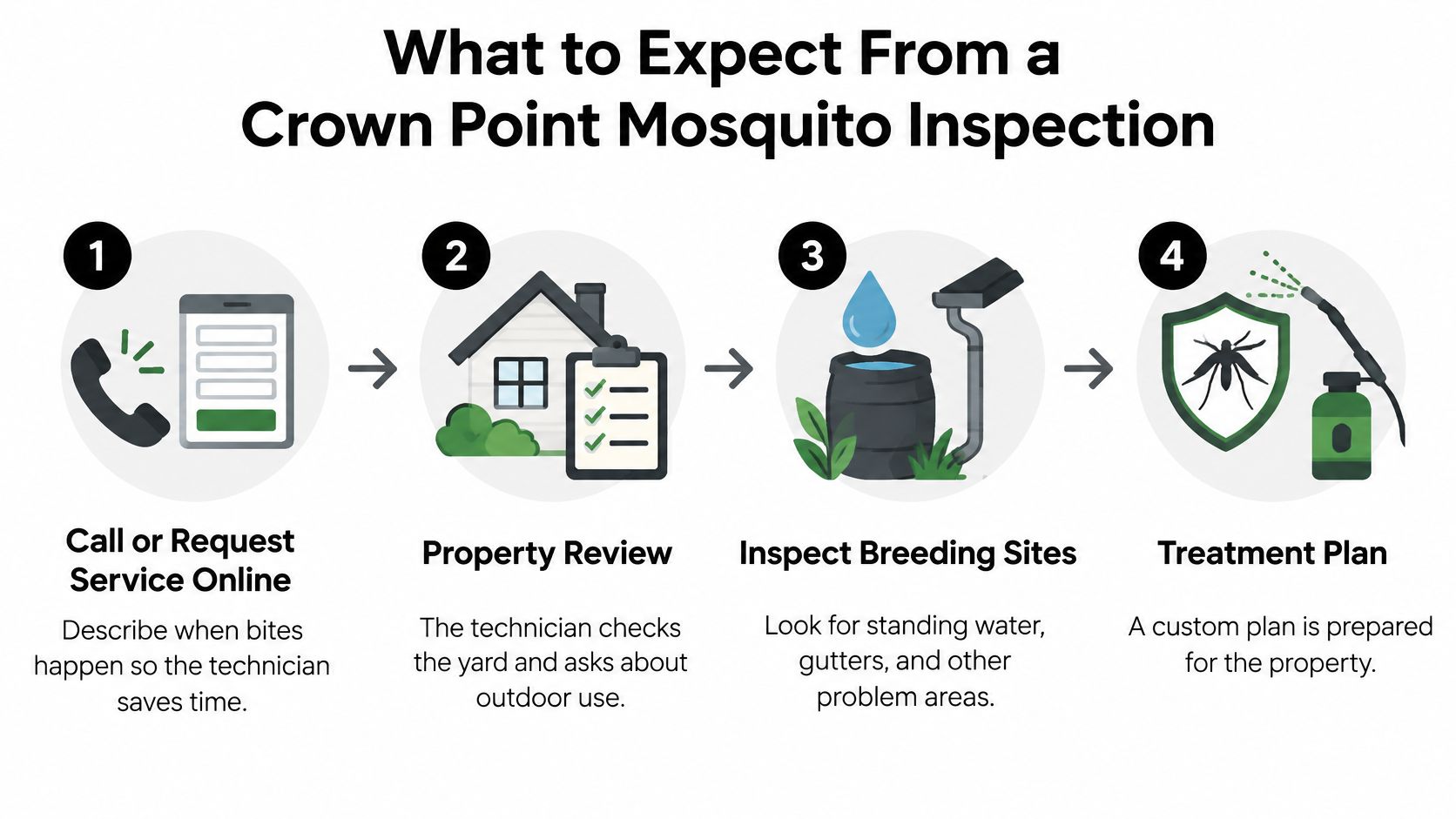
- Call or request service online. Describe bite times and the areas your family uses most.
- Review outdoor use with the technician. Mention breakfast outside, after-school play, grilling and late gatherings.
- Inspect breeding and resting sites. We check standing water, containers, gutters, dense shrubs, tall grass and lighting near patios or entrances.
- Explain findings in plain language. You get the treatment and timing plan before work begins.
- Schedule treatment and follow-up. The return visit confirms whether biting has dropped in the windows you reported.
What to Prepare Before We Arrive
Note bite times, clear access to the yard and shrubs, and point out children's play areas and pet spaces. For most general pest control services, you don't need to leave your home during treatment.
When overnight identity matters, the CDC mosquito trap guide says carbon-dioxide mosquito traps are most effective when placed at dusk and collected after dawn. That catch can show Culex activity a daytime visit underestimates, and it helps an exterminator in Crown Point, IN set the right plan instead of guessing.
Schedule Your Mosquito Inspection in Crown Point
Book an inspection when bites keep happening outside the window you expected. Three checks guide the decision: know the species window, inspect shade and lighting, and time outdoor use and treatment around the peaks you experience.
You'll get a plan that covers breeding sites, resting areas and both daytime and nighttime activity. Our outdoor mosquito control targets pests at all stages of life, from eggs to flying adults, and we also offer residential and commercial pest control, mosquito control, Tree Technology services, Lakeside Web Management, pest inspections, and an Insect ID resource. Related services such as ant control, termite control, rodent control, spider control and wasp removal can be discussed during the same visit if other seasonal pest issues show up.
Businesses and property managers can call our commercial line at (219) 779-9815, open Monday to Friday, 8:00 AM to 4:00 PM. If your office misses calls while staff are in the field, a contractor answering service can help callers reach a person instead of voicemail.
Homeowners searching for an exterminator near me in Crown Point or nearby Northwest Indiana communities can request a quote and schedule through our website. Tell us when and where bites happen, and we'll build the timing plan around your yard.
When Are Mosquitoes Most Active in your yard depends on species, shade and season, and The Green Advantage will identify that window, treat breeding and resting sites, and time follow-up around your family's outdoor routine. Visit The Green Advantage to schedule a mosquito inspection in Crown Point, IN and get a clear, eco-friendly pest control plan for your home or business.