
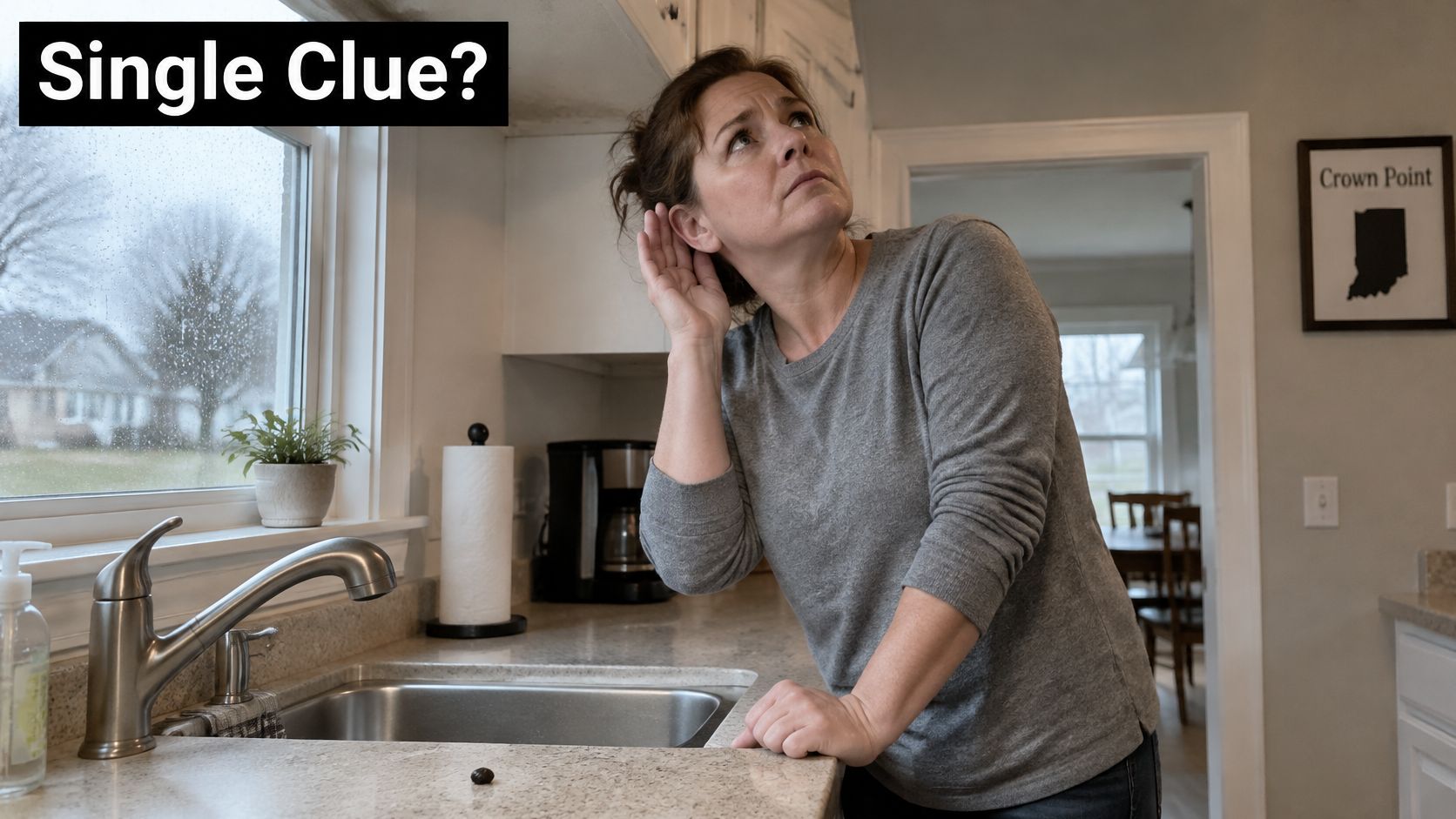
You're making coffee in Crown Point after a wet week when you hear faint scratching in a soffit. Under the sink you find one dark pellet, and now you're wondering if you've got mice, if it's nothing, and whether searching for pest control near me means committing to a treatment you may not need. You don't have to decide from one clue. Learning how to identify pest infestation comes down to a calmer question: does the evidence repeat, cluster in one place, and look fresh? If it does, acting early usually protects your home and gives you clearer choices.
What Crown Point Homes Reveal Before You See a Pest
That soffit noise and a single pellet can mean a mouse passed through once, or they can be the first signs of a route. One sound at night isn't proof. One bite, one odor, or one dropping isn't proof either. What counts is the pattern around it: what you found, where you found it, whether it's fresh, and whether it returns. A passerby leaves an isolated clue. An established population keeps using the same food, water, shelter, and entry points, so clues gather along the same paths.
That's because the pests that matter most often stay hidden at first. Mice and rats travel behind appliances and inside walls. Termites work where wood meets damp soil. Bed bugs wait in seams and cracks near people. By the time an animal crosses a kitchen floor in daylight, activity nearby may already be well established. Looking for indirect evidence isn't being alarmist. It's how you catch a problem while it's still small and contained.
The Problems Northwest Indiana Homes Actually Meet
Across Crown Point, Cedar Lake, Merrillville, and nearby towns, the usual mix is predictable. Older housing draws mice and rats around utility openings and foundation gaps. Damp soil and wood invite termites and carpenter ants. Kitchens bring small pantry ants and cockroaches, while travel and secondhand furniture can bring bed bugs. Late summer puts wasps in eaves and soffits, and yard water keeps mosquitoes close after rain.
The cluster rule: Treat one clue as a reason to look, not as a reason to spray. Treat repeated clues in the same place as a reason to map the route and get a firm identification.
The Green Advantage is our family-owned licensed team serving Crown Point and Northwest Indiana for homeowners, landlords, and businesses who reach that point. Early evidence doesn't mean your home is badly damaged or beyond repair. It means you have a chance to confirm what's active, fix the conditions helping it, and choose residential pest control only where monitoring justifies it. A sign chart, a room-by-room walk-through, and a simple freshness check will help you tell the difference before you schedule an inspection.
Signs That Match Common Northwest Indiana Pests
Match your clue to a row before you decide how worried to be. Strong evidence is physical and repeatable. A weak clue can start a search, but it can't confirm an infestation on its own.
Pest Clues Crown Point Homeowners Can Match
| Pest | Where to look | Strong evidence | Weak clue only |
|---|---|---|---|
| Rodents | Cabinets, under sinks, attics, wall edges | Fresh droppings, gnaw marks, nests, grease rubs, entry holes | One old dropping or a single sighting |
| Termites | Foundation, sill plates, wood near soil | Mud tubes, discarded wings, hollow wood, frass | Paint blisters alone |
| Ants | Kitchen trails, foundation cracks, damp wood | Trails that return; carpenter-ant frass with insect bits | A few scouts |
| Bed bugs | Mattress seams, frames, sofa legs, nearby outlets | Live bugs, pale 1 mm eggs, rusty stains, fecal spots that smear | Bites, which can mimic mosquitoes or rashes |
| Cockroaches | Behind appliances, under sinks, cardboard | Pepper-like droppings, egg cases, musty odor, repeat sightings | One insect near a delivery |
| Stinging insects | Eaves, soffits, sheds, ground holes | Daily flight path into one opening; papery or mud nest | One wasp foraging on flowers |
| Silverfish and moisture pests | Bathrooms, basements, stored paper | Repeated shed skins and paper damage in a damp room | One insect after heavy rain |
How to Read a Row Without Overreading It
Read across the row, not down a single column. Location matters as much as appearance. Droppings scattered along a wall edge under a sink tell a different story from one pellet in a garage corner. Reliable identification rests on multiple physical indicators rather than sightings alone, partly because rodents can stay hidden until an infestation is well established. Check near food packages, inside drawers and cupboards, and under sinks for droppings, shredded paper or fabric used for nests, chewed packaging, holes through walls or floors, grease marks, urine stains, tracks, and stale odors from concealed areas.
One strong sign is a clue. Two or more strong signs in the same zone, especially where food, water, and a gap sit close together, is a pattern.
For a suspected mouse problem, a closer look at the signs of rodent infestation helps you separate that cluster from a lone pellet before you buy traps.
Some look-alikes cause the most confusion. Carpenter-ant frass looks like rough sawdust mixed with insect bits, and it usually shows up below damp wood. Termite evidence looks different: mud tubes climbing a foundation, or discarded wings near a sill. Blistered paint can come from moisture alone, so hold off calling it termite damage until tubes, wings, or hollow-sounding wood support it.
Bed bugs are the other common misread. Bites can resemble mosquito or flea bites, eczema, fungal rashes, or hives, so skin alone can't confirm them. Rusty stains on sheets, dark fecal dots that smear like ink, pale eggs, and a live insect in a seam carry far more weight. The EPA bed bug identification guide describes eggs and eggshells as tiny, approximately 1 millimeter, and pale yellow, and points homeowners to mattresses, bedding, seams, fabric folds, bed frames, and nearby cracks.
Action Based on the Match
Once you've matched a clue, don't spray first. Photograph it with a coin or a fingertip nearby for scale, note the room and date, and check the surrounding area for a second sign. A cockroach near a grocery delivery deserves a look behind the refrigerator, not an immediate whole-house treatment. Pepper-like droppings, egg cases, and a musty odor in the same cabinet deserve faster action.
The same logic applies outdoors. One wasp working flowers is normal summer activity, while a steady stream entering the same soffit gap every day points to a nest in the structure. One silverfish after heavy rain is weak evidence, but repeated shed skins and chewed paper in a damp basement show the room itself is supporting them. Freshness, location, and clustering are what turn a hint into proof.
How to Inspect a Home Room by Room
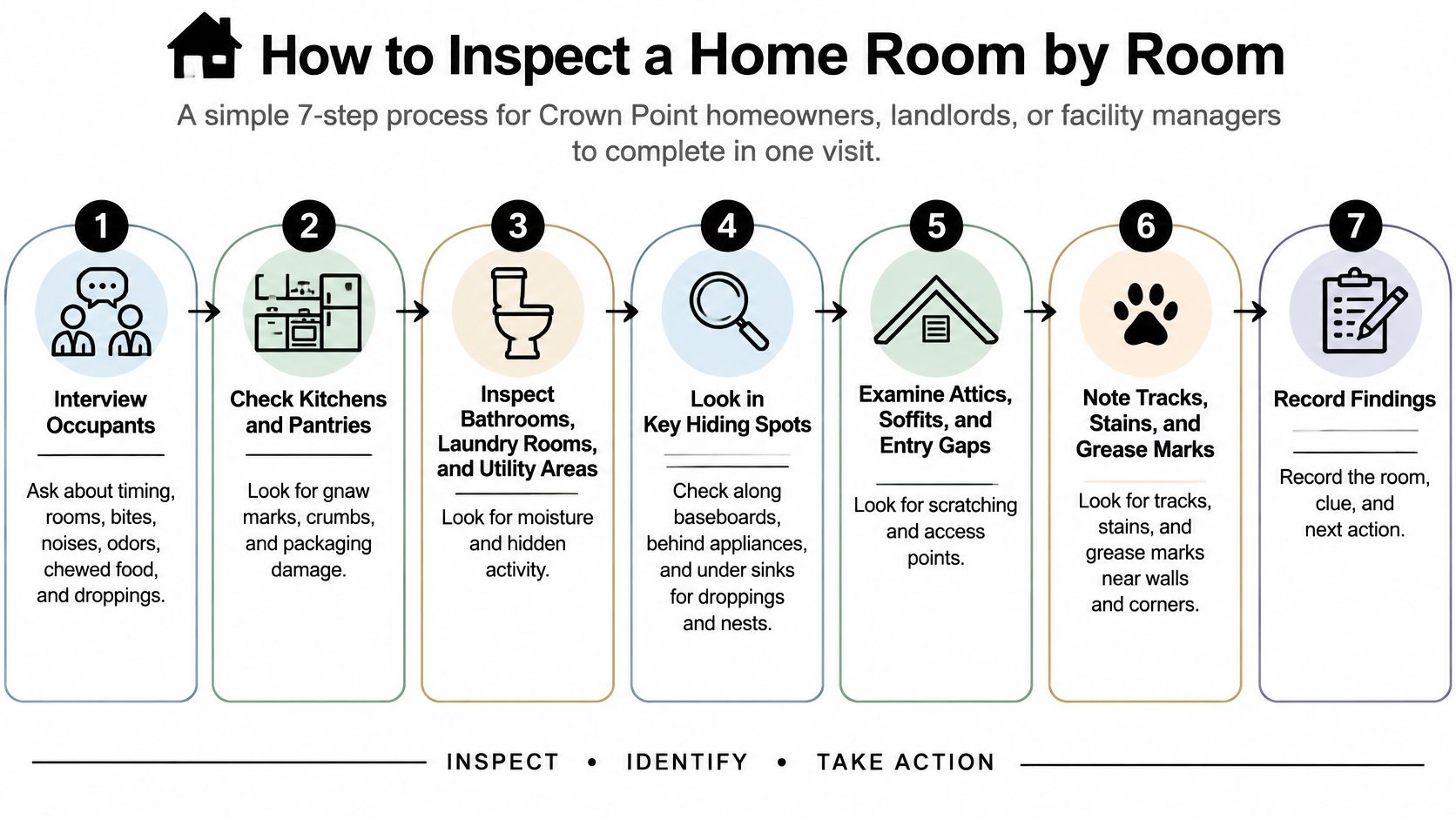
You can do a useful first inspection in one visit with a flashlight, a crevice tool such as an old gift card, gloves, your phone for photos, and a notebook or notes app. Work in this order so you don't stop at the first clue and miss the source.
The Seven Steps in Order
Interview everyone first. Ask when noises, bites, odors, sightings, or chewed food started, which rooms they involve, and whether there's been recent travel, deliveries, secondhand furniture, or construction. Timing often reveals the route. Scratching that began after soffit work is different from droppings that appeared after a pantry delivery.
Walk the exterior before you judge the interior. Look for foundation cracks, torn screens, damaged soffits, wood touching soil, clogged gutters, and standing water. Check where pipes and cables enter the wall. A pencil-width gap can admit a mouse, and a larger opening can admit a rat, so small gaps count. Note vegetation touching the house and firewood or mulch piled against the foundation.
Check the kitchen and pantry closely. Open cabinet corners, look under the sink around plumbing, inspect pet-food bins, and examine cardboard boxes for droppings, egg cases, and gnawed packaging. Pull light items forward, but don't force heavy appliances if moving them isn't safe. A flashlight angled along the floor behind the refrigerator and stove often shows droppings or grease rubs you'd miss looking straight down.
Inspect wet rooms and storage areas. Bathrooms, laundry rooms, and basements show you where moisture is feeding a problem. Look for slow leaks under sinks, damp drywall, silverfish shed skins, and dark undisturbed corners where pests shelter. A continuously damp room explains silverfish, some ants, and cockroaches better than any single insect does.
Search bedrooms like an inspector, not by bites. Use the flashlight and card on mattress seams, box springs, headboards, bed frames, baseboards, and upholstered furniture. Check sofa legs and nearby outlets if someone sleeps in a living room. Look for live insects, cast skins, eggs, and fecal spotting, and treat bite marks only as a reason you started looking.
Finish high and low. In attics, crawl spaces, and around utility penetrations, look for droppings, nesting material, disturbed insulation, and mud tubes. Use a stable light and watch your footing. If access is unsafe or you can't enter comfortably, note that gap in your inspection rather than assuming those spaces are clear.
Record everything before you clean up. Photograph each find in place, then slide an intact specimen into a sealed bag or clear container without crushing it. Log the room, date, what you found, and the rough amount. That record becomes your baseline for a return check and helps an exterminator in Crown Point, IN identify the species instead of guessing.
This next walk-through shows the same room-by-room logic in motion, which can help if you're unsure how close to look along seams, baseboards, and utility openings.
Why the Full Walk-Through Matters
Inspecting only the reported room is the most common miss. Adjoining rooms, shared walls in rentals, wall voids, rooflines, and shared food or water sources can sustain activity while one clean-looking room reassures you. The EPA integrated pest management toolkit describes inspection, identification, monitoring, control selection, and evaluation as a repeating cycle, and recommends surveying vulnerable areas for pest evidence, food, water, and entry points. It also warns that old frass, shed skins, dead insects, or cosmetic damage can persist after pests are gone, so isolated evidence isn't automatic proof of an active infestation.
Preserve a specimen or a clear image before treatment. Cockroaches can be confused with harmless beetles, and carpenter-ant damage can be confused with moisture decay.
If you manage a shop, restaurant, or apartment building, keep a dated pest log instead of relying on hallway comments. Trend notes by room and date, and include deliveries and construction that might explain a one-time sighting. For commercial pest control, that simple log often separates a supplier problem from an on-site harborage problem. For a house, the same notes tell you whether your baseline is growing, stable, or disappearing on the next check.
Fresh Activity Versus Leftover Evidence
After the walk-through, your real decision is freshness. Start with rodents. Clean the clue safely, mark the spot, and look again. The CDC rodent cleanup and trapping guidance gives a useful threshold: if new droppings, urine spots, or gnawing continue after one week, the property may have a rat infestation. New evidence within seven days means something is still using that route. Nothing returning after a careful cleanup points more toward a passerby or an old sign, though hidden activity elsewhere is still possible.
Counts help, but they don't settle it alone. The Cornell University integrated pest management guidance reports estimates of approximately 40 to 50 droppings per day for rats and 50 to 60 per day for mice, and notes that finding both large and very small droppings together may indicate adults and juveniles. It also cautions that a sudden large number alone doesn't prove a full infestation, because a rodent exploring a new area can scatter droppings while searching for food. Use the count with freshness and location, and check high routes such as pipes and drop ceilings as well as low cabinets.
How to Read One Pest Clue
| Pattern found | Likely reading | Next check |
|---|---|---|
| One dropping and no gnawing | Possible passerby | Clean safely and look again in 7 days |
| Droppings, urine, or gnawing return within a week | Active rodents | Map the route and book a rodent inspection |
| Mixed large and tiny droppings near food | Adults and juveniles, not one visitor | Inspect low and high routes the same day |
| Bites or itching with no specimen | Not diagnostic | Search seams and save any insect uncrushed |
| Fecal spots, eggs, or a live bed bug | Strong bed bug evidence | Avoid foggers and confirm the specimen |
| Old frass, shed skins, or dead insects only | May be a past problem | Monitor; do not treat on history alone |
| Mud tubes or discarded wings indoors | Active or recent termites | Leave tubes intact and schedule inspection |
| Wasps entering one soffit gap daily | Nest likely in the structure | Do not seal the hole while they are active |
Bed Bugs Need More Than One Look
Itching is a weak diagnostic test. Bite reactions vary, some people show no marks, and the marks that do appear can look like other biting insects or skin conditions. Strong evidence is a live insect or nymph, viable eggs, cast skins, and reddish-black fecal spotting in seams, frames, and nearby cracks.
Passive interceptors under bed and sofa legs improve the odds of catching low-level activity that a visual search misses. The multi-city housing study by Wang and colleagues found interceptors detected 89% of infested apartments, compared with 72% for visual inspection, and extension guidance in that evidence base reports combining both methods can raise detection to approximately 99%. Those are study-specific benchmarks, not guarantees. Furniture design, infestation density, placement, and inspection quality all change performance.
Don't declare a home clear after one negative visual inspection or one empty monitor. Low-density populations can evade both, and in adjoining units an untreated room can reseed the one you checked. Carpet beetle larvae, fleas, and bat bugs are common mix-ups, so keep the specimen intact for a qualified identification before you pay for bed bug treatment.
Age and return matter more than the first count. Old frass and dead insects can outlast the population that left them.
Use the table as your sorting rule. Mud tubes or indoor swarmers mean you should stop disturbing the wood and get a termite inspection. A daily flight line into one soffit gap means a nest, not random wasp activity. Property managers should trend these notes by room and date rather than judging from memory. If the pattern is fresh, repeated, or structural, stop cycling DIY products. That pattern is the point where an exterminator near me search becomes a booking decision, not just research.
Safe Checks and Simple Prevention Moves
The safest clue is the one you can still read tomorrow. A rushed cleanup can erase the pattern, contaminate the air, or turn one specimen into a smear that nobody can identify.
Start by avoiding three moves that make the next inspection weaker.
- Don't dry-sweep rodent debris. Sweeping or vacuuming dry droppings and nesting dust can stir contaminated particles into the air you're breathing.
- Don't crush a suspected bed bug. A smashed insect is hard to separate from a flea, bat bug, or carpet beetle, and species decides treatment.
- Don't seal an active wasp opening or use a fogger blindly. Caulking a hole while stinging insects are using it can push them deeper into the home, and total-release foggers often drive cockroaches and bed bugs into wall voids without reaching eggs in cracks.
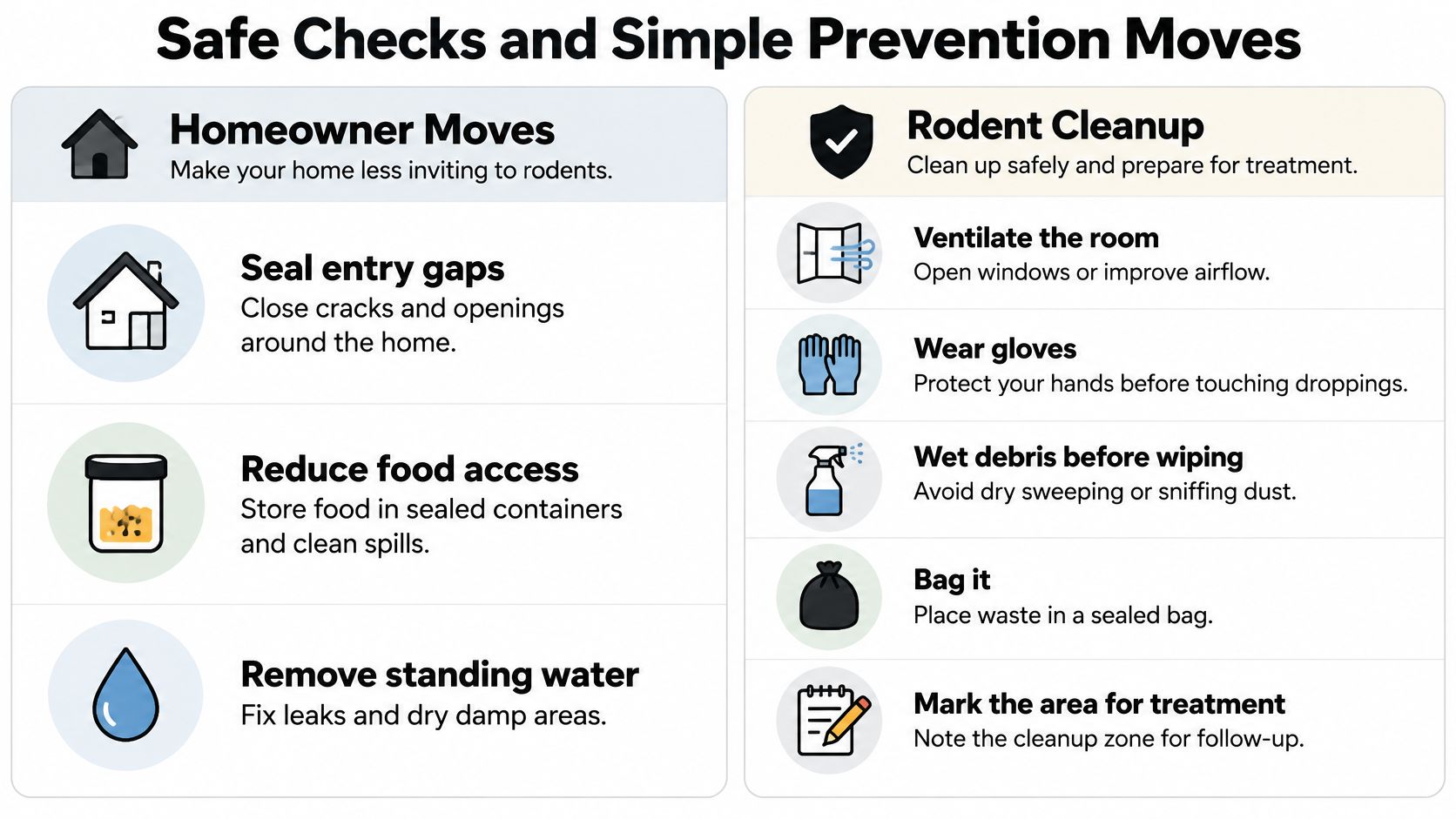
For rodent cleanup, ventilate the room first and wear gloves. Wet the debris before wiping so you're not raising dust, bag it in a sealed bag, and wash your hands. Mark the cleaned spot with the date in your notes so your seven-day recheck is honest. Photograph a suspected bed bug on a pale card before you bag it, because contrast helps show body shape and banding.
Prevention That Fits Crown Point Houses
The EPA pest control guidance for housing managers places accurate identification, monitoring, and action thresholds before control decisions, with prevention targeting food, water, shelter, and entry points. That order matters. Seal a gap too early and you can trap rodents inside a wall. Clean up food and moisture first, monitor, and seal after activity stops or a technician has traced the route.
Treat prevention like tightening a house envelope after the leak map is finished. Work through this local checklist once the evidence has been logged:
- Food access: Store pantry goods and pet food in sealed containers, and don't leave pet dishes filled overnight.
- Water: Empty the kitchen sink, repair under-sink and basement leaks, and clear yard items that hold water before mosquito season.
- Shelter: Pull mulch and firewood away from the foundation, store cardboard off the garage floor, and reduce clutter in basements and utility rooms.
- Screens and gaps: Repair window screens and door sweeps, since intact screens help keep flies, mosquitoes, and stinging insects out of the home. Advice built for another climate, such as fly prevention for Phoenix homes and storefronts, can still illustrate the same basic point: a torn screen is an open door.
These steps reduce conditions for ant problems, rodents, occasional invaders, and mosquito pressure, but they aren't treatment. They don't replace licensed rodent exclusion, a termite evaluation, or stinging-insect removal once strong evidence shows an active problem. Take the plain takeaway with you: clean the clue safely, watch for seven days, and bring photos and dates if it returns. That record turns prevention into calm judgment instead of guesswork.
Book a Crown Point Inspection When Evidence Returns
Book an inspection when the evidence stops looking like leftovers: droppings, urine spots, or gnaw marks that return within seven days of cleanup, fresh mud tubes or discarded wings indoors, or a wasp nest building in a soffit or wall void. Homebuyers, landlords, and businesses that cannot risk a missed infestation should also book rather than monitor indefinitely. If soffit or roofline damage may be the entry point, a professional roof inspection can clarify the structural side while pest routes get traced below it.
A visit works like a second, sharper read of the same rooms. When you call, office staff handle the scheduling and the details about your pest problem, so the licensed technician arrives focused on solving it. The technician checks the exterior, kitchen, bedrooms, basement, attic, and crawl space, separates current activity from old evidence, and matches the response to the finding, whether that is rodent exclusion, a termite evaluation, crack-and-crevice roach treatment, wasp removal, or mosquito reduction. For the equipment side of that diagnosis, our overview covers how advanced equipment improves pest inspection accuracy in Crown Point.
All our technicians are licensed for structural pest control by the Department of Public Health, and each one notes on the inspection report any steps you can take to prevent the pest problem. Before starting cockroach or rodent work, a trained technician explains the entire process and the precautions to follow. For general pest control issues, we typically schedule service the same day or the next business day, depending on your convenience. Bring your photos, dates, and room notes: they turn a first impression into a diagnosis.
If fresh droppings, mud tubes, a live bed bug, or a daily wasp route have shown up in your Crown Point home or business, we can confirm what is active and build a treatment and prevention plan around your photos and room notes. Schedule a pest inspection or request a quote through The Green Advantage and let our licensed Northwest Indiana team restore your peace of mind.