
Natural pest control is integrated pest management that changes the conditions pests need and uses the least disruptive effective treatment only after the pest and the risk are identified. That definition challenges the most popular advice you'll find online, which tells you to swap a conventional spray for an essential oil and call the problem solved. A bottle with a plant on the label won't seal a gap under your door, dry out a damp sill, or empty standing water where mosquitoes breed. When something is trailing across your counter, the label matters far less than the order of steps you take.
What Natural Pest Control Means at Home
At home, natural pest control is a prevention-first system built on inspection, sanitation, exclusion, monitoring, and habitat changes. You add a targeted treatment only when pest activity crosses a nuisance, health, or property threshold. That system sits inside integrated pest management, or IPM, which the USDA guidance on practicing IPM describes as long-term prevention that combines biological control, habitat manipulation, changes in cultural practices, and resistant plant varieties.
Say ants appear in a Crown Point kitchen after the first warm spell. A plant-based spray feels like the safe, responsible choice, and for an hour the counter looks clear. The ants weren't there for the spray, though. They found crumbs under the stove, moisture at a pipe, and a pencil-thin gap at the sill. Until you remove the food, dry the leak, and seal the gap, new foragers keep arriving on the same route.
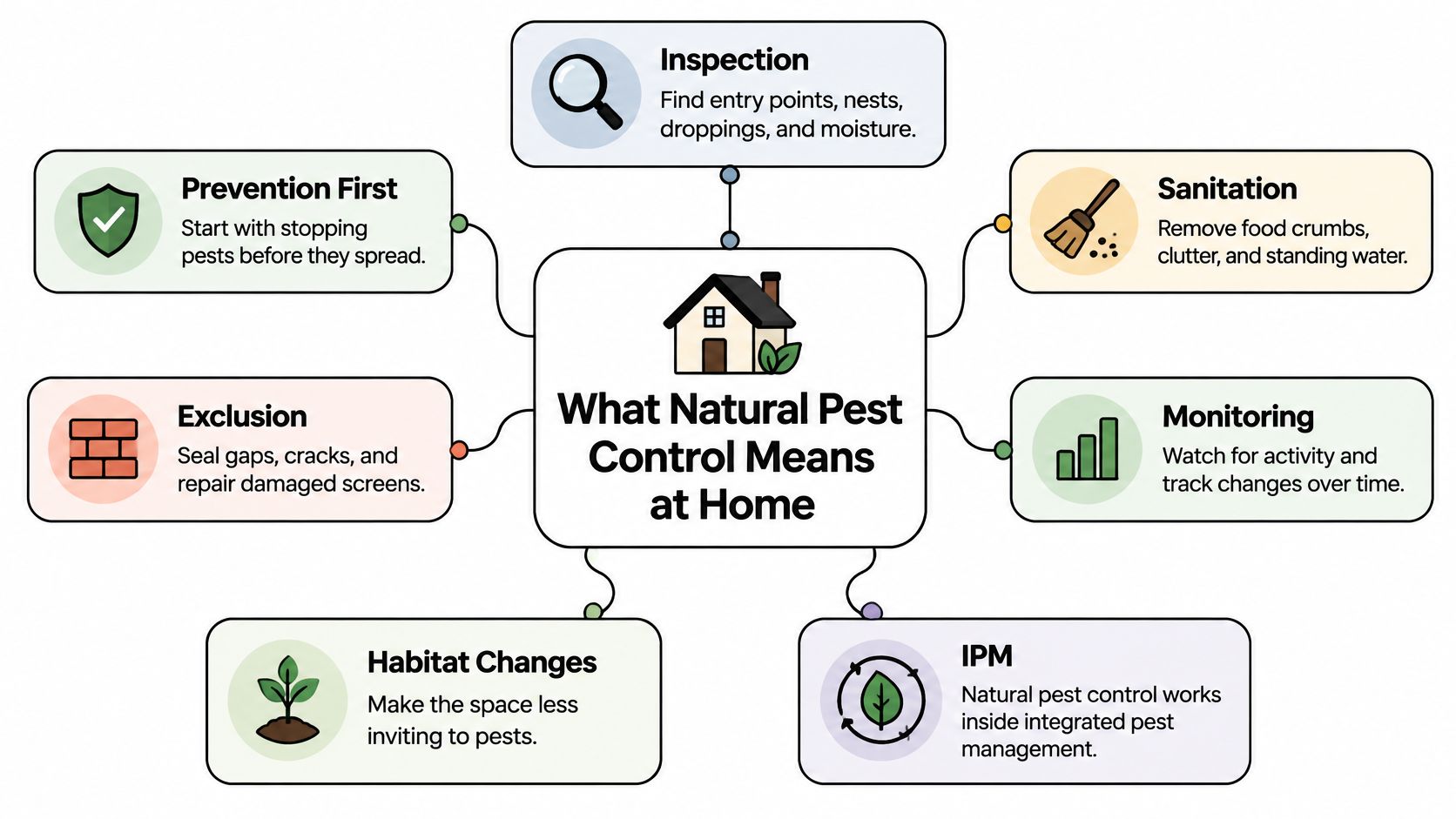
A Label Is Not a Plan
Seasonal invaders piling onto sunny siding, mosquitoes breeding in a clogged gutter, and rodents traveling through wall voids rarely stop because a product smells botanical. Each of those problems has a physical cause you can find and fix. Residential pest control built on IPM starts with diagnosis instead of automatically treating every insect sighting, and the same decision process governs whether anything gets sprayed at all.
The same logic shows up in yard care. Resources on safe weed prevention for Prescott yards describe the identical pattern for lawns: change the conditions first, then consider a product only if the problem persists. Whether the target is a dandelion or an ant trail, prevention and habitat changes do the heavy lifting.
The Green Advantage serves Crown Point and nearby Northwest Indiana homes and businesses with this approach. The business shifted toward pest control after its knowledge of nature, gained in the field and by hobby, helped it solve pest problems that others struggled with, and many customers asked for indoor pest control advice. A natural method done in the wrong order fails the same way a chemical one does, so the order of your decisions matters more than the ingredients on any label.
The Prevention Ladder Before Any Treatment
Before you buy anything, work through this ladder in order. Each step either solves the problem on its own or tells you exactly why the next step is justified.
- Identify the pest and the evidence. Confirm the species, where it's active, and what it left behind. A line of foragers, droppings in a cabinet corner, a papery nest, and one stray beetle on a windowsill are four different problems. A photo on your phone helps more than a guess.
- Set an action threshold. Decide what level of activity requires action. One boxelder bug on a sunny wall isn't the same risk as cockroaches in a kitchen or mice scratching in an attic. Low-risk, one-time sightings often need nothing but a note and a recheck.
- Remove what the pest uses. Wipe up crumbs and grease, store pantry food in sealed containers, fix drips under sinks, and empty standing water in tires, saucers, and gutters. If foraging stops once the attractant is gone, you're done.
- Exclude. Add weatherstripping and door sweeps, repair torn screens, and seal gaps around pipes, cable lines, and the foundation with caulk or copper mesh. Pests that end up outdoors and can't get back in don't need a treatment at all.
- Monitor and write it down. Check the same spots for a short period and record new sightings with dates. Falling counts mean prevention is holding. Rising counts mean something is still feeding or sheltering the pest.
- Add a matched natural control. Use a snap trap on a confirmed rodent run, protect beneficial insects outdoors, or apply a microbial product aimed at a specific life stage. Match the tool to the pest you identified in step one.
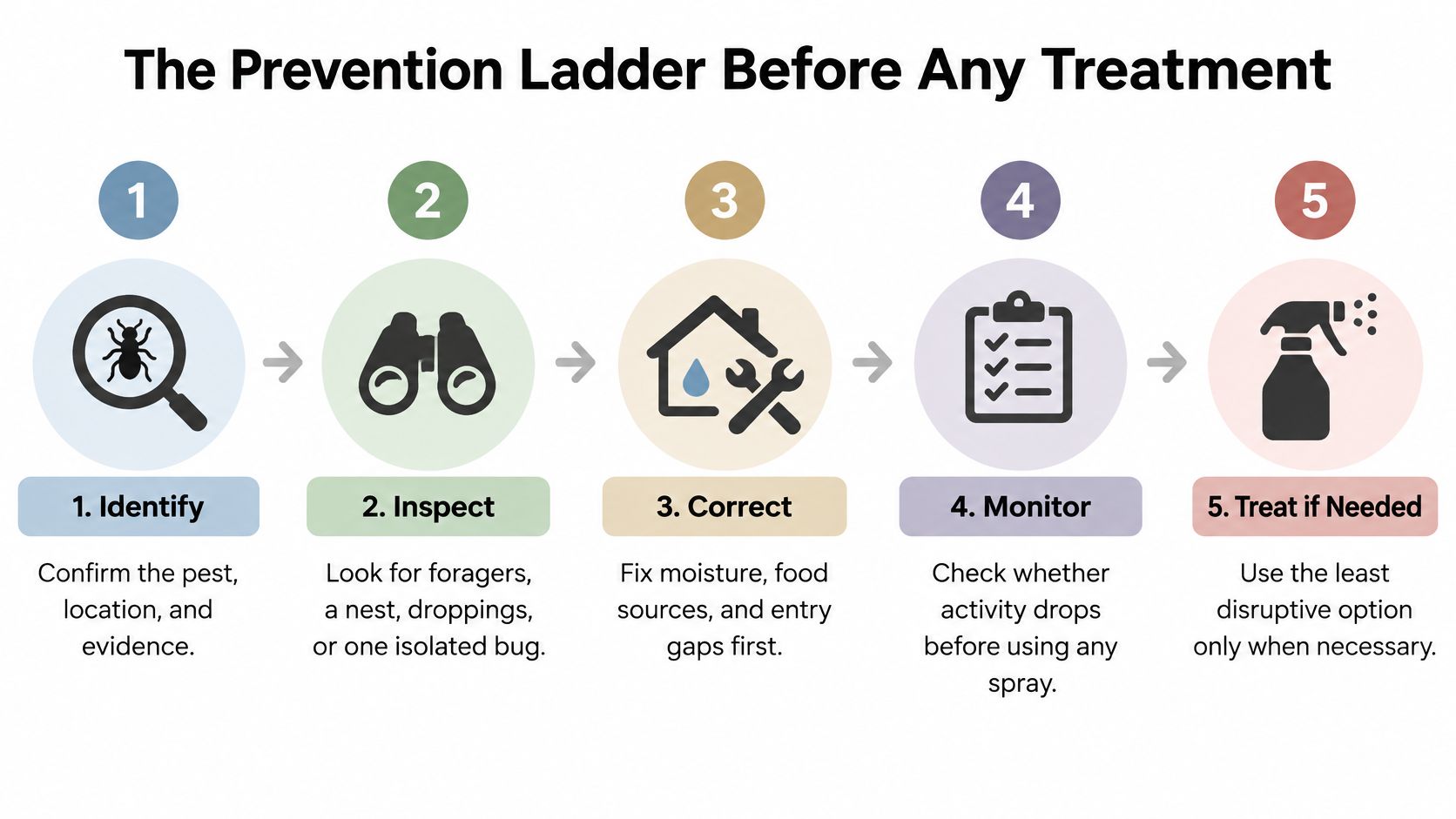
When the Ladder Ends at Escalation
Step seven is a licensed, targeted treatment, and it's the right move when counts keep rising after prevention, when the pest can damage structure or spread illness, or when the harborage sits somewhere you can't safely reach, like deep inside a wall void. Escalation isn't a failure of the natural approach. It's the ladder working as designed, because you've already removed the conditions that would bring the pest right back.
Practical rule: If you can't name the pest, its entry point, and its food or water source, a spray is a guess, not a treatment.
This order matters because the EPA introduction to integrated pest management says IPM programs should routinely monitor pest populations, locations vulnerable to pests, and the effectiveness of prevention and control methods, and it defines an action threshold as the point at which pest activity becomes a nuisance, health hazard, or economic threat. A single sighting doesn't automatically mean treatment is necessary. Calendar spraying skips all of that reasoning, which is why it isn't the default. For anyone hiring an exterminator in Crown Point, IN, a credible inspection should document evidence and contributing conditions before recommending control, and our page on what integrated pest management involves explains that inspection logic in more detail.
| Step | What you do | When it is enough |
|---|---|---|
| Identify | Confirm species, location, numbers, and evidence such as droppings or a nest | A single harmless sighting with no trail or damage |
| Set a threshold | Decide if activity is a nuisance, a health risk, or a property threat | Activity stays below that line on repeat checks |
| Sanitize | Remove food, water, clutter, and indoor moisture | Foraging stops because the attractant is gone |
| Exclude | Seal gaps, add sweeps and screens, close utility penetrations | Pests are outdoors and cannot re-enter |
| Change habitat | Empty standing water, trim vegetation off the siding, reduce harborages | Breeding sites are removed and new adults do not appear |
| Monitor | Record sightings and check whether prevention holds | Counts fall or stay at zero without a product |
| Target then escalate | Use a matched biological or biochemical control, then a licensed treatment in the harborage | Health pests, structural pests, or rising counts after prevention |
Nature-Based Methods Compared by Job
Homeowners get confused because very different tactics all get sold under the word natural. Exclusion, sanitation, habitat change, biological control, regulated biopesticides, and monitoring do different jobs, and none of them substitutes for the others. Picking the wrong one is the most common reason a natural approach seems to fail.
| Method | How it works | Best local use | Hard limit |
|---|---|---|---|
| Exclusion | Blocks entry with seals, screens, and sweeps | Mice, ants, overwintering beetles at siding gaps | Will not remove an established indoor nest or colony |
| Sanitation | Takes away food, water, and clutter | Cockroaches and kitchen ants | Fails if a hidden moisture or food source remains |
| Habitat change | Removes breeding or resting sites | Mosquitoes in tires, saucers, and gutters | Neighbors and weather can keep pressure high |
| Biological control | Uses a matched predator, parasitoid, or pathogen | Aphids outdoors and mosquito larvae | Slow, species-specific, and weak as an indoor cure-all |
| Biochemical or microbial product | Targeted active ingredient, not a homemade mix | A known pest after the cause is reduced | Not automatically safer for pets, bees, or water |
| Monitoring | Tracks sightings, evidence, and whether prevention holds | Any recurring residential or commercial pest | Does not reduce a population by itself |
The Limits That Change Your Choice
Exclusion is the backbone for mice and for ants entering along a foundation, but sealing gaps won't empty an established wasp nest inside a wall. Sanitation matters most for cockroaches and pantry ants, yet it can't compensate for a hidden leak feeding moisture into a cabinet void. Habitat change is powerful against mosquitoes because it removes the water they need to breed, though a neighbor's neglected containers and a rainy stretch can keep adult pressure high even in a well-kept yard.
Biological control uses a living enemy or disease agent matched to one pest. Lady beetles eating aphids on a shrub is the classic example, and microbial products aimed at mosquito larvae work the same way, one target at one life stage. It fails when the species doesn't match, when the weather is wrong for the organism, or when you release it after the pest has already peaked. Our explainer on how biological pest control works covers that matching process in plain language. Indoors, biological control is usually too slow and too specific to rescue an active kitchen infestation.
Biochemical and microbial biopesticides sit in their own category. They're regulated products with named active ingredients and legal labels, not homemade oil mixes from a video. That distinction protects you, because a labeled product tells you the target pest, the rate, and where it can go. A kitchen-cabinet blend tells you none of that.
A botanical repellent does not close a gap under a door, and a door sweep does not treat a colony already living in the wall.
Monitoring deserves its own mention even though it kills nothing. Sticky traps in a basement corner, dated sighting notes, and a flashlight check along the sill plate tell you whether sanitation and exclusion worked. Without that feedback, you're guessing at success.
One more warning applies across every row. Broad, indiscriminate sprays can kill the predatory insects and spiders your yard relies on for free pest suppression, which can leave you with more aphids and mites a few weeks later, not fewer. Protecting those beneficials is part of the method, not an afterthought.
Choose one primary method aimed at the cause and one backup, then give them time to show results in your monitoring notes. A drawer of unlabeled sprays, each used once in frustration, tells you nothing and exposes your household to products that were never matched to the pest in the first place.
Northwest Indiana Pests and Household Uses
The principles get clearer when you apply them to the pests Crown Point homeowners call about. Each scenario below ends with the condition that has to change, because that's what determines whether the fix holds.
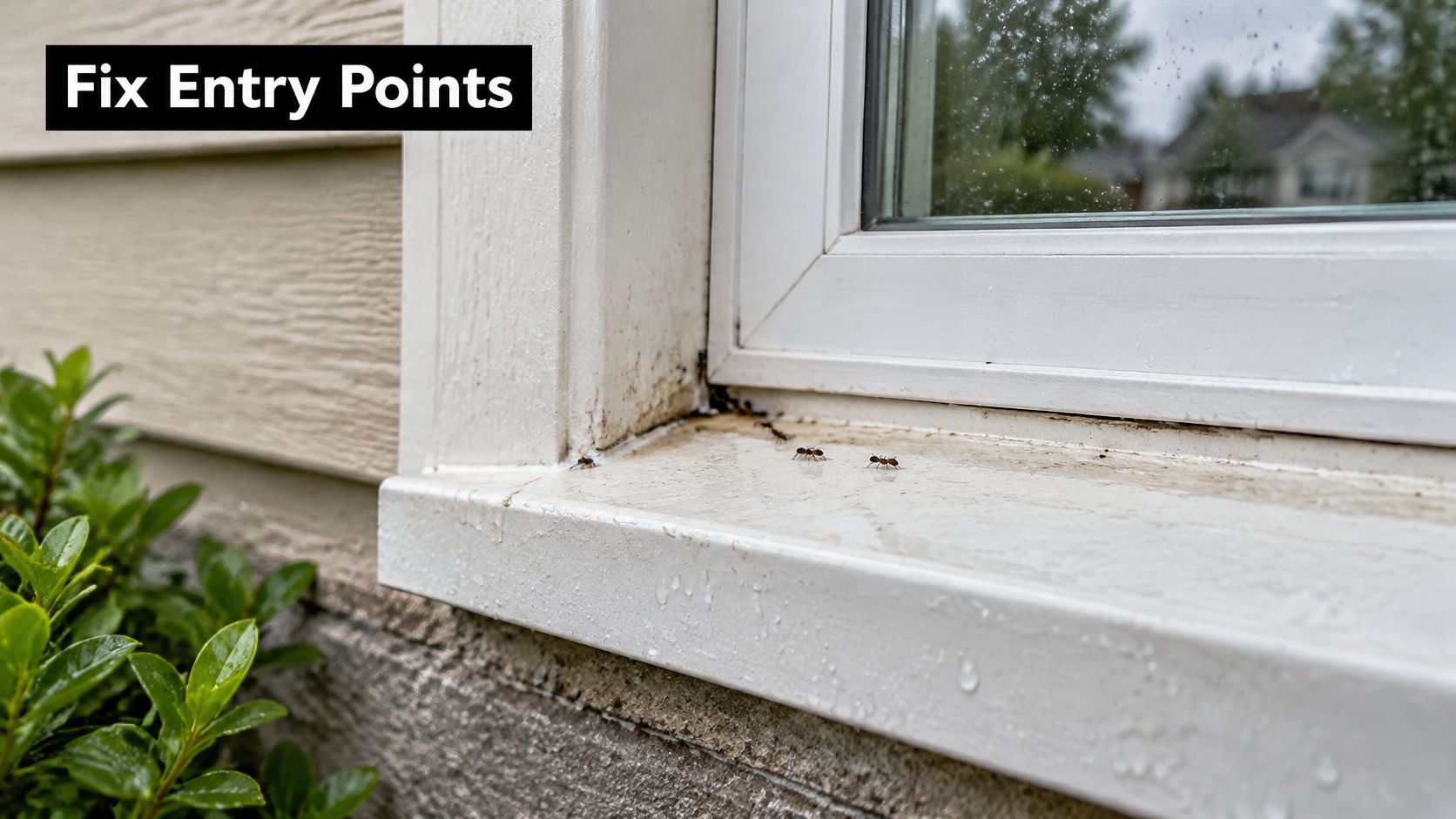
Ants on a damp sill. A trail running from a window frame to the sink usually means moisture-softened wood plus a food source nearby. Wipe the trail with soapy water to break the scent path, fix the damp wood and the entry gap, and remove the food before you consider any bait or spray. If fresh trails appear after the sill is dry and sealed, the colony has another route or harborage you haven't found.
Mosquitoes in the yard. This is a breeding problem first and a biting problem second. The USDA Agricultural Research Service overview of biological alternatives identifies removal of standing-water sources, including old tires and other containers, as a cultural control for reducing mosquito breeding habitat around homes, and it notes that microbial pesticides may target mosquitoes at different life stages, from larvae to adults. Empty or cover buckets and birdbaths, clear clogged gutters, and only then consider a life-stage treatment if adults remain heavy. For mosquito control that goes beyond yard cleanup, that prevention-versus-treatment distinction is the whole ballgame.
Indoor Pests With Hidden Routes
Mice and rats travel along hidden runs in attics, basement rim joists, and wall voids. A trap set in the middle of a garage floor rarely meets a mouse, because rodents hug edges and familiar paths. Rodent control works better when you find the run from droppings and rub marks, reduce the population there, and then seal the entry points so the route closes permanently.
Spiders in a Crown Point basement usually signal two things, other insects to eat and clutter near the foundation to hide in. Spider control that lasts means reducing their food supply and clearing stored items away from walls. Silverfish and earwigs point to moisture, so a dehumidifier, a fixed leak, and better drainage at the foundation often matter more than any product.
Seasonal and Stinging Pests
Wasps and bees need a nest decision, not a garden oil. A colony near a doorway is a sting risk, and disturbing it without the right equipment can turn wasp removal into an emergency. Asian beetles and boxelder bugs behave differently. They pile onto sunlit walls in fall looking for a warm crack, so sealing siding gaps and window frames before they move indoors beats spraying a swarm that's already gathered.
Businesses and rentals run the same logic with lower tolerance. Ants near a home pantry are a nuisance, but cockroaches near a commercial kitchen, dumpster, or shared tenant wall become a health and reputation problem fast. Residential pest control and commercial pest control share the inspection steps, but a food business can't accept the wait-and-monitor window a homeowner might.
Use one pass or fail check for every pest on this list. If new evidence appears after the cause is fixed, droppings, fresh trails, new larvae in standing water, the plan is incomplete and something was missed.
Benefits and Limits Versus Chemical Control
The honest verdict depends on the situation, not on a slogan. Natural, IPM-style control usually lowers unnecessary exposure, protects beneficial insects when you avoid broad sprays, and cuts repeat visits when the entry point or water source is fixed. Conventional chemical control knocks down active pests faster, and it's often the practical choice for termite control, heavy cockroach activity, or a rodent problem already established inside walls. Refusing it in those cases doesn't make a home safer. It gives the infestation more time.
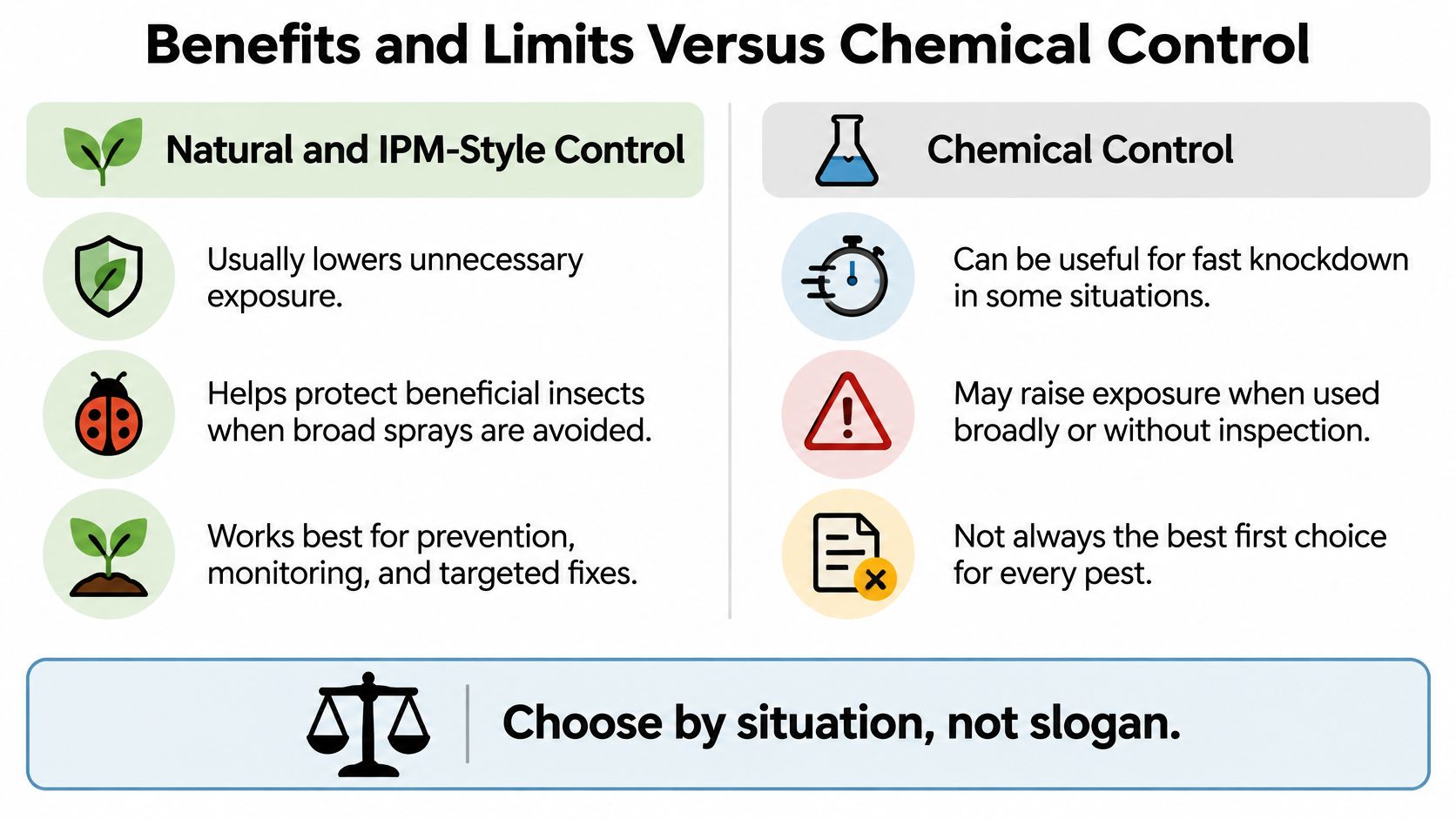
| Criterion | Natural and IPM approach | Conventional chemical approach |
|---|---|---|
| Speed | Often slower because the cause is fixed first | Usually faster knockdown of active pests |
| Exposure | Aims for the least disruptive effective step | Higher if products are broadcast on a schedule |
| Rebound | Lower when food, water, and entry are removed | Can return if harborage is left untouched |
| Beneficial insects | Easier to protect if sprays stay targeted | Broad products can kill predators too |
| Structural or health pests | May be insufficient alone for termites or heavy roaches | Often required for reliable control |
| How to judge success | Fewer sightings, no new evidence, closed gaps, fewer repeats | Fewer live pests after the application |
Where Each Approach Fails
The failure mode of a natural-only rule is delay. A botanical repellent can scatter ants for a day while the colony keeps breeding in a damp wall, and essential oils near a pantry do nothing about termites feeding in a sill plate. The EPA overview of biopesticides classifies biopesticides into biochemical pesticides, microbial pesticides, and plant-incorporated protectants, which shows that natural covers several technically different approaches, not one gentle category. A product labeled botanical may repel pests temporarily without addressing entry points, moisture, food sources, or nesting sites.
Routine chemical service fails in the opposite direction. Treating the symptom on a calendar while gaps, moisture, and food stay in place produces a predictable cycle of knockdown and return. No single tactic is a universal solution, which is why effective programs combine assessment, prevention, monitoring, and targeted treatments.
Measure the result, not the label. Fewer sightings over weeks, no new droppings or shed skins, closed entry points, and no harm to pets or pollinators tell you more than any word on a bottle.
The homeowner rule is straightforward. Start with prevention for occasional invaders and yard mosquitoes, and don't refuse a regulated, targeted treatment when a pest threatens health, structure, or a food business. Price depends on building size, pest, service, and materials, so a real quote follows an inspection rather than a flat promise over the phone.
Safety Checks Before You Treat
Plant-based, organic, and natural don't mean harmless to children, pets, pollinators, or waterways. A peer-reviewed review of natural pesticides states that natural pesticides can have reduced persistence or residue in some cases, yet these advantages do not apply to every product, and it warns that natural pesticides are not consistently safer or more environmentally friendly. The same review identifies variable active-ingredient concentrations and preparation methods as major reasons homemade botanical sprays can have unpredictable effectiveness and safety.
Some naturally derived compounds can harm bees or aquatic life, and long-term ecological data remain limited for many products. Natural should trigger an ingredient-specific risk check, not blanket reassurance.
The Pre-Treatment Checklist
- Identify the pest first. A product aimed at the wrong species adds exposure without results.
- Read the active ingredient. Judge the named ingredient, not the marketing words around it.
- Follow the legal label. The label sets the rate, the location, and who must stay away, and for how long.
- Protect pollinators and water. Keep sprays off blooming flowers and away from storm drains and ponds.
- Check the non-chemical fix first. Ask whether exclusion or sanitation can solve the cause before anything is applied.
Household precautions also vary by service. For most general pest control services, customers do not need to leave their home during treatment. Flea control is different, since all pets and residents must leave the home for four to six hours so the products can settle safely. Before starting cockroach or rodent work, our trained technician explains the entire process and shares the precautions for your household to follow.
Signs to Stop DIY
Book a licensed inspection instead of mixing more products when you find droppings in a kitchen, gnawed wiring, mud tubes or hollow-sounding wood that suggests termites, a stinging-insect nest near a door, pests inside a commercial food area, or the same ants and mosquitoes returning after you've completed exclusion and sanitation. Licensed structural pest technicians, including rodent and termite specialists, handle those cases, and a good inspection report still lists the prevention steps you can take yourself. If two prevention steps have failed, that's the handoff point.
Schedule a Crown Point Pest Inspection
Booking pest control in Crown Point, IN starts with a conversation, not a spray schedule. You'll describe the pest to our office staff, who handle scheduling and information about the problem so our licensed technicians can focus on solving the pest issue in the building itself. For general pest control issues, we typically schedule service the same day or the next business day, depending on your convenience.
During the visit, the technician identifies the pest, documents the conditions that let it in, and recommends a plan aimed at the problem areas rather than routine treatments. That plan might involve mosquito reduction from egg to adult, a rodent exclusion plan for your Crown Point home, or targeted work for ants, spiders, cockroaches, or stinging insects, and the inspection report notes the steps you can take to prevent the problem from returning.
Commercial customers can request a free quote for pest control through our team. The commercial line is open Monday through Friday, 8:00 AM to 4:00 PM, at (219) 779-9815. After you call for a quote, we identify the pest problem and design a customized program for your facility.
Pricing depends on building size, the type of pest, the service required, and the materials used, so your quote follows the inspection instead of guessing over the phone. If you're a homeowner, landlord, or local business searching for an exterminator near me in Northwest Indiana, schedule a pest inspection and get a plan built on prevention first and targeted treatment only where it's needed.
If pests keep coming back after your own prevention steps, The Green Advantage can inspect your Crown Point home or business, identify the pest and the conditions feeding it, and build a prevention-first plan with targeted treatment only where it's justified. Visit The Green Advantage to schedule your inspection or request a quote today.