
You notice a single ant near the kitchen sink, a spider in the basement, or scratching above the ceiling after sunset. The immediate question is simple: does one pest mean there are more? In Crown Point, IN, the right answer depends on the pest, the location, the season, and what a professional inspection finds.
Pest control monitoring replaces guesswork with evidence. Instead of spraying every visible insect on a calendar, a technician looks for patterns, identifies conditions that attract pests, and recommends action when activity reaches a meaningful threshold. The Green Advantage serves Crown Point and surrounding Northwest Indiana communities with residential pest control, commercial pest control, pest inspections, mosquito reduction, and environmentally mindful prevention strategies.
Why Pest Control Monitoring Matters for Northwest Indiana Properties
A homeowner spots one ant on the counter and wipes it away. The next morning, another appears near the same cabinet. That small detail deserves attention, but it doesn't automatically justify spraying the entire kitchen. The useful question is whether the ants are wandering in from outdoors, following a repeatable trail, entering through a gap, or responding to moisture and food inside the home.
Professional monitoring turns that isolated sighting into a property-specific decision. A technician checks likely entry points, activity zones, moisture conditions, food sources, and signs of nesting. The same logic applies to spiders in a basement, wasps around a roofline, mosquitoes in a yard, or rodents moving through an attic. Visible pests are clues, not the complete diagnosis.
Monitoring is different from routine spraying
Integrated pest management treats monitoring as a decision-making step, not just an observation task. Professionals track pest populations and site conditions to determine whether control is economically, practically, or medically justified, then target the response where it matters. USDA guidance on integrated pest management describes monitoring as a documented, recurring process that records locations, schedules, techniques, findings, and control effectiveness.
That distinction matters for families and businesses in Northwest Indiana. A routine application may kill exposed insects temporarily, but it won't necessarily seal an entry point, correct sanitation issues, remove standing water, or identify a developing rodent pathway. Monitoring gives the technician information needed to combine inspection, exclusion, habitat changes, traps, and targeted treatment.
Practical rule: A single pest sighting should start a question, not automatically start a broad chemical treatment.
Why local conditions change the answer
Seasonal pest issues can move indoors when temperatures shift, rainfall changes moisture conditions, or properties offer accessible food and shelter. A Crown Point home with a damp crawl space has different risks from a dry, well-sealed home. A restaurant, warehouse, rental property, and office building each has its own vulnerable areas and operating requirements.
The Green Advantage approaches these properties with long-term prevention in mind. That means monitoring for activity before damage becomes obvious, documenting findings, and adjusting the plan instead of treating every visit as an identical service. Modern IPM reflects a long evolution from basic pest suppression toward threshold-based management, with economic threshold concepts formalized in the mid-20th century and earlier biological-control practices recorded much further back in history. The principle remains practical: collect useful information, then intervene with purpose.
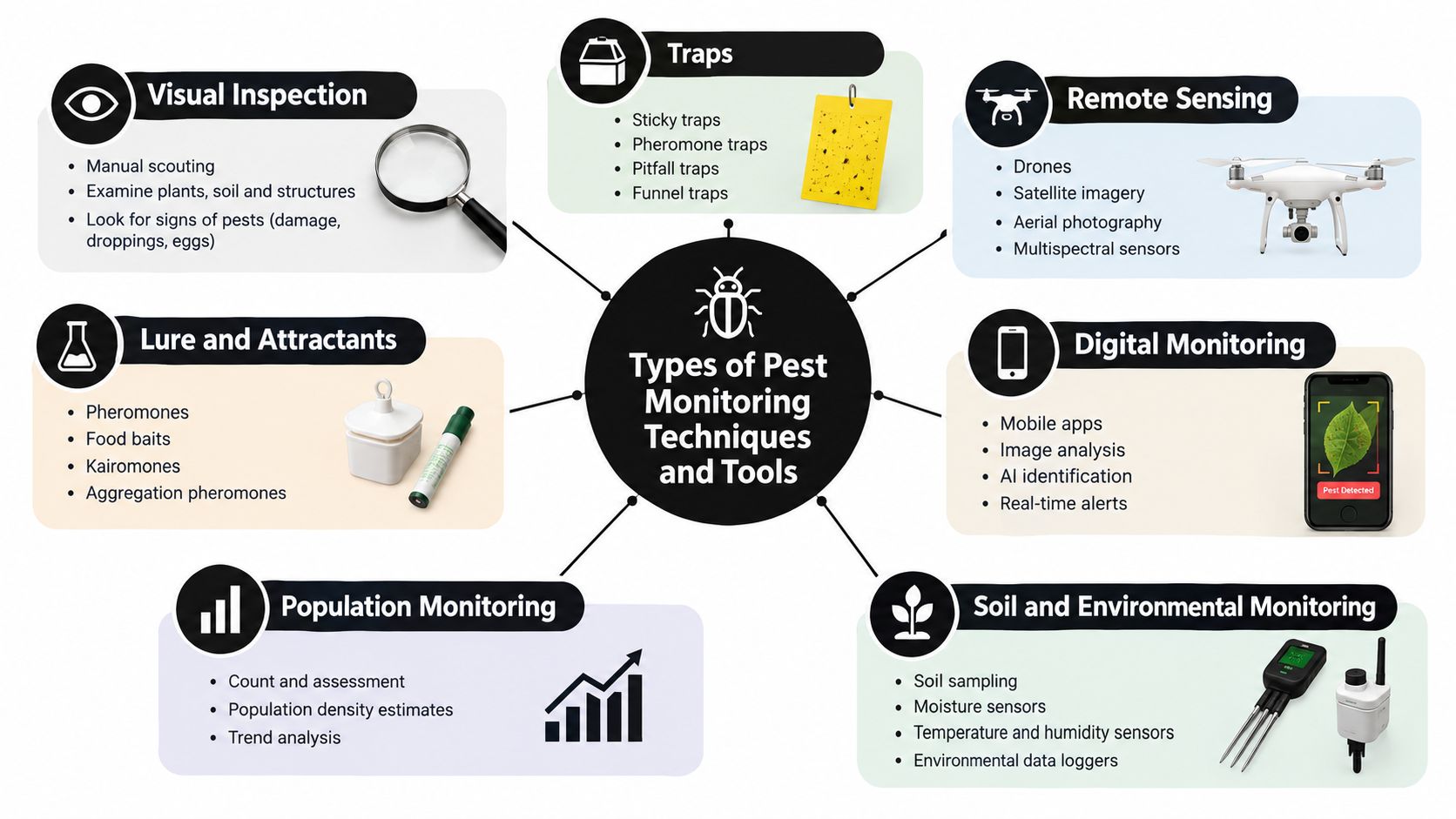
Types of Pest Monitoring Techniques and Tools
Effective pest control monitoring uses more than one tool. The right combination depends on the property, pest, access points, and consequences of missed activity. A family home may need focused inspections and physical traps, while a food facility may need documented stations, recurring checks, and trend records.
Visual inspections find conditions devices can't explain
A visual inspection is the starting point. The technician examines foundation lines, utility penetrations, door sweeps, attic insulation, crawl spaces, wall voids, roof edges, kitchens, storage areas, and exterior vegetation. Droppings, gnaw marks, shed insect skins, mud tubes, grease marks, webbing, nesting materials, and damaged screens can reveal activity even when no pest appears during the visit.
Visual work also explains the reason behind a signal. A rodent trap may show activity, but the inspection can identify the opening that allowed entry. A wasp sighting may lead to a roofline inspection. An ant trail may point toward moisture or a gap around plumbing.
Traps and bait stations act as early warning systems
Sticky monitors, snap traps, insect traps, and tamper-resistant bait stations provide physical evidence. Placement matters more than quantity. Professionals position devices along travel routes, near suspected entry points, behind equipment, in utility areas, or beside other conditions that support pest movement.
A trap catch isn't just a result. It can show where activity is concentrated, whether a control measure is working, and whether activity is recurring. In a commercial setting, stations also support consistent documentation and follow-up.
Digital sensors extend visibility
Connected sensors can detect movement or trap activity in areas that are difficult to inspect frequently, such as wall voids, crawl spaces, attics, and storage rooms. Remote alerts may help a technician respond sooner when the property justifies that level of service.
Digital monitoring isn't automatically better for every customer. It adds equipment, maintenance, data review, and service complexity. For a small home with occasional seasonal insects, a sound inspection and conventional monitoring may be enough. For a multi-site facility, a sensitive food operation, or a property with hidden rodent pathways, connected information can be more useful.
Sentinel programs create a repeatable baseline
A sentinel program uses selected monitoring points that technicians revisit on an agreed schedule. The team compares findings over time, records pest identification and activity, and watches for changes instead of relying on memory.
For homeowners researching integrated pest management services, the key question isn't which device looks most advanced. Ask whether the provider can explain what each device measures, where it will be placed, how often it will be checked, and what finding will trigger a change in the plan.
Residential vs Commercial Monitoring Needs
A Crown Point residence and a commercial facility don't need identical pest control monitoring. Treating them as if they do creates two problems. Homeowners may pay for equipment they don't need, while businesses may receive informal service that doesn't produce the documentation or response process their operation requires.
Residential pest control usually centers on comfort, health, family safety, and property protection. A technician may focus on exterior perimeter conditions, foundation cracks, garage transitions, attic access, crawl spaces, kitchens, bathrooms, and areas where children or pets spend time. Termite control, carpenter ant prevention, rodent exclusion, spider control, wasp removal, mosquito control, and preventative pest treatments may all require different inspection priorities.
Commercial pest control demands a broader operational view. Restaurants, warehouses, offices, rental properties, and other facilities have employees, customers, inventory, equipment, and business procedures that can be affected by pest activity. Monitoring records need to show locations inspected, findings, corrective actions, and follow-up. Managers should be able to see whether activity is declining, recurring in one area, or connected to a building or sanitation condition.
Why one schedule doesn't fit every property
EPA school guidance describes monitoring as regular, ongoing inspection, with frequency adjusted to the site and pest pressure. The guidance allows schedules ranging from weekly to less frequent intervals, and it describes more frequent indoor monitoring during a serious infestation followed by less frequent checks after control. EPA school IPM guidance supports the practical point that monitoring frequency should follow risk, not a generic calendar.
| Feature | Residential Properties | Commercial Facilities |
|---|---|---|
| Primary concern | Comfort, family safety, structural protection, and peace of mind | Public-facing risk, inventory, operations, documentation, and audit readiness |
| Common focus areas | Perimeter, attic, crawl space, garage, kitchen, and living areas | Kitchens, receiving areas, storage, waste zones, loading areas, production spaces, and utility rooms |
| Monitoring style | Seasonal inspections, traps, exclusion checks, and targeted follow-up | Mapped monitoring points, recurring logs, trend review, corrective actions, and documented follow-up |
| Technology decision | Use digital tools when hidden or recurring activity makes them worthwhile | Consider connected systems when response speed, multi-site visibility, or documentation justifies the complexity |
| Service goal | Prevent infestation and protect the home without unnecessary exposure | Detect activity early, protect the operation, and maintain a defensible pest management record |
For both property types, the plan should be understandable. Customers need to know what the technician found, what should change on the property, and what evidence will lead to treatment.
The Professional Monitoring Process and Action Thresholds
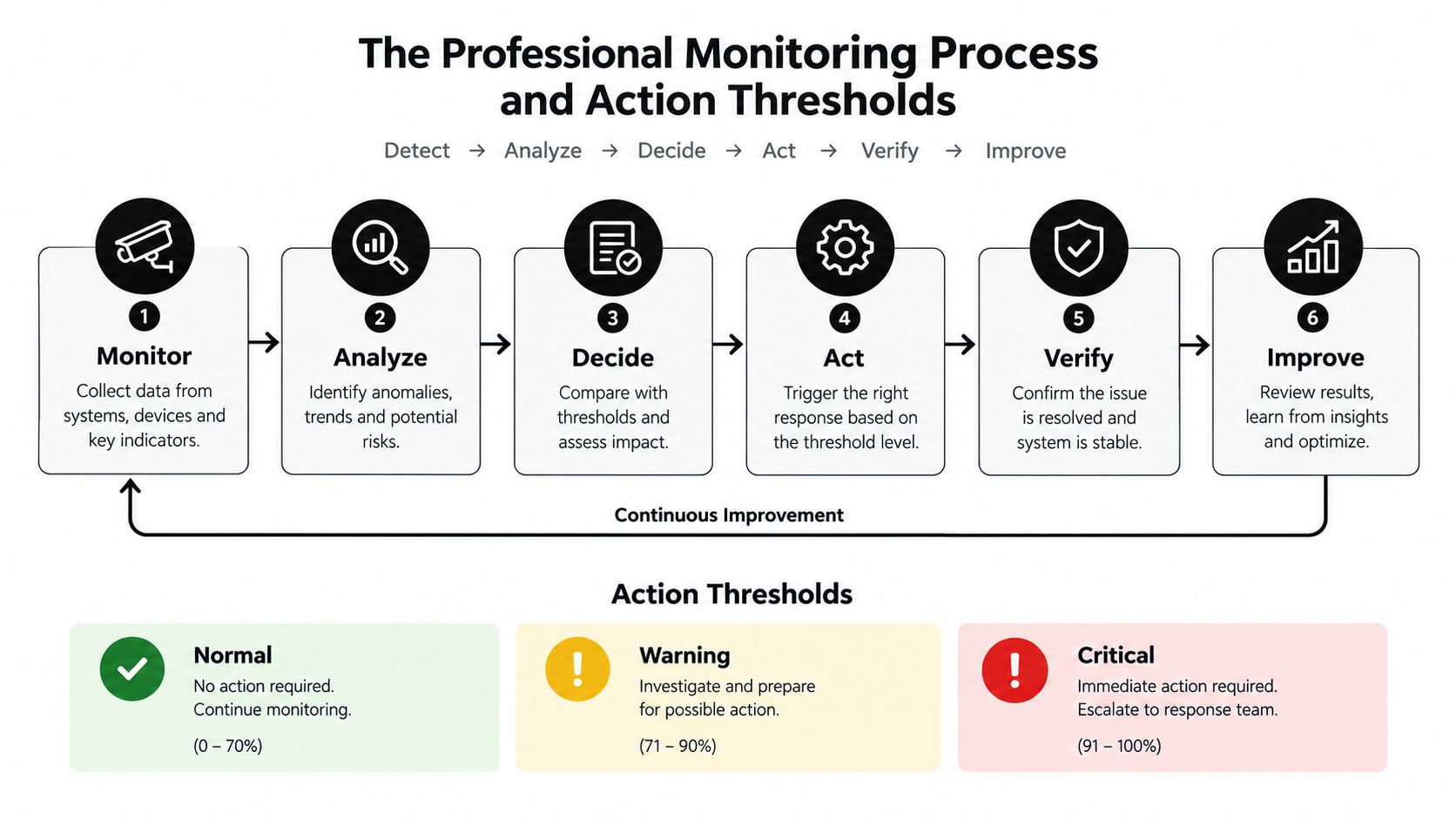
A professional program should answer four questions clearly: what pest is present, where is it active, how is activity changing, and what finding justifies treatment? Without those answers, monitoring becomes a collection of devices rather than a management system.
The workflow starts with a site assessment
The technician first reviews the property and its history. The inspection looks for pest evidence, entry points, moisture, food and waste conditions, harborage, vulnerable occupants or operations, and areas where activity could remain hidden. Monitoring points are then selected based on likely pest movement and the consequences of missed activity.
The next step is identification. Ants, termites, pantry pests, cockroaches, spiders, rodents, mosquitoes, and wasps don't respond to the same control strategy. Correct identification prevents a technician from treating the wrong pest or overlooking the condition that supports it.
Thresholds determine when observation becomes action
Integrated pest management uses an action threshold. Control should begin only when pest populations or environmental conditions reach a point where they create a nuisance, health hazard, or economic threat. EPA's IPM principles also note that seeing a single pest doesn't always mean control is needed.
A useful threshold should be measurable or at least consistently defined. University of California IPM guidance gives examples such as average pests per trap each week or the percentage of leaves or plants damaged during inspection. In school IPM examples from Texas A&M, operational thresholds include 10 ants per room in public areas, five ants per 100 square feet in storage areas across two monitoring periods, or two cockroaches observed per room. These examples aren't universal rules for every Crown Point property. They demonstrate why thresholds must match the pest, building, use, and risk.
Records reveal trends that a single visit misses
Technicians compare trap catches, inspection notes, locations, environmental conditions, and treatment results as a sequence over time. A repeated low-level signal in one area may call for exclusion or sanitation work. A rising pattern may justify targeted treatment. A declining pattern may support continued monitoring instead of escalation.
Clear routing, scheduling, and field records can also help boost field team efficiency, especially when technicians service multiple properties or return to specific monitoring points. Property owners should expect records that connect findings to decisions, not merely a note that a service occurred. A practical pest control inspection checklist can help homeowners and managers prepare questions and track corrective actions.
Benefits and ROI of Proactive Pest Monitoring
Proactive monitoring pays off by addressing small signals before they become disruptive problems. The return isn't limited to avoiding a treatment. It includes protecting building materials, reducing contamination risks, preserving business operations, and giving property owners a clearer basis for decisions.
For homeowners, early detection can expose moisture, gaps, nesting conditions, or structural vulnerabilities while repairs remain manageable. Termite control and carpenter ant monitoring can support earlier investigation of wood-related concerns. Rodent monitoring can identify activity near wiring, insulation, food storage, or HVAC spaces. Mosquito monitoring can guide outdoor service decisions instead of treating the yard without regard to actual pressure.
Property protection is easier before damage spreads
Exclusion work often has lasting value because it addresses how pests enter. Sealing gaps, improving screens, correcting door sweeps, managing standing water, reducing harborage, and changing storage practices can reduce the conditions that invite repeat activity. Preventative pest treatments work best when they support those measures, not when they substitute for them.
A reactive service call may be necessary during an active infestation, but it shouldn't be the entire strategy. Monitoring helps identify whether a treatment worked and whether pests are returning through the same route.
Long-term protection: The most valuable pest control decision often happens before anyone sees a large infestation.
Businesses measure value through continuity and accountability
For a restaurant, warehouse, office, or rental property, pest activity can affect more than the building. Managers may need to protect inventory, reassure occupants, maintain clean operating areas, and respond to inspection or audit questions. Documented monitoring gives the business a record of what was checked and what corrective action followed.
The value of commercial pest control therefore includes fewer surprises and faster decisions. If a monitoring point shows activity, the manager can direct attention to a defined location rather than searching the entire property. If records show no activity in a low-risk zone, the team can focus resources where evidence supports it.
The best program is not the one with the most equipment or the most frequent chemical application. It's the one that produces useful information, corrects property conditions, and applies treatment when the evidence supports it.
Signs You Need Professional Monitoring and What to Expect
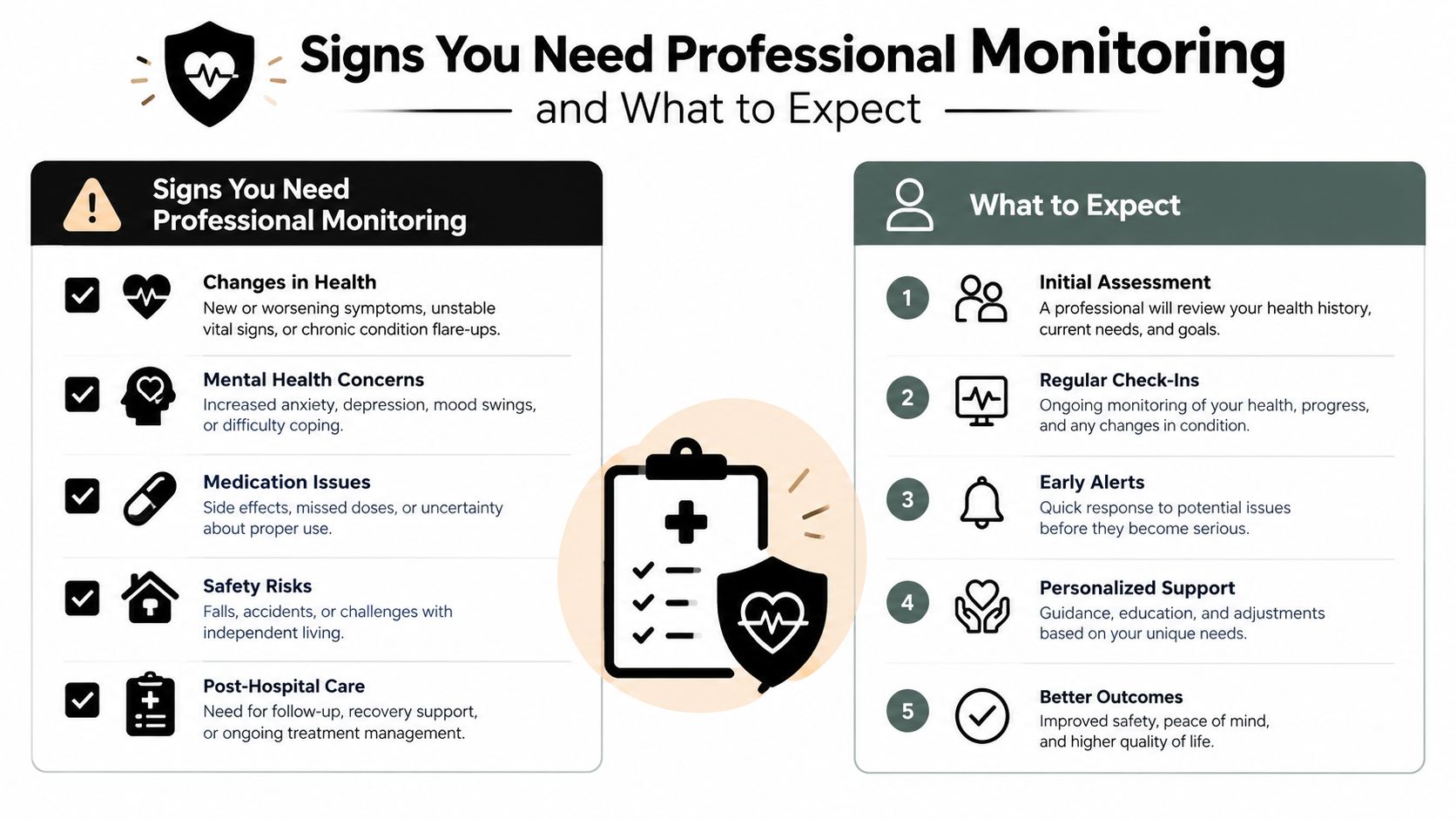
Some pest problems announce themselves. Others leave quiet evidence that homeowners and managers overlook until activity becomes harder to control. A monitoring assessment is appropriate when signs repeat, appear in protected areas, or coincide with damage and health concerns.
Watch for these indicators:
- Droppings or nesting material: Check cabinets, attic edges, utility rooms, storage areas, and concealed corners.
- Gnaw marks or damaged wiring: Rodent activity can threaten building components and should receive prompt attention.
- Repeated indoor insects: A seasonal spike in ants, spiders, cockroaches, or other insects may point to entry conditions or an indoor source.
- Mud tubes or damaged wood: These signs call for a focused termite or carpenter ant inspection.
- Wasp activity near the structure: Repeated traffic around eaves, soffits, wall openings, or play areas deserves professional evaluation.
- Mosquito pressure in outdoor areas: Persistent biting activity can justify a yard assessment and monitoring-based mosquito reduction plan.
- Unexplained odors or sounds: Scratching, rustling, or unusual smells may indicate concealed rodent activity.
What happens after you contact The Green Advantage
The first conversation should be straightforward. Knowledgeable office staff gather the property details, the pest concern, where signs appeared, and whether anyone in the home or business has specific safety needs. That information helps the field technician arrive prepared rather than treating the call as an anonymous appointment.
During the on-site visit, the technician inspects the relevant interior and exterior areas, identifies evidence, looks for entry and harborage conditions, and explains what requires attention. The service plan should distinguish immediate control from prevention, recommend monitoring points where useful, and outline follow-up clearly.
Ask for a plan that matches the property
Eco-friendly pest control isn't a promise to ignore serious activity. It means using inspection, exclusion, sanitation improvements, monitoring, and targeted products responsibly. Ask what will be applied, where it will be used, what preparation is required, and how the technician will confirm results.
The Green Advantage provides licensed and certified residential and commercial services in Crown Point, IN, with direct communication from office staff and site-specific recommendations from field technicians. That model keeps the diagnosis and follow-up connected to the property rather than forcing every customer into the same routine.
Local Pest Control FAQs and Next Steps
How much does pest monitoring cost?
There isn't one responsible price for every home or business. Cost depends on the pest, property size, activity level, access, monitoring equipment, exclusion needs, treatment scope, and follow-up schedule. Request a site-specific quote instead of choosing a plan based only on a generic service frequency.
How often should monitoring occur?
The schedule should follow pest pressure and property risk. EPA guidance allows monitoring intervals to vary by site and pest, from frequent checks during serious activity to less frequent visits after conditions are controlled. Mosquitoes, wasps, rodents, termites, and indoor insects each require different inspection priorities.
Is eco-friendly pest control safe around children and pets?
Ask the technician to explain the products, placement, preparation, ventilation, and reentry instructions for your specific property. Responsible service reduces unnecessary exposure by matching treatment to verified activity and using nonchemical measures whenever they can solve the underlying condition.
Should I choose traditional inspections or digital monitoring?
Choose traditional methods when the property is straightforward and activity is visible or seasonal. Consider digital monitoring when pests move through concealed spaces, response speed matters, or a commercial operation needs recurring data across multiple locations. A professional should explain the expected outcome, not just sell the newest device.
Clear scheduling and communication make it easier to book pest control appointments without delaying an inspection. For pest control near me, an exterminator near me, or pest control in Crown Point, IN, start with the property evidence and ask what action threshold will guide the service plan.
The Green Advantage provides residential pest control, commercial pest control, pest inspections, mosquito reduction, rodent exclusion, termite treatments, and targeted prevention for Crown Point, IN and nearby Northwest Indiana communities. Visit The Green Advantage to schedule a professional inspection or request a customized quote built around monitoring, prevention, and long-term property protection.