
If you're searching for a natural mosquito repellent for humans, don't assume the bottle with the most leaves on its label will protect your family. A strong scent can disappear while mosquitoes keep biting. In Crown Point, IN, homeowners need to judge a repellent by its active ingredient, concentration, formulation, and reapplication schedule, not by the word “natural.”
The practical truth is straightforward. Some plant-based ingredients can help during a short backyard gathering, while others offer little more than fragrance. Personal repellent also protects only the person wearing it. If mosquitoes keep returning to your yard, patio, rental property, or business, you may need mosquito control rather than another bottle of oil. The Green Advantage serves Crown Point and surrounding Northwest Indiana communities with mosquito reduction options for residential and commercial properties.
Why Natural Mosquito Repellents Are Not All the Same
“Natural” identifies an ingredient's origin, not its performance. A plant oil may repel mosquitoes in a controlled test yet fail on a sweaty homeowner standing outside in humid Northwest Indiana weather. The label needs closer scrutiny than the leaf graphics.
Protection depends on active chemistry, concentration, and formulation stability. Volatile oils can evaporate quickly. A weak blend may contain several pleasant-smelling oils without enough active material to matter. Candles, wristbands, and clip-on devices can also distribute too little repellent around your body for dependable personal protection.
Where weak products fall short
Three problems appear repeatedly:
- Fast evaporation: Some essential-oil repellents protect for only about 30 minutes to 2 hours, according to a review published in the medical literature.
- Insufficient concentration: A low-dose blend may smell strong while failing to maintain an effective barrier.
- Poor delivery format: Water-heavy sprays and decorative outdoor products can lose active ingredients quickly in wind, heat, and humidity.
A 2023 human-volunteer study tested 20 essential oils in 10% lotion formulations. Clove, cinnamon, 2-phenylmethyl propionate, and geraniol provided the longest protection, with complete protection times exceeding 1 hour. Several other oils performed no better than untreated controls (Scientific Reports).
That difference matters more than the word botanical. The same study reported attraction reduction lasting 30 minutes for spearmint and garlic, 60 minutes for peppermint and lemongrass, and 120 minutes for cinnamon. An oil that works briefly in a carefully prepared lotion is not an all-evening solution.
Practical rule: Choose the formula first and the plant name second. A well-made product with a realistic duration claim beats a fashionable oil blend every time.
The evidence supports a clear buying order. Oil of lemon eucalyptus, also called PMD, has the strongest regulatory standing among plant-derived options. Geraniol and citronella can help when properly formulated. Catnip, clove, and cinnamon show promise, but their real-world consistency and skin tolerance call for more caution. Reapply according to the product's tested duration, not the strength of its scent.
Plant-Based Actives That Actually Repel Mosquitoes
Natural does not mean interchangeable. Plant-derived actives differ in strength, skin tolerance, and staying power. The carrier, such as a lotion, balm, or emulsifier, can determine whether the active remains on skin long enough to repel mosquitoes.
The strongest plant-based candidates
Oil of lemon eucalyptus, or PMD, is the first plant-based option I'd consider for a short outdoor event. The Environmental Protection Agency registered it in 2000 as a biopesticide repellent derived from natural materials, and independent reviews describe roughly 2 hours of protection against mosquito bites (Beyond Pesticides). Do not confuse PMD with lemon eucalyptus essential oil sold for fragrance. Read the label for the registered active ingredient and its concentration.
Catnip oil has shown promise, though a homemade spray does not guarantee the same result. A 2024 study found 2% catnip essential oil significantly repelled Aedes aegypti, with more than 70% repellence lasting 1 to 4 hours depending on the carrier. In an unscented lotion, protection lasted up to 4 hours, showing how strongly the base can affect performance (Scientific Reports).
Citronella can help, but keep expectations realistic. Unprotected essential oil usually works for a short period. A fixative or lotion can slow evaporation, while a citronella candle belongs outdoors and should not be treated as a skin-applied repellent.
Geraniol can strengthen a properly made blend. In a human study, geraniol in a 10% lotion provided complete protection beyond 1 hour (Scientific Reports).
Clove and cinnamon can repel mosquitoes, but concentrated forms may irritate skin. They belong in carefully formulated commercial products or controlled perimeter treatments, not casual sprays applied neat to the body.
For a broader reference list, review top mosquito repellent essential oils. Then check the label for the actual active ingredient, concentration, and protection claim.
| Active Ingredient | Typical Concentration | Protection Time | Best Use Case |
|---|---|---|---|
| PMD, oil of lemon eucalyptus | Product-specific | About 2 hours in independent reviews | Short outdoor activities |
| Catnip essential oil | 2% in a 2024 study | Up to 4 hours in unscented lotion | Carefully formulated topical use |
| Citronella | Product-specific | Roughly 30 minutes to 2 hours for many essential-oil formulas | Short events and blended products |
| Geraniol | 10% lotion in a human study | More than 1 hour in that formulation | Blended topical products |
| Clove oil | 10% lotion in a human study | More than 1 hour in that formulation | Formulated products, not casual neat application |
| Cinnamon oil | 10% lotion in a human study | More than 1 hour in that formulation | Formulated products and controlled use |
The plant name is only part of the decision. The carrier oil, emulsifier, lotion, or balm controls how quickly the product disappears, and the active leaves with it. Use the stated reapplication interval as your practical guide, not the intensity of the scent or the length of the botanical ingredient list.
How Natural Repellents Stack Up Against DEET and Picaridin
Synthetic repellents win the duration contest. In a rigorous human trial, 23.8% DEET provided 301.5 minutes of complete protection, while soybean oil averaged 94.6 minutes and every other botanical repellent tested protected for less than 20 minutes on average (New England Journal of Medicine).
That doesn't make every natural product useless. It means you should match the repellent to the exposure. A carefully made botanical lotion may cover a short cookout. It isn't the right tool for a full day of landscaping, fishing, or outdoor work without reapplication.
A 2022 review described a citronellal derivative mixture providing 95% protection for up to 3.5 hours. The review authors said its performance was comparable to DEET and icaridin even though the synthetic repellents were tested at four times higher doses (review in PMC). That result is encouraging, but it reflects a specific formulation, not every citronella or essential-oil product on a store shelf.
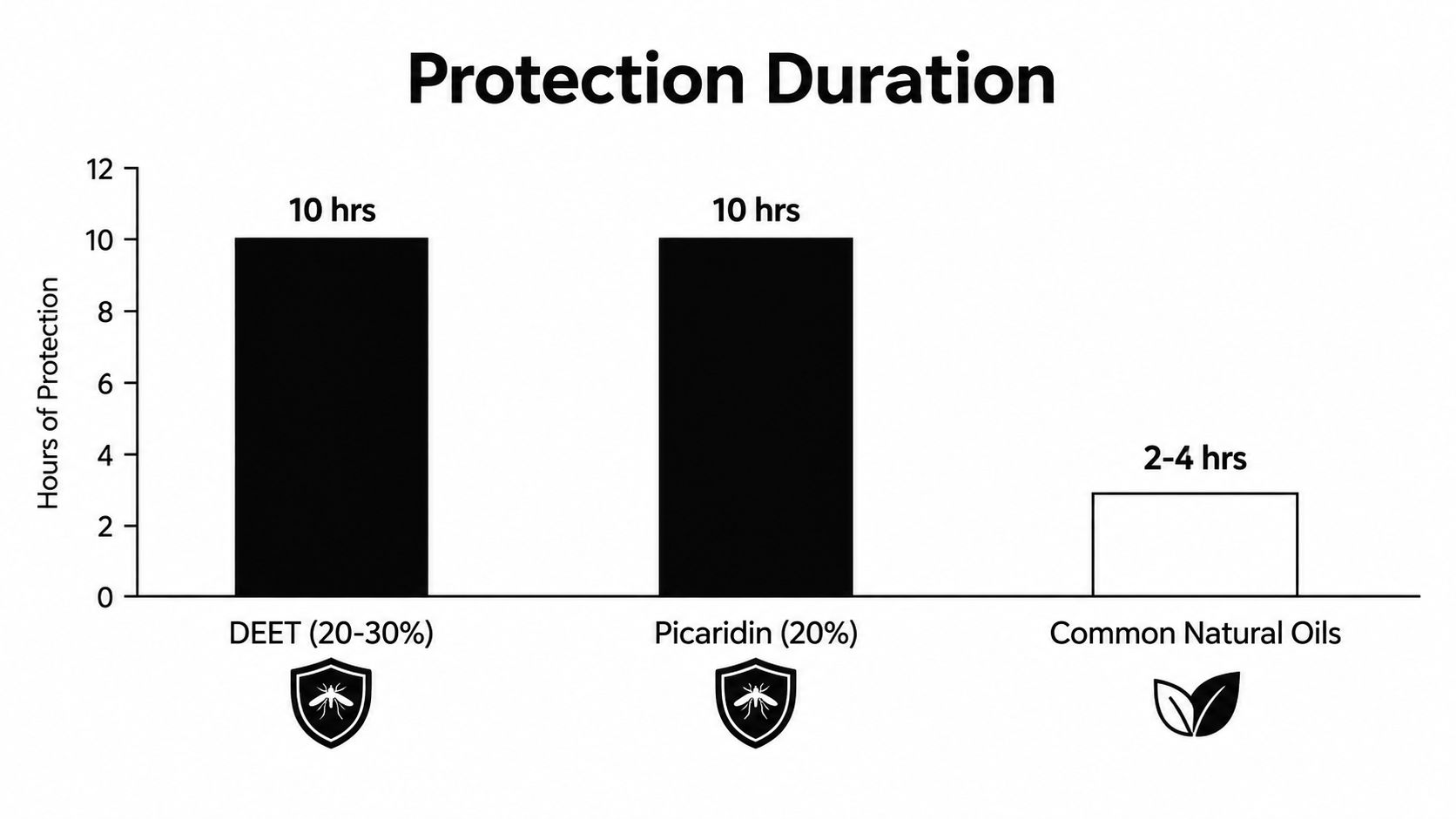
Use the categories this way:
- Natural botanical formulas: Better suited to short outdoor activities when you can reapply.
- DEET and picaridin: Better suited to prolonged exposure, heavy mosquito pressure, sweat, and situations where missed reapplication creates a real problem.
- Personal repellent: Protects the wearer, not the entire yard.
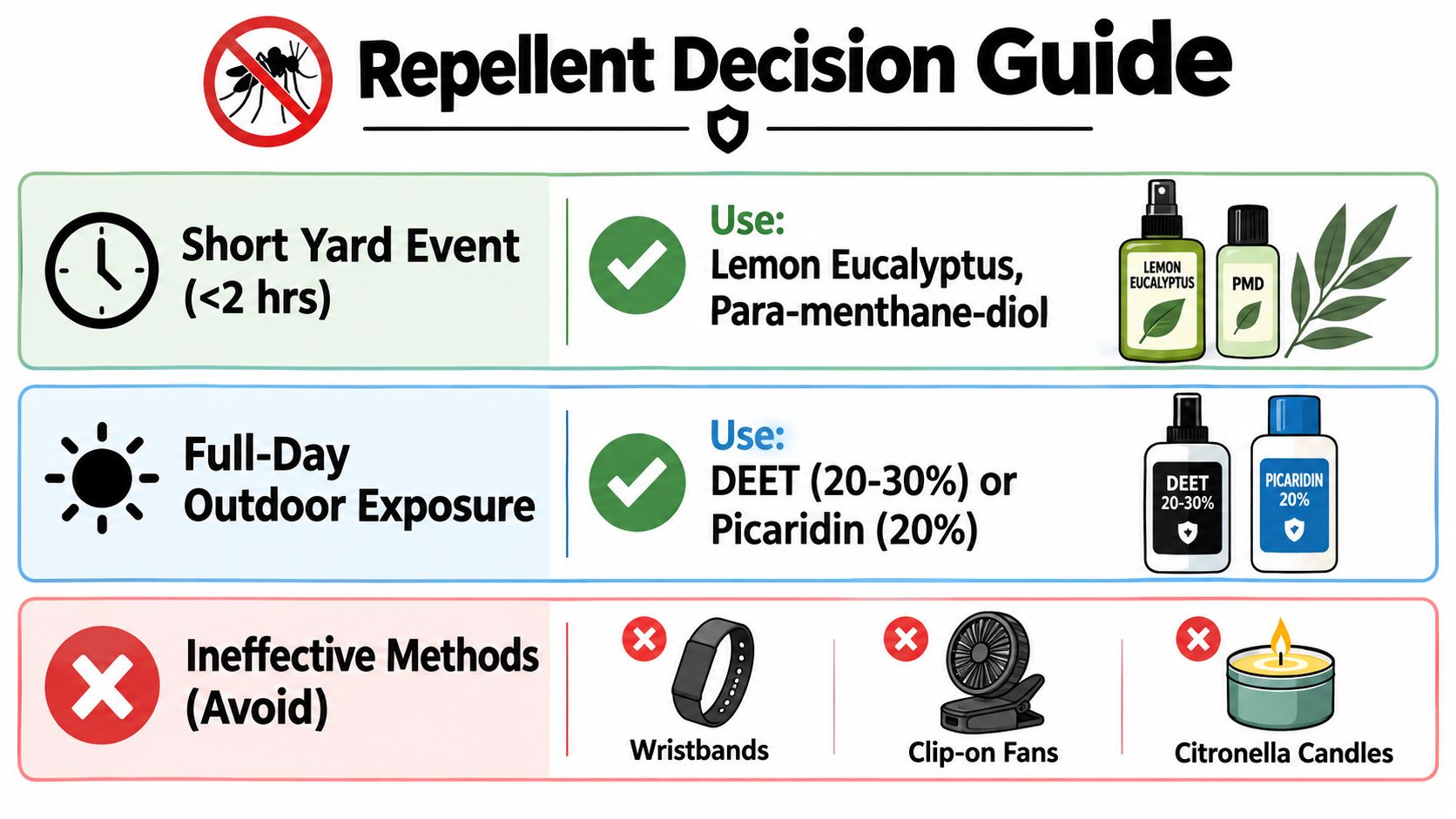
My recommendation is simple. Use a credible PMD product for a brief patio visit if you prefer a plant-derived option. Choose picaridin or DEET when you'll be outside for hours and can't reliably stop to reapply.
DIY Mosquito Repellent Recipes You Can Mix Today
Homemade repellent can work for brief, low-pressure outings, but it leaves little room for sloppy mixing. Essential oils require dilution, a compatible carrier, and realistic expectations. Never apply an undiluted essential oil directly to skin.
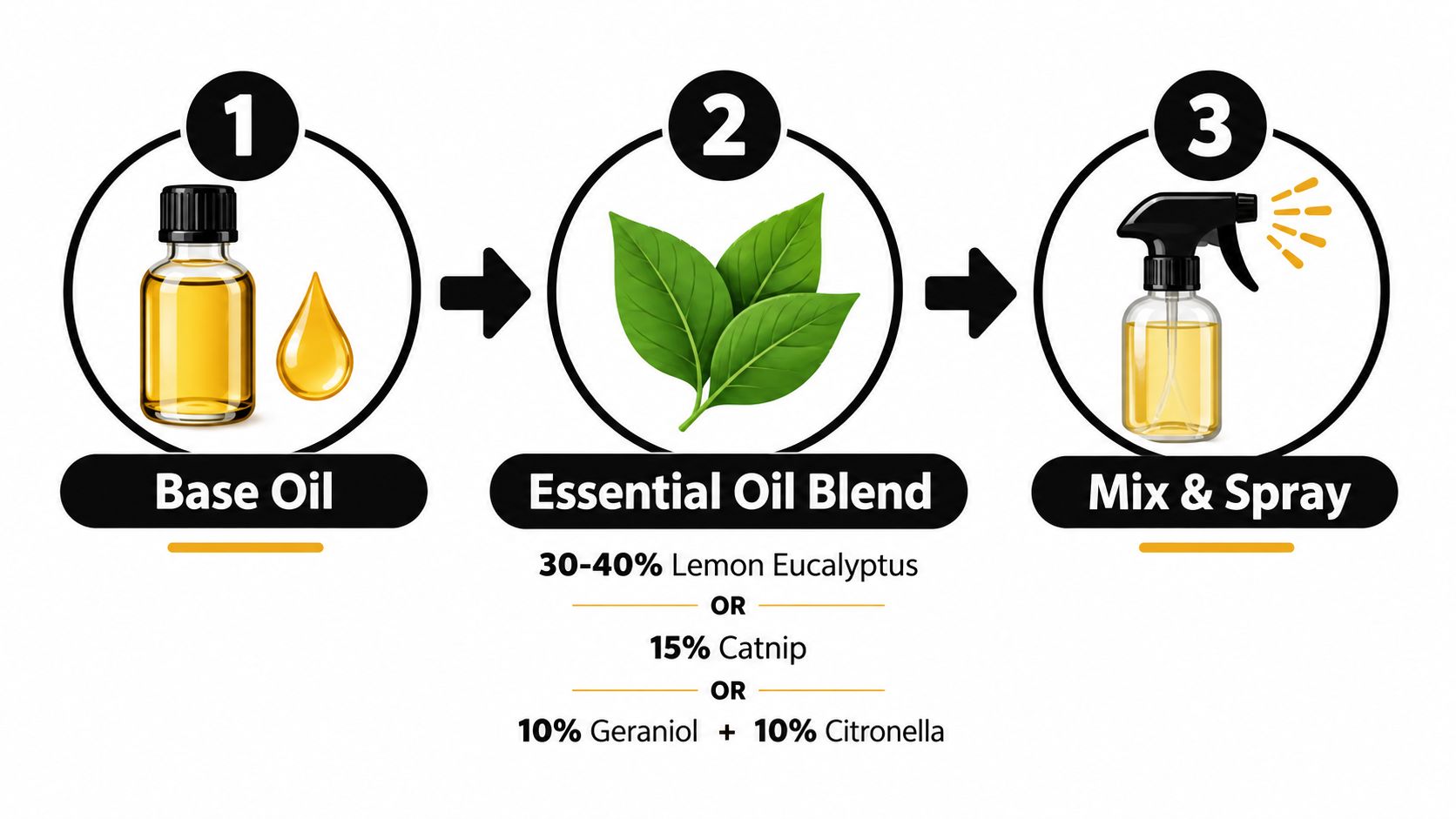
For a 4-ounce amber glass bottle, combine a measured essential-oil blend with fractionated coconut oil. Drop size changes with the dropper and oil viscosity, so measure by volume when possible. Treating “drops” as a laboratory standard creates false precision.
A simple topical approach
Choose one blend:
- Lemon eucalyptus option: Use a 30% to 40% dilution in fractionated coconut oil. Patch-test this strong homemade concentration before applying it more broadly.
- Catnip option: Use 15% catnip oil in a compatible carrier. The 2024 study used a much lower 2% catnip formulation in a lotion. A stronger DIY mixture is not automatically safer or more effective.
- Geraniol and citronella option: Use 10% geraniol plus 10% citronella in jojoba or olive oil.
Oil and water separate. Distilled water with a proper solubilizer, such as Solubol, distributes oils more evenly than shaking oil into water, but it does not make a homemade spray equivalent to a tested commercial product. Label the bottle, shake it before each use, and store it away from heat and direct sunlight.
Keep undiluted citrus oils off sun-exposed skin. Phototoxicity can cause a serious reaction, so children and people with sensitive skin need extra caution.
Homemade blends usually fade quickly. Plan to reapply about hourly instead of expecting the protection claimed for a commercial PMD lotion. Stop using the mixture if burning, rash, swelling, or breathing symptoms appear. Wash the area and seek medical help for a severe reaction.
For help choosing oils, read The Green Advantage's natural mosquito repellent essential oils guide. Keep homemade formulas for personal, temporary use. They are a poor choice during heavy mosquito pressure, when missed reapplication matters.
A yard candle made with soy wax, citronella, and cedarwood can add scent around a seating area, but it should not be your primary protection. Use a lavender-clove spray on clothing only. Do not apply it to bare skin.
Commercial Natural Repellents Worth Buying
“Natural” on the front label proves very little. A commercial lotion or tested spray can outperform a homemade blend because the formula controls concentration, stability, and coverage. Read the back label before buying. Look for the named active ingredient, its concentration, directions, and protection claims.
PMD products are the strongest first choice for shoppers who want a plant-derived repellent. Catnip-based products also merit consideration, but their performance depends heavily on the carrier and finished formula. Citronella, geraniol, clove, and cinnamon can support a blend, yet a pleasant scent does not establish lasting protection.
Buy only products that give you a practical reapplication plan. A formula that requires frequent touch-ups may suit a short time on the porch, but it becomes a poor choice for yard work or family outings if the label is vague.
What to avoid
Citronella candles and tiki torches scent a seating area. They do not provide dependable personal protection, so keep them supplemental. Wristbands, ultrasonic devices, vitamin B1 patches, and clip-on gadgets are weak substitutes for repellent applied to exposed skin or clothing.
If the label won't tell you the active ingredient and concentration, you don't have enough information to judge the product.
| Product | Active Ingredient | Format | Claimed Duration | Effectiveness Rating |
|---|---|---|---|---|
| Oil of lemon eucalyptus products | PMD | Lotion or spray | Check label | Strongest plant-derived category |
| Catnip-based product | Catnip essential oil | Lotion or topical blend | Check label | Promising, formulation-dependent |
| Citronella product | Citronella oil | Spray or lotion | Check label | Moderate for short exposure |
| Geraniol blend | Geraniol | Topical blend | Check label | Useful when properly formulated |
| Citronella candle | Citronella fragrance or oil | Candle | Not a reliable personal duration | Decorative, not primary protection |
| Ultrasonic wristband | No established topical active | Wristband | No dependable protection claim | Avoid as a standalone method |
| Vitamin B1 patch | Vitamin B1 | Patch | No dependable protection claim | Avoid as a standalone method |
A product category cannot replace evidence. The 2019 review of essential-oil repellents describes wide variation by ingredient and concentration. Choose the product with a transparent label, then follow its stated reapplication schedule instead of guessing based on the plant name (PMC review).
Safety Considerations for Kids, Sensitive Skin, and Pets
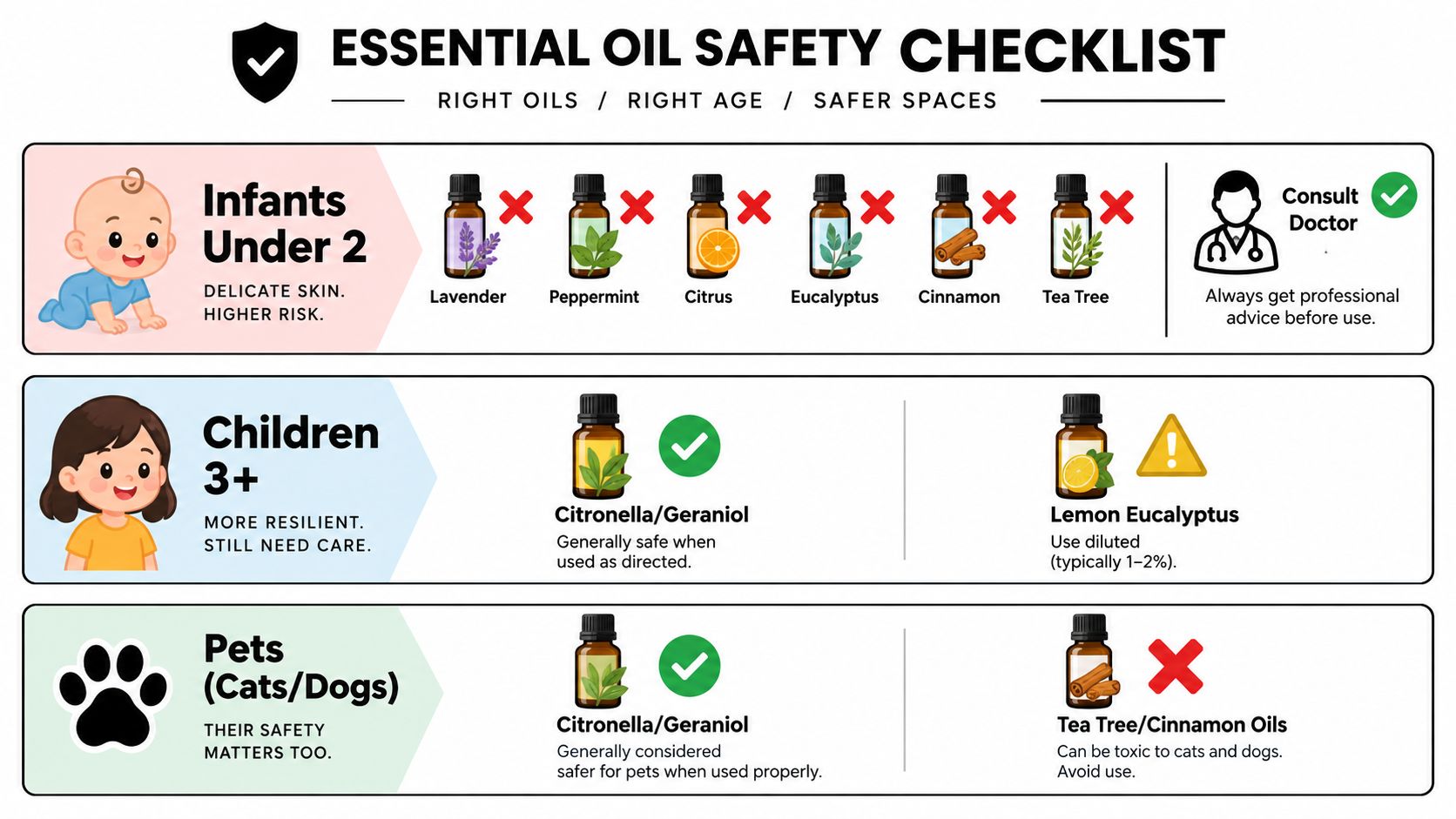
Natural oils can irritate skin, trigger allergic reactions, or create hazards for pets. “Plant-based” isn't a safety exemption. Clove, cinnamon bark, and peppermint oils deserve particular caution because concentrated applications can cause irritation and sensitization.
Start with a small patch behind the ear or on the inner arm and wait 24 hours before wider use. Don't apply repellent to broken skin, eyes, lips, or a child's hands. Adults should apply products to children, following the product label rather than improvising a stronger mixture.
Children and pregnant adults
Use extra caution with young children. PMD products are not appropriate for children under 3, and infants should not receive essential-oil repellents without guidance from a pediatric clinician. A 2023 human study found that some oils in a 10% lotion performed well, but that result doesn't establish safety for infants or repeated use in every child (Scientific Reports).
Pregnant adults should ask their healthcare professional before using topical essential oils. Don't treat a broad safety category or internet recipe as individualized medical advice. A tested, labeled product is easier to evaluate than an unmeasured homemade blend.
Pets need a separate rulebook
Keep essential oils away from pets, especially cats. Tea tree, pennyroyal, and concentrated citronella can be dangerous, and cats are especially vulnerable to certain oil components because their bodies process them differently.
Apply human repellent outdoors, wash your hands, and let the product dry before handling an indoor cat. Never spray essential oils on a pet unless a veterinarian specifically directs you to do so.
If someone develops facial swelling, widespread hives, trouble breathing, or severe blistering, stop using the product and seek urgent medical care. For routine uncertainty, a pharmacist, pediatrician, veterinarian, or dermatologist is the right resource.
How Often to Reapply for Real Protection Outdoors
Reapplication should follow the activity, not the optimism on the front of the bottle. Sweat, toweling, swimming, wind, and humidity can remove or dilute a topical repellent faster than a calm laboratory setting suggests.
For a backyard cookout lasting 1 to 2 hours, a properly labeled PMD product may be reasonable for one application, while a light citronella DIY spray may fade much sooner. For an evening walk, a tested commercial formula offers a better margin than a thin homemade mix. Outdoor workers should plan for a morning application and a midday check, with another application after heavy sweating or toweling.
| Activity | Lemon Eucalyptus, 30% | Citronella Spray, DIY | Picaridin, 20% | DEET, 30% |
|---|---|---|---|---|
| Backyard gathering | Apply before going outside, check label before extending use | Reapply frequently as scent and coverage fade | One application may suit a short event, follow label | One application may suit a short event, follow label |
| Evening walk | Use a tested product and follow its label | Reapply during the walk if mosquitoes return | Better choice for longer walks | Better choice for longer walks |
| Outdoor work | Morning application, then reassess after sweat or towel drying | Frequent reapplication is likely | Practical for extended exposure | Practical for extended exposure |
| Swimming or heavy sweating | Reapply according to the label after drying | Reapply after activity | Reapply according to the label | Reapply according to the label |
A systematic review found that essential-oil repellents usually protect for about 2 to 4 hours, while DEET products often provide 5 to 9 hours of complete protection (PubMed review). That gap explains why natural products can work for a short patio visit but become frustrating during a long outdoor shift.
Reapply after swimming, toweling off, or heavy sweating. Those events matter more than the clock.
Never stack multiple repellents or increase concentration casually. Follow the label, cover exposed skin evenly, and use clothing, screens, and source reduction as additional protection.
Choosing the Right Repellent and When to Call a Pro
Choose a PMD product for a brief yard event when you prefer a plant-derived option and can follow its label. Choose picaridin or DEET for prolonged outdoor exposure, especially when sweat, wind, and missed reapplication are likely. Skip wristbands, clip-on fans, and ultra-dilute essential-oil sprays as standalone protection.
Personal repellent won't solve a mosquito source. Standing water in containers, clogged drainage, shaded damp areas, and nearby breeding sites can keep pressure high even when everyone applies repellent correctly. A recurring problem calls for source reduction and a professional barrier or seasonal treatment plan.
For homeowners and property managers in Crown Point, IN, a mosquito inspection makes sense when children play barefoot outdoors, someone in the household has a serious reaction to bites, an immune-compromised adult needs stronger exposure control, or guests keep getting bitten despite regular reapplication. The Green Advantage provides mosquito control for homes and businesses, including treatments directed at adult mosquitoes and larvae.
For more practical background on bite triggers and personal exposure, review what attracts mosquitoes to humans.
If you're tired of reapplying every hour, stop treating the problem as a shopping decision. A local pest-control assessment can identify breeding areas and determine whether residential pest control, seasonal mosquito service, or commercial pest control fits the property.
Schedule a mosquito inspection or request a quote from The Green Advantage for mosquito reduction services in Crown Point, IN and surrounding Northwest Indiana communities. The team can evaluate adult mosquito and larval pressure, recommend practical prevention, and provide a treatment plan for your home, yard, rental property, or business.