
A Crown Point summer evening can turn uncomfortable quickly. Mosquitoes gather around patios, dog beds, shaded play areas, and damp corners of the yard, even when the landscaping looks healthy and well maintained. Aromatic plants may help reduce mosquito activity close to where they grow, but they won't remove standing water, eliminate breeding sites, or control an established population.
The Green Advantage is a family-owned pest control provider serving Crown Point and the broader Northwest Indiana community. The seven choices below can add useful scent, color, and seasonal flexibility to a dog-friendly yard, but each has trade-offs involving placement, care, ingestion risk, and realistic coverage. Before planting, it's also smart to review broader resources on safe houseplants for pets, especially if your dog chews foliage.
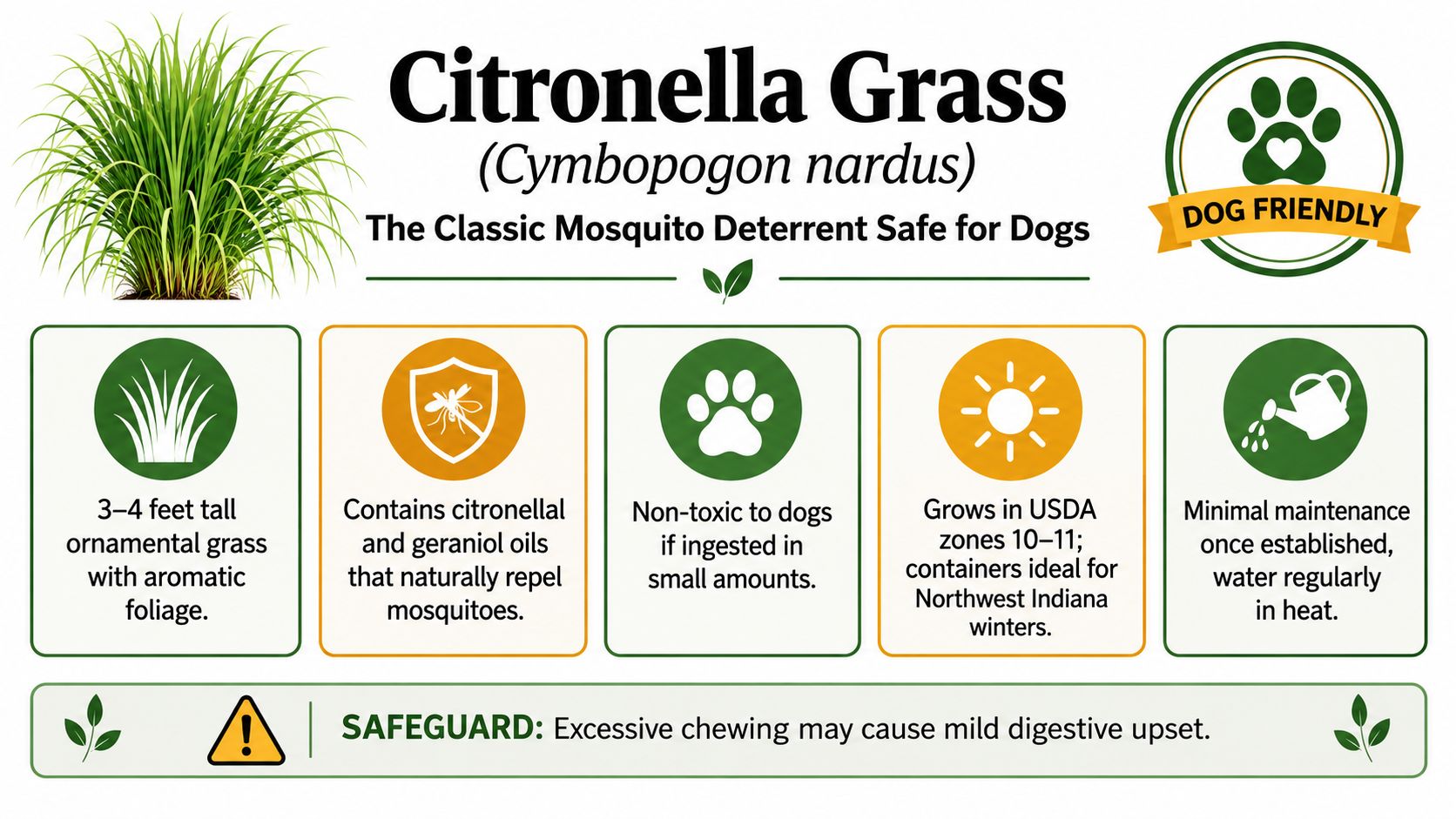
1. Citronella Grass Cymbopogon nardus
Citronella grass is often the first plant homeowners mention when searching for plants that repel mosquitoes safe for dogs. Its aromatic leaves can contribute useful fragrance near a patio, deck, or outdoor sitting area, particularly when the plant is placed close to the space people and pets use. In Crown Point, containers are usually more practical than permanent beds because they make seasonal movement and winter protection easier.
A large decorative pot near a dog bed or patio chair can keep the plant close to the area where its scent matters most. It won't create a mosquito-proof perimeter around an entire yard, and planting it at the property edge won't address mosquitoes emerging from wet soil, clogged gutters, or containers holding water.
Practical rule: Treat citronella grass as a close-range landscape helper, not as a substitute for mosquito reduction.
Growing citronella grass in Northwest Indiana
Keep the plant in a sunny, well-watered location during hot weather. Containers also let you move it indoors before frost, which is important for managing a warm-season plant in Crown Point. Regular trimming can encourage fuller growth and refresh the foliage, but don't crush leaves and rub them on your dog or apply concentrated citronella oil without veterinary guidance.
Pet owners should also distinguish citronella grass from the plant marketed as a “mosquito plant.” That product is often a scented geranium, and ASPCA poison-control guidance warns that citronella can cause gastrointestinal upset in dogs, with more serious signs possible after larger exposures. The safest approach is to prevent chewing and keep containers where dogs can't knock them over.
For a more complete overview of mosquito-repelling plants, combine plantings with standing-water management and professional mosquito control when activity remains high.
2. Lavender Lavandula angustifolia
Lavender earns its place in a dog-friendly garden because it provides more than aromatic foliage. Its purple blooms add structure along a sunny patio border, while the fragrance can make outdoor seating more pleasant and may discourage some flying insects near the planting. It's also a useful choice for homeowners who want a tidy perennial rather than a fast-growing herb.
Plant lavender where it receives full sun and where water drains quickly. Crown Point yards with heavy or compacted soil can create problems if lavender's roots stay wet. A raised bed, amended planting area, or container can help, particularly in locations that hold moisture after storms.
Placement and pruning matter
A lavender border around a patio or dog run may improve comfort right beside that border, but it won't protect a distant lawn or wooded edge. Leave space around each plant for air movement, prune after flowering to maintain a compact shape, and avoid frequent watering once the plant is established. Overwatering can weaken the plant and reduce the quality of its aromatic growth.
Lavender itself is often included among dog-friendly options, but concentrated lavender oil is a different product. The ASPCA dog plant list is a useful neutral reference for checking plant safety, and owners should contact a veterinarian or poison control if a dog eats an unfamiliar plant.
Research on plant-derived repellents also supports realistic expectations. A peer-reviewed review found that several extracted botanical repellents, including some aromatic oils, repelled mosquitoes for about 60 to 180 minutes in testing, not for an entire day (peer-reviewed review of plant-derived repellents). That evidence concerns extracted compounds, not a living lavender border. For more context on whether lavender oil repels mosquitoes, remember that formulation and exposure determine performance.
3. Rosemary Rosmarinus officinalis
Rosemary fits naturally beside an outdoor kitchen, grill, or patio table. Its tough, fragrant foliage gives homeowners a useful culinary herb and an attractive container plant, while the aroma may help reduce mosquito interest close to the plant. For dog owners, rosemary is commonly presented as a safer choice than several “mosquito plant” products that carry ingestion warnings.
Northwest Indiana soil can be challenging for rosemary when it drains slowly. Use a container with drainage holes if your yard has dense clay or regularly wet areas. Position the pot in full sun, keep foliage from staying damp, and water only when the plant needs it rather than following a fixed schedule.
A strong container candidate
A rosemary pot beside an outdoor dining table is easier to manage than a shrub planted in an exposed bed. You can shift it toward the seating area when guests arrive, shelter it during severe weather, and move it indoors before damaging cold. Harvesting sprigs for cooking also encourages a fuller shape when you pinch or cut cleanly.
Rosemary still provides limited, local coverage. A pot won't stop mosquitoes traveling in from neighboring properties, drainage areas, or shaded vegetation. It also shouldn't lead you to rub crushed leaves or oil onto a dog's coat. Plant safety and topical safety aren't the same thing.
The strongest plant-based repellency results have generally involved formulated oils rather than growing herbs outdoors. A review of plant-based repellents reported complete protection times from 9.1 to 11.5 hours for certain citronella, pine, peppermint, and related oil formulations in controlled testing (review of plant-based repellents). Outdoor wind, heat, and exposure can reduce performance, so rosemary works best as one layer alongside drainage improvements and professional mosquito control.
4. Marigold Tagetes spp.
Marigolds give Crown Point homeowners a practical way to add color around patios, raised beds, and dog-friendly outdoor areas. They're accessible, easy to replace, and suitable for containers or sunny borders. Their presence may contribute to a less inviting environment for some insects, but a row of flowers won't control mosquitoes developing in nearby water.
Start marigolds indoors before the local spring planting window or sow them outdoors after frost danger has passed. Choose a sunny location, avoid crowding, and remove spent blooms to keep the plants looking productive through the warm season. Containers near a dog bed or outdoor dining area make placement flexible and keep the flowers visible rather than scattered at the far edge of the property.
Use color as part of a layered plan
Clusters generally make more practical garden sense than isolated plants. A bright border can define the edge of a seating area, while containers can be moved when mosquito activity shifts. Keep the soil from staying saturated, and check saucers after watering because any container that holds stagnant water can undermine the goal by creating mosquito habitat.
Marigold safety advice is inconsistent across online gardening content, especially among different species and varieties. The responsible approach is to identify the plant, check the ASPCA list, and prevent dogs from chewing large amounts of any ornamental. “Natural” doesn't automatically mean harmless, and the same caution applies to plant extracts and homemade sprays.
If mosquitoes remain concentrated around the yard, professional treatment can address the places plants can't reach. The Green Advantage can evaluate common sources of mosquito pressure, including damp garden areas and areas near outdoor living spaces, then discuss a practical mosquito reduction plan for your property.
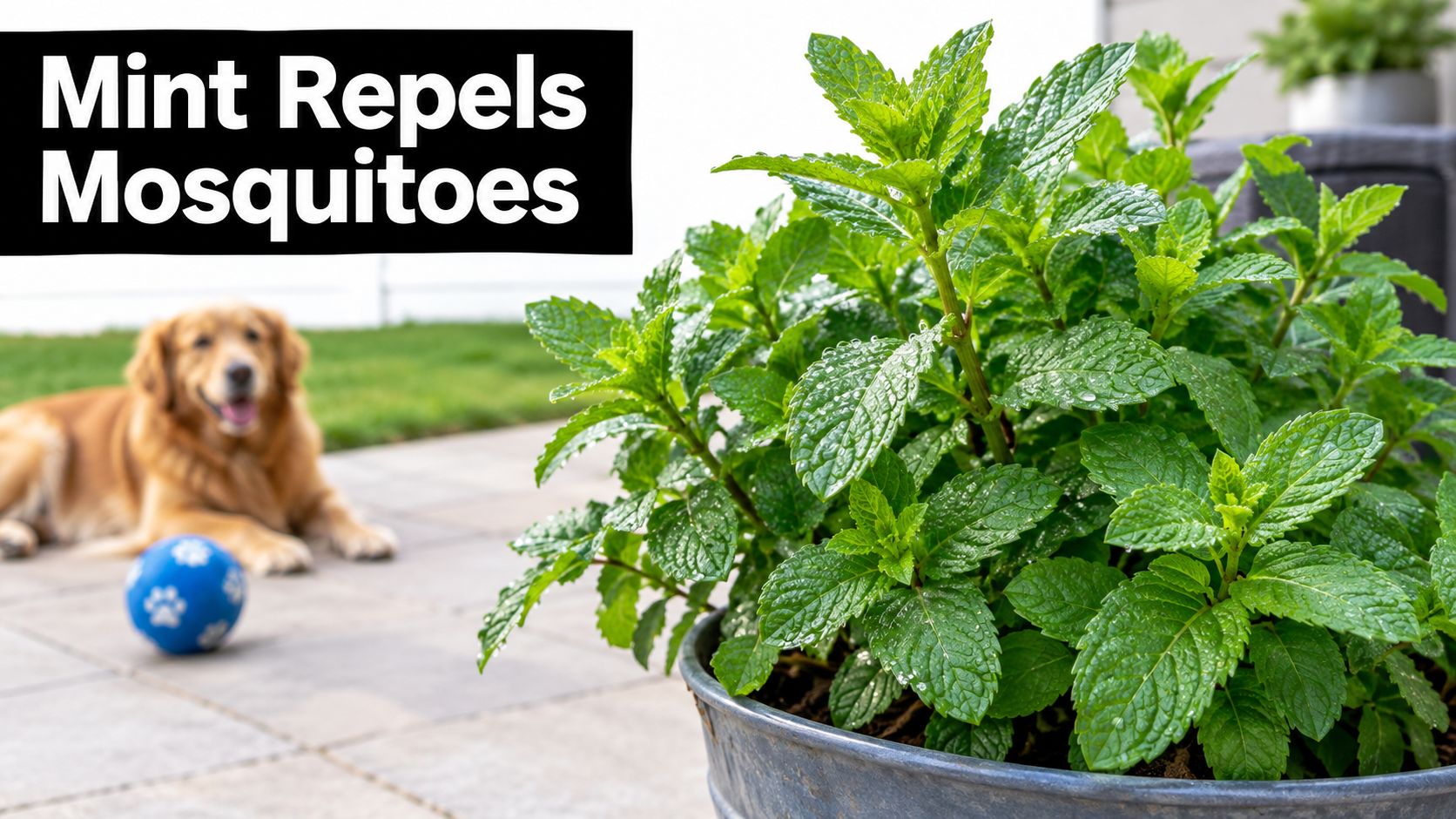
5. Mint Mentha spp.
Mint is flexible, fragrant, and useful in a patio garden, but it comes with one major landscaping warning. It spreads aggressively when planted directly in open soil. For that reason, dog owners should grow mint in containers, raised planters with defined barriers, or another controlled setup rather than placing it loose beside a fence or dog run.
A large pot near outdoor seating can provide fresh leaves for drinks and cooking while keeping the aromatic foliage close to the people and pets using the space. Mint tolerates sun and partial shade, but it needs consistent moisture, especially in containers that dry quickly during a Crown Point heat spell.
Containment is part of pet safety
Mint plants can become messy when neglected, and loose stems may invite chewing. Keep pots stable, inspect drainage holes, and place them where an active dog can't easily tip the container. Pinching stem tips encourages bushier growth and gives you a reason to remove old or damaged foliage.
Use mint as a localized helper rather than a barrier across the property. The scent fades with distance, and a dense planting won't eliminate mosquitoes around storm drains, wet grass, clogged gutters, or water-filled toys. Don't use concentrated peppermint oil in a diffuser or apply it directly to a dog without veterinary advice.
A layered approach works better. Combine contained mint with lavender or rosemary near the patio, remove water-holding objects after rain, and request professional mosquito control when bites continue despite reasonable yard maintenance.
6. Basil Ocimum basilicum
Basil is a strong fit for homeowners who want mosquito-conscious landscaping without giving up a productive kitchen garden. A few containers near an outdoor dining table can provide fresh leaves for meals and add aromatic foliage close to the areas where people gather. Basil is a warm-season annual in Crown Point, so it offers seasonal value rather than year-round protection.
Wait until frost danger has passed before setting basil outdoors. Give it full sun, regular watering, and enough room for air circulation. Containers are especially useful because you can move basil closer to a table or dog lounging spot, protect it from heavy weather, and bring it into a sheltered location when temperatures fall.
Keep basil leafy and vigorous
Pinch flower buds before they open if you want continued leaf production. Harvest the top stem sections regularly instead of stripping lower leaves, and water when the soil begins to dry. A wilted basil plant won't provide much attractive foliage, and standing water in a saucer can create an avoidable mosquito problem.
Basil's fragrance may help around the plant, but it won't replace mosquito control in a larger yard. Mosquitoes can approach from shaded vegetation and neighboring areas, and dogs can still receive bites while moving beyond the patio. Keep basil where your dog can't destroy the pot, but don't assume a chew-resistant plant makes essential-oil use safe.
For pet-focused protection, also maintain your dog's veterinary prevention plan. Plantings can improve the yard environment, while a veterinarian can advise on approved measures for mosquito-related risks. When outdoor activity remains uncomfortable, residential mosquito control from a local provider can address the broader exposure pattern.
7. Geranium Pelargonium spp.
A garden center may label a scented geranium as a “mosquito plant,” but that name does not identify one specific species or guarantee dog safety. Scented Pelargonium varieties can offer lemon, rose, apple, or peppermint fragrance in a patio container. Geranium-family plants still require caution: the ASPCA guidance on toxic and non-toxic plants lists geraniums as capable of causing gastrointestinal upset when dogs ingest them.
For a dog that chews leaves, skip a ground-level bed. Use a clearly labeled plant in a secured, raised container, and confirm the botanical name before buying. Keep the original label, especially if the retailer uses “citronella” as a marketing name.
Seasonal container care
In Crown Point and across Northwest Indiana, scented geraniums work best as warm-season container plants. Set them outdoors after frost danger has passed, then give them bright light, well-draining soil, and careful watering. Let the soil surface dry before watering again, pinch growing tips to maintain fuller growth, and move the container indoors before fall frost. A sunny window can preserve the plant for another season, but indoor placement still requires chew prevention.
Its fragrance may make a small patio more pleasant, yet a living geranium will not protect a yard or provide dependable all-day coverage. Results from a citronella formulation cannot be transferred to a geranium, and a formulated product should never be treated as proof that applying essential oil to a dog is safe. Keep oils off your pet unless a veterinarian specifically directs their use.
If your dog chews a geranium or another questionable plant, use what to do if your dog eats a potentially toxic plant as a starting point, then contact your veterinarian or an appropriate poison-control resource. For persistent mosquitoes around shaded areas, drains, or neighboring properties, professional mosquito reduction may be needed alongside contained plantings.
7-Plant Comparison: Dog-Safe Mosquito Repellents
| Plant | Implementation complexity | Resource requirements | Expected outcomes | Ideal use cases | Key advantages |
|---|---|---|---|---|---|
| Citronella Grass (Cymbopogon nardus) | Moderate, container/overwinter management | Warm-zone plant or indoor relocation; regular summer watering | Short-range deterrent (3–5 ft); reduces attraction, not eradication | Patio containers near dog beds and play areas | Strong repellent oils; ornamental; pet-safe |
| Lavender (Lavandula angustifolia) | Low, hardy, low-maintenance | Full sun, well-draining soil; drought tolerant | Moderate close-range repellency; seasonal blooms (summer–fall) | Borders, perennial beds, dog runs | Fragrant, pollinator-friendly, durable in IN climate |
| Rosemary (Rosmarinus officinalis) | Low–Moderate, may need winter protection for some varieties | Full sun, very well-draining soil; mulch in winter; drought tolerant | Year-round foliage deterrent within ~3–5 ft | Containers near outdoor kitchens, patios, dog areas | Culinary use, evergreen, low water needs |
| Marigold (Tagetes spp.) | Low, easy annuals from seed | Full sun, regular watering; replant each spring | Quick, short-range deterrent (1–3 ft); seasonal until frost | Cost-effective borders, containers, mass plantings near pet areas | Affordable, fast-growing, attractive blooms |
| Mint (Mentha spp.) | Moderate, vigorous grower requiring containment | Hardy, tolerates partial shade; prefers regular moisture; best in containers | Strong close-range deterrent (3–5 ft); fast coverage | Container herb gardens near seating and dog zones | Very hardy, culinary/medicinal uses, rapid establishment |
| Basil (Ocimum basilicum) | Low, seasonal annual, simple care | Warm-season plant; consistent moisture; containers recommended | Short-range deterrent (2–4 ft) during warm months | Patio containers by dining areas and dog lounging spots | Quick growth, culinary value, fragrant foliage |
| Geranium (Pelargonium spp.) | Low–Moderate, containerize for winter in cold climates | Well-draining soil, full sun–partial shade; indoor overwintering | Moderate close-range deterrent (2–4 ft); long bloom season | Decorative patio containers and barriers near pet areas | Ornamental blooms, scented foliage, pet-safe |
Plants Help, but a Complete Mosquito Plan Goes Further
Dog-safe plantings can improve the immediate area around a patio, container garden, dog bed, or outdoor kitchen. They're most useful when you match the plant to the location. Rosemary, basil, mint, and scented herbs work well in movable containers, while lavender and marigolds can add structure and color to sunny borders. Citronella grass offers seasonal flexibility in a pot, and geranium containers can provide fragrance when carefully identified, secured, and monitored.
The central limitation is coverage. Living plants release scent from their foliage, but they don't remove breeding water or reach mosquitoes throughout a property. Wind, heat, yard layout, dense vegetation, and nearby wet areas all affect how comfortable an outdoor space feels. Plant-derived repellents have a history of temporary and ingredient-specific performance, so homeowners shouldn't treat a garden bed as an all-day mosquito barrier.
Start with the basics around your Crown Point property. Empty water from plant saucers, toys, buckets, and other containers. Keep gutters flowing, trim dense vegetation near seating areas, and inspect shaded locations where water remains after rain. Don't use essential-oil diffusers around dogs without veterinary guidance, and don't crush leaves onto a pet's coat just because the plant itself appears safe to grow.
When mosquitoes remain active after these steps, The Green Advantage can help determine whether you need targeted mosquito reduction, broader residential pest control, or a seasonal prevention plan. Property managers and businesses may also need commercial pest control to protect employees, customers, tenants, and outdoor gathering spaces. The same local team can discuss related needs such as ant control, termite control, rodent control, spider control, wasp removal, preventative pest treatments, and pest inspections.
For homeowners searching for pest control near me, an exterminator near me, or pest control in Crown Point, IN, a property-specific evaluation is more useful than relying on a generic plant list. The Green Advantage serves Crown Point and nearby Northwest Indiana communities with licensed, certified services and environmentally mindful approaches designed around each site.
The Green Advantage provides mosquito reduction, residential pest control, commercial pest control, and property inspections for homes and businesses in Crown Point and surrounding Northwest Indiana. If your dog-friendly landscaping isn't keeping outdoor areas comfortable, visit The Green Advantage to request a quote or schedule service.