
If you stepped onto a Crown Point patio after dinner, sat down for ten minutes, and came back inside with itchy welts you can't quite explain, you're not dealing with a mosquito problem. You're probably dealing with no-see-ums, and they're frustrating because the usual backyard fixes often miss them. For homeowners and property managers looking for pest control in Crown Point, IN, the right answer starts with knowing what drives these biting midges away, and what just makes the yard look treated.
The Green Advantage works with homeowners and businesses across Northwest Indiana that want practical pest control near me results, not guesswork. No-see-ums demand a different playbook than ants, termites, spiders, or rodents, and the most effective approach is layered, calm, and targeted. That's especially true around irrigated lawns, patios, screened porches, and commercial outdoor seating areas where the bites keep coming back.
Why No-See-Ums Are a Different Kind of Problem
A lot of people assume they have mosquitoes until they look closer. No-see-ums are much smaller biting midges, and that size difference changes the fix. Screen gaps, damp yard edges, and still air that barely matter for bigger pests can keep these insects active. In warm, humid parts of Northwest Indiana, especially where irrigation and standing moisture linger, the problem can feel seasonal and still keep coming back. The Arizona Pest Management Center points to over-irrigated turf, splash pads, poorly drained parks and grounds, and even indoor potted plants as breeding sites, and it notes that pausing irrigation so moist spots can drain and dry helps kill eggs and larvae. Arizona Pest Management Center no-see-ums guidance

What sets them apart from mosquitoes
No-see-ums are most active at twilight, so the bites often show up right when families want to use the patio. Extension guidance also says they're weak fliers, which is why airflow matters more than many homeowners expect. Calm evenings near landscaping, mulch, wet grass, or a shaded deck can turn into a biting zone fast. Lowcountry Life no-see-ums guidance
Practical rule: if the bites happen mostly at dusk and keep showing up near damp areas, think no-see-ums first, not mosquitoes.
The mistake I see most often is treating the symptom before the habitat. People buy a spray, light a candle, or fog the yard, then wonder why the bites come right back. No-see-ums respond best to a layered plan, not a single product. Start with moisture reduction and entry control, then use personal protection where people sit. Standard 16×16 and 18×16 screens are often not enough for these insects, according to Arizona guidance, because they can pass through them, so knowing how to choose bug screens matters if the house stays open to evening air. A tighter layer can make the difference between a porch you use and one you avoid. If you need full-body protection for heavier outdoor pressure, a mosquito net suit from The Green Advantage can help keep bites off while you work or spend time outside.
If you're also dealing with other pests, a broader residential pest control or commercial pest control inspection is still the right first move, because moisture and entry issues rarely show up alone.
Inspecting Your Yard and Home Like a Technician
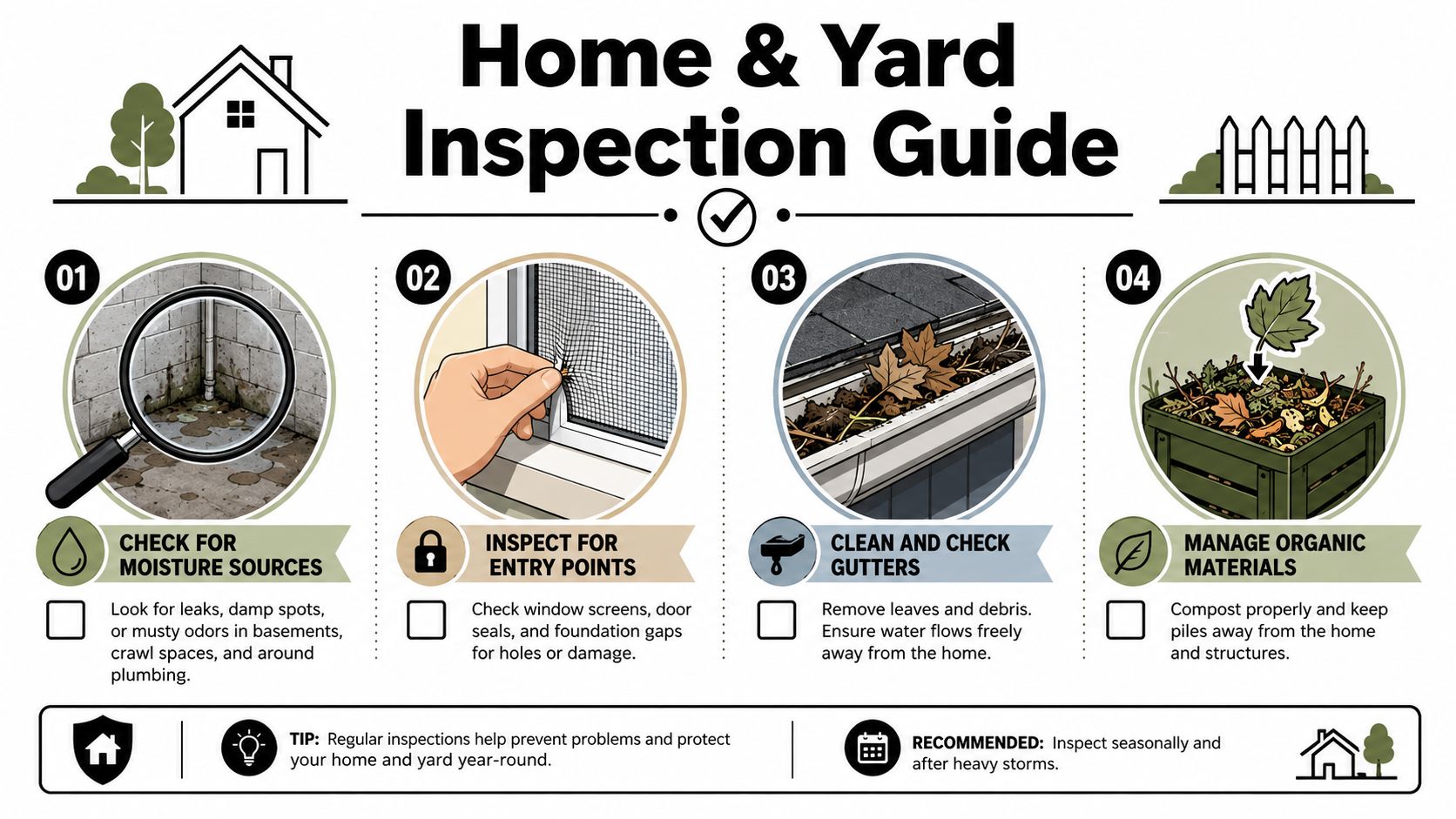
A no-see-um problem usually starts where water hangs around and air does not move well. Walk the property with that in mind before you spend money on sprays or gadgets. Start outside, because the highest-payoff fixes usually begin there. Look for over-irrigated turf, splash pads, low spots near foundations, clogged gutters, dense foundation plantings, and torn or loose screens. The goal is not to inspect every inch of the property forever. It is to find the few damp or open spots that keep the problem active.
The fastest places to check first
If you only have an hour, start where water and access problems overlap.
- Foundation and grading: Look for water pooling near the slab, walkway edges, or basement walls. Moisture close to the house gives these insects a place to breed and rest, and it often points to a drainage problem that needs attention before anything else.
- Gutters and downspouts: Clogged gutters hold water longer than most homeowners realize, and that standing moisture keeps the cycle going. If water is spilling where it should be moving away from the house, fix that first.
- Screens and frames: Check every screen for tiny tears, lifted corners, and gaps around the frame. Standard 16×16 and 18×16 screens are often not enough for no-see-ums, because these insects can pass through them.
- Potting areas and saucers: Even indoor potted plants can matter if they stay wet too long. That is easy to miss in a basement, sunroom, or enclosed porch.
- Lighting near seating areas: Bright porch lighting can pull insects toward the patio when you are trying to keep the area less attractive at dusk.
The inspection tells you whether you have a drainage issue, an exclusion issue, or both. That matters because source reduction usually delivers the biggest drop in pressure, and it is the one homeowners can control without turning the yard into a chemical project. A technician's job is to separate a small fix from a repeating moisture pattern.
Field note: if one corner of the yard stays damp after watering stops, that corner deserves attention before any spray goes down.
That habit helps with other services too. Drainage problems can affect mosquito control, and overgrown edges can hide rodents, spiders, or wasp activity. A quick inspection does not solve everything, but it keeps you from chasing the wrong pest with the wrong tool.
Sealing the Home with Finer Mesh and Smarter Airflow
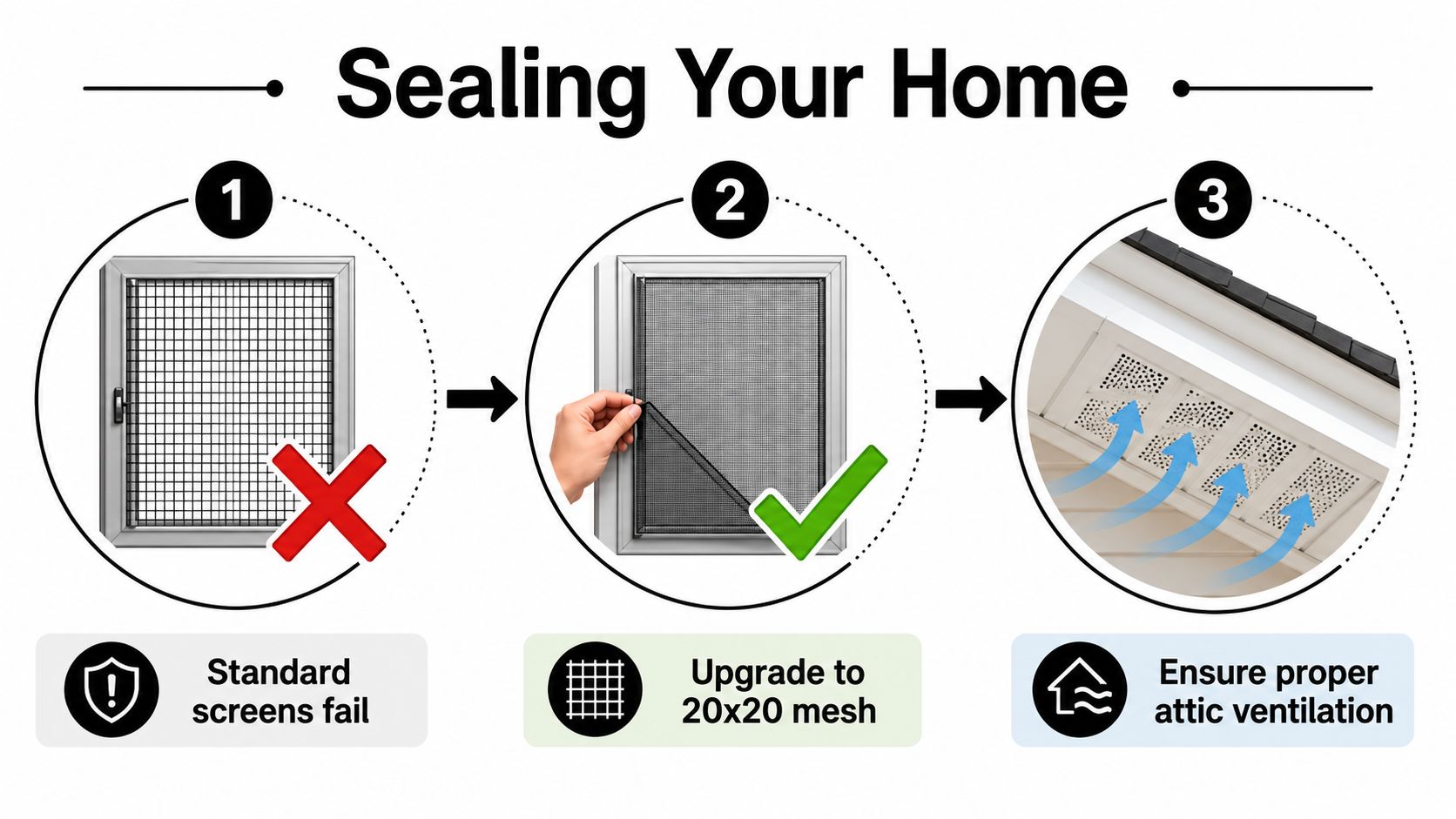
A house can look closed up and still leak no-see-ums through weak screening, loose frames, and small gaps around openings. The practical fix is to tighten the parts people use, windows, doors, screened porches, and any enclosure that gets regular airflow. Finer mesh does the hard work here, and the frame has to match it, because a good screen in a sloppy frame still leaves an entry point. For homeowners comparing options before they replace anything, how to choose bug screens is a useful place to sort out the trade-offs.
Where the home defense usually fails
One repaired opening does not carry the load for the rest of the house. A torn door sweep, a lifted corner on a screen, or a gap that stays open at a window will keep the pressure coming back, because exclusion only works when the whole envelope is tight.
Air movement is the other piece that gets overlooked. No-see-ums are weak fliers, so porch fans, box fans, and ceiling fans can make a noticeable difference around seating areas by making it harder for them to land. Closed doors and windows help too, since airflow and sealing work together, not separately.
Mesh choice matters more than many expect. Finer screening keeps out smaller insects, but tighter mesh can reduce airflow and make a porch feel warmer or more enclosed. That trade-off is worth accepting in the spots where people sit, because a slightly less open patio is still more usable than one full of bites.
For homeowners who spend real time outside, protective gear has its place, but it should support the house fix, not replace it. A mosquito barrier suit or similar cover can help during peak activity, and a screened setup like the one shown on the mosquito net suit page gives you another layer when you need to stay out near dusk.
Best payoff first: replace or repair the screens on the openings you use every day, then work outward to porches, doors, and any vent or side opening that still gives insects a path inside.
A tighter home does not dry out a wet yard, but it does cut down the evening frustration indoors and on the porch. The job here is straightforward, tighten the entry points, keep air moving where people sit, and stop the easy access that lets no-see-ums turn a small leak into a nightly problem.
Practical Outdoor Protection
Even a well-sealed house does not help if you are still trying to enjoy the deck at dusk. Personal protection matters most during the hours when no-see-ums are active and people still want to be outside. The strongest options are the ones that cut bites fast, not the ones that only look good on a garden-center shelf. A pest-control comparison notes that DEET can be only “barely effective” for no-see-ums, while CO2 traps, fine-mesh screens, and air conditioning rank higher for control. WikiHow no-see-um comparison
What to wear and what to carry
Long sleeves and long pants still help outdoors, especially in lighter fabrics that cover skin without holding as much heat. Add picaridin or DEET if you need a repellent, but do not expect either one to solve a heavy infestation on its own. The practical win is layered protection, clothing plus repellent plus timing.
Botanical options and scented add-ons can make a space feel more comfortable, but they are usually not the first thing I would rely on when the bites are already happening. If you have a choice, carry the repellent that has a record in real use and keep the rest as backup. A porch fan often does more than a candle, because airflow disrupts the insect's flight instead of just masking the area.
A few habits matter just as much as products.
- Stay inside at twilight when you can: That is the peak biting period.
- Use fans on patios and decks: Air movement makes landing harder.
- Reduce porch lights when possible: Less attraction means fewer insects circling the seating area.
- Cover up for short outdoor tasks: Taking out trash, watering plants, or checking the yard is easier when you are not bare-armed.
A lot of people overbuy here. They grab candles, sprays, and decorative devices, then skip the one thing that changes behavior the most, timing. If the goal is fewer bites tonight, clothing, airflow, and smarter timing do more than a basket of feel-good products.
Yard-Level Fixes to Reduce the Population
The biggest reduction usually starts outside the house, not on the patio chair. No-see-ums breed in aquatic or semi-aquatic conditions, so standing water removal is the first place to spend time. A practical source-control routine means checking pots, saucers, gutters, low spots, leaky faucets, ponds, drainage ditches, and clogged areas, then improving drainage where water keeps returning. One pest-control source recommends Bti in water that can't be eliminated, with reapplication every 7–14 days when needed. Mosquito Joe no-see-ums guidance
How I rank yard fixes in real properties
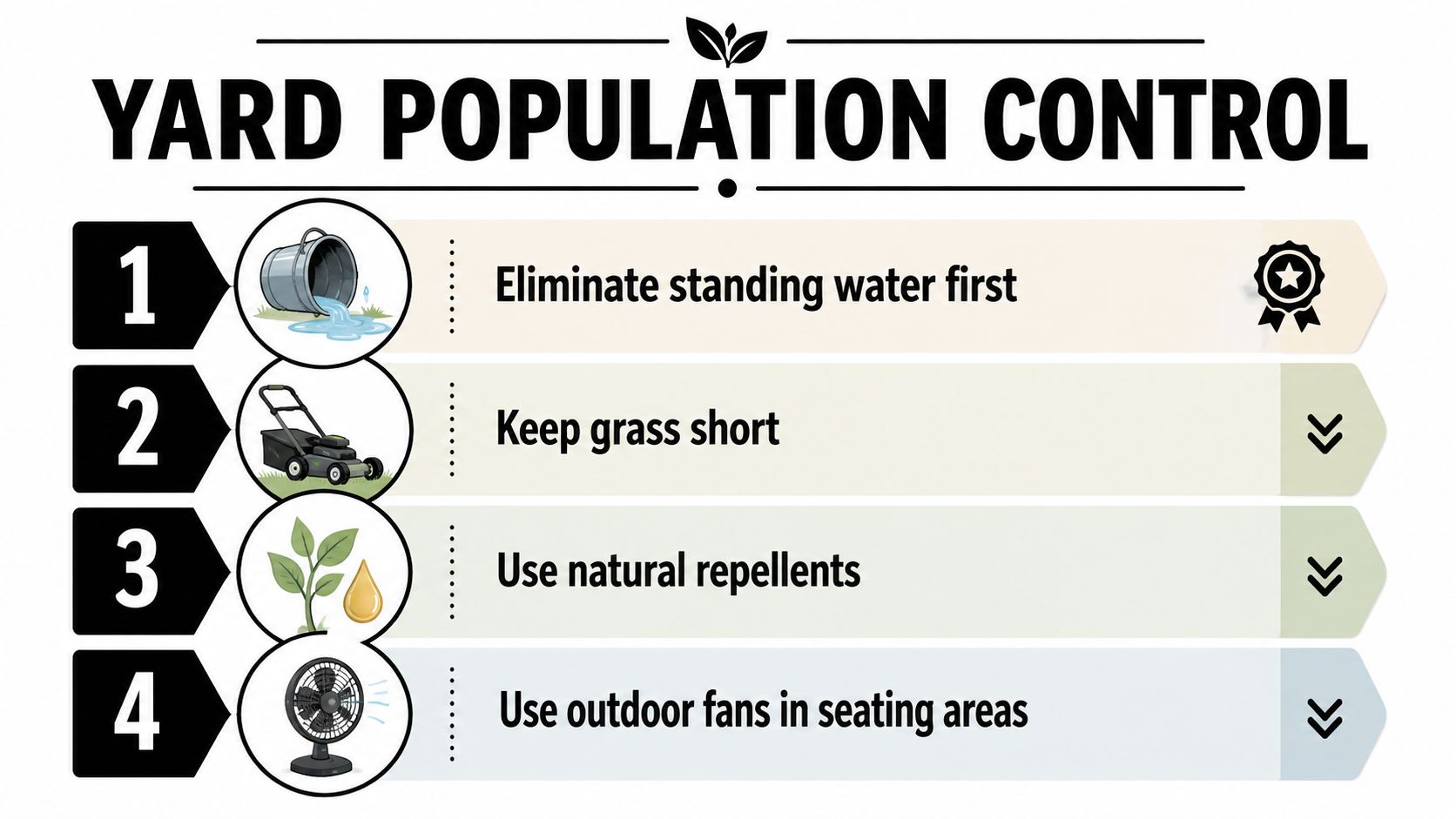
Water comes first, because that is where the population starts.
- Eliminate standing water first. Drain what you can, and correct the spots that refill after rain or irrigation.
- Thin dense vegetation. Sheltered, humid edges around foundations and fences help these insects stay active near people.
- Use targeted control where water can't be removed. Bti belongs in water that can't be eliminated, not as a substitute for drainage.
- Use CO2-baited traps when pressure stays high. A University of Arizona guide says CO2-baited traps are a preferred control method because no-see-ums use carbon dioxide as a host-finding signal. Mosquito Magnet no-see-ums facts
The same guidance says standard insect sprays, mists, and fogs are not effective in one mosquito-control source, which matches what homeowners notice when the yard still bites after a “treatment.” Mosquito Magnet no-see-ums facts
For landscaping, a separate reference on mosquito-repelling plants can help with yard design, but plants alone won't fix active breeding conditions. A planted border may make a sitting area feel better, yet it will not outweigh wet soil, hidden puddles, or dense shade that keeps the insects active.
Broad fogging looks busy. Moisture control changes the population.
Timing matters too. In Northwest Indiana, the most useful season-long strategy is to start before the wet, warm stretch settles in, keep drainage and mowing tight through the active months, and then ease off as conditions dry. That approach won't make every bite disappear overnight, but it does reduce the pressure people feel around patios, pools, and outdoor gathering spaces. It also pairs better with home-level exclusion and a practical Mesa HVAC company approach to airflow control than with product-heavy yard clutter that only looks active.
When DIY Plateaus and a Local Pro Makes Sense
There's a point where the homeowner has done the obvious work and the bites still keep coming. That's usually when a pro earns the call. The usual signs are recurring welts after the screens are fixed, damp spots that won't stay dry, or a commercial property where outdoor seating, employee comfort, or customer complaints make the issue a real liability. At that stage, the question isn't whether you've tried. It's whether the property needs a more complete review.
What a managed program adds
A one-time spray can feel reassuring, but it doesn't change how the property behaves. A managed program looks at the entry points, the moisture pattern, the seating areas, and the seasonal pressure together. That matters because no-see-um control isn't only about adults in the air. It's about the conditions that keep bringing them back.
The Green Advantage handles that kind of review in Crown Point with direct communication, an on-site inspection, and a treatment plan built around the property's actual layout. For homes, that may mean a mix of exclusion, moisture reduction, and follow-up checks. For businesses, it can also mean planning around customer use, side entrances, patios, or service areas where bites and complaints create a bigger problem than a backyard nuisance.
A local team also brings a practical edge in Northwest Indiana. Soil, drainage, irrigation habits, and housing styles all change how no-see-ums behave around a property. That's why the right answer for one yard can be wrong for the one next door. If you're already balancing other needs like termite control, rodent control, or general exterminator near me searches, it helps to have one inspection that looks at the whole site instead of piecemeal fixes.
Good service should feel specific, not generic. If the plan doesn't account for moisture, access, and where people actually spend time, it's probably not complete.
For property managers, that same approach is useful because repeated bite complaints can damage confidence fast. A professional visit doesn't replace good upkeep, but it does turn a vague nuisance into a defined problem with a tracked solution.
Your Next Step Toward a Bite-Free Yard
The fastest way to lower no-see-um pressure is still the same. Cut moisture first, tighten screens and seals, use fans where people sit, avoid peak twilight when you can, and keep the yard on a drainage-and-vegetation schedule that makes sense for the season. That combination is more reliable than chasing sprays, candles, or quick fixes that only look active.
If you want a local set of eyes on the problem, The Green Advantage handles pest control in Crown Point, IN for both homes and commercial properties, including moisture-driven pest issues and outdoor biting pressure. For homeowners who also need a trusted exterminator in Crown Point, IN, or a property review that ties no-see-um control to broader prevention, a site inspection is the cleanest next step. If you're comparing service providers for another home system, the Mesa HVAC company pages from Comfort Experts show how helpful clear local service information can be when you're trying to solve a problem quickly.
If no-see-ums are turning your patio, yard, or screened porch into a place you avoid, The Green Advantage can inspect the property and build a plan around the actual source of the bites. Visit The Green Advantage to request a quote or schedule pest control in Crown Point, IN, and get a local plan that fits your home, your business, and the way these pests really behave.