
You walk a Crown Point property and find the kind of detail that makes a homeowner stop cold, a scatter of wings near a basement window, a pencil-thin mud tube on the foundation, or trim that sounds hollow when you tap it. In Northwest Indiana, those signs deserve attention, but they don't always mean the same thing, and they don't always mean panic. Environmentally safe termite control starts with knowing what you're seeing, then choosing a treatment that fits the home, the soil, and the level of activity without loading the property with more chemical than it needs.
For homeowners searching for pest control in Crown Point, IN, the challenge is sorting real termite pressure from lookalikes and old damage. Around here, crawl spaces, slab edges, basement walls, and damp sill plates are the first places I check because subterranean termites work from the ground up and use moisture as a road map. The Green Advantage serves Crown Point and nearby Northwest Indiana homes with that practical approach, the kind that starts with an inspection and ends with a plan a homeowner can understand.
What Termite Activity Looks Like in a Northwest Indiana Home
A lot of termite calls start the same way, someone notices wings on a windowsill or a soft spot in a baseboard and wonders whether they need an exterminator near me right away. In this region, the first job is to separate termite evidence from old wood damage, ant activity, or simple moisture wear. If you can tell the difference, you can make a smarter decision about timing instead of reacting to every speck of debris.
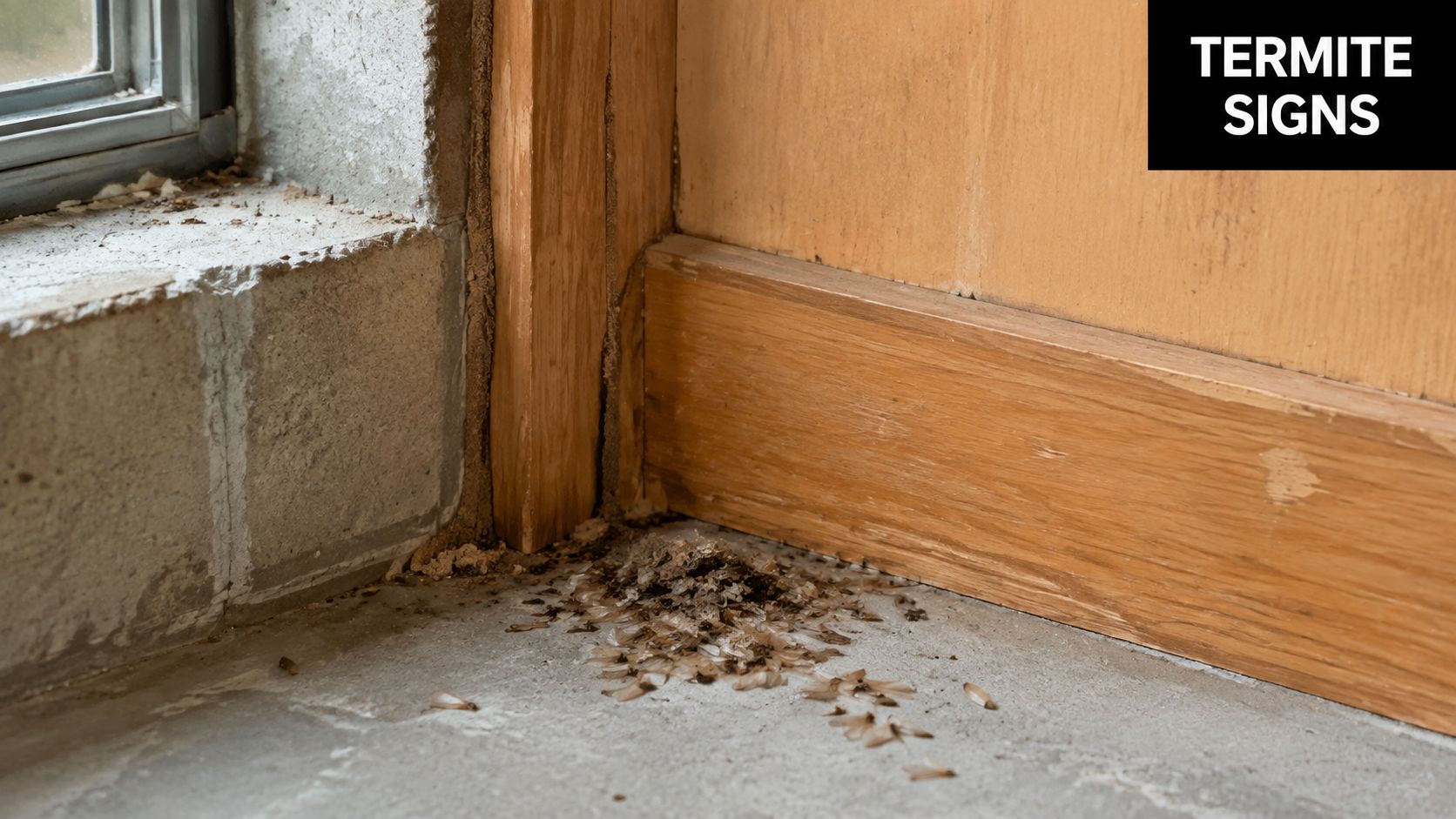
The signs that matter most
Termite swarmers leave behind wings, but wings alone don't prove an active colony in your walls. A cluster near a basement window or sliding door can mean the swarm happened nearby, or it can mean the insects found light inside. Mud tubes on concrete, block, or foundation walls tell a different story, because subterranean termites build those protected travel lines to move between soil and wood.
Practical rule: if the mud tube is fresh, intact, and connected to a moisture-prone area, treat it as active until a licensed inspection proves otherwise.
Hollow-sounding trim, blistered paint, or wood that crumbles when probed points to possible feeding. If the damage is older, you may see no fresh mud, no wings, and no visible termites at all, just weakened wood that has already been abandoned. That's why I tell homeowners not to judge by one sign alone.
Where to look first in Crown Point homes
Crawl spaces and slab edges are the first inspection points because they're the easiest travel routes for subterranean termites. Older homes, additions, porch steps that touch soil, and basement rim joists all deserve a close look. If you're seeing wings indoors, or you've found mud tubes that seem connected to the structure, schedule an inspection rather than guessing.
If you want a visual reference for the damage patterns I'm talking about, the guide on how to identify termite damage is a useful place to compare what you're seeing at home. The main thing is to stay calm and act on evidence, not fear. A small sign can be a cheap fix, but ignored activity can turn into a structural problem.
What Environmentally Safe Termite Control Actually Means
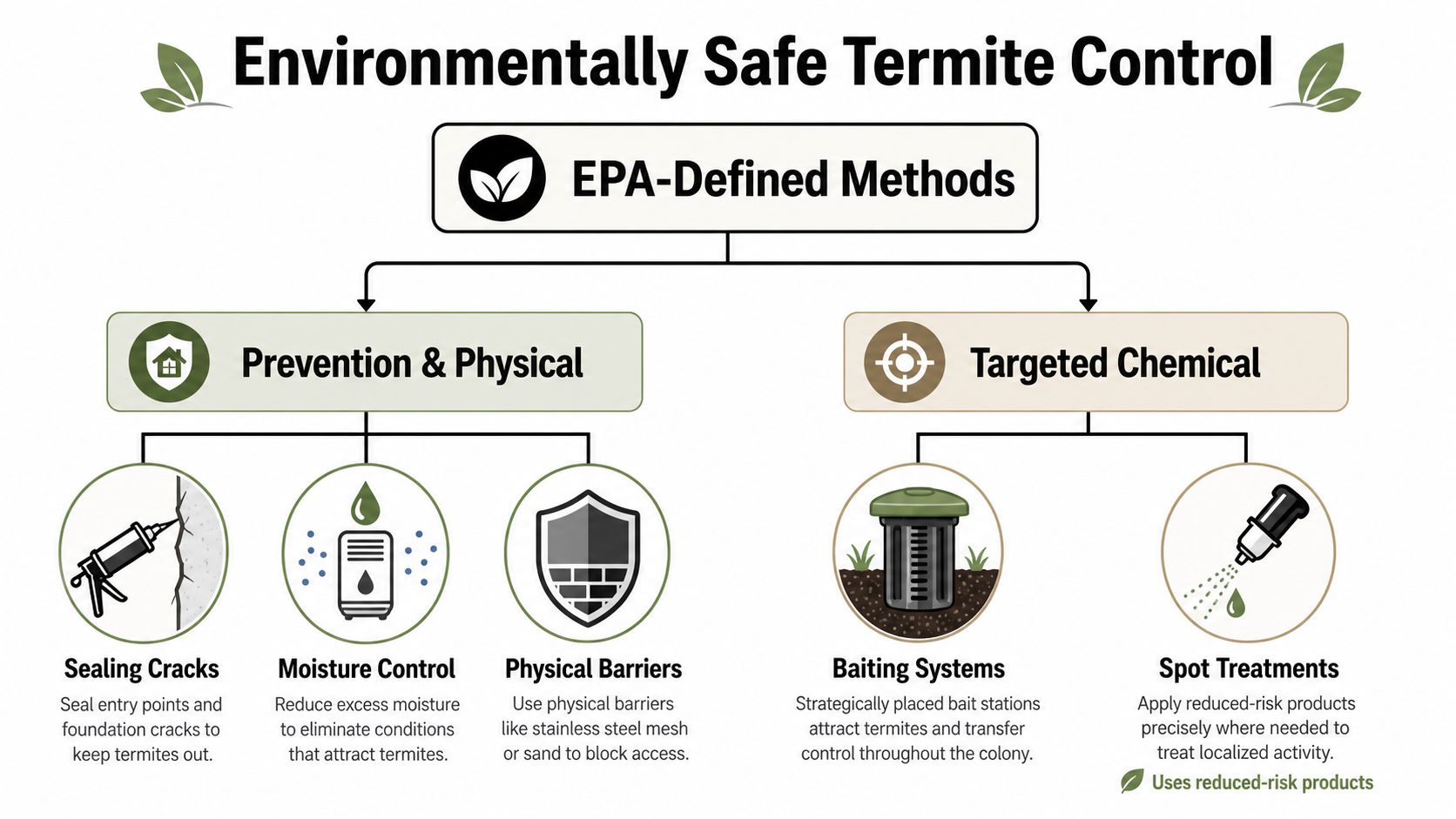
A lot of homeowners hear “green termite treatment” and assume it means one thing. It doesn't. In practice, environmentally safe termite control falls into three real categories, prevention and physical exclusion, low-toxicity targeted products, and true nonchemical methods. The EPA makes the first distinction clear, termite control should begin with moisture management, physical exclusion, and inspection, and any pesticide used must be specifically labeled for termite and structural protection, with licensed applicators following the label because the label defines use and risk according to EPA guidance on termite identification and control.
Prevention and physical exclusion
This is the foundation. Moisture control, sealing utility gaps, correcting wood-to-soil contact, and using barriers where appropriate all reduce termite pressure before a treatment ever goes in. Some nonchemical barriers, including stainless-steel mesh and polyethylene barriers, are treated as devices rather than pesticides, which matters to homeowners who want to know whether a solution is pesticide-free.
Targeted products with lower impact
The next category includes nonrepellent soil termiticides, bait matrices, and borate treatments. These tools still involve active materials, but they're used in a more targeted way than older broadcast soil approaches. A review of termite management noted a clear shift in the industry toward nonrepellent liquids and away from older repellent liquids, and that shift reflects a broader move toward selective application and lower exposure, not just a marketing label.
True nonchemical methods and biological controls
Heat treatment, physical barriers, and biological tools fit here. Entomopathogenic nematodes are described in review literature as an effective, environmentally safe, and sustainable biological control method against termites, and that matters for homeowners who want to understand the full range of options rather than just “spray or don't spray.” For exposed wood, nonchemical devices, and certain renovation phases, these methods can make sense. For an active basement infestation, they may be part of the answer, but usually not the whole answer.
If you're comparing service quotes, keep the language straight. A company can offer prevention, a reduced-risk product, or a nonchemical method, and those are not the same thing. For a plain-English overview of service categories, the page on environmentally friendly pest control methods helps frame the difference without turning everything into the same bucket.
Comparing the Main Eco-Friendly Treatment Options
Choosing the right termite strategy is less about chasing the newest product and more about matching the method to the structure. A Crown Point house with a crawl space, a finished basement, and damp grading needs a different plan than a renovated home with exposed framing or a new addition under construction. The best fit depends on whether you're stopping entry, eliminating an active colony, or protecting accessible wood.
| Environmentally Safe Termite Treatment Options at a Glance | |||
|---|---|---|---|
| Method | How It Works | Typical Best Fit | Key Trade-Off |
| Bait systems | Termites feed on a targeted bait and carry it back to the colony | Most subterranean pressure around homes | Slower than a liquid barrier, but highly targeted |
| Borate wood treatments | Borate is applied to exposed wood surfaces | Framing, repairs, unfinished wood | Only works where the wood is accessible |
| Nonrepellent soil termiticides | Termites pass through treated zones without detecting them | Active subterranean infestations | Still a pesticide, so placement and licensing matter |
| Heat treatment | Structure is brought to lethal temperature over time | Localized infestations, certain drywood scenarios | Needs careful monitoring to avoid heat sinks |
| Physical barriers | Mesh, membranes, or construction devices block entry | New construction, renovations, some crawl space upgrades | Best before or during building work, not after major damage |
| Biological controls | Living agents suppress termite populations | Emerging or specialized programs | Useful in research and niche cases, not a universal fix |
Bait stations are the workhorse option for many homes because they keep the chemical load small and focus on the colony rather than saturating soil. They do work best when termites keep feeding, which is why placement and follow-up matter so much. A California station study recorded an overall hit rate of 44% for bait stations and monitoring stations over two years, and a large baiting survey found 9% reinfestation, or 1,794 out of 19,553 sites, which is a reminder that monitoring doesn't end after the first win.
Heat treatment is different. A laboratory result cited in field work found that about 49.6°C for 2 hours was needed for 100% termite mortality under heat-sink conditions, and a condominium field study reported 0% callback after improved heat treatment versus 33.33% callback after standard heat treatment at 6 months PMC heat-treatment review. That makes heat attractive for localized jobs, but the downside is obvious, temperature has to be uniform enough to avoid survivorship pockets in walls, floors, and hidden framing.
For exposed wood, borates are a practical low-impact choice, especially after repairs or in unfinished spaces. If you're comparing wood-protection products, a helpful outside resource is non-toxic wood preservatives, because the main question is often whether you're protecting accessible lumber or trying to solve an active colony problem.
A few job types in Northwest Indiana line up naturally with certain methods:
- Bait stations: best when the home has recurring subterranean pressure and you want ongoing monitoring.
- Borate treatments: best for accessible framing, small repairs, and preventive wood protection.
- Physical barriers: best during construction, major renovation, or crawl space upgrades.
- Heat: best for localized infestations where structural monitoring can be done carefully.
- Biological controls: best viewed as a lower-impact tool in the broader termite-control toolbox, not a stand-alone answer for every house.
The Green Advantage often steers termite work toward baiting systems and low-toxicity treatments rather than older chemical-heavy barrier thinking, because that fits the property types and moisture conditions common here. The right choice isn't the loudest one, it's the one that protects the structure without over-treating it.
When DIY Makes Sense and When to Call a Pro
Some termite-related work is realistic for a homeowner. Some of it isn't. The line usually comes down to access, risk, and whether you're dealing with prevention or an active infestation. If you can see the wood, reach the gap, and confirm the problem is limited, you have a much better DIY case than a house with a finished basement, hidden crawl-space framing, or damage already spreading behind trim.
What homeowners can handle well
A careful homeowner can manage moisture reduction, keep firewood off the siding, repair obvious grading issues, and apply borate treatments to accessible wood during repairs. Placing or checking monitoring stations along a known foraging path can also make sense when the goal is early detection rather than elimination. For practical sealing and gap work, the article on DIY pest proofing tips is a useful companion, especially if you're trying to reduce entry points before scheduling service.
Where DIY usually falls short
Soil termiticide injection around a slab, full-structure heat treatment, and anything that involves active feeding damage usually belong with a licensed technician. Those jobs demand equipment, labeling, and placement that most homeowners don't have, and a mistake can leave the colony untouched while the damage keeps spreading. The same goes for homes where the signs point to hidden travel routes in crawl spaces or behind finished walls.
A cheap DIY attempt feels reasonable until the colony keeps moving and the real repair cost rises with the damage.
For Crown Point homes, the construction style matters. Crawl spaces give termites easy access to joists and rim boards, while slab houses hide activity at edges and penetrations where a homeowner can't always inspect safely. If the house is older, or if you're already seeing damage instead of just prevention issues, a professional inspection usually pays for itself in clarity alone.
The Green Advantage handles this part by separating what's feasible from what's risky. That keeps you from paying twice, once for a product that doesn't reach the problem, and again for the professional fix that should have happened first.
Preparing Your Property Before Any Treatment
A good termite treatment starts before the technician arrives. If access is blocked, moisture issues are obvious, or the perimeter is cluttered, the application gets harder and the odds of a callback go up. In Northwest Indiana, prep is especially important around crawl spaces, basements, porch steps, and garage edges because those are common termite travel zones.
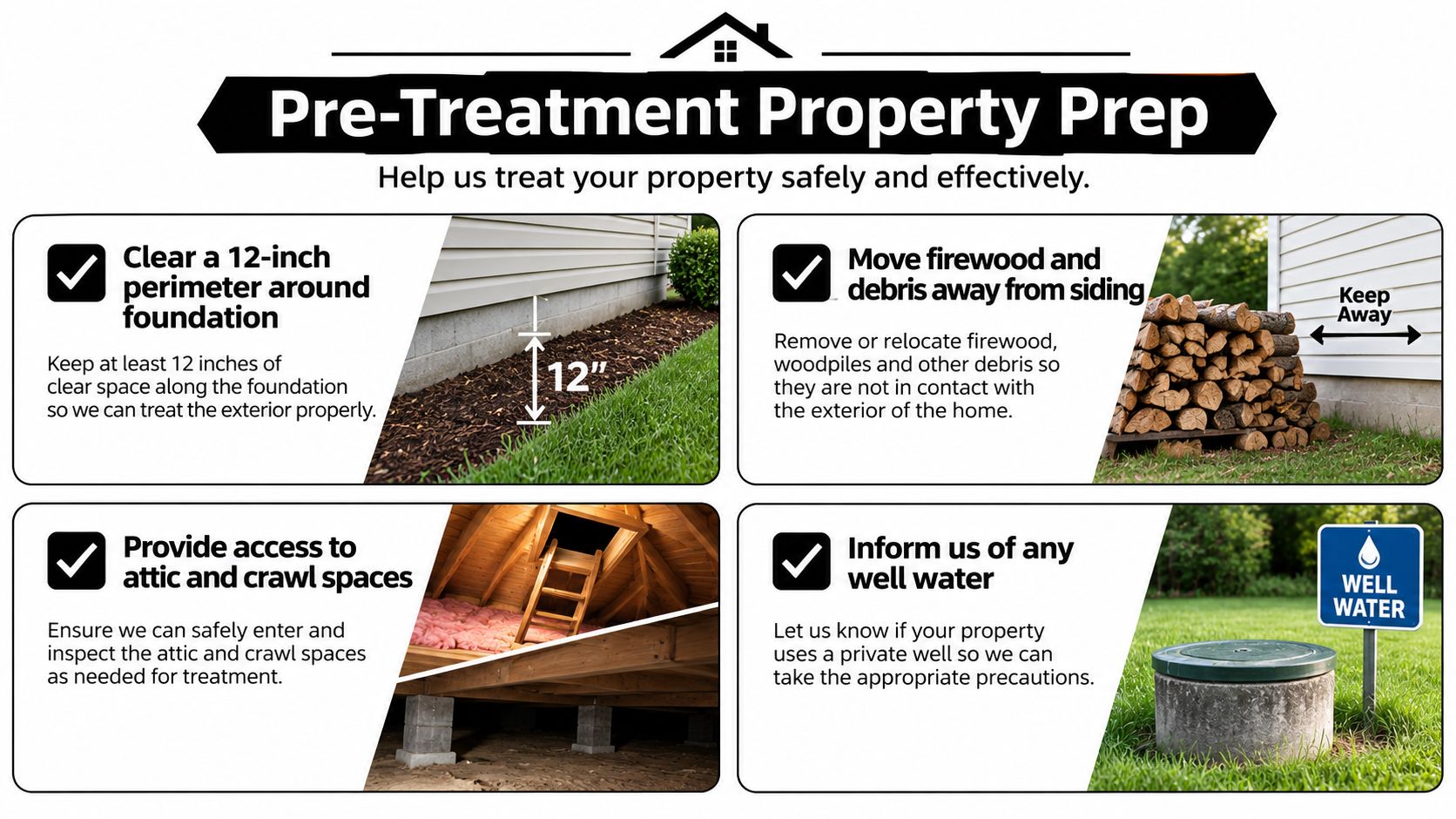
The homeowner prep checklist
- Clear a 12-inch perimeter around foundation: move mulch, stored materials, and loose debris away so the technician can inspect and treat properly.
- Move firewood and debris away from siding: wood stacked against the house creates hidden moisture and a direct bridge.
- Provide access to attic and crawl spaces: technicians need to see the problem areas, not guess at them.
- Inform us of any well water: that matters for treatment planning and safety around water sources.
What else to handle before service
Trim vegetation back so the foundation is visible. Fix known leaks if you can, or at least flag them for the technician so the treatment plan reflects the moisture source. Photograph existing damage before the visit, because a clear before-and-after record helps everyone track whether the problem is active or old.
Pets and aquariums need their own plan on service day, and sensitive household members should stay clear of treated areas until the technician gives the all-clear. If termites showed up in the basement, don't ignore the garage perimeter either, because access routes often start outside where soil, siding, and slab edges meet. A little prep keeps the service cleaner, faster, and more effective.
The right inspection habits matter too. For additional perspective on what to notice before a visit, the home check guidance from Pine Country Window Cleaning inspection tips pairs well with termite prep because it reinforces the same idea, catch access issues early and document what you see.
Year-Round Monitoring and Prevention for Northwest Indiana
Termite control in this region works best as a rhythm, not a one-time event. Spring swarm season tells you what might be happening indoors. Summer is when colonies keep foraging. Fall is the time to tighten the exterior before cold weather drives moisture problems and warm-crawl-space activity. Winter still matters because the inside of a home stays livable even when the ground outside is frozen.
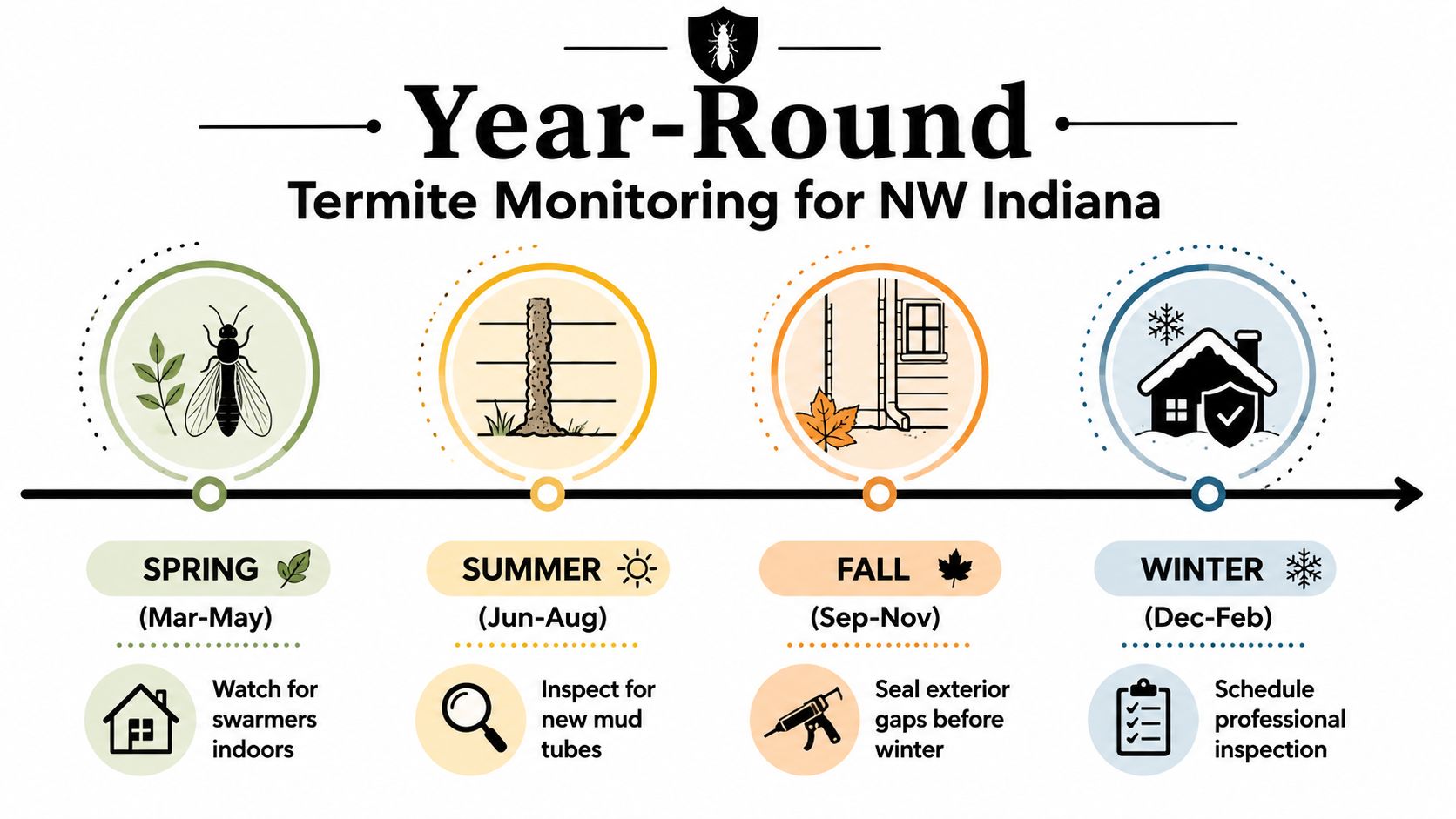
What to check each season
- Spring: watch for swarmers indoors, especially around windows and basement lights.
- Summer: inspect for new mud tubes along walls, piers, and crawl-space supports.
- Fall: seal exterior gaps before winter weather settles in.
- Winter: schedule a professional inspection if the home has had past activity or moisture concerns.
A homeowner can keep a close eye on the basics between visits. Recheck old mud tubes to see whether they're active, watch for fresh frass where wood-boring activity might show up, and use a simple moisture meter if you suspect a damp area under the house. That kind of monitoring doesn't replace a professional inspection, but it does help you catch changes early.
Good termite prevention is boring on purpose. Dry wood, clean access, and regular inspections prevent the kind of surprise that turns into major repair work.
The Green Advantage's ongoing monitoring approach in Crown Point fits that seasonal pattern. The point isn't to sell a homeowner on constant treatment, it's to keep an eye on the property so a small issue doesn't turn into a hidden one. A successful eco-friendly program is built on follow-up, not wishful thinking.
Scheduling a Termite Inspection in Crown Point
If you're seeing wings, mud tubes, or wood that doesn't sound right when you tap it, the next step is straightforward. Call The Green Advantage, speak with the office staff, and set an on-site inspection with a licensed technician. The visit covers the interior, foundation, crawl space or slab edge, and yard perimeter, then the findings are explained in plain language so you know what's active, what's old, and what needs to happen next.
A quote should reflect the property, not a one-size-fits-all package. That means the plan may lean on baiting, low-toxicity treatment, prevention work, or a mix of methods depending on the structure and the signs you're seeing. You'll know what's being treated, why it's being treated, and what follow-up looks like before anything starts.
If you want a local termite inspection in Crown Point, IN, The Green Advantage can help you sort the signs, choose the right level of treatment, and protect your home with an approach that fits the property. Visit The Green Advantage to request an inspection and get a clear plan before the damage spreads.