
On a warm Crown Point evening, it's easy to notice the mosquitoes before you notice what they're doing to the dog. The family is trying to finish dinner on the patio, the retriever keeps circling the grass, and everyone ends up swatting at the same cloud of pests. That's where mosquito control stops being a comfort issue and starts being a health question, especially for homeowners looking for pest control in Crown Point, IN and nearby Northwest Indiana communities.
Mosquitoes and dogs are connected in two ways that matter. First, dogs get bitten, just like people do. Second, mosquitoes can transmit heartworm disease, which is caused by the parasite Dirofilaria immitis and spreads by mosquito bite rather than dog-to-dog contact (IFAS heartworm guidance). The Green Advantage works with Crown Point homeowners who want a safer yard, but the science behind this problem is what should really get your attention.
Why Mosquitoes Are a Real Problem for Dogs in Crown Point
A lot of dog owners think the fur solves the problem. It doesn't. Mosquitoes look for exposed skin, and a dog's belly, ears, muzzle, and inner legs can give them plenty of access, especially during the humid parts of a Northwest Indiana summer. That's why a pet can come inside covered in fur and still end up itchy, irritated, or at risk.
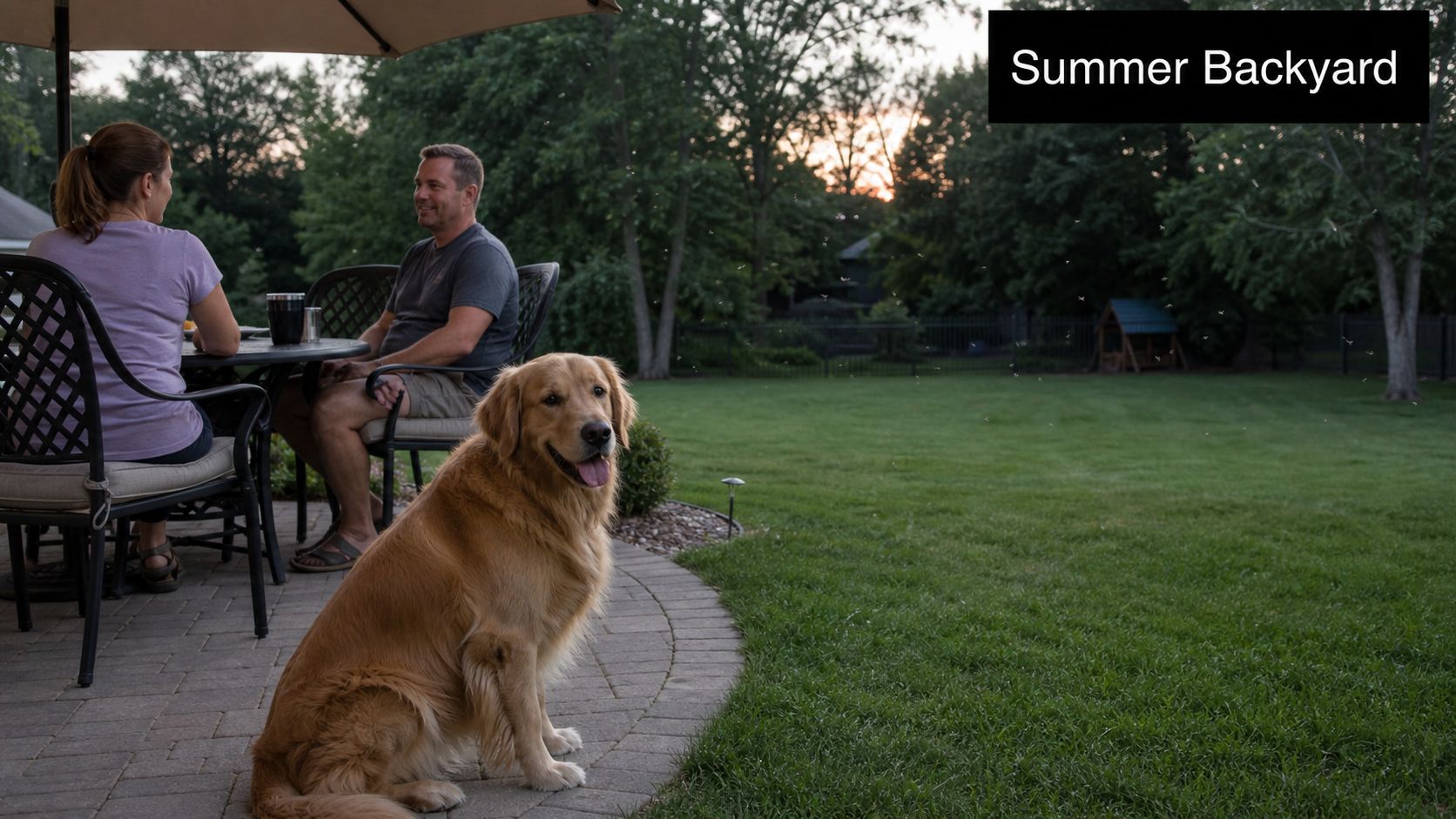
A backyard problem that spreads beyond one bite
The issue isn't just discomfort. Florida's IFAS notes that thousands of dogs die or become disabled each year from heartworm-related lung, heart, or circulatory disease, and that heartworm was once largely limited to the southern and eastern coastal United States until the late 1960s (IFAS heartworm guidance). That history matters because it shows how widely mosquito-borne risk can move when conditions favor it.
Practical rule: if mosquitoes are active enough to bother people in the yard, they're active enough to bother dogs too.
That's one reason local exterminator near me searches often lead homeowners to broader prevention instead of a one-time fix. A yard that supports mosquitoes also supports repeated pet exposure, and repeated exposure is where the bigger problem begins.
Why local control has to start outside
Mosquitoes don't need a perfect breeding site. They need standing water, shaded resting spots, and enough time to keep reproducing. Only female mosquitoes bite, and one source notes that a female can lay up to 300 eggs at a time (mosquito basics for pet owners). That's why small yard problems can turn into a bigger household nuisance quickly.
For Crown Point families, the practical takeaway is simple. If the dog is getting bitten, the yard probably needs attention too. That's where residential pest control and seasonal mosquito control can make the outdoor space safer for everyone using it.
How Mosquitoes Actually Bite and Infect Dogs
Mosquito feeding isn't random. In field research, Cx. pipiens mosquitoes fed on dogs at a rate of 70.2% compared with a 25.9% probing rate on humans, and the highest bite/night/host rate reached 84.0 for dogs versus 26.5 for humans (mosquito-host interaction study). That means dogs can be a favored target in the same yard where people are trying to relax.
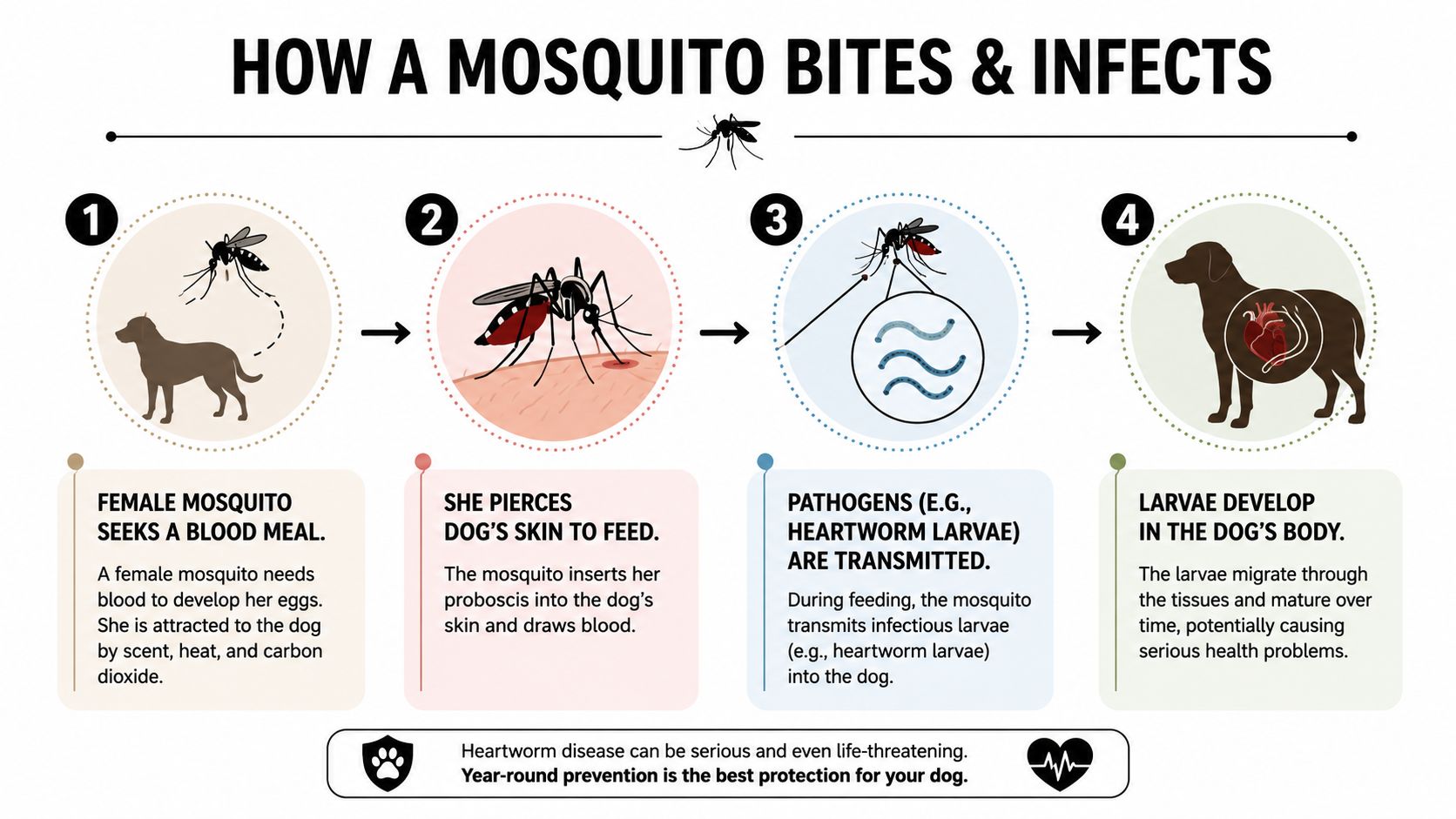
What happens from bite to infection
Only female mosquitoes bite because they need blood for egg production. When a female mosquito feeds, she pierces the skin, draws blood, and can pass parasites at the same time. In the same study, D. immitis DNA was detected in unfed Cx. pipiens at an infection rate of 0.26%–2.07%, with an adjusted infection rate of 0.38% (mosquito-host interaction study). That sounds small, but it's enough to keep transmission going.
The point is that dogs are not just passive victims. They're frequent targets in the feeding pattern that lets heartworm move through a neighborhood. If your yard gives mosquitoes a place to rest, you're making that feeding pattern easier.
Why standing water changes the risk
Mosquitoes also reproduce fast when water is available. Because a female can lay up to 300 eggs at a time, even small sources of water around a yard can become a cycle of new bites and new breeding opportunities (mosquito basics for pet owners). That's why a dog-friendly yard in Crown Point should be managed as a mosquito yard first, and a pet yard second.
The dog's fur slows a bite, but it doesn't stop one. For mosquito planning, exposed skin and outdoor habits matter more than most owners expect.
A local pest professional looks at where the dog rests, where shade collects, and where moisture lingers. That's how pest control near me becomes more than a search term, it becomes a yard-specific plan.
Mosquito-Borne Diseases That Affect Dogs
Heartworm is the headline risk because it can move from a mosquito bite into a long-term disease inside the dog's body. The parasite is Dirofilaria immitis, and it lives in the heart of infected dogs (Elanco mosquito guidance). That is why heartworm prevention is treated so seriously by veterinarians and why mosquito pressure around the home is more than a nuisance issue.
Heartworm is the disease that changes the conversation
A dog can look fine early on and still be infected. That's what makes heartworm so dangerous. A more recent U.S. shelter study looked at 3,750 dogs from shelters in 19 eastern states and found more than 10% infected with heartworms, which shows the disease remains widespread beyond the old high-risk map (IFAS heartworm guidance). Another review cited there notes that at least 25 mosquito species can transmit heartworm to susceptible dogs (IFAS heartworm guidance).
Other mosquito-borne illnesses still matter
Mosquitoes can also transmit West Nile virus and eastern equine encephalitis to dogs (Whole Dog Journal). Those illnesses are not the everyday story for most pet owners, but they reinforce the larger point. Mosquito bites on dogs are not just skin-deep.
The Green Advantage also keeps mosquito risk in context for local homeowners through its mosquito-borne illness guidance for Indiana. That matters because a Crown Point yard can be comfortable one week and a mosquito source the next if breeding sites are ignored.
Why prevention beats waiting
Treatment for heartworm is much harder than prevention, and that's the part many owners don't realize until they're already dealing with symptoms. A dog that is bitten repeatedly is not only annoyed, it's entering a risk pattern that can build over time. That's why consistent mosquito reduction and heartworm protection belong together, not separately.
Recognizing Bite Reactions and Heartworm Warning Signs in Dogs
A lot of owners miss mosquito bites because they hide under fur. What looks like simple restlessness can be a dog scratching at red, swollen skin, licking the same spot, or rubbing its face on furniture. In dogs with sensitivity, repeated bites can trigger mosquito-bite hypersensitivity, which the veterinary literature documents as a real reaction, not just ordinary itching (mosquito hypersensitivity review).
Signs that deserve a closer look
The warning signs are usually subtle at first. A dog may seem tired on walks, pause sooner than usual, or act unwilling to exercise. That kind of change matters because heartworm often doesn't announce itself loudly in the beginning.
Watch for:
- Persistent scratching or pawing, especially around the face, ears, or belly.
- Raised bumps, redness, or swelling, which can point to a bite reaction.
- Coughing or low energy, which can fit early heartworm warning signs.
- Facial swelling or hives, which call for veterinary attention right away.
When the bite isn't the real issue
A single mosquito bite can lead to an itchy spot. Repeated bites can do more. The bigger concern is that a dog with ongoing exposure may also be exposed to heartworm, and that risk doesn't depend on whether the bite looks dramatic.
If your dog suddenly doesn't want to play, lags on short walks, or starts coughing after a stretch of heavy mosquito activity, it's smart to call your vet. If there's swelling around the muzzle or eyes, don't wait.
Good owner habit: if the skin reaction seems bigger than the bite, or the behavior change lasts longer than expected, treat it as a real health signal.
That's the homeowner side of the problem. Mosquitoes are easy to dismiss until a pet starts acting differently, and then the backyard feels a lot less harmless.
Flea and Tick Products Do Not Always Cover Mosquitoes
A common mistake is assuming one parasite product handles everything. Many flea and tick products do not protect against mosquitoes, so a dog can still be bitten even when it's wearing or taking something for other pests (Elanco mosquito guidance). That gap matters because it gives owners false confidence.
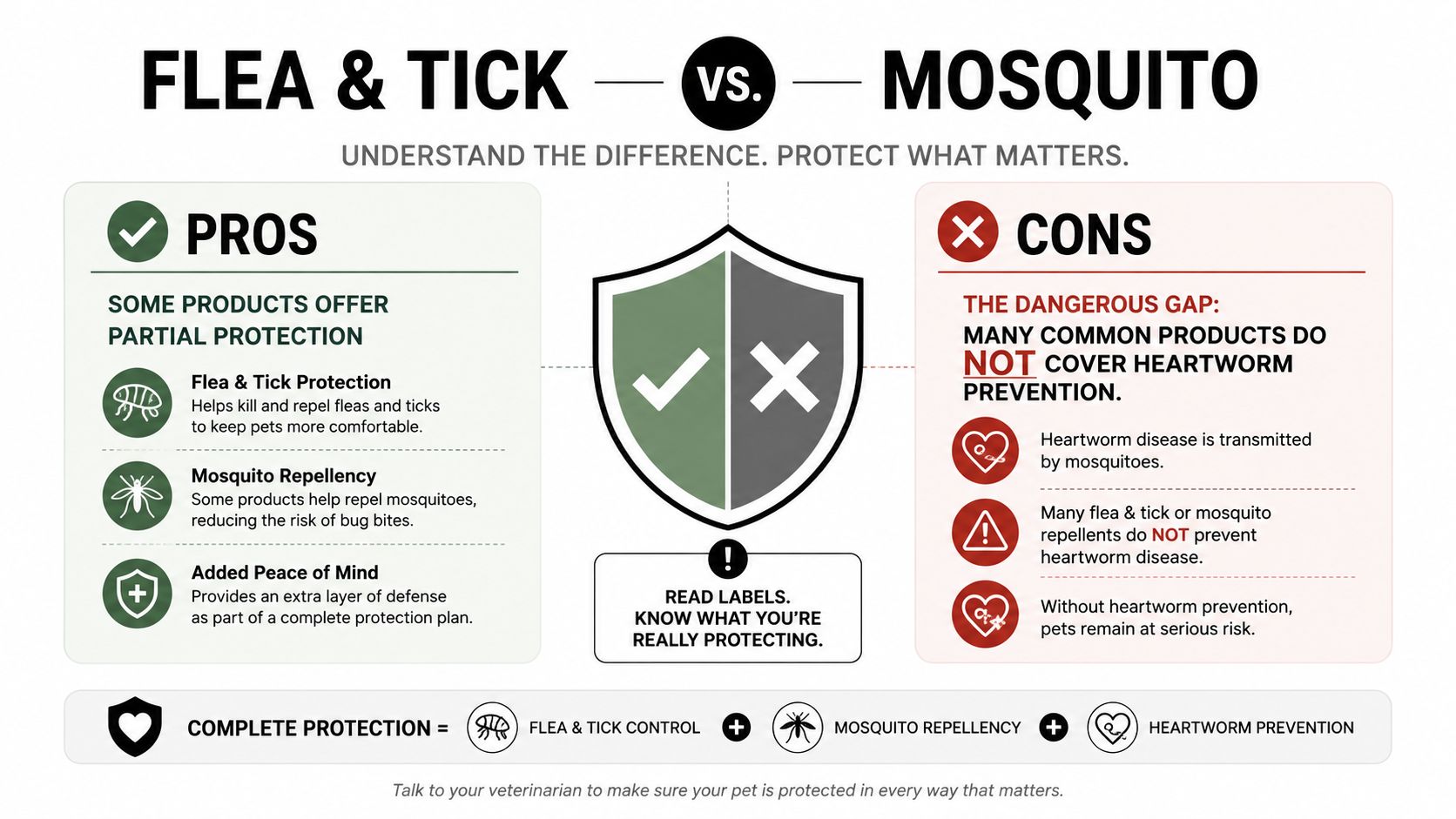
Why product labels matter
Flea and tick prevention serves one purpose. Mosquito prevention serves another. Heartworm prevention is its own layer again. If those categories get mixed together, the dog can still be exposed even though the owner thinks the pet is covered.
That's why veterinarians often talk about layered protection. A product may reduce some biting pressure, but it doesn't replace heartworm prevention or a yard plan that lowers mosquito numbers where the dog spends time.
What this means for Crown Point homeowners
If your yard has shade, moisture, and active mosquitoes, a flea-and-tick product alone won't solve the problem. It may still be useful, but it won't close the mosquito gap. That's the part many homeowners only discover after the dog keeps getting bitten.
A practical service plan often combines pet protection from the veterinarian with environmental control around the home. That's the point where commercial pest control and residential pest control both make sense, because the goal is to reduce mosquitoes where they breed, rest, and bite.
The Green Advantage can fit into that bigger plan with mosquito reduction around homes, patios, and play areas, while your vet handles the pet-side protection. Those two pieces work better together than either one does alone.
Pet-Safe Repellents and Yard Habits That Reduce Mosquitoes
The safest mosquito plan for dogs starts with products meant for dogs, not people. Human repellents like DEET should stay off pets, and essential oils should be used cautiously because not every “natural” product is safe for a dog's skin or breathing. Veterinary-approved options are the better starting point when you want protection without guessing.
Simple yard habits that lower mosquito pressure
Here's what usually helps most around a Crown Point home:
- Empty standing water in buckets, pots, toys, and low spots after rain.
- Trim dense vegetation where mosquitoes rest during the day.
- Keep dog areas dry by checking bowls, runoff, and shaded corners.
- Use fans on patios when dogs and people are outside, because airflow makes it harder for mosquitoes to land.
- Limit outside time at dusk and dawn when biting pressure often feels worse.
Those steps sound basic because they are. They work because they take away the conditions mosquitoes depend on.
Why yard timing matters
A useful schedule is the one that matches mosquito behavior, not just homeowner convenience. For a general mosquito spraying reference, the mosquito spraying schedule for Phoenix properties is a helpful reminder that timing matters as much as product choice. Crown Point conditions are different, but the principle is the same, treat and manage when mosquito activity is most likely to rebound.
A simple yard comparison
| Yard-Level Mosquito Reduction Action for Dog Owners | Why It Helps | Effort Level |
|---|---|---|
| Dump standing water after rain | Removes breeding spots | Low |
| Keep grass and shrubs trimmed | Reduces resting cover | Medium |
| Use pet-safe repellents only | Lowers bite risk without unsafe chemicals | Low |
| Improve airflow with fans | Makes landing harder for mosquitoes | Low |
| Schedule targeted mosquito treatments | Reduces pressure in problem areas | Medium |
When those steps still don't bring relief, it's usually a sign the yard has a bigger mosquito source than the owner can see from the porch.
When to Call a Local Pest Control Professional
DIY cleanup works best when the mosquito pressure is light. If you keep dumping water and the bites keep coming, the problem has probably moved beyond simple homeowner maintenance. That's when a local exterminator in Crown Point, IN can help identify the hidden spots where mosquitoes rest and breed.
What professional help should include
A solid mosquito service starts with an inspection of the property. A technician should look at shade, drainage, shelter, and breeding conditions, then build a treatment plan around the parts of the yard where dogs spend time. That approach fits with the way The Green Advantage handles mosquito reduction in Northwest Indiana, through property assessment, treatment, and follow-up rather than guesswork.
If you want a broader look at the risk side, The Green Advantage also explains what mosquito-borne risks and control services address. That context matters for households trying to decide whether the issue is just annoying or worth service.
When it's time to stop waiting
Call for help if:
- Your dog keeps getting bitten even after you clean up standing water.
- The yard feels worse after rain, which often means breeding conditions are still active.
- A vet has already flagged a bite reaction or heartworm concern.
- You want mosquito control tied to other services like ant control, spider control, rodent control, or seasonal pest treatments.
A local company can be useful because it understands Crown Point weather patterns, nearby property layouts, and the way mosquitoes move through backyards, patios, and kennel areas. That's more practical than a generic treatment.
Bottom line: if the dog is the first one showing the problem, the yard probably needs service before the rest of the family feels it too.
Protecting Your Dog Starts With Your Yard
Mosquitoes and dogs are linked by more than an itchy bite. Dogs can be a frequent target for mosquitoes, and that means the yard around them matters as much as the pet itself. Heartworm prevention, pet-safe repellent choices, and regular yard cleanup all help, but they work best when the outdoor environment is brought under control too.
That's especially true in Crown Point, where summer evenings can make mosquitoes feel like part of the scenery. If drainage is part of your property issue, it also helps to schedule service with MG Drain Services for the type of water-related work that can support a drier, less mosquito-friendly yard. Small environmental fixes often make pest control more effective overall.
The Green Advantage helps homeowners and businesses in Crown Point, IN, with mosquito reduction, residential pest control, commercial pest control, and preventive treatments that fit local conditions. If your dog is getting bitten, or your yard still feels like mosquito territory after you've cleaned up the obvious spots, it's time to get a professional look at the property.
If you're ready to make your yard safer for your dog and your family, contact The Green Advantage to schedule a pest inspection or request a quote. Their team can identify mosquito problem areas, recommend the right treatment plan, and help you take the next step toward a more comfortable Crown Point yard.