
Enjoying your Northwest Indiana backyard shouldn't come with the worry of finding a tick on your family or pets. In Crown Point, that worry can grow fast once lawns thicken up, wooded edges stay damp, and garden beds start looking a little too inviting. A tick-resistant yard is a smart first step, and it works best when you pair it with real prevention habits and eco-friendly pest methods like the ones homeowners ask about from The Green Advantage.
Planting the right herbs and shrubs can make your yard less attractive to ticks, especially along patios, fence lines, and entry paths. The key is to understand the difference between plants that repel ticks in controlled settings and actual yard-level protection, because those are not the same thing. The Green Advantage helps Crown Point homeowners build a complete approach that fits our local climate, protects outdoor living spaces, and supports long-term pest control in Crown Point, IN without relying on landscaping alone.
1. Lavender for fragrant tick deterrence in Crown Point gardens
A Crown Point side yard can look finished with lavender along a stone path, and it can also do a little quiet work at the edge of the property. The plant's scent is the main reason homeowners choose it, but its tidy form matters too. It fits well in residential pest control plans because it improves curb appeal while helping make patios, walkways, and border beds less inviting to ticks.
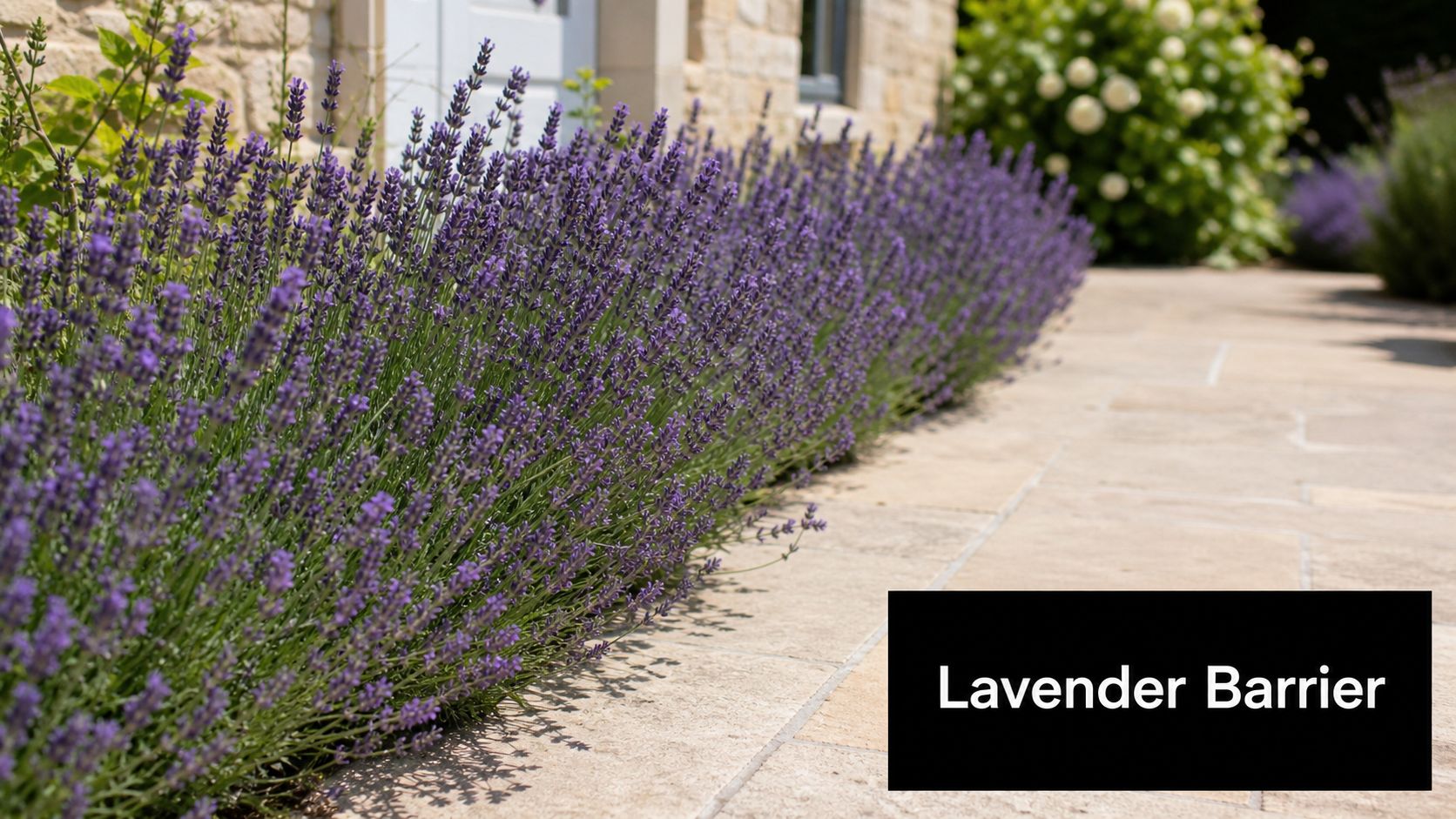
Lavender can handle Northwest Indiana conditions, but only if the soil is set up correctly. Indiana clay holds moisture, so the planting area needs better drainage, some compost, and enough sand or grit to keep the roots from sitting wet. Airflow matters as well, because crowded, damp plantings are where lavender tends to fail.
How to use lavender well
Practical rule: Place lavender where people and pets already pass. Ticks collect around the edges of yards, so border planting matters more than a hidden bed far from activity.
In Crown Point homes and commercial properties, a few placements work especially well:
- Fence-line borders: These help mark the property edge and soften the move from turf to brush or wooded areas.
- Patio-adjacent beds: Lavender makes seating areas feel more intentional and gives you a low-maintenance planting that does not ask for constant care.
- Mixed repellent plantings: Lavender does better when it is paired with other aromatic plants instead of being treated as a stand-alone answer.
Full sun, generous spacing, and regular pruning all help the plant stay compact and healthy. Homeowners who want more care guidance can also use lavender care from Little Green Leaf as a practical reference. Gardeners often dry the stems for sachets or indoor arrangements, which gives the plant an added use inside the home. Lavender is one of the better-known plants that repel ticks, but in Crown Point it works best as one layer in a wider tick management plan, not as a complete solution.
2. Rosemary for woody structure and everyday outdoor use
Rosemary brings a different kind of value to a tick-conscious yard. It's not just fragrant, it has a tidy, woody form that works near seating areas, raised beds, and walkways where homeowners want structure and function in the same planting. That makes it especially attractive for families looking for exterminator near me style solutions that still respect the look of the property.
The plant's biggest advantage is how flexible it can be. In milder microclimates it may do well outdoors, but many Crown Point homeowners keep rosemary in containers so it can be moved before cold weather settles in. That's a smart option when you want a living deterrent near a deck or garage entry without gambling on winter damage.
Where rosemary fits best
Rosemary performs best in sunny spots with sharp drainage, and that's where many Northwest Indiana yards need the most help anyway. Raised beds near patios, container groupings near steps, and narrow planting strips beside driveways all work well. Commercial properties can also use rosemary in mixed borders to make customer-facing outdoor areas feel more polished and less overgrown.
Keep rosemary close to the spaces people use most. If a plant can help define the edge of a patio or pathway, it's doing more for tick management than a hidden bed in the back corner.
A few practical tips make a difference:
- Use containers when winters get harsh: This protects the plant and lets you reposition it seasonally.
- Give it full sun: Rosemary needs strong light to stay dense and aromatic.
- Improve drainage: Perlite or sand in the planting hole helps in clay-heavy soil.
- Prune lightly in spring: Dense growth is better than a leggy plant with sparse foliage.
Rosemary also has a bonus for homeowners who like practical landscaping, because it doubles as a kitchen herb. That makes it easier to justify in smaller yards where every plant needs to earn its keep. Like other plants that repel ticks, it works best as part of a larger prevention plan, not as a reason to skip inspections or treatments.
3. Garlic for vegetable beds and perimeter planting
Garlic is one of the most practical plants for gardeners who want something useful, pungent, and simple to work into a property plan. It belongs in vegetable beds, mixed borders, and edges where a homeowner wants a low, organized planting with a clear purpose. For people who want residential pest control ideas that also support the kitchen garden, garlic is hard to beat.
The planting season matters here. Garlic is usually planted in fall so it can establish before winter and emerge strongly in spring, which lines up well with Northwest Indiana's growing rhythm. It also likes well-draining soil, because standing water during thaw periods can quickly cause problems.
Why garlic works so well in mixed beds
Garlic's strong scent is the reason many gardeners rely on it as a companion planting near other ornamentals and edibles. You can thread it through fence lines, place it around the perimeter of a garden plot, or use it as a repeating border near spaces where pests tend to travel. That approach creates a more deliberate look than random herb placement and gives the yard a stronger sense of order.
For Crown Point homeowners, the biggest advantage is that garlic earns its space twice. It gives you bulbs and greens, and it contributes to a more hostile environment for ticks around the garden edge. It's also easy to maintain once established, which is helpful for busy households.
A simple garlic rhythm for Northwest Indiana yards
- Plant in fall: Put individual cloves in the ground before freeze-up.
- Mulch after the soil cools: This helps protect the cloves during winter.
- Let the tops grow through spring: Resist the urge to harvest too early.
- Cure bulbs properly after digging: A dry, ventilated spot protects storage quality.
Garlic won't replace a professional pest control near me service, but it does fit neatly into a broader yard-health plan. If you already use raised beds, edging, or layered borders, garlic is one of the easiest additions to make. It's also a good reminder that plants that repel ticks often do their best work when they're part of a thoughtful design, not a stand-alone promise.
4. Mint for contained protection near patios and entries
Mint is one of those plants homeowners love right up until it starts spreading where it shouldn't. That aggressive growth habit is exactly why it belongs in containers, not loose in the ground. Once contained, it becomes a useful choice for patios, garage entries, and walkways where a bold scent and quick growth are both welcome.
Mint can make a strong impression fast, which is helpful if you're trying to shape outdoor living spaces around preventative pest treatments and better yard management. It's also familiar to families, so it tends to feel less intimidating than some other herbs. For that reason, it shows up often in questions about exterminator in Crown Point, IN services and natural yard upgrades.
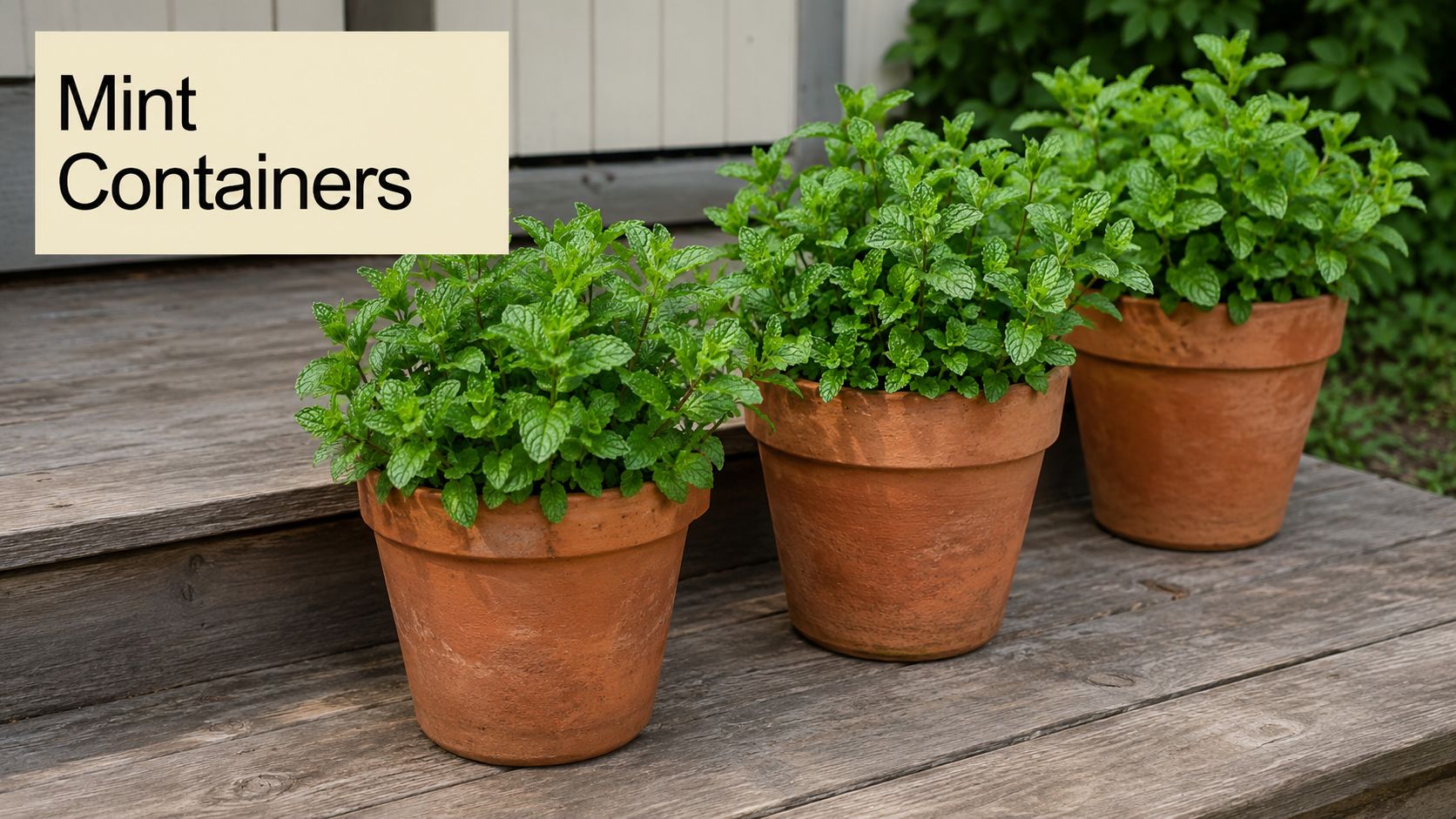
The trick is containment. Put mint in large planters, sunken pots with drainage holes, or other barriers that keep the roots in check. Once it's boxed in, the plant can do real visual and practical work around the spaces your family uses most.
Smart ways to place mint
Mint works especially well in these spots:
- Deck steps and side entries: These are common transition zones where pests can move toward the house.
- Patio corners: Container groupings create a tidy look and keep the scent near seating areas.
- Commercial break areas: Businesses often need plants that are attractive, durable, and easy to control.
Water mint consistently, trim it hard when growth gets lush, and divide containers every few years so the plants stay vigorous. It tolerates more moisture than many herbs, which makes it more forgiving in mixed plantings. Still, if it escapes the pot, it can become more of a maintenance problem than a benefit.
That's why mint is best used by homeowners who want a strong visual cue at key access points without creating future cleanup headaches. It's a useful example of how plants that repel ticks can be practical when the planting method is just as thoughtful as the plant itself.
5. Pennyroyal for targeted border plantings
Pennyroyal has a narrower job than lavender or rosemary, and that is part of its value. It is a low-growing mint-family plant that can help sharpen a border, but it needs careful handling because it spreads and it is toxic if ingested in quantity. For that reason, it belongs in controlled spaces where homeowners can limit contact and keep children and pets away from the planting.
In Crown Point yards, that usually points to patio edges, foundation beds, or narrow border strips with light foot traffic. It fits best with experienced gardeners or property managers who are comfortable watching growth closely and correcting it when needed. Used that way, it can support commercial pest control goals where clean edging and controlled access matter, and it can also fit into a broader natural tick repellent for yard plan for homeowners who want plantings that do more than look nice.
Controlling pennyroyal before it controls the bed
Pennyroyal fills gaps quickly, which is helpful if the goal is a dense border. The same habit can create trouble if it spreads past the area you planned. Sunk containers, edging, and clearly marked zones keep it where you want it and away from the places where people gather.
A plant like this also rewards clear intent. If it needs constant explanation, the placement is probably wrong. Pennyroyal makes more sense when everyone on the property knows why it is there and why it stays contained.
Here, the best uses are fairly specific:
- Foundation strips: These can form a defined line close to the home.
- Patio borders: Useful where you want tighter planting without loose growth.
- Managed commercial beds: Better for properties with regular oversight.
Pennyroyal asks for more care than many homeowners expect, so it works best alongside other repellent plantings and broader yard service. It should never stand alone as the only tactic on a tick-prone property. That matters in Northwest Indiana, where changing weather can quickly affect how aggressively a border plant grows.
For homeowners comparing plants that repel ticks, pennyroyal shows why effective and easy are not always the same thing. It can support a plan, but it needs a plan around it.
6. Sage for durable, long-living yard protection
Sage is a strong choice for homeowners who want a plant that looks refined and can stay in the garden for a long time. Its silvery foliage stands out in sunny beds, and its form works well in foundation plantings, mixed shrub borders, and deck-edge gardens. For yards where tick control is a concern, that makes sage one of the more versatile herbs you can use without sacrificing appearance.
It also fits the way many Crown Point homeowners garden. People want plants that do not need constant babysitting, that still look good after the first flush of growth, and that can help support a broader residential pest control plan. Sage does that when it is placed in the right soil and given enough light.
Sage in a Northwest Indiana setting
Sage does best in full sun and very well-draining soil. That matters here because heavy ground can hold moisture longer than sage likes, especially after spring rains. Gravel mulch, coarse compost, and careful watering help keep roots healthy while preserving the plant's shape.
The trade-off is simple. Sage gives you a neat, durable herb with a tidy profile, but it will not perform well in soggy spots or cramped beds that stay wet. In Northwest Indiana, where weather can swing fast, the planting site matters more than the plant label.
Sage also works well in combination plantings. A mixed border with sage, lavender, or rosemary creates a layered look that feels intentional rather than random. That helps homeowners who want practical planting without making the yard look like a demonstration garden. It also gives you a better match for a broader tick plan, because no single plant should carry the whole job. For a more complete approach, see our yard flea and tick control guidance.
A simple routine keeps sage attractive:
- Prune in spring: This encourages compact, bushy growth.
- Water thoroughly, not often: Too much moisture is a common failure point.
- Harvest regularly: Cutting leaves keeps the plant useful and tidy.
- Clear dead wood early: This helps the shrub recover well after winter.
Sage also holds its shape well through colder months, depending on the variety and the site. That consistency matters when you want your pest control near me goals without constant replacement costs. It is one of the better plants that repel ticks for homeowners who want year-after-year structure in the same bed.
7. Tansy for historic tick fighting with careful management
A Crown Point homeowner might be drawn to tansy for its old garden character and its reputation in traditional planting, but that plant needs to be handled with care from the start. It can be useful in a controlled setting, yet it is toxic and spreads quickly, so it belongs only where there is a clear containment plan. That makes it a better fit for experienced gardeners and tightly managed perimeter beds than for spaces where kids or pets spend time.
Use tansy only in spots where access is limited, such as isolated corner beds or fence-line areas. In Northwest Indiana yards, placement matters more than the plant itself. Without containment, tansy can turn into a maintenance problem fast.
Where tansy belongs, and where it doesn't
Tansy works best when it is treated like a specialized planting, not a casual accent. Keep it away from lawns, play areas, pet zones, and any bed where someone could mistake it for a harmless herb. Clear labeling helps, and everyone in the home should know what has been planted.
The practical appeal is that tansy can form a dense edge when it is managed carefully. Some property owners place it at the outer boundary of larger yards or in areas where access is already restricted. It adds texture, and it can also serve as a visual reminder to stay out of that space.
Use tansy only when containment is already part of the design. If you are not ready to manage spread and toxicity, safer choices make more sense for Crown Point homes.
A few placement rules help lower the risk:
- Use physical barriers: Sunk containers or edging make control easier.
- Deadhead before seed set: This helps limit unwanted spread.
- Keep it out of family zones: Safety comes before appearance.
- Pair it with other plants: Do not rely on tansy alone.
Tansy is a clear example of why plants that repel ticks are not equal in safety or maintenance demands. For most homeowners, it is a specialty option, and it should be treated that way. A yard that feels safer and asks less of you usually starts with professional inspection and a broader pest plan, including yard flea and tick control guidance.
7-Plant Tick-Repellent Comparison
| Plant | Implementation complexity | Resource requirements | Expected outcomes | Ideal use cases | Key advantages | Main cautions |
|---|---|---|---|---|---|---|
| Lavender | Low–moderate: needs one season to establish and correct soil conditions | Full sun, well-draining soil (amend with sand/compost), minimal water once established, occasional pruning | Year-after-year ornamental border with moderate tick-repelling activity mid-summer–fall | Sunny borders, patio edges, entryways | Drought-tolerant, attractive blooms, harvestable for sachets/dried bundles | Requires excellent drainage; may need winter protection in harsh sites; fragrance weakens without maintenance |
| Rosemary | Moderate: woody perennial that may need containerizing or winter protection | Full sun, very well-draining soil, containers or sheltered site in cold, pruning | Evergreen year-round repellency in suitable microclimates or when moved indoors | Containers near seating, raised beds, walkways, mixed borders | Culinary use + pest control, evergreen, pollinator-friendly | Less cold-hardy than some; needs container management in cold climates; can get woody without pruning |
| Garlic | Low: simple fall planting and seasonal care | Fall planting of cloves, well-draining soil, straw mulch after freeze, minimal maintenance | Strong seasonal (spring) repellency with edible bulb harvest | Vegetable beds, perimeter borders, integrated garden plantings | Potent repellent, edible crop, cost-effective, naturalizes over time | Strong odor for some homeowners; seasonal dormancy leaves gaps in winter; occupies garden space |
| Mint | Low implementation if contained; high risk if uncontained | Containers or sunk pots to prevent spread, consistent moisture, regular pruning/dividing | Rapid, dense coverage with strong localized repellency when contained | Containerized barriers by patios, walkways, entry points | Extremely vigorous growth, fast coverage, versatile culinary/medicinal uses | Highly invasive if uncontained; dies back in winter; can host mint-specific pests/fungal issues |
| Pennyroyal | Moderate: establishes via rhizomes and needs moisture/management | Moist, amended soil, edging or containment to limit spread, regular watering during establishment | Low-growing groundcover providing concentrated, strong repellency where planted | Borders, foundation beds, patio edges, low borders needing short barrier | Compact habit, very potent repellent, tolerates partial shade | Toxic if ingested (risk to pets/children), spreads readily, dies back in winter |
| Sage | Moderate: woody shrub requiring good drainage and pruning | Full sun, coarse sand/compost for drainage, light mulch/gravel, occasional pruning | Long-term, year-round deterrent with ornamental silvery foliage | Shrub borders, foundation plantings, low-maintenance landscapes | Durable, long-lived, winter-hardy, attractive flowers and foliage | Needs excellent drainage; slower to reach full size; some varieties sensitive to extreme cold |
| Tansy | Moderate–high: vigorous perennial that needs strict containment and monitoring | Physical barriers/raised beds, deadheading to prevent seeding, regular removal of encroaching rhizomes | Rapid vigorous coverage with very strong tick-repelling properties | Isolated perimeters, contained corners, rural fence lines away from activity | Highly effective repellent, drought-tolerant, showy yellow flowers | Highly toxic if ingested, aggressively spreading and self-seeding, can cause dermatitis and harm wildlife |
Your Complete Tick Defense Strategy in Northwest Indiana
Planting these tick-repelling species is an excellent natural way to make your Crown Point property less inviting to pests. But if you want complete protection, especially in high-risk areas or during peak season, this approach should be only one layer of the plan. The strongest results come from combining a hostile environment with professional treatments that target existing tick activity and help prevent the next wave from building up.
That's where a local exterminator near me approach becomes valuable. The Green Advantage understands how Northwest Indiana properties really function, from shaded backyard edges to commercial grounds that need a cleaner, more controlled appearance. Our team can help you pair eco-friendly pest methods with targeted service, so your yard doesn't depend on plants alone to stay more comfortable.
A complete strategy usually includes more than just planting. It also means paying attention to tall grass, leaf litter, brushy borders, pet traffic, and the areas where ticks naturally travel. When those pressure points are addressed together, the property becomes much less attractive to pests and much easier to enjoy.
The Green Advantage offers targeted tick control designed for Crown Point homes, rental properties, and commercial sites across Northwest Indiana. If you've been searching for pest control near me or comparing pest control in Crown Point, IN, now is the time to get a plan that fits your property instead of guessing your way through the season. A local inspection can show where the risk really is, and a custom treatment plan can help you protect the people who use the space every day.
Richmond Tree Experts GA pest management tips is a useful reminder that integrated pest management works best when every layer supports the next. The same logic applies here. Plants can help, but professional oversight is what turns a nice yard idea into a dependable tick-management strategy.
The Green Advantage helps Crown Point homeowners and businesses build smarter tick defense with practical landscaping guidance and targeted pest control. If you want a safer yard this season, visit The Green Advantage to schedule an inspection or request a custom plan for your property.