
A lot of Crown Point homeowners set up a rain barrel for the right reasons. You want to save water, keep a garden healthy, and make better use of every heavy Northwest Indiana rain. Then a few warm evenings pass, and the same setup that felt smart starts drawing buzzing, biting mosquitoes right where your family wants to relax.
That's the frustrating part about mosquito problems. A rain barrel can look clean, useful, and harmless while still acting like a reliable breeding spot. If you've been searching for how to keep mosquitoes out of rain barrel systems without giving up your garden routine, the answer starts with solid DIY habits. It ends with a bigger view of your whole property.
Your Crown Point Backyard Oasis or a Mosquito Magnet?
A homeowner in Crown Point might spend a Saturday doing everything right. The flower beds are mulched, the vegetable garden is thriving, and the rain barrel is hooked up neatly to the downspout behind the shed. By early evening, the patio should be the best spot in the yard.
Instead, people start swatting.
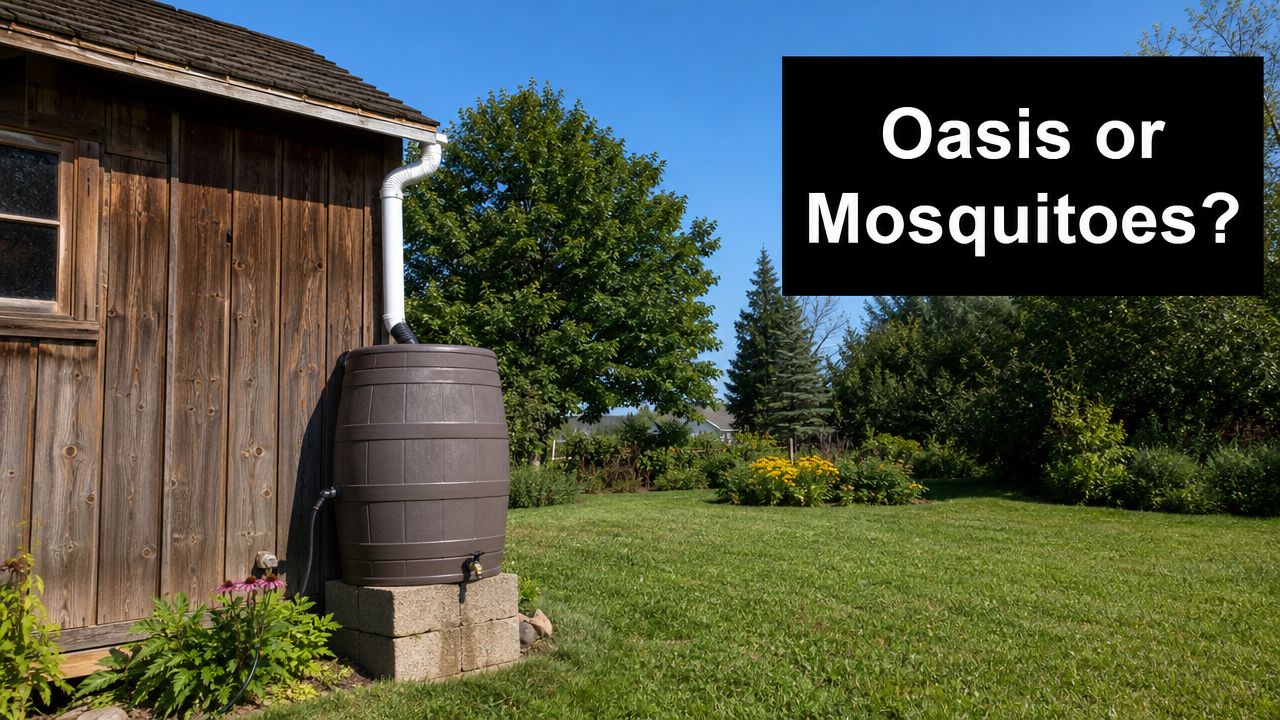
That's a common pattern in Northwest Indiana. Rain barrels support eco-conscious landscaping, but they also create exactly what mosquitoes look for if the system isn't managed carefully. The problem usually isn't the idea of rainwater collection itself. The problem is that mosquitoes only need access to still water and a small opening.
Why good intentions still lead to bites
Most homeowners don't ignore mosquito prevention. They install a lid, maybe add a screen, and assume they've handled it. Then the bites continue, often because the actual access point isn't obvious. It may be an overflow opening, a loose connection, or a bit of water that never fully drains.
Local reality: In Crown Point, warm weather, summer storms, shaded yards, and dense landscaping give mosquitoes plenty of backup habitat even when the barrel seems like the only issue.
That's why a rain barrel problem rarely stays isolated. The mosquitoes coming from one water source don't stay politely near the spigot. They move into seating areas, around entry doors, and across the whole yard.
Why local help matters
Homeowners searching for pest control near me, exterminator near me, or pest control in Crown Point, IN usually aren't looking for theories. They want a practical fix that protects their home life. Families want to grill, kids want to play outside, and property owners want outdoor spaces to feel usable again.
For mosquito issues, local experience matters because Northwest Indiana yards have recurring patterns. Heavy rainfall, clogged gutters, low spots in turf, ornamental containers, and rain barrels all work together. A company serving this area needs to understand the full picture, not just the single container holding water.
Understanding Why Mosquitoes Love Your Rain Barrel
A rain barrel gives mosquitoes what they need most. It holds water in one place, often in a shaded or partially shaded area, and many setups stay undisturbed for days at a time. That combination is enough to turn a useful gardening tool into a dependable mosquito nursery.
The key timing issue is simple. Rain barrels must be completely drained within five days of filling to prevent standing water from becoming a high-risk breeding habitat, because the mosquito life cycle from egg to adult typically takes 7 to 10 days depending on temperature, as explained in Blue Water Baltimore's rain barrel mosquito guidance.
What happens inside the barrel
Female mosquitoes look for still water where they can lay eggs. Once eggs hatch, larvae stay in the water and continue developing. If the water sits long enough, the cycle keeps moving.
That's why a barrel can become a problem quickly after rain, especially during warm spells in Crown Point. Homeowners often think, “It's just one barrel.” Mosquitoes don't see it that way. They see protected water with very little disturbance.
If you want a broader look at how standing water drives yard infestations, The Green Advantage's mosquito breeding and mosquito control guide is a useful companion resource.
Why this gets worse in Northwest Indiana
A rain barrel doesn't sit in isolation. In many Crown Point yards, it sits near shrubs, fences, mulch beds, and shaded corners that give adult mosquitoes places to rest during the day. After they emerge, they already have shelter nearby.
Here's where homeowners often underestimate the problem:
- Warm weather speeds activity. Mosquito development and feeding pressure increase during the season when families spend the most time outdoors.
- Storm cycles refill the problem. A barrel that was safe one week can become risky again after the next heavy rain.
- Backyards add support habitat. Gutters, toys, planters, tarps, and low spots can keep the local mosquito population going even if one source is addressed.
Mosquito control works better when you treat the barrel as one part of a yard-wide system, not the whole system.
That shift in thinking matters. If your goal is learning how to keep mosquitoes out of rain barrel setups, the first step is understanding that the water itself is only part of the issue. The second step is making sure every opening, every maintenance habit, and every surrounding condition supports prevention.
First-Line Defense A Homeowner's Guide to Rain Barrel Safety
The most effective DIY prevention starts with blocking access, treating water when needed, and keeping the barrel from holding old water. Homeowners can make real progress with a few disciplined habits, especially when they focus on details instead of assumptions.
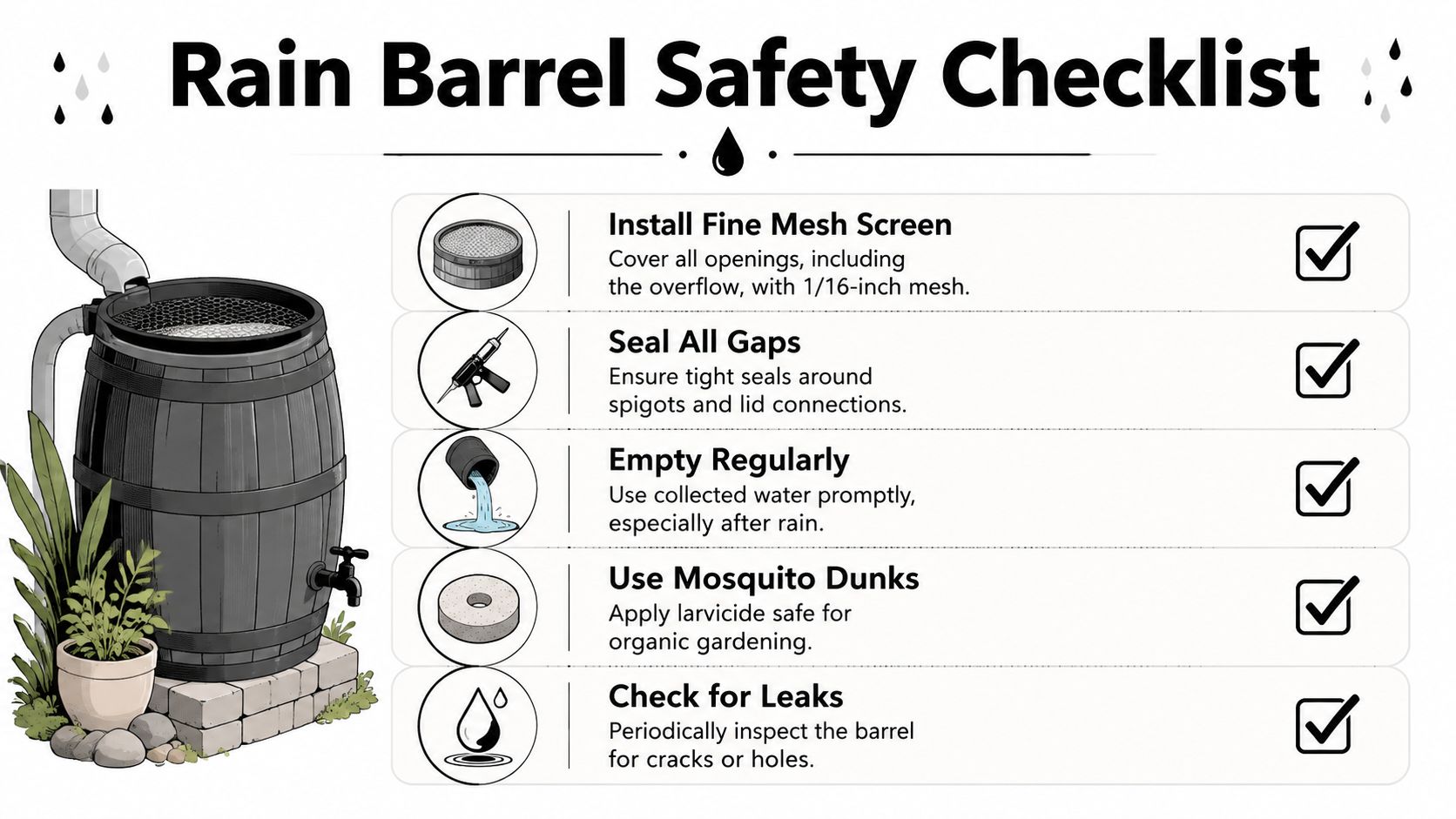
Start with the screen, not guesswork
A lid alone isn't enough if mosquitoes can get through the mesh or around it. Mosquito presence in rain barrels is reduced by over 90% when a mesh covering with a 1/16-inch (about 1.6 mm) aperture is installed over the lid, according to the University of Illinois rain barrel guidance. That size matters because smaller mosquito species can pass through standard window screen mesh.
Use that fact as your baseline standard, not as an upgrade.
What to check on the barrier side
- Use the right mesh size. Install 1/16-inch mesh over the lid opening, not standard window screen.
- Cover every opening. The overflow port, intake points, and any access holes need the same level of protection.
- Tighten the fit. A high-quality screen won't help if edges lift or gaps form around the frame.
Practical rule: If a mosquito can reach the water from any opening, the barrel is still vulnerable.
A lot of DIY setups fail because the homeowner screens the obvious opening and misses the smaller one.
Here's a visual walkthrough to reinforce the basics before you inspect your own setup:
Use BTI correctly
If your barrel regularly holds water, Bacillus thuringiensis israelensis, or Bti, is one of the most practical larval control tools available. Vector control guidance says Bti products such as mosquito dunks or bits eliminate 95 to 100% of mosquito larvae in rain barrels when applied at one dunk, about 4 grams, per 50 to 100 gallons of water monthly, according to San Diego County rain barrel mosquito prevention guidance.
Bti works on mosquito larvae in the water and is described there as non-toxic to humans, pets, plants, and wildlife. That makes it a solid fit for homeowners using collected rainwater in garden beds.
If you want product-specific guidance before you buy, this mosquito dunks overview from The Green Advantage helps explain what to look for.
Keep water moving out, not sitting in
Drain and use the water promptly after rain. The most effective barrel is the one that doesn't sit full for long periods. If your gardening routine doesn't use the stored water often enough, the system may be oversized for how your household operates.
A simple maintenance routine usually looks like this:
- Inspect after every rainfall. Check the lid, screen, overflow area, and spigot connections.
- Use the stored water quickly. Don't let the barrel become a long-term holding tank unless it's managed consistently.
- Reapply Bti on schedule. Follow the label and your barrel volume carefully.
DIY rain barrel safety can work. It just works best when homeowners stay exact about the details.
When DIY Isn't Enough The Hidden Risks You Might Miss
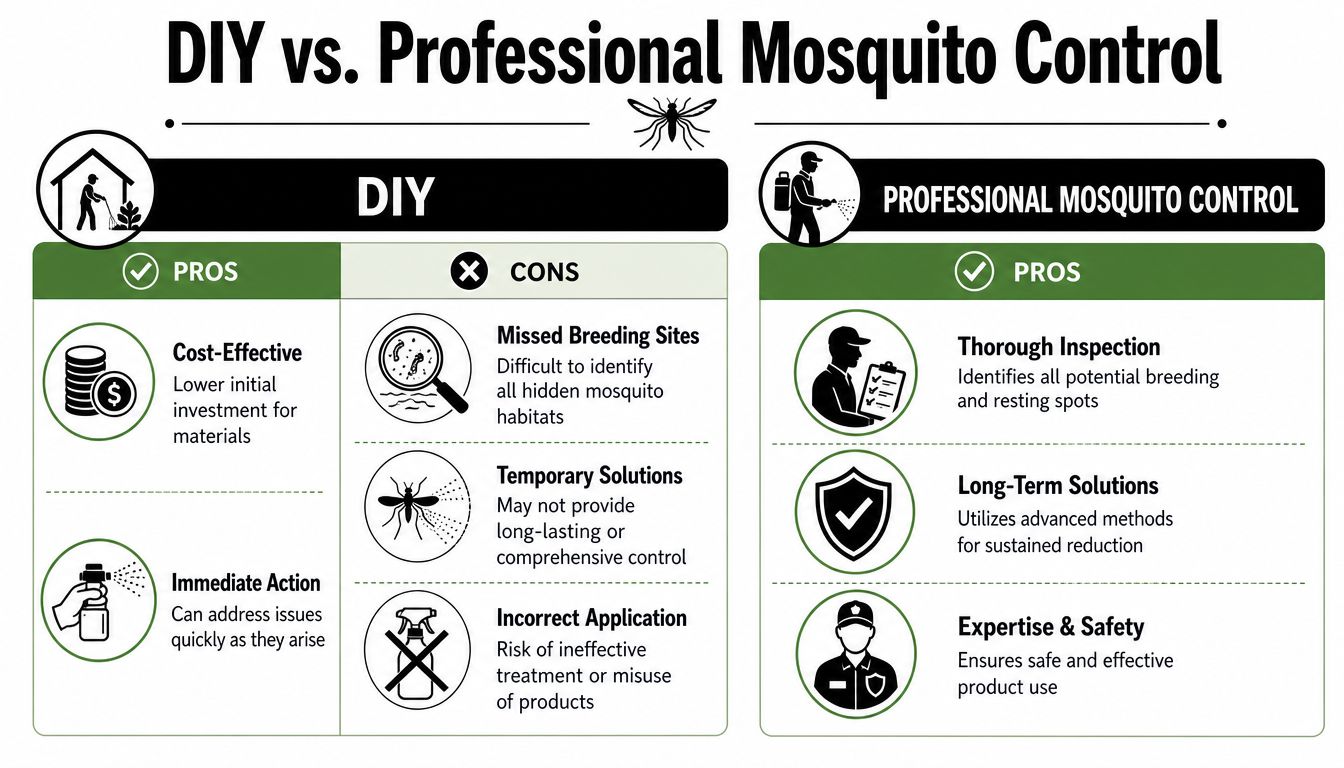
Many online guides make rain barrel mosquito control sound simple. Screen the lid, drop in a dunk, and move on. In practice, that's where a lot of homeowners get tripped up.
The missed issue is often residual water. The BlueBarrel rain barrel mosquito article points out that water trapped below outflow valves or in decorative top depressions can create hidden breeding zones, even when the lid is screened. In other words, a barrel can look protected from the top while still holding mosquito-friendly water elsewhere in the design.
The failure points homeowners overlook
A barrel doesn't have to be obviously open to become a problem. Small mechanical details matter.
| Hidden issue | Why it causes trouble |
|---|---|
| Overflow ports | Mosquitoes may access water if these openings aren't screened securely |
| Water below the spigot | The barrel may appear drained while a small pocket of water remains |
| Top depressions | Certain designs hold water above the main chamber |
| Loose fittings | Tiny gaps around connections can defeat otherwise careful screening |
That's why some homeowners feel like they're doing everything right and still getting bitten.
BTI has a limit
Bti targets larvae. It does not solve every water-quality issue inside a barrel. Homeowners sometimes notice stagnant water starts smelling unpleasant, especially when organic debris builds up and oxygen levels drop. That rotten-egg type odor pushes people to look for aeration or other maintenance changes, because larval control alone doesn't make stored water fresher.
A rain barrel can be mosquito-managed and still be poorly maintained.
That distinction matters. DIY steps are useful, but they're narrow. They address one part of one breeding site. They don't inspect nearby gutters, shaded puddling, clogged drains, or dense foliage where adult mosquitoes rest during the day.
For many homeowners in Crown Point, that's the turning point. The issue isn't whether DIY advice is wrong. It's that mosquitoes exploit the small things that are often overlooked during routine checks.
A Comprehensive Mosquito Control Plan for Your Indiana Home
A well-maintained rain barrel is a smart start. It isn't a full mosquito control program.
If mosquitoes are active across your yard, the barrel may be one contributor among many. Northwest Indiana properties often have several repeat problem areas at the same time. Gutters hold water after storms, low spots stay damp, kids' items collect rain, and thick shrubs give adult mosquitoes daytime shelter. Sealing one container won't remove pressure from the rest of the property.
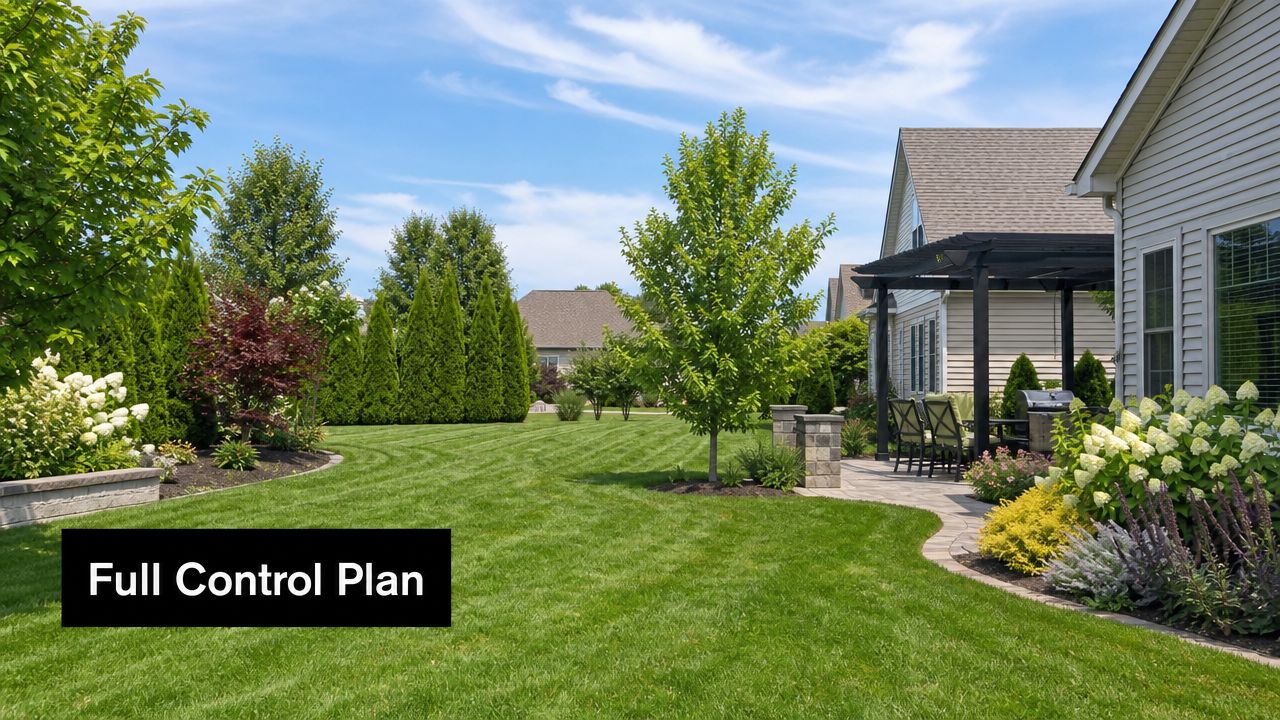
What a property-wide approach looks like
Professional mosquito control works better when it combines inspection, habitat reduction, and targeted treatment. For homeowners seeking residential pest control, that means looking beyond visible water and asking where mosquitoes are breeding, where they're resting, and why the property keeps supporting them.
A complete plan typically includes:
- Yard inspection. Identify standing water sources, drainage trouble spots, and shaded resting areas.
- Prevention guidance. Correct barrel issues, gutter problems, and routine moisture traps around the home.
- Targeted mosquito reduction. Address active mosquito pressure where people use the yard.
- Seasonal follow-up. Recheck conditions as weather patterns change.
This is also where broader pest management matters. Homes that need mosquito help often benefit from other preventative pest treatments at the same time, especially when dense landscaping, moisture, and exterior clutter also support spiders, wasps, ants, or rodents. For businesses and shared properties, the same logic extends to commercial pest control programs that protect entrances, outdoor common areas, and customer-facing spaces.
Why local service beats one-size-fits-all advice
In Crown Point, IN, mosquitoes respond to local weather, yard layout, and how each property drains after rain. A generic checklist won't tell you which low corner of the fence line stays wet longest or which shrub mass is holding the most adult activity.
That's where The Green Advantage fits. Their mosquito control service can be used alongside homeowner maintenance steps such as proper screening and Bti use, while also addressing the broader outdoor conditions that a rain barrel guide alone won't solve.
Peace of mind usually comes from layered control, not a single product or a single fix.
That's the difference between searching for exterminator in Crown Point, IN and buying one more DIY item. One path gives you tools. The other gives you a plan.
Enjoy Your Yard Again with The Green Advantage
Individuals don't contact a pest company because they enjoy talking about insects. They call because mosquitoes are changing how they live at home. The patio goes unused. Kids come inside covered in bites. Even basic yard work becomes miserable.
That's why professional mosquito control has value beyond convenience. It helps protect comfort, routine, and confidence in your own outdoor space. Homeowners looking for pest control near me or exterminator near me usually want a clear answer to one question. Can someone help me get this under control without turning it into a full-time job?
What working with a local pest professional should feel like
The process should be simple and direct.
First, the property needs a careful review. That includes the rain barrel, but it shouldn't stop there. A serious inspection also looks at drainage patterns, vegetation, recurring moisture points, and other breeding or resting sites around the home.
Second, you should get practical recommendations that match how you use your yard. Some families need a stronger focus on patio and play areas. Some properties need more prevention work near landscaping and structures. For landlords and local businesses, the priority may be keeping shared outdoor areas more usable and reducing complaints.
Thorough service matters when the barrel is already active
When larvae are already present or the water smells foul, the proper mechanical response is immediate. The San Gabriel Valley Mosquito and Vector Control District rain barrel guidance says to remove 100% of the water and scrub the interior walls with a scrub pad and warm, soapy water to detach mosquito eggs that stick to the barrel sides.
That kind of detail matters because mosquitoes don't only rely on what's floating in the water today. They take advantage of what remains stuck to surfaces and what gets overlooked during cleanup.
Homeowners get better results when they stop treating mosquito activity as a one-time annoyance and start treating it like an outdoor pest issue that needs structure.
For families in Crown Point and nearby Northwest Indiana communities, the right solution is usually a blend of good homeowner habits and consistent local expertise. That applies whether you're dealing mainly with mosquitoes or also need support with spider control, wasp removal, ant control, rodent control, or other seasonal pest issues around the property.
If you want your yard back, the next step isn't complicated. Get the problem inspected, get a realistic plan, and stop letting one overlooked water source dictate how your family uses the outdoors.
If mosquitoes are taking over your yard in Crown Point, IN or nearby Northwest Indiana communities, contact The Green Advantage to schedule a pest inspection or request a quote. Whether you need help with a rain barrel issue, ongoing mosquito control, residential pest control, or commercial pest control, you'll get clear guidance, practical solutions, and a service plan built for your property.