
A lot of Crown Point evenings go sideways the same way. The patio is set, the kids head out after dinner, and a few minutes later everyone is slapping at ankles by the deck steps and along the fence. On properties across Northwest Indiana, that usually means mosquitoes are already settled into the yard's hidden shelter zones.
A key question is where they spend the rest of the day.
Around here, mosquitoes rarely hang out in the open lawn. They hold in the damp, protected pockets that many homeowners overlook, under decks where air stays still, inside clogged gutters after a summer storm, behind dense arborvitae, near low spots that stay wet, and around shaded foundations where moisture lingers. In Crown Point yards, those micro-habitats matter more than the obvious parts of the property.
That is why off-the-shelf sprays and backyard gadgets often disappoint. They may knock down a few active mosquitoes, but they usually miss the places where mosquitoes rest and where new activity starts. The Green Advantage approaches mosquito reduction by targeting those specific hiding and breeding areas common in Northwest Indiana, instead of relying on generic advice and hoping the problem fades.
Homeowners usually get better results with a local pest control partner who knows how our yards hold moisture, how our foliage creates resting cover, and how to treat the trouble spots without wasting product on areas that are not driving the problem. That same practical approach carries over to broader residential and commercial pest control work, whether the issue is mosquitoes, ants, spiders, rodents, termites, or wasps.
Reclaim Your Summer from Mosquitoes in Crown Point IN
A lot of Crown Point homeowners tell me the same thing. Dinner is almost ready, the kids want to stay outside, and then the mosquitoes start working the patio, deck steps, and side yard hard enough to end the evening early.
That usually points to a yard with several small hiding and breeding pockets, not one big obvious problem. In Northwest Indiana, I see the same trouble spots over and over: damp shade under decks, clogged gutters after a storm, thick arborvitae and shrubs that hold humidity, low areas along fence lines, and mulch beds near the foundation that stay moist longer than they look.
A clean yard can still support mosquito activity. Neat landscaping, patio furniture, stacked firewood, and decorative beds often create the kind of cover mosquitoes use through the day, then they drift out at dusk once the heat drops.
What homeowners usually notice first
Most calls start with a pattern, not a swarm. Bites happen near the grill, by the garage service door, around the dog run, or along the path to the trash cans. On commercial properties, complaints usually build around entrances, break areas, fence lines, and dumpster pads where shade and moisture hang around.
Here is the practical rule I use on inspections.
Practical rule: If mosquitoes are active at dusk, they already have daytime shelter on the property.
That is why mosquito reduction starts with a close inspection of the places people do not spend much time looking at. A technician checks where air stays still, where leaves and debris hold water, and where foliage creates a cool resting zone. Gutter buildup is a common factor, and routine upkeep like the steps outlined in this guide to Long Island home protection helps explain why.
Why local pest control matters
Crown Point yards are full of mosquito-friendly micro-habitats. The challenge is not just standing water in the obvious sense. It is the water trapped in a sagging gutter run, the damp soil under a shaded deck, the overgrown edge behind a shed, and the dense plantings that hold moisture after evening watering.
The Green Advantage treats those specific areas with a targeted approach instead of spraying the whole property and hoping for the best. That matters here, because the spots driving mosquito pressure in Northwest Indiana are usually tucked into the structure and landscaping of the yard itself.
Homeowners want to use their yard again. The way to get there is to identify the exact places mosquitoes are resting and reproducing, then treat those zones directly.
The Hidden World of Mosquito Hideouts in Your Yard
Mosquitoes hide because daytime conditions work against them. Heat dries them out, sun stresses them, and wind pushes them around. During daylight hours, they look for surfaces and spaces that stay darker, cooler, and more humid than the open lawn.
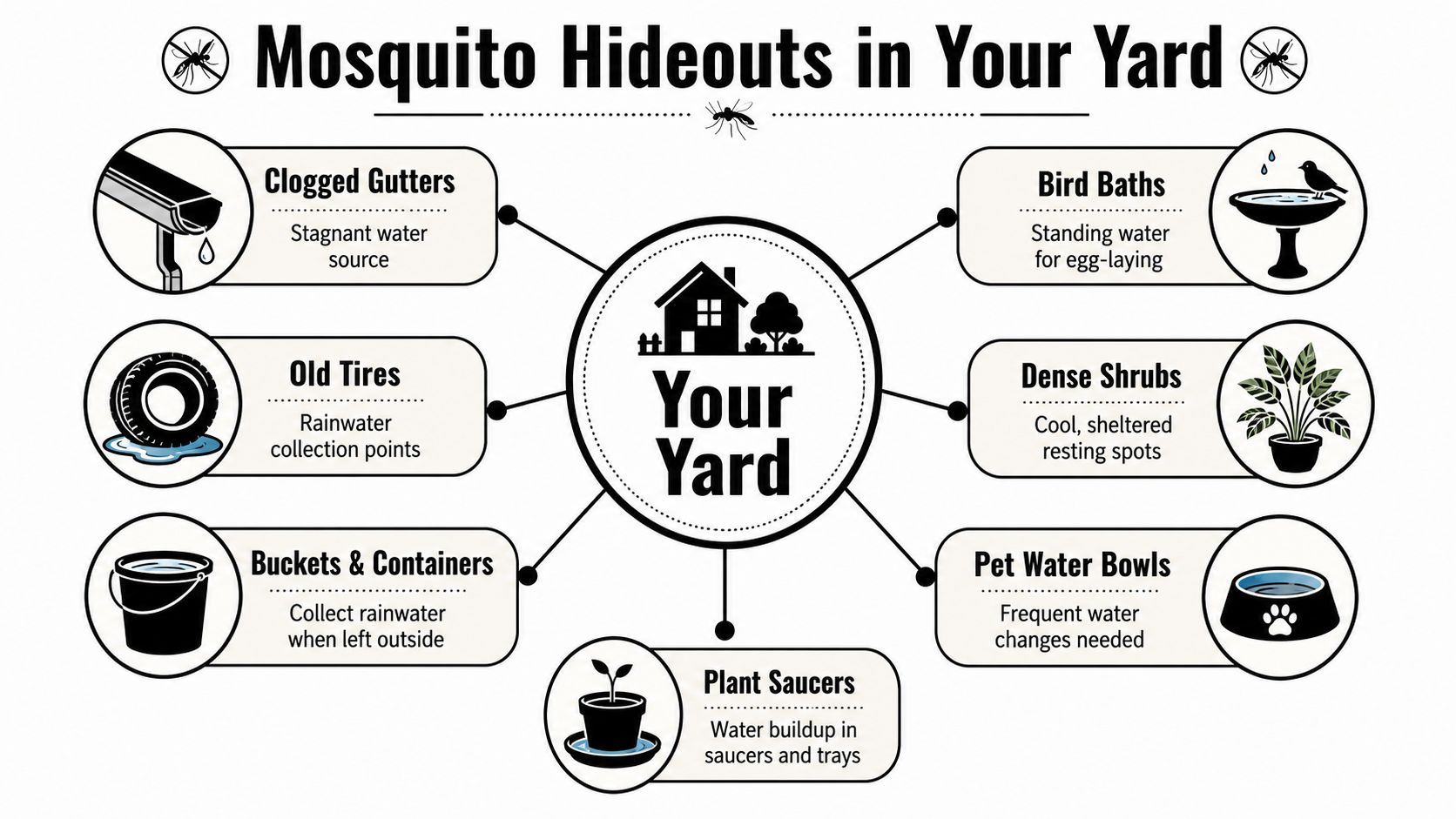
Where to look first in a Crown Point yard
Start with the spots commonly walked past every day.
- Under decks and porches. Mosquitoes use the underside of decks, porches, and fence lines because those areas stay cooler than the open yard and hold shade longer. Those structural edges can become reliable daytime resting zones, especially where vines or vegetation add humidity, as noted in this overview of unexpected mosquito hiding places.
- Dense shrubs and ornamental plantings. The outer edge may look harmless, but the interior often stays damp and sheltered.
- Tall grass near fences or sheds. If grass and weeds stay thick, mosquitoes can rest there through the hottest part of the day.
- Clogged gutters and plant saucers. These are two of the most common problem areas because they can support both resting adults and developing larvae.
- Low, shaded spots near the foundation. Moisture collects there, and mosquitoes follow that moisture.
The spots DIY treatments often miss
Mosquitoes don't just land on whatever's easy to spray from the sidewalk. They settle in protected pockets.
Adult mosquitoes predominantly hide on the undersides of large shrub leaves, especially where dense canopy cover reduces wind and holds humidity. They're weak fliers, so they favor sheltered zones over breezy open turf. In practical terms, that means the center of a shrub often matters more than the outer foliage.
A yard can look open from the patio and still hold mosquito harborage deep inside shrubs, behind furniture, and along shaded fence lines.
Inside the home, some species may also seek dark surfaces with low airflow. That's one reason a few mosquitoes can seem to appear indoors even when the main pressure is outside.
A better way to inspect your yard
Walk the property in late morning or early afternoon and look for these conditions instead of looking for swarms:
| Yard feature | Why mosquitoes like it |
|---|---|
| Deck undersides | Cool shade and protection from wind |
| Thick shrubs | Dark leaf cover and higher humidity |
| Fence lines with vines | Structure plus plant moisture |
| Gutters | Moist overhangs and trapped water |
| Plant saucers | Small water source close to shelter |
For homeowners who are already working on exterior maintenance, this guide to Long Island home protection is a useful reminder that gutter care affects more than drainage. In mosquito work, clogged gutters are one of those small property issues that can create a much bigger nuisance.
How a Teaspoon of Water Becomes a Mosquito Factory
In Crown Point, mosquito breeding usually starts in the places homeowners walk past every day. A saucer under a planter. A low spot in a tarp behind the shed. Water sitting in a clogged gutter over the back patio. It does not take much.
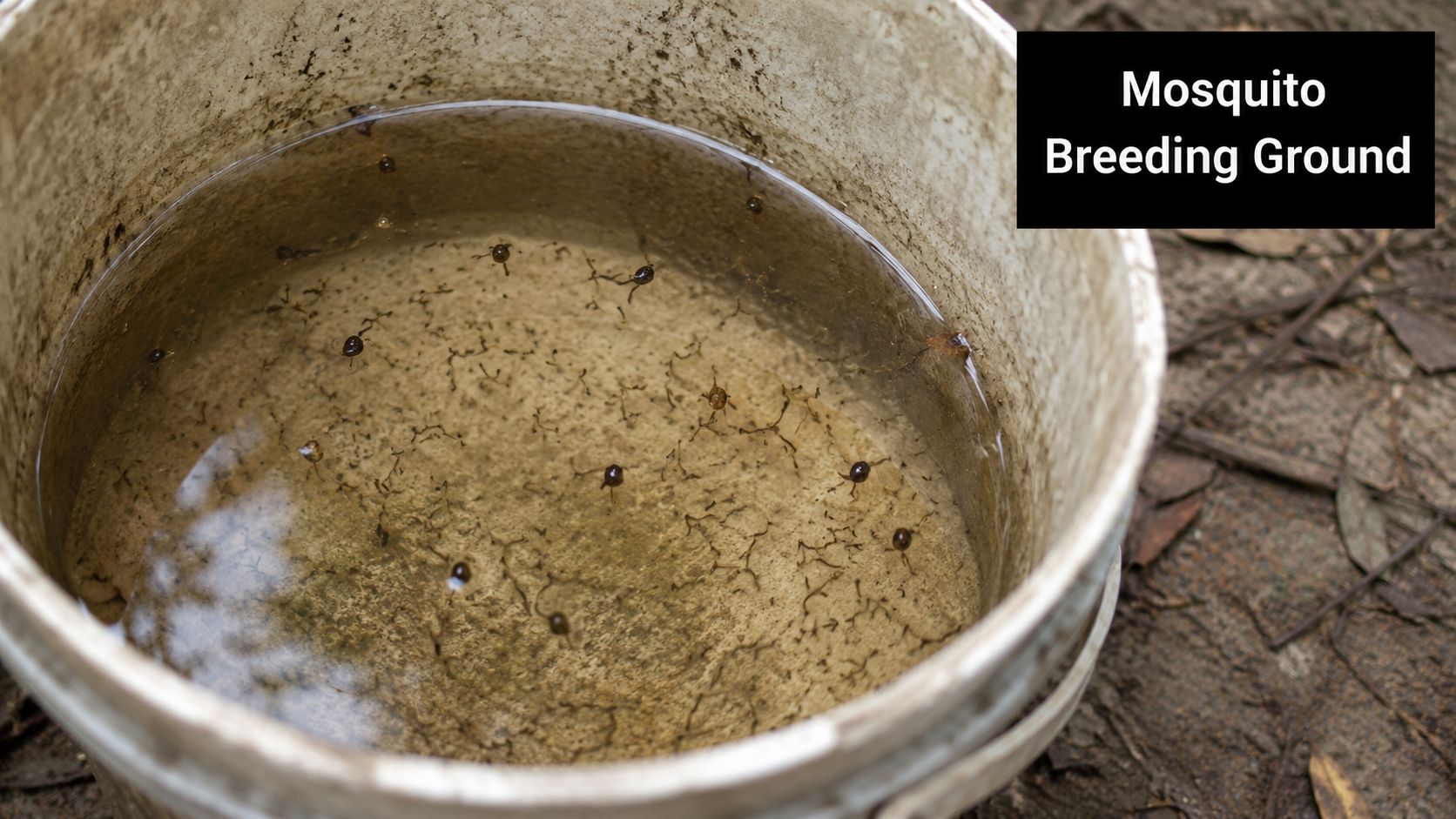
Mosquitoes can lay eggs in very small amounts of still water, which is why a yard can have steady mosquito pressure without any pond, ditch, or marsh in sight. In practice, the trouble spots around Northwest Indiana homes are usually close to the same sheltered areas where adults rest during the day. That tight setup lets the cycle keep repeating in a small space.
The small water sources that cause big problems
Around Crown Point homes, the water sources that produce mosquitoes are often hidden by the way the property is built or laid out:
- Plant saucers tucked under porch pots and hanging baskets
- Clogged gutters holding water above shaded foundation beds
- Tarp folds on firewood stacks, grills, and stored equipment
- Kids' toys, wheelbarrows, and buckets left along the fence line
- Bird baths and pet bowls sitting in shade and changed too rarely
- Tree holes and hollow stumps that keep water after a summer storm
- Low spots under decks or at downspout discharge points where water lingers longer than expected
I see this a lot in yards with dense shrubs, mature maples, and limited afternoon sun. The homeowner clears the obvious bucket, but the actual production site is a gutter run packed with debris or a sagging tarp behind the garage.
A recent example of that hidden-water problem appears in Lawn & Leaf Solutions' drainage guide, which is useful for homeowners trying to identify why damp trouble spots keep returning after rain. Good drainage work does not replace mosquito service, but it does cut down the wet pockets that help populations rebound.
Why one cleanup rarely solves it
Mosquito pressure drops fastest when breeding sources are found in clusters, not one at a time. Emptying one container helps. Missing three others near the deck, the side yard gate, and the gutter line keeps the cycle going.
That is why mosquito jobs in Northwest Indiana often come down to inspection detail. The question is not whether there is standing water somewhere on the property. The question is where small amounts of water keep collecting near shade, leaf cover, and low airflow.
For a closer look at how breeding sites and treatment planning fit together, The Green Advantage provides mosquito breeding and mosquito control information that helps homeowners connect what they're seeing outside with what a technician looks for during service.
A short visual can make that cycle easier to spot in real life:
What works and what usually falls short
Dumping visible water is a good start. Keeping gutters clear, correcting drainage near the foundation, and checking the underside of decks and stored items after rain usually makes a bigger difference than homeowners expect.
What falls short is treating mosquito prevention like a one-time cleanup. In Crown Point yards, the repeat offenders are usually the overlooked micro-habitats. Wet gutter debris, shaded containers, and protected pockets under structures. If those spots keep refilling, mosquitoes keep coming back.
The Green Advantage Solution for Mosquito Reduction
A lot of mosquito treatments fail because they focus on the air instead of the resting sites. Foggers may give a brief knockdown. Zappers may kill random flying insects. Neither approach fixes the core issue if mosquitoes are spending the day deep in leaf cover, under structures, and along sheltered edges.
Target the harborage, not just the symptom

Adult mosquitoes predominantly hide on the undersides of large shrub leaves during daylight, and a single large shrub can harbor hundreds of resting mosquitoes, according to this technician-focused mosquito harborage breakdown. That matters because it changes how a treatment should be applied.
A technician looking for lasting mosquito reduction doesn't just treat the outside edge of vegetation. The effective target is deeper inside the plant, especially the interior branches and the undersides of leaves where mosquitoes rest.
Field insight: If a treatment only touches the outer shell of dense shrubs, it often misses the part of the plant mosquitoes are using most.
Why professional application outperforms random spraying
The difference is precision.
A professional mosquito program looks at how the yard functions as a system. The shaded side of the garage, the underside of the deck, the shrub line near the fence, and the damp pocket behind the shed all get evaluated differently. Treatment is directed to likely harborages instead of being spread evenly over every visible surface.
That's the practical value of a service such as professional mosquito pest control. It's built around locating active resting areas and applying targeted reduction methods where mosquitoes spend their time, not where homeowners notice them later.
What works better than DIY tools
Store-bought options often fall into three categories. Quick fogging, light-based traps, and broad lawn sprays. Each can seem appealing because it feels immediate.
In practice, homeowners usually get better results from a plan that combines:
- Harborage treatment aimed at dense vegetation, leaf undersides, and shaded structural areas
- Breeding site correction so fresh mosquitoes aren't constantly replacing the ones you reduce
- Yard-specific adjustments such as trimming heavy growth and improving sanitation around moisture-holding items
That same targeted mindset carries over into broader residential pest control and commercial pest control. Properties rarely have one isolated issue. The same inspection that identifies mosquito pressure often helps uncover conditions contributing to ants, spiders, wasps, or rodent activity as well.
Protecting Your Family and Property in Northwest Indiana
Mosquito control isn't only about comfort, though comfort matters. It's also about whether your family can use the yard without thinking twice about every bite, every cookout, or every evening spent outside.
In Northwest Indiana, homeowners often focus on patios, decks, and play areas first because those are the spaces that lose value when mosquito pressure gets high. A backyard can be clean, well-maintained, and attractive, yet still feel off-limits once biting starts.
The part many guides leave out
Most mosquito advice stays outdoors. That misses a real concern for some homes.
Most guides list generic spots but fail to address the indoor micro-habitat specificity of species like the Asian Tiger Mosquito, which may hide in dark corners behind furniture and on dark indoor surfaces, as discussed in this mosquito behavior thread summarizing biologist observations. For homeowners, that means “check the yard” isn't always enough when aggressive daytime biters are making their way inside through screens or vents.
If mosquitoes are showing up in bedrooms, behind curtains, or in darker corners, the solution may require both outdoor reduction and indoor exclusion steps.
Peace of mind has practical value
Professional mosquito reduction supports more than one goal at once:
- Family use of the yard for meals, play, and evenings outside
- Less indoor frustration when mosquitoes slip past weak screening or open doors
- Better overall property comfort for guests, tenants, and employees
- A more complete pest strategy that fits with ant control, spider control, termite control, wasp removal, and other seasonal pest issues
That's why many people who start by searching pest control near me are really looking for reliability. They want someone who understands how pests behave on a real property, not just a company that applies a generic treatment and moves on.
What to Expect with Your Crown Point Pest Control Partner
When homeowners contact a local exterminator in Crown Point, IN, they usually want a straightforward answer. What's attracting the mosquitoes, what can be corrected, and what should happen next?
A good service process should feel simple from the start.
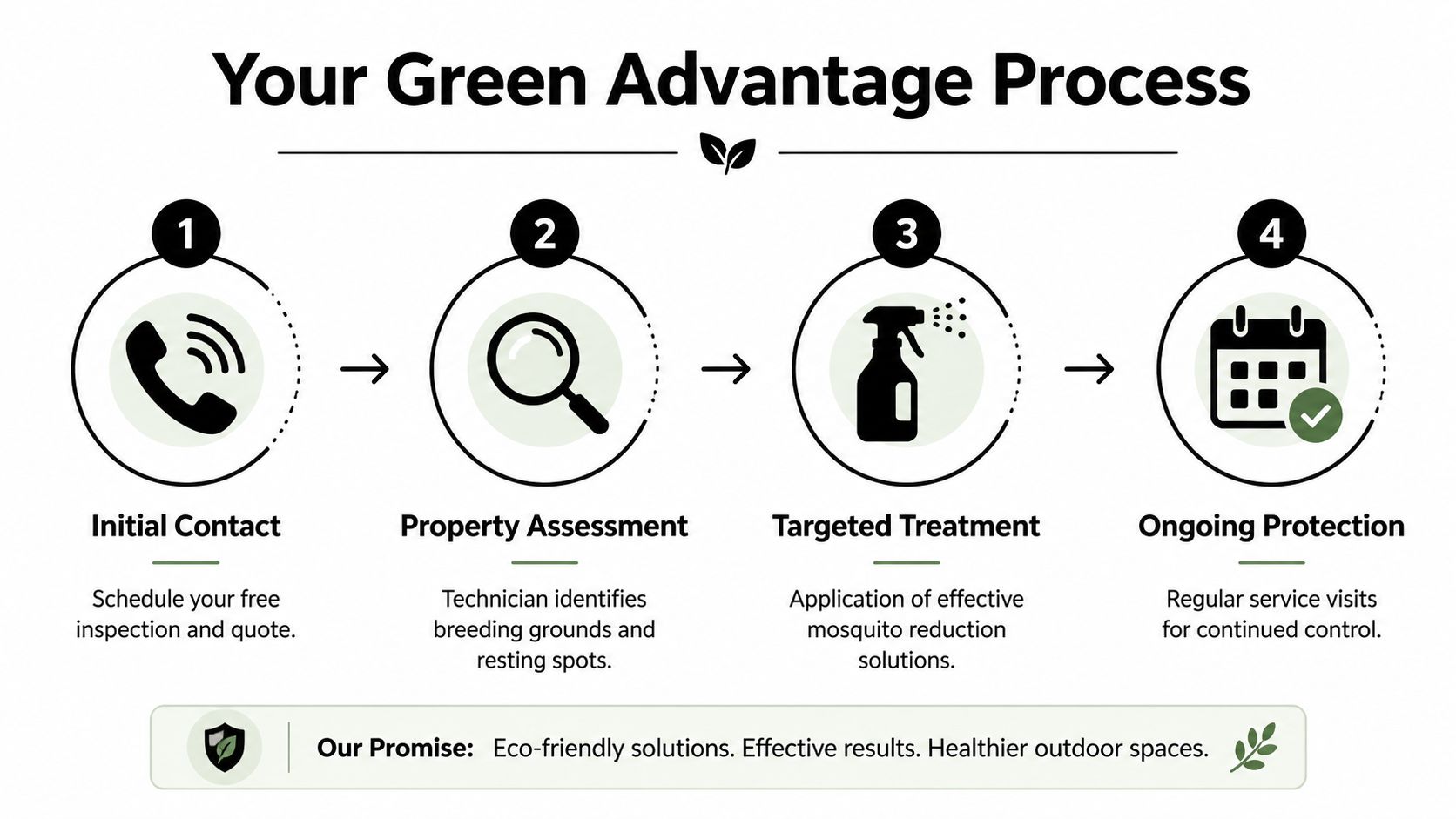
What the service process looks like
Initial contact
You call, describe what you're seeing, and get help scheduling service. Clear communication matters because timing, yard layout, and recent weather can all affect what the technician needs to inspect.Property assessment
The technician checks likely resting and breeding areas, not just the places where bites happen. That includes vegetation, structural shade, damp pockets, containers, and other mosquito-friendly zones.Clear treatment plan
You should know what's being targeted and why. The goal isn't to overwhelm you with jargon. It's to show you which parts of the property are contributing most to the problem.Follow-through and prevention advice
Homeowners also need practical upkeep steps. Experts recommend keeping grass under 2 inches and trimming overgrown shrubs and vegetation because these create the shaded daytime resting spots mosquitoes need, according to the Marin residents guide for mosquito harborage reduction.
What a useful consultation should include
A solid mosquito visit should leave you with actions you can take, such as:
- Trim dense growth around decks, fences, and sheds
- Watch hidden water in saucers, tarps, and containers after rainfall
- Improve yard airflow where plantings have become too thick
- Check screening and entry points if mosquitoes are making it indoors
That kind of guidance is part of working with a pest control partner instead of chasing one-off fixes. It's the same practical mindset that helps homeowners and businesses in Northwest Indiana with commercial pest control, rodent control, spider control, preventative pest treatments, and other recurring pest issues.
If mosquitoes are taking over your yard in Crown Point, IN, it's time to stop guessing and start with a property-specific plan. Contact The Green Advantage to schedule a pest inspection, request a quote, and get clear answers about the hidden mosquito resting and breeding spots around your home or business.