
A standard pest control visit in Crown Point typically takes 45 to 60 minutes, but complete results can take longer depending on the pest and how established the problem is. If you're worried about how much of your day this will take, and whether you'll still see bugs afterward, the timeline usually makes a lot more sense once you separate the visit itself from the full treatment process.
If you're reading this after spotting ants in the kitchen, hearing scratching in a wall, or finding wasps around the eaves, you're probably asking the same practical question every homeowner asks first: how long does pest control take? That concern is reasonable. You want the issue handled quickly, but you also want to know what to expect inside your home, around your family, and across the next few days or weeks.
In Crown Point, IN and nearby Northwest Indiana communities, pest issues don't all follow the same clock. A straightforward residential pest control visit may be brief and efficient. A more involved rodent control, termite control, or mosquito control job can take much longer, and the visible result may not match the time spent on site.
The biggest misunderstanding comes from assuming a short appointment should mean instant elimination. That's not how many treatments work. A technician may only need about an hour in the home, but the product, bait, or exclusion strategy may keep working well after the truck pulls away. That's why a good exterminator near me should explain both timelines clearly: service time and result time.
Your Guide to Pest Control Timelines in Crown Point IN
Homeowners in Crown Point usually aren't looking for abstract advice when pests show up. They want to know whether they'll need to clear the whole morning, whether the kids or pets need to stay out of treated areas, and whether the bugs should be gone by tomorrow.
Those are the right questions.
Two timelines matter
The first is how long the appointment takes. The second is how long the pest problem takes to resolve. Those aren't the same thing, and mixing them together is where frustration starts. A visit can be short, while the biological process of eliminating a colony, interrupting breeding, or forcing pests out of hiding takes longer.
For homeowners searching for pest control in Crown Point, IN, that distinction matters because it helps you judge results fairly. If you're dealing with ant control, spider control, wasp removal, mosquito control, or rodent control, the treatment plan has to match the pest. Fast isn't always thorough, and thorough isn't always disruptive.
Practical rule: Judge a pest service by whether the treatment matches the problem, not just by how quickly the technician leaves the driveway.
Why timing varies from house to house
Two homes on the same street can have very different timelines. One may need a quick preventative pest treatment around the exterior. The other may need interior work, inspection of hidden entry points, follow-up service, and more detailed recommendations.
Common factors include:
- Pest type: Ant control and mosquito control follow different treatment patterns than termite control or bed bug work.
- Severity: A few occasional invaders are simpler than an established infestation.
- Access: Cluttered basements, packed garages, dense landscaping, and difficult crawlspaces slow things down.
- Goal: Residential pest control for prevention is different from active extermination.
For commercial pest control, timing can become even more site-specific because kitchens, warehouses, offices, and tenant properties all have different access and sanitation conditions.
What homeowners should expect
A reliable local provider should explain the visit in plain language, tell you what happens first, and prepare you for what happens after. That means no vague promises and no pretending every treatment works instantly.
In Northwest Indiana, seasonal pest pressure changes throughout the year, so timelines do too. Spring ants, summer mosquitoes, fall rodents, and winter overwintering pests all create different service patterns. Clear expectations are part of the job.
On-Site Treatment Times What to Expect During Our Visit
You book a visit because you want to know one thing fast. How long will someone be at the house, and what will they do while they are there?
For most homes in Crown Point, the on-site part is usually finished in about an hour. Smaller homes on a routine preventative plan can be closer to 30 minutes. A first visit or a mosquito treatment can take longer because the work includes inspection, treatment decisions, and coverage of more outdoor areas, as noted in this residential treatment timing overview.
What changes the visit length
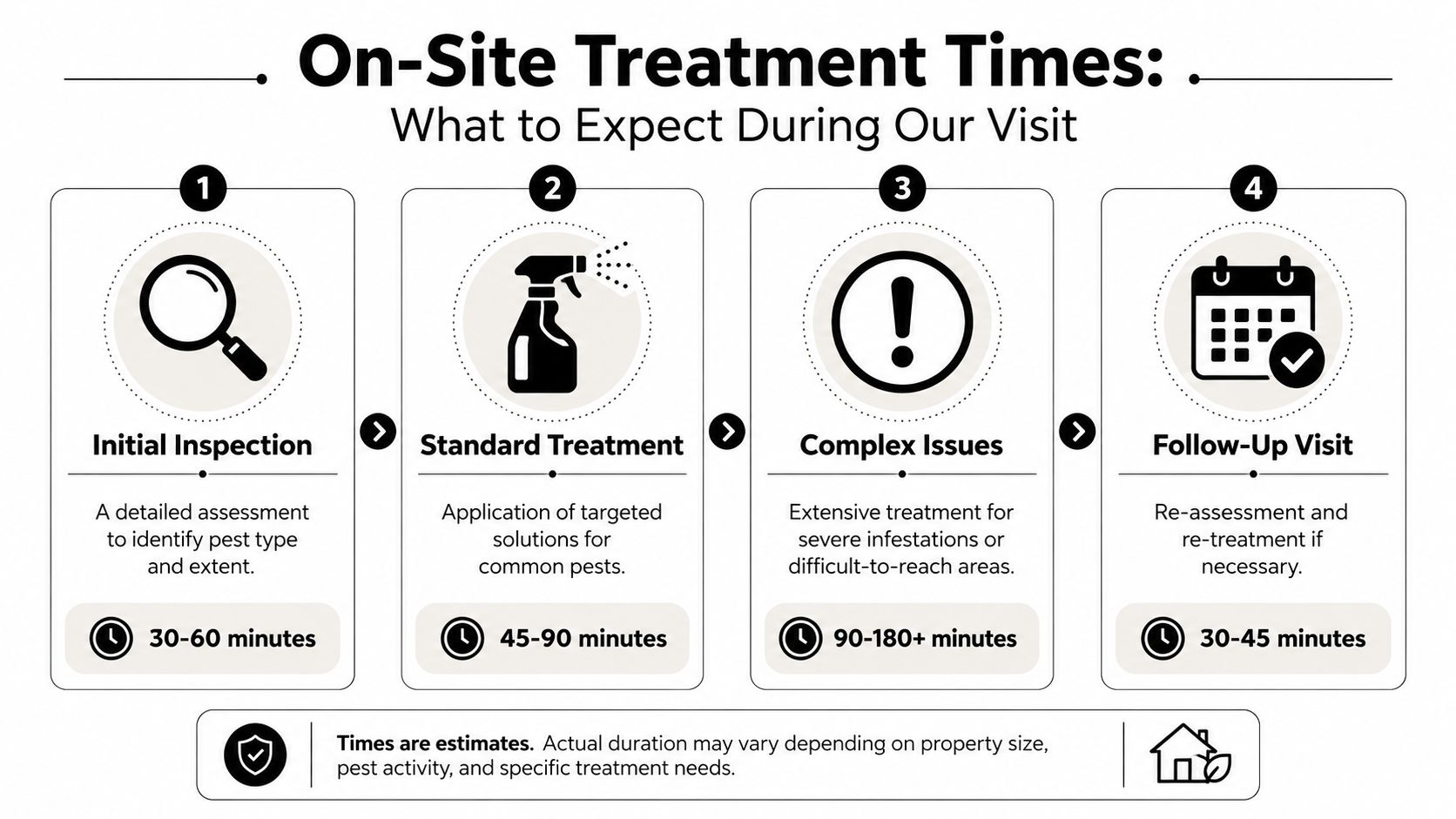
A proper visit includes inspection, not just product application. I look for active areas, likely entry points, moisture issues, and the spots where treatment will hold up best.
Here is the usual pattern:
| Visit type | What usually happens | Typical time |
|---|---|---|
| Routine preventative service | Exterior treatment, targeted interior service if needed, quick review of current activity | About 30 to 60 minutes |
| First visit | Inspection, problem history, treatment planning, and application | Often longer than a maintenance visit |
| Active infestation service | Focused work in problem zones, added product placement, and more detailed instructions | Often longer than standard service |
| Yard-focused mosquito control | Treatment of breeding and resting areas outdoors | About 30 minutes to 2 hours |
The biggest difference between a quick stop and a longer appointment is usually access and detail. If the garage is packed wall to wall, the crawlspace is tight, or the problem is centered around kitchen voids, utility lines, or exterior gaps, the visit slows down for a good reason. Rushing through those areas saves minutes and costs results.
First visits vs recurring service
First appointments take longer because the plan is being built in real time. We need to confirm what pest is present, where activity is strongest, and whether the issue is isolated or spread through several areas.
Recurring service is more efficient. The property history is already there, pressure points are known, and the visit is focused on maintaining control instead of starting from zero. If you want to help the appointment go smoothly, this guide on how to prepare for pest control covers the simple prep steps that save time and help treatment reach the right areas.
A shorter visit does not mean less care. In many homes, it means the technician knows exactly where to inspect and what to treat.
For homeowners looking for residential pest control, that is the normal rhythm. Commercial service follows the same basic process, but timing depends more on facility layout, restricted-access areas, and whether service has to work around business hours.
The Timeline to Results When Will You See Fewer Pests
You come home after service, check the kitchen that night, and spot a few ants again. Or you see a roach where you had not seen one in days. That usually feels like bad news. In many cases, it is a normal part of the timeline.
The visit itself may take about an hour. The results usually do not. For many common household pests, control takes shape over several weeks because baits, residual products, and follow-up adjustments need time to affect the full population. As explained in this breakdown of pest control result timelines, it is common for full results to take 4 to 6 weeks, and activity can even increase during the first couple of weeks after treatment.
Why you may see more pests first
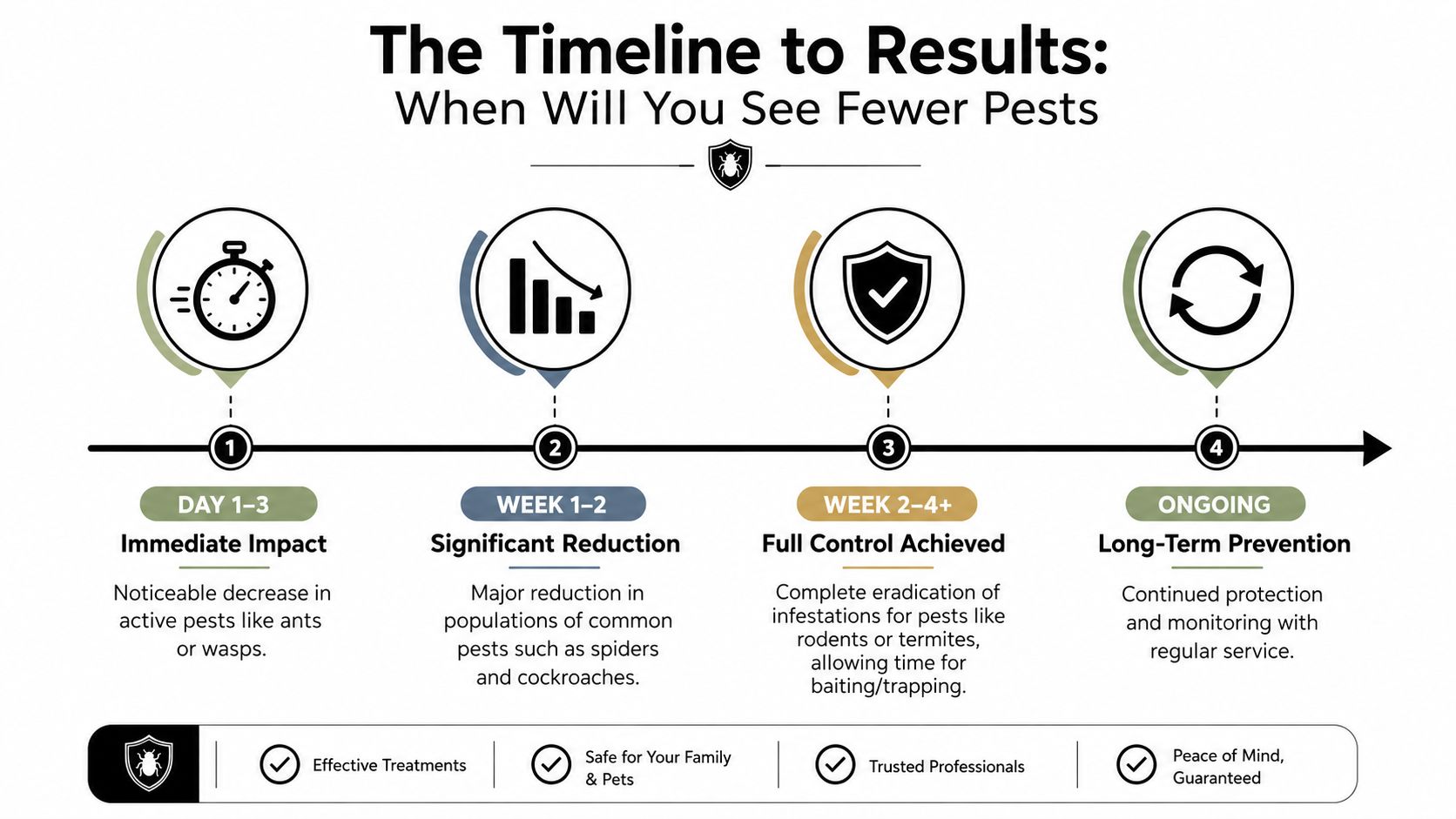
Pests do not all die in place the minute a treatment goes down.
A lot of the work happens after they cross a treated area or pick up bait and carry it back to where the colony is nesting. That is why a homeowner may notice more visible movement at first. The product is affecting behavior, flushing pests out of wall voids, under appliances, around pipe gaps, and along baseboards where they were hiding before.
This is one of the biggest expectation gaps in pest control. Homeowners often judge the service by what they see in the first few days. The better measure is whether activity starts changing over the next few weeks.
What the first weeks usually look like
In a typical home, the pattern goes something like this:
- First few days: You may notice pests out in the open more often.
- First 1 to 2 weeks: Activity can look inconsistent. One room improves, another still has movement.
- Weeks 3 to 6: Numbers usually drop more steadily as the treatment reaches more of the active population and nesting pressure starts to break.
That timeline is especially common with ants, roaches, and other pests where transfer or baiting is part of the strategy. Fast knockdown sounds good, but it is not always the best approach if the goal is getting control at the source instead of just killing the few pests you happen to see.
A short visual can help clarify what homeowners often experience over time.
Results depend on the pest
Mosquitoes, stinging insects, ants, roaches, rodents, and termites all behave differently, so the timeline is never exactly the same from one job to the next. Some pests respond quickly to direct treatment. Others take longer because the treatment is targeting nesting sites, hidden travel routes, or a larger population you may never see.
That is why I always tell homeowners to ask one simple question after the first service. Are we still in the expected process, or are we seeing signs that this needs an adjustment? That conversation matters more than counting every bug you see in the first week.
If you want a clearer picture of what ongoing protection looks like after the initial treatment, this guide on how often pest control should be done helps explain the service rhythm that keeps pest pressure from building back up.
Pest Control Schedules for Northwest Indiana Homes
A lot of Crown Point homeowners call after a one-time treatment and ask the same fair question. If the visit only took about an hour, why are we talking about service over several months?
Because the visit is only part of the timeline. The schedule is what keeps new pest pressure from rebuilding after the first round starts working.
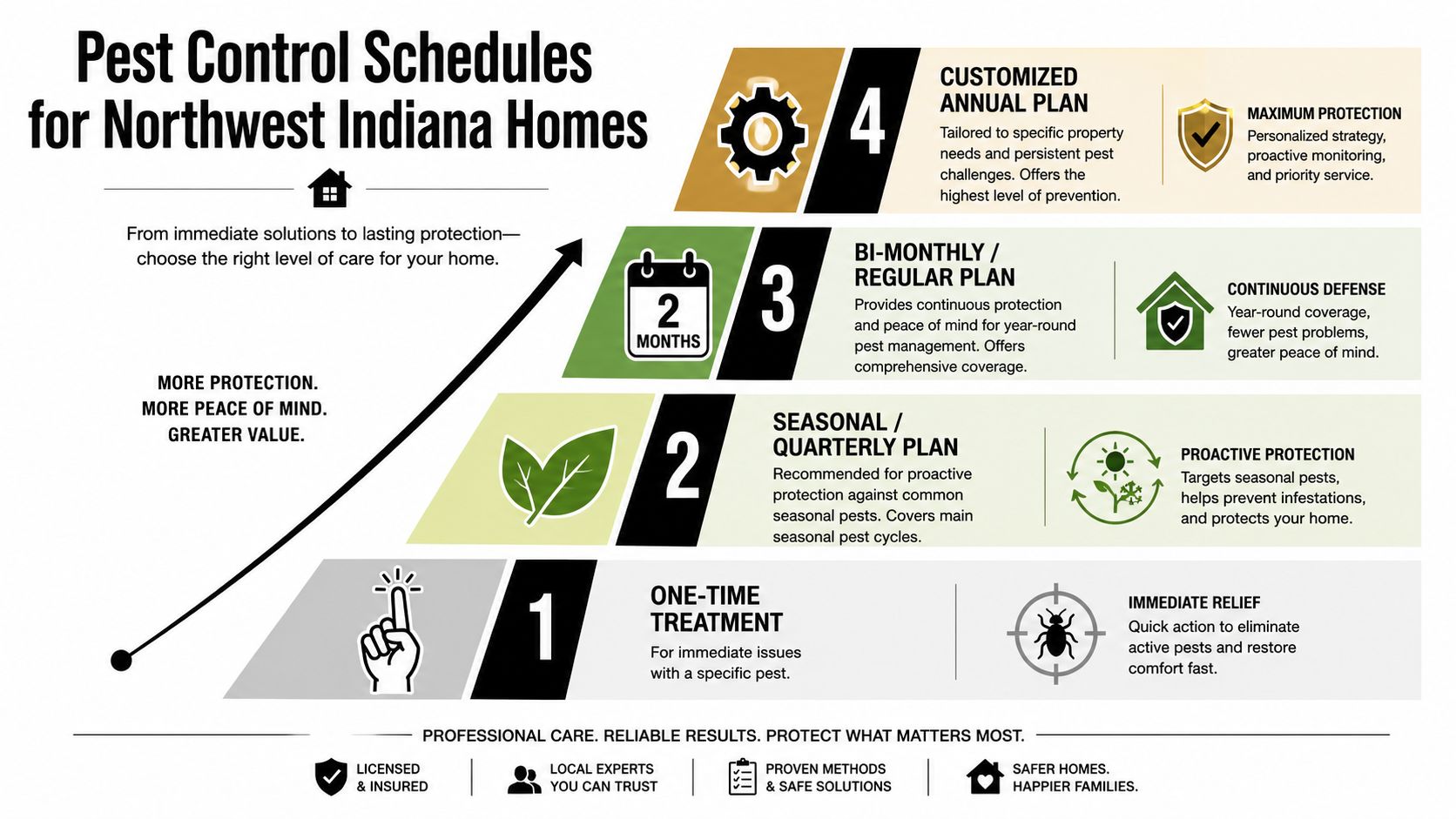
Why quarterly service makes sense here
Northwest Indiana homes deal with shifting pest activity through every season. A recurring schedule lines treatment up with those patterns instead of waiting until insects or rodents are already established.
Typical seasonal pressure looks like this:
- Spring: Ants start foraging, and early perimeter activity shows up around foundations, door thresholds, and mulch beds.
- Summer: Mosquitoes, wasps, and general outdoor insect pressure pick up.
- Fall: Rodents, spiders, and other occasional invaders start pushing indoors for shelter.
- Winter: Pest problems get quieter, but they do not disappear. Mice, roaches, and hidden activity can keep going inside wall voids, crawlspaces, and utility areas.
For many homes, that is why quarterly service is the standard recommendation. CBS News' summary of common pest control scheduling guidance notes that many services recommend quarterly visits, and it also points out that some pests still need time after treatment, with ants often taking about seven to ten days and fleas about two weeks.
Why the schedule matters after the first treatment
That timing matters more than people expect.
If ants are still active a few days after service, or flea activity feels uneven at first, that does not automatically mean the treatment failed. In many cases, the material is doing exactly what it is supposed to do. Pests are contacting treated areas, bait is being shared, and hidden populations are still cycling through before numbers drop.
That is also why a recurring plan works better than a one-and-done approach for many properties. The first service reduces the active problem. Follow-up service keeps outside pressure, seasonal reinfestation, and leftover hotspots from turning into the same callback a month or two later.
Homeowners comparing one-time service with prevention can get a clearer picture from this guide on how often pest control should be done for ongoing home protection.
One-time vs recurring protection
A one-time service can be the right call when the issue is isolated, access is good, and the conditions that caused it are easy to correct.
A recurring plan usually makes more sense when:
- The same pests come back every season: Ants in spring, wasps in summer, mice in fall.
- The property keeps attracting activity: Moisture, thick landscaping, nearby woods, or easy entry points raise pressure.
- You want fewer surprises: Preventative service is usually easier, cheaper, and less disruptive than chasing a larger infestation later.
For Northwest Indiana homes, the schedule is part of the treatment. It gives the initial visit time to work, then keeps pressure down before the next seasonal wave starts.
Factors That Influence Pest Control Duration
The reason two pest control jobs can look similar from the street but take very different amounts of time comes down to diagnosis. Pest control isn't just application. It's inspection, access, strategy, and correction.
Preventative treatments for common pests may take 15 to 30 minutes per technician, while active extermination can extend to 90 to 120 minutes or longer. Severe rodent removal can reach 15 hours of labor across multiple days because trapping, exclusion, and sanitation add complexity, according to this service duration comparison for preventative and active infestations.
Pest type changes everything
A light spider treatment and a rodent job aren't remotely the same workload.
Rodent control often includes inspection of droppings, travel routes, entry gaps, trap placement, exclusion recommendations, and sometimes cleanup planning. Termite control and bed bug work also sit in a completely different category from standard residential pest control because they require broader coverage and tighter process control.
Property conditions matter
The condition of the property can speed a job up or slow it down.
A technician can move efficiently when access is clear and the problem is visible. Service gets more involved when there are packed storage areas, dense vegetation against the home, heavy yard clutter, or sanitation issues feeding the infestation. Those conditions don't make treatment impossible, but they can add time and may also affect how fast results appear.
The best treatment plan doesn't start with the product. It starts with what the property is allowing pests to do.
Severity and scope are different issues
Severity is about how established the pest problem is. Scope is about how much of the property is involved. A mild issue in one area may be easier than a moderate issue spread across a basement, garage, exterior perimeter, and yard.
Consider the difference:
| Factor | Simpler job | More involved job |
|---|---|---|
| Infestation level | Early activity | Established infestation |
| Treatment area | One or two zones | Multiple interior and exterior zones |
| Access | Clear and open | Cluttered or obstructed |
| Method | Direct treatment | Traps, baiting, exclusion, sanitation steps |
That's why a trustworthy exterminator near me won't promise one fixed timeline before seeing the site. Good pest control in Crown Point, IN should be specific, but it should also be honest about variables.
What doesn't work
Homeowners often lose time when they wait too long, treat the wrong pest, or rely only on store-bought sprays for a problem requiring exclusion or bait transfer. Quick contact kills can make an area look better for a moment while leaving the source untouched.
What works better is matching the method to the actual issue. Sometimes that's a short preventative service. Sometimes it's a multi-visit process. The timeline should come from the pest and the conditions, not from guesswork.
Your Local Solution The Green Advantage Process
Good pest control should feel organized from the first phone call. You shouldn't have to chase answers, wonder when someone is arriving, or guess what happens after the service.
With a local Crown Point company, the process usually starts with a conversation about what you're seeing, where you're seeing it, and how urgent the issue feels. That early detail matters. Ants in one bathroom call for a different response than rodent sounds in an attic or a larger commercial pest control concern in a facility with multiple access points.
What working with a local team should feel like

A strong service experience usually follows a practical sequence:
- You describe the problem. The office gathers enough detail to schedule appropriately.
- The technician inspects before acting. That keeps the treatment tied to the actual issue, not assumptions.
- You get clear expectations. That includes how long the visit may take, what preparation is helpful, and when to expect improvement.
- Follow-up happens when needed. Especially for persistent or high-risk pests.
That clarity matters even more for complicated jobs. For termite work, extensive barrier treatments can require a full day's work for two technicians to create a complete and unbroken chemical barrier, according to this explanation of labor requirements for complex termite treatments. That's a good example of why the right pest control company won't treat every service call like a quick spray appointment.
Why local knowledge helps
Northwest Indiana properties come with their own patterns. Moisture conditions, seasonal swings, older construction details, wooded edges, and neighborhood pest pressure all affect what technicians find and how they plan service.
For homeowners and businesses searching pest control near me, exterminator near me, or eco-friendly pest control in Crown Point, the advantage is simple. You want someone who can tell the difference between a short visit, a longer treatment, and a problem that needs an ongoing prevention plan.
Clear communication is part of the treatment. People handle pest problems better when they know what “normal” looks like after service.
If you need answers about pest control in Crown Point, IN, want help with residential pest control or commercial pest control, or you're ready to schedule an inspection, contact The Green Advantage. Their team serves Crown Point and nearby Northwest Indiana communities with practical pest solutions, straightforward guidance, and treatment plans built around the actual timeline of the job.