
You hear scratching in a wall after dark. The next morning, you find a line of ants cutting across the kitchen counter. By the weekend, you're checking the basement, the pantry, and the window frames, wondering if you've got one small nuisance or a real infestation starting.
That's a common moment for homeowners in Crown Point and across Northwest Indiana. Our seasons shift hard, moisture levels change fast, and pests respond to every bit of it. Some stay outside until weather or food pressure pushes them in. Others settle in undetected long before you notice them.
A lot of people start by searching for pest control near me, hoping for a quick answer. The better answer is a clear one. You need to know what's active in this area, what you can handle on your own, and when it's time to bring in a licensed exterminator in Crown Point, IN.
Your Guide to Pest Control in Crown Point Indiana
One of the most common calls starts with something simple. A homeowner spots a few ants near the sink and assumes it's a cleaning issue. Then they wipe the counter, put food away, and the ants still come back. By then, the problem isn't the crumb on the counter. It's the route into the house, the moisture source, and the colony pressure behind it.
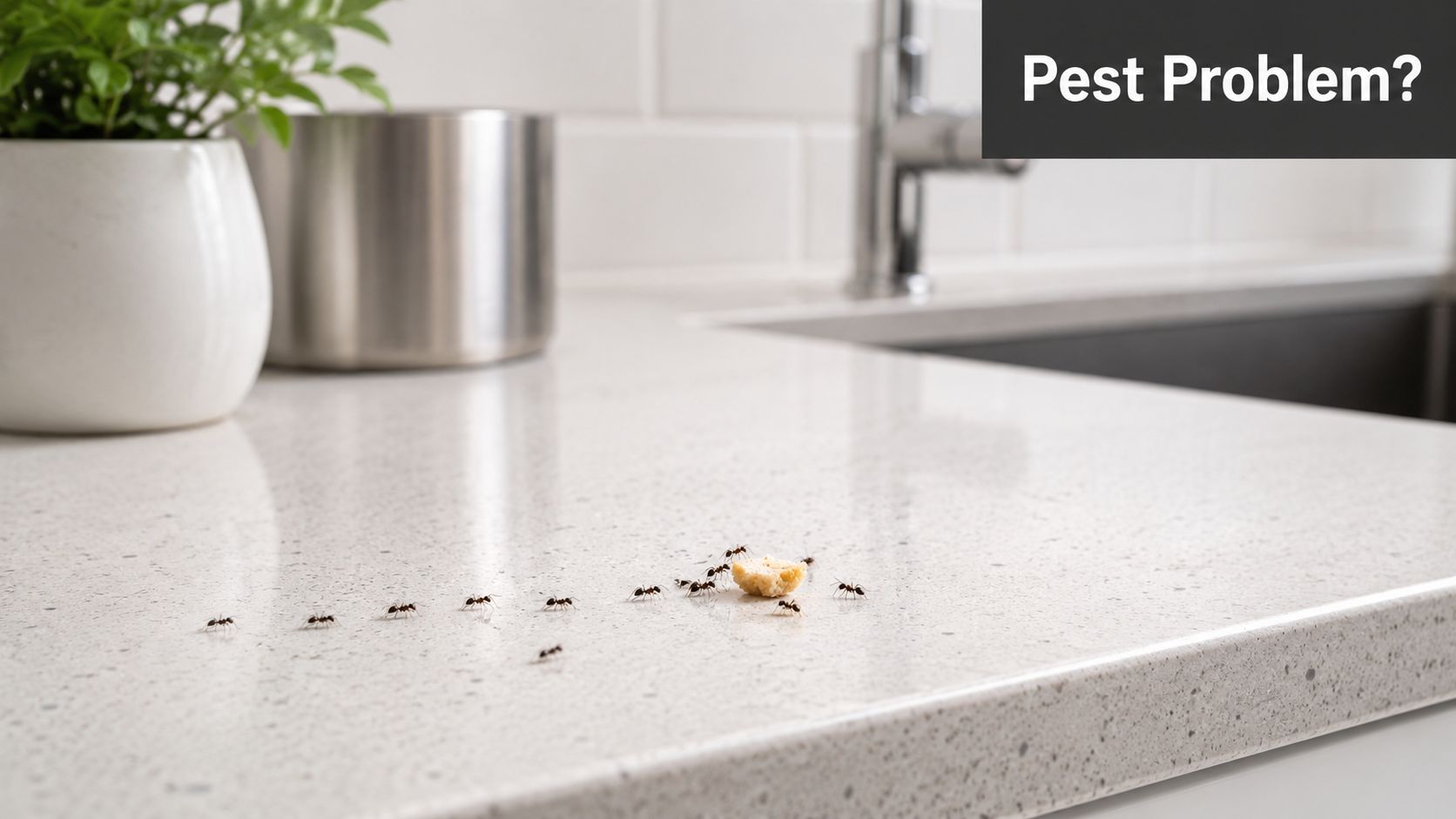
That's how a lot of pest issues work in Northwest Indiana. You don't just have “bugs.” You have a local pattern. Ants in spring, mosquitoes around standing water in summer, spiders and rodents pressing inward as temperatures drop, and overwintering pests that take advantage of quiet corners indoors. A house in Crown Point can look sealed and well-kept and still have enough gaps, moisture, or food access to attract pests.
Why local context matters
Indiana pest control isn't a niche service. IBISWorld projects Indiana's pest control industry will reach 597 businesses and $417.1 million in market size in 2026, with average annual growth of 6.0% from 2021 to 2026. That scale tells you something practical. Homeowners here deal with pest pressure often enough that the work has become more structured and specialized.
If you want a broader look at how service demand varies by area, this Transactional LLC pest control mapping resource gives useful geographic context.
Practical rule: If the same pest keeps showing up after you clean, remove clutter, or spray a store product, the pest usually isn't the main issue. The access point is.
What homeowners usually need
What's needed isn't more noise, stronger odors, or random treatments. Rather, it's a process that answers a few direct questions:
- What's active on the property right now
- Why it's there, including entry points and attractants
- What treatment fits, instead of using the same method everywhere
- Whether follow-up is needed to confirm the problem is under control
That's the difference between a one-time reaction and a real residential pest control plan. For homes in Crown Point, IN, that difference matters.
Common Pests in Northwest Indiana and Their Seasons
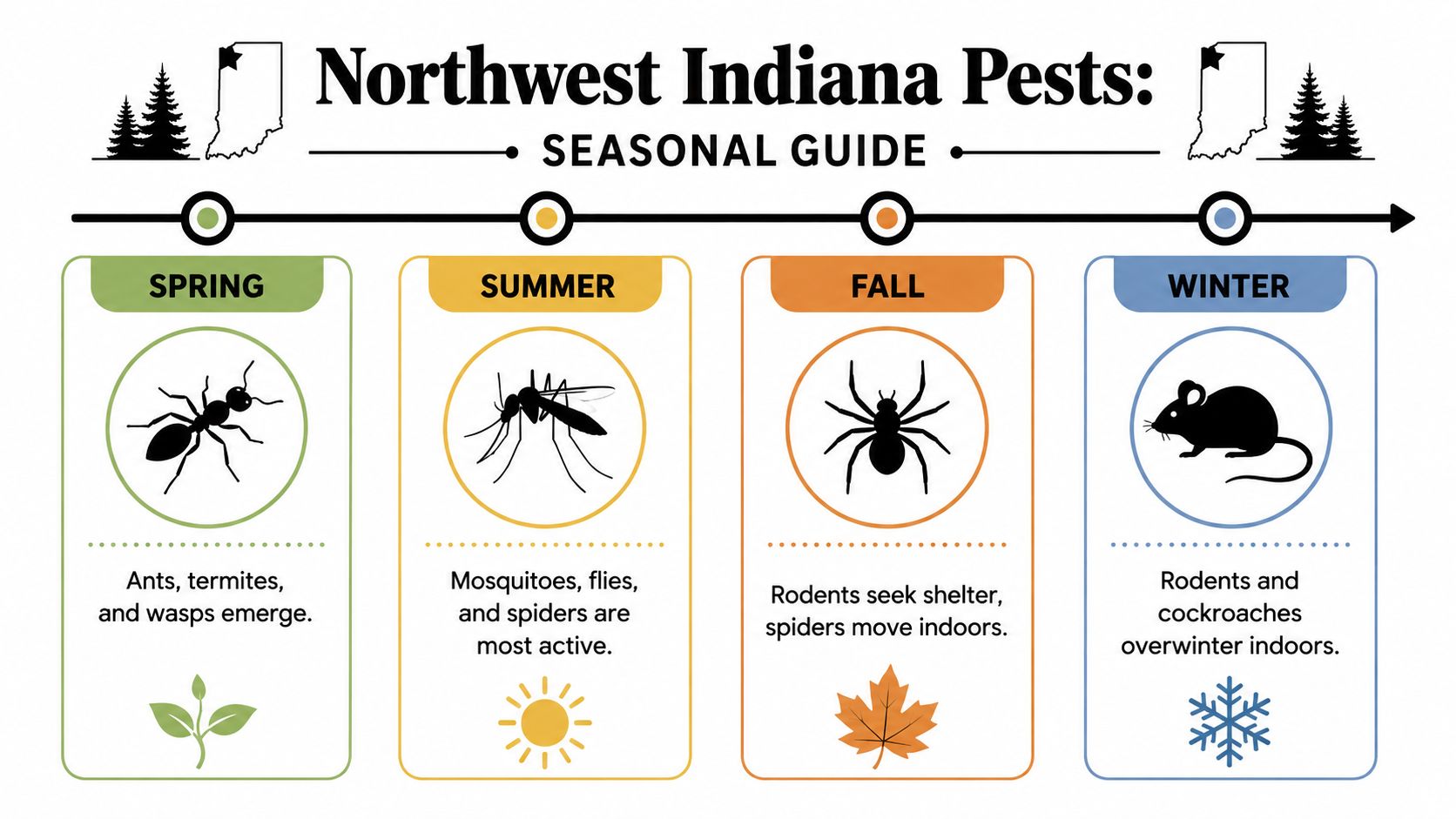
Pest activity in Northwest Indiana follows a pretty familiar rhythm. Not every home sees the same pressure, but the timing matters. If you know what usually shows up each season, you can catch problems earlier and avoid treating every issue like an emergency.
Spring activity around Crown Point
Spring usually starts the visible push. Soil warms, moisture shifts, and insects that stayed hidden become active around foundations, mulch beds, window lines, and kitchens.
You'll often want to watch for:
- Ants indoors as colonies expand and foragers start moving
- Termite concerns when conditions support swarming activity
- Early wasp activity around eaves, sheds, and porch areas
A few insects in spring can turn into a regular pattern fast. This is when people often realize the problem didn't begin today. It started outside and worked inward.
Summer pressure on yards and living spaces
Summer is when outdoor activity and indoor annoyance collide. Windows open more, people spend time in the yard, pets move in and out, and pests have more places to feed and breed.
The most common summer complaints include mosquitoes, flies, spiders, and stinging insects. Mosquito control matters most where there's standing water, dense shade, clogged areas that stay damp, or containers collecting rain. Wasps also become more noticeable as nests develop around rooflines, play areas, and entry points.
Warm weather doesn't create pest problems by itself. It speeds up feeding, nesting, and movement that was already building.
For many homes, this is also the season when outdoor treatment and yard-focused prevention make the biggest difference in daily comfort.
Fall movement indoors
Fall changes the job. Pests that stayed mostly outside start looking for stable shelter. Homes in Crown Point with attached garages, basements, crawl spaces, or utility penetrations often show activity first.
Common fall invaders include:
| Season shift | What homeowners notice |
|---|---|
| Cooler nights | Rodents testing gaps near doors, siding, and utility lines |
| Less outdoor prey | Spiders showing up in corners, basements, and garages |
| Dry indoor shelter | Other nuisance pests settling into wall voids and storage areas |
This is usually when a homeowner searches for an exterminator near me after hearing movement, spotting droppings, or finding webs in rooms that were quiet all summer.
Winter doesn't mean pest-free
Winter feels calmer, but it doesn't mean the property is clear. It usually means the activity is less visible and more concentrated indoors. Rodents and cockroaches are the main concerns people tend to ignore too long because they assume cold weather solved the problem.
That assumption rarely helps. If pests found warmth, food, and shelter before winter settled in, they're already where they want to be.
Proactive Prevention and When to Call an Exterminator
Most pest control starts before any product comes out. Good prevention lowers pressure, helps treatments work better, and sometimes stops a small issue from becoming a recurring one. Indiana's public guidance reflects that approach. The Indiana Department of Environmental Management recommends integrated pest management, including sealing openings with 16-gauge mesh, using sealant around pipes and cracks, keeping food and water sources dry, and requesting targeted strategies from providers. It also points residents toward practical tools like bait stations for cockroaches, snap traps for mice, and outdoor water management to reduce mosquito breeding sites, as outlined in Indiana's pests and pesticides guidance.
Prevention that actually helps
A few basic habits do more than is commonly thought:
- Seal entry points around utility lines, pipe gaps, sill plates, and foundation cracks
- Dry problem areas under sinks, near sump spaces, around hoses, and beside HVAC lines
- Store food properly in containers, not loosely in pantries or garages
- Reduce exterior harborage by trimming back contact points and keeping clutter off the house
- Manage standing water in buckets, toys, planters, and low spots in the yard
The point isn't to make your home sterile. It's to make it harder for pests to feed, breed, and settle in.
What usually doesn't work
Homeowners often lose time with the same three moves. They buy a spray for the insects they can see, put traps in one room only, or treat inside while ignoring the exterior source. That can knock down activity for a few days, but it usually doesn't solve the cause.
Recurring ants, persistent rodent noise, repeated wasp nesting, and ongoing roach sightings all point to a problem that needs more than surface treatment.
If pest activity keeps returning to the same room, the pest is using that room for access or resources. It's not there by accident.
When it's time to call an exterminator in Crown Point, IN
Call for professional help when any of the following shows up:
- Repeat sightings after cleaning and store-bought treatment
- Evidence of nesting such as droppings, gnawing, void activity, or concentrated webs
- Higher-risk pests like termites or stinging insects near family activity areas
- Property-related concerns tied to rental units, real estate transactions, or commercial use
That's the point where professional residential pest control or commercial pest control becomes less about convenience and more about protecting the property.
What to Expect from Professional Pest Control Services
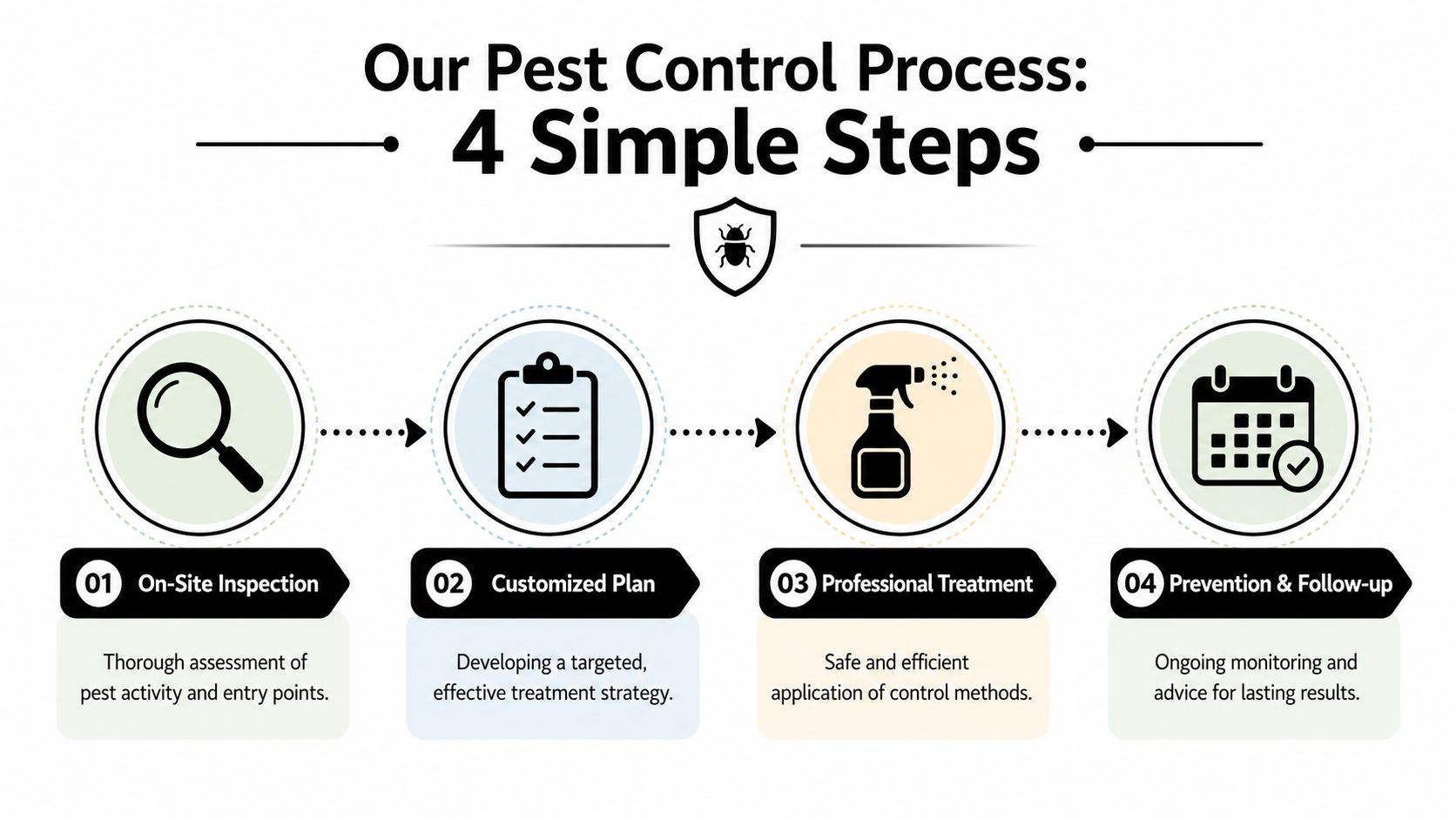
Most homeowners feel better once they know what a service visit looks like. Good pest control isn't guessing, and it shouldn't feel rushed. It follows a sequence that makes sense for the pest, the property, and the level of activity.
Here's the service flow typically expected from a structured Indiana pest control program.
Inspection comes first
A real inspection looks beyond the obvious complaint. If someone says they're seeing ants in a bathroom, the technician should also be checking moisture, exterior access, sill conditions, plumbing penetrations, and nearby rooms.
That first visit usually answers three practical questions:
- What pest are we dealing with
- Where is it entering or nesting
- What conditions are helping it stay active
That's why inspection matters more than quick spraying. If identification is wrong, treatment is usually weak or temporary.
Treatment should match the problem
A good treatment plan isn't one-size-fits-all. Ant control, rodent control, mosquito reduction, termite work, and wasp removal all require different methods and follow-up expectations. A family home with pets also needs a different treatment discussion than a warehouse, office, or multi-unit property.
Indiana residential service commonly follows a process of inspection, identification, treatment selection, and follow-up verification, often 14 to 30 days after the first application, in line with the practical framework described in Indiana pesticide regulation guidance and service standards.
Indiana law also matters here. Commercial applicators must hold the right IDOA license or certification for the category they're working in, and restricted-use products can only be applied by certified applicators or people under their direct supervision. The same guidance notes record retention requirements for at least 2 years for those regulated uses, which is part of what makes licensing more than paperwork.
For homeowners comparing providers, it also helps to understand bonded and insured pros so you know what protections and accountability to look for.
If you want a plain-language look at service scope, this page on what pest control companies do is useful.
Follow-up is where the job gets confirmed
One visit can solve some problems. Other issues need verification after the initial work. Rodents may require monitoring and exclusion updates. Roach jobs often need rechecks. Exterior invaders may change with weather or sanitation conditions.
This short video gives a quick visual overview of how homeowners often think about the process:
A professional service should leave you with fewer surprises. You should know what was found, what was done, and what happens next.
The Green Advantage Our Eco-Friendly Approach
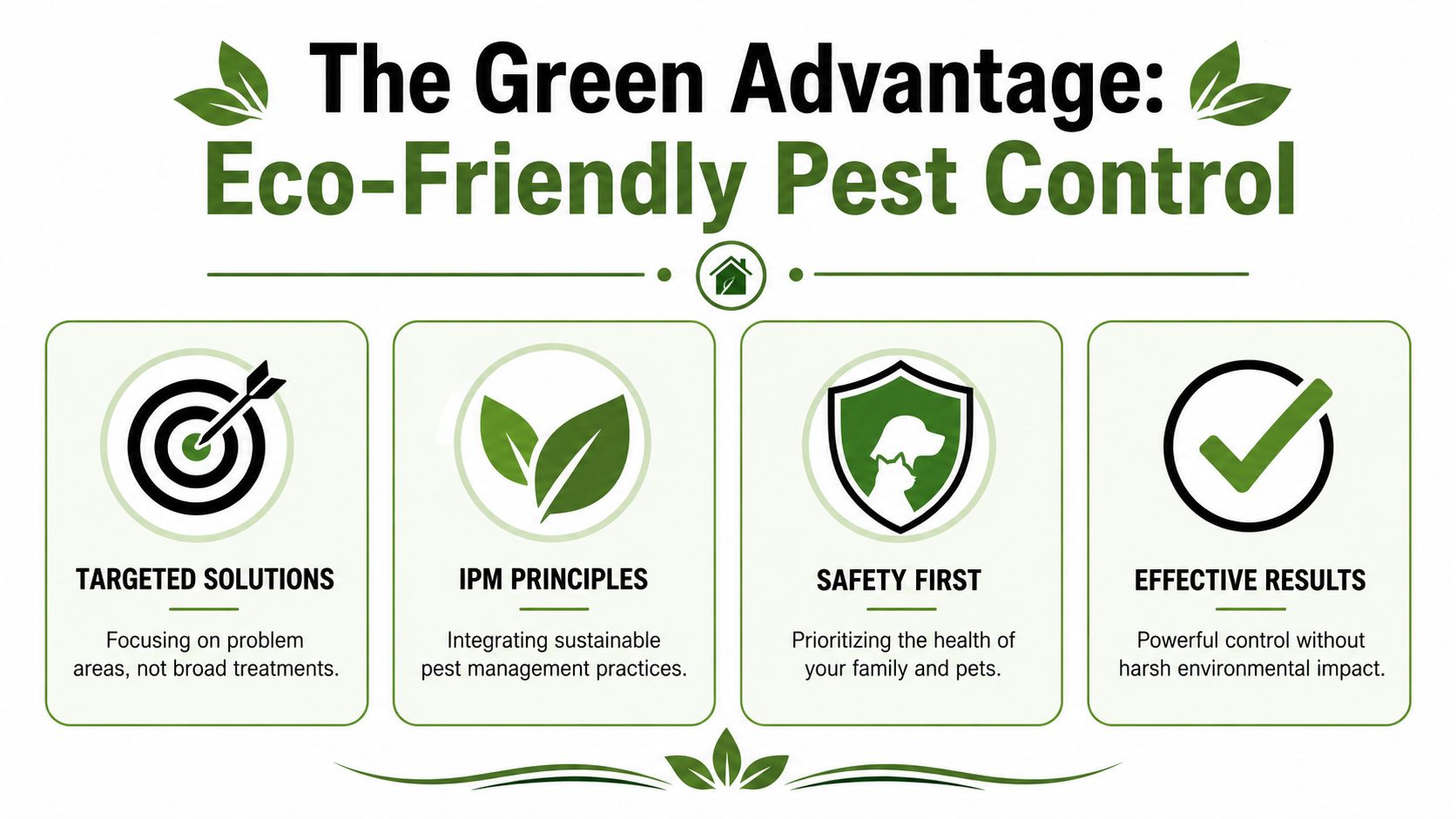
A lot of homeowners hear “eco-friendly pest control” and assume it means lighter treatment that won't hold up. That's not how effective work is done. The better definition is targeted treatment with less unnecessary exposure.
What eco-friendly means in practice
For a homeowner, the practical version looks like this:
- Focused placement instead of broad, indiscriminate treatment
- Exclusion and sanitation to reduce the need for repeat chemical use
- Product selection based on pest behavior rather than using the same material everywhere
- Attention to family and pet routines before treatment decisions are made
That approach usually works better because it lines up with how pests use a property. Roaches need harborage and food access addressed. Rodents require entry-point correction. Mosquito relief depends heavily on habitat pressure outdoors. Spiders often improve when the insects they feed on are reduced and access routes are cut off.
Why effective and careful can go together
The strongest-looking treatment isn't always the most useful one. Overapplying products to the wrong places can waste time and leave the actual issue in place. Smart pest control uses the least disruptive method that still solves the problem.
That's where integrated methods matter. They connect inspection, habitat correction, targeted applications, and follow-up. For homeowners who want to read more about that philosophy, this overview of environmentally friendly pest control methods gives a clear explanation.
The Green Advantage applies that kind of approach in Northwest Indiana with licensed service for homes and businesses, including common household pests, rodents, mosquitoes, termites, and stinging insects.
Good eco-friendly pest control isn't passive. It's precise.
Understanding Pest Control Costs in Northwest Indiana
Clients inquiring about price typically want to know two things. What affects the quote, and what are they paying for beyond a single visit. That's a fair question, because pest control in Crown Point, IN isn't priced as a flat commodity. The cost depends on the problem you have.
What changes the price
Several factors shape service recommendations and pricing:
- Property size and layout because larger homes, multi-unit sites, and complex structures take more inspection and treatment time
- Type of pest since ants, mosquitoes, rodents, termites, and cockroaches each require different materials, labor, and follow-up
- Severity of activity because a light seasonal issue is different from an established infestation
- Service frequency including one-time work versus a recurring preventive plan
- Access and exclusion needs if sealing, trapping, monitoring, or specialized placement is part of the solution
A termite concern, for example, is a different level of job than a minor ant trail at one sink. A rodent issue in a finished basement with utility gaps is different from occasional spider activity in a garage.
Cost versus value
The cheapest option often looks better only at the start. If the treatment doesn't identify the pest correctly, misses the entry route, or skips follow-up, you may end up paying again while the infestation keeps going.
Here's the better way to consider it:
| What you're paying for | Why it matters |
|---|---|
| Accurate inspection | Wrong identification leads to weak treatment |
| Targeted control | Better fit for the pest and the site |
| Licensed application | Important for compliance, safety, and accountability |
| Prevention guidance | Helps reduce repeat activity |
For homeowners and property managers, pest control is usually an investment in structure protection, livability, and peace of mind, not just a one-day fix.
Indiana Pest Control Frequently Asked Questions
Are pest control treatments safe around kids and pets
That depends on the pest, the product, where it's applied, and whether the treatment plan is built carefully. A responsible provider should explain where materials will be placed, what to avoid touching, and whether any temporary restrictions apply. Safety improves when treatment is targeted instead of broadly applied and when exclusion and sanitation do part of the work.
If you have children, pets, or specific sensitivities in the home, say that up front. That information should shape the plan.
Is one visit enough or do I need ongoing service
Some problems respond well to a one-time visit. Others don't. Wasp removal at a single nest may be straightforward. Recurring ant activity, rodent pressure, mosquitoes, and general household pest issues often benefit from ongoing monitoring and seasonal prevention.
The question isn't whether repeat service sounds appealing. It's whether the property has conditions that keep attracting pests. If it does, a maintenance plan is usually more practical than treating the same issue from scratch over and over.
What's the difference between residential and commercial pest control
Residential pest control focuses on living spaces, family routines, pets, garages, yards, and the comfort of the home. Commercial pest control has a different pressure. It often includes sanitation oversight, traffic patterns, storage areas, staff coordination, documentation needs, and protection of business operations.
A restaurant, office, warehouse, or multi-tenant property can't be treated exactly like a single-family house. The inspection and service plan need to match how the building is used.
When should I schedule an inspection
Schedule one as soon as activity becomes repeatable. If you see the same pest more than once, hear movement in walls or ceilings, notice droppings, find fresh nesting signs, or keep getting bitten outdoors, waiting rarely makes the job easier.
People often call later than they should because they hope a change in weather will solve it. Usually, pests are already responding to the weather faster than the homeowner is.
If you're looking for pest control in Crown Point, IN, want a local exterminator near me, or need help with residential pest control, commercial pest control, mosquito control, rodent control, termite concerns, spider issues, ant control, or wasp removal in Northwest Indiana, the next step is simple. Get the property inspected and get a plan based on what's happening.
If you're dealing with pest activity in Crown Point or nearby Northwest Indiana communities, contact The Green Advantage to schedule a pest inspection, request a quote, or talk through what you're seeing. A clear inspection and a targeted plan can save a lot of frustration, especially when the problem keeps coming back.