
A dinner rush can be going smoothly until one small movement near the hostess stand changes the whole night. A server sees it. Then a guest sees it. The kitchen is still producing good food, your staff is still working hard, and yet the conversation in the room has shifted to one question no restaurant owner wants attached to their business.
That's why pest control for restaurants isn't just a maintenance task in Crown Point, IN. It's part of food safety, brand protection, and day-to-day operations. In food service, pests don't show up because an owner doesn't care. They show up because restaurants naturally provide heat, moisture, food residue, deliveries, drains, trash, and hidden shelter.
If you own or manage a restaurant in Northwest Indiana, the goal isn't panic. The goal is a repeatable system. You need prevention, monitoring, fast response, and records that hold up during a health inspection.
Protecting Your Reputation from Unwanted Guests
A single pest sighting rarely stays limited to the one table that noticed it. Guests talk to the people they came with, staff members get shaken up, and online reviews can turn a minor incident into a long-term credibility problem.
That reputational risk is real. According to Orkin's restaurant customer survey, more than 60% of diners who see a pest in a restaurant say they would tell five or more acquaintances. For a restaurant owner, that means one visible issue can spread far beyond the dining room where it happened.
Why restaurant owners feel this pressure fast
Restaurants are public-facing businesses. A warehouse can have a back-corner problem and deal with it discreetly. A restaurant doesn't get that luxury. Guests are watching the entry, the restroom, the bar, the condiment station, and anything they can see from their table.
A pest problem also creates two separate risks at the same time:
- Guest trust risk. People connect pests with sanitation, even when the source is structural access, drains, or a recent delivery.
- Operational risk. Staff lose time chasing symptoms instead of fixing root causes like leaks, gaps, clutter, and poor storage flow.
- Inspection risk. If your response isn't documented, the business can look reactive instead of controlled.
Practical rule: Treat every sighting as both a pest issue and a communication issue. The pest needs control, but the process behind your response needs to be visible and organized.
What actually works
The owners who handle this well don't rely on occasional spray service and hope. They run pest prevention like they run line checks, temperature logs, and opening duties. Someone inspects. Someone logs. Someone fixes the condition that allowed the pest activity in the first place.
That's the right mindset for restaurants in Crown Point and nearby Northwest Indiana communities. Pest control belongs inside your standard operating procedures. When it's built into the routine, you're far less likely to get caught off guard during service or during an inspection.
Common Pests in Northwest Indiana Restaurants
Some pests are nuisance pests. In restaurants, the common ones are operational pests. They use the exact conditions that make food service possible. Warm kitchens, drains, storage rooms, dumpsters, deliveries, and floor-level hiding spots all give them what they need.
German cockroaches
German cockroaches cause outsized problems in restaurants because they stay hidden until numbers build. They favor tight cracks, equipment voids, warm motor areas, sink bases, and spaces near moisture.
Industry guidance identifies German cockroaches as the #1 pest problem in U.S. restaurants, and notes that professional treatment is often recommended monthly, with high-risk sites sometimes needing service every 2 weeks based on this restaurant pest control guidance. For owners, the practical takeaway is simple. If you see one during business hours, there's usually more activity where staff and guests can't see.
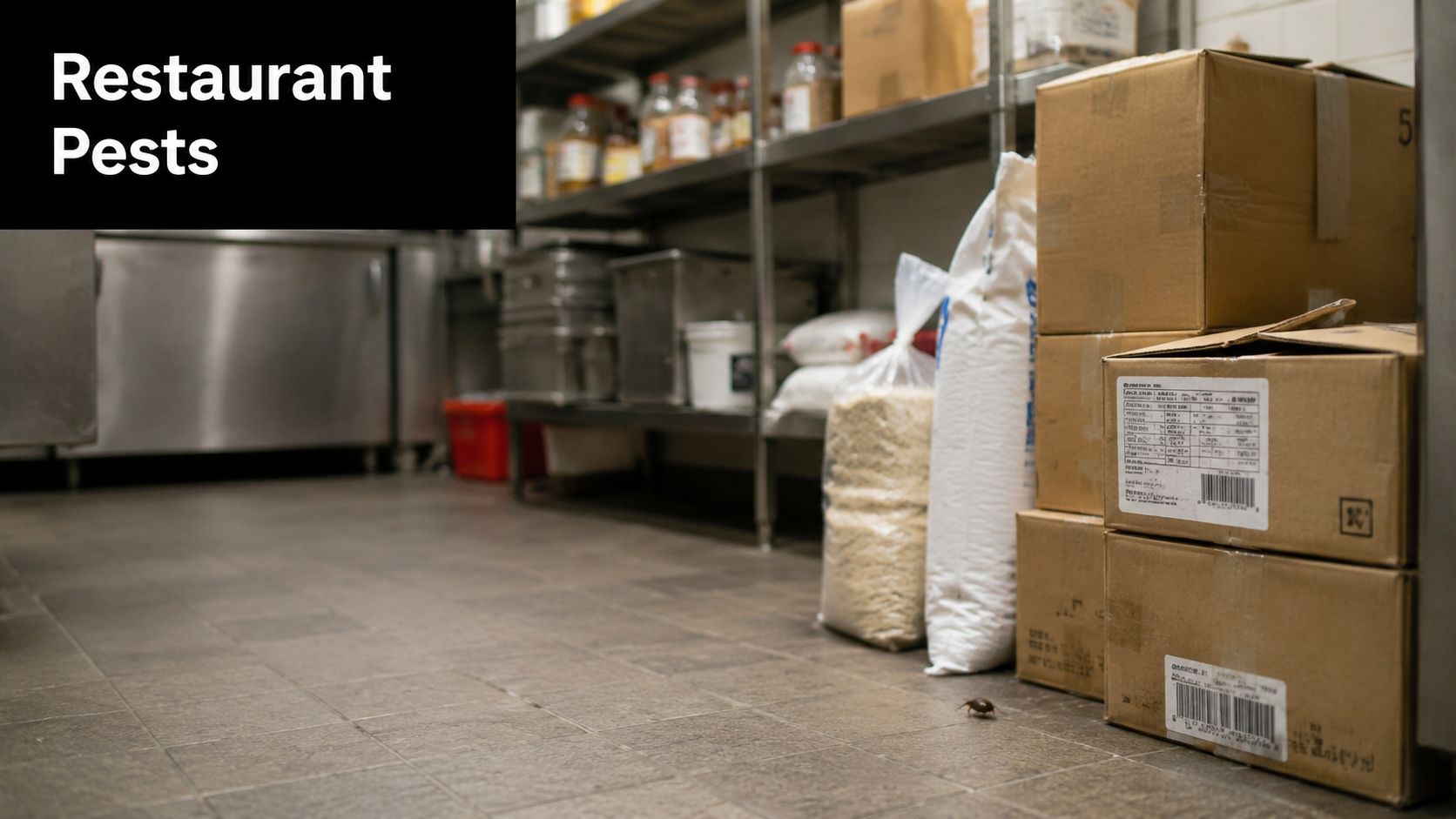
Watch for:
- Live activity near heat and moisture. Behind fryers, dish machines, prep sinks, and beverage stations.
- Small dark spotting. Around hinges, wall junctures, shelving legs, and hidden corners.
- Recurring sightings after cleaning. That often points to harborage inside equipment gaps or wall penetrations.
Rodents
Mice and rats usually enter for shelter first, then settle in because the food source is easy. Back doors, receiving areas, utility penetrations, damaged sweeps, and dumpster zones are common access points.
Rodents create a different kind of pressure than roaches. They travel. They can move from exterior pressure points into dry storage, ceiling voids, and wall lines. In restaurants, that means you can't think only about the kitchen. You have to think like a rodent. How does one get from the alley, pad site, or landscaping edge to a hidden indoor route?
A few signs deserve immediate attention:
| Sign | What it often means |
|---|---|
| Gnawing on packaging or soft materials | Active feeding or nest-building nearby |
| Rub marks along walls | Repeated rodent travel path |
| Droppings in storage or behind equipment | Established movement through the area |
Flies
Flies are often the pest owners underestimate because they seem minor compared with rodents or roaches. In practice, they can be one of the most visible problems in front-of-house and one of the most stubborn in back-of-house.
Drain areas, mop sinks, bar stations, soda lines, floor grout edges, and organic buildup support fly breeding. If the staff only treats the symptom by swatting adults, the issue keeps coming back.
A fly problem usually means there's a breeding site your cleaning routine is missing.
Why these pests are so common here
Northwest Indiana restaurants deal with weather shifts, delivery volume, moisture swings, and older buildings mixed with newer tenant build-outs. That combination creates plenty of hidden gaps, plumbing penetrations, and service access points. If your team focuses only on visible cleanliness, pests will use the places no guest ever sees.
Building Your Restaurant's Defense System
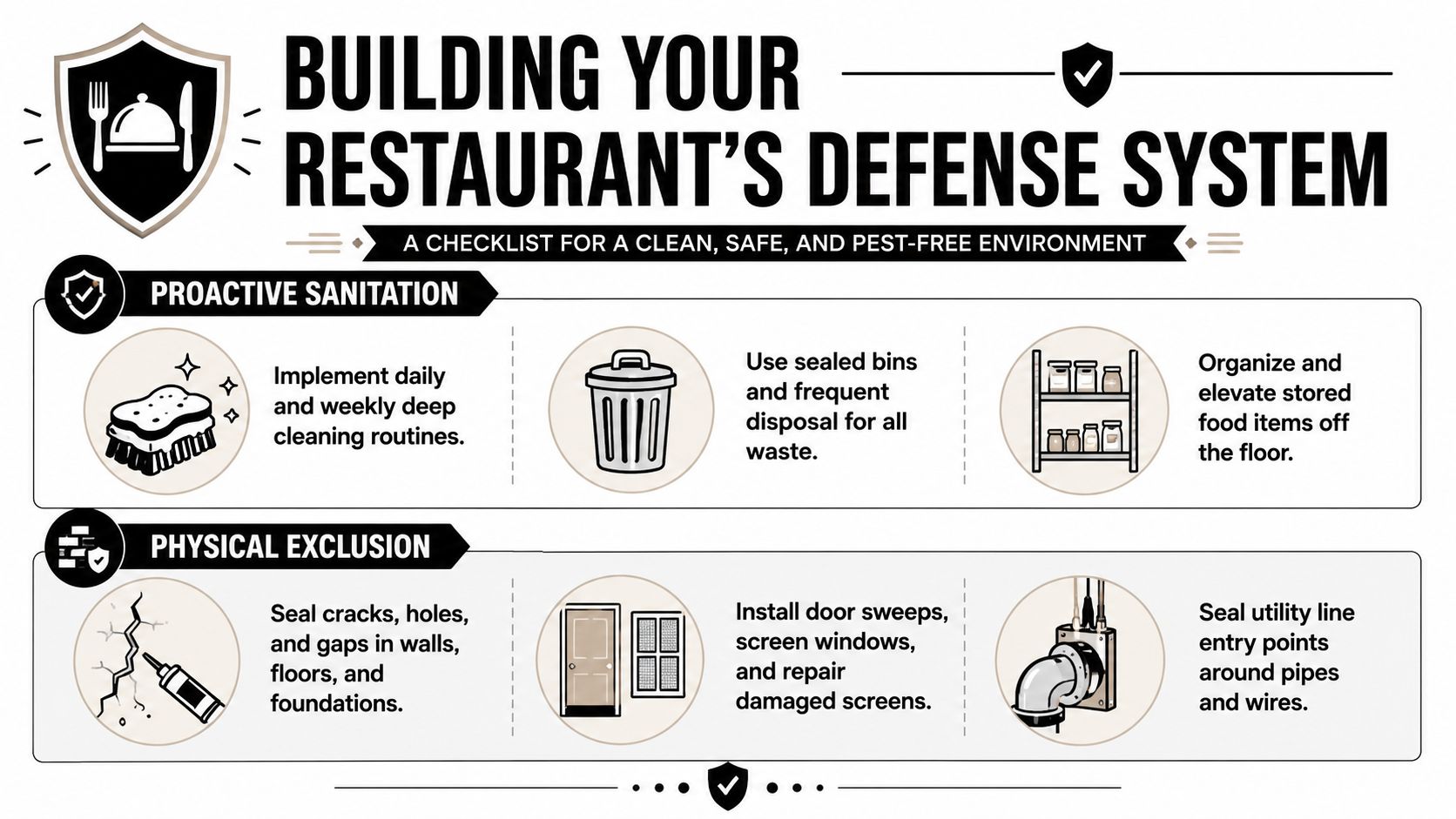
The strongest restaurant pest plans start before any treatment goes down. In practice, your defense system has two parts. Sanitation removes what pests need to survive. Exclusion removes how they get in.
Tighten sanitation where pests actually live
The most common failure points in restaurants include unsealed cracks, standing water from leaks, clutter behind equipment, and overflowing trash, all of which can keep an infestation going even after treatment, as outlined in restaurant pest control tips from RTI.
The useful lesson is that pests don't need a filthy restaurant. They need overlooked conditions.
Daily priorities should be simple and specific:
- Dry the right areas. Check under sinks, around ice machines, near floor drains, and behind dish stations before closing.
- Reset trash correctly. Empty interior waste, clean residue from bin rims, and make sure liners sit inside containers without spills running down the outside.
- Pull and inspect movable equipment. Crumbs and grease build fast behind fryers, coolers, and prep stations.
- Protect ingredients. Keep food in sealed containers and keep storage off the floor where possible.
Weekly work needs to go deeper:
- Audit hidden clutter. Cardboard stacks, unused smallwares, and forgotten supplies create shelter.
- Verify drain care. Staff should clean drains as a procedure, not as a reaction to odor or flies. For drain-specific best practices, this comprehensive guide to drain pest prevention is a useful reference for managers building a stronger routine.
- Check receiving and storage flow. Deliveries can bring in pests or leave doors open long enough to create entry opportunities.
For broader facility habits, many operators also use a written prevention checklist like this commercial pest prevention resource for Crown Point businesses.
Close the building up
Exclusion is where many restaurants leave easy wins on the table. If a door sweep is damaged, if a vent screen is torn, or if utility lines enter through rough openings, the building is inviting pests in every day.
Start outside and work inward:
- Back doors and side doors need tight sweeps and proper closure.
- Window and vent screens should be intact and fitted.
- Pipe and conduit entries should be sealed where they pass through walls.
- Foundation and wall gaps should be identified and repaired before they become routine entry routes.
Local habit that matters: In Northwest Indiana, weather movement and wear around exterior openings can quietly undo previous repairs. Re-check seals and sweeps instead of assuming they're still working.
What doesn't work
Restaurants waste time when they rely on broad, occasional treatment without fixing the condition. Spraying around a leak won't solve moisture. Treating under a sink won't solve an open wall gap. Fogging a room won't solve clutter behind equipment.
Good prevention is less dramatic, but it holds. Staff routines, structural correction, storage discipline, and ongoing inspection do more for restaurant pest control than any quick fix.
Implementing an Integrated Pest Management Program
A week before a county inspection, the owner sees one small roach near the dish area and asks the usual question. “Can you just spray it?” The honest answer is no single treatment fixes what an inspector will care about. You need a repeatable system that shows what was found, what was corrected, who handled it, and whether the pressure dropped after follow-up.
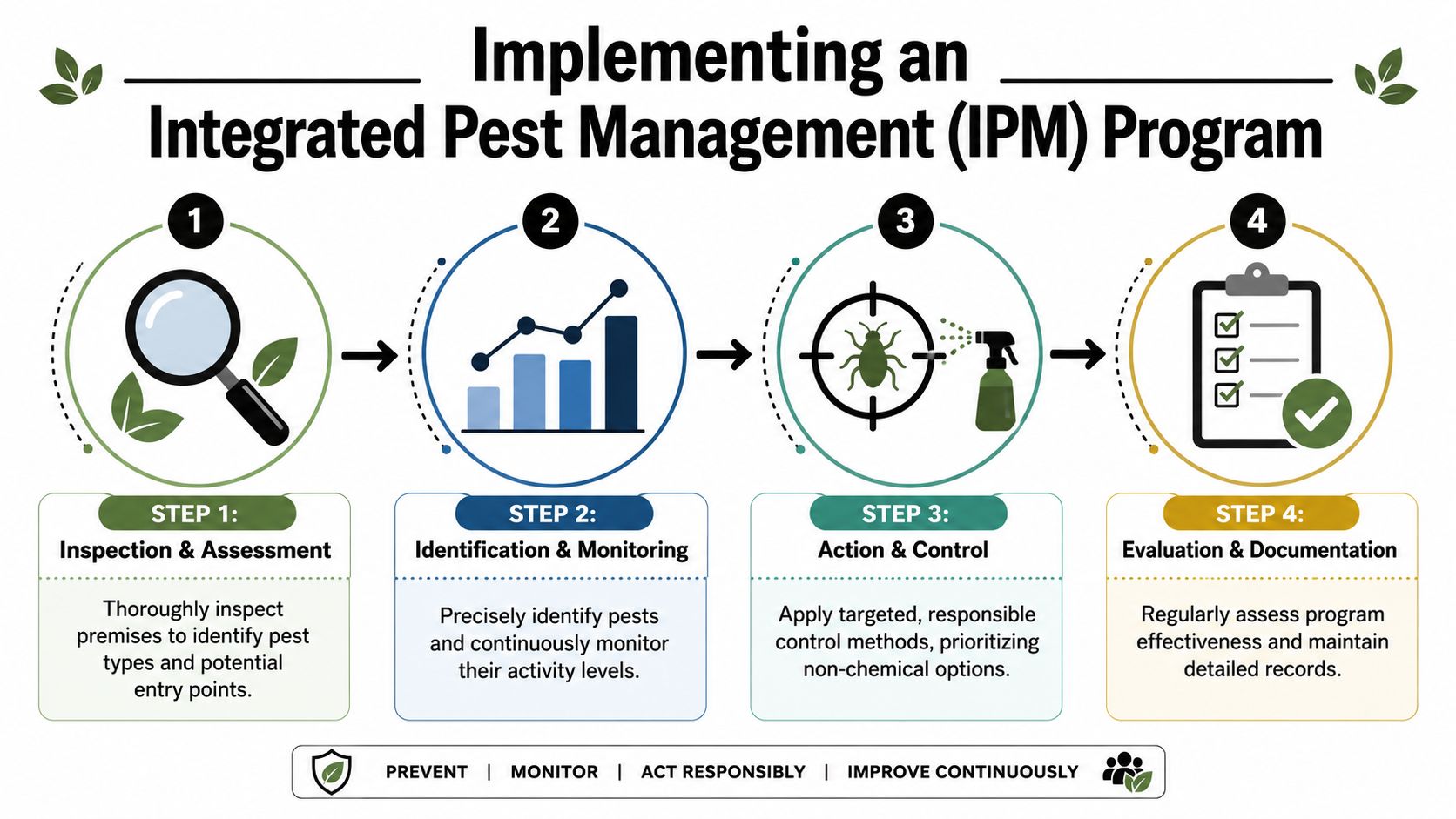
Integrated Pest Management, or IPM, is the operating routine behind that system. It combines inspection, monitoring, targeted correction, limited product use where needed, and written records that hold up during management review and health inspections. A practical restaurant IPM workflow includes those steps, as outlined in this restaurant IPM overview from Rezku.
Inspection should answer operational questions
A useful inspection does more than note where a pest was seen. It should identify the source of pressure, the conditions allowing it, and the department responsible for the fix. In restaurants, that usually means separating a sanitation issue from a maintenance issue, and both from a supplier or exterior-entry issue.
That changes how the walkthrough is done.
Check receiving doors, utility penetrations, mop areas, dish stations, floor drains, bar sinks, soda lines, storage racks, and the hard-to-reach spaces behind hot equipment. In Crown Point restaurants, I also tell owners to inspect after weather swings, delivery schedule changes, and menu shifts that increase grease or moisture load. Those are the moments when a stable building starts showing new pest pressure.
This short video gives a helpful visual on how structured inspection and monitoring fit into a restaurant setting.
Monitoring gives you proof, not guesses
Monitoring devices help managers answer two questions fast. Is activity current, and is the problem getting better or worse?
Sticky monitors, insect light traps where appropriate, rodent devices in mapped locations, and routine visual checks create a record you can act on. They also keep staff from chasing isolated sightings while missing the pattern. A line cook may report a pest near the prep line, but the monitors might show the primary pressure is building near a floor drain, a wall void, or a storage area that is only disturbed once a week.
That record matters for more than pest control. It supports manager handoffs, vendor conversations, and inspection readiness.
One Northwest Indiana issue that gets overlooked is drain condition. If organic buildup is feeding flies, pest service alone will not close the loop. Pairing your IPM plan with grease trap compliance by Anytime Drain Solutions can help address the sanitation side of recurring drain and waste-area pressure.
Control needs to match the cause
The right response depends on what inspection and monitoring found. If the problem is entry, seal the gap and correct the door sweep. If it is moisture, fix the leak and change cleaning or drying routines. If it is harborage, remove clutter, adjust storage, and open access for cleaning. Product application has a place, but in food service it should support the correction, not stand in for it.
That is the trade-off owners need to understand. Quick knockdown can reduce visible activity, which helps in the short term, but unresolved conditions bring the problem back. A slower, disciplined correction process takes more coordination with staff and maintenance, yet it protects the business better and gives you something defensible to show an inspector.
For operators in Crown Point, a commercial pest partner should fit into that process. The Green Advantage provides commercial service plans built around scheduled inspection, mapped monitoring, sanitation review, targeted treatment, and follow-up reporting instead of one-time response alone.
Evaluation keeps the program credible
Every service visit should end with a short review. What changed since the last visit? Which corrections were completed? Which ones are still open? Did activity drop in the monitored areas, or did it shift?
If nothing changes, the plan needs adjustment. That may mean changing device placement, revising staff cleaning steps, involving plumbing or maintenance sooner, or tightening documentation so recurring issues stop getting lost between shifts.
That is what makes IPM work in a restaurant. It gives you a method you can manage, not just a treatment you hope holds.
Documentation for Health Inspection Readiness
A restaurant can look clean and still create concern during an inspection if the owner can't show a repeatable pest prevention process. That's the part many general cleaning guides miss. Inspectors want more than a verbal assurance that you're watching the issue.
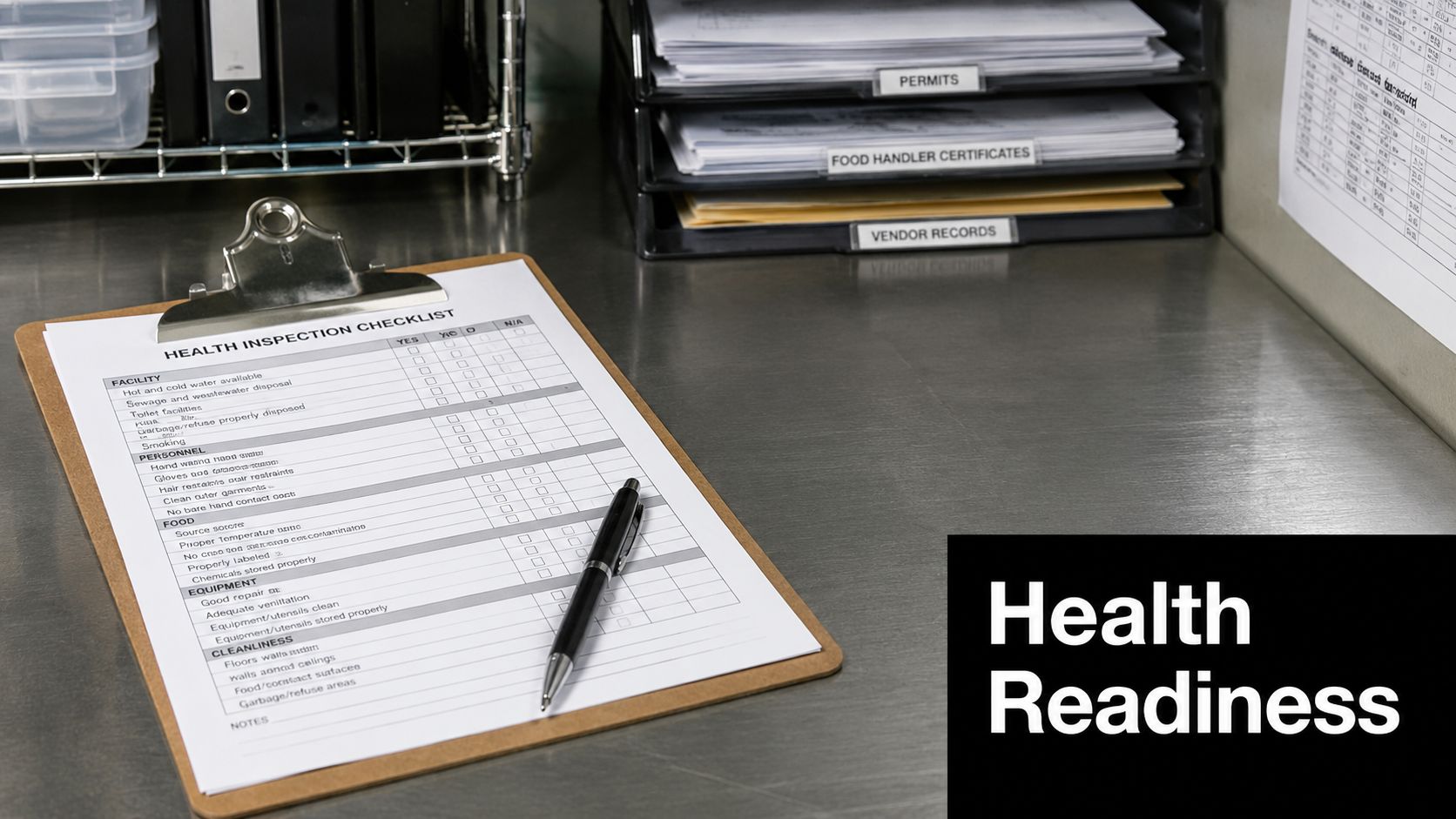
Health inspection readiness increasingly depends on documented process. Guidance for food-service compliance emphasizes a site-specific IPM plan, inspection logs, sighting reports, corrective actions, and follow-up verification, as explained in this restaurant compliance article from Smith IPM.
The records that matter most
If you manage a restaurant in Crown Point or elsewhere in Northwest Indiana, keep your pest records organized in one place that managers can access quickly. Paper binder, digital folder, or both. What matters is consistency.
A strong file usually includes:
- Written IPM plan. This should identify target pests, monitoring methods, service expectations, and responsibilities for staff, maintenance, and pest professionals.
- Sighting log. Record what was seen, where, when, and who reported it.
- Corrective action log. Note what changed after the sighting, such as a leak repair, deep clean, sealing work, or storage adjustment.
- Service reports. Keep technician findings, device checks, treatment notes, and recommendations.
- Device map. Show where monitors, traps, or stations are located so your team can verify them during review.
What inspectors are really looking for
Inspectors aren't only checking whether pests are absent in that exact moment. They're also looking for whether management is in control of the system. A sighting without records suggests chaos. A sighting tied to a log, correction, follow-up, and verification shows management.
That's an important distinction. Restaurants are busy environments. Deliveries arrive. Staff changes happen. Equipment breaks. A documented system proves that pest prevention still holds together when the day gets hectic.
Cleanliness matters. Documentation proves that cleanliness is part of a managed program rather than luck.
Documentation gets stronger when maintenance supports it
Many pest records connect directly to facility issues. Leak repair, floor drain condition, wall sealing, and waste-area maintenance all influence whether your logs show recurring problems or resolved ones. That's also why related compliance items matter. For example, grease management often affects sanitation and pest pressure around drains and back-of-house service areas, so this resource on grease trap compliance by Anytime Drain Solutions can help managers connect plumbing maintenance with cleaner pest records.
A simple review rhythm
Don't wait for an inspection to open the binder. Review your records on a routine schedule with whoever oversees kitchen operations. Look for repeated locations, recurring comments, overdue repairs, or missing follow-up notes.
The best documentation is boring. It's current, legible, complete, and easy to understand.
Your Local Action Plan with The Green Advantage
For restaurant owners, the clearest path is also the most practical. Protect the reputation of the business. Know which pests are most likely to show up. Remove the conditions that support them. Run a real IPM process. Keep records that show your response is organized and repeatable.
What a local restaurant should do next
If you want a usable checklist, keep it short:
- Inspect the entire site. Include doors, drains, storage, equipment lines, utility entries, and dumpster areas.
- Fix the pressure points. Leaks, gaps, clutter, and trash handling problems need correction before they become repeat issues.
- Monitor consistently. Don't rely on memory or occasional sightings.
- Document every response. Turn pest activity into a written process.
- Review the plan with your team. Staff habits decide whether prevention holds up between service visits.
For restaurants that need a more kitchen-specific service framework, this commercial kitchen pest control page is a useful next step.
What working with a provider should feel like
A professional restaurant pest program should start with a thorough inspection, not a generic treatment pitch. The site needs to be evaluated based on layout, food handling areas, moisture sources, employee habits, receiving patterns, and structural vulnerabilities.
After that, the plan should be clear. What's being monitored. What needs repair. What staff should change. What gets documented. What follow-up looks like. Restaurant owners shouldn't have to guess whether the program is working.
In Crown Point and nearby Northwest Indiana communities, that local familiarity matters. Restaurant buildings differ, but the pressure points are often similar. Back entries, drain lines, delivery flow, and seasonal moisture conditions all shape what an effective pest control plan looks like.
A strong partnership doesn't just reduce pest activity. It makes the operation easier to manage. Managers get clearer records. Staff know what to watch for. Owners have more confidence going into inspections and less stress when business is busy.
If your restaurant in Crown Point, IN or the surrounding Northwest Indiana area needs a practical pest prevention plan, contact The Green Advantage to schedule an inspection or request a quote. The right system protects your food safety program, your inspection readiness, and the reputation you've worked hard to build.