
You hear scratching in the wall after dark. The dog keeps staring at the same corner of the kitchen. Then you open the pantry and find a few droppings behind the pet food bag.
That's usually the moment rodent control stops feeling like a small annoyance and starts feeling personal. In Crown Point, IN and across Northwest Indiana, homeowners deal with this every year, especially as the weather shifts and mice start looking for warmth, food, and quiet places to nest.
Eco friendly rodent control makes sense here because homeowners generally seek to avoid a heavy-handed approach inside the home if possible. They want the problem solved, but they also want a method that's thoughtful, targeted, and safe around daily family life. That means focusing on how rodents got in, what's keeping them there, and what will stop the cycle from repeating.
If you're in the middle of buying a home and trying to spot issues before move-in day, a practical resource like this Vancouver house buying checklist can help you think through structural details that often overlap with pest entry risks.
For homeowners already seeing signs, it helps to know what you're looking at before it grows into a bigger issue. This guide to signs of rodent infestation can help you confirm whether the noises and mess you're seeing point to mice or rats.
Hearing Unwanted Guests? A Homeowner's Guide to Rodent Control
In Crown Point, rodent problems often start subtly. A few sounds in the attic. A chewed bag of bird seed in the garage. Grease marks along a baseboard that didn't seem important at first.
Then the pattern becomes obvious.
What homeowners usually notice first
Some of the first warning signs are easy to dismiss:
- Nighttime scratching: Often heard inside walls, ceilings, or under floors.
- Droppings near food or water: Common around pantries, pet bowls, utility rooms, and garages.
- Gnawing damage: Cardboard, food packaging, insulation, and soft materials get chewed fast.
- A stale or musky odor: More noticeable in enclosed areas like crawl spaces or cabinets.
What makes this stressful isn't just the animal itself. It's the uncertainty. Homeowners want to know if one mouse got in by accident, or if there's already a nest somewhere in the house.
A rodent issue rarely stays limited to the spot where you first notice it.
That's why a calm, methodical response matters. If you rush straight to sprays, random traps, or store-bought repellents, you can spend a lot of time without fixing the actual reason rodents are staying on the property.
Why eco friendly rodent control matters locally
In Northwest Indiana, homes deal with changing temperatures, attached garages, older utility penetrations, and seasonal shelter pressure. Those conditions make prevention just as important as removal.
A practical eco friendly rodent control plan doesn't start with broad pesticide use. It starts with inspection, exclusion, sanitation, and targeted action. That approach gives homeowners in Crown Point a clearer path forward, whether they're searching for pest control near me, an exterminator near me, or long-term residential pest control that won't create new problems while solving the current one.
The Green Advantage Approach to Pest Management
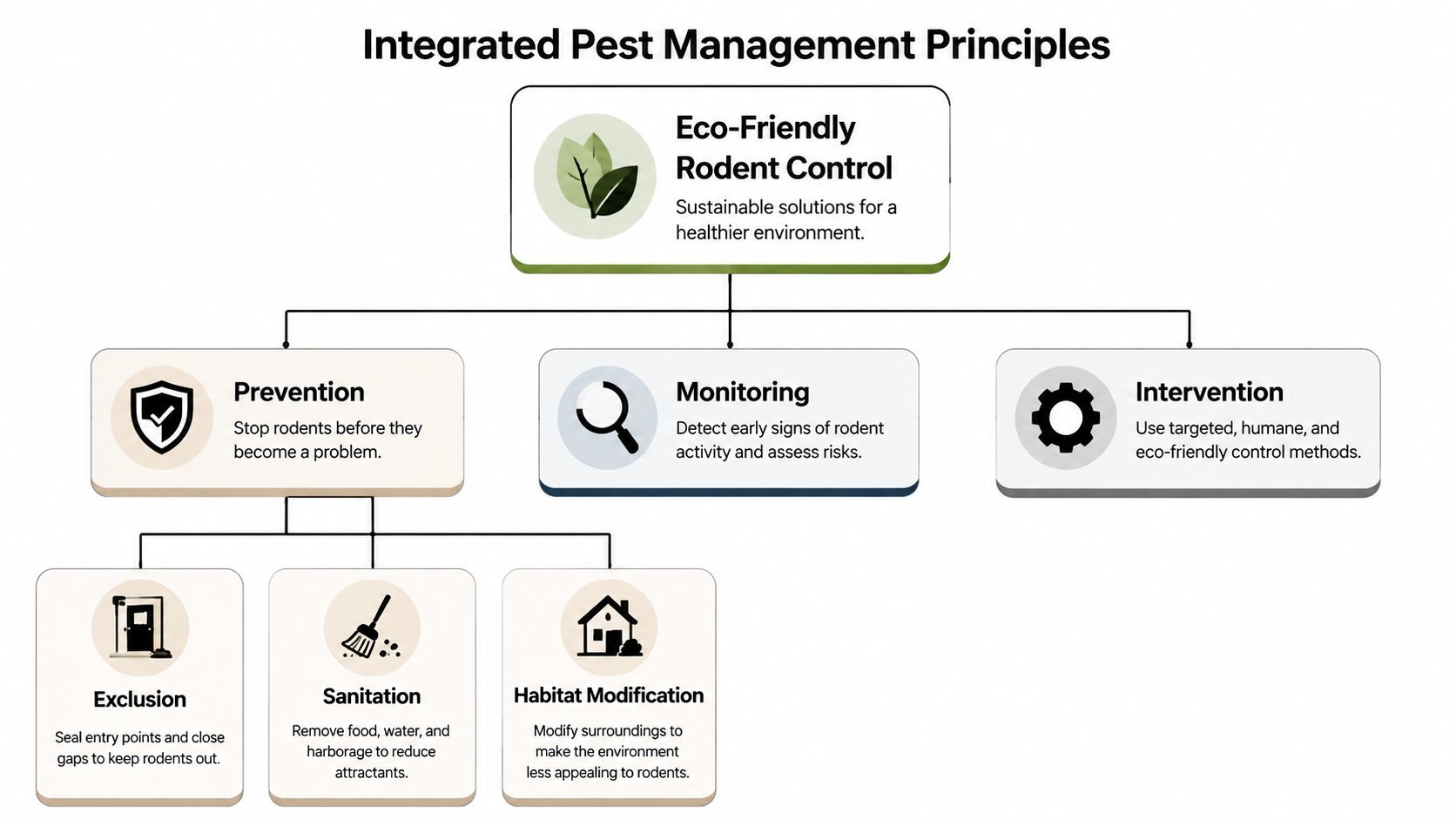
Eco friendly rodent control is really an Integrated Pest Management, or IPM, job. That means the focus shifts away from routine chemical use and toward prevention, sanitation, exclusion, and monitoring. It's a practical model, not a trendy label. It has also become more relevant as the U.S. pest control market is projected to grow from $22.7 billion in 2022 to $29.1 billion by 2026 according to PestPac's pest control industry trends overview.
What IPM looks like in a real house
Most homeowners think rodent control means traps or bait. Those tools can matter, but they aren't the whole job.
IPM usually works in four layers:
| Step | What happens | Why it matters |
|---|---|---|
| Inspection | Technicians look for entry points, droppings, rub marks, nesting areas, and attractants | You can't solve what you haven't mapped |
| Exclusion | Gaps, seams, penetrations, and vulnerable openings get sealed | Rodents keep returning if the structure stays open |
| Sanitation | Food, water, clutter, and hiding areas get addressed | Rodents stay where conditions support them |
| Monitoring | Activity is tracked with traps, follow-up checks, and site-specific adjustments | Good control depends on proof, not guesswork |
A good IPM program explains the why behind every recommendation. If someone only wants to place traps and leave, they're treating symptoms.
What eco friendly really means
Eco friendly doesn't mean doing nothing. It also doesn't mean every “natural” idea will work.
It means using the least disruptive method that still solves the problem. In many rodent cases, the strongest move is physical correction. Seal the opening. Remove the food source. Cut off access to nesting spots. Then monitor for activity and use targeted control only where it's needed.
Homeowners who want a broader overview of lower-toxicity options can review these environmentally friendly pest control methods.
Practical rule: If the structure is still open and food is still available, no trap plan will hold for long.
That's the difference between quick relief and lasting rodent control in Crown Point, IN.
Your First Line of Defense Sealing Your Home
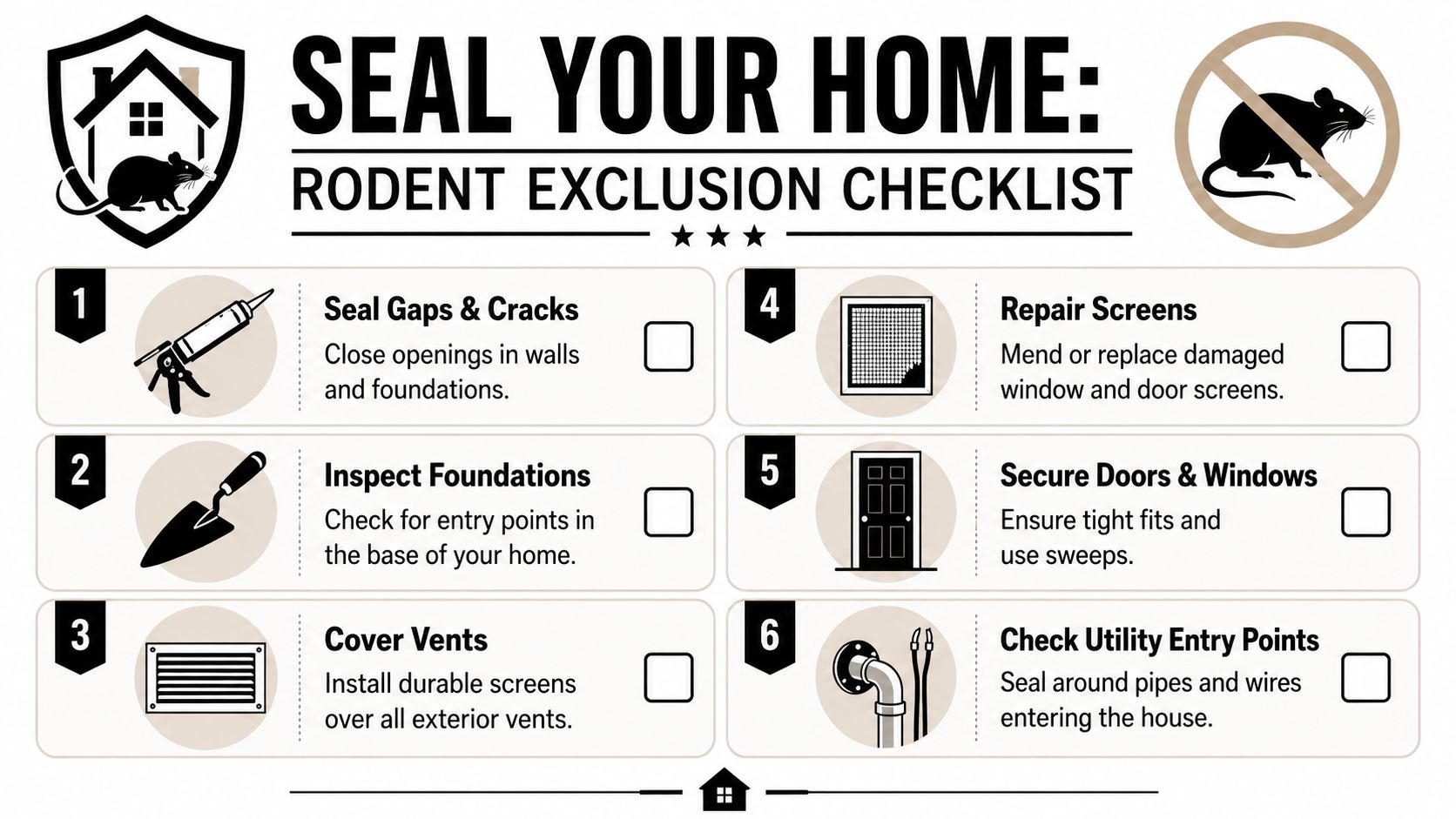
The most effective eco friendly rodent control step is often the least glamorous. Seal the structure. A technically sound program follows IPM in a clear order: remove attractants first, then block access, then monitor and trap. Guidance on eco-friendly rodent control also emphasizes sealing openings at ground level and on roofs because rodents exploit very small entry points, as outlined by Bloc's eco-friendly rodent control guidance.
A simple visual checklist helps homeowners know where to start.
Where Crown Point homes usually have vulnerabilities
In Northwest Indiana, the common problem spots are predictable. Rodents don't need a dramatic opening. They take the smallest weakness and turn it into a regular route.
Check these areas first:
Utility entry points
Look around pipes, cable lines, conduit, and outdoor spigots. If daylight shows through, it needs attention.Garage door corners and sweeps
Garages are one of the easiest entry zones for mice. Damaged rubber seals leave enough space for repeated access.Foundation cracks and expansion gaps
Small gaps near ground level matter more than many homeowners expect.Roof edges and soffits
Openings higher on the house are easy to miss during a quick walkaround.Door thresholds and weather stripping
Exterior doors should close tightly with no visible gap.
If soffit or fascia damage is creating openings near the roofline, outside repair support like Moore Construction Co. repair help can be useful when the issue is more structural than cosmetic.
Materials that make sense and mistakes to avoid
Homeowners can handle some exclusion work themselves if the openings are limited and easy to reach.
| Area | Common material | Best use |
|---|---|---|
| Small cracks | Exterior-grade sealant or caulk | Narrow seams and finish work |
| Utility gaps | Copper mesh or steel wool paired with sealant | Openings that need filler plus seal |
| Door bottoms | Door sweeps | Straight-line gaps at thresholds |
| Vents | Durable screening | Preventing access while preserving airflow |
Don't rely on foam alone where rodents can chew. Don't use repellent as a substitute for a hole repair. And don't stop at the spot where you heard noise. Entry points are often several feet away from the area where activity shows up indoors.
Here's a useful walkthrough before you start sealing:
If rodents can still enter at night, you haven't fixed the infestation. You've only interrupted it.
When DIY sealing works
DIY exclusion makes sense when:
- Activity seems light: You've seen a small amount of fresh evidence in one area.
- Openings are visible: Gaps are easy to identify around doors, pipes, vents, or the foundation.
- There's no sign of widespread nesting: No repeated noises in multiple walls, attic zones, or crawl space sections.
When the house has multiple access points, repeat activity, or hard-to-reach roofline defects, it usually moves beyond a weekend project.
Making Your Property Unattractive to Rodents
A sealed house helps. A messy property invites trouble right back.
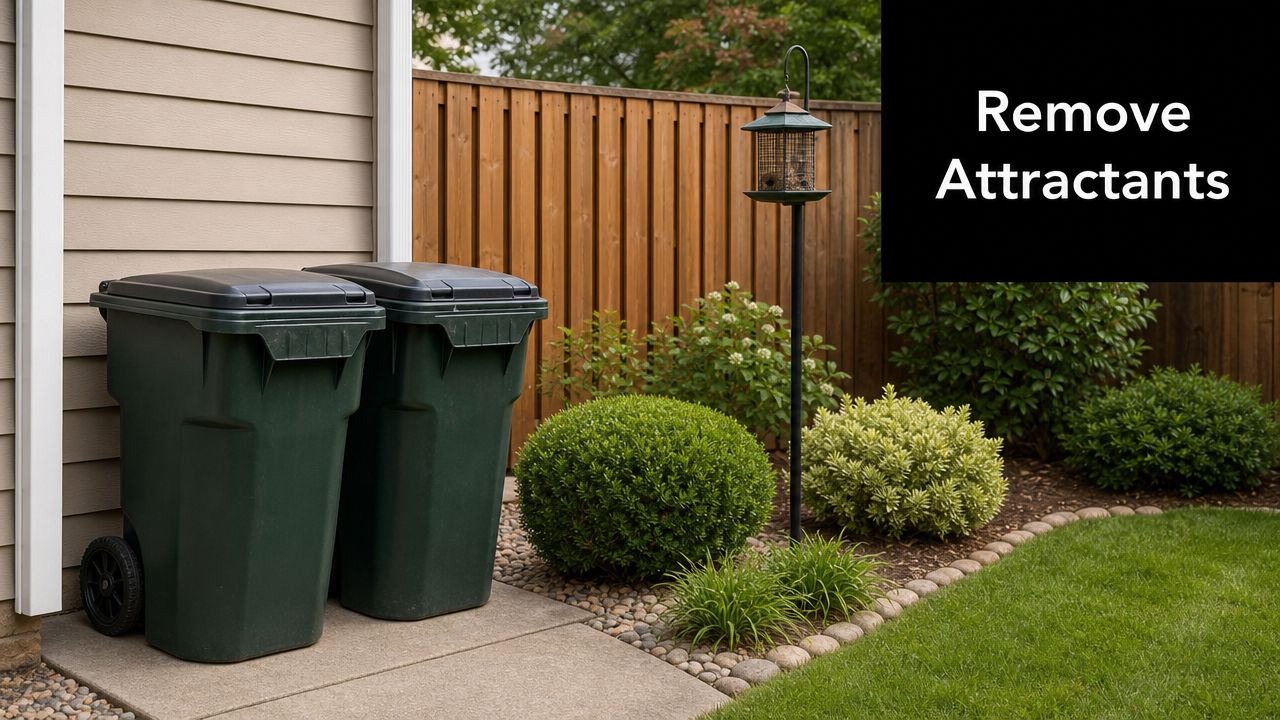
Rodents stay where they can eat, drink, and hide with minimal risk. That's why habitat modification matters so much in eco friendly rodent control. If the yard, garage, trash area, and storage habits stay favorable to rodents, even good exclusion work faces more pressure.
What works better than most homeowners think
The most reliable changes are usually simple.
- Secure trash properly: Use tight-fitting lids and avoid overflow around bins.
- Store pet food and bird seed in solid containers: Thin bags are easy targets in garages and sheds.
- Pull clutter away from walls: Cardboard, paper, and crowded storage create sheltered runways.
- Reduce overgrowth near the foundation: Dense vegetation gives rodents cover as they approach the structure.
- Move firewood away from the house: Wood piles create shelter and make inspection harder.
- Address moisture issues: Leaky hose bibs, standing water, and damp corners help support activity.
These steps don't look dramatic, but they change the site conditions rodents rely on.
What sounds natural but often disappoints
Homeowners waste time on ideas commonly found online. Many online pages repeat the same ideas about essential oils, plant-based sprays, and scent deterrents. The problem is that “natural” doesn't automatically mean “effective for rodents.” The University of Florida notes that essential-oil and plant-based repellents are mainly targeted at insects rather than rodents, as highlighted by the Center for Biological Diversity's rodent control discussion.
That doesn't mean every scent product is useless in every setting. It means you shouldn't expect peppermint oil or ultrasonic gadgets to solve an active mouse problem in the walls.
A practical comparison
| Method | Reliability | Best use |
|---|---|---|
| Sanitation and food storage | High | Core prevention |
| Vegetation reduction | High | Reduces cover near the home |
| Trash control | High | Cuts off regular feeding opportunities |
| Essential oils | Limited | At most, a minor supplemental step |
| Ultrasonic devices | Limited | Unreliable as a stand-alone method |
| Random repellent sprays | Limited | Often inconsistent and short-lived |
Homeowners usually get the best results from boring fixes, not clever gadgets.
For residential pest control and commercial pest control alike, the strongest eco friendly rodent control programs are built around site correction. Deterrents can play a supporting role, but they don't replace sanitation.
Northwest Indiana's Seasonal Rodent Challenges
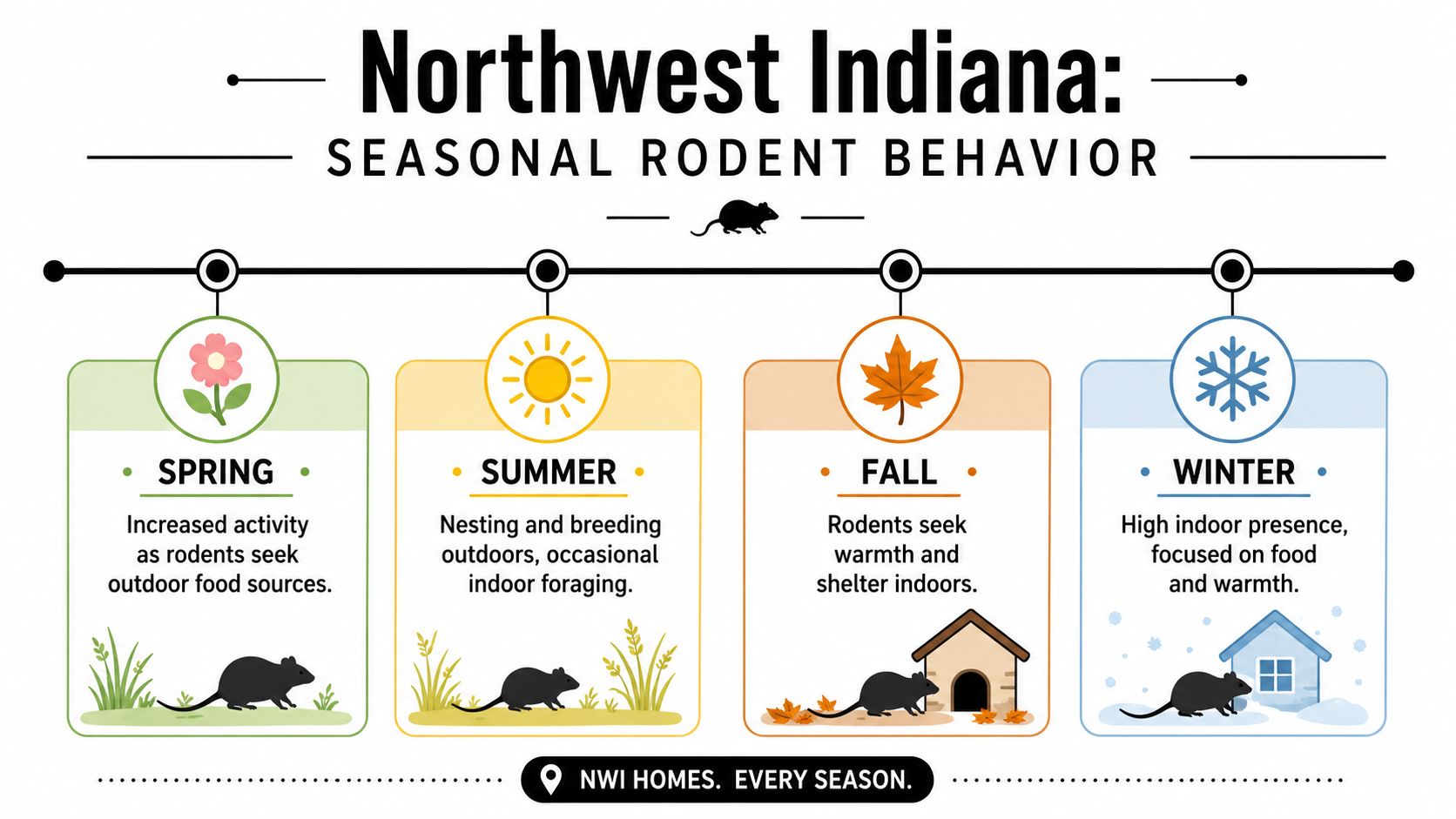
Rodent pressure in Crown Point doesn't stay the same all year. It shifts with temperature, food availability, moisture, and shelter needs. That's why a rodent plan that seems fine in July can fail by late fall.
What each season usually brings
In spring, outdoor activity rises. Rodents move around more visibly, and homeowners may notice signs in sheds, garages, and along fence lines. Winter survivors are active, and any open route into the home still matters.
During summer, food is often easier to find outdoors, but that doesn't eliminate indoor pressure. Garages, crawl spaces, and outbuildings still attract activity, especially where clutter or stored seed is present.
Fall is when many Crown Point homeowners first search for pest control in Crown Point, IN or an exterminator near me. That timing makes sense. Rodents start pushing toward warmth and shelter as outdoor conditions become less forgiving.
Why fall and winter are the pressure months
Once temperatures drop, even a small exterior gap becomes important. Mice don't need much encouragement to shift from the yard to the wall void.
Watch more closely in fall and winter for:
- Fresh droppings in utility areas
- Noises after dark in ceilings or walls
- New gnawing around pantry goods or pet food
- Tracks or smudges near garage edges and doors
In Northwest Indiana, the best time to rodent-proof a house is before the weather forces rodents to choose your house over the outdoors.
Winter often brings the highest indoor visibility. Rodents focus on food and warmth, and small unresolved issues become obvious. By spring, homeowners may think the problem “went away,” when in reality activity just shifted back outside. That seasonal lull can be the right time to fix structure and sanitation before the next push indoors.
Knowing When to Call a Professional Exterminator
Some rodent issues are manageable with basic cleanup, a few traps, and small repairs. Others aren't. The hard part is knowing the difference before you lose time.
If you've set traps, cleaned up food, and sealed what you could reach, but you still hear regular movement or keep finding fresh droppings, the problem is likely established. At that point, searching for an exterminator in Crown Point, IN isn't overreacting. It's usually the most efficient decision.
Signs the job has moved beyond DIY
Call for professional help when you notice any of these conditions:
- Daytime sightings: Rodents seen during the day can point to heavier pressure or disrupted nesting.
- Repeated fresh droppings: Especially after cleanup.
- Activity in multiple zones: Attic, garage, basement, kitchen, and crawl space signs at the same time.
- Persistent scratching inside walls: Noise that continues after basic trapping attempts.
- Chewed wiring or insulation: This shifts the problem from nuisance to property risk.
- Multi-unit or commercial settings: Shared walls and recurring access make DIY much harder.
A lot of homeowners also underestimate the risk of using over-the-counter poison incorrectly. The issue isn't only whether a product kills rodents. It's where the bait is placed, how much is used, what non-target animals may contact it, and whether the structure still has uncorrected entry points.
Why professional low-toxicity work is different
Scientific literature supports a low-toxicity approach, but it also makes an important point. Reducing dose changes environmental risk. It does not remove risk entirely. In one study, anticoagulant combinations remained effective even when active ingredients were reduced, indicating that calibrated baiting by professionals can preserve efficacy while lowering chemical load and non-target risk, as reported in this peer-reviewed study on reduced-active rodenticide use.
That matters in real homes with pets, children, and wildlife nearby.
A professional approach should answer questions like these:
| Question | DIY guesswork | Professional process |
|---|---|---|
| Where are rodents entering? | Often uncertain | Mapped during inspection |
| Is bait appropriate? | Frequently overused or misplaced | Used selectively and secured when needed |
| Why do they keep returning? | Assumed to be trap failure | Usually tied to sanitation or exclusion gaps |
| How is success measured? | “I haven't seen one lately” | Based on evidence, follow-up, and reduced activity |
If you're also budgeting for service and comparing options, broader pricing context like this Can Do Duct Cleaning pest costs can help you think through the factors that affect final pricing, even though every rodent job should still be evaluated on-site.
What to Expect from The Green Advantage Pest Control
Homeowners usually feel better once they know what the service process looks like. Rodent work shouldn't feel mysterious. It should feel organized.
The shift toward lower-risk pest management is part of a larger market move toward science-based, preventive service. The natural pest control market was valued at USD 9.5 billion in 2025 and is projected to grow at a 12% CAGR through 2030 according to Be River Friendly's eco-friendly pest solutions overview. That lines up with what many Crown Point homeowners want now. Fewer broad treatments, more targeted decisions, and better long-term prevention.
What the service process usually includes
A solid rodent service starts with a thorough inspection. That means looking beyond the obvious droppings in the pantry and checking the exterior, garage, roofline, utility penetrations, storage patterns, and moisture conditions that support activity.
From there, the recommendations should be specific. Not generic. A house with garage door gaps and pet food storage problems needs a different plan than a commercial space with roofline entry and dumpster pressure.
The Green Advantage offers rodent exclusion that includes trapping and removal while sealing the home to help prevent return. In practical terms, that means the service isn't limited to catching what's already inside.
What homeowners should expect to hear clearly
Good communication matters just as much as the treatment itself.
You should expect clarity on:
- Where activity was found
- Which openings need correction
- What sanitation changes will help
- Whether trapping alone is enough
- Whether a targeted low-toxicity product is warranted
- What follow-up should look like
The right rodent plan should make the home harder to enter, less rewarding to stay in, and easier to monitor over time.
Why this matters for peace of mind
Rodent control isn't only about removing an animal. It's about getting your house back. That's true whether you own a single-family home in Crown Point, manage rentals in Northwest Indiana, or need commercial pest control for a business property.
A well-run service visit should leave you with fewer unknowns, not more. You should know what caused the issue, what was done, what still needs attention, and what signs to watch going forward. That's what turns a stressful pest problem into a manageable one.
If you're hearing scratching, finding droppings, or dealing with repeat rodent activity, it's time to get a clear answer. Contact The Green Advantage to schedule an inspection, request a quote, and get a practical plan for eco friendly rodent control in Crown Point, IN and nearby Northwest Indiana service areas.