
Pest control prices in the Crown Point area usually fall into a few familiar ranges. A one-time visit is commonly about $100 to $341 per job, while recurring service often lands around $100 to $300 per quarterly visit or $30 to $70 per monthly visit based on broader U.S. pricing patterns.
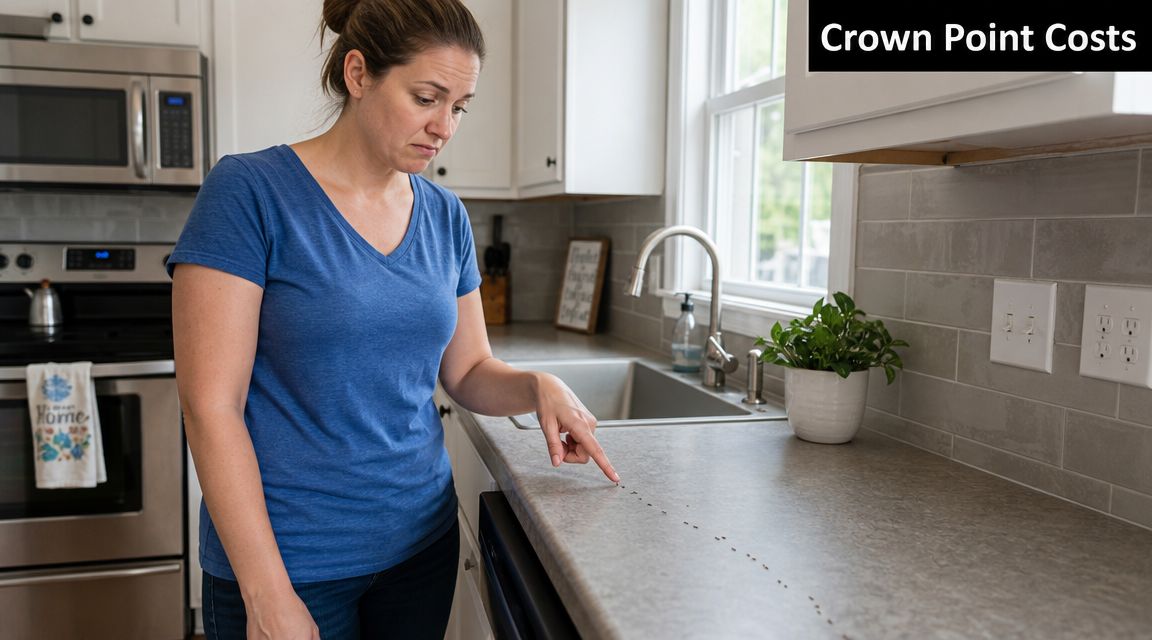
If you're standing in the kitchen looking at ants on the counter, hearing scratching in a wall, or noticing more spiders than usual in the basement, cost is usually the first question right after, “How bad is this?” That's a normal reaction. Most homeowners don't call pest control every day, so it helps to know what drives the bill and what you're paying for.
In Crown Point and across Northwest Indiana, pest problems aren't all priced the same because the work isn't all the same. Preventive residential pest control is a different service from chasing an active infestation. A small ant trail at the sink is different from a termite issue, and a one-time treatment is different from a plan designed to keep pests out year-round. This guide gives you a practical look at pest control services prices, what makes quotes go up or down, and how to judge value without getting distracted by the cheapest number.
Your Guide to Pest Control Costs in Crown Point Indiana
You spot ants crossing the counter before breakfast, or you notice fresh mouse droppings in the garage while grabbing a rake. The first concern is the pest. The second is the bill.
That reaction makes sense. Homeowners in Crown Point want a clear price range, a clear reason for that price, and a clear answer on whether they need a one-time treatment or a plan that keeps the problem from coming back.
What most homeowners should expect
General pest control usually falls into familiar price ranges. Earlier figures in this guide give a useful national benchmark for one-time visits and recurring service, but those numbers only help if you pair them with local context.
In Crown Point and across Northwest Indiana, pricing often shifts for practical reasons. Older homes can have more entry points. Weather swings can push pests indoors fast. A simple perimeter treatment for seasonal insects is a different job from tracking down a rodent entry point or dealing with repeated activity inside the home.
That is why a quote should do more than show a dollar amount.
Why neighbors in Crown Point ask for transparency
Homeowners in Crown Point, IN want to know what they're buying. They want to know whether the treatment is low-odor, whether it is applied carefully around kids and pets, whether follow-up is included, and whether the company is addressing the source of the problem instead of just treating what is visible that day.
At The Green Advantage, that conversation matters. Eco-friendly service does not mean cutting corners. It means choosing products and application methods carefully, explaining where the money goes, and recommending the level of service that fits the problem instead of pushing the biggest package.
A low price can be fine for a minor issue. It can also turn expensive if the service is rushed, the inspection is thin, or the pest returns two weeks later.
The best quote is usually the one that explains the work, the expected results, and the safety steps in plain language.
Key Factors That Determine Your Pest Control Cost
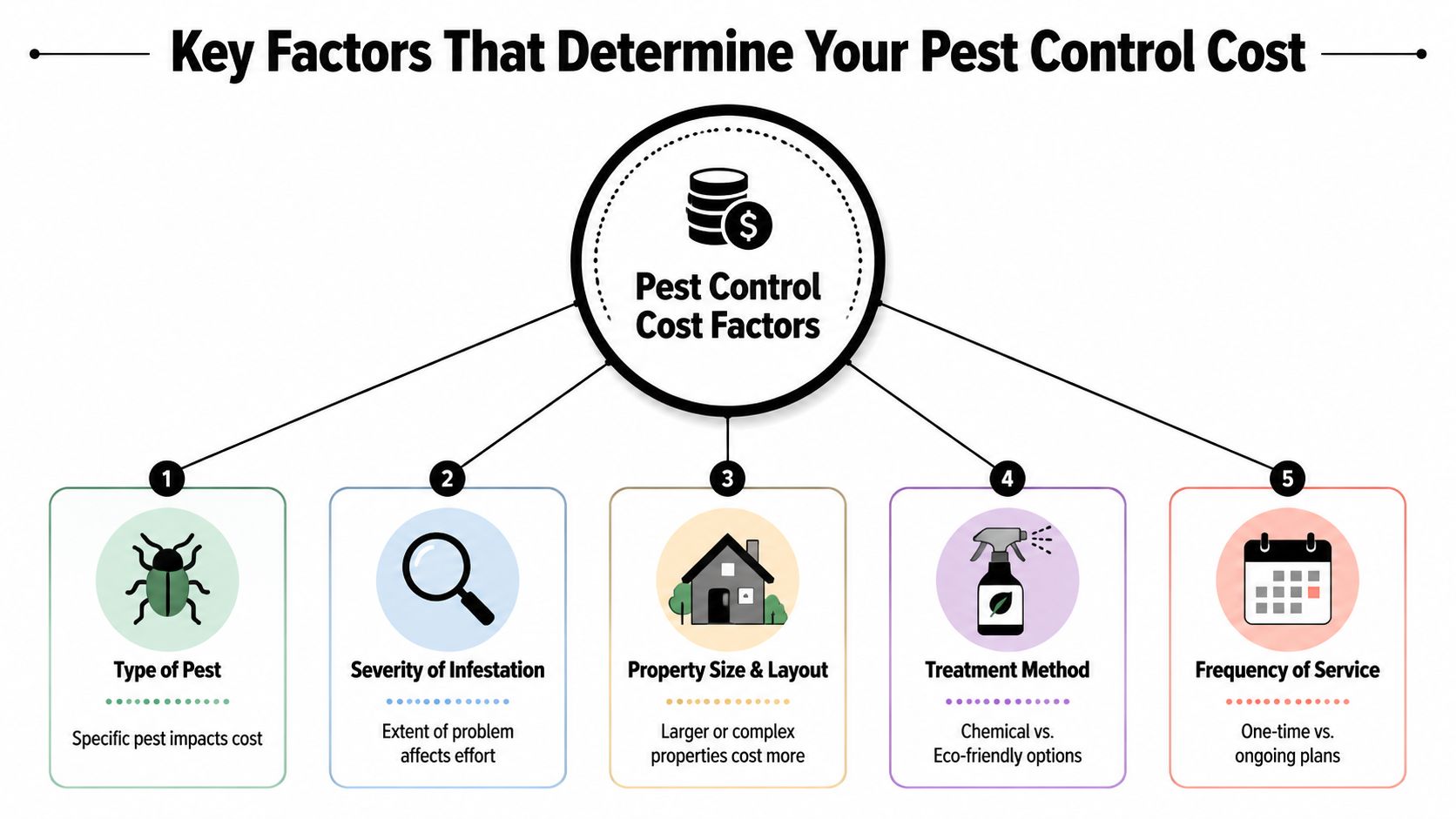
Two homes on the same block can get very different pest control quotes, and there is usually a good reason for it. In Crown Point, the price is shaped by what is being treated, how far the problem has spread, how the property is built, and whether the goal is quick relief or steady prevention.
The pest itself changes the scope
Ants in a kitchen, wasps under an eave, mice in a basement, and termites in structural wood are not priced the same because they are not the same job. Some problems can be handled with a targeted exterior treatment and a few interior placements. Others require a detailed inspection, more time to find the source, and return visits to confirm the activity is under control.
That difference matters in real life. A basic service for occasional invaders is usually simpler than a rodent issue that needs trapping and entry-point recommendations, or a termite concern that carries structural risk.
Severity changes labor and follow-up
A light issue is cheaper to correct than an established infestation. Once pests have spread into multiple rooms, wall voids, attic spaces, or crawlspaces, the work usually takes longer and follow-up matters more.
This is also why recurring service often makes sense for homes that deal with repeat pressure through the year. Homeowners comparing visit schedules can get a clearer feel for that trade-off in this guide to monthly pest control service costs.
Here's a short explainer that helps many homeowners understand how companies think about cost and treatment planning.
Property size and layout affect labor
Square footage matters, but layout often matters just as much. A compact ranch with open access is faster to inspect and treat than a larger home with a finished basement, attached garage, crawlspace, heavy landscaping, detached shed, or a yard that backs up to woods or water.
Older Crown Point homes can add another layer. More gaps, more settling, and more hidden entry points often mean more inspection time before treatment even starts.
Commercial properties usually show this even more clearly. Food prep areas, storage rooms, shared walls, receiving doors, and stricter documentation all increase the scope.
Treatment method changes the quote
Different pest problems call for different tools. A baiting program, crack-and-crevice application, dusting voids, exterior perimeter treatment, trapping plan, exclusion recommendation, or mosquito yard treatment each carries a different amount of labor and material.
At The Green Advantage, eco-friendly service is not a shortcut and it is not just a different label on the truck. The value comes from careful product selection, low-odor application methods where appropriate, and treatment plans built around the pest activity and the people living or working in the space.
A lower price can still be the right choice for a small, simple issue. If the quote skips inspection detail, source identification, or follow-up expectations, the lower number may only be cheaper on the first visit.
- Targeted treatment fits problems where the source is clear and accessible.
- Preventive service often works well for seasonal insects such as ants, spiders, and other perimeter pests.
- Exclusion and sanitation guidance matter more when rodents or recurring insects keep finding a way back inside.
A low quote with no explanation usually means part of the job is being left out.
Frequency is often the biggest pricing lever
One-time service and ongoing service solve different problems. A single treatment can be the right fit for a small, isolated issue. A quarterly or monthly plan is usually built to keep seasonal pest pressure from turning into a larger, more expensive problem later.
That is why prices vary so much from one quote to another. The key question is not just what the visit costs today. It is what level of protection the property needs, and whether the plan is likely to hold up through a Northwest Indiana season.
Typical Pest Control Prices in Northwest Indiana
The most useful way to look at local pricing is by service type, not by one big average. Homeowners searching for residential pest control in Crown Point usually want to know whether they need a one-time treatment, an ongoing quarterly plan, or a more specialized service for a specific pest.
National consumer reporting shows the market is broad. The average pest control job is near $171, with a common range of $50 to $500, while severe cases like termites or bed bugs can rise much higher, including termite fumigation at as much as $8,000 and bed bug removal up to $6,000, according to this consumer pricing report on pest control costs. That spread matters because it shows why a simple ant or spider treatment shouldn't be compared to a specialty eradication project.
Sample Pest Control Estimates for the Crown Point Area 2026
| Service Type | Frequency | Estimated Price Range |
|---|---|---|
| One-time general pest treatment for common insects | One-time | $100 to $341 |
| General pest treatment for common insects | One-time | $100 to $260 |
| Quarterly home protection plan | Quarterly | $100 to $300 per visit |
| Monthly recurring pest service | Monthly | $30 to $70 per visit |
| Tri-annual recurring program | Annual total | $300 to $900 per year |
| Monthly recurring program | Annual total | $480 to $840 per year |
| Mosquito treatment | Per visit | $80 to $150 |
| Termite control | Project-based | $200 to $2,500 |
| Inspection fee | One-time inspection | $125 to $450 |
How to read this table correctly
This table is most helpful when you use it for direction, not as an automatic quote. If you're seeing ants, spiders, or roaches, the one-time and recurring general service ranges are usually the most relevant. If you're dealing with termites, mosquitoes, or a more complex issue, the pricing logic changes fast.
A few practical takeaways:
- General pests stay in the lower bands when the issue is caught early and the service is straightforward.
- Recurring plans spread cost differently because they're built around prevention and seasonal coverage.
- Specialty pests cost more when identification, access, follow-up, or structural risk make the work more involved.
For homeowners trying to budget over time rather than by a single invoice, this guide to monthly pest control cost expectations can help frame the difference between a single treatment and an ongoing protection plan.
What works when comparing quotes
The most reliable comparison is to line up quotes by scope. Ask whether each proposal includes inspection, treatment areas, follow-up expectations, and what happens if pests return. If one company gives a lower number but leaves out those details, you're not comparing the same service.
That matters a lot in Northwest Indiana, where seasonal pest issues shift through the year. A quote should reflect what's happening on your property, not just a canned price sheet.
Residential vs Commercial Pest Control Pricing
Residential and commercial work can both fall under pest control, but the job isn't priced the same because the responsibilities aren't the same.
What residential pricing usually reflects
For a home, the focus is comfort, health, and protecting the structure. Most homeowners care about common invaders such as ants, spiders, wasps, rodents, and seasonal insects. The treatment plan usually centers on inspection, targeted application, perimeter defense, and practical prevention advice.
Residential pricing often depends on things like:
- Home size and access because treatment time changes with layout.
- Type of pest activity because a routine ant issue is different from a rodent or termite concern.
- Service cadence because one-time help and year-round prevention are priced differently.
Why commercial quotes are usually more customized
Commercial pest control usually involves more moving parts. Businesses may need scheduled monitoring, service logs, after-hours access, more frequent visits, staff coordination, and tighter documentation. A restaurant, office, warehouse, or property management account each presents a different level of risk and different service expectations.
That's why commercial pricing rarely fits a simple flat menu. In many cases, the company needs to see the site before giving a precise proposal.
Commercial clients usually pay for consistency, documentation, and reduced disruption as much as for the treatment itself.
Cost comparison is easier when you compare service models
One useful way to think about commercial maintenance pricing is to compare it with other recurring building services. For example, this guide to pricing for Flagstaff commercial window cleaning is from a different trade, but it shows the same pattern. The final quote depends on frequency, access, building layout, and how much ongoing maintenance is expected.
That same logic applies to commercial pest control in Crown Point and nearby Northwest Indiana service areas. A business with routine monitoring needs a different pricing structure than a homeowner calling for a one-time residential pest control visit.
Understanding Your Quote from The Green Advantage
A clear quote should tell you more than a price. It should tell you what problem was found, where the issue is happening, what treatment is being recommended, and what follow-up you should expect.
What should be listed in writing
If you're reviewing a quote for pest control in Crown Point, look for these basics before you focus on the total:
- Pest identified so you know the recommendation matches the actual issue.
- Treatment areas such as interior trouble spots, exterior perimeter, garage, attic access points, or yard zones.
- Service type including whether it's a one-time response or a recurring prevention plan.
- Follow-up expectations so you know if another visit is likely or already included.
- Preparation instructions if the technician needs access, cleanup, or changes before treatment.
A good quote helps you judge value because you can see the scope, not just the bill.
Questions worth asking before you approve service
Some questions save people money and frustration:
Is this aimed at active control or prevention?
That changes both price and expectations.What happens if the pest activity continues?
Some services involve planned follow-up while others do not.Are there non-treatment steps I should take?
Sealing gaps, trimming vegetation, reducing moisture, or changing storage habits can make service more effective.Will the treatment be customized for my property?
Cookie-cutter service often misses the source of the problem.
For homeowners who want more background on the company's process and service approach, this page explains why customers choose The Green Advantage for pest control.
The best quote is usually the one that makes the work easy to understand before the technician ever starts.
What not to accept
Be careful with quotes that are little more than a number and a vague label like “general spray.” If a company can't explain where they're treating, why they're treating there, and whether more than one visit may be needed, you're left guessing.
That's especially risky with recurring pests. A cheap first visit can turn expensive if it doesn't address entry points, nesting behavior, or seasonal pressure around the home.
Value Over Price The Green Advantage Approach
A low quote can feel like a win until the ants come back in three weeks, the wasps are still active by the garage, or the treatment leaves you wondering whether it was applied safely around kids, pets, or pollinator areas. In Crown Point, the better question is what you are getting for the price.
Good pest control value shows up in the result and in the process. The technician identifies the actual source of the problem, treats the right areas with care, and looks for practical corrections that reduce repeat activity. That matters here because local pest pressure changes fast with weather, moisture, and the way each property is laid out.
At The Green Advantage, the goal is not to blanket a property with as much product as possible. The goal is to solve the issue with targeted treatment, thoughtful product selection, and clear guidance on what the homeowner can do to help keep pests from returning.
That approach often saves money over time.
A cheaper service can turn into a more expensive one if it misses entry points, skips follow-up where needed, or treats symptoms without addressing the reason pests are there in the first place. Ants around a slab, spiders in a basement, and stinging insects near rooflines all call for different decisions. Price alone does not tell you whether those decisions are being made well.
An eco-minded approach also has real trade-offs, and honest companies should say so. In some cases, lower-impact methods require better inspection, more precise placement, or stronger prevention steps on the property to get the same long-term result. The benefit is a treatment plan built to reduce unnecessary exposure while still addressing the pest problem directly.
The National Pest Management Association emphasizes integrated pest management, which focuses on inspection, targeted treatment, and prevention rather than routine over-application. You can see that approach in the association's consumer guidance on pest control and prevention.
For many Crown Point homeowners, value means paying for fewer surprises. It means understanding why a service is priced the way it is, what results are realistic, and whether the plan fits the home instead of forcing the home into a generic program. That is the standard The Green Advantage aims to meet.
Common Questions About Pest Control Costs
Is a one-time service or a recurring plan cheaper?
A lot of Crown Point homeowners ask this after the first warm stretch of spring, when ants show up in the kitchen or spiders start collecting in basement corners. A one-time visit usually costs less upfront. A recurring plan often costs less over the course of a full pest season if the home deals with repeat pressure.
The deciding factor is pattern. If the issue is isolated, a single service may be enough. If pests return every year, or if the property has conditions that keep attracting them, a maintenance plan usually gives you better cost control and fewer surprise visits.
Are eco-friendly pest control services more expensive?
Sometimes, yes. It depends on what the service includes.
Lower-impact programs often rely more on inspection, precise product placement, exclusion advice, and follow-up instead of broad, routine application. That can affect labor and price. It can also reduce unnecessary exposure and lead to a cleaner long-term result when the plan fits the property well.
At The Green Advantage, the question is not whether a service sounds greener on paper. The question is whether it solves the problem safely, with the right level of treatment for the home, family, and pest involved.
Why do some pest quotes vary so much?
Because two quotes can look similar on the surface and cover very different work.
One company may price only the initial spray. Another may include inspection time, entry-point findings, follow-up service, and warranty terms. The pest matters too. General ants and spiders are priced differently than termites, bed bugs, or stinging insects near high rooflines. Property layout, crawlspaces, detached garages, and heavy pest activity can all change the scope.
That is why the lowest number is not always the lower-cost option.
What's usually the smartest way to save money?
Address the problem early.
Small issues are usually simpler to correct than established infestations, especially when pests have had time to spread into wall voids, nesting areas, or multiple rooms. If you already know your home gets the same pest activity each season, prevention is often the steadier financial choice.
The University of California Statewide Integrated Pest Management Program also stresses prevention and early action as part of practical pest management guidance for homeowners and property managers. You can review that approach in its integrated pest management overview.
If you want a quote that explains the work, not just the number, contact The Green Advantage for pest control in Crown Point, IN and nearby Northwest Indiana communities. Whether you need residential pest control, commercial pest control, mosquito reduction, termite evaluation, or help comparing one-time service with a recurring plan, the team can help you understand your options and schedule the right next step.