
On a damp spring evening in Crown Point, it usually starts small. A line of ants shows up by the sink, something rustles in the wall after dark, or a basement spider sighting turns into a second and third one a few days later. Homeowners are not overreacting when they pay attention to those signs. In Northwest Indiana, our wet springs, humid summers, leaf-heavy falls, and cold snaps give pests regular reasons to move closer to the house.
Good pest control around here is less about spraying on sight and more about solving the condition that allowed the pest in. That can mean sealing a gap at the garage slab, drying out a crawl space, trimming back heavy foundation growth, or treating a specific nesting area instead of blanketing the whole home. Families in Crown Point usually want the same thing. They want the problem handled safely, and they want a clear answer about whether it is a one-off issue or the start of something larger.
That local piece matters.
A ranch home near mature trees and a newer subdivision lot near retention ponds can have very different pest pressure, even within the same part of town. I also see how moisture management affects pest activity. Roof edges, gutters, and drainage shape what happens around the foundation, much like protecting Western Washington homes from rain starts with controlling where water goes. Around Northwest Indiana homes, the same principle applies. Water, shelter, and entry points decide a lot of what shows up indoors.
Protecting Your Crown Point Home from Unwanted Pests
You walk into the kitchen early, flip on the light, and spot ants running the edge of the sink. Later that week, a wasp circles the back eave. By the first cold stretch, you hear scratching in the garage wall. In Crown Point, that pattern is common, and it usually means the house is offering something pests want.
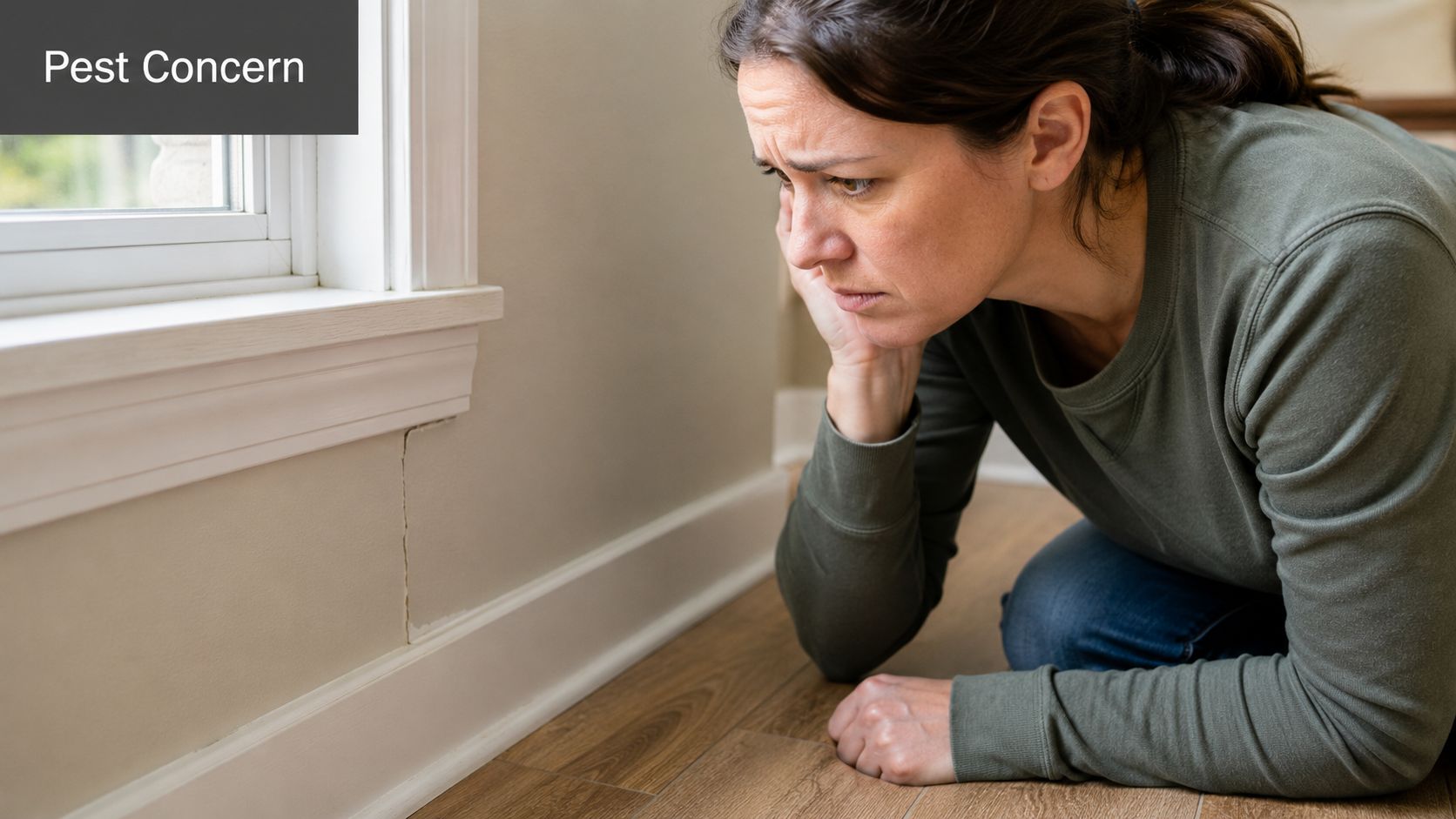
For families here, a pest problem never feels minor for long. It raises real questions about sanitation, hidden damage, and whether kids or pets could come into contact with droppings, stings, or unnecessary pesticide use. The right response is not broad, routine spraying. The right response is to inspect carefully, identify the pest correctly, find the entry or nesting area, and treat only where it makes sense.
That distinction matters in Northwest Indiana.
Homes near wooded lots, drainage swales, retention ponds, or older tree lines often deal with different pest pressure than homes in newer subdivisions with tighter grading and less shade. Wet springs push moisture-loving pests closer to foundations. Hot, humid summers keep ant and mosquito activity going. Fall drives rodents and overwintering insects toward wall voids, attics, and garages. A plan that works in one season, or on one block, may miss the underlying issue on the next street over.
Why homeowners are paying closer attention
Pest control is not a niche home service. Homeowners deal with these problems often enough that the industry has grown steadily, with thousands of companies and specialists working across the country, as noted earlier. That lines up with what we see locally. Calls come in for recurring ants, stinging insects around rooflines, mice after the first temperature drop, and spider activity that usually points to a broader insect food source nearby.
There is also a cost to waiting. A small ant trail can turn into repeated kitchen activity. A single mouse in the garage can become nesting in insulation or stored items. Wasps under an eave can stay manageable for a short window, then become a safety problem near entry doors and play areas.
The trade-off is simple. Early action usually means a smaller, more targeted fix. Waiting often means more labor, more disruption, and more places to inspect and seal.
A house also responds as a system. Roof edges, clogged gutters, damp mulch beds, poor grading, and foundation moisture all affect pest pressure. Homeowners looking at exterior water control can see the same principle in protecting Western Washington homes from rain. Around Crown Point homes, moisture control changes pest activity just as much as it changes wear on the structure.
Practical rule: If pests keep coming back, the house still has an opening, a moisture issue, or an easy food source.
What local service should feel like
Homeowners in Crown Point usually want a calm answer, not a sales pitch. They want to know what the pest is, why it showed up, whether the problem is isolated, and what can be done without turning the house into a chemical cloud.
That is a reasonable standard. Good service should include a plain explanation of what was found, what was treated, what needs to be corrected by the homeowner, and what level of follow-up makes sense. Sometimes a one-time treatment handles the issue. Sometimes the honest answer is that seasonal service, exclusion work, or moisture correction will do more than another spray ever will.
Safe pest management is not about using the most product. It is about using the right method, in the right place, at the right time, for the actual pest in front of you.
Northwest Indiana's Most Common Pests by Season
A typical Crown Point pest call changes with the calendar. In April, it is ants in the kitchen after a wet stretch. In July, it is mosquitoes around the patio and wasps under the eaves. In October, it is scratching in the wall or a mouse in the garage by the first cold snap.
That pattern is normal for Northwest Indiana. Our mix of wet spring weather, humid summers, older neighborhoods, detached garages, and cold winters gives different pests their opening at different times of year.
Seasonal pest activity in Northwest Indiana
| Season | Common Pests | Typical Behavior |
|---|---|---|
| Spring | Ants, spiders, wasps | Ants start foraging indoors as colonies expand and moisture shifts around the foundation. Spiders become easier to notice as insect activity increases. Wasps scout soffits, porch ceilings, sheds, and other protected spots for new nests. |
| Summer | Mosquitoes, wasps, ants | Mosquitoes build up around standing water, dense shade, clogged gutters, and low areas that stay wet. Wasps become more defensive once nests are established near rooflines, decks, and play areas. Ant pressure often spreads from mulch beds, patios, and exterior walls into kitchens, bathrooms, and utility rooms. |
| Fall | Rodents, spiders, overwintering insects | Cooler nights push mice and other pests toward garages, attics, basements, wall voids, and gaps around utility lines. Spiders show up more often because the insects they feed on are also moving inward. Stink bugs and similar overwintering pests gather on sunny exterior walls, then slip inside through small cracks. |
| Winter | Rodents, occasional hidden infestations | Outside insect activity drops, but pests already inside keep moving near warmth, stored food, and water sources. Winter also exposes problems that started earlier, especially in crawlspaces, basements, attics, and storage areas that do not get checked often. |
What homeowners in Crown Point usually notice first
Ants are still one of the first things homeowners spot because they leave visible trails and keep coming back if the colony is established nearby. A few ants at the sink can mean a simple moisture issue under the counter, or it can point to an exterior nest using a gap at the sill plate, window frame, or utility entry.
Rodent activity usually shows up in quieter ways first. Droppings in the pantry. Chewed pet food bags in the garage. A scratching sound after dark in the wall or ceiling.
Mosquito complaints tend to start with the yard, not the house. In Crown Point, that often comes back to shaded fence lines, clogged gutters, birdbaths, low spots in the lawn, or containers that hold water longer than people realize.
For homeowners weighing shortcuts, this breakdown of why DIY pest control often costs more in the long run lines up with what we see locally. The product is only part of the job. Finding the source is what changes the outcome.
Pests follow conditions. Seasonal changes shift moisture, shelter, food access, and entry pressure around the home.
Why generic advice often misses the local issue
National advice has its place, but Northwest Indiana homes have a few patterns that change the job. Freeze-thaw movement opens small gaps around foundations and door frames. Spring rain leaves mulch beds and low grading areas damp for days. Detached garages, older brick, and additions create extra transition points where pests slip in.
Local treatment plans need to account for those details. A summer ant issue near a slab patio is different from ant activity in a damp crawlspace. A fall mouse problem in a newer subdivision still needs exterior exclusion, but an older Crown Point home may also need attention around settling cracks, aging weatherstripping, and utility penetrations that have widened over time.
Season matters. So does the way your property holds water, where the shade sits, what touches the siding, and how tight the structure really is.
Prevention Best Practices and DIY Limitations
A Crown Point homeowner cleans the kitchen, sprays the baseboards, and still finds ants a week later. Or the scratching in the wall stops for a few nights, then starts again when the temperature drops. That usually means the problem was disturbed, not solved.
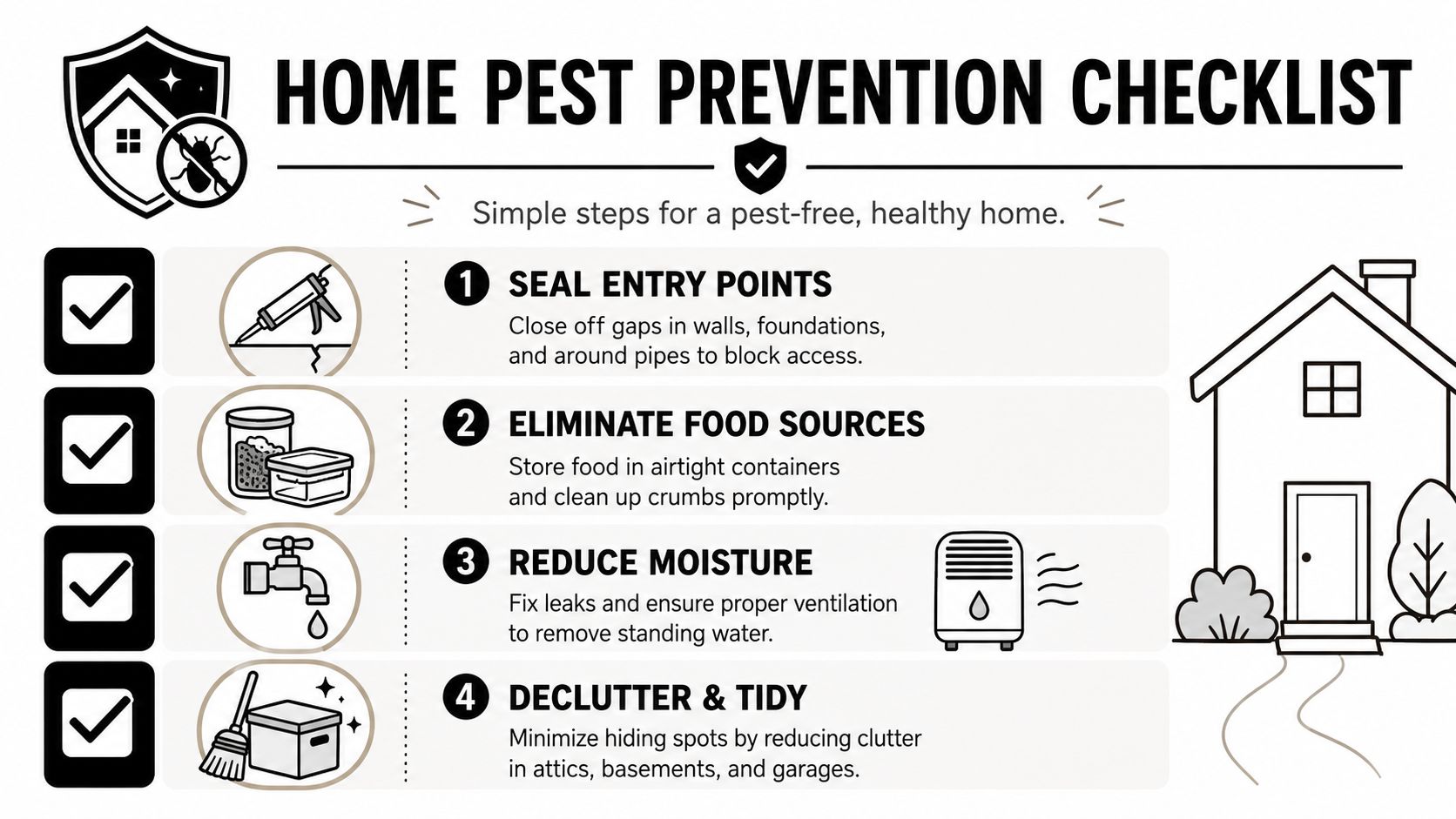
Good prevention focuses on the conditions that let pests stay active around a home. In Northwest Indiana, those conditions often shift with the season. Wet spring soil along the foundation, summer food sources on patios, and fall gaps that open as materials expand and contract all change pest pressure in real ways.
Four prevention steps that matter
Start with the parts of the house pests use every day.
- Seal entry points. Check utility penetrations, garage door corners, worn sweeps, loose weatherstripping, foundation cracks, and gaps around window frames. In older Crown Point homes, small settling gaps and aging trim are common trouble spots.
- Remove food and water sources. Store pantry items well, clean under appliances, avoid leaving pet food out overnight, fix leaks, and empty standing water near the house. Even minor moisture around a laundry area or basement sink can keep activity going.
- Reduce shelter. Cardboard in basements, clutter in garages, firewood stacked against the house, and shrubs touching siding all give pests cover close to the structure.
- Control moisture. Keep gutters clear, improve drainage where water sits, and pay attention to crawlspaces, mulch beds, and shaded areas that stay damp longer than they should.
Those steps sound simple because they are. The hard part is consistency.
A quick visual checklist can help homeowners spot weak points before they turn into an infestation.
Where DIY methods usually fall short
Store-bought products have a place. For a light, occasional issue, a trap or a targeted treatment may reduce activity. The trade-off is that over-the-counter solutions rarely answer the bigger question. Why are pests using this part of the property in the first place?
That is where DIY efforts often stall. Homeowners treat the visible trail, the one mouse, or the insects around a window, but the nesting site, moisture source, or entry route stays active. Repellents can push pests to a different area. Broad spraying can miss the crack, void, or exterior condition that keeps the problem alive.
Natural options have similar limits. Some products can discourage activity for a short period, but they usually do not remove an established colony or stop repeat entry on their own. For families in Northwest Indiana who want lower-impact solutions, the better approach is targeted treatment paired with exclusion and habitat correction.
When it makes sense to stop experimenting
Repeated treatments in the same spot usually point to a missed cause. If ants keep returning to the same kitchen corner, if mice activity picks up every fall, or if spiders and occasional invaders keep showing up in the basement, more product is rarely the answer by itself.
At that stage, inspection saves time and guesswork. This article on why DIY pest control is a false economy explains the pattern well. Homeowners often spend money on short-term relief while the underlying access point or attractant keeps driving the issue.
The goal is not to spray more. The goal is to make the home harder to use.
The True Value of Professional Pest Control Services
You see a few ants near the sink or hear scratching over the garage ceiling, and the first question is usually, "Do I need a spray, or do I need something more?" In Crown Point, that answer depends on what is happening behind the surfaces. Our homes deal with freeze-thaw gaps, damp basements, mulch lines, attached garages, and seasonal pest pressure that changes fast from spring to fall. A treatment only has value if it fits those conditions.
Property protection comes first
Professional pest control protects the parts of the home you do not inspect during a normal week. Sill plates, attic corners, crawlspaces, utility penetrations, window frames, and wall voids are where many problems start and keep going. By the time pests are fully visible in living areas, they have often been using those hidden areas for a while.
That is why a good service call starts with inspection, not product. The job is to identify how pests are getting in, what is helping them stay, and whether the issue is isolated or part of a larger pattern around the structure.
A good technician looks for moisture, nesting pressure, food access, exterior gaps, and movement between indoors and outdoors.
A dead pest on the floor is evidence of activity. Inspection findings show whether the home is actually protected.
Safety and peace of mind matter too
Families here ask practical questions, and they should. Do children or pets need to stay out of certain areas? Is an interior treatment necessary? Can the issue be handled with exclusion, baiting, trapping, or targeted exterior work instead of broad application inside the home?
The right professional answer is not the same for every property. A ranch with a crawlspace in Crown Point has different risk points than a newer two-story on a slab. A home backing up to a retention area may need a different mosquito and occasional-invader plan than a house in a tighter subdivision. Safe pest control means choosing the least disruptive effective method for the pest, the season, and the layout of the property.
There is also a cost trade-off homeowners feel quickly. Store-bought products can look cheaper at first, but repeated trial-and-error adds up, especially when the original entry point or nesting area stays active. Professional service earns its value through accurate identification, better placement, follow-up when needed, and fewer repeat surprises.
For homeowners comparing providers, this guide on what to look for when choosing a pest control company is a useful place to start. The value is straightforward. You are paying for diagnosis, risk reduction, and a treatment plan that fits Northwest Indiana conditions instead of a one-size-fits-all approach.
How The Green Advantage Treatment Process Works
A good treatment process should answer two questions right away. What is driving the pest activity, and what will stop it with the least disruption to your family and home?
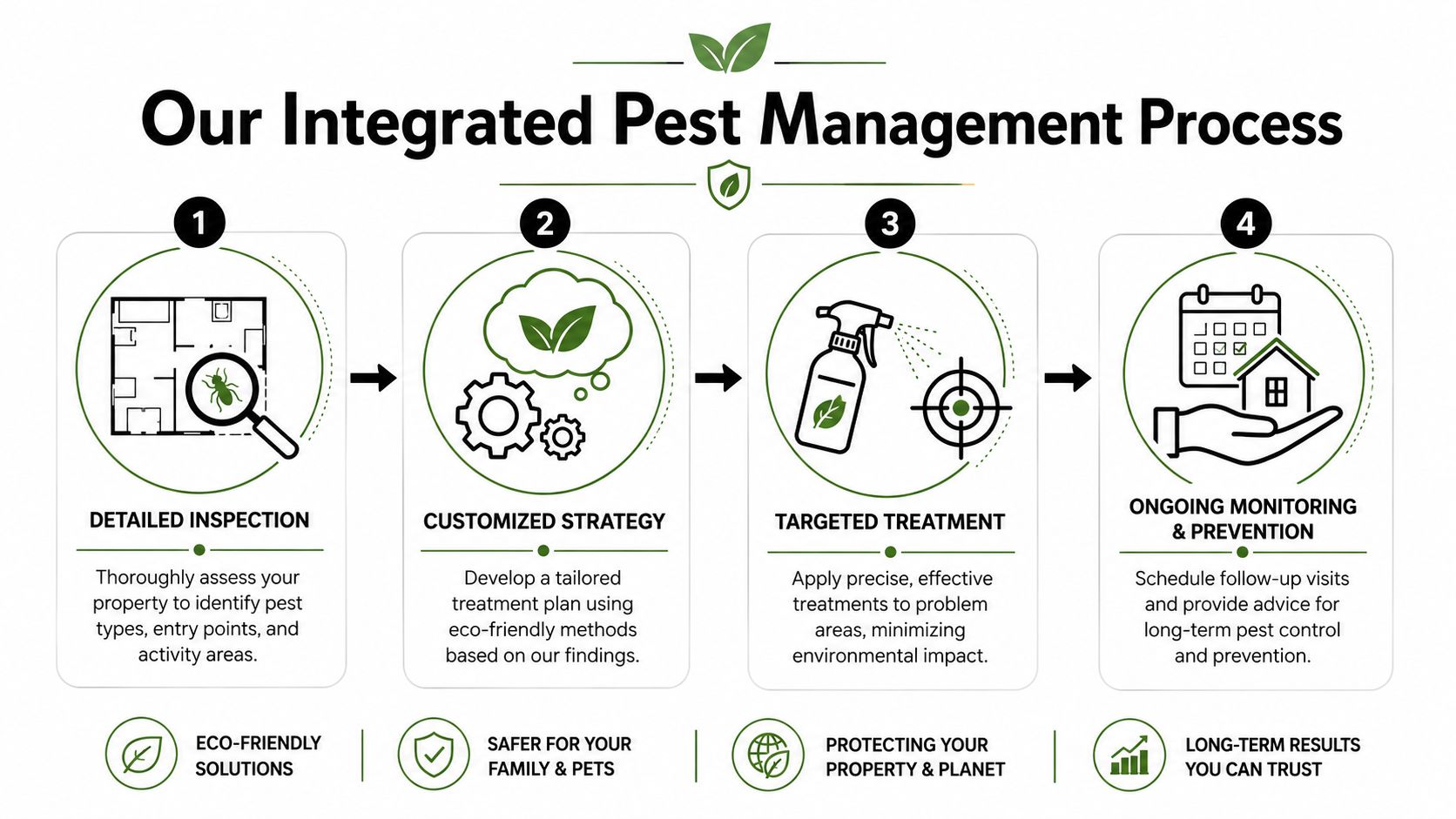
In Crown Point and across Northwest Indiana, that process has to account for real seasonal patterns. Spring brings ant trails and wasp starts. Summer adds mosquito pressure near shaded yards and standing water. Fall pushes mice toward garages, basements, and wall voids. Winter often exposes the homes with small entry gaps that went unnoticed during warmer months.
Step one starts with inspection
Correct identification comes first because different pests call for different tools. Pavement ants at the front walk are a different problem from carpenter ants near damp wood. A mouse using the garage weatherstrip is a different job from activity in an attic insulation line. Spiders around entry lights may be reduced with exterior work and habitat changes, while a yellowjacket issue may require nest-specific treatment.
As noted earlier, Integrated Pest Management starts with inspection and source control, not broad application for the sake of coverage. The practical goal is to find where pests are feeding, nesting, entering, or being drawn to the structure. Once that is clear, treatment decisions get easier and results are usually better.
Then the strategy gets matched to the property
No two homes in this part of Indiana have the same pressure points. A house near open fields, tree lines, ponds, or retention areas will often deal with a different mix of insects than a home in a tighter subdivision. Older homes may have more entry gaps around utility lines, soffits, and foundation transitions. Newer homes can still develop pest issues if mulch is piled high, gutters overflow, or garage doors leave small openings.
A sound treatment plan may include:
- Exterior entry-point work around doors, windows, utility penetrations, soffits, and foundation lines.
- Targeted interior treatment only where activity is confirmed, such as along an ant trail, at a rodent runway, or near a wasp nesting site.
- Habitat correction to reduce standing water, thick vegetation against the house, excess clutter, and damp areas that support pest activity.
- Monitoring and follow-up for problems that tend to return with the season, including mosquitoes, recurring ants, and cold-weather rodent movement.
That balance matters. Some issues can be controlled with exclusion and a focused exterior program. Others need direct treatment in active indoor areas to get the problem under control.
The Green Advantage uses this process for homes in Crown Point and nearby Northwest Indiana communities, including mosquito work, termite-focused service, and rodent exclusion when conditions point in that direction.
Why eco-conscious doesn't mean weak
Homeowners sometimes hear "eco-friendly" and expect a lighter version of pest control that does not hold up through an Indiana season. In practice, the opposite is often true. The stronger approach is to use the least amount of product needed, place it where it will do the job, and fix the condition that allowed the pests in to begin with.
Field insight: The safest useful treatment is the one that is targeted correctly and backed up by exclusion.
That is how families get safer, more reliable control. It also avoids a common mistake with do-it-yourself products and low-effort service calls. More product does not always mean better control. Better inspection usually does.
What to Expect When You Call The Green Advantage
The first contact should lower stress, not add to it. When a homeowner in Crown Point calls about ants in the kitchen, mice in the garage, or wasps over the back patio, the process should feel clear from the start.

The first conversation
Three questions are often top of mind right away. What kind of problem does this sound like, how soon can someone come out, and what should we do before the visit? Clear scheduling and practical guidance matter because pest issues rarely feel minor to the person dealing with them.
You shouldn't have to guess whether the technician will inspect the property or just show up and spray. The EPA states that a reputable pest control service should begin with a complete inspection, and service protocols should include exterior evaluation, removal of webs and nests, and written reporting that documents where pests entered and what conditions attracted them, according to the EPA's tips for selecting a pest control service.
What happens on site
A proper visit usually includes a look at both the inside and outside of the property. That means checking likely access points, signs of moisture, harborage areas, pest evidence, and the specific locations where the homeowner has seen activity.
Homeowners should expect straightforward communication, including:
- What was found
- Where the pressure is coming from
- What treatment makes sense
- What changes at the property will help prevent recurrence
That kind of transparency matters because a treatment only solves part of the issue if the source isn't addressed.
After the service
Written notes are more important than many people realize. They create a record of where activity was found, what was treated, and what the homeowner should monitor next. That becomes especially useful for recurring seasonal issues, rental properties, and homes with several possible entry points.
For families, another practical point matters. Indoor-use guidance should keep children and pets out of treated areas until sprays are dry, as noted in the EPA guidance above. That kind of simple, specific instruction is exactly what homeowners should receive from a careful provider.
Your Partner for Safe and Effective Pest Management
Home pest control in Northwest Indiana works best when it's approached as a partnership between the homeowner and the service provider. The technician handles diagnosis, treatment selection, and monitoring. The homeowner helps by correcting the conditions that pests are using, such as moisture, clutter, food access, and exterior openings.
What eco-conscious service looks like in practice
Eco-conscious pest management isn't about avoiding action. It's about avoiding unnecessary action. In practice, that means focusing on inspection, precise treatment, and prevention measures that lower future pressure on the home.
For families in Crown Point, that approach has practical benefits:
- Less guesswork because the problem is identified before treatment begins
- More durable results because exclusion and habitat correction are part of the plan
- Better household comfort because the goal is prevention, not constant reaction
Why year-round planning often makes sense
Northwest Indiana doesn't have one pest season. It has several. Ants, wasps, mosquitoes, spiders, rodents, and overwintering pests all show up under different conditions. That makes ongoing home pest control a sensible option for properties that repeatedly deal with changing seasonal pressure.
The goal isn't to make homeowners think about pests all the time. It's the opposite. A sound plan should let you use your kitchen, basement, garage, patio, and yard without wondering what's moving behind the scenes.
Frequently Asked Home Pest Control Questions
Are pest control treatments safe for kids and pets
They should be planned with household safety in mind. A careful provider identifies the pest first, treats only where needed, and gives clear instructions about treated areas. If indoor products are used, children and pets should stay out of treated areas until sprays are dry.
Do I need a one-time service or an ongoing plan
That depends on the pest and the conditions around the home. A one-time service can make sense for an isolated issue. Seasonal pests, recurring ant activity, mosquito pressure, and rodent concerns often benefit from ongoing monitoring and prevention.
Do you handle commercial pest control too
Yes. Many of the same principles apply, but commercial pest control also depends on the building type, sanitation practices, entry points, storage areas, and how the space is used day to day.
If you're dealing with pest activity in Crown Point, IN or nearby Northwest Indiana communities, The Green Advantage can help you sort out what's happening and what it will take to fix it. Reach out to schedule a pest inspection, request a quote, or talk through a home or commercial pest control plan that fits your property.