
A lot of Crown Point homeowners reach the same point every summer. The patio is clean, the grill is ready, the kids want to stay outside longer, and then the mosquitoes show up. If you back up to the edge of the lawn, brush past tall grass, or let the dog run near the tree line, ticks become part of the worry too.
That frustration is real in Northwest Indiana. These pests don't just interrupt a nice evening. They change how people use their own property.
At The Green Advantage, tick and mosquito control starts with that simple goal. Help you enjoy your yard again without second-guessing every bite, every patch of brush, or every damp corner near the house.
Enjoy Your Crown Point Yard Without Worry
A Crown Point backyard should feel like an extension of the home. It should be where family dinners run late, where dogs sprawl near the patio, and where guests don't spend the whole evening swatting at their legs and ankles.
Many homeowners start with the same idea. They'll add better seating, improve the lighting, maybe even create the ultimate backyard sanctuary with an outdoor kitchen or gathering area. Then reality hits. If mosquitoes are breeding around the property or ticks are waiting in shaded edges and leaf litter, that outdoor space doesn't get used the way it should.
This isn't a small issue. Vector-borne diseases transmitted by mosquitoes and ticks account for more than 17% of all infectious diseases and cause over 700,000 deaths annually, according to the World Health Organization fact sheet on vector-borne diseases.
What local homeowners usually notice first
In Crown Point and nearby Northwest Indiana neighborhoods, the first signs are often easy to dismiss:
- Evening bites near patios: Mosquito activity spikes when people are finally trying to relax outside.
- Pets bringing the problem closer: Dogs move through grass, mulch beds, and fence lines that people don't think of as risk areas.
- A yard that feels off-limits: Families start cutting outdoor time short, especially in late spring, summer, and early fall.
Practical rule: If your family changes its routine to avoid parts of the yard, the pest issue is already affecting quality of life.
The local part matters. Yards in this area often combine open lawn with wooded edges, ornamental plantings, low drainage spots, and shaded mulch beds. That's exactly the kind of mix that can support both mosquito breeding and tick activity.
Peace of mind comes from a plan
Homeowners don't need more generic internet advice. They need practical guidance that fits Northwest Indiana conditions. That's where a local approach helps. The right tick and mosquito control plan doesn't start with overapplying product. It starts with identifying what on the property is supporting the pests.
Some homes need aggressive standing-water reduction. Some need habitat correction along the back fence. Some need a treatment plan built around family use, pets, and regular outdoor traffic.
The good news is that these problems are manageable. With the right mix of prevention, targeted treatment, and follow-up, a yard can become usable again.
Northwest Indiana's Unwanted Summer Guests
Ticks and mosquitoes don't show up by accident. In Crown Point and surrounding Northwest Indiana communities, they follow the same patterns again and again. If you understand where they live and what allows them to build up on a property, the problem gets much easier to solve.
Where mosquitoes gain ground
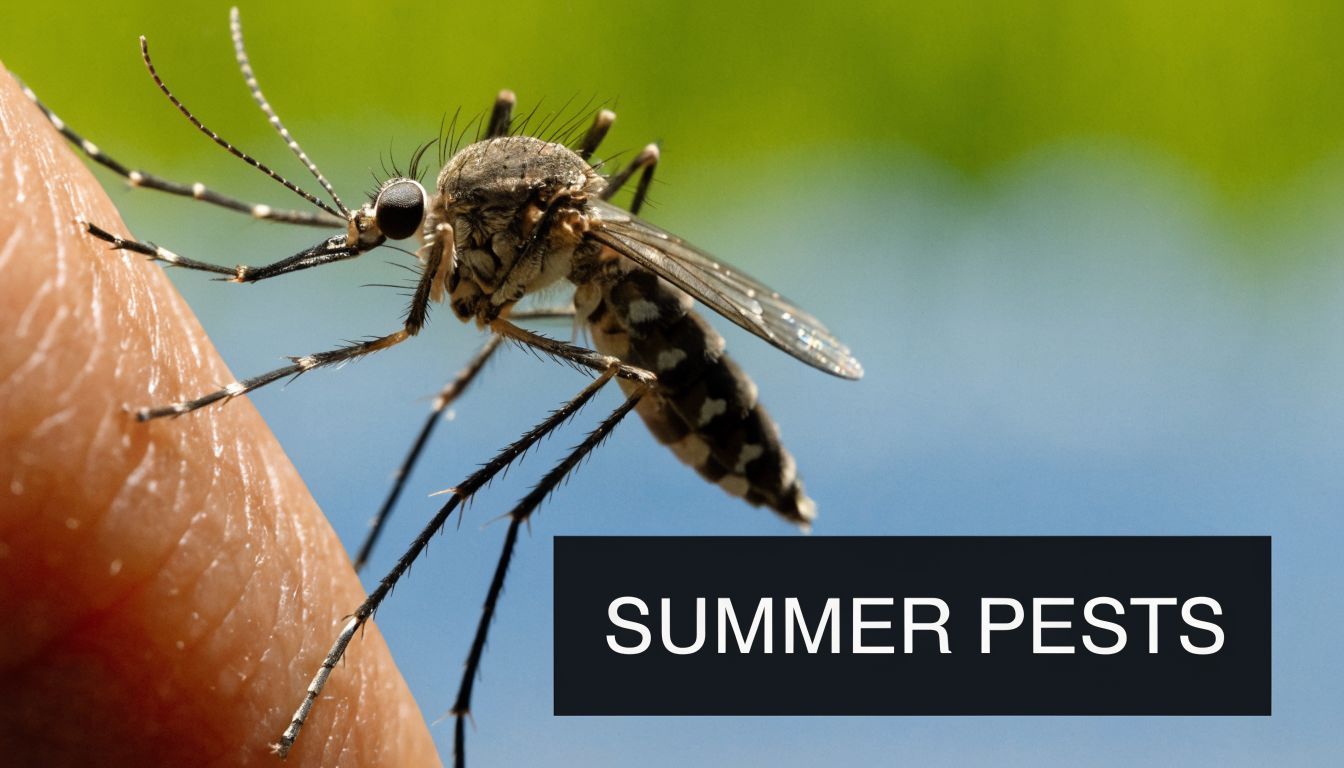
Mosquitoes need water. Not a pond-sized amount. Just enough standing water to stay in place long enough for breeding.
In Northwest Indiana yards, the usual trouble spots include clogged gutters, low spots that hold rainwater, kiddie toys, buckets, plant saucers, corrugated drain extensions, and neglected edges near sheds or fences. One wet week can change a quiet yard into a mosquito-producing property.
Shaded resting areas matter too. Even when mosquitoes breed elsewhere, they often settle into cool, protected zones during the day. Dense shrubs, overgrown foundation plantings, under-deck spaces, and damp corners around the home give them shelter until people come outside.
Where ticks wait
Ticks operate differently. They don't breed in standing water, and they don't fly in from nowhere. They build pressure where habitat supports them and where animal hosts move through consistently.
In this region, the most common risk areas are:
- Wooded borders: Especially where lawn meets brush
- Leaf litter: A major shelter zone for immature ticks
- Tall grass and unmanaged edges: Places where ticks can wait for passing hosts
- Pet routes and wildlife paths: Repeated travel corridors matter
- Mulch beds with heavy shade: These often stay cooler and moister than open lawn
The challenge for homeowners is that a property can look neat from the patio and still have serious activity at the perimeter.
Ticks don't need your whole yard. They only need enough protected habitat near the spaces your family and pets use.
Why this has become harder to ignore
This is not just a nuisance trend. In the United States, there were an estimated 640,000 cases of diseases in humans transmitted by mosquito, tick, and flea bites from 2004 to 2016, and that marked a 3-fold increase over prior periods. Ticks account for about 90% of those bite-related diseases according to the CDC publication on vector-borne disease trends.
That aligns with what property owners feel on the ground. Tick concerns have become part of everyday yard planning, especially for homes with dogs, children, wooded lots, or neighboring undeveloped areas.
The seasonal pattern in Crown Point
Most homeowners notice mosquitoes first because they're obvious. You hear them, feel them, and react immediately. Tick pressure is quieter. It often becomes clear after someone finds one on clothing, on a pet, or attached after time near the edge of the lawn.
A typical Crown Point property sees risk build when these conditions line up:
- Spring growth starts fast and yard edges thicken.
- Rain leaves water behind in containers and low spots.
- Summer shade deepens under shrubs and decks.
- Outdoor activity increases right when pests are most active.
Why one-size-fits-all advice falls short
National articles tend to say the same things. Dump water. Mow grass. Use repellent. That's not wrong, but it doesn't diagnose the actual source of activity on a specific property.
A Northwest Indiana yard may have drainage issues on one side, deer traffic in the rear easement, and thick shade by the patio. Another may have almost no tick habitat but major mosquito pressure from hidden water collection. Those are different problems. They require different control decisions.
That's why effective tick and mosquito control begins with understanding the environment correctly, not just reacting to bites.
Your First Line of Defense Integrated Pest Prevention
Most yards improve when homeowners handle the basics well. Prevention won't replace a full treatment plan when pressure is already high, but it does remove the conditions that let ticks and mosquitoes keep coming back.
Start with the landscape
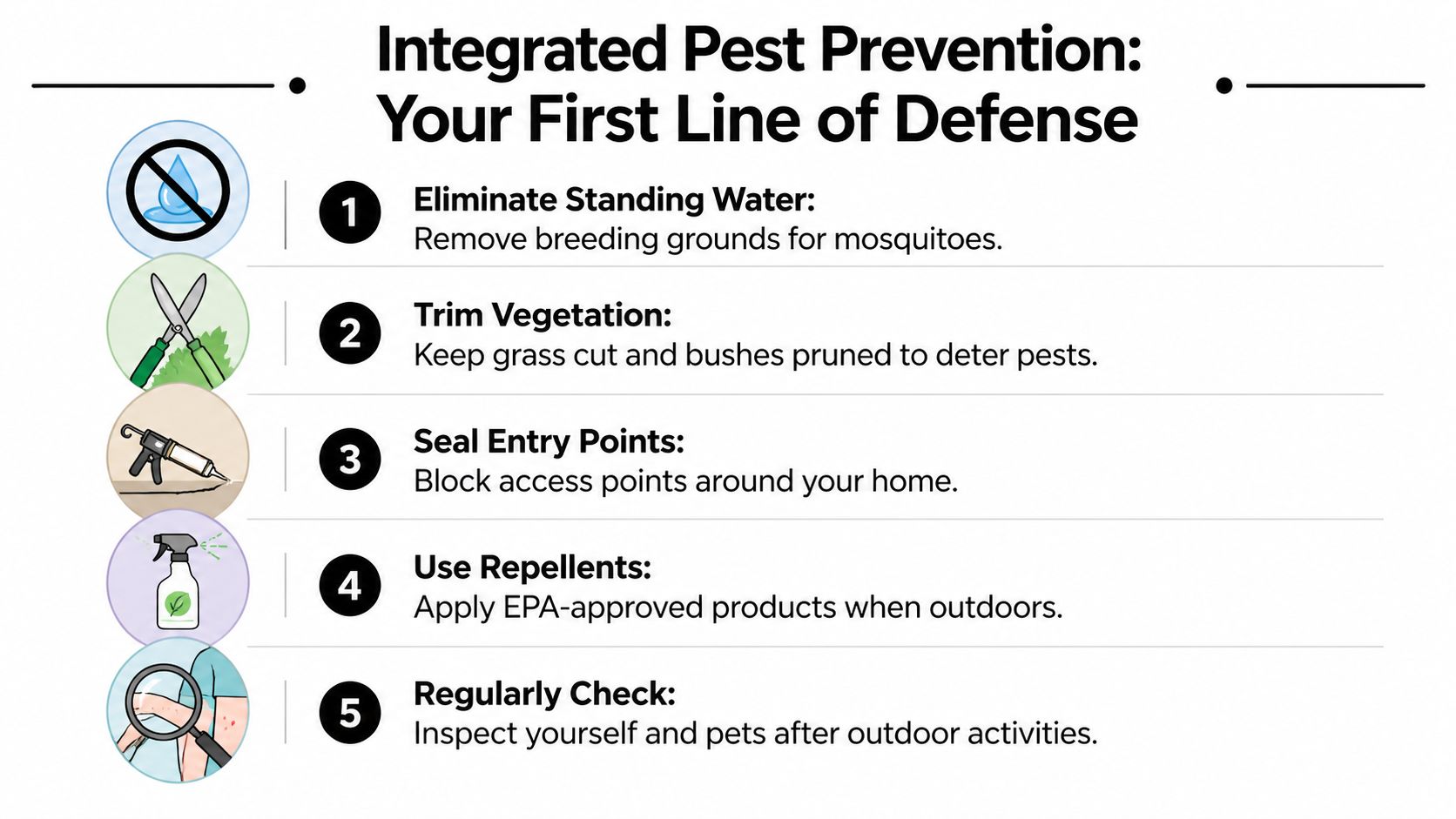
The fastest way to make a yard less welcoming is to reduce shelter. That means mowing consistently, trimming back overgrown edges, and opening up areas that stay damp and shaded for too long.
Leaf litter deserves special attention. Homeowners often focus on the lawn and ignore the back edge, fence line, and wooded transition zones. That's where ticks hold.
A cleaner edge changes how the whole property functions. It reduces hiding places, interrupts animal movement, and makes inspections easier.
Remove mosquito breeding sites
If you're serious about mosquito reduction, walk the property after rain. Not during a dry week. After rain.
Look for anything that catches and keeps water:
- Containers and toys: Flip them over or store them inside.
- Gutters and downspouts: Keep them flowing so water doesn't pool.
- Low spots in the yard: Fill or correct them when possible.
- Tarps and covers: Tighten them so they don't sag and collect water.
- Decorative items: Check planters, birdbaths, and outdoor storage areas.
For homeowners who want a more complete, structured approach, this is the same logic used in integrated pest management. The goal is to reduce pest pressure before treatment is even applied.
A yard with untreated breeding sites will keep recreating the problem, even if you spray it.
Protect people and pets during daily use
Personal protection still matters, especially in yards with wooded edges or heavy summer mosquito activity. EPA-registered repellents can reduce bite risk. Verified guidance includes repellents with 20% to 50% DEET and permethrin applied to clothing, as noted in the earlier CDC-backed guidance.
That doesn't mean homeowners need to live in protective gear. It means using common sense during high-risk times, especially around dusk, after mowing near brushy zones, or after kids and pets spend time near the perimeter.
A few habits help right away:
- Check after outdoor time: Inspect ankles, socks, waistbands, and pets.
- Stay alert near transitions: Lawn-to-woods edges are where many tick encounters begin.
- Keep play areas visible: Open, dry spaces are easier to monitor and maintain.
Prevention works best when it's specific
Some DIY prevention steps are worth doing every season. Others only matter if your property has a certain risk profile. A home with thick ornamental shrubs by the patio may need pruning more than drainage work. A home with rear tree cover may need leaf litter and wildlife-path attention more than anything else.
Homeowners often get better results when they stop thinking in terms of one big pest problem and start thinking in terms of micro-areas on the property. Back gate. Under deck. AC pad. Fence line. Drainage swale. Dog run.
Those are the places where prevention either works or fails.
DIY Treatments vs Professional Services
DIY products are appealing for one reason. They're easy to buy. You can walk into a store, grab a fogger, hose-end spray, or yard granule, and feel like you're taking action the same day.
Sometimes that helps temporarily. Often it doesn't solve much.
Where DIY usually falls short
The biggest problem with store-bought tick and mosquito control is coverage. Homeowners tend to treat visible areas and miss the places that matter most. Mosquitoes breed in hidden water. Ticks hold in leaf litter, brush edges, rodent harborages, and shaded transition zones that aren't obvious unless you know what to look for.
Another issue is timing. A product may be applied after mosquito numbers are already high or after tick activity has already moved deeper into the property. By then, homeowners are reacting instead of controlling the source.
There is also a planning gap that many families don't realize exists. Mosquito control is often supported by publicly funded community programs, but tick control largely falls to private efforts with minimal public infrastructure support, according to the research on mosquito and tick abatement program differences. In practical terms, that means homeowners often need to address tick pressure on their own property in a much more deliberate way.
The decision becomes clearer when you compare them side by side
| Factor | DIY Store-Bought Products | The Green Advantage Professional Service |
|---|---|---|
| Property assessment | Usually based on guesswork and label instructions | Starts with site-specific inspection of habitat, moisture, shade, edges, and activity zones |
| Treatment targeting | Often broad and inconsistent | Applied to the areas that are actually sustaining the pests |
| Root-cause control | May knock down visible activity without fixing breeding or harborage issues | Built around source reduction, habitat pressure, and treatment timing |
| Safety management | Homeowner is responsible for reading, mixing, storing, and applying correctly | Licensed technicians handle selection and application according to label and site conditions |
| Tick strategy | Often limited to general yard spraying | Can incorporate more focused yard-level approaches, including guidance like yard flea and tick control options where site conditions call for it |
| Follow-up | Usually starts over from scratch if the first attempt underperforms | Adjustments can be made based on the property's response and seasonal conditions |
What works and what doesn't
DIY can make sense for very low-pressure properties or for minor short-term relief before an outdoor event. It can also support a larger plan when the homeowner is disciplined about cleanup, drainage, and vegetation management.
What usually doesn't work is relying on one retail product to solve a mixed tick and mosquito problem across an entire yard. That's especially true in Crown Point properties with wooded edges, pets, or recurring water issues.
If the problem returns right after a treatment window, the product probably didn't fail by itself. The property conditions were still feeding the infestation.
Why professional service is different
A professional approach isn't just stronger product. It's better diagnosis, better placement, and better sequencing.
That matters because tick and mosquito control isn't one problem. It's several smaller problems happening at once. Adults may be active near the patio while mosquito breeding continues behind the shed. Tick pressure may be concentrated along a back fence while the front lawn has almost none.
Professional service is built to separate those zones and respond accordingly. That's what homeowners are really paying for. Not just application, but judgment.
How Professional Treatments Create a Safer Outdoor Space
Professional tick and mosquito control works best when it matches the biology of the pests instead of just chasing visible activity. That means stopping mosquitoes where they develop, reducing adult pressure where people spend time, and treating tick habitat where contact is most likely.

Mosquito control starts before they fly
One of the most important trade-offs in mosquito work is this. Adult mosquito spraying may give quick relief, but source control is what changes the population on the property.
Verified guidance shows that effective mosquito integrated pest management prioritizes larviciding over adulticiding, using products such as Bacillus thuringiensis israelensis (Bti) to target aquatic immature mosquitoes. This approach can achieve 95% to 100% larval mortality in breeding sites and is considered safe for pollinators, according to the Pollinator Partnership guidance on mosquito control.
That matters in real yards. If a property keeps holding water in overlooked spots, adult mosquito pressure will keep rebuilding. Larvicide-focused work interrupts the cycle earlier.
Tick control requires placement, not just product
Tick treatments fail when they're applied like a lawn cosmetic service. Ticks don't use the property evenly. They cluster where moisture, shade, cover, and host movement overlap.
A technician who understands environmental structure will pay attention to:
- Perimeter transitions: Where turf meets brush or woods
- Leaf litter bands: Often ignored, often critical
- Under-deck and fence-line zones: Protected, shaded, and undisturbed
- Pet travel corridors: Repeated exposure areas
- Wildlife access points: Places where deer and smaller hosts move through
For some properties, a seasonal service plan makes sense. For others, a one-time event treatment is enough to lower immediate mosquito pressure before guests arrive. The Green Advantage offers both mosquito reduction options as part of its service mix for Northwest Indiana properties.
Good treatment plans respect trade-offs
Not every homeowner wants the same thing. Some want the strongest possible knockdown. Others care about minimizing impact on beneficial insects and avoiding unnecessary broad treatment. A good plan should account for that.
That doesn't mean choosing between "natural" and "effective" as if those are the only options. It means combining habitat correction, targeted product selection, and careful placement so that each part of the plan has a purpose.
Here's a helpful look at the kind of yard conditions that often drive treatment decisions:
Why lawn and landscape knowledge matters
A company with outdoor-care roots reads a property differently. Drainage patterns, turf density, shade retention, ornamental overgrowth, and seasonal growth habits all influence where mosquitoes and ticks gain an advantage.
That's especially useful in Crown Point and nearby Northwest Indiana neighborhoods where one side of a yard may dry out quickly while the other side stays shaded and damp. Generic treatment doesn't account for that. Site-aware treatment does.
The safest effective application is usually the one that goes only where it's needed, at the time it's needed, for the reason it's needed.
When a treatment plan is built that way, homeowners usually notice two things. The yard becomes more comfortable to use, and the pest pressure feels less unpredictable.
Your Partnership with The Green Advantage in Crown Point
Hiring pest control shouldn't feel confusing or opaque. Homeowners usually want the same basic things. Clear answers, a practical plan, and confidence that someone understands the property they're treating.
That customer experience matters more now because conditions are shifting. Recent 2025 data indicates a 25% increase in tick encounters in Indiana due to warmer springs, increasing the need for adaptive control strategies that combine natural and synthetic protocols to reach over 90% efficacy, based on the 2025 extension guidance on tick and mosquito habitats. Since that source is future-dated, it's best understood as a recent reported trend cited in that guidance.
What the process feels like
The first step is usually a conversation, not a sales pitch. A homeowner calls with a concern that sounds familiar. Mosquitoes around the patio. Ticks on the dog. A yard that looks fine from the house but doesn't feel comfortable to use.
From there, the focus should be on specifics. Where do you spend time outside? Is the lot open or wooded? Are there drainage issues after rain? Do pets run a fence line or cut through a back corner repeatedly?
Those details shape the plan.

What good communication looks like
A local service relationship works better when the customer knows what is being treated and why. That means plain language, realistic expectations, and clear scheduling.
Homeowners should expect guidance on things like:
- Activity zones: Which parts of the yard are driving the issue
- Preparation steps: Whether anything needs to be moved, cleared, or avoided temporarily
- Seasonal expectations: Why some periods require more attention than others
- Follow-through: What to watch for after service and when to check back in
Why local knowledge changes the outcome
Crown Point and nearby Northwest Indiana properties aren't all the same, but they do share common patterns. Wet stretches, tree lines, suburban wildlife movement, and mixed-use yards all affect pest pressure.
A local provider sees those patterns repeatedly. That means less time guessing and more time reading the property correctly from the start.
Homeowners don't need a canned program. They need someone who can look at one backyard in Crown Point and understand why the rear edge behaves differently from the side yard.
That kind of partnership is what removes uncertainty. You know who you're talking to, you know what the plan is, and you know the recommendations fit the property rather than a script.
Take Back Your Yard Today
Ticks and mosquitoes change how people live at home. They push families indoors, make pets more vulnerable, and turn a comfortable yard into a place people avoid. In Crown Point and across Northwest Indiana, that problem is common, but it isn't something you have to accept.
The right tick and mosquito control plan is practical. It starts with habitat reduction, addresses key pressure points on the property, and uses treatment methods that fit how the yard is used. That's how outdoor spaces become usable again.
If you've tried DIY sprays, cleanup efforts, or one-off fixes and the pests keep returning, the issue usually isn't effort. It's that the source of activity hasn't been fully identified or treated in the right way.
For homeowners looking for pest control near me, pest control in Crown Point, IN, or an exterminator near me who understands local yard conditions, this is the moment to act before the next stretch of warm weather brings the problem right back.
A safer, more comfortable yard is possible. It just takes a plan that fits Northwest Indiana conditions and follows through.
If you're dealing with mosquitoes around the patio, tick pressure near wooded edges, or seasonal pest problems that keep interrupting life outside, contact The Green Advantage to request a quote and schedule an inspection for your Crown Point property.