
Understanding NPMA 33: The Gold Standard in Pest Inspections
Purchasing a property involves a mountain of paperwork, endless walkthroughs, and countless decisions. Among all the documents you will review, the pest inspection report holds a unique level of importance. Structural damage caused by hidden wood-destroying insects can easily compromise the safety and value of a home, turning a dream purchase into a severe financial burden.
A standard visual appraisal rarely uncovers the silent destruction happening behind walls or under floorboards. Insects can chew through support beams and joists for years without leaving obvious traces in the living areas. Because of this hidden threat, thorough pest inspections remain a critical step in the real estate transaction process, offering buyers a clear picture of what lies beneath the surface.
To create consistency and reliability in these inspections, the pest control industry relies on a specific reporting document. The NPMA 33 form serves as the definitive standard for wood-destroying insect inspections across the United States. Knowing how to read and understand this document helps buyers, sellers, and real estate professionals make informed, confident decisions about a property.
What is the NPMA-33 Form?
The NPMA-33 form is an official Wood Destroying Insect (WDI) Inspection Report. The National Pest Management Association (NPMA) created this standardized document to provide a uniform method for reporting the presence or absence of wood-destroying insects in residential and commercial structures. Before this form existed, pest control companies used a wide variety of reporting methods, which often led to confusion among buyers and lenders.
The primary purpose of the NPMA-33 is to document the findings of a visual inspection conducted by a qualified pest management professional. The inspector looks for specific signs of active infestations, previous infestations, and any visible damage caused by specific groups of insects.
The NPMA-33 form specifically covers four main types of wood-destroying pests:
Termites:
These highly destructive insects consume cellulose found in wood. Subterranean, drywood, and dampwood termites cause billions of dollars in structural damage annually.
Carpenter Ants:
Unlike termites, carpenter ants do not eat wood. They excavate tunnels and galleries inside wooden structures to build their nests, weakening the timber in the process.
Carpenter Bees:
These solitary bees bore perfectly round holes into exposed wood, such as eaves, decks, and siding, to create protective galleries for their larvae.
Wood-Boring Beetles:
The larvae of these beetles, often called woodworms, tunnel through wooden beams and floorboards. Powderpost beetles are among the most common and destructive in this category.
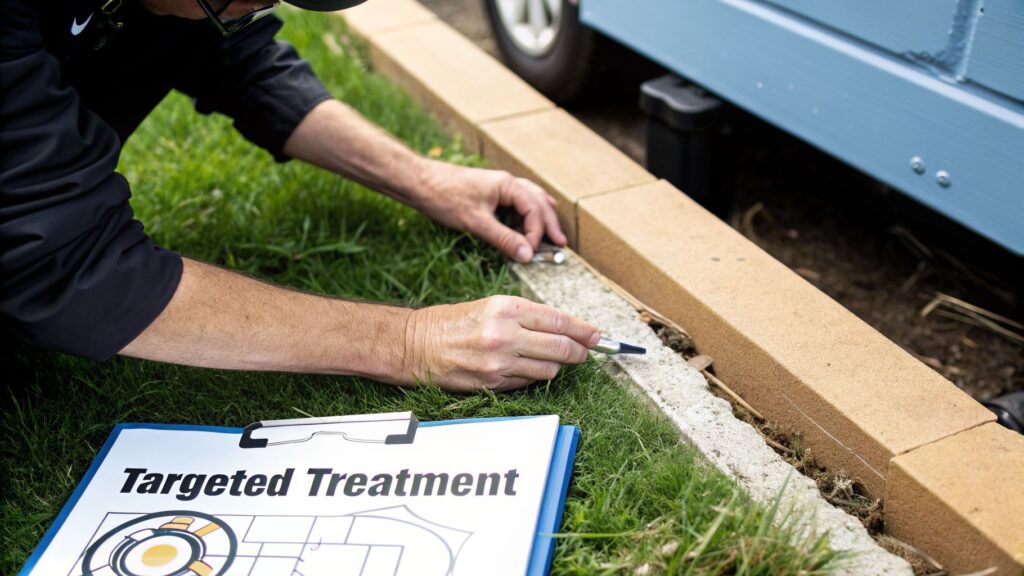
Key Components of the NPMA-33 Form
The form follows a highly structured layout to ensure clarity and consistency. Every NPMA-33 report includes specific sections that break down the inspector’s findings in plain language.
Property Information
The top section of the form captures the basic details of the inspection. It lists the property address, the buyer and seller details, the date of the inspection, and the contact information for the pest control company. This section also confirms the specific structures on the property that were inspected, such as the primary residence, detached garages, or sheds.
Inspection Findings
This is the most critical section of the document. The inspector will check specific boxes to indicate what they found during the visual examination. The findings are categorized clearly:
No visible evidence of wood-destroying insects was observed.
Visible evidence of wood-destroying insects was observed.
If evidence is found, the inspector must detail whether they saw live insects, dead insects, frass (insect excrement), shelter tubes, or visible exit holes. They will also specify exactly where on the property this evidence was located.
Recommendations and Disclosures
If an active infestation is found, or if there is evidence of a past infestation with no proof of prior treatment, the inspector will use this section to recommend a professional pest control treatment. The form also includes an important disclosure section. Because inspectors cannot see through drywall, insulation, or concrete, they must note any areas of the property that were inaccessible or obstructed during the inspection, such as locked cellars or cluttered attics.
Why NPMA-33 is Essential for Homebuyers
For homebuyers, the NPMA-33 form provides an invaluable layer of protection. Walking through a potential new home, buyers are usually focused on room layouts, natural light, and neighborhood amenities. They rarely have the expertise to spot the subtle signs of a termite infestation, such as discarded wings, mud tubes on the foundation, or hollow-sounding baseboards.
The NPMA-33 form translates the expert findings of a licensed pest inspector into plain, actionable language. It helps buyers understand exactly what they are getting into before they sign the final closing documents. If the report reveals an active infestation, the buyer can use that information to negotiate with the seller. They might request that the seller pay for the necessary pest control treatments prior to closing, or they might ask for a reduction in the home’s purchase price to cover the cost of future repairs.
Ultimately, this form plays a vital role in avoiding costly surprises post-purchase. Discovering a massive carpenter ant colony weeks after moving in can quickly drain a buyer’s savings account. By securing an NPMA-33 inspection beforehand, homebuyers gain peace of mind knowing the structural integrity of their new house is sound.
The Role of NPMA-33 for Lenders and Real Estate Professionals
Homebuyers are not the only stakeholders relying on the NPMA-33 report. Mortgage lenders and real estate agents heavily depend on this document to ensure a smooth, secure transaction.
Lenders need to know that the property securing their loan is structurally sound. Government-backed loans, including those from the Department of Veterans Affairs (VA) and the Federal Housing Administration (FHA), frequently mandate a clean NPMA-33 report before they will approve funding. If the report indicates an active infestation, the lender will typically require proof of treatment before clearing the loan to close.
Real estate agents use the form to protect their clients from future liability. A standardized, universally recognized report removes ambiguity. Agents can present the findings to the opposing party with confidence, knowing the inspection was conducted according to strict industry standards. This transparency helps keep negotiations moving forward and prevents last-minute disputes over property conditions.
The Green Advantage: Our Expertise in NPMA-33 Inspections
Navigating the real estate inspection process requires a partner you can trust. The Green Advantage is a premier pest management company dedicated to delivering thorough, highly accurate NPMA-33 inspections. We understand that a real estate transaction is a time-sensitive process, and delays can jeopardize a closing.
Our team of licensed, highly trained inspectors knows exactly what to look for when evaluating a property. We meticulously examine foundations, crawlspaces, basements, and exteriors to identify the subtle signs of wood-destroying insects. We take our commitment to accuracy seriously, ensuring that every box checked and every note written on the NPMA-33 form reflects the exact condition of the home.
By choosing The Green Advantage, buyers, lenders, and real estate agents gain peace of mind. We help all parties navigate the pest inspection process with confidence, providing clear explanations of our findings and offering effective, environmentally responsible treatment solutions when necessary.

Benefits of Using NPMA-33 in Pest Management
The widespread adoption of the NPMA-33 form has elevated the entire pest control industry. One of the primary benefits is legal compliance and industry standardization. By using a uniform document, pest management professionals ensure they are meeting state and federal requirements for real estate reporting. It reduces the likelihood of legal disputes arising from misunderstood or poorly written inspection notes.
Another major benefit is the clear communication it fosters between pest control professionals and stakeholders. The form uses standardized checkboxes and specific terminology that eliminates ambiguity. A lender in one state can read an NPMA-33 report generated in another state and instantly understand the findings.
This standardization builds trust and transparency in real estate transactions. Buyers feel confident that the property has been properly vetted, sellers have a clear understanding of any necessary repairs, and lenders have the documentation required to approve financing. The NPMA-33 form acts as a bridge of trust between all parties involved.
Common Misconceptions About NPMA-33
Despite its widespread use, there are still several misunderstandings surrounding the NPMA-33 form. Clarifying these myths helps buyers and sellers set realistic expectations for the inspection process.
“The form guarantees a pest-free property”
Many people mistakenly believe that a clean NPMA-33 report is a lifetime guarantee against pests. This is entirely false. The form is a snapshot in time. It documents the visible condition of the property on the specific date the inspection occurred. Pests can swarm or migrate to a property weeks or months after an inspection is completed. Additionally, the report only covers visible evidence; inspectors cannot see through drywall or underneath flooring. It is an expert assessment, not a magical shield.
“It’s only necessary for older homes”
Another common myth is that newly constructed homes do not need WDI inspections. Wood-destroying insects do not discriminate based on the age of a building. Termites will happily feed on the fresh lumber of a brand-new house just as quickly as they would on a century-old farmhouse. In some cases, the construction process itself can attract pests by leaving wood debris buried near the foundation. An NPMA-33 inspection is a vital step regardless of when the home was built.
Secure Your Investment with a Reliable Pest Inspection
The NPMA-33 Wood Destroying Insect Inspection Report remains an indispensable tool in the real estate world. By providing a clear, standardized assessment of a property’s vulnerability to termites, carpenter ants, carpenter bees, and wood-boring beetles, it protects buyers from disastrous financial surprises and satisfies the rigorous requirements of mortgage lenders.
Having a reliable expert conduct this inspection makes all the difference. The Green Advantage provides accurate, timely, and deeply thorough NPMA-33 inspections designed to keep your real estate transaction on track. We deliver the clarity and professionalism you need to move forward with complete confidence.
Don’t leave your new investment to chance. Contact The Green Advantage today to schedule your comprehensive NPMA-33 property inspection.
The Green Advantage
https://maps.app.goo.gl/wzz1BewPEdKx96pQ6
14451 Reeder Rd, Crown Point, IN 46307, United States
(219) 779-9815
https://thegreenadvantage.biz/