
Residential Pest Control Services: Trusted Home Protection

A humid July evening in Crown Point can turn ordinary home maintenance into a pest problem quickly. You notice carpenter ants moving along the kitchen baseboard, or you find mouse droppings behind the pantry shelves as temperatures fall in late October. For pest control near me, pest control in Crown Point, IN, or an exterminator near me, you need more than a quick spray. You need someone to identify why pests entered, treat the active problem, and help keep the next seasonal invasion outside.
The Green Advantage serves Crown Point and nearby Northwest Indiana communities with residential pest control services designed around inspection, targeted treatment, and practical prevention. This guide explains which household pests are common here, when a one-time treatment makes sense, when recurring service is worth considering, and how an eco-conscious approach can protect your home, family, pets, and property.
Why Crown Point Homeowners Need Reliable Pest Control
Northwest Indiana gives pests several opportunities to move indoors. Hot, humid summers support ants, mosquitoes, spiders, and other outdoor activity. Freezing winters push mice and rats toward warmer basements, crawl spaces, garages, and wall voids. Older homes in Crown Point and surrounding Lake County communities may also have aging foundations, attic vents, weathered sill plates, or utility penetrations that create convenient entry routes.
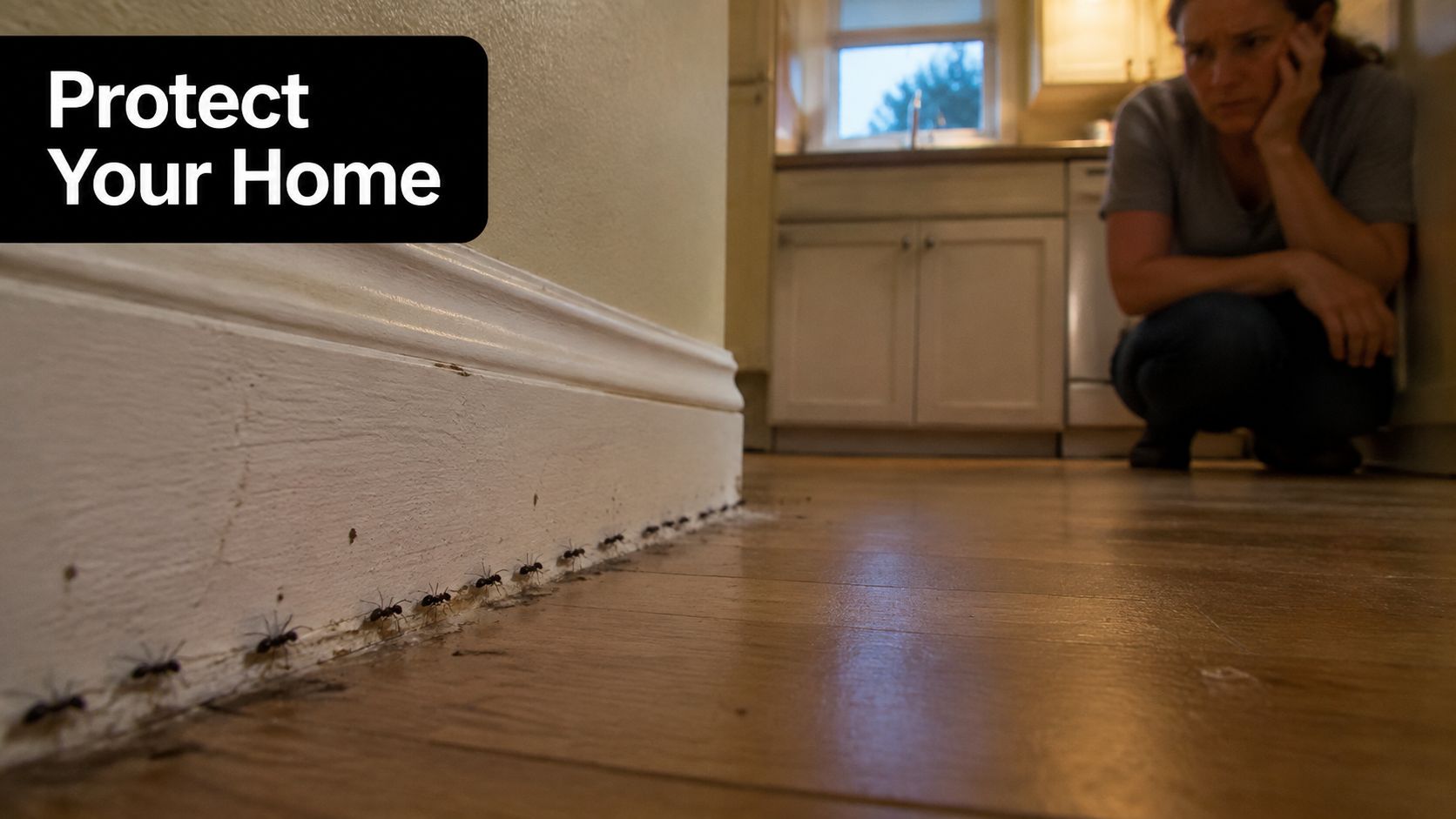
A line of ants in the kitchen doesn't always mean the colony lives inside the wall. It may be following moisture, food residue, or a hidden route from the exterior. A few droppings in the pantry may be the first visible sign of a mouse traveling through a much larger network of gaps. The right response depends on the pest, the building, and the conditions that support it.
Why prevention matters
Professional pest control has become a recurring household service because many infestations return when the underlying conditions remain. Industry coverage cited nearly 13.29 million U.S. residential customers receiving professional pest control services in 2025, while recurring revenue represented 85.4% of residential service revenue. The same coverage reported roughly 31,000 pest control businesses and 167,232 pest control specialists, evidence of a labor-intensive industry built around ongoing inspections, follow-ups, and maintenance rather than one-time visits. Consumer Affairs coverage of pest control industry statistics
The Green Advantage brings that prevention mindset to Crown Point homes without treating every property as though it has the same risk. A house near wooded areas, an older home with a crawl space, and a newer tightly sealed home may need very different recommendations.
Practical rule: Treat the pest you can see, but investigate the moisture, food, shelter, and entry point that brought it there.
Common Household Pests in Northwest Indiana
Pest identification matters because similar-looking insects can require very different responses. Carpenter ants excavate galleries in damp or damaged wood, but they don't consume wood the way termites do. German cockroaches thrive in warm, humid indoor areas and can spread through kitchens, bathrooms, and utility spaces. Mice and Norway rats look for warmth and dependable food as outdoor conditions worsen.
Local conditions that invite pests
Carpenter ants often take advantage of moisture-damaged wood around roofs, windows, porches, foundations, and plumbing leaks. Odorous house ants and pavement ants commonly follow protected routes into kitchens and bathrooms during spring and summer, especially where vegetation, mulch, cracks, and damp soil meet the foundation.
House mice and Norway rats can enter through surprisingly small openings around doors, vents, pipes, garages, and foundations. From September through March, crawl spaces, basements, wall voids, and attic insulation offer shelter from cold weather. German cockroaches can remain active year-round in warm indoor environments, particularly where food residue, water, clutter, and appliance heat are available.
Boxelder bugs, stink bugs, and spiders become more noticeable in autumn as they gather around siding, windows, attic vents, and other protected areas. They may not all cause the same structural concern, but a sudden increase can reveal gaps in the building envelope that other pests can also use.
| Pest | Peak Season | Primary Risk | Common Entry Points |
|---|---|---|---|
| Carpenter ants | Spring through summer | Wood excavation and moisture concerns | Foundation cracks, siding gaps, roof and window areas |
| Odorous house ants and pavement ants | Spring through summer | Food contamination and recurring trails | Baseboards, plumbing penetrations, foundation gaps |
| House mice and Norway rats | Fall through winter | Droppings, gnawing, contamination, and nesting | Doors, vents, utility lines, garages, crawl spaces |
| German cockroaches | Year-round indoors | Allergens, contamination, and rapid population growth | Deliveries, plumbing openings, appliances, shared walls |
| Boxelder bugs and stink bugs | Autumn | Nuisance activity and indoor congregation | Windows, attic vents, siding, roofline gaps |
| Spiders | Seasonal, often autumn indoors | Webs, nuisance activity, and possible bites from certain species | Exterior cracks, garages, basements, vegetation contact |
Early professional identification helps separate an isolated visitor from an established infestation. Broad spraying can miss a nest, colony, breeding site, or entry route. Fleas deserve the same careful approach because adults may be only part of the problem. For practical household guidance alongside professional evaluation, review these natural flea control tips.
Cockroaches, rodents, termites, bed bugs, and recurring ant activity deserve prompt attention. A technician can look for conditions homeowners usually can't see, including rub marks, droppings in hidden areas, frass, nesting material, moisture damage, and travel routes behind cabinets or through utility spaces.
What to Expect from a Professional Pest Inspection
A reliable inspection starts with a conversation, not a product. The technician should ask what you've seen, where you saw it, when activity began, whether you've heard scratching, and whether anyone has already applied sprays, traps, or bait. Questions about the home's age, renovations, moisture problems, pets, children, and previous treatments help shape a useful inspection.
The inspection path
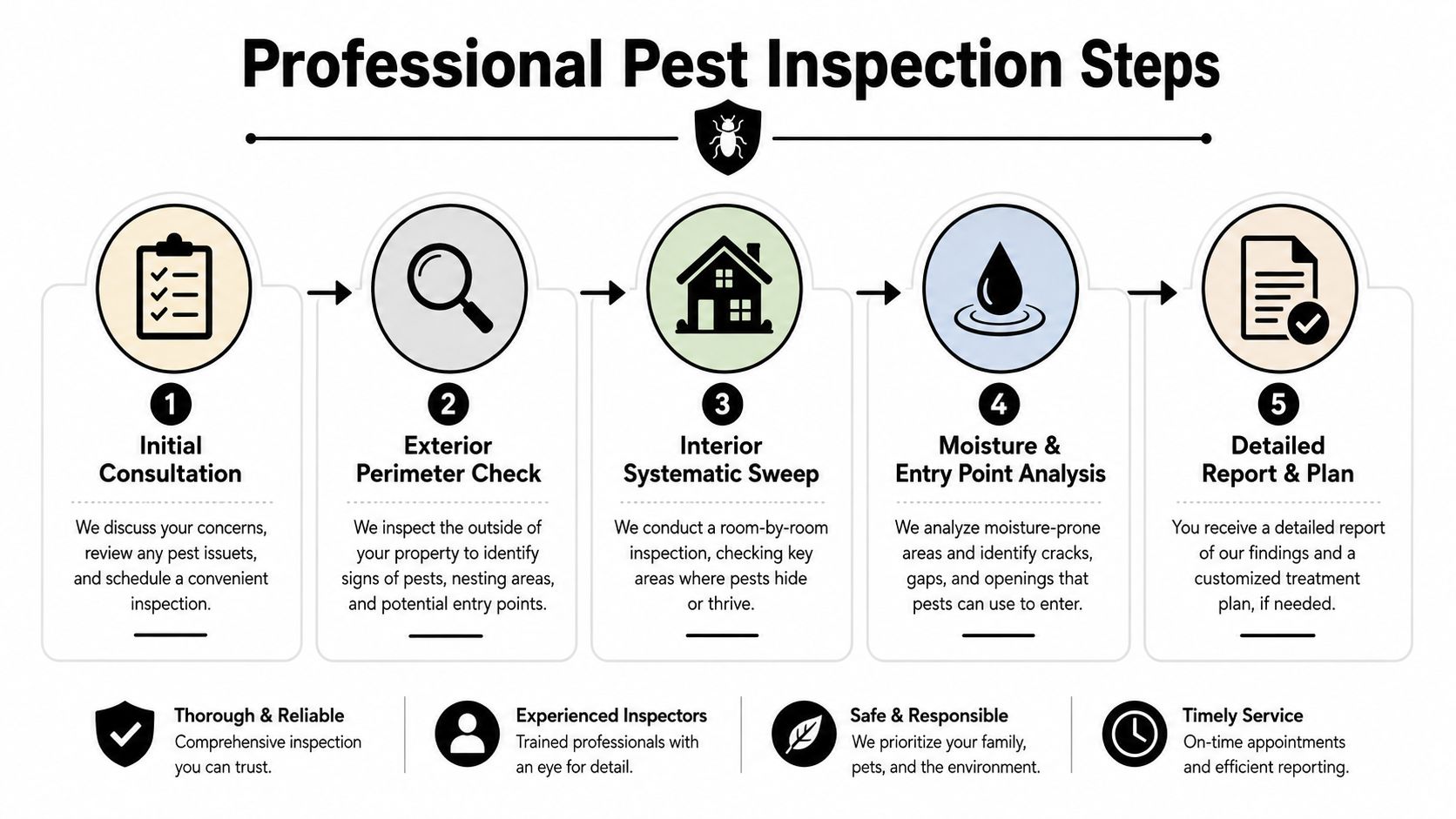
A Crown Point inspection typically follows the home's pest pathways rather than relying on a quick visual glance.
Start with the exterior perimeter. The technician checks the foundation, siding, doors, windows, roofline areas, vegetation, mulch, and exterior penetrations for cracks, gaps, and conditions that let pests reach the structure.
Examine lower levels. Basements and crawl spaces can reveal moisture intrusion, wood damage, rodent travel, droppings, nesting materials, and gaps around pipes or ductwork.
Check attic areas. Technicians look for rodent activity, disturbed insulation, rub marks, droppings, chewed materials, and openings around vents or roof details.
Sweep activity zones indoors. Kitchens, bathrooms, utility rooms, garages, and storage areas often provide the food, water, warmth, or clutter pests need.
Document the findings. The final recommendation should identify the pest, explain contributing conditions, outline treatment options, and clarify any exclusion or sanitation work that belongs in the plan.
Homeowners can make the visit more useful by keeping a record of sightings, saving insect samples or clear photographs, and making accessible areas available. You don't need to empty the house, but stored items may need to move away from walls, basement corners, attic access points, or utility rooms.
Clear recommendations before treatment
Inspection time depends on the home's size, access, pest concern, and complexity. Rather than promise a universal duration, a professional should explain what the visit includes before arriving. Pricing should also be communicated clearly before work begins, with separate attention to general pest control, rodent exclusion, termite control, mosquito control, bed bug treatment, or other specialized services.
For a homeowner preparing for an appointment, this residential pest control inspection checklist can help organize observations and access points.
Recurring Service Plans Versus One-Time Treatments
A single treatment can be appropriate when the problem is isolated, visible, and unlikely to return after the source is removed. A wasp nest that has been located and safely treated may not justify a long-term plan. One mouse sighting after a door was left open may call for monitoring and exclusion rather than an automatic recurring contract.
Recurring service makes more sense when pest pressure follows the property, not just the calendar. Ants, spiders, cockroaches, and seasonal invaders can exploit the same foundation cracks, vegetation bridges, moisture conditions, and utility penetrations repeatedly. Older homes, houses with crawl spaces, properties near wooded areas or water sources, and homes with a history of pest activity generally deserve closer consideration.
A practical Crown Point decision framework
Ask these questions before choosing a service level:
- Does the activity repeat? Repeated trails, droppings, webs, or sightings indicate a pattern rather than a one-off visitor.
- Does the property have persistent vulnerabilities? Aging foundations, damp crawl spaces, attached garages, and unsealed vents can keep inviting pests inside.
- Does the season create a predictable problem? Spring ants, summer mosquitoes, and fall rodents may each require a different prevention emphasis.
- Would missed activity create a larger risk? Cockroaches, rodents, termites, and bed bugs shouldn't be evaluated like an occasional outdoor insect.
- Do you want active monitoring? Recurring service can identify changes before a small problem becomes disruptive.
| Factor | One-Time Treatment | Recurring Service Plan |
|---|---|---|
| Best fit | Isolated nest, visitor, or clearly limited issue | Repeating activity or continuing structural vulnerability |
| Main focus | Immediate control and source assessment | Monitoring, seasonal adjustment, and prevention |
| Property profile | Tightly maintained home with little history of activity | Older home, crawl space, wooded lot, or repeated pest pressure |
| Limitation | May not address new activity or hidden entry points later | Requires ongoing scheduling and homeowner cooperation |
| Typical decision | Use when risk appears limited | Use when conditions make recurrence likely |
The residential market's reliance on recurring service reflects this distinction. Coverage of 2025 industry conditions reported recurring revenue at 85.4% of residential service revenue, compared with 85.2% in 2024, and reported that 70% of consumers named protecting their home and family as the top reason for a contract or regular service. National Pest Management Association industry coverage
That doesn't mean every Crown Point home needs frequent visits. It means the decision should match pest biology, building conditions, and the household's tolerance for risk. Repeated emergency calls can also become less predictable than a structured maintenance plan, especially when the same entry points remain open.
Eco-Friendly Pest Management Methods That Work
For a Crown Point home, environmentally responsible pest control starts with inspection, not a routine spray. The goal is to choose the least disruptive effective method, place products where they matter, and correct the conditions that let pests survive. The Environmental Protection Agency describes integrated pest management, or IPM, as an approach that combines monitoring, exclusion, sanitation, habitat modification, and targeted pesticide use when needed. EPA principles of integrated pest management
Why targeted treatment outperforms routine spraying
A broad contact spray may kill exposed insects without reaching a nest, eggs, wall void, harborage, or entry route. Targeted baiting, crack-and-crevice treatment, exclusion, moisture correction, and monitoring address why pests remain on the property.
In a Crown Point household, the work might involve placing bait along an ant trail, sealing a foundation gap, repairing a leak that supports carpenter ants, or removing standing water that supports mosquitoes. Botanical or lower-toxicity products can fit the plan, but “natural” does not automatically mean effective or risk-free. The product, placement, and application must match the pest and the site. Our environmentally friendly pest control methods reflect that inspection-led approach.
Lower-impact pest control works best when “green” describes the entire strategy, not just the label on a product.
Resistance can make casual, repeated pesticide use unreliable. The 2025 BPCA Future of Pest Management survey reported that 82% of professionals had encountered some form of pesticide resistance, up from 77% in 2023. Coverage of the 2025 BPCA survey
That supports rotating tactics and improving inspection instead of repeatedly applying the same product. It also explains why professional judgment matters when cockroaches, ants, or other pests return after DIY treatment.
Professional control remains the most common consumer approach at 62%, while DIY methods account for 28%, according to survey coverage. Coverage of consumer pest control sentiment A practical middle ground combines targeted professional work, fewer unnecessary applications, and monitoring when the home's construction or seasonal pest pressure warrants it.
The Green Advantage may use inspection-led exclusion, targeted products, and prevention recommendations suited to the property. That approach protects people and pets while addressing the infestation with methods matched to the home and pest involved.
Year-Round Prevention Tips for Your Home
Professional treatment controls the immediate problem, but homeowner habits influence what happens between visits. Small maintenance tasks reduce food, water, shelter, and access, which are the same conditions IPM targets during professional service.
Spring preparation
Inspect the foundation before ant activity builds. Seal visible cracks, check thresholds, and look for gaps around pipes and utility lines. Trim shrubs and groundcover away from siding so branches don't create a bridge from damp soil to the house.
Clean gutters and confirm that downspouts move water away from the foundation. Moisture near the structure can support carpenter ants, earwigs, and other pests while making entry points harder to notice.
Summer moisture control
Repair leaking faucets, hose connections, and basement plumbing. Remove debris from gutters and avoid leaving containers, toys, buckets, or other items where they can hold water.
Mosquitoes lay eggs in or near water. The CDC recommends that homeowners empty, scrub, turn over, cover, or throw out water-holding items once a week, because even small containers can become breeding sites. CDC mosquito control guidance
The CDC also advises holding stormwater for less than 72 hours whenever possible, because standing water held longer than 3 days can create mosquito breeding habitat. CDC stormwater guidance
Fall exclusion
Install or repair door sweeps, screen attic and crawl-space vents, and seal openings around utility penetrations. Store firewood away from the home and keep leaves, cardboard, and unused materials from accumulating against the foundation.
Female Culex mosquitoes can use ponds, swamps, unmaintained pools, and wastewater areas, but also household items such as buckets, tires, planters, toys, birdbaths, and flowerpots. CDC information about Culex mosquitoes The EPA similarly recommends removing standing water from gutters, tires, buckets, plastic covers, and toys, while changing water in birdbaths, fountains, wading pools, rain barrels, and plant trays at least weekly. EPA integrated mosquito control guidance
Winter monitoring
Store pantry food in sealed containers, clean crumbs promptly, and reduce clutter in basements and crawl spaces. Check for new droppings, gnaw marks, scratching, insect skins, or activity around stored items.
These habits won't replace residential pest control when an infestation is established. They do make professional treatments more effective by removing the conditions that keep drawing pests back.
Choosing The Green Advantage for Your Pest Control Needs
Choosing an exterminator in Crown Point, IN should involve more than comparing a treatment label. The company should understand Northwest Indiana homes, seasonal pest movement, older construction, moisture problems, crawl spaces, garages, and the practical concerns of families living in the property.
The Green Advantage is a family-owned pest control company serving Crown Point and the broader Northwest Indiana community. Its licensed and certified technicians provide residential and commercial pest control, inspections, mosquito reduction programs, rodent exclusion support, and site-specific treatment plans. The company emphasizes environmentally mindful methods, direct communication, transparent recommendations, and follow-up that keeps homeowners informed.
The most useful service plan is the one that fits the home. A property with one isolated issue may need a one-time response. A home with recurring ants, seasonal rodents, moisture, older foundations, or repeated outdoor mosquito pressure may benefit from ongoing monitoring and preventative pest treatments. Inspection findings should guide that choice, not a generic package.
If you're unsure whether you need commercial pest control, termite control, rodent control, spider control, wasp removal, or general residential service, start with an inspection. Clear identification gives you a safer and more practical path forward.
The Green Advantage offers inspection-driven residential and commercial pest control services, targeted treatments, mosquito reduction, rodent exclusion, and environmentally mindful prevention for Crown Point and nearby Northwest Indiana homes and businesses. Visit The Green Advantage to schedule a pest inspection, request a quote, and speak with a local team about the right one-time or recurring protection for your property.