
Why Are There Mosquitoes in My House?
You're getting ready for bed, the lights are low, and one mosquito is still buzzing around the bedroom like it owns the place. Then another shows up in the bathroom, and now you're wondering if the problem is outside, inside, or both. In Crown Point, that's the kind of call The Green Advantage hears all the time, and it usually comes down to more than a single open door or a stray bite.
Mosquitoes are a public-health issue, not just a nuisance. The World Health Organization identifies mosquitoes as vectors for several serious illnesses, including malaria and dengue, and it notes that indoor mosquito presence is shaped by factors such as housing type, mosquito control measures, nearby water, the number of people in the home, and how attractive a person is to mosquitoes (WHO vector-borne disease fact sheet). Indoors, mosquitoes are usually looking for blood meals, shelter, and resting sites, and houses with entry points or moisture can make that easier.
For Northwest Indiana homeowners, that means the question isn't only why are there mosquitoes in my house, it's where they're getting in, where they're resting, and whether there's a hidden water source keeping them around. Local weather and yard conditions matter too, especially in areas where standing water and humid pockets let mosquitoes build up around the home. If you're also worried about mosquito-borne illness, see this local overview of mosquito-borne illnesses in Indiana for a practical local perspective.
The Unwanted Houseguest in Your Crown Point Home
A homeowner calls because the mosquitoes “aren't that bad,” then mentions they've killed three in the kitchen, one in the hallway, and another near the baby's room. That is usually the point where the problem stops feeling like a small annoyance and starts affecting how the whole house feels. In Crown Point, that can happen fast when summer humidity, shaded yards, and easy entry points all work together.
Why mosquitoes keep showing up indoors
Mosquitoes do not drift inside by mistake and then stay because they are confused. They move toward heat, carbon dioxide, shelter, and moisture, and a house can give them all four when it stays warm, damp, or easy to enter. A few mosquitoes indoors often point to a bigger pattern, especially when the property outside gives them places to breed and rest.
Entry is often tied to the outdoor conditions around the home, not just one bad screen. The same mosquito problem that starts in a yard can keep feeding itself indoors if water collects in planters, gutters, low spots, or other hidden places around the property. In Northwest Indiana, that connection matters because local weather, shade, and damp areas can keep mosquito pressure high around the house, then push the insects inside.
For a local perspective on the health side of the issue, see this Crown Point guide to mosquito-borne illnesses in Indiana.
Practical rule: if mosquitoes keep showing up in more than one room, treat it like a source problem until proven otherwise.
The concern is comfort, but the reason people call for pest control in Crown Point, IN is usually peace of mind. A house with mosquitoes rarely feels clean or restful, and families do not want to guess whether the problem is coming from outside, inside, or both. A local pest inspection helps sort out where the pressure is coming from and whether the house itself is part of the cycle.
How Mosquitoes Are Getting Into Your House
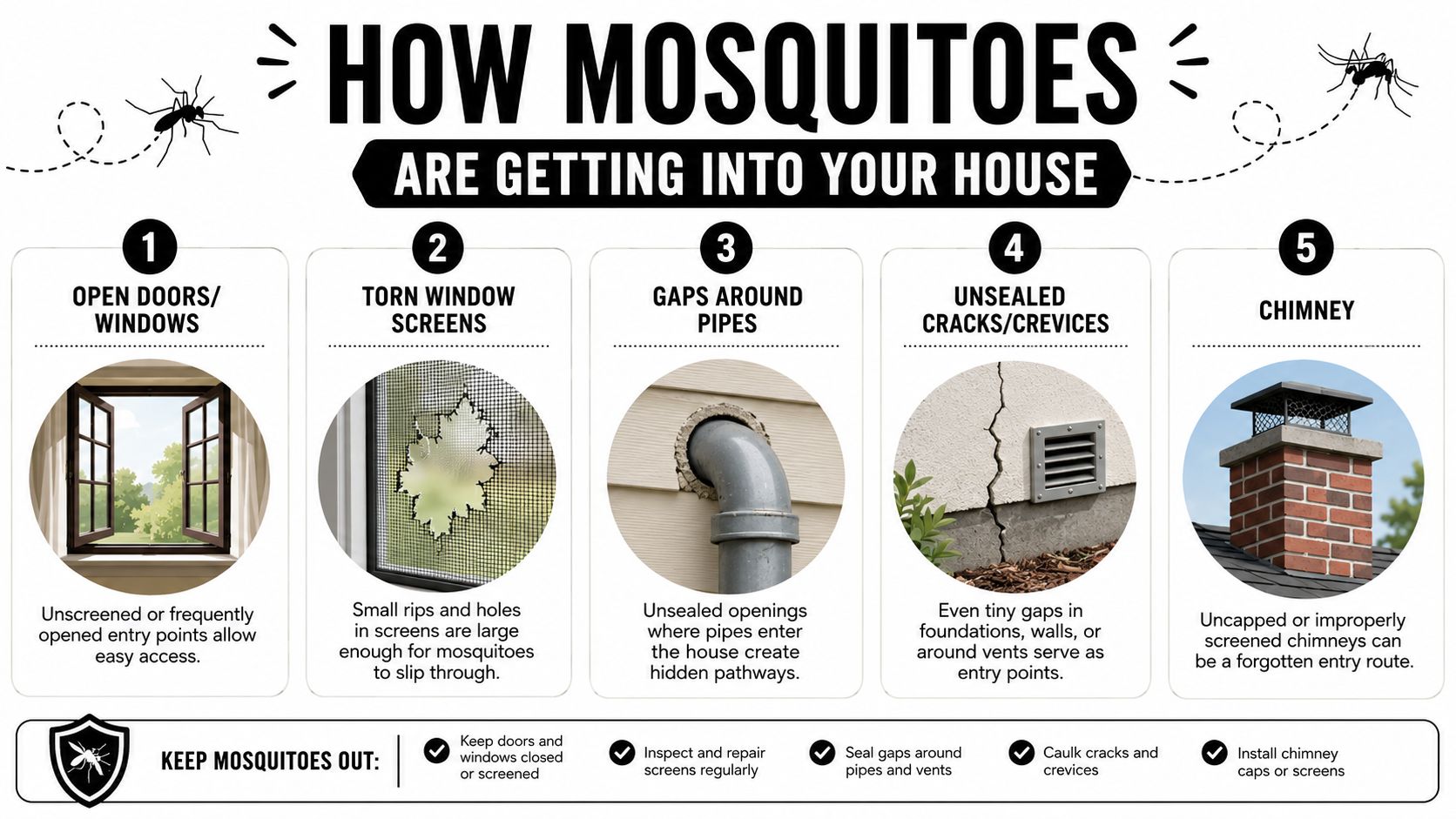
The most common mistake is assuming mosquitoes only come in through a wide-open door. In reality, they use small, boring-looking openings that homeowners walk past every day. Damaged screens, loose weather stripping, utility gaps, and unsealed vents can all become routes inside.
The entry points people miss
A quick walk-around often reveals the same trouble spots. Mosquitoes can slip through small gaps around doors and windows, damaged screens, vents, garages, chimneys, and utility openings, and they can even hitchhike indoors on clothing, pets, or people returning from outside (Agile Pests). That's why a home can seem sealed up and still have a steady mosquito problem.
Here's the homeowner checklist I'd use first:
- Door and window edges: Look for daylight, loose sweeps, or gaps where the frame doesn't seal tightly.
- Screen condition: Check for tears, bent frames, or screens that pull away when touched.
- Utility openings: Inspect where cables, pipes, or lines enter the house, especially near basements and garages.
- Vent and chimney screens: These get forgotten because they're higher up or out of sight.
- Garage and mudroom traffic: Mosquitoes can ride in when doors stay open during loading, unloading, or yard work.
Why entry control alone sometimes falls short
A homeowner can repair a screen and still see mosquitoes the next night. That usually means the house has more than one access route, or the insects are already inside and resting in a cool, shaded spot. A single fix helps, but it doesn't always solve a pattern that's coming from multiple weak points.
A sealed house matters, but a sealed house with moisture still gives mosquitoes somewhere to survive.
For readers comparing exterminator near me options, an experienced inspection pays off. If you want a deeper look at how indoor mosquito service works, The Green Advantage's interior mosquito control page gives a useful local reference.
The Hidden Breeding Sites Inside Your Home
Not every mosquito in a house flew in from outside. Some are born right there, in water you may barely notice. That's the part many homeowners miss, and it's why a few bites can become a recurring indoor problem.
Small water, big problem
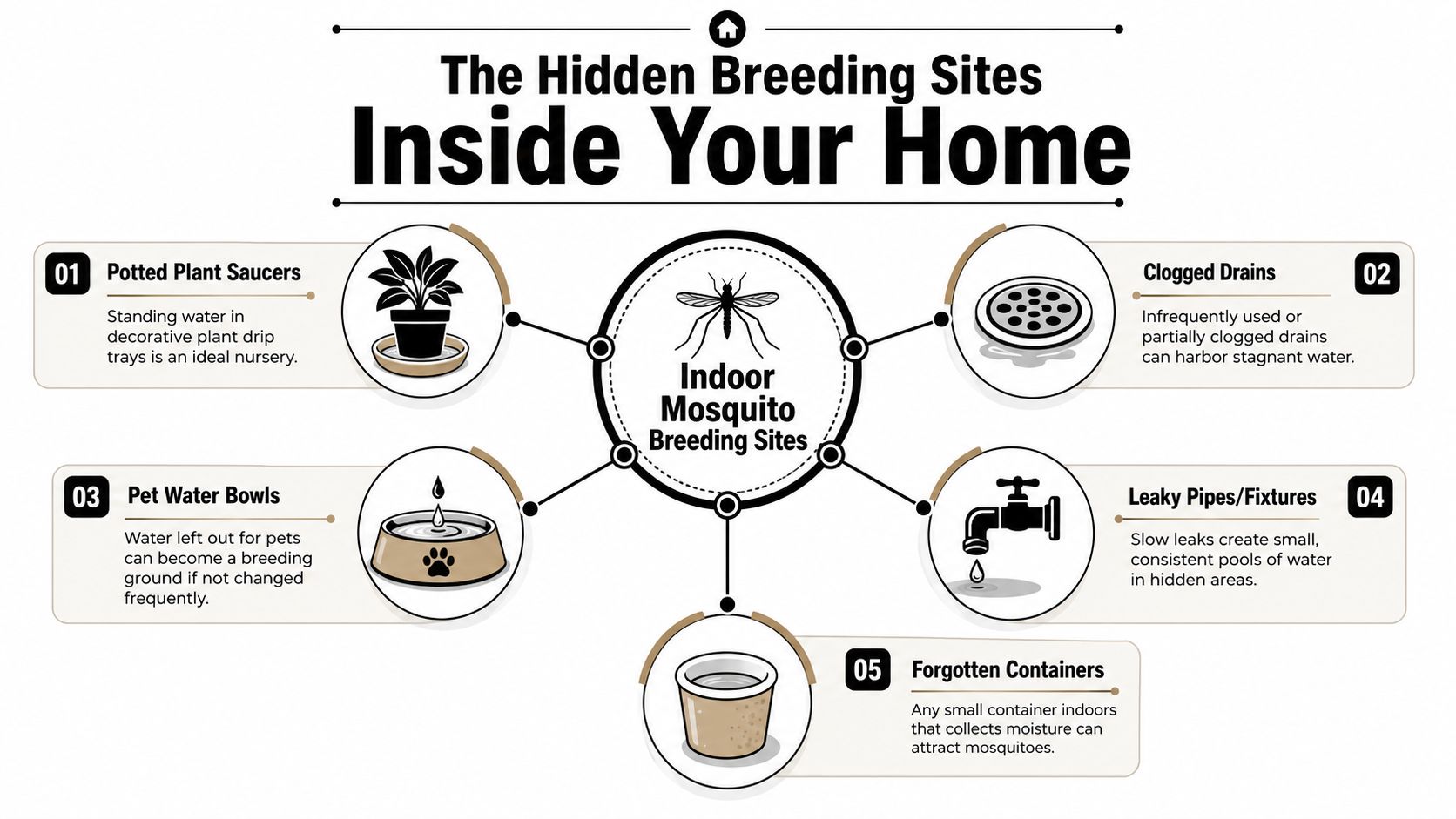
Mosquitoes do not need much water to breed. Female mosquitoes can lay eggs in very small standing-water sources, and one source notes that even a tablespoon of water can be enough for a breeding site (Engineer Fix). That means the usual suspects, plant saucers, drip trays, and small forgotten containers, can turn into indoor nurseries if the water sits long enough.
The older assumption is that breeding only happens in big puddles or swampy yard water. In practice, indoor sources are often tiny and persistent. A plant tray near a window, a pet bowl left unchanged, a slow leak under a sink, or a drain that doesn't get much use can all hold enough moisture for mosquitoes to cycle through again and again.
The rooms that deserve a closer look
Bathrooms, laundry rooms, basements, kitchens, and utility spaces are the places I'd inspect first. Those rooms often combine humidity, shade, and hidden water, which makes them attractive resting spots even when the source is small. A good home humidity guide, like this one from Sunset Shine Home Cleaning, can also help homeowners understand why damp indoor air keeps pests comfortable.
Rule of thumb: if a space stays damp, shaded, or underused, don't assume it's harmless just because it looks clean.
The bigger takeaway is simple. If mosquitoes remain after you've looked at doors, screens, and obvious entry points, the house may already be supporting an indoor cycle. That's the point where mosquito control becomes less about chasing adults and more about finding the water source they're using to keep coming back.
Your First Line of Defense Against Mosquitoes
The best homeowner defense is still the basic one. Clean out water, keep screens intact, and make the house less inviting. Those steps matter because they cut off the easiest survival conditions, and they're worth doing even if you plan to call for help.
What to do every week
The CDC says to once a week empty and scrub items that hold water, and it also notes that if mosquitoes remain after screen repair and container cleanup, professional treatment inside the home may be needed (CDC mosquito control at home). That advice is plain, practical, and hard to beat.
A homeowner can start with a short routine:
- Empty standing water: Check saucers, buckets, pet dishes, and anything that catches rain or condensation.
- Scrub water-holding items: Eggs can cling to surfaces, so dumping water alone isn't always enough.
- Repair screens quickly: Small tears are easier to ignore than they are to live with.
- Improve airflow: Stagnant, damp rooms tend to be more attractive resting spots.
- Watch the basement and garage: These areas often stay cooler and moister than the rest of the home.
Where DIY ends
DIY prevention works best when the issue is minor and the source is obvious. It's less effective when mosquitoes are coming from multiple access points, or when one hidden water source keeps replenishing the problem. That's why persistent indoor activity often needs a more complete inspection.
If you're comparing residential pest control providers, it helps to look at the whole home, not just the obvious window problem. A resource like identify household health risks can also help homeowners think more broadly about the conditions that make indoor spaces uncomfortable or unhealthy.
The practical line is this. If you've cleaned, repaired, and still see mosquitoes indoors, you're past the point where a spray can solve everything. At that stage, source identification matters more than guesswork.
The Green Advantage Solution for Mosquito Control

The strongest mosquito treatment starts with a full inspection, not a single product. A trained technician looks for entry points, moisture sources, and resting areas inside and around the structure, then matches the response to what's driving the problem. That matters because a house with mosquitoes needs source control, not just a quick knockdown.
What a professional service looks for
A proper visit usually focuses on the places homeowners miss. That includes utility openings, crawl spaces, basement moisture, shaded corners, and any indoor or outdoor source that can keep water in place long enough for mosquitoes to breed. The point is to find the chain, not just the symptom.
In the field, that can also include mosquito control around the property to reduce pressure from outside. For many homes in Crown Point and nearby Northwest Indiana neighborhoods, the issue is a mix of indoor access and outdoor activity. A complete plan may include targeted treatment, source reduction, and follow-up guidance for the season.
The Green Advantage also handles related commercial pest control and residential pest control needs, which helps when a home, rental property, or business all need consistent service standards. For homeowners who want a practical local option, The Green Advantage can provide a focused mosquito inspection and treatment plan suited to the structure and surrounding property.
Why timing matters
Mosquito breeding moves fast. New York State health guidance says many mosquitoes lay eggs in even small amounts of standing water, and eggs can develop in water that remains for more than four days (New York State health guidance). That short timeline is why a delay gives mosquitoes room to rebuild.
A professional approach breaks that cycle by treating the problem at the source, not just the adult mosquitoes you happen to see flying by. For families in Crown Point, that usually means less guessing, less repeat cleanup, and a clearer plan for keeping mosquitoes out of living spaces.
Working With Your Local Crown Point Exterminator
When a mosquito problem keeps coming back, homeowners usually want three things. They want the house to feel comfortable again, they want to know the problem was handled correctly, and they want a plan that doesn't turn into another seasonal headache. That's a fair expectation.
What you can expect from service
A good inspection should feel straightforward. The technician should look at the structure, identify likely sources, explain what's making the house attractive to mosquitoes, and recommend the next step in plain language. You shouldn't have to guess what was found or why the treatment matters.
That's especially important for pest control in Crown Point, IN, where moisture, season changes, and property layouts can vary a lot from one home to the next. A local team understands that mosquito pressure doesn't come from one cause every time. Sometimes it's a screen issue. Sometimes it's indoor moisture. Sometimes it's both.
Here's what usually helps most:
- Clear diagnosis: You know whether the issue is entry, breeding, or both.
- Targeted treatment: You're not paying for blanket work that doesn't match the problem.
- Prevention guidance: You get practical steps to reduce the chance of a return visit.
- Local follow-through: You can work with a company that understands Northwest Indiana homes and seasons.
The right service makes the house easier to live in, not just quieter for one night.
That's the reason people call an exterminator in Crown Point, IN instead of trying to chase mosquitoes room by room. Professional mosquito control protects comfort, supports better indoor conditions, and gives you a plan that fits the property instead of a generic answer.
If mosquitoes keep turning up in your home, schedule a pest inspection with The Green Advantage and get a local plan built for Crown Point and Northwest Indiana. Visit The Green Advantage to request a quote, ask about mosquito control, and take the next step toward a more comfortable home.