
Rodent Proofing Your Home in Crown Point: Expert Guide
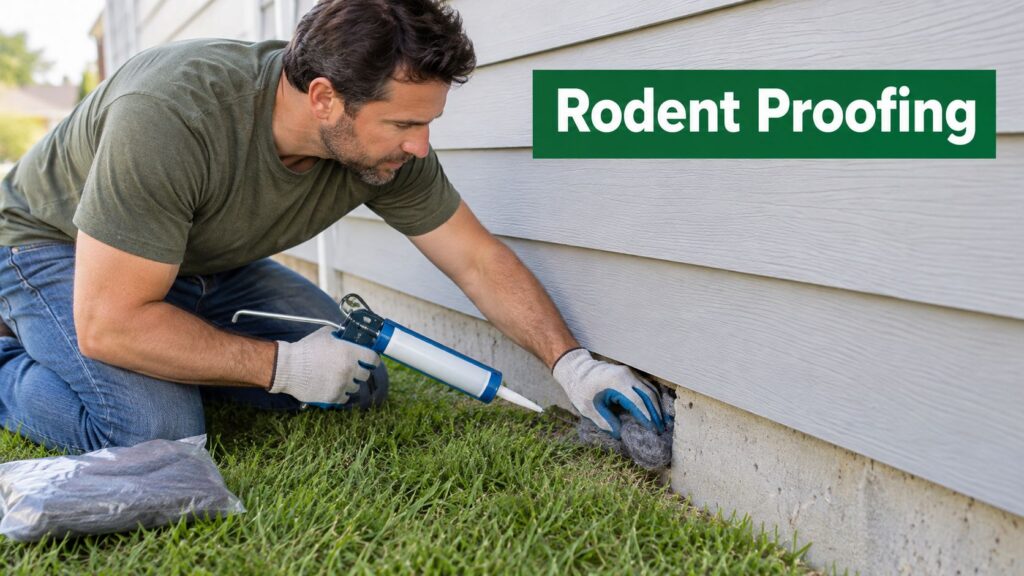
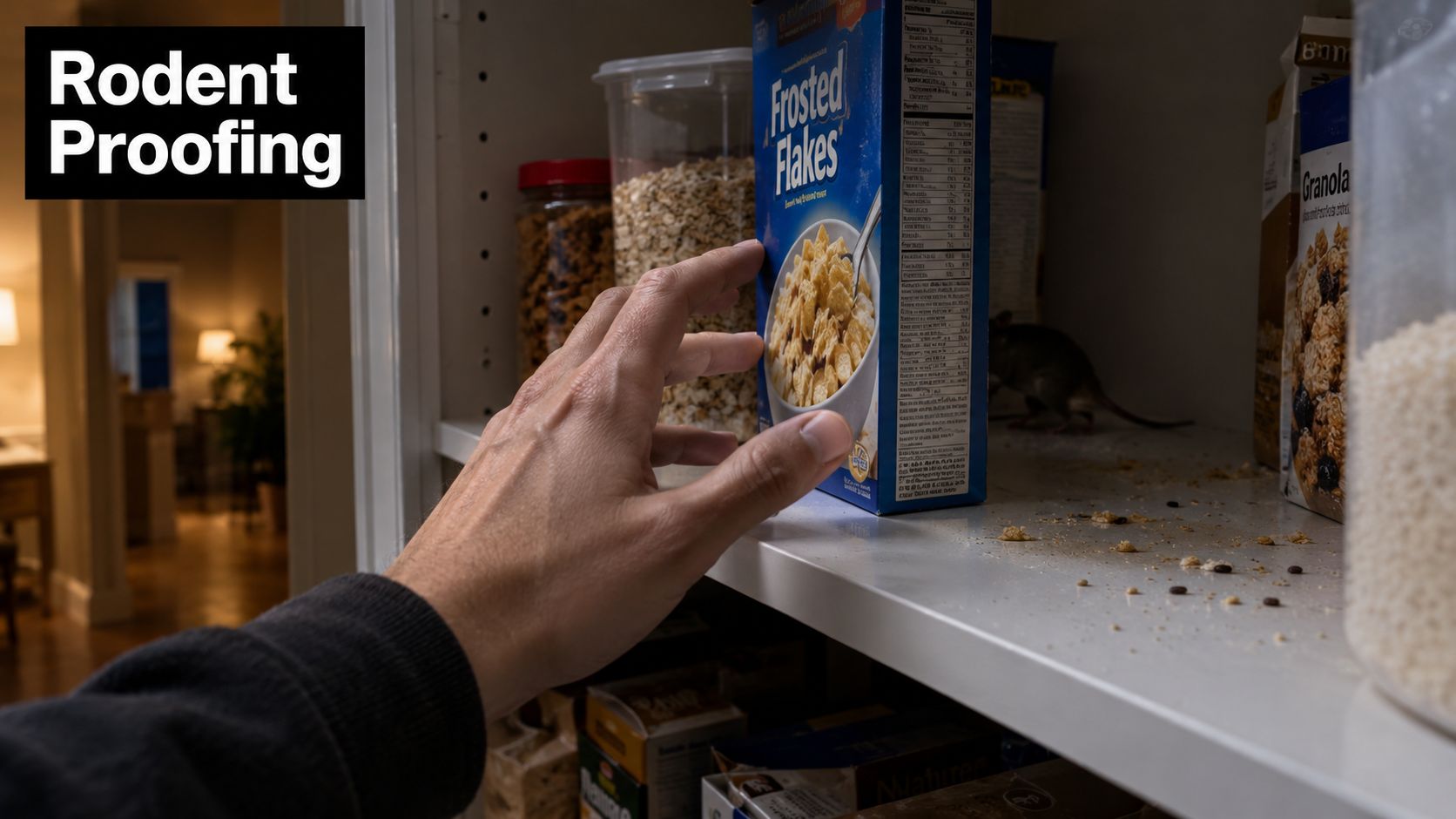
You hear scratching behind the pantry wall after dark. The next morning, you find droppings near the cereal, a chewed food package, or a faint odor in the basement. For many homeowners searching for pest control near me or an exterminator near me, the immediate concern is getting rid of the rodent. The lasting solution starts earlier, by finding and closing the route the animal used to enter.
For homeowners in Crown Point, IN, rodent proofing is a practical part of residential pest control. A thorough inspection looks beyond obvious foundation cracks and checks the small transitions around pipes, vents, doors, rooflines, and utility equipment. Local technicians can then combine exclusion, sanitation, and targeted control to protect the home without relying on a temporary fix.
Why Rodent Proofing Is Essential for Crown Point Homes
A Crown Point homeowner may first notice a problem in one of three ways: scratching in a wall, droppings in a cabinet, or signs that stored food has been disturbed. None of these signs tells you exactly where the rodent entered. The animal may have used a gap behind an appliance, an opening around a pipe, a damaged vent screen, or a worn seal under an exterior door.
Northwest Indiana homes include a wide range of construction styles, from older properties with settling foundations to newer homes with attached garages, crawl spaces, mixed siding, and multiple utility penetrations. Each transition between materials creates a possible weakness. Seasonal changes can also expose deteriorated caulk, loose weather stripping, damaged screens, and gaps around the foundation.
The practical priority: trapping may remove an animal that's already inside, but exclusion addresses the access point that allows the problem to continue.
Rodents seek shelter, food, and protection from outdoor conditions. A warm wall void, unfinished garage, attic corner, or cluttered basement can provide all three. Once inside, they may damage insulation, stored materials, food packaging, and wiring. Droppings and urine can also create sanitation concerns, particularly in pantries, kitchens, laundry areas, and places where children or pets spend time.
The response doesn't need to be alarmist. Early action usually gives homeowners more options and makes the source easier to identify. A local exterminator in Crown Point, IN can assess activity, inspect the exterior and interior, and separate an active entry problem from old signs that no longer represent current activity.
The same principle applies to businesses and rental properties. A restaurant, warehouse, office, or apartment building can't depend on traps alone if a damaged door seal or utility opening remains exposed. Commercial pest control and residential service both work better when the building itself becomes part of the control plan.
Inspecting Your Home for Hidden Entry Points
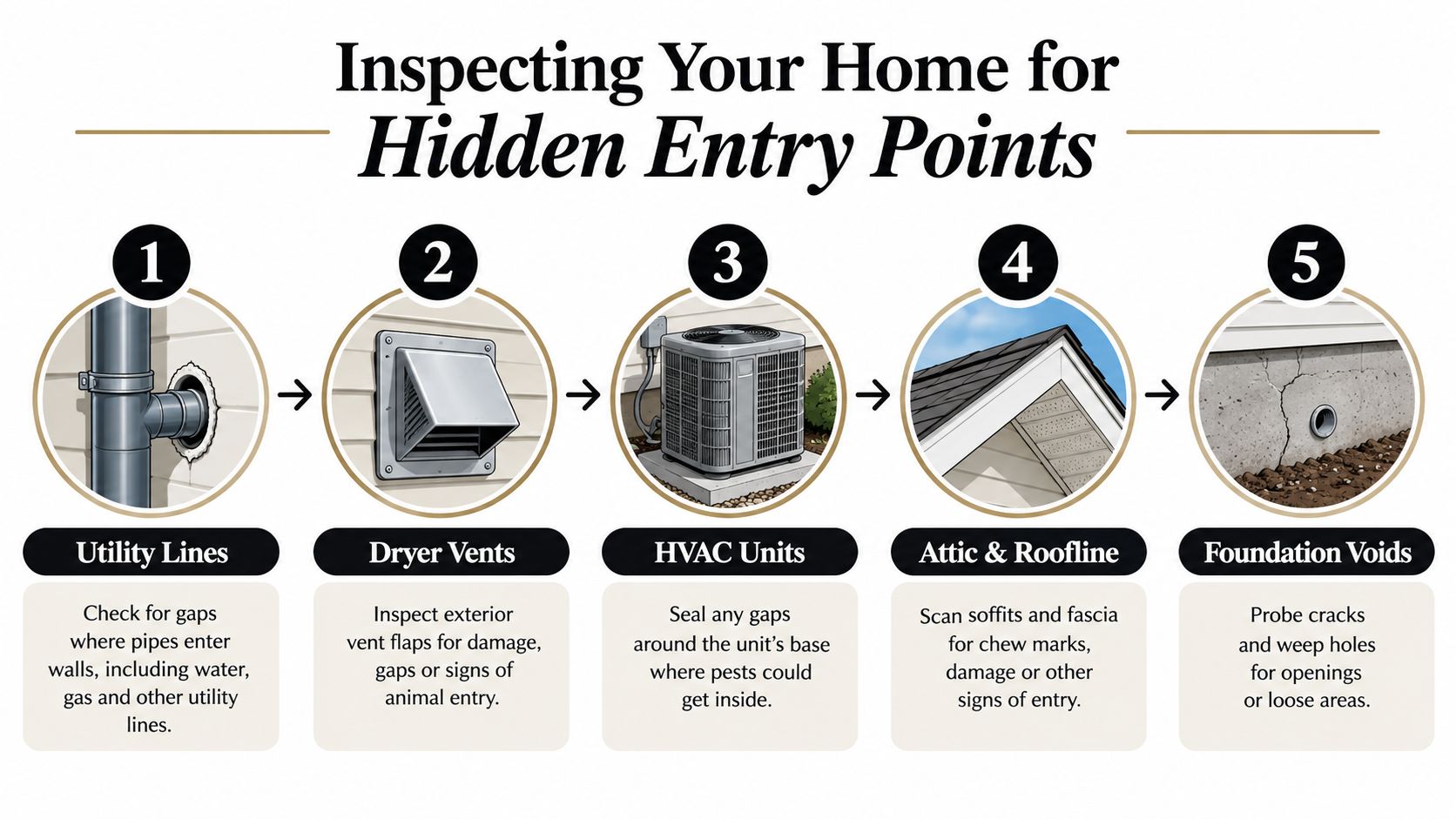
A reliable inspection moves around the structure in a consistent direction. Randomly patching the first hole you see often leaves the actual access route untouched. Start outdoors, work from the roofline down, then repeat the process indoors where pipes, wires, ducts, and appliances meet walls or floors.
Start at the roofline and move downward
Look at soffits, fascia, eaves, attic vents, gable areas, and places where roof materials meet siding. Search for damaged screens, loose panels, chew marks, nesting material, and daylight visible through a seam. Roofline gaps matter because rodents can travel through attic spaces and enter wall cavities without leaving obvious signs in the living area.
Next, inspect exterior vents. Dryer vents should have intact flaps and a secure connection to the wall. Check bathroom and kitchen exhaust outlets, crawl-space vents, and other screened openings for breaks or missing covers. Don't assume a vent is too high or too small to matter. A damaged screen can turn a designed opening into an unprotected route.
Pay close attention to utility transitions
Walk the foundation perimeter and examine where the foundation meets soil, paving, siding, porches, and attached structures. Then check around gas lines, plumbing, electrical conduits, cable entries, hose bibs, air-conditioning lines, and other penetrations. The important question isn't only whether you see a crack. Ask whether the material around the penetration forms a continuous seal.
Inside, inspect under sinks, behind appliances, inside cabinets, around water heaters, near furnaces, and in basements or crawl spaces. A gap may be hidden from the exterior but visible where a pipe or wire passes through an interior wall. Garages and outbuildings deserve the same attention as the main house, especially around doors, corners, stored materials, and utility lines.
For a broader understanding of how building components are evaluated, this home inspection guide for buyers offers useful context. A pest inspection isn't a substitute for a general home inspection, but both benefit from careful attention to building transitions.
The inspection should finish in the basement, crawl space, and garage. Look for droppings, rub marks, nesting material, disturbed insulation, gnawing, and air movement around penetrations. Record each opening before repairing it. That record helps you confirm that the repair is complete and prevents a surface-level patch from being mistaken for whole-house protection.
Sealing and Exclusion Techniques That Work
The most important measurement in rodent exclusion is the quarter-inch threshold. Mice can enter openings as small as 1/4 inch, or about 6 mm, while rats can enter openings as small as 1/2 inch, according to CDC rodent exclusion guidance. If a pencil can fit through a gap, treat it as a potential mouse route rather than dismissing it as too small.
A successful repair uses a material the animal can't easily pull apart or chew through. Foam and caulk can help hold a repair in place, but they aren't dependable as the only barrier. For larger gaps, public guidance recommends materials such as metal sheeting, lath screen, flashing, and hardware cloth. Historic rodent-control guidance also identifies galvanized sheet metal and cement-based repairs as durable choices, as described by the University of Nebraska Extension rodent-proofing guide.
Match the material to the opening
For a small penetration around a pipe or wire, pack the void with steel wool, then secure it with caulk or an appropriate sealant. The steel wool provides the difficult-to-chew core, while the sealant helps keep the material in place and closes the edge.
For a larger opening, attach metal mesh or sheet metal so it overlaps the surrounding surface. The University of Nebraska identifies 1/4-by-1/4-inch, 24-gauge mesh for mice and 1/2-by-1/2-inch, 19-gauge hardware cloth for rats in its exclusion recommendations. Cut the material tightly, fasten it securely, and seal the perimeter so the rodent can't work behind it.
Avoid the foam-only repair. Expanding foam may fill a visible void, but it doesn't create a reliable chew-resistant barrier by itself.
Doors need mechanical attention. Examine the bottom edge, threshold, corners, and side seals for daylight, warping, or worn weather stripping. Exterior doors should have a tight-fitting sweep or metal threshold with no more than 1/4 inch of clearance, consistent with the National Park Service rodent exclusion manual. Garage doors require the same scrutiny along the bottom and side edges.
For practical guidance on reducing gaps around an overhead garage door, Danny's Garage Door Repair provides this garage door sealing guide. The repair should still be evaluated as part of the whole building, because closing a garage threshold won't solve an unsealed utility penetration or damaged crawl-space screen elsewhere.
Homeowners who need a structured inspection and repair plan can review rodent exclusion services for examples of how professionals approach entry points, repairs, and follow-up. The objective is a continuous exterior shell, not a collection of isolated patches.
Trapping, Sanitation, and Professional Pest Control
Traps have a legitimate role, but they solve only part of the problem. A snap trap may remove a rodent that is already traveling along a wall, while exclusion prevents another animal from using the same route. If you place traps without correcting access, you may continue finding evidence because the building remains available.
Sanitation supports the repair. Store dry goods in durable containers, clean food residue from shelves and counters, secure waste, and avoid leaving pet food out overnight. Reduce cardboard, fabric piles, and other nesting material in garages, basements, storage rooms, and utility areas. These changes don't replace sealing, but they make the property less attractive and make fresh signs easier to identify.
Where DIY efforts often stop short
DIY work can be appropriate when the opening is visible, accessible, and easy to repair safely. A homeowner may replace damaged weather stripping, screen a small vent, or pack a minor pipe gap with steel wool and sealant. The difficulty comes when access is restricted or the visible opening isn't the full route.
Common problems include:
- Surface patching: A homeowner seals one foundation crack but misses a utility line entering a nearby wall.
- Soft materials: Foam, plastic screen, or unreinforced rubber closes the gap briefly but doesn't withstand chewing.
- Incomplete follow-up: The repair looks finished, yet activity continues in the attic, garage, or crawl space.
- Unsafe access: Rooflines, electrical penetrations, and confined spaces can create risks that aren't suitable for casual inspection.
Professional technicians bring inspection experience, repair materials, and a method for distinguishing active signs from old evidence. They can also identify conditions that support activity, such as accessible waste, cluttered storage, damaged screens, or gaps between connected structures.
Trapping is a response to presence. Exclusion is a response to access.
A local service can also coordinate rodent work with other needs. Ant control, termite control, mosquito control, spider control, wasp removal, and preventative pest treatments each address different pest pressures, so the inspection should identify the actual problem instead of applying the same treatment everywhere. Environmentally mindful service means using the least disruptive effective approach while protecting people, pets, and the structure.
Exterior maintenance matters, too. Blocked gutters can contribute to moisture around a building and make other defects harder to spot. Homeowners looking for a separate explanation of drainage upkeep can review this resource on gutter cleaning for Flagstaff homes, while keeping the rodent inspection focused on Crown Point property conditions.
Long-Term Maintenance Checklist for Prevention
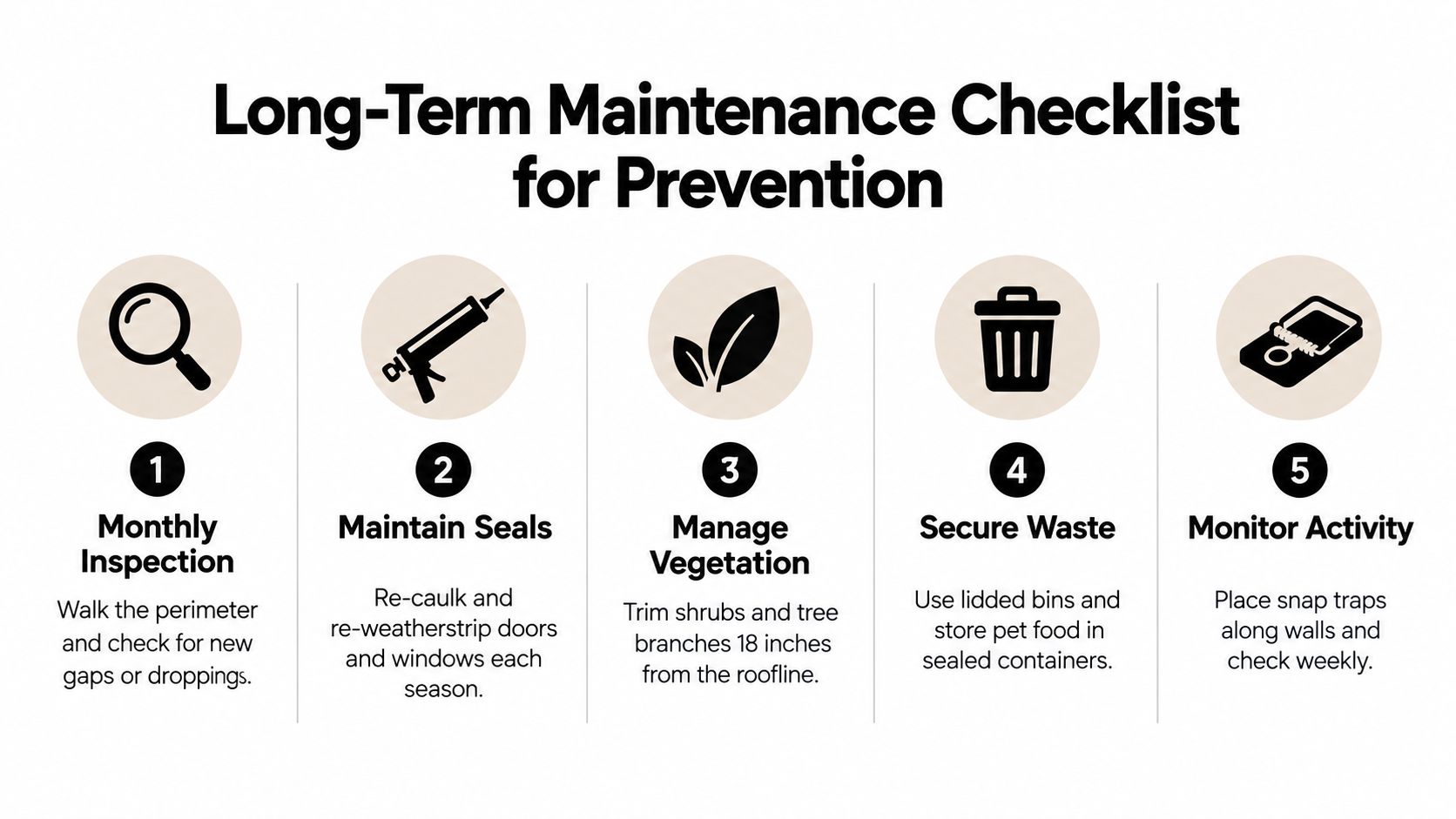
Rodent proofing your home isn't a one-time event. Wind, settling, remodeling, weather exposure, landscaping, and routine wear can create new openings after an otherwise careful repair. A short, repeatable inspection is more useful than waiting until scratching or droppings appear again.
Keep the exterior visible
Walk the perimeter and look at doors, vents, foundation edges, utility penetrations, garage seals, and outbuildings. Trim vegetation so branches and dense growth don't hide the roofline or touch vulnerable areas. Keep stored materials off the ground and organized where possible, especially in garages and sheds.
Maintain the barrier
Recheck caulk, weather stripping, vent screens, metal patches, and door sweeps as part of seasonal home maintenance. If a seal has separated or a screen has bent, repair it before the opening becomes an active route. Don't cover a damaged area with another soft layer. Replace or reinforce the underlying barrier.
Control attractants and monitor signs
Use lidded waste containers and sealed food storage. Clean spills quickly, manage pet food, and remove nesting material from storage spaces. Check along walls, behind appliances, in cabinets, and near utility areas for new droppings, gnawing, odors, or disturbed insulation.
A maintenance plan works best when every household member knows what to report. A tenant, property manager, or employee may notice a damaged door seal or unexplained noise before the person responsible for repairs sees it. Prompt reporting helps a local exterminator near me investigate while evidence remains fresh and before a small defect becomes a larger repair.
Schedule Your Rodent Inspection Today
Rodent signs shouldn't be treated as a reason to panic, but they shouldn't be ignored either. The right response combines a careful inspection, durable exclusion, sanitation, and control suited to the building. That approach protects the structure while giving homeowners a clearer explanation of what caused the problem.
For Crown Point homeowners, landlords, property managers, and local businesses, a professional inspection can identify hidden entry points that are easy to miss during a quick walkaround. The family-owned local team serving Northwest Indiana brings decades of hands-on experience, licensed and certified service, transparent communication, and options for both residential pest control and commercial pest control.
Schedule a pest inspection when you notice scratching, droppings, damaged food packaging, nesting material, or repeated activity after a DIY repair. You can also request a quote for preventative service before signs appear, particularly if your property includes a garage, crawl space, attic, outbuilding, or older foundation.
For rodent proofing your home, The Green Advantage provides inspection-focused rodent control, exclusion support, and preventative pest treatments for Crown Point properties. Visit The Green Advantage to schedule an inspection, request a quote, or discuss residential and commercial pest control options.
Residential Pest Control Services: Trusted Home Protection
A humid July evening in Crown Point can turn ordinary home maintenance into a pest problem quickly. You notice carpenter ants moving along the kitchen baseboard, or you find mouse droppings behind the pantry shelves as temperatures fall in late October. For pest control near me, pest control in Crown Point, IN, or an exterminator near me, you need more than a quick spray. You need someone to identify why pests entered, treat the active problem, and help keep the next seasonal invasion outside.
The Green Advantage serves Crown Point and nearby Northwest Indiana communities with residential pest control services designed around inspection, targeted treatment, and practical prevention. This guide explains which household pests are common here, when a one-time treatment makes sense, when recurring service is worth considering, and how an eco-conscious approach can protect your home, family, pets, and property.
Why Crown Point Homeowners Need Reliable Pest Control
Northwest Indiana gives pests several opportunities to move indoors. Hot, humid summers support ants, mosquitoes, spiders, and other outdoor activity. Freezing winters push mice and rats toward warmer basements, crawl spaces, garages, and wall voids. Older homes in Crown Point and surrounding Lake County communities may also have aging foundations, attic vents, weathered sill plates, or utility penetrations that create convenient entry routes.
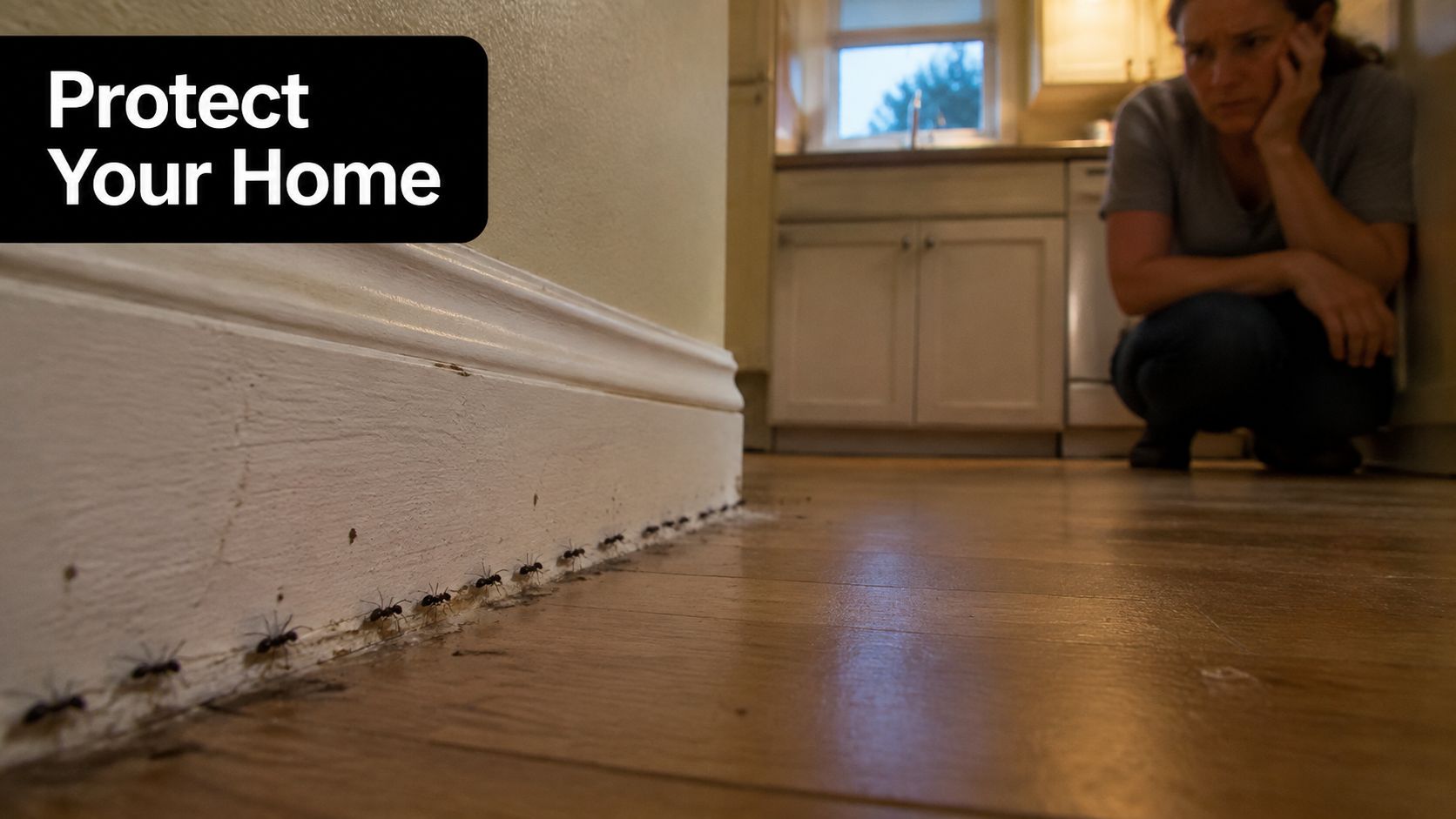
A line of ants in the kitchen doesn't always mean the colony lives inside the wall. It may be following moisture, food residue, or a hidden route from the exterior. A few droppings in the pantry may be the first visible sign of a mouse traveling through a much larger network of gaps. The right response depends on the pest, the building, and the conditions that support it.
Why prevention matters
Professional pest control has become a recurring household service because many infestations return when the underlying conditions remain. Industry coverage cited nearly 13.29 million U.S. residential customers receiving professional pest control services in 2025, while recurring revenue represented 85.4% of residential service revenue. The same coverage reported roughly 31,000 pest control businesses and 167,232 pest control specialists, evidence of a labor-intensive industry built around ongoing inspections, follow-ups, and maintenance rather than one-time visits. Consumer Affairs coverage of pest control industry statistics
The Green Advantage brings that prevention mindset to Crown Point homes without treating every property as though it has the same risk. A house near wooded areas, an older home with a crawl space, and a newer tightly sealed home may need very different recommendations.
Practical rule: Treat the pest you can see, but investigate the moisture, food, shelter, and entry point that brought it there.
Common Household Pests in Northwest Indiana
Pest identification matters because similar-looking insects can require very different responses. Carpenter ants excavate galleries in damp or damaged wood, but they don't consume wood the way termites do. German cockroaches thrive in warm, humid indoor areas and can spread through kitchens, bathrooms, and utility spaces. Mice and Norway rats look for warmth and dependable food as outdoor conditions worsen.
Local conditions that invite pests
Carpenter ants often take advantage of moisture-damaged wood around roofs, windows, porches, foundations, and plumbing leaks. Odorous house ants and pavement ants commonly follow protected routes into kitchens and bathrooms during spring and summer, especially where vegetation, mulch, cracks, and damp soil meet the foundation.
House mice and Norway rats can enter through surprisingly small openings around doors, vents, pipes, garages, and foundations. From September through March, crawl spaces, basements, wall voids, and attic insulation offer shelter from cold weather. German cockroaches can remain active year-round in warm indoor environments, particularly where food residue, water, clutter, and appliance heat are available.
Boxelder bugs, stink bugs, and spiders become more noticeable in autumn as they gather around siding, windows, attic vents, and other protected areas. They may not all cause the same structural concern, but a sudden increase can reveal gaps in the building envelope that other pests can also use.
| Pest | Peak Season | Primary Risk | Common Entry Points |
|---|---|---|---|
| Carpenter ants | Spring through summer | Wood excavation and moisture concerns | Foundation cracks, siding gaps, roof and window areas |
| Odorous house ants and pavement ants | Spring through summer | Food contamination and recurring trails | Baseboards, plumbing penetrations, foundation gaps |
| House mice and Norway rats | Fall through winter | Droppings, gnawing, contamination, and nesting | Doors, vents, utility lines, garages, crawl spaces |
| German cockroaches | Year-round indoors | Allergens, contamination, and rapid population growth | Deliveries, plumbing openings, appliances, shared walls |
| Boxelder bugs and stink bugs | Autumn | Nuisance activity and indoor congregation | Windows, attic vents, siding, roofline gaps |
| Spiders | Seasonal, often autumn indoors | Webs, nuisance activity, and possible bites from certain species | Exterior cracks, garages, basements, vegetation contact |
Early professional identification helps separate an isolated visitor from an established infestation. Broad spraying can miss a nest, colony, breeding site, or entry route. Fleas deserve the same careful approach because adults may be only part of the problem. For practical household guidance alongside professional evaluation, review these natural flea control tips.
Cockroaches, rodents, termites, bed bugs, and recurring ant activity deserve prompt attention. A technician can look for conditions homeowners usually can't see, including rub marks, droppings in hidden areas, frass, nesting material, moisture damage, and travel routes behind cabinets or through utility spaces.
What to Expect from a Professional Pest Inspection
A reliable inspection starts with a conversation, not a product. The technician should ask what you've seen, where you saw it, when activity began, whether you've heard scratching, and whether anyone has already applied sprays, traps, or bait. Questions about the home's age, renovations, moisture problems, pets, children, and previous treatments help shape a useful inspection.
The inspection path
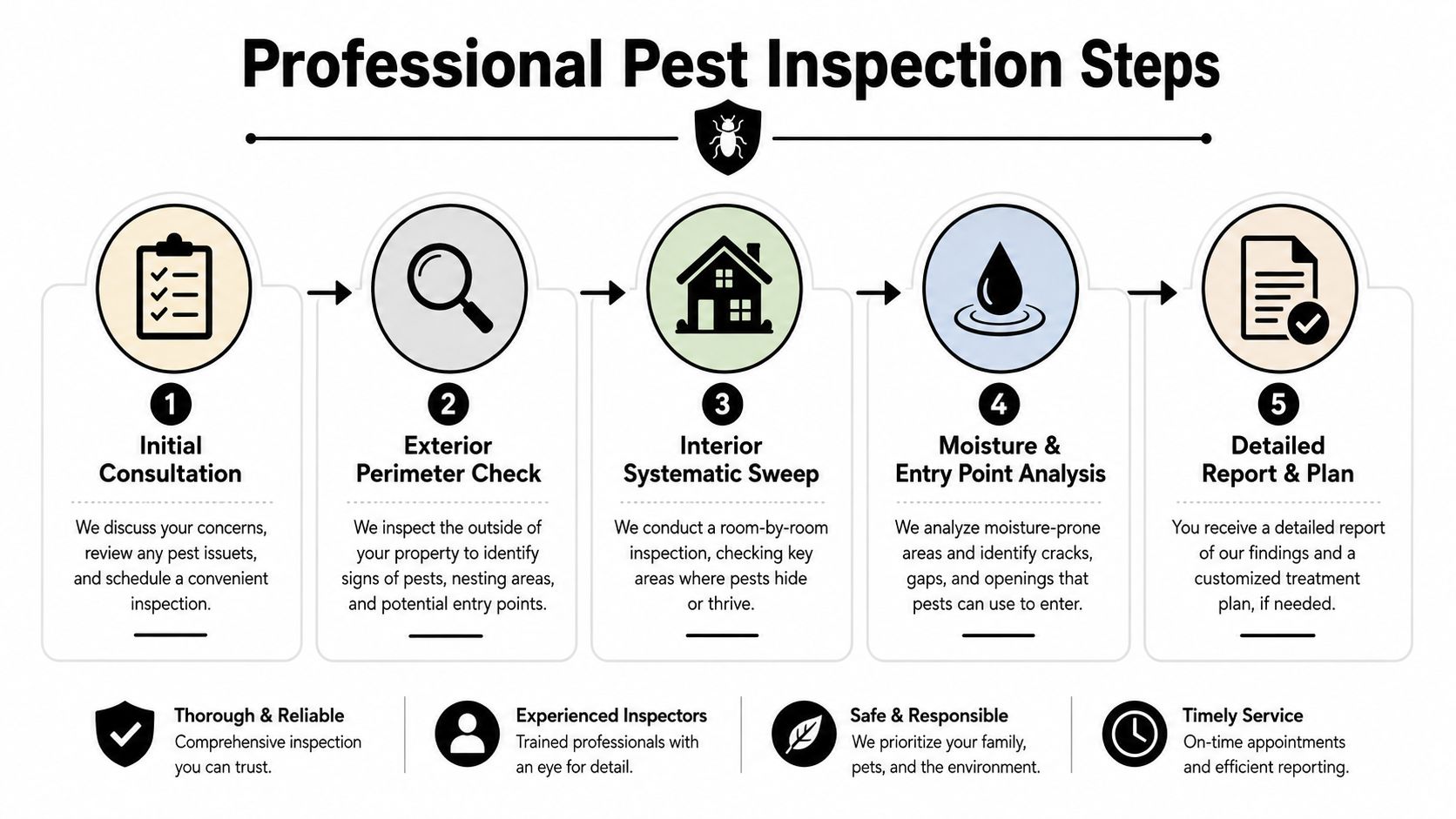
A Crown Point inspection typically follows the home's pest pathways rather than relying on a quick visual glance.
Start with the exterior perimeter. The technician checks the foundation, siding, doors, windows, roofline areas, vegetation, mulch, and exterior penetrations for cracks, gaps, and conditions that let pests reach the structure.
Examine lower levels. Basements and crawl spaces can reveal moisture intrusion, wood damage, rodent travel, droppings, nesting materials, and gaps around pipes or ductwork.
Check attic areas. Technicians look for rodent activity, disturbed insulation, rub marks, droppings, chewed materials, and openings around vents or roof details.
Sweep activity zones indoors. Kitchens, bathrooms, utility rooms, garages, and storage areas often provide the food, water, warmth, or clutter pests need.
Document the findings. The final recommendation should identify the pest, explain contributing conditions, outline treatment options, and clarify any exclusion or sanitation work that belongs in the plan.
Homeowners can make the visit more useful by keeping a record of sightings, saving insect samples or clear photographs, and making accessible areas available. You don't need to empty the house, but stored items may need to move away from walls, basement corners, attic access points, or utility rooms.
Clear recommendations before treatment
Inspection time depends on the home's size, access, pest concern, and complexity. Rather than promise a universal duration, a professional should explain what the visit includes before arriving. Pricing should also be communicated clearly before work begins, with separate attention to general pest control, rodent exclusion, termite control, mosquito control, bed bug treatment, or other specialized services.
For a homeowner preparing for an appointment, this residential pest control inspection checklist can help organize observations and access points.
Recurring Service Plans Versus One-Time Treatments
A single treatment can be appropriate when the problem is isolated, visible, and unlikely to return after the source is removed. A wasp nest that has been located and safely treated may not justify a long-term plan. One mouse sighting after a door was left open may call for monitoring and exclusion rather than an automatic recurring contract.
Recurring service makes more sense when pest pressure follows the property, not just the calendar. Ants, spiders, cockroaches, and seasonal invaders can exploit the same foundation cracks, vegetation bridges, moisture conditions, and utility penetrations repeatedly. Older homes, houses with crawl spaces, properties near wooded areas or water sources, and homes with a history of pest activity generally deserve closer consideration.
A practical Crown Point decision framework
Ask these questions before choosing a service level:
- Does the activity repeat? Repeated trails, droppings, webs, or sightings indicate a pattern rather than a one-off visitor.
- Does the property have persistent vulnerabilities? Aging foundations, damp crawl spaces, attached garages, and unsealed vents can keep inviting pests inside.
- Does the season create a predictable problem? Spring ants, summer mosquitoes, and fall rodents may each require a different prevention emphasis.
- Would missed activity create a larger risk? Cockroaches, rodents, termites, and bed bugs shouldn't be evaluated like an occasional outdoor insect.
- Do you want active monitoring? Recurring service can identify changes before a small problem becomes disruptive.
| Factor | One-Time Treatment | Recurring Service Plan |
|---|---|---|
| Best fit | Isolated nest, visitor, or clearly limited issue | Repeating activity or continuing structural vulnerability |
| Main focus | Immediate control and source assessment | Monitoring, seasonal adjustment, and prevention |
| Property profile | Tightly maintained home with little history of activity | Older home, crawl space, wooded lot, or repeated pest pressure |
| Limitation | May not address new activity or hidden entry points later | Requires ongoing scheduling and homeowner cooperation |
| Typical decision | Use when risk appears limited | Use when conditions make recurrence likely |
The residential market's reliance on recurring service reflects this distinction. Coverage of 2025 industry conditions reported recurring revenue at 85.4% of residential service revenue, compared with 85.2% in 2024, and reported that 70% of consumers named protecting their home and family as the top reason for a contract or regular service. National Pest Management Association industry coverage
That doesn't mean every Crown Point home needs frequent visits. It means the decision should match pest biology, building conditions, and the household's tolerance for risk. Repeated emergency calls can also become less predictable than a structured maintenance plan, especially when the same entry points remain open.
Eco-Friendly Pest Management Methods That Work
For a Crown Point home, environmentally responsible pest control starts with inspection, not a routine spray. The goal is to choose the least disruptive effective method, place products where they matter, and correct the conditions that let pests survive. The Environmental Protection Agency describes integrated pest management, or IPM, as an approach that combines monitoring, exclusion, sanitation, habitat modification, and targeted pesticide use when needed. EPA principles of integrated pest management
Why targeted treatment outperforms routine spraying
A broad contact spray may kill exposed insects without reaching a nest, eggs, wall void, harborage, or entry route. Targeted baiting, crack-and-crevice treatment, exclusion, moisture correction, and monitoring address why pests remain on the property.
In a Crown Point household, the work might involve placing bait along an ant trail, sealing a foundation gap, repairing a leak that supports carpenter ants, or removing standing water that supports mosquitoes. Botanical or lower-toxicity products can fit the plan, but “natural” does not automatically mean effective or risk-free. The product, placement, and application must match the pest and the site. Our environmentally friendly pest control methods reflect that inspection-led approach.
Lower-impact pest control works best when “green” describes the entire strategy, not just the label on a product.
Resistance can make casual, repeated pesticide use unreliable. The 2025 BPCA Future of Pest Management survey reported that 82% of professionals had encountered some form of pesticide resistance, up from 77% in 2023. Coverage of the 2025 BPCA survey
That supports rotating tactics and improving inspection instead of repeatedly applying the same product. It also explains why professional judgment matters when cockroaches, ants, or other pests return after DIY treatment.
Professional control remains the most common consumer approach at 62%, while DIY methods account for 28%, according to survey coverage. Coverage of consumer pest control sentiment A practical middle ground combines targeted professional work, fewer unnecessary applications, and monitoring when the home's construction or seasonal pest pressure warrants it.
The Green Advantage may use inspection-led exclusion, targeted products, and prevention recommendations suited to the property. That approach protects people and pets while addressing the infestation with methods matched to the home and pest involved.
Year-Round Prevention Tips for Your Home
Professional treatment controls the immediate problem, but homeowner habits influence what happens between visits. Small maintenance tasks reduce food, water, shelter, and access, which are the same conditions IPM targets during professional service.
Spring preparation
Inspect the foundation before ant activity builds. Seal visible cracks, check thresholds, and look for gaps around pipes and utility lines. Trim shrubs and groundcover away from siding so branches don't create a bridge from damp soil to the house.
Clean gutters and confirm that downspouts move water away from the foundation. Moisture near the structure can support carpenter ants, earwigs, and other pests while making entry points harder to notice.
Summer moisture control
Repair leaking faucets, hose connections, and basement plumbing. Remove debris from gutters and avoid leaving containers, toys, buckets, or other items where they can hold water.
Mosquitoes lay eggs in or near water. The CDC recommends that homeowners empty, scrub, turn over, cover, or throw out water-holding items once a week, because even small containers can become breeding sites. CDC mosquito control guidance
The CDC also advises holding stormwater for less than 72 hours whenever possible, because standing water held longer than 3 days can create mosquito breeding habitat. CDC stormwater guidance
Fall exclusion
Install or repair door sweeps, screen attic and crawl-space vents, and seal openings around utility penetrations. Store firewood away from the home and keep leaves, cardboard, and unused materials from accumulating against the foundation.
Female Culex mosquitoes can use ponds, swamps, unmaintained pools, and wastewater areas, but also household items such as buckets, tires, planters, toys, birdbaths, and flowerpots. CDC information about Culex mosquitoes The EPA similarly recommends removing standing water from gutters, tires, buckets, plastic covers, and toys, while changing water in birdbaths, fountains, wading pools, rain barrels, and plant trays at least weekly. EPA integrated mosquito control guidance
Winter monitoring
Store pantry food in sealed containers, clean crumbs promptly, and reduce clutter in basements and crawl spaces. Check for new droppings, gnaw marks, scratching, insect skins, or activity around stored items.
These habits won't replace residential pest control when an infestation is established. They do make professional treatments more effective by removing the conditions that keep drawing pests back.
Choosing The Green Advantage for Your Pest Control Needs
Choosing an exterminator in Crown Point, IN should involve more than comparing a treatment label. The company should understand Northwest Indiana homes, seasonal pest movement, older construction, moisture problems, crawl spaces, garages, and the practical concerns of families living in the property.
The Green Advantage is a family-owned pest control company serving Crown Point and the broader Northwest Indiana community. Its licensed and certified technicians provide residential and commercial pest control, inspections, mosquito reduction programs, rodent exclusion support, and site-specific treatment plans. The company emphasizes environmentally mindful methods, direct communication, transparent recommendations, and follow-up that keeps homeowners informed.
The most useful service plan is the one that fits the home. A property with one isolated issue may need a one-time response. A home with recurring ants, seasonal rodents, moisture, older foundations, or repeated outdoor mosquito pressure may benefit from ongoing monitoring and preventative pest treatments. Inspection findings should guide that choice, not a generic package.
If you're unsure whether you need commercial pest control, termite control, rodent control, spider control, wasp removal, or general residential service, start with an inspection. Clear identification gives you a safer and more practical path forward.
The Green Advantage offers inspection-driven residential and commercial pest control services, targeted treatments, mosquito reduction, rodent exclusion, and environmentally mindful prevention for Crown Point and nearby Northwest Indiana homes and businesses. Visit The Green Advantage to schedule a pest inspection, request a quote, and speak with a local team about the right one-time or recurring protection for your property.
Best Home Pest Control DIY: When to Call the Green Advantage
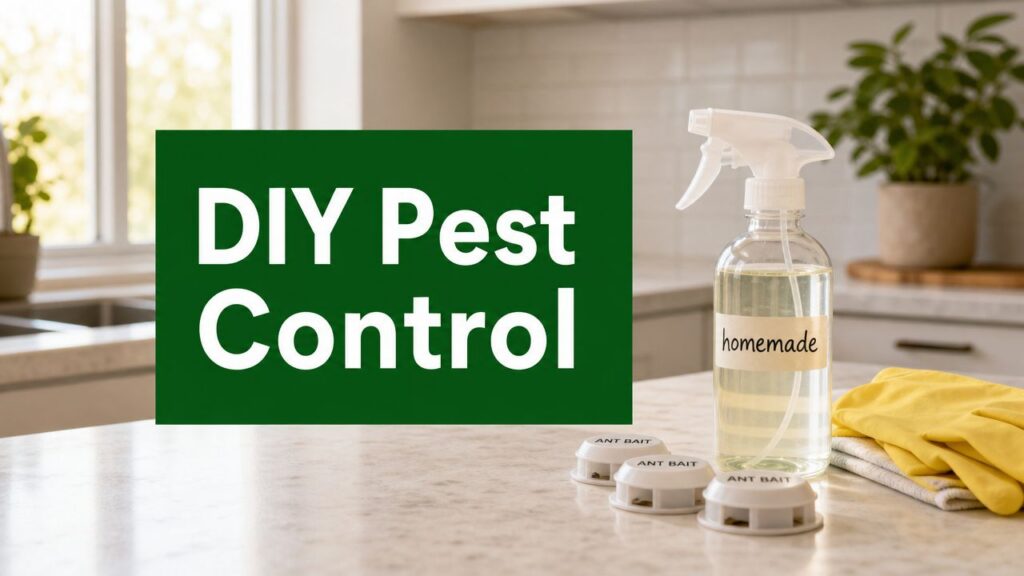
You flip on the kitchen light and find ants tracking along the counter. Later that night, you hear scratching near the basement ceiling. That is usually the point where Crown Point homeowners head to the hardware store and try to solve it themselves first.
That instinct makes sense. Many pest issues start as manageable DIY jobs, especially when the problem is limited, the pest is clearly identified, and the entry point or food source can be corrected. The trouble is that local pest pressure is not the same in every season. In Northwest Indiana, damp spring weather, summer mosquito breeding, fall mouse movement, and winter indoor sheltering all change what works and how long it works.
The most reliable DIY approach starts with prevention, inspection, and targeted treatment. The National Pesticide Information Center explains that a prevention-first method includes cutting off food and water, reducing access, and using pesticides carefully only when needed. Their guidance also makes an important distinction. Some pests, such as occasional ants or spiders, are often reasonable for homeowners to handle, while bed bugs, termites, and established rodent problems usually call for more than store-bought products can offer. You can review that framework in the National Pesticide Information Center's DIY pest control guidance.
This guide is built to help Crown Point homeowners make that call with less guesswork. It focuses on which DIY methods fit common local pests, where those methods tend to fall short, and how to spot the point where repeated treatments are wasting time. If you want a clearer way to weigh your options, this DIY or hire a pro guide for homeowners lays out the decision clearly.
Some fixes also pull double duty. Sealing gaps and improving insulation can help block pests and lower energy costs at home.
Use this article as a practical filter. Start with the method that matches the pest, the location, and the size of the problem. If activity keeps spreading, damage shows up, or you cannot identify the source, that is usually the point where calling The Green Advantage is the safer and more cost-effective move.
1. Sealing, Caulking, and Insulation Upgrades for Pest-Proof Barriers
If I had to pick one method that helps the widest range of homes, it would be exclusion. Pests get inside because the structure gives them a path. In Northwest Indiana, that often means foundation cracks, utility penetrations, garage door edges, attic vents, rim joists, and worn weatherstripping around side doors.
Start small and stay methodical. Use silicone or acrylic caulk on narrow cracks, expanding foam on larger voids where it makes sense, and hardware cloth where chewing pests could reopen the gap. Pay close attention to band boards, basement transitions, crawlspace entries, and the spots where siding meets foundation lines.
Where Crown Point Homes Usually Need Attention
A lot of older and mid-age homes in Crown Point have vulnerable points that don't look serious until cold weather or heavy rain pushes pests indoors. Mice, ants, and spiders all benefit from the same overlooked gaps.
- Check door bottoms first: If you can see daylight under a door, pests can use it.
- Inspect rim joists and sill plates: Basements often hide entry points behind storage.
- Seal around pipes and cable lines: Utility entries are common weak spots.
- Replace torn screens: Window and vent screens fail unnoticed.
Practical rule: Seal first, then treat. If the opening stays open, the pest pressure usually comes back.
If you're weighing whether this is still a DIY job or it's becoming a bigger repair issue, The Green Advantage has a useful breakdown on DIY or hire a pro? What's right for you.
This work can also overlap with comfort and efficiency upgrades. Homeowners who improve weather barriers often also look for ways to lower energy costs at home, which makes sealing projects easier to justify over time.
A quick visual helps if you're planning your own sealing work:
2. Natural Diatomaceous Earth (Food-Grade)
Food-grade diatomaceous earth can be useful, but it's often misused. Homeowners tend to dump down thick piles, and that usually works worse than a light, targeted dusting. Insects avoid heavy deposits, and the material loses value when it gets damp.
Used correctly, food-grade DE fits best in dry indoor areas where crawling insects travel. Think along baseboards, behind appliances, near pet bedding, and in dry basement corners. It's a mechanical treatment, not a quick knockdown product, so patience matters.
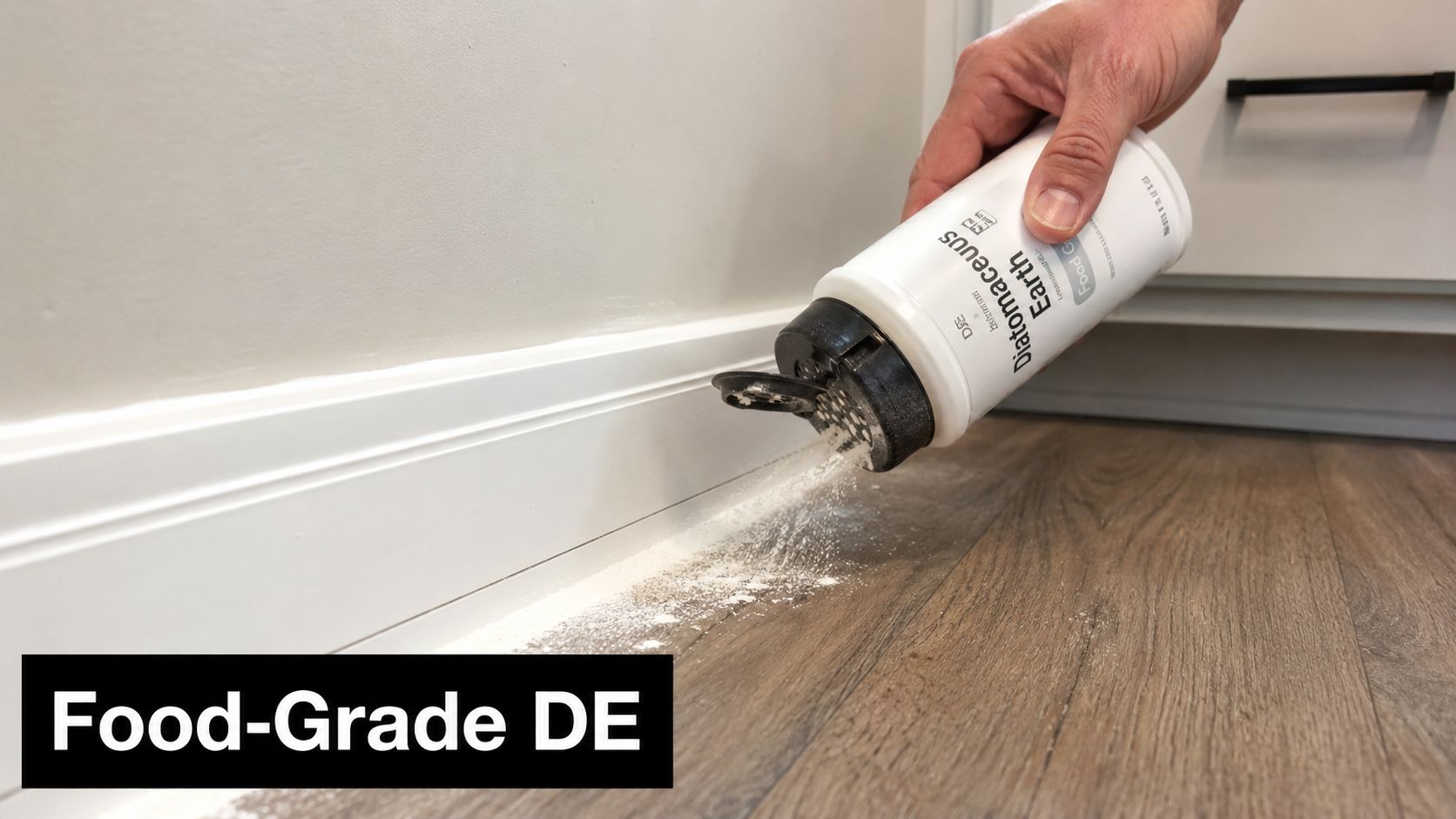
How to Use It Without Creating a Mess
Wear a dust mask when you apply it, especially indoors. Even products people view as “natural” still need careful handling around indoor air and family spaces.
The bigger point is safety and selectivity. Many DIY articles blur the line between repellents, contact killers, and dusts, but that distinction matters around kids, pets, and food areas. As noted in this overview of DIY pest control safety and integrated pest management, label directions are legal instructions and thoughtful product selection matters more than blanket spraying or random home remedies.
A realistic Crown Point use case is a dry basement where occasional ants or flea activity shows up near storage areas. A light DE application can help there, but it won't replace sanitation, vacuuming, exclusion, and moisture control. If the problem is spreading room to room, DE alone usually isn't enough.
3. Sticky Traps and Monitoring Stations
Sticky traps are underrated because they don't feel dramatic. They don't smell like spray, and they don't give instant satisfaction. What they do give you is information, and that's often what separates smart DIY pest control from wasted effort.
Place them where pests travel, not where people notice them. Along walls, under sinks, behind toilets, beside appliances, in utility rooms, and near basement perimeter walls are all better choices than open floor space. Pests tend to follow edges.
Use Traps to Read the House
One trap in one room won't tell you much. A small grid tells you where activity is concentrated, whether it's getting better, and whether you're dealing with occasional invaders or a bigger pattern.
- Track location: Write the room and date on each trap.
- Check weekly: Don't wait until the adhesive is full of dust.
- Replace routinely: Old glue boards lose stickiness even when they look fine.
- Match the pest to the response: Ants, roaches, spiders, and occasional invaders all call for different next steps.
A property manager might place traps under sinks and behind shared-appliance areas before complaints build. A homeowner in Crown Point might use them in spring to learn whether insects are entering from the garage side, the basement, or a plumbing wall. That's useful because your treatment only works if you know where activity starts.
The trap doesn't solve the whole problem. It tells you where to solve it.
For homeowners trying to avoid guesswork, this is one of the best home pest control DIY tools because it prevents random product use. If the traps keep filling up after sealing and sanitation, that's often the point where residential pest control makes more sense than another retail purchase.
4. Essential Oil and Natural Spray Solutions
Essential oil sprays have a place, but they need realistic expectations. They work better as repellents and short-term deterrents than as complete control plans. If you use them like a perimeter reminder around likely entry spots, they can help. If you use them as a stand-alone answer to a hidden infestation, they usually disappoint.
Peppermint is the one most homeowners reach for first. It's commonly used around baseboards, garage entries, mudrooms, and utility spaces where ants, spiders, or occasional rodent movement is suspected. Eucalyptus, clove, and cinnamon are also popular in homemade mixes.
Where Natural Sprays Help Most
Use them where you want a lower-residue option and where staining risk is manageable. Always test first on hidden surfaces. Oils can mark painted trim, wood finishes, fabrics, and some stone.
A simple spray routine usually works better than overapplying once. Shake the bottle each time, apply in the evening when pest movement often increases, and reapply consistently around the same trouble spots. That's especially true in garages, entryways, and patio-adjacent rooms in Northwest Indiana homes.
If mosquitoes are part of your outdoor frustration, The Green Advantage also has a helpful article on natural mosquito repellent essential oils.
Natural sprays are best viewed as support tools. Pair them with sealing, habitat cleanup, and monitoring. If ants are trailing through the kitchen or roaches are active around appliances, repellent-only strategies can scatter pests into new hiding spots instead of ending the issue.
5. Proper Waste Management and Sanitation Practices
Sanitation isn't the glamorous answer, but it's often the answer that changes the whole pressure level in a house. The EPA's integrated pest management approach emphasizes sanitation, exclusion, and careful product selection rather than routine blanket spraying. That prevention-first guidance is reflected in the EPA's overview of integrated pest management principles.
For Crown Point homeowners, the practical version is simple. Crumbs under the stove, grease beside the range, unsealed cereal boxes, pet food left out overnight, and moisture under the sink all create repeat invitations. If food, water, and shelter remain easy to access, even a good treatment often underperforms.
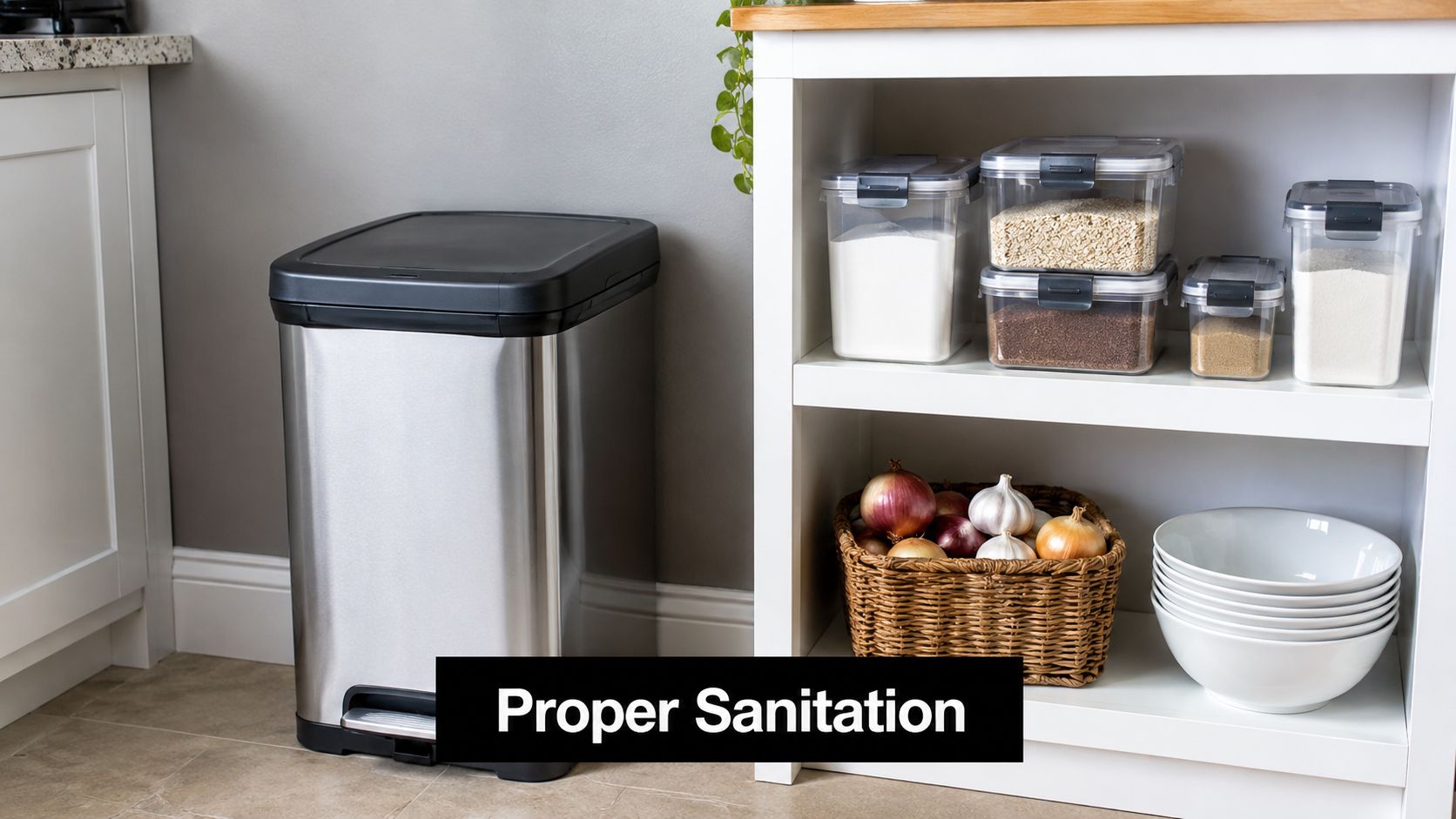
Small Cleaning Habits That Matter
Most homes don't need perfection. They need consistency.
- Seal pantry goods: Move flour, cereal, rice, and snacks into airtight containers.
- Empty trash regularly: Use tight-fitting lids, especially in kitchens and garages.
- Clean hidden zones: Pull out the toaster, fridge, and pet bowls, not just countertops.
- Fix moisture fast: Leaks and standing water keep pest pressure alive.
This matters outside, too. Overflowing bins, greasy grill areas, and old organic debris near the house can attract activity that later moves indoors. If you're already cleaning up exterior problem spots, broader yard maintenance jobs like this guide to tree stump removal can also reduce hiding areas around the property.
In apartments and multi-unit settings, sanitation works best when the whole building follows it. One clean unit helps, but shared walls and common trash areas can keep pests circulating if management isn't addressing the full picture.
6. Nematodes for Grub and Larvae Control
Beneficial nematodes are one of the more targeted DIY options for outdoor pest pressure. They're used in soil, not on shelves or countertops, and they make the most sense when the actual pest problem starts underground. That can include flea larvae in pet-use areas or lawn pests that develop below the surface.
This is a better fit for homeowners who want to manage the source rather than just the adult pest they notice later. In a Crown Point yard, that might mean addressing flea pressure before it follows pets inside or dealing with lawn-damaging grubs before stressed turf creates a larger maintenance problem.
What Makes This Method Worth Trying
Nematodes aren't a general cure-all. They need the right conditions. Moist soil, proper timing, and fresh product matter a lot more here than they do with shelf-stable sprays and traps.
Apply in the cooler part of the day, water before and after, and avoid dry, high-heat conditions. If the soil dries out immediately, the treatment loses value. That's why this tends to work best for homeowners who are willing to follow through with watering and timing instead of treating it like a one-step shortcut.
A practical example is a yard with recurring flea issues around shaded runs, fence lines, or areas where pets spend time. Nematodes can be part of that plan, but indoor vacuuming, pet-care coordination, and entry-point control still matter. Outdoor treatments help most when they're tied to a clear source area.
7. Boric Acid Baits for Cockroaches and Ants
For ants and cockroaches, baiting often works better than chasing visible insects with contact spray. That's because you need the pest to carry the toxicant back into the places you can't reach. Spraying the insects you see may kill a few, but it can leave the larger population untouched.
Boric acid baits can be effective when used carefully and placed where pests travel. The key word is carefully. This isn't something to scatter loosely around kitchen edges, especially in homes with children or pets. Use contained placements or tamper-resistant bait stations whenever possible.
The Main Mistake Homeowners Make
They bait and spray the same spot. That usually backfires.
- Keep bait dry: Moisture reduces performance.
- Place it along travel routes: Under appliances, near wall voids, and beside plumbing lines are common examples.
- Don't contaminate bait placements: Strong cleaners and spray residues can reduce bait acceptance.
- Label and secure stations: Safety comes first in kitchens, baths, and utility rooms.
A realistic Northwest Indiana scenario is ant activity near a sink or a basement half-bath where moisture stays high. Another is roach movement around warm appliance zones. Baits can help in those settings. But if you're seeing daytime roach activity, repeated sightings across multiple rooms, or pests returning no matter how often you rebait, the problem may be bigger than a DIY colony reduction effort.
8. Physical Exclusion for Rodents, Door Sweeps and Hardware
Rodent prevention often fails at the door line. Homeowners will seal foundation cracks, set traps, and clean the garage, then leave a gap under the service door wide enough for a mouse to use every night. Door sweeps, threshold seals, hardware cloth, and proper fastening hardware fix a lot of that.
This is especially important in Crown Point garages, side entries, utility rooms, and basement exterior doors. Seasonal shifts in Northwest Indiana push rodents to look for warmth, shelter, and food. A worn sweep or loose corner seal can undo a lot of other prevention work.
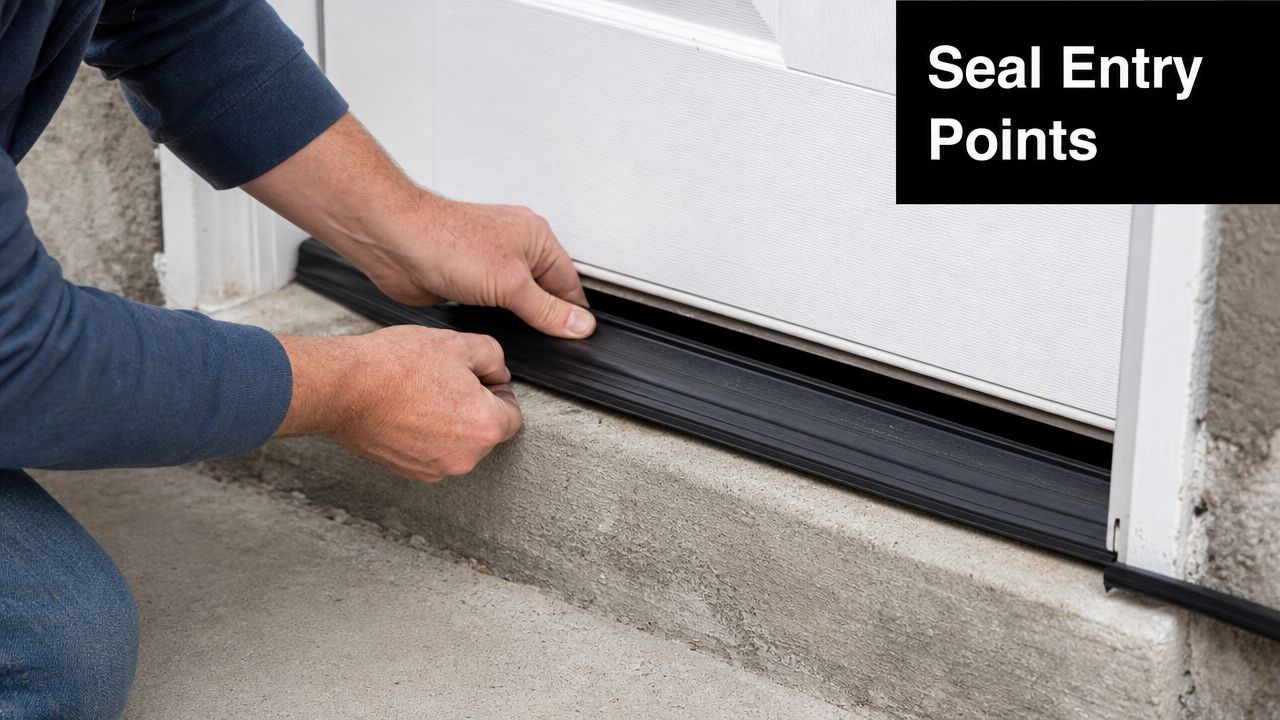
What to Install and What to Check
Choose durable materials. Thin rubber pieces wear out quickly, especially on doors with rough concrete contact. Brush or vinyl styles often hold up better in daily-use entries.
If light shows under the closed door, treat it like an open invitation.
Use hardware cloth at vulnerable vents, gaps near garages, and other openings where rodents could chew or squeeze through. Fasten it securely with screws or nails rather than relying on weak attachment points. Then inspect monthly. Exclusion hardware isn't a set-it-and-forget-it fix if the door is used hard all year.
This is one of the clearest examples of the best home pest control DIY strategy in practice. Don't start with poison if the building shell is still open.
9. Mosquito Habitat Elimination in Yards
Mosquito control starts long before a spray treatment. If the yard keeps producing breeding sites, the pressure keeps rebuilding. In Crown Point, that often means clogged gutters, low spots that hold water, neglected containers, birdbaths, kids' toys, wheelbarrows, and dense shrub lines where adults rest during the day.
Yard correction is often more effective than homeowners expect. You don't have to eliminate every damp area. You do need to identify the spots that repeatedly hold water and the shady areas that give adult mosquitoes a place to wait out the day.
A Better Outdoor Routine
Walk the property after rain. That's when the problem spots reveal themselves.
- Dump and refresh containers: Birdbaths, pet bowls, buckets, and planters matter.
- Clean drainage paths: Gutters and downspout exits shouldn't hold water.
- Trim dense vegetation: Mosquitoes rest in cool, shaded cover.
- Store items upside down: Toys, pots, and tarps collect more water than people realize.
If your yard still feels mosquito-heavy after habitat cleanup, the issue may involve neighboring conditions or a larger pressure pattern around the property. That's when local mosquito control becomes more practical than repeated retail foggers. The Green Advantage can help homeowners in Crown Point, IN evaluate whether outdoor conditions are driving the problem and whether a broader treatment plan makes sense.
10. Pantry Pest Prevention Through Storage Management
Pantry pests frustrate homeowners because they often arrive with the food itself. You can keep a clean kitchen and still end up with moths, beetles, or weevils if an infested package comes home from the store. Once they get established, they spread unnoticed through dry goods.
The fix is less about spraying and more about inspection, disposal, and storage discipline. Check flour, cereal, rice, nuts, dried fruit, and pet food. If you see webbing, damaged packaging, or insect activity, bag it and remove it from the house right away.
A Pantry Reset That Actually Works
Often, only the obviously affected item is inspected. This overlooks nearby products that are already compromised.
- Transfer dry goods immediately: Glass or sturdy food-grade plastic containers work best.
- Label and rotate items: Older products should get used first.
- Vacuum shelves and corners: Crumbs and spilled grains support repeat activity.
- Don't save questionable packages: One “maybe it's fine” item can restart the problem.
This matters even more for households that buy in bulk. Large bags of grain products and pet food sit longer, which gives hidden pantry pests more time to develop. For property managers and landlords, pantry pests also create repeat complaints in multi-unit housing unless residents understand that storage changes, not room spray, solve the root problem.
10-Method DIY Home Pest Control Comparison
| Item | Implementation complexity | Resource requirements | Expected outcomes | Ideal use cases | Key advantages |
|---|---|---|---|---|---|
| Sealing, Caulking, and Insulation Upgrades for Pest-Proof Barriers | Moderate–High: requires thorough inspection and precise installation | Specialty sealants, foam board/batt insulation, tools or contractor; $200–$800+ | Long-term prevention of entry routes; durable 10+ years; secondary energy savings | Whole-home prevention, attics, rim joists, renovation projects | Permanent, non-toxic barrier; reduces energy loss; complements other measures |
| Natural Diatomaceous Earth (Food-Grade) | Low: simple dusting application by homeowner | Food-grade DE, applicator, dust mask; $20–$40 per application | Mechanical control of crawling insects; effective until wet; slower (3–7 days) | Dry basements, crawlspaces, around pet bedding, organic-focused homes | Organic, no resistance, long shelf life, low environmental impact |
| Sticky Traps and Monitoring Stations | Low: place and check regularly | Adhesive traps, optional pheromone lures; $1–$3 per trap | Immediate detection and localized capture; useful for trend data but not full elimination | Diagnostics, monitoring in kitchens, basements, commercial areas | Very inexpensive, chemical-free, helps target treatments |
| Essential Oil and Natural Spray Solutions | Low: DIY mixing and spot application | Essential oils, spray bottles, carrier (water/soap); $5–$15 per batch | Short-term repellent/mild contact effect; frequent reapplication needed | Light infestations, preventive use, homeowners preferring natural scents | Pleasant aroma, low toxicity when used correctly, versatile |
| Proper Waste Management and Sanitation Practices | Low–Moderate: habit and routine changes | Airtight containers, tight-lid bins, cleaning supplies; minimal cost | Foundational long-term reduction in pest attraction; visible improvement in 2–4 weeks | All homes and food-handling facilities; multi-unit living with coordination | Zero-cost habits, immediate hygiene benefits, reduces chemical reliance |
| Nematodes for Grub and Larvae Control | Moderate: timed application with moisture requirements | Live nematodes (species-specific), sprayer, refrigeration until use; $30–$60 per yard | Targeted underground control; results in 2–4 weeks; may persist multiple seasons | Lawns/gardens with grubs, mosquito pupae control, organic landscapes | OMRI-certified, safe for non-targets, can establish beneficial populations |
| Boric Acid Baits for Cockroaches and Ants | Low–Moderate: careful placement and safety measures | Boric acid formulations, tamper-resistant bait stations; $10–$25 | Slow-acting colony control; results in 1–2 weeks for moderate infestations | Ant and roach infestations where children/pets are not at risk of ingestion | Highly effective, low-cost, long shelf life when stored dry |
| Physical Exclusion for Rodents, Door Sweeps and Hardware | Low–Moderate: measurement and installation accuracy required | Door sweeps, threshold seals, hardware cloth, fasteners; $50–$150 typical | Continuous physical exclusion when installed correctly; minimal upkeep | Basements, exterior doors, vents, garages, sites of rodent entry | Permanent, non-toxic, reduces drafts and energy loss |
| Mosquito Habitat Elimination in Yards | Low–Moderate: ongoing weekly maintenance | Time and basic yard tools; minimal material cost | Preventive reduction (≈50–70%) over 2–3 weeks; durable if maintained | Outdoor living areas, pre-season mosquito control, community efforts | Free, safe for people/pets, improves yard health and usability |
| Pantry Pest Prevention Through Storage Management | Low–Moderate: organization and consistent habits | Airtight containers, labels, storage solutions; $30–$80 upfront | Prevents infestation of stored foods; protects quality and reduces waste | Pantries, bulk buyers, households storing dried goods | Food-safe, cost-effective, long-term prevention with minimal maintenance |
Know When to Call Your Crown Point Pest Control Pro
You treat the ants in the kitchen, wipe down the counters, and the trail is back three days later. A week later, you hear scratching in the wall near the garage. That is usually the point where a Crown Point homeowner stops asking, "What product should I buy?" and starts asking, "What am I missing?"
DIY pest control still has a real place in home maintenance. For light, isolated problems, store products and basic prevention steps can work well enough. I tell homeowners to start there when the issue is small and clearly identified. But repeated activity usually means the visible pest is only part of the problem. The source may be inside a wall void, under insulation, around a foundation gap, near a crawlspace moisture issue, or tied to a recurring exterior entry point that is easy to miss in older Northwest Indiana homes.
Some pests cross that line faster than others. Bed bugs, termites, German cockroaches, and rodents rarely stay simple for long. Public-facing guidance also points out that once an infestation involves hidden harborage, repeated reproduction, or building access points, the answer is usually a mix of inspection, monitoring, exclusion, moisture correction, and targeted treatment, not another round of general spray. A helpful overview appears in this article on when DIY stops being cost-effective or effective at all.
Product buying habits explain part of the confusion. Analysts at Grand View Research found that sprays and aerosols made up the largest product segment in the U.S. pest control products market in 2024, within a market valued at https://www.grandviewresearch.com/industry-analysis/us-pest-control-products-market-report. Homeowners buy what is easy to find and easy to use. That makes sense. The trade-off is that fast knockdown products often solve the symptom you can see, not the nesting site, access route, or breeding source that keeps the problem active.
In Crown Point and nearby Northwest Indiana, that decision point often shows up in a few predictable ways. Mice activity tends to pick up as temperatures drop. Ant problems often return in spring and early summer, especially after wet periods. Mosquito complaints can usually be reduced with yard maintenance, but heavy pressure near standing water, drainage issues, or shaded harborage may need a broader treatment plan than a homeowner wants to manage alone.
Call for an inspection when you see one or more of these signs:
- You have treated more than once and pest activity keeps returning.
- Droppings, gnawing, damaged food packaging, or wood damage are showing up.
- Pests are appearing in multiple rooms, not just one isolated spot.
- You suspect termites, bed bugs, or German cockroaches.
- The problem involves rental units, food areas, pets, children, or anyone with health sensitivities.
- You cannot identify the pest with confidence, which makes product choice guesswork.
The Green Advantage works with Crown Point homeowners and nearby Northwest Indiana properties on residential pest control, commercial pest control, inspections, mosquito reduction, and targeted treatment plans based on the pest and the structure involved. If your DIY efforts are no longer working and you need professional help in Crown Point, a thorough inspection is the next logical step.
If pests keep returning despite your best efforts, contact The Green Advantage to schedule an inspection or request a quote. For homeowners and property managers in Crown Point, IN and nearby Northwest Indiana service areas, it is a practical way to move from repeated DIY treatments to a clearer plan for ant control, rodent control, spider control, termite concerns, mosquito issues, and year-round residential pest control.