
What Is a Pest Inspection and Why Crown Point Homeowners
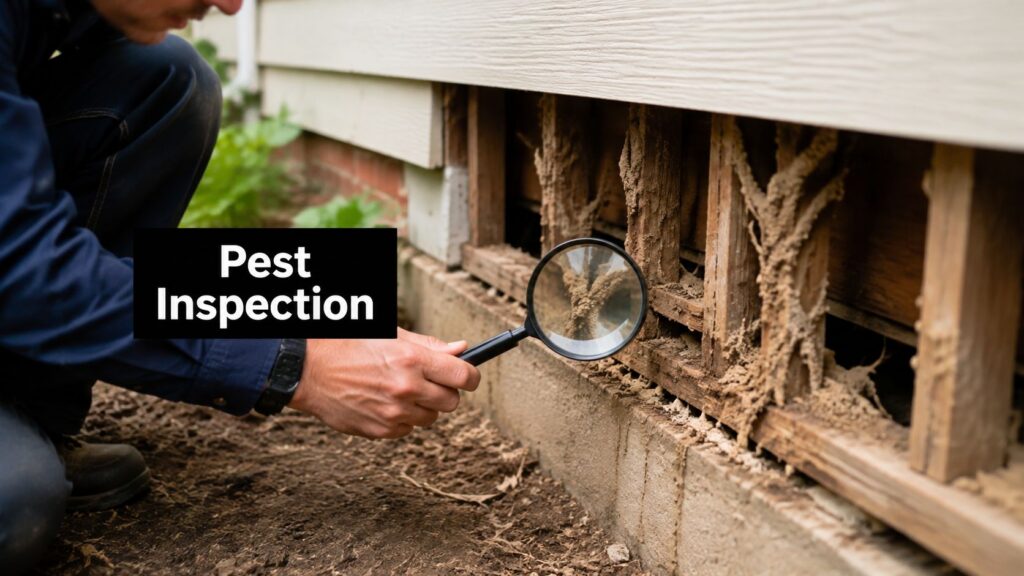
A pest inspection is a structured visual examination of a property's accessible areas that documents evidence of pests, damage, and conditions that attract infestation. It's a diagnostic assessment, not a treatment visit.
You may notice carpenter ants near your back door, droppings in the basement, or scratching above the ceiling and wonder whether the problem is small enough to handle yourself. In Crown Point, IN, that uncertainty matters. Northwest Indiana homes face changing seasonal pest pressure, moisture problems, aging wood, and entry points that can turn a few signs into a larger property issue.
The Green Advantage serves Crown Point and nearby Northwest Indiana communities with pest inspections for homeowners, buyers, landlords, and businesses. A proper inspection helps you understand what's happening, what the inspector could access, what remains outside the inspection's scope, and which follow-up action makes sense.
What a Pest Inspection Actually Covers
A Crown Point homeowner who spots carpenter ants near the back door may assume the insects are limited to that entry point. They might be, but the ants could also indicate damp framing, a roof or plumbing leak, soft window trim, or an accessible route into the structure. A professional pest inspection looks for the larger pattern instead of focusing only on the insects you happened to see.
Maryland's inspection standard describes a pest inspection as a careful visual observation and thorough examination of readily accessible areas, with special attention to places where target pests are likely to occur. The findings must be reported in writing, and the inspector's role is to identify pests or pest damage, not spray or place bait during the visit. You can review that scope in the Maryland pest inspection standard.
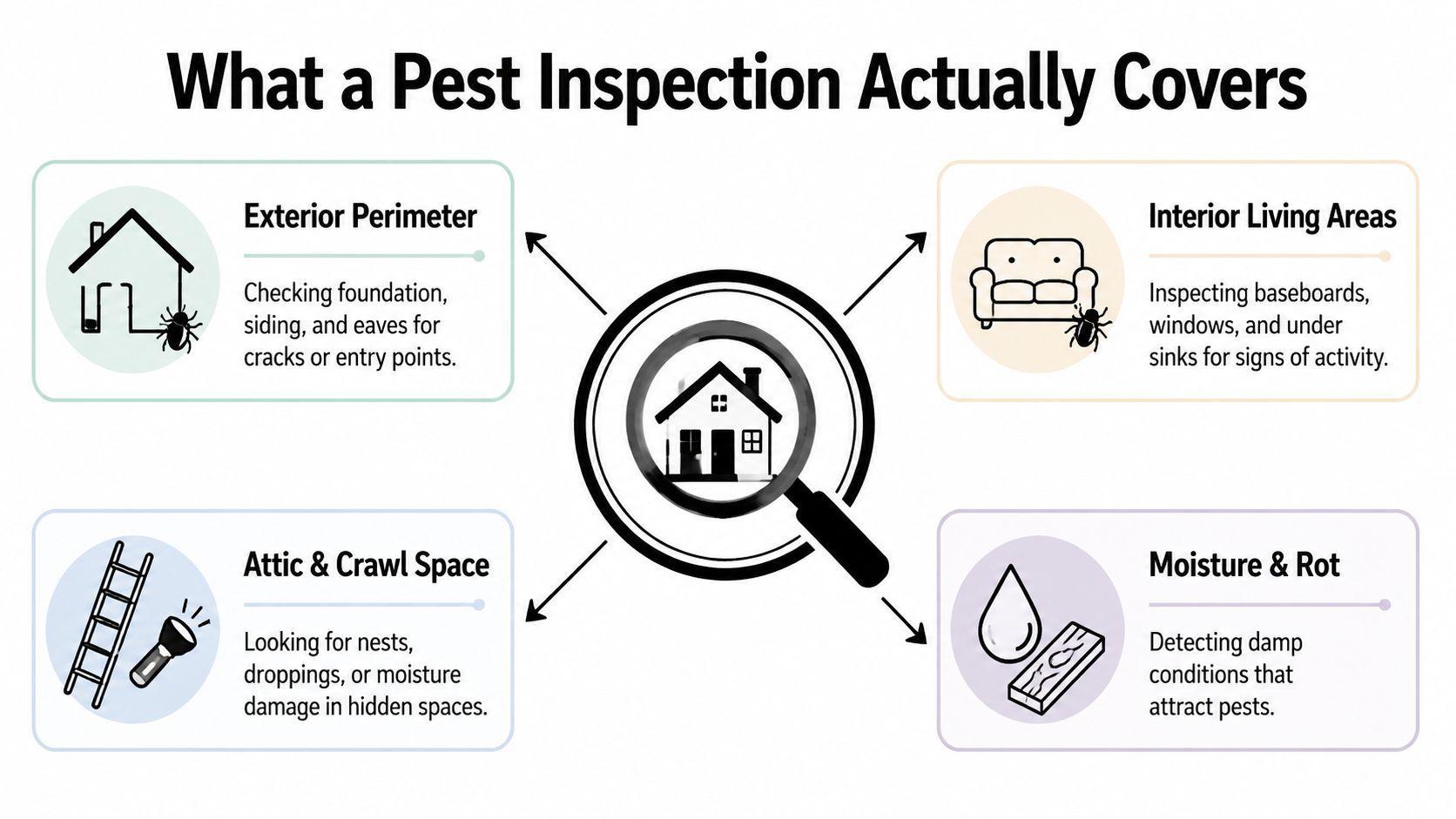
Areas an inspector examines
A typical inspection may include:
- Interior living areas: Kitchens, bathrooms, baseboards, window sills, door frames, utility penetrations, and areas beneath sinks.
- Lower-level spaces: Basements and crawl spaces, especially where moisture, wood-to-soil contact, or limited ventilation may support pest activity.
- Upper-level spaces: Attics, rafters, insulation, roofline transitions, and accessible areas where rodents or wasps may leave evidence.
- Exterior perimeter: Foundation walls, siding, eaves, grading, drainage, vegetation, cracks, gaps, and possible entry points.
- Accessible structural members: Wood framing and other exposed or reachable members may be sounded or probed when the inspection standard requires it.
Inspectors may document live insects, frass, mud tubes, exit holes, droppings, moisture damage, soft wood, and conducive conditions. Washington guidance describes examining readily accessible areas, sounding or probing accessible structural members in termite-prone locations, and documenting evidence in writing, sometimes with diagrams marking damage locations. That detail appears in the Washington structural pest inspection rule.
What the inspection doesn't cover
A pest inspection isn't destructive testing. It generally doesn't include opening finished walls, removing flooring, dismantling cabinets, or examining sealed voids. Hidden wall interiors, inaccessible crawl spaces, packed storage areas, and covered structural components can remain outside the inspection's scope.
It also isn't a general home inspection. Mold, radon, electrical faults, plumbing defects, and other non-pest concerns require the appropriate specialist. Before buying, pair the pest inspection with practical new home inspection guidance so you understand how pest findings fit into broader property due diligence.
This boundary is important in real estate. HUD's Wood Destroying Insect Inspection Report notice states that the report isn't a guarantee against hidden or future infestation or damage, and the report can become invalid for a mortgage or property-transfer settlement if it isn't used correctly. Buyers and sellers should treat it as a documented risk assessment, not a promise that pests can never appear.
Inside the Inspection Process From Start to Finish
A well-run inspection starts before the technician arrives. When you schedule service, provide the property address, the reason for the inspection, known pest history, and any areas that concern you. Mention locked gates, pets, crawl space access, vacant rooms, or recent renovations so the technician can plan for a complete visit.
At arrival, the inspector reviews the property layout and asks what you've noticed. A homeowner might report a recurring ant trail in the pantry, scratching in an attic, or a damp crawl space. Those details help the technician prioritize likely routes and compare your observations with evidence found throughout the structure.
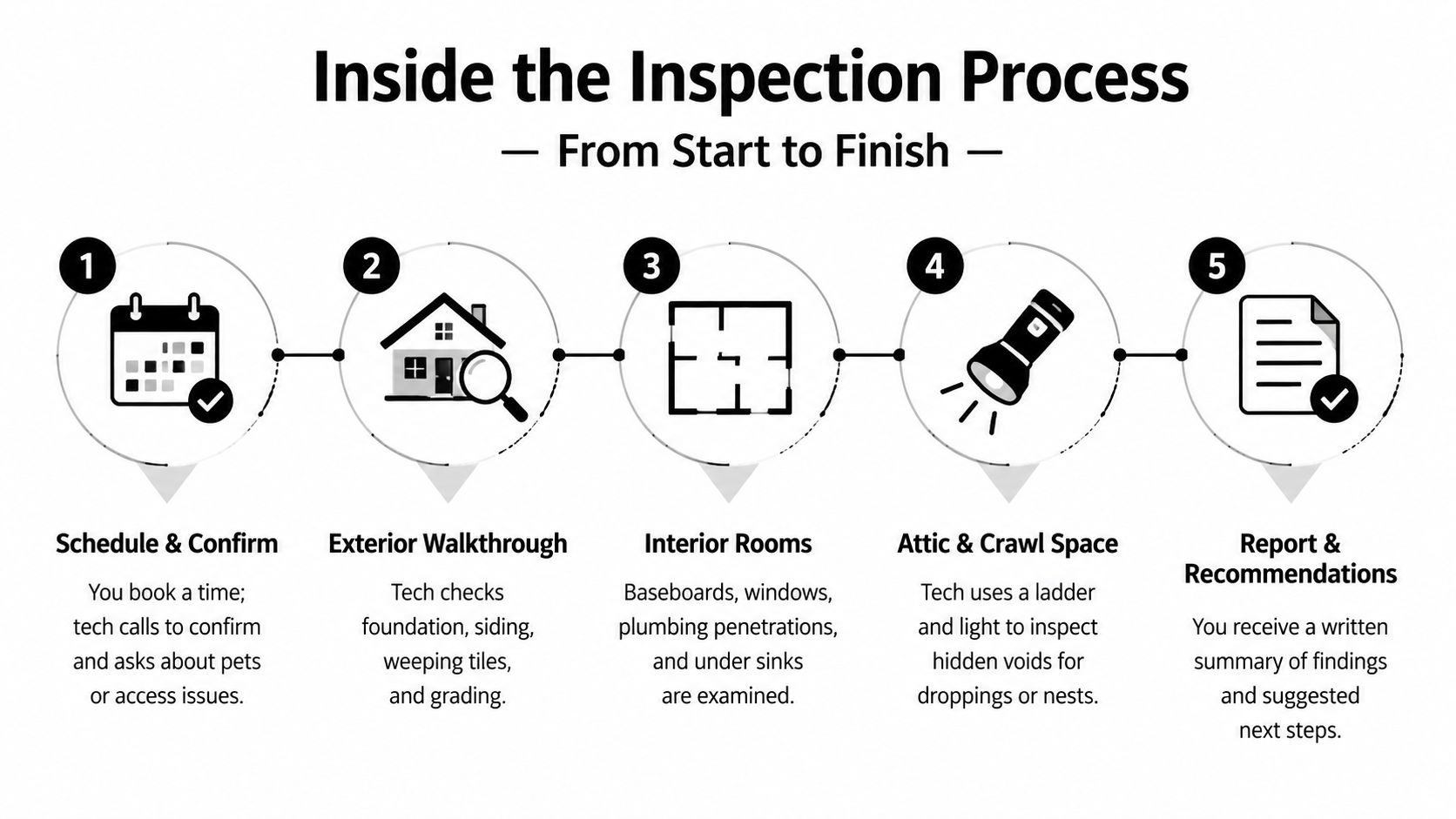
The exterior walkthrough
The technician begins outside, following the foundation and looking for cracks, gaps, mud tubes, damaged siding, and conditions that let pests reach the structure. Grading and drainage matter because water that collects near the foundation can support moisture-loving pests and weaken wood or other building materials.
The inspection may continue up to soffits, fascia, eaves, window trim, and roofline transitions. The technician looks for openings, nests, droppings, damaged wood, and signs that insects or rodents are using the exterior as a route indoors.
The interior examination
Inside, the inspector works through accessible rooms and high-risk areas. Basements and crawl spaces receive attention for moisture, wood-to-soil contact, and evidence along foundation walls. Attics may reveal rodent droppings, nesting material, or wasp activity around rafters and roof penetrations.
Kitchens and bathrooms deserve close attention because plumbing leaks and gaps around pipes can create pest-friendly conditions. Window and door frames may be gently probed where permitted to identify soft or damaged wood. The purpose isn't to tear into the house. It's to document visible evidence and accessible conditions that warrant action.
The written report
The final deliverable should be a written report that identifies findings, access limitations, photographs or diagrams when appropriate, conducive conditions, and recommended next steps. For wood-destroying organisms, North Carolina guidance calls for reporting visible evidence and conditions conducive to subterranean termites, including findings from accessible areas and sounding of accessible structural members.
The inspection visit typically takes 45 to 90 minutes, depending on property size and accessibility. That range is practical rather than universal. A cluttered basement, locked outbuilding, or inaccessible crawl space can limit the inspection and should be recorded in the report.
Practical rule: A report is only as useful as its access notes. If an area couldn't be inspected, treat that limitation as part of the decision, not as proof that the area is pest-free.
Common Findings in Northwest Indiana Homes
Crown Point properties don't all face the same pest problem. A newer home with dry drainage and sealed utility penetrations presents a different risk profile from an older property with damp framing, dense landscaping, and an exposed crawl space. Seasonal weather also changes what inspectors are most likely to find.
| Finding | Peak Season | Risk Level | Typical Location |
|---|---|---|---|
| Subterranean termite evidence | Spring and summer | High when active or associated with damage | Foundation walls, crawl spaces, slab edges |
| Carpenter ant evidence | Warmer, wetter periods | Moderate to high when wood is damp or damaged | Window frames, roof leaks, wall-adjacent wood |
| Rodent activity | Fall and winter | Moderate to high because of contamination and damage | Attics, basements, behind appliances |
| Moisture and conducive conditions | After wet weather and during damp seasons | Moderate, but can increase future pest risk | Crawl spaces, foundation perimeter, plumbing areas |
| Occasional invaders | Seasonal transitions | Usually low, but activity can be disruptive | Exterior cracks, wall voids, window areas |
Wood-destroying organisms
Subterranean termite evidence may appear as mud tubes along foundation walls or in crawl spaces. The presence of a tube or damaged wood doesn't tell you the complete extent of the problem, which is why the inspector documents location, accessibility, visible evidence, and conditions that could support continued activity.
The scale of termite risk explains why buyers and property managers use inspections as preventive risk management. Industry materials cited in the verified background estimate that roughly 600,000 U.S. homes suffer termite damage each year. That figure is available through the United Kingdom government pest control resource, which also provides general background on pest control.
Carpenter ants often point inspectors toward moisture-damaged wood rather than dry, isolated surfaces. Window frames, roof leaks, plumbing areas, and softened exterior trim deserve attention because correcting the moisture source is part of controlling the risk.
Rodents and seasonal invaders
As temperatures fall, mice and rats seek shelter, food, and protected nesting areas. Droppings in an attic, basement, cabinet void, or behind an appliance can show where activity is occurring, while gnaw marks and nesting material may identify entry routes.
Boxelder bugs and stink bugs commonly use exterior cracks and gaps during seasonal transitions. They may not present the same structural risk as wood-destroying organisms, but a recurring indoor presence still signals that sealing and exterior maintenance deserve attention.
The right response depends on the finding. Active evidence calls for prompt professional evaluation. A moisture problem or entry gap calls for correction before it supports a larger infestation.
Who Needs a Pest Inspection and When
The right inspection timing depends on who controls the property and what decision is approaching. A buyer is checking risk before closing. A landlord is protecting units between occupants. A business owner is keeping pests out of customer and work areas. A current homeowner needs answers when conditions change.
| Owner Type | Primary Motivation | Recommended Frequency | Key Stakes |
|---|---|---|---|
| Homebuyer | Identify pest evidence before purchase or closing | One-time inspection tied to the transaction | Financing, negotiation, repairs, and risk acceptance |
| Landlord or property manager | Protect units and identify problems between occupants | Recurring inspections based on property risk | Tenant comfort, maintenance planning, and property condition |
| Business owner | Reduce pest risk in customer and work areas | Ongoing schedule suited to the facility | Sanitation, operations, reputation, and compliance needs |
| Current homeowner | Investigate signs or changing conditions | When signs or risk conditions appear | Property damage, household comfort, and timely treatment |
Homebuyers need clarity before closing
Schedule an inspection early enough to review the report before deadlines for contingencies, repairs, or closing. A lender, purchase agreement, or local transaction practice may require a Wood Destroying Insect report. Buyers should read the stated scope, identify inaccessible areas, and confirm who will handle follow-up work.
As noted in the coverage scope section, the Wood Destroying Insect report documents risk rather than guaranteeing freedom from pests. Treat findings as information for a property-specific decision, not as permission to ignore moisture, entry points, or previous treatment history.
A property with a termite history may sell for 10% to 20% less than a comparable property without that history, according to the verified industry material summarized above. The figure does not replace an evaluation of the home, but it shows why documented pest history can affect negotiations, financing discussions, and buyer confidence.
For transaction-focused guidance, review this pest inspection for a home purchase before scheduling an inspection with The Green Advantage.
Landlords and businesses need repeatable oversight
Landlords should arrange inspections during turnover and after reports of scratching, droppings, ants, or other activity. Accessible areas can be checked, conditions documented, and leaks or entry points corrected before the next occupant moves in. In Northwest Indiana, seasonal temperature changes can push rodents and overwintering insects toward protected indoor spaces, so timing inspections around recurring pressure helps.
Commercial facilities need a plan suited to their use. Restaurants, healthcare settings, retail spaces, warehouses, and offices have different access points and operating concerns. An inspection should identify where pests could enter, feed, nest, or move between areas while keeping disruption to the business low.
Current homeowners should call after repeated activity, movement in walls or ceilings, moisture damage, or droppings. Do not wait for a visible swarm or extensive damage. Give The Green Advantage the specific location, timing, and changes you have noticed so the technician can determine whether the next step is monitoring, repairs, or treatment.
How to Prepare Your Property for an Inspection
Preparation helps the technician see more and helps your report say more. The goal isn't to make the home look perfect. It's to remove avoidable access barriers and point out the evidence that a quick visit might otherwise miss.
Use this preparation checklist
- Clear attic and crawl space entrances: Move boxes, stored items, and furniture away from hatches and access doors.
- Open the basement perimeter: Pull boxes and shelving away from foundation walls so the technician can look for tubes, droppings, moisture, and entry points.
- Make sinks and cabinets accessible: Remove cleaning supplies and stored items from beneath kitchen and bathroom sinks.
- Trim exterior vegetation: Cut back shrubs, vines, and dense growth touching the foundation or siding.
- Ensure exterior areas are accessible: Provide access to gates, garages, sheds, and backyard sections included in the inspection.
- Secure pets: Keep dogs, cats, and other pets in a safe room or away from the work area.
- Gather records: Have prior pest reports, treatment records, warranties, and seller disclosures available.
- Mark known concerns: Show the inspector the pantry trail, damp crawl space, attic noise, or other recurring sign.
Pet food, bird feeders, standing water, clogged gutters, and leaking plumbing can all help explain why pests are present. Don't hide those conditions. Tell the technician what changed, when you noticed it, and whether anyone has already applied a product.
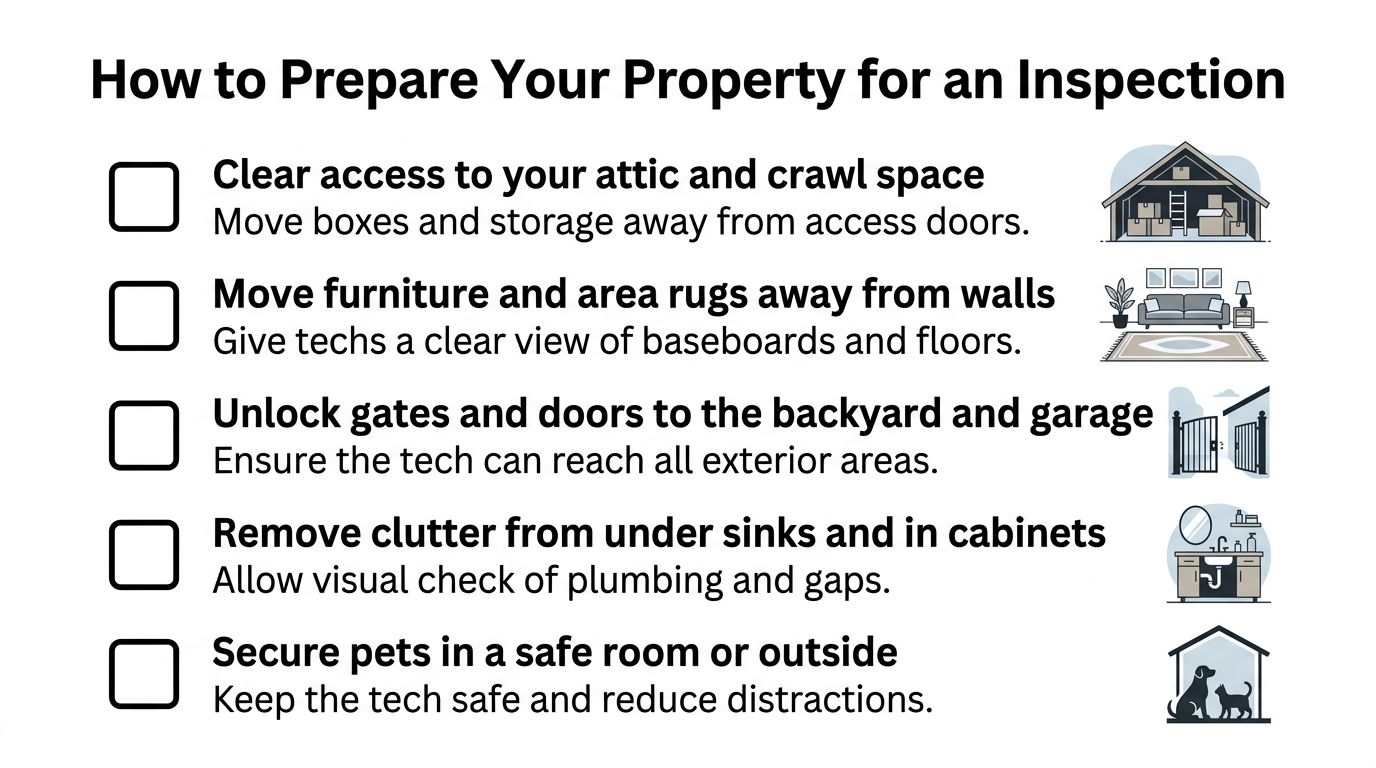
For a printable preparation reference, use this pest control inspection checklist before your appointment.
The short video below also shows the kind of access and observation that can make a property inspection more productive.
Next Steps After Your Inspection Report
A report becomes useful when you turn each finding into a decision. Sort the results into active evidence, older or historical damage, and conditions that invite future activity. This distinction matters because each category calls for a different response.
Confirmed termites, rodents, or other live pest activity should be addressed promptly. Older damage may require monitoring, repairs, or another evaluation to determine whether the pest remains active. Conditions such as poor drainage, wood-to-soil contact, plumbing leaks, or unsealed entry points need correction even if no live pests were found.
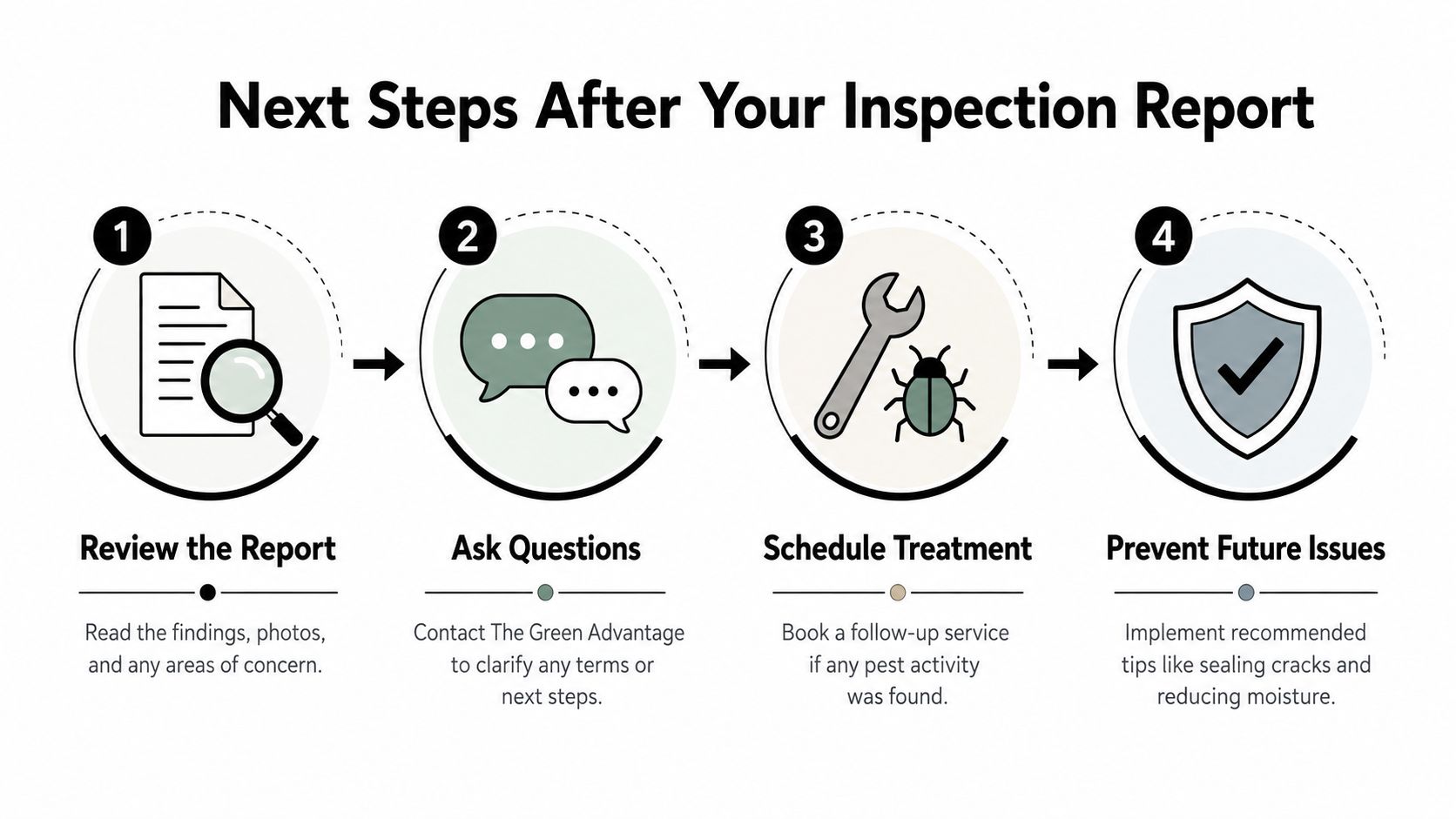
Use the report to make a decision
If you are buying a home, send the report to your real estate professional and lender when required. Ask which findings could affect closing, which repairs to request, and whether treatment or a seller credit fits the documented conditions. Base negotiations on locations, visible evidence, access limitations, and professional recommendations, not a general fear of pests.
Homeowners and landlords should assign a clear action to every recommendation:
- Treat active pests: Schedule termite control, ant control, rodent control, wasp removal, or another service suited to the identified pest.
- Correct moisture sources: Repair leaks, improve drainage, clear gutters, and address damp crawl space conditions.
- Close entry points: Seal cracks, gaps around pipes, damaged screens, and openings near doors or roofline transitions.
- Monitor unresolved areas: Recheck locations with limited access or older damage that requires observation.
- Choose prevention when appropriate: Use seasonal preventative treatments when recurring pest pressure or property conditions support ongoing service.
The Green Advantage can review the findings and provide eco-friendly treatment options, prevention plans designed for Crown Point properties, and follow-up support for homes and businesses. Services include residential and commercial pest control, termite control, mosquito control, rodent exclusion, spider control, and seasonal pest treatments. Recommendations should match the property conditions and evidence documented in the report.
Use the report promptly: treat active pests, correct the condition supporting them, and schedule follow-up when risk remains.
Visit The Green Advantage to schedule an inspection or request a quote for professional pest control near you.
Carpenter Ant Damage: Signs, Repair, and Prevention Guide
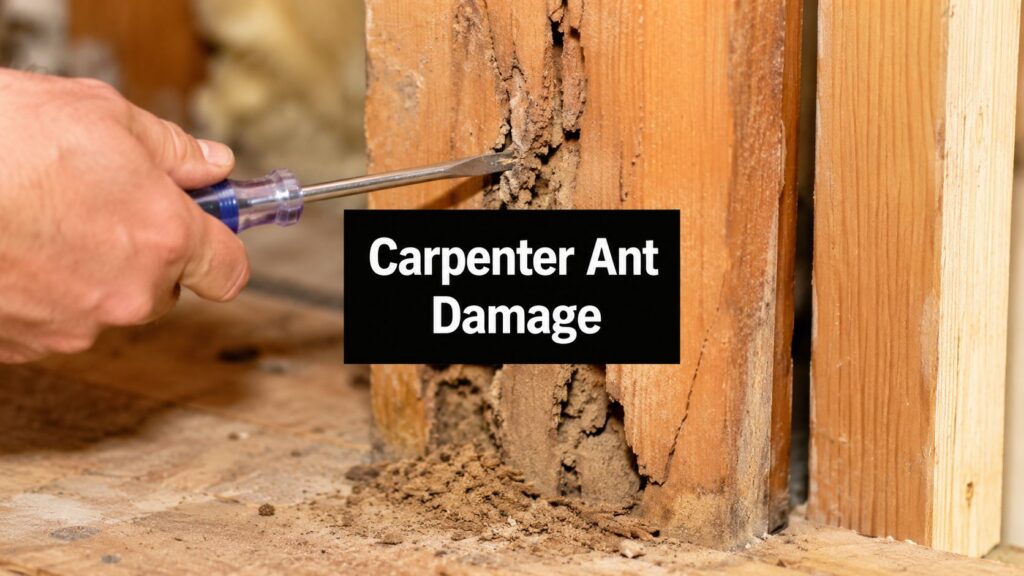
You hear faint rustling inside the wall after dark, tap the baseboard, and get a hollow echo. Then you notice a small pile of sawdust-like material beneath a window. For a homeowner in Crown Point, IN, that combination is unsettling, but it doesn't automatically mean the house is about to fail. Carpenter ant damage ranges from minor surface evidence to serious localized weakening, and the right response depends on what caused it, where it is, and whether the colony is still active.
The Green Advantage helps homeowners and businesses in Crown Point and nearby Northwest Indiana communities identify carpenter ants, locate moisture-related conditions, and choose a practical treatment plan. This guide separates cosmetic damage from structural risk and hidden moisture problems, so you know when a simple repair may be enough and when to call an exterminator near me for a professional inspection.
What Carpenter Ant Damage Actually Looks Like
At night, a wall can sound busy without revealing much. A homeowner may hear a dry, faint movement near a window or porch, then find fine debris on the sill the next morning. The first instinct is often to blame termites, but carpenter ants work differently.
Carpenter ants excavate wood to build nesting galleries. They don't eat the wood. Their tunnels can be smooth and clean inside, almost as if someone sanded the channels. Termites consume wood, while carpenter ants remove it and push the debris out of the nest. North Carolina State Extension explains this distinction and notes that carpenter ant galleries can leave wood appearing intact on the outside while becoming hollowed from within. Learn how carpenter ants excavate galleries.

Why one debris pile may not show the nest
A carpenter ant colony generally has a primary nest in moist wood and satellite nests in drier parts of a building. Satellite nests may sit in wall voids, under insulation, or inside other hollow spaces, and they can contain workers, larvae, pupae, and winged reproductives without containing the queen or eggs. This technical overview of carpenter ant colony organization helps explain why ants can appear near a dry window frame even when the original moisture problem is elsewhere.
That matters for repairs. Replacing the visible trim may remove the evidence but leave the colony undisturbed. A single pile of frass, the sawdust-like material ants eject, can indicate activity inside a wall, porch beam, window frame, crawl space, or another connected area.
Carpenter ants are widely recognized as a major structural pest in North America. Rutgers Extension places them among the top five pest ant groups in the United States, and a New Jersey survey conducted from 1981 to 1982 found carpenter ants infesting 75% of sampled urban shade trees, showing how readily they occupy moisture- or decay-prone wood systems. Rutgers Extension explains carpenter ant damage and habitat.
Practical rule: A clean-looking exterior doesn't clear the wood. Tap suspicious areas, inspect nearby moisture, and treat the colony before closing the evidence behind new trim.
For homeowners comparing carpenter ants and termites, the key point is simple. Carpenter ant damage is carved into galleries, often associated with wet or decayed wood, and may remain hidden until the structure feels soft, sounds hollow, or begins to deform.
The Five Most Common Signs Homeowners Notice First
You don't need specialized equipment to gather useful information before calling pest control near me. You do need to look carefully and record where, when, and how often each clue appears.

Faint rustling inside walls: Listen after the house is quiet, especially near windows, exterior walls, ceilings, and porches. Dry, intermittent movement can point to activity inside a void, though plumbing, ductwork, and other pests can create similar sounds. Record the room and the time rather than opening the wall.
Frass piles: Carpenter ant frass often resembles sawdust, but it may include insect parts and material of varying texture. Uniform sawdust beneath a fresh cut points more toward recent woodworking, while recurring debris from a crack or trim joint deserves inspection. Photograph the pile beside a common object for scale and mark the location with removable tape.
Hollow-sounding wood: Use the handle of a screwdriver to tap trim, sills, exposed framing, porch supports, and other accessible wood. A resonant sound doesn't prove an infestation, but it identifies an area that needs closer evaluation, especially if the wood also shows staining, softness, or cracks.
Discarded wings near light sources: Winged reproductive ants may leave shed wings near windowsills and other bright areas. Save a few in a small container if you can do so safely, and photograph the surrounding frame. Don't assume every winged insect is a termite or carpenter ant, because identification affects treatment.
Large ants indoors: Repeated sightings of large black ants, particularly at night or in rooms beyond the kitchen, raise the concern level. Note whether the ants travel along baseboards, window trim, plumbing routes, or ceiling lines. One outdoor forager can wander inside, but recurring indoor activity calls for a closer look.
What to document before service
Take wide photos showing the room, close photos showing the debris or entry point, and a short video of any repeated movement or sound. Write down whether the area is near a leak, condensation, a bathroom, kitchen plumbing, a roof edge, or a porch.
A technician can diagnose the problem more efficiently when you provide the exact location, timing, photos, and moisture clues. Don't vacuum up every trace before documenting it, and don't spray randomly into a wall void. Surface treatment may kill visible workers while leaving the nest and the building condition untouched.
Ranking the Damage From Cosmetic to Structural Threat
Carpenter ants deserve a calm assessment, not an automatic disaster label. Illinois public health guidance says they are usually more of a nuisance than a threat to structural integrity, while Penn State notes that unchecked activity can damage softer materials and, in some cases, structural wood. Review the Illinois guidance on carpenter ants.
Use the scale below to decide how quickly to act.
| Tier | What It Looks Like | Typical Response |
|---|---|---|
| Tier 1, cosmetic evidence | Small frass piles, surface scratches, or isolated activity with firm wood and no deformation | Photograph it, inspect for moisture, seal accessible gaps, and arrange monitoring or an inspection if activity continues |
| Tier 2, structural concern | Sagging floors, bowed framing, soft joists, weakened porch beams, or hollow-sounding load-bearing wood | Stop treating it as a cosmetic repair. Arrange professional pest and building assessment promptly |
| Tier 3, hidden moisture-driven damage | Active leaks, rot, water staining, condensation, or persistently damp wood associated with ant activity | Prioritize leak and decay repair alongside colony elimination. Treating ants alone won't solve the cause |
Tier 1 means evidence, not permission to ignore it
A small pile beneath a sound window sill may be limited to a damaged trim section. You can photograph it, check the exterior, and look for water entry. If the debris returns or ants appear repeatedly, move to professional diagnosis rather than repeatedly wiping the surface clean.
Tier 2 calls for urgent help
Sagging floors, bowed framing, and softened structural timbers indicate that the issue may extend beyond finish materials. Carpenter ants excavate rather than consume wood, but persistent galleries can weaken members, especially when decay has already reduced the wood's strength. A screwdriver can help identify suspicious softness, but it can't establish whether a beam, joist, or header remains safe.
Tier 3 is the most commonly missed
In many buildings, moisture is the original invitation. UC Statewide Integrated Pest Management explains that carpenter ants commonly begin in wood affected by water damage or rot, then expand into sound wood. See the UC IPM guidance on carpenter ants and moisture-related nesting.
For a Crown Point home, that might mean a leaking gutter above a porch, condensation near a basement window, a wet crawl-space rim joist, or a plumbing leak below a kitchen sink. Fix the source and replace decayed wood while addressing the colony. Otherwise, the next group of ants may use the same conditions.
How to Inspect Your Home Room by Room
Start outdoors. Carpenter ants often enter where exterior wood meets moisture, soil, vegetation, or a building gap. Walk the perimeter with a flashlight, phone camera, screwdriver, and moisture meter if you own one.
Outside first
Check gutters, downspouts, fascia, roof edges, porch beams, deck joists, window trim, siding transitions, and areas where firewood or dead branches sit close to the house. Shine the light across the wood rather than directly at it. Side lighting reveals soft spots, raised grain, staining, and small openings that a straight beam can miss.
Tap accessible wood lightly with the screwdriver handle. Don't puncture sound siding or pry into painted trim. Photograph frass, water stains, ant trails, and any place where exterior wood stays shaded and damp.
Interior inspection points
Move inside in a consistent order:
- Kitchen: Check beneath sinks, around plumbing penetrations, behind toe-kicks, and near dishwashers for dampness, staining, or recurring ants.
- Bathrooms: Inspect window frames, baseboards, vanity plumbing, and wall areas adjoining showers or tubs.
- Basement and crawl space: Look at sill plates, rim joists, insulation edges, support posts, and areas beneath plumbing. A moisture meter can compare suspicious wood with nearby dry material.
- Attic: Examine roof sheathing, rafters near flashing, insulation around ventilation paths, and any water marks. Don't step between joists without proper footing.
- Bedrooms and living areas: Focus on windows that sweat, exterior corners, ceiling transitions, and places where you hear nighttime rustling.
Don't open a wall just because you found one ant. Document the evidence first, then let an experienced technician decide whether targeted access is justified.
Create a simple inspection record with the room, exact location, date, weather conditions, visible ants, debris, sound, wood condition, and moisture readings if available. That record helps a professional distinguish a one-off outdoor visitor from a hidden satellite nest and makes the service visit more productive.
DIY Fixes Versus Professional Treatment in Crown Point
A homeowner can handle limited maintenance. A homeowner shouldn't guess at a colony hidden behind finished walls or assume fresh caulk has solved a structural pest problem.

| Homeowner work | Professional service |
|---|---|
| Seal a visible gap with exterior-grade caulk after identifying the entry route | Locate parent and satellite nests across connected areas |
| Replace a small, accessible section of cosmetic trim | Evaluate wall voids, porch framing, joists, and other concealed locations |
| Remove damp debris and correct simple drainage issues | Apply a targeted treatment suited to the infestation and structure |
| Use sticky monitors to track movement | Assess whether carpenter ant activity is linked to decay or active moisture |
| Photograph and record recurring evidence | Coordinate pest remediation with recommendations for building repairs |
What you can reasonably do
If the wood is firm and the damage is limited to accessible trim, clean the area, replace the compromised finish material, and seal cracks around windows or utility penetrations. Correct obvious water flow problems, move firewood away from the structure, and use monitors where ants travel. These steps support control, but they don't eliminate a nest you can't locate.
Don't drill pesticide into walls, fog rooms, or combine products. Those approaches can expose people and pets to unnecessary chemicals while leaving the colony untouched. The case against treating DIY pest control as a false economy comes down to diagnosis, not fear. A cheap surface fix can become wasted effort if the source remains active.
When professional treatment is the sensible choice
Call a licensed pest company when ants are active indoors, activity appears in multiple rooms, debris keeps returning, or the suspected nest is inside a wall, ceiling, porch, attic, crawl space, or structural timber. Professional help also makes sense before selling a property, during a real estate inspection, or when a landlord needs documentation for a tenant or building file.
The Green Advantage provides licensed pest inspection and wood-destroying insect remediation that includes carpenter ants. Its service approach focuses on targeted nest treatment and the damp wood or leak conditions that attract activity. Ask for an inspection and a written plan rather than purchasing a product based only on a label promise.
Why Moisture Control Is the Real Prevention Strategy
The spray isn't the prevention plan. Moisture control is. Carpenter ants usually establish nests where wood stays damp, decayed, or water-damaged, then may move into nearby sound wood. Iowa State Extension identifies leaks, condensation, gutters, roofs, decks, porches, and plumbing as common moisture connections. Read Iowa State's explanation of carpenter ants as a sign of a bigger moisture problem.
Northwest Indiana homes face familiar trouble spots. Prioritize repairs in this order:
- Roof and flashing leaks: Water around chimneys, roof edges, and attic framing needs prompt roofing attention. Replace wet or decayed wood after the leak is corrected.
- Clogged gutters and poor downspouts: Clean the gutters and make sure downspouts move water away from the foundation rather than dumping it beside the wall.
- Plumbing leaks: Check under sinks, around dishwashers, near tubs, and at pipe penetrations. A slow leak can keep framing damp long after the visible drip stops.
- Crawl-space condensation: Improve airflow, address standing moisture, and inspect the rim joist and sill plate. Homeowners dealing with persistent humidity can review this resource on how to stop crawl space dampness problems.
- Ice dams and winter water entry: Inspect attic insulation and ventilation, then repair stained or softened sheathing after the water path is understood.
Break the cycle at the building
Replace decayed wood instead of covering it with new trim. Seal gaps around windows, doors, siding transitions, and utility lines after the underlying moisture is controlled. Keep firewood, dead branches, mulch, and soil from creating damp contact zones beside the structure.

A treatment plan that ignores wet wood is incomplete. The colony may disappear temporarily, but another colony can use the same damaged area if the leak, rot, or condensation remains. That principle applies to residential pest control and commercial pest control alike. Buildings with kitchens, loading areas, crawl spaces, roof penetrations, or exterior decks need both pest monitoring and maintenance discipline.
What to Expect From The Green Advantage in Crown Point
Start with a clear account of what you found. Tell the office where you saw ants or frass, whether the activity is indoors, whether you hear movement, and whether the area is near a leak or damp spot. That information helps staff arrange the appointment and gives the technician useful context before arriving.
At the property, a licensed technician checks exterior entry points, moisture-prone wood, accessible framing, wall and ceiling clues, and the areas in your photographs. The inspection should settle four practical questions: Is a colony active? Is the damage limited to trim? Could another nest be nearby? Does the building need a broader wood or moisture assessment?
A clear service path
- Initial intake: You describe the symptoms, timing, rooms involved, and any previous treatment.
- On-site inspection: The technician traces the activity instead of treating only the most visible ant.
- Digital documentation: Findings, photographs, affected areas, and recommendations are recorded for review.
- Targeted treatment plan: The plan addresses the colony and identifies damp wood, leaks, or other conditions requiring correction.
- Follow-up: The team checks activity and confirms whether more treatment, monitoring, or building repair is needed.
The Green Advantage serves Crown Point and surrounding Northwest Indiana communities with licensed, certified pest services for homes, businesses, property managers, and real estate professionals. Its services include pest inspections, wood-destroying insect remediation, termite control, rodent exclusion, mosquito reduction, ant control, spider control, wasp removal, and preventative pest treatments. Choose the service that matches the evidence. A wood clue alone does not prove termites.
Local experience helps because technicians regularly see the area's seasonal pest pressure, varied construction, damp basements, crawl spaces, porches, roof drainage issues, and weather-related moisture. That local contact also helps when a pest concern overlaps with a repair, property sale, rental turnover, or commercial maintenance schedule.
Ask for a written explanation of the findings. You should know where the activity is, what condition attracted it, and which repair or treatment comes next.
In Crown Point, don't wait for a sagging floor or widespread wall activity before asking for help. Schedule a pest inspection, request a quote, or contact The Green Advantage through The Green Advantage to investigate carpenter ant damage and hidden moisture conditions at your home or commercial property. A focused inspection can keep a small repair from becoming a larger building problem.
Termite Inspection Cost in Crown Point, IN: A Homeowner’s Guide
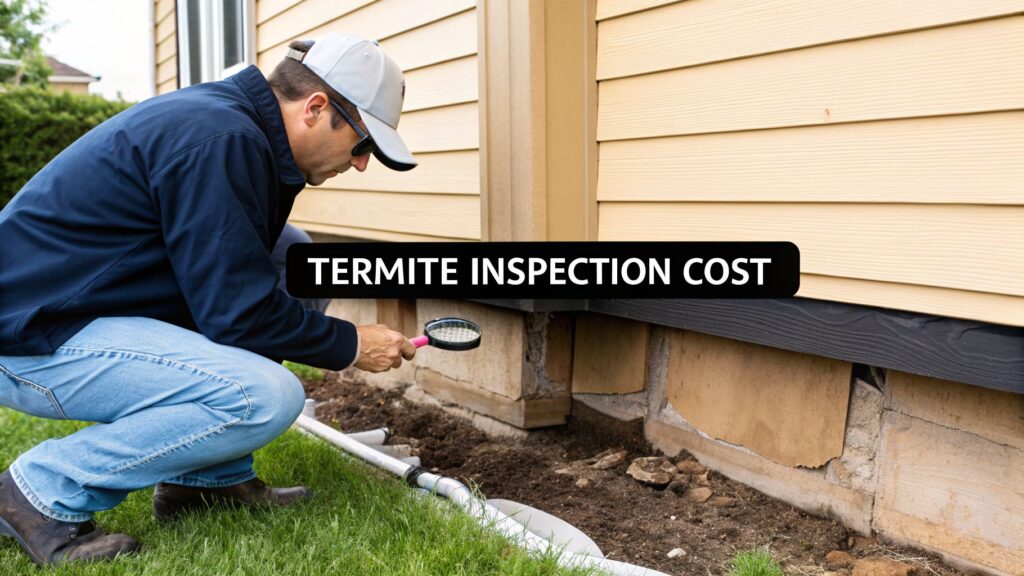
Whether you're selling your home, buying a new one, or simply concerned about protecting your property, the cost of a termite inspection is a common question. For homeowners in Crown Point, Indiana, the answer is often a pleasant surprise. A professional inspection is a small, smart investment to protect your family's home from the threat of pests.
As a trusted, local pest control company serving Crown Point and the surrounding Northwest Indiana communities, The Green Advantage is here to provide the clear answers and reliable service you need. We understand that a potential pest infestation can be stressful, and our goal is to offer reassuring expertise and effective, family-safe solutions.
The Real Cost of a Termite Inspection in Crown Point
Let's get straight to it: protecting your home from the hidden damage termites can cause is more affordable than you might think. For homeowners in Crown Point and across Northwest Indiana, the cost for a professional termite inspection from a local exterminator is often much lower than what people face in other parts of the country. This makes proactive prevention a smart and accessible choice.
While you might hear of inspection prices creeping into the hundreds or even thousands of dollars in other states, that's not the reality here. As a local pest control provider, The Green Advantage operates efficiently, passing those savings directly on to our neighbors.
Comparing Local and National Costs
Here in Northwest Indiana, a typical inspection from a trusted local expert like The Green Advantage will usually fall somewhere between $81 and $277.
That range is a bargain when you compare it to high-risk termite areas. For instance, according to national data from HomeLight, inspections in California can run from $785–$1,777, and in Florida, they can be anywhere from $423–$1,066.
To put this into perspective, here is a breakdown of termite inspection and potential repair costs, comparing the national average to what we typically see right here in Crown Point.
Termite Inspection Costs at a Glance: National vs. Crown Point, IN
| Region | Average Inspection Cost Range | Average Repair Cost for Untreated Damage |
|---|---|---|
| National Average | $200 - $650+ | $3,000 - $8,000+ |
| Crown Point, IN | $81 - $277 | $3,000 - $8,000+ |
As you can see, while the potential cost of repairs from an untreated infestation is devastatingly high no matter where you live, the upfront cost to catch the problem early is significantly lower for homeowners in our local community.
This chart drives the point home, visually comparing the value we get in our area.
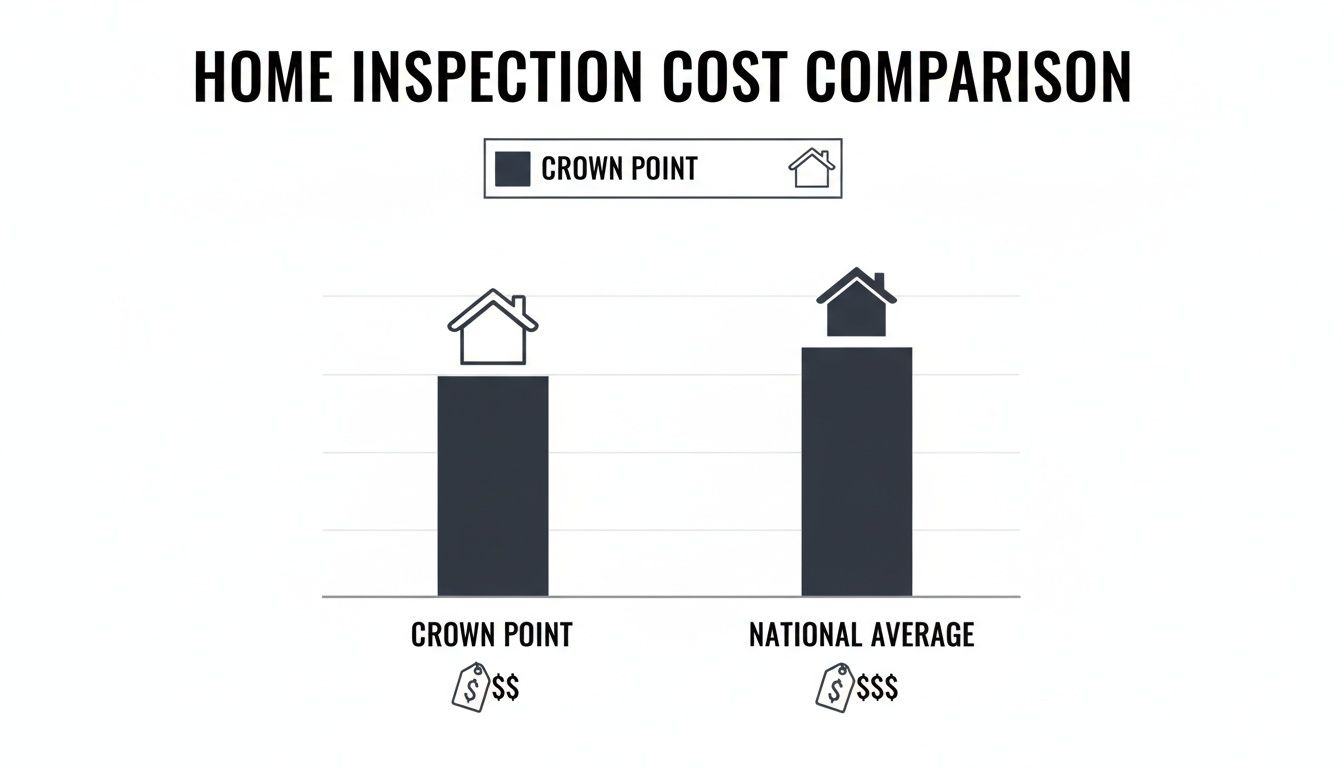
It’s clear that getting peace of mind in our community is far more wallet-friendly than in many other places.
Think of a termite inspection less as an expense and more as a small insurance premium. It’s a modest fee that provides a powerful defense against the staggering repair bills that an unchecked infestation can leave behind.
As your local exterminator in Crown Point, IN, our goal isn't just to find termites; it's to make this essential service accessible to everyone. A small, upfront investment is the single most effective way to prevent the thousands of dollars in structural damage that pests like termites, ants, and rodents can quietly cause.
What Happens During a Professional Termite Inspection
So, what really goes on when we show up for a termite inspection? It's much more than a quick walkthrough. Think of it as a comprehensive check-up for your house, where a trained specialist knows exactly what symptoms to look for. Our mission is to hunt down any evidence of wood-destroying insects and spot potential problems before they escalate.
For us at The Green Advantage, the work starts before we even ring your doorbell. A home’s exterior is the frontline defense against termites and other pests, so that’s where we begin our search at your Crown Point property.
The Exterior Examination
A professional inspection always starts on the outside, methodically working around your home's entire foundation. We're looking for tiny clues that an untrained eye would almost certainly miss.
Here’s a glimpse of what we're scanning for:
- Mud Tubes: Subterranean termites build these pencil-thin tunnels to travel safely from their colony in the soil to the wood in your home. They’re a dead giveaway.
- Damaged Wood: We physically probe and tap wood structures near the ground—siding, porch supports, deck posts—listening for the hollow sound that signals internal damage.
- Cracks and Gaps: Termites only need a sliver of an opening. We pinpoint every crack in the foundation or gap around utility pipes that could serve as a secret entrance for pests.
The Interior Deep Dive
Once we've cleared the exterior, we move inside to the places termites and other pests love most. This is where experience really pays off, because we know their favorite hiding spots.
Our interior check focuses on these high-risk zones:
- Basements and Crawl Spaces: These dark, often damp areas are a five-star resort for termites and other pests. We get into every corner, inspecting support posts, sill plates, and floor joists for any trace of activity.
- Attics: We’re not just looking for evidence of drywood termites up here; we’re also checking for roof leaks or moisture issues that can attract all kinds of pests, from spiders to rodents.
- Garages and Utility Areas: The wood framing in a garage is often in direct contact with the concrete slab foundation, creating a perfect bridge for termites to enter undetected.
A professional inspection isn't just about finding an active infestation. It's about identifying conducive conditions—things like standing water, woodpiles against the house, or poor ventilation—that essentially roll out the welcome mat for future termite, ant, or rodent problems.
After our assessment is complete, we'll walk you through everything we found, right there on the spot. If there are signs of termites, we’ll show you the proof, explain the situation clearly, and lay out a straightforward, no-pressure plan to handle it. For real estate transactions, the process and paperwork have specific requirements. You can discover more about this in our detailed guide on the termite inspection for real estate. We want every homeowner in Crown Point, IN, to have the knowledge they need to protect their investment.
What Factors Influence Your Final Inspection Price?
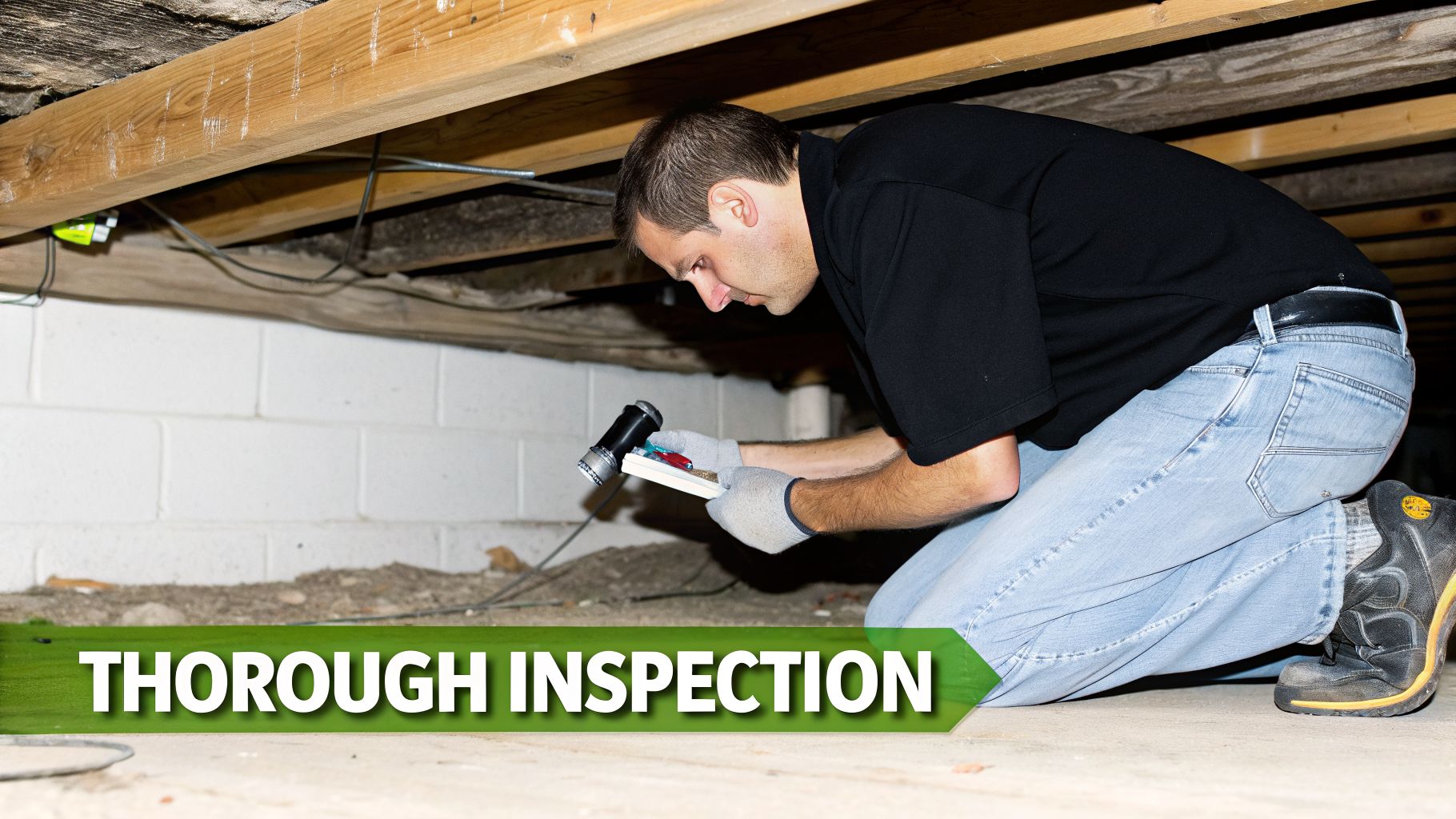
While the average termite inspection cost around Crown Point is very reasonable, the final number on your estimate isn't pulled out of a hat. No two homes are exactly alike, so no two inspections are, either. The price really comes down to the time and effort a certified technician needs to invest to give your property a truly thorough look.
We provide a custom quote that reflects the unique details of your home, ensuring you’re only paying for the work that’s actually required. Let’s break down the main things that can move the needle on your final cost.
Property Size and Layout
This one is pretty straightforward. A sprawling, multi-story home with a detached garage and a shed is going to take more time to inspect than a compact, single-story ranch. More square footage simply means more ground to cover.
But it’s not just about size; the layout matters, too. A home with a complex floor plan—lots of little rooms, nooks, and crannies—requires a much more meticulous search than a place with a wide-open concept. Our job is to hunt down every potential weak spot, and a complicated layout just gives pests like termites more places to hide.
Foundation Type and Accessibility
Your home's foundation is a huge factor in the inspection process. Homes with a clean, open basement or a simple slab foundation are usually the easiest to inspect. The real wild card? Crawl spaces.
- Slab Foundations: These are typically the quickest. The inspection mainly focuses on the outside perimeter and any points where plumbing or utilities enter the slab.
- Basements: Most basements give us good access, allowing for a clear look at the sill plates, headers, and joists where termites love to show up first.
- Crawl Spaces: This is where things can get tricky. A tight, damp, or cluttered crawl space can dramatically increase the time and effort involved. Getting into these spaces safely and effectively often requires special gear and a lot more patience.
In short, the harder it is for an inspector to get a good look at the structural "bones" of your home, the more time and labor it takes. That difference will naturally be reflected in the final termite inspection cost.
Type of Inspection Report
Finally, why you're getting the inspection can also affect the price. A standard check-up for a long-time homeowner just wanting peace of mind is different from the official report needed for a real estate sale.
When a property is being sold in Indiana, lenders and buyers often require a formal Wood-Destroying Organism (WDO) report. This isn't just a simple checklist; it's a legal document that follows a much stricter protocol and involves more detailed paperwork. Because this report carries more weight and liability, it can add a bit to the overall cost. A company's internal efficiency, sometimes streamlined by tools like pest control business management software, can also play a role in how they price these more intensive services.
The True Financial Risk of Skipping an Inspection
Let's be honest—when you're juggling all the expenses of homeownership, it’s easy to think about skipping a pest inspection to save a little cash. After all, if you don't see any bugs, there's no problem, right? Unfortunately, that's one of the riskiest assumptions you can make.
Pests like termites earned their nickname as "silent destroyers" for a reason. They work out of sight, deep within your walls, floors, and crawl spaces, methodically eating away at your home's structure. By the time you spot the first sign of trouble, they've likely been there for years. Think of a small inspection fee as an inexpensive insurance policy on your most valuable asset. It's the one thing that stands between your peace of mind and a potential financial nightmare.
The Staggering Cost of Termite Damage
Here in Northwest Indiana, our warm, humid summers create the perfect environment for subterranean termites to flourish. These conditions allow colonies to grow and spread aggressively, putting virtually every home in Crown Point and the surrounding region at risk. Ignoring that threat can have some truly staggering financial consequences.
The numbers are pretty shocking on a national scale. According to industry leader Orkin, termites infest roughly 600,000 homes in the U.S. every single year. The average repair bill for homeowners who discover an infestation is a painful $3,000. And that's just the average—in high-risk areas like ours, the costs can spiral much, much higher.
A single termite colony isn't just chewing on a 2x4. It’s a relentless, 24/7 demolition crew of hundreds of thousands of insects systematically compromising the very bones of your house.
From Small Pests to Massive Repair Bills
The damage these pests leave behind isn't just cosmetic; it's structural. An unchecked termite colony can weaken the most critical parts of your home, leading to repair bills that can easily soar into the five-figure range.
Depending on how long the termites have been active, you could be facing repairs like:
- Structural Beams: Replacing or shoring up load-bearing beams can run from $2,000 to $10,000.
- Flooring: Repairing damaged subfloors and floor joists is an extensive job, often costing between $1,500 and $7,000.
- Foundations: In the worst-case scenarios, where termites compromise foundation supports, repairs can climb as high as $25,000.
When you stack those numbers up against the modest price of a professional inspection, the choice is obvious. An experienced exterminator in Crown Point, IN, can catch the earliest signs of an issue, giving you the chance to solve the problem before it becomes a catastrophe. To get a better handle on what comes next, you can explore our guide on the cost of residential termite control in Crown Point.
Why Crown Point Homeowners Trust The Green Advantage
When you're looking for someone to protect your home, you're looking for more than a service—you're looking for peace of mind. For families all across Crown Point and Northwest Indiana, The Green Advantage has become that trusted partner. We're not some faceless national chain; we're a local, family-owned business with deep roots right here in the community.
That local connection makes all the difference. Our decades of experience aren't just in general pest control, but in solving the specific pest problems our neighbors face season after season—from ant control and wasp removal to rodent control and mosquito treatments. When you call us, you're talking to someone who gets it.
Our Commitment to You and Our Community
At The Green Advantage, our entire way of doing business is built on a few straightforward promises. We aim to be your dedicated partner in keeping your home safe, sound, and pest-free.
Here’s why choosing a professional pest control company like ours protects your property, health, and peace of mind:
- Deep Local Expertise: We know exactly what to expect from Northwest Indiana's climate, from the spiders that show up in the fall to the termites that get active in the spring. This lets us stay a step ahead of pests, not just react to them.
- Eco-Friendly Solutions: Your family’s well-being always comes first. We use effective, eco-friendly pest control treatments that are tough on pests but gentle on your home, your yard, and the people and pets you love.
- Clear Communication: No one likes confusing technical jargon. Our licensed technicians take the time to walk you through what they’ve found, explain what it means for your home, and lay out your options in plain English.
We believe an informed homeowner is an empowered one. Our job is to give you the clarity and confidence to make the best decision for protecting your home and family, without pressure or confusion.
What to Expect When Working With The Green Advantage in Crown Point, IN
When you choose The Green Advantage, you are choosing a community-focused expert dedicated to solving your pest problems for good. Whether you need residential pest control for your home or commercial pest control for your business, we create a specific plan to solve it right. Our highly trained technicians are problem-solvers, not just applicators. Whether they’re tracing a hidden ant trail to its source, spotting conditions that invite termites, or setting up a preventative mosquito control plan for your yard, our team is focused on delivering results that last.
When you search for "pest control near me," you’re hoping to find someone who will treat your home with the same care they’d treat their own. That’s the promise we make—and keep—for every customer in Crown Point, IN.
Ready to Schedule Your Crown Point Termite Inspection?
Now that you know what’s at stake, the next move is simple. A professional termite inspection is, hands down, the most affordable and effective way to protect your biggest investment from these silent destroyers. The peace of mind that comes from knowing your home is on solid ground is truly invaluable.
At The Green Advantage, we live and work right here in Northwest Indiana. We’ve made the process of protecting your Crown Point home as straightforward and stress-free as possible. We’re your local experts, here to give you clear answers and service you can trust.
Getting Started Is Easy
We designed our scheduling process to be quick and transparent. Whether you're ready to book an inspection or just have a few questions, our team is here to help.
- Give Us a Call or a Click: Reach out by phone or fill out our online form. You’ll connect directly with a knowledgeable member of our local team—not a call center—who understands the unique pest pressures we face right here in NWI.
- Tell Us What’s Going On: We’ll take the time to listen to your concerns. Have you spotted something worrying? Or are you just looking for a routine check-up? Based on our conversation, we can give you a clear, honest quote for your termite inspection right over the phone.
- Book Your Appointment: We'll work with you to find a time that fits your busy schedule. Our certified technicians will show up on time, in uniform, and ready to perform a thorough, professional inspection of your property.
Don’t wait until you see sagging floors or crumbling wood. Proactive protection is always the smartest and most cost-effective strategy for any homeowner.
Take that next step today. Contact The Green Advantage to request your free quote and schedule the termite inspection that will secure your home and your peace of mind. Our Crown Point team is ready to help.
Common Questions About Termite Inspections
Even with all the details, you probably still have a few questions floating around. That’s completely normal. We’ve put together answers to the questions we hear most often from homeowners right here in the Crown Point area, so you can feel confident you’re making the right call.
How Often Should I Get a Termite Inspection?
For anyone living in Northwest Indiana, we always recommend getting a professional termite inspection every one to two years. An annual check-up is the gold standard for preventative pest treatments.
Our local climate gives termites a long season to stay active and cause trouble. Consistent, regular monitoring is genuinely the best defense you have to catch an infestation before it turns into a serious, expensive structural problem.
What Happens If You Find Termites?
Finding out you have termites is a stressful moment, but our job is to bring clarity, not chaos. If our technicians discover signs of termite activity, we don't just hand you a confusing report and walk away. We show you exactly what's going on.
First, we’ll point out the physical evidence so you can see it for yourself. Then, we’ll explain the extent of the problem in plain English and give you a detailed, no-obligation proposal for a treatment plan. The goal is to give you a clear, effective path to getting rid of the colony and protecting your home for good.
When we find termites, our immediate goal is to replace your uncertainty with a straightforward, effective action plan. We explain the problem and present the solution, putting you back in control.
Is a Termite Inspection the Same as a Treatment?
That’s a common point of confusion, but no—they are two separate services that serve very different purposes.
- Think of an inspection as a diagnostic check-up. Its only purpose is to find out if termites are present and identify any conditions around your property that could attract them in the future.
- A treatment is the active remedy. This is the process of eliminating an existing colony and applying a protective barrier to prevent them from coming back.
An inspection is always the critical first step. You can't solve a problem until you know exactly what you're dealing with. The inspection gives us the crucial information to know if treatment is even needed and, if so, what approach will be the most effective for your home.
Are Your Methods Safe for My Family and Pets?
Absolutely. The safety of your family, pets, and property is our top priority at The Green Advantage, and it’s something we take very seriously.
We focus on using eco-friendly, low-impact products that are tough on pests but gentle on the environment inside and around your home. Before we ever begin a treatment, we’ll walk you through our entire process, explain the specific products we’ll be using, and answer every single question you have. Your peace of mind comes first.
Ready to protect your Crown Point home? Contact The Green Advantage today to schedule your termite inspection or get a free, no-obligation quote from our local experts. Visit us at https://thegreenadvantage.biz to get started.
The Ultimate Pest Control Inspection Checklist for Crown Point, IN Homeowners

For homeowners in Crown Point, IN, and across Northwest Indiana, peace of mind starts with a secure and healthy home. The threat of unseen pests like termites, rodents, and ants can compromise not only your property's structure but also your family's health and well-being. This uncertainty is why a detailed pest control inspection checklist is so valuable for every local homeowner. It transforms guesswork into a clear action plan, empowering you to identify risks before they become costly infestations.
At The Green Advantage, we understand the specific pest challenges our neighbors face. As a trusted local pest control company serving Crown Point and the surrounding areas, we've created this guide to walk you through a professional-grade inspection. We'll show you exactly what our expert exterminators look for, helping you understand your home's vulnerabilities and when it's time to call us for professional residential or commercial pest control services. Understanding your home’s weak points is the first step in effective prevention, and for a complete assessment, it's often wise to consult professional home inspection services. Whether you're searching for "pest control near me" or a reliable "exterminator in Crown Point, IN," this checklist provides the roadmap to securing your property.
1. Perimeter, Foundation, and Entry Point Inspection
Your home’s first line of defense is its physical structure. A thorough perimeter and foundation inspection is the most crucial step in any effective pest control strategy. This involves a systematic walk-around of your property to identify any vulnerability pests could exploit. A crack the width of a dime is a superhighway for mice, and a tiny tear in a screen is an open invitation for spiders and mosquitos. This initial check is fundamental for stopping an infestation before it begins and a core part of our local pest control services.

In Northwest Indiana, the seasonal freeze-thaw cycle can cause homes to shift, creating new gaps and cracks each year. A small opening that wasn’t there last fall could be a primary entry point for ant control issues this spring. At The Green Advantage, our professional exterminators focus on these details to provide lasting protection for your Crown Point home.
Key Areas Our Exterminators Scrutinize:
- Foundation and Sill Plate: We examine the entire foundation for cracks, especially where the concrete meets the home's wood framing.
- Utility Penetrations: We check every point where pipes, wires, and vents enter your home. Gaps around these are common entryways for rodents and insects.
- Windows and Doors: We inspect seals around all doors and windows. Damaged screens are prime entry points for insects, so we recommend professional window screen repair services to maintain a secure barrier.
- Vents and Roofline: Soffit vents, gable vents, and other roof penetrations are common entry points for wasps and rodents. We ensure all covers are secure and undamaged.
Local Insight: Our technicians often find mice entering Crown Point homes through small, hidden gaps around air conditioning lines. Sealing these unseen entry points is a cornerstone of our preventative pest treatments.
2. Interior Wall Voids and Structural Cavity Assessment
While the exterior is the first barrier, what happens inside your walls is just as critical. Our pest control inspection includes a systematic check of interior wall voids, attics, and crawl spaces. These hidden cavities provide pests like rodents, cockroaches, and ants with the perfect environment: shelter, protection, and undisturbed space to nest. An infestation can grow for months inside these voids, hidden from view.
This part of the inspection looks deeper into the anatomy of your home. In many Northwest Indiana properties, especially older homes in Crown Point, these cavities can be extensive. Without a proper assessment from a professional exterminator, treatments may only address visible pests, while the core infestation remains safe inside your walls, requiring services like rodent control or ant control.
Key Areas Our Exterminators Scrutinize:
- Attic and Crawl Spaces: These are common sanctuaries for pests. We inspect insulation for rodent tunneling, droppings, and nesting materials.
- Wall Voids Behind Utilities: We check behind cabinets, under sinks, and behind appliances, which offer pests easy access to food, water, and entry into walls.
- Basements and Cellars: We examine the spaces between ceiling joists and along foundation walls, common highways for spiders, crickets, and rodents.
- Drop Ceilings: In commercial properties or finished basements, we inspect above drop ceilings for droppings, gnaw marks, and other signs of pest activity.
Local Insight: Called to a Valparaiso home for a persistent ant problem, our technicians found a damp area inside a wall from a slow leak attracting carpenter ants. By identifying this hidden void, we eliminated the entire colony, solving the problem for good.
3. Kitchen and Food Storage Area Inspection
The kitchen’s abundance of food, water, and warmth makes it a primary target for pests. A focused inspection of your kitchen and pantry is a non-negotiable part of our pest control service. Pests like cockroaches, ants, rodents, and pantry beetles are drawn to these areas, posing health risks through contamination. Identifying and eliminating the conditions that attract them is key to a safe home.

This step involves a meticulous check of the hidden spaces where pests thrive—behind appliances, under sinks, and inside cabinets. In Northwest Indiana, an ant trail on the kitchen floor often signals a much larger colony nesting in a wall void. Our professional inspection uncovers these root causes before a minor nuisance becomes a major infestation requiring extensive ant control.
Key Areas Our Exterminators Scrutinize:
- Under and Behind Appliances: We carefully check around your refrigerator, stove, and dishwasher for droppings, grease marks, or shed skins.
- Pantry and Cabinets: We inspect all dry goods for signs of pantry pests like beetles or moths and recommend storing food in sealed, airtight containers.
- Sinks and Plumbing: We examine the area under the kitchen sink for leaks or moisture, which attracts cockroaches and other pests, and seal any gaps.
- Trash and Recycling Bins: We ensure bins have tight-fitting lids and check the surrounding area for spills that attract pests.
Local Insight: In a Crown Point apartment complex, we traced a persistent cockroach issue to shared plumbing voids between units. Sealing these access points was crucial to solving the problem and protecting residents' health.
4. Bathroom and Moisture-Prone Area Assessment
Pests like cockroaches, silverfish, and carpenter ants don't just seek shelter; they need water. High-moisture areas like bathrooms, laundry rooms, and basements act as a magnet for pests, creating the perfect breeding ground. A dedicated assessment of these zones is a key part of our professional pest inspection. Correcting water issues is often more effective than treatments alone, as it removes the resource pests need to survive.
This inspection is about spotting the subtle signs of excess humidity and hidden water sources. For Northwest Indiana homes, managing moisture is a year-round battle. A damp, musty smell is a red flag that conditions are ripe for a pest problem, signaling the need for professional pest control.
Key Areas Our Exterminators Scrutinize:
- Under-Sink Cabinets: We thoroughly inspect plumbing for slow drips or water stains that provide a consistent water supply for pests.
- Tubs and Showers: We examine caulk and grout lines. Cracked sealant allows water into wall cavities, creating hidden moisture pockets where pests like silverfish and even termites can thrive.
- Exhaust Fans and Ventilation: We ensure fans vent outdoors and function correctly to prevent humidity buildup that attracts pests.
- Basements and Crawl Spaces: We check for signs of water seepage and persistent dampness around sump pumps and drains, which are common issues in Crown Point homes.
Local Insight: We recently helped a family in Crown Point with a persistent cockroach problem in their basement. Our inspection revealed a tiny, slow leak from a washing machine hose behind the drywall. Once the plumbing was repaired, our treatments became far more effective.
5. Rodent Sign and Activity Level Detection
Finding evidence of rodents requires a professional eye. A systematic approach to detecting signs of mice and rats is essential for understanding the scope of an infestation. This step involves identifying droppings, gnaw marks, and nesting materials to determine the species, severity, and most effective rodent control strategy. Ignoring these signs allows populations to grow, leading to property damage and health risks.

This part of the inspection is investigative work. Rodents travel the same hidden pathways between their nests and food sources. In Northwest Indiana homes, we check behind appliances, inside cabinets, along basement walls, and in attics. Documenting activity helps us build a complete picture and create a targeted, successful treatment plan for your home or business.
Key Areas Our Exterminators Scrutinize:
- Droppings and Urine: We search for droppings in undisturbed areas like pantries and under sinks. A UV blacklight can reveal hidden urine stains, highlighting high-traffic runways.
- Gnaw Marks and Damage: We look for gnaw marks on wood, plastic, and especially electrical wires, which pose a significant fire hazard.
- Nests and Runways: Rodents build nests from soft materials like paper and insulation. We check inside wall voids, attics, and behind appliances. Oily rub marks along baseboards indicate frequently used pathways.
- Entry Points: We locate and document potential entry holes. A mouse can squeeze through a hole the size of a dime. Sealing these is a crucial part of our rodent control process.
Local Insight: During an inspection for a Crown Point home, we uncovered extensive rat damage in the attic insulation. Identifying this before the sale allowed the homebuyer to negotiate for necessary remediation, preventing a major health hazard.
6. Termite and Wood-Destroying Insect Assessment
A critical part of our pest control inspection checklist is looking for wood-destroying insects (WDIs). Termites, carpenter ants, and carpenter bees pose a direct threat to your property's structural integrity. Unlike other pests, these insects can cause thousands of dollars in damage, often silently. A dedicated termite control assessment is essential for protecting your Crown Point home.
This inspection involves actively probing and examining vulnerable wooden components of your home. Identifying the specific insect is key, as termites consume wood while carpenter ants excavate it for nesting, requiring different treatment strategies from a professional exterminator.
Key Areas Our Exterminators Scrutinize:
- Foundation and Sill Plate: We meticulously look for mud tubes—pencil-sized tunnels that subterranean termites build. We also probe floor joists and the sill plate, as hollow sounds can indicate internal damage.
- Basement and Crawl Space: These dark, damp areas are prime habitats for termites and carpenter ants. We check for damaged wood and piles of "frass" (sawdust-like material) that signal carpenter ant activity.
- Window and Door Frames: We inspect window sills and door frames for softness or damage. Discarded swarmer wings are a strong indicator of a recent termite or ant event.
- Decks, Porches, and Fascia Boards: Carpenter bees drill perfectly round holes into exterior wood, while carpenter ants are often found in moisture-damaged porch columns and decks.
Local Insight: During a pre-purchase inspection in Crown Point, our exterminator discovered termite mud tubes hidden behind a water heater. This saved the buyer from inheriting a major structural repair, demonstrating the value of our expert termite control services.
7. Pest Harborage and Environmental Conditions Evaluation
Pests are drawn to environments that provide food, water, and shelter. An evaluation of these conditions is a core part of our preventative pest treatments. This step focuses on identifying and correcting the root causes that attract pests. By making your home less appealing, we provide sustainable, long-term pest management.
This part of the inspection assesses anything on your property that could offer pests a place to live. In Northwest Indiana, dense vegetation, firewood piles, and thick mulch can create perfect microclimates for pests. A cluttered basement provides endless hiding spots for rodents, and tree branches touching your roof act as a highway for squirrels into your attic. Addressing these is often more effective than chemical treatments alone.
Key Areas Our Exterminators Scrutinize:
- Landscaping and Vegetation: We examine overgrown plants near your home that can harbor insects and rodents while trapping moisture against your foundation.
- Mulch and Ground Cover: Thick wood mulch piled against the foundation is a major attractant for termites, ants, and other pests.
- Stored Items and Debris: We inspect your yard, garage, and basement for clutter like lumber, old tires, and firewood stacks, which are ideal nesting sites for rodents, spiders, and wasps.
- Exterior Lighting: We assess your outdoor lights, as bright white lights can attract swarms of flying insects, which in turn draw spiders to your home.
Local Insight: We worked with a Crown Point homeowner who had a persistent ant and termite problem. We discovered their landscaper had piled mulch a foot deep against the siding. By simply pulling the mulch back, we eliminated the primary condition attracting pests.
8. Documentation, Photography, and Findings Report
A professional pest control inspection is only as good as the information it produces. That’s why comprehensive documentation, including detailed photographs and a clear findings report, is an essential part of our service. This process transforms our observations into actionable data, creating a permanent record of your property's condition.

This formal record serves as a crucial baseline for your residential or commercial pest control plan. For landlords, it provides evidence of a property’s condition. For homebuyers, it uncovers hidden issues. In Northwest Indiana, where pest pressures shift with the seasons, this historical data helps us anticipate problems before they escalate.
What Our Professional Report Includes:
- Evidence of Activity: We photograph all signs of pests, such as droppings, gnaw marks, nests, or mud tubes.
- Structural Deficiencies: We document any cracks, gaps, or damaged vents identified during the inspection.
- Conducive Conditions: We record and photograph conditions that attract pests, such as standing water, woodpiles against the house, or overgrown vegetation.
- Written Report: Our report consolidates all findings in clear, jargon-free language. It details the location and severity of each issue and outlines a clear plan of action with treatment recommendations. Knowing how advanced equipment improves pest inspection accuracy shows why our detailed reports are so vital.
Local Insight: Our detailed inspection report, complete with photos of termite damage, allowed a Crown Point homebuyer to negotiate repairs with the seller before closing, saving them thousands in unexpected costs. This is the peace of mind our professional service provides.
8-Point Pest Inspection Comparison
| Inspection Type | Implementation Complexity | Resource Requirements | Expected Outcomes | Ideal Use Cases | Key Advantages |
|---|---|---|---|---|---|
| Perimeter, Foundation, and Entry Point Inspection | Moderate — full exterior access, season-dependent | Technician time, ladders, moisture checks, sealing materials, contractor referrals | Identifies and prioritizes entry points; reduces ingress risk | Pre-purchase, landlords, preventive maintenance | Cost-effective prevention; protects foundation and property value |
| Interior Wall Voids and Structural Cavity Assessment | High — confined spaces and safety hazards, advanced tools often needed | PPE, borescope/thermal camera, moisture meter, safe access points | Reveals hidden infestations and nesting; enables targeted treatments | Suspected hidden activity, pre-purchase inspections, attics/crawlspaces | Detects concealed pests early; reduces broad-spectrum treatments |
| Kitchen and Food Storage Area Inspection | Low–Moderate — accessible but sensitive and time-constrained | Flashlight, mirror, inspection tools, sanitation review | Direct identification of health-risk pests and sanitation issues | Commercial kitchens, food service, residences with food complaints | Clear, actionable findings tied to health and regulatory compliance |
| Bathroom and Moisture-Prone Area Assessment | Moderate — involves moisture diagnostics and HVAC/ plumbing checks | Moisture meter, dehumidifier recommendations, plumber referrals | Identifies moisture sources and conditions that sustain pests | Basements, laundry rooms, humid climates, remodel planning | Environmental fixes reduce pest habitat and reliance on chemicals |
| Rodent Sign and Activity Level Detection | Moderate — careful evidence assessment and safety precautions | PPE, traps/monitors, UV light, sample collection supplies | Determines species, activity level, and optimal control placement | Warehouses, kitchens, multi-unit dwellings, attics | Provides clear evidence for targeted control and progress tracking |
| Termite and Wood-Destroying Insect Assessment | High — probing and species ID; may require specialists | Probes, moisture meter, specialized treatment options, structural referrals | Early detection of wood damage; informs species-specific treatment | Pre-purchase, older/historic homes, properties with wood contact to soil | Prevents costly structural damage; guides appropriate treatments |
| Pest Harborage and Environmental Conditions Evaluation | Low — visual survey and landscape assessment | Time, landscape knowledge, customer action plan | Identifies environmental drivers of pest pressure and mitigation steps | Yard maintenance plans, preventive programs, HOA properties | Low-cost, sustainable reductions in pest pressure; customer-empowering |
| Documentation, Photography, and Findings Report | Moderate — time-intensive but essential for records | Camera/tablet, reporting software, secure storage, templates | Baseline records, prioritized recommendations, legal/insurance support | Multi-property management, insurance claims, buyer/seller transactions | Builds trust, improves communication, and documents treatment outcomes |
From Checklist to Action: Partner with Crown Point's Trusted Pest Control Experts
This checklist is more than just a list of tasks—it's a framework for understanding your home's unique vulnerabilities and protecting your family. You now know that a small gap is an open invitation for mice, a leaky pipe is a beacon for cockroaches, and a firewood pile against your house can be a bridge for termites. This knowledge is your first line of defense. However, while a DIY inspection is an excellent start, interpreting the findings and creating a safe, effective treatment plan requires the expertise of a professional exterminator.
The Value of Professional Pest Control in Crown Point, IN
A professional inspection from The Green Advantage goes beyond what the naked eye can see. Our certified exterminators in Crown Point use their deep knowledge of local pest pressures in Northwest Indiana to connect the dots. We understand the seasonal behaviors of pests in our region—from spring ant invasions to winter rodent problems—and can identify high-risk conditions that homeowners often miss. We don’t just find pests; we determine why they are there. This focus on the root cause is the key to our effective, long-lasting, and eco-friendly pest control solutions.
When you partner with us, you get more than just a service; you get a neighbor dedicated to protecting our community. As a local company, we are committed to providing responsible and effective pest control to our friends and neighbors in Crown Point, IN. We translate our findings into a clear, actionable plan, explaining every step so you feel confident and informed. From preventative pest treatments and mosquito control to comprehensive termite and rodent control, we are your dedicated partners in maintaining a safe and pest-free home.
Don't let small concerns escalate into major infestations. If your inspection has raised any red flags, or if you simply want the peace of mind that comes from a professional assessment, The Green Advantage is here to help. Contact us today to schedule your comprehensive pest inspection and get a custom treatment plan designed specifically for your Crown Point home. Let us turn your findings into lasting peace of mind.