
Pest Inspection Services in Crown Point, in: What to Expect

You hear scratching above the ceiling in Crown Point, notice a few droppings near the garage, or spot ants returning along the same kitchen wall after store-bought spray seemed to work. A quick visual check may tell you where pests appeared, but it often won't tell you why they're there or whether activity is hidden elsewhere.
Pest inspection services provide that missing diagnosis. In Crown Point, IN and nearby Northwest Indiana communities, The Green Advantage helps homeowners, landlords, property managers, and businesses connect visible evidence with practical next steps. A thorough inspection can guide residential pest control, commercial pest control, termite control, mosquito control, rodent exclusion, and preventative pest treatments without jumping straight to unnecessary applications.
Why Professional Pest Inspections Matter in Crown Point
A Crown Point homeowner may notice a mouse in the kitchen, seal one obvious gap, and assume the problem is finished. A week later, fresh droppings appear near the water heater. The original sighting was only one piece of the problem. The core issue may involve a foundation opening, stored food, nesting material, or access through an attached garage.
Northwest Indiana properties face changing seasonal conditions, older foundations, crawl spaces, finished basements, and exterior utility penetrations that can give pests several ways inside. Ants may follow moisture toward a leaking fixture. Spiders may gather where outdoor lighting attracts insects. Rodents may use roofline, soffit, foundation, or garage openings that are easy to miss during a rushed walkthrough.
Practical rule: A treatment aimed only at the place where you saw a pest may provide temporary relief while leaving the entry route untouched.
Ignoring early evidence doesn't guarantee serious damage, but it does remove an opportunity to address the source while the situation may be easier to manage. Rodent activity can contaminate areas and damage materials. Termites can affect wood components. Stinging insects, mosquitoes, and crawling pests can make a home or commercial space uncomfortable and harder to use. The risk isn't a reason to panic. It's a reason to replace guesswork with documentation.
The broader industry context supports treating inspection as skilled property work. Pest inspection services are formally included in NAICS 561710, Exterminating and Pest Control Services, a category covering inspection, elimination, and control of termites, rodents, mosquitoes, birds, insects, fumigation, and other structural pests. The U.S. Bureau of Labor Statistics reported 89,070 pest-control workers in this industry in May 2023, with a mean hourly wage of $21.35 and a mean annual wage of $44,400, as summarized with the underlying classification details by The Pest Control Brief. The figures describe the broader workforce, not inspectors alone, but they show that inspection belongs to a specialized property-service field.

A professional assessment should leave you with more than “pests found” or “no pests found.” It should clarify evidence, contributing conditions, areas that couldn't be accessed, recommended repairs, treatment options, and whether follow-up monitoring makes sense. The pest inspection process becomes useful when it helps you decide what to do next.
The Science Behind Modern Pest Inspections
A sound inspection is the first diagnostic stage of Integrated Pest Management, or IPM. It isn't only a search for live insects. The inspector evaluates pest evidence, identifies the species when possible, and looks for the conditions that allow activity to continue.
The U.S. Environmental Protection Agency describes IPM as a process that combines prevention, monitoring, identification, and targeted control. Its guidance treats inspection and monitoring as recurring activities, with attention intensified in known problem areas rather than applied uniformly across every part of a property. That framework is explained in the EPA introduction to Integrated Pest Management.
What an inspector is diagnosing
A technician may look for:
- Entry points: Gaps around foundations, doors, vents, utility lines, windows, roof edges, and attached structures.
- Resources: Food, standing water, leaking plumbing, waste, pet food, and other conditions that support activity.
- Harborage: Clutter, wall voids, insulation, vegetation, stored materials, crawl-space conditions, and sheltered exterior zones.
- Evidence: Droppings, gnaw marks, nests, cast skins, damage, trails, insect remains, and pheromone activity.
- Building vulnerabilities: Moisture damage, cracks, poorly sealed penetrations, vegetation touching the structure, and inaccessible areas.
Species identification matters because ants, termites, rodents, mosquitoes, stinging insects, and spiders don't respond to one universal treatment. A product that affects one pest may do little for another. Misidentification can waste time and encourage unnecessary pesticide use.
For commercial properties, the report should be more structured. It can record the inspection location, schedule, monitoring method, observed evidence, corrective recommendations, and follow-up results. This creates a baseline for deciding whether sanitation, exclusion, moisture correction, monitoring, or targeted treatment is working.

Why diagnosis changes the treatment
Suppose a technician finds rodent droppings in a basement but also identifies an unsealed pipe penetration behind a utility area. Trapping may remove animals already inside, but exclusion addresses the route they use to return. If a mosquito assessment finds several water-holding containers, reducing those breeding sites may matter more than treating only the area where adults are flying.
The same logic applies to general residential pest control. Sealing penetrations, correcting leaks, improving waste storage, removing vegetation contact, and reducing accessible food can lower the conditions pests need. Treatment still has a role when activity warrants it, but IPM places that treatment in a documented plan rather than making it the automatic first response.
A useful inspection therefore answers four questions:
- What evidence is present?
- What pest is most likely responsible?
- What conditions are sustaining the activity?
- Which action should happen first, and how will the result be checked?
What Happens During a Crown Point Property Inspection
When a technician arrives, the process should follow the property rather than a memorized checklist. The inspection normally considers both the building and the surrounding grounds because pests often enter from outside and move through concealed routes.
Inside the building
The technician may examine basements, crawl spaces, attics, garages, utility areas, kitchens, storage rooms, wall-adjacent zones, and other locations suggested by your observations. The inspection looks for:
- Rodent signs: Droppings, urine spots, gnawing, nesting materials, rub marks, and damaged packaging.
- Insect evidence: Live insects, shed skins, nests, trails, damage, dead specimens, and activity near moisture or food.
- Moisture conditions: Leaks, condensation, damp storage areas, and plumbing or drainage concerns.
- Concealed access: Gaps around pipes, vents, doors, windows, ductwork, and wall or ceiling penetrations.
- Building impact: Damaged wood, contaminated materials, chewed wiring, and areas requiring cleanup or repair.
The CDC recommends checking both the interior and exterior for rodent openings around windows and doors, roof rafters, gables, eaves, soffits, foundations, attic vents, crawl-space vents, garages, and outbuildings. Some rodents can fit through openings as small as a dime, making a small foundation or utility gap a meaningful finding rather than a minor cosmetic defect. The CDC's rodent guidance for homes and buildings also describes materials suited to small and larger openings.
Outside the structure
The exterior perimeter often explains what an interior sighting can't. A technician may walk foundations, porches, decks, landscaping, trash-storage areas, drainage points, detached structures, roofline features, and areas where plants contact siding or masonry.
For rodent control, the inspection connects evidence with food, water, and shelter. The CDC recommends storing food in thick plastic, metal, or glass containers with tight-fitting lids, securing attractants, placing traps where signs occur, and checking whether new droppings, urine spots, or gnawing continue after one week. Those details are outlined in the CDC's rodent control recommendations.
Mosquito control requires a different exterior view. The technician should look at tires, buckets, planters, toys, birdbaths, flowerpot saucers, pools, trash containers, rain barrels, drainage areas, and pool covers. The CDC recommends emptying and scrubbing, turning over, covering, or discarding water-holding items at least once per week, as described in its home mosquito-control guidance.
What gets documented
A practical report should identify where evidence was found, what was accessible, what wasn't evaluated, which conditions need correction, and whether monitoring or reinspection is appropriate. Property managers can benefit from consistent scheduling and documenting inspections, especially when several units, work orders, or maintenance teams are involved.
The inspection isn't complete when the technician leaves. It becomes valuable when the findings give you a clear sequence: correct the condition, apply the appropriate control if needed, and verify whether activity persists.
Connecting Inspection Findings to Safer Treatment Plans
An inspection doesn't have to end with heavy chemical application. In many homes, better information can support a narrower, lower-risk response because it distinguishes active infestation from an isolated sighting or a condition that can be corrected through exclusion and sanitation.
The EPA reports that 75% of U.S. households used at least one pesticide product indoors during the previous year, and another study cited by the agency suggests that about 80% of typical pesticide exposure occurs indoors. The same EPA resource notes that measurable levels of up to a dozen pesticides have been detected in indoor air and recommends IPM as a way to combine prevention, monitoring, identification, and targeted treatment. These figures and recommendations appear in the agency's discussion of pesticides and indoor air quality.
Evidence should determine the response
Accurate identification helps avoid treating the wrong pest. Documentation helps determine whether activity is current, widespread, seasonal, or connected to a specific condition. Those distinctions affect the next step:
- A gap with rodent evidence: Prioritize exclusion, remove food and shelter, and use appropriate trapping or monitoring.
- Moisture near ant activity: Correct the leak or damp condition and then determine whether targeted control is needed.
- Water-holding containers with mosquitoes: Remove, drain, scrub, or cover them. Water that can't be removed may require an appropriate larvicide.
- Old damage without current evidence: Document the limitation and consider follow-up rather than assuming active infestation.
- Confirmed termite activity: Use a termite-specific inspection and treatment plan instead of general household spraying.
Preparation also matters. A technician should explain what residents need to move or clean, which rooms need access, how ventilation will be handled, and what questions to ask about children, pets, and re-entry times. “Eco-friendly” shouldn't mean vague promises. Ask what product or method is proposed, where it will be applied, why it is necessary, and which nonchemical steps come first.
The safest treatment plan is the one that uses enough control to address verified activity, while also removing the conditions that keep bringing pests back.
Commercial facilities need the same discipline at a larger operational level. Kitchens, warehouses, offices, and shared buildings may require monitoring locations, sanitation recommendations, exclusion work, and records that show how findings were addressed. Facility managers looking to connect inspection data with practical prevention can review IPM strategies for facility managers.
The Green Advantage provides residential and commercial pest inspection services that examine live pests, droppings, nests, damage, moisture, food sources, and entry points. The value lies in connecting those observations to an appropriate plan, whether that means ant control, termite control, rodent exclusion, mosquito reduction, spider control, wasp removal, or preventative pest treatments.
Interpreting Inspection Reports for Real Estate and Homeownership
A pest inspection report has different responsibilities depending on why you ordered it. A homebuyer needs decision-ready information before a transaction. A homeowner dealing with recurring ants needs a diagnostic explanation and a workable correction plan. A landlord or commercial operator needs repeatable documentation that supports maintenance and follow-up.
Transaction inspections versus routine service
For a real estate transaction, the report should make the scope easy to understand. It should identify accessible areas inspected, evidence observed, apparent damage, conducive conditions, inaccessible spaces, and recommended next steps. A buyer may need to know whether a finding requires specialist termite treatment, repair before closing, monitoring, or additional evaluation.
Routine residential pest control is more ongoing. The technician may compare current evidence with prior observations, track recurring locations, and adjust prevention based on seasonal or structural conditions. Commercial pest control adds operational requirements, including location-specific records, monitoring techniques, corrective recommendations, and follow-up results.
| Situation | Main question | Useful report detail |
|---|---|---|
| Home purchase | Does the property show evidence or conditions that need attention before the transaction? | Scope, findings, limitations, urgency, and recommended follow-up |
| Residential service | Why are pests appearing, and what will reduce recurrence? | Pest identification, entry points, moisture, food sources, treatment, and prevention |
| Commercial property | Can the site demonstrate an organized response over time? | Locations, monitoring, corrective actions, schedules, and verification |
A clean report doesn't always mean zero risk. Pest evidence can be intermittent, concealed, seasonal, or located outside the areas inspected. “No evidence observed” is more precise than “no pest risk,” especially when access was limited or occupant reports point to activity that wasn't visible that day.
Questions worth asking before relying on the result
Ask whether the inspector evaluated attics, crawl spaces, basements, wall voids, exterior structures, roofline access, drainage areas, and other relevant zones. Ask which findings appear active, which may be old, and what evidence supports that conclusion.
Also ask:
- What wasn't accessible? A sealed wall, crowded storage area, or unsafe roof edge can limit confidence.
- What should happen next? The report should distinguish repairs, treatment, monitoring, and reinspection.
- How long does the finding remain useful? Conditions and activity can change, especially with weather, occupancy, construction, or water intrusion.
- Is this visual inspection enough? Monitoring over time may be more informative for intermittent rodents or concealed insects.
- Does the issue affect the transaction? Buyers and sellers may need a qualified opinion on termite evidence, damage, or treatment requirements.
The same reading habit applies to other property systems. If you're evaluating a home purchase, a guide to red flags during a roof inspection can help reinforce the broader principle of reviewing scope, access, evidence, and recommended repairs rather than relying on a simple pass or fail.
For Crown Point buyers, sellers, landlords, and agents, pest inspections for home purchases should produce clear information that supports a decision, not a vague conclusion that leaves everyone guessing.
Partnering with The Green Advantage for Lasting Pest Control
A local inspection provider should understand how Crown Point homes, commercial buildings, yards, crawl spaces, basements, and older construction create different pest-control challenges. The Green Advantage is a family-owned company serving Crown Point, IN and nearby Northwest Indiana communities with licensed, certified residential and commercial services.

Customers communicate with knowledgeable office staff about questions and scheduling, while field technicians focus on diagnosing conditions and tailoring treatments to each property. That approach supports transparent recommendations, environmentally mindful methods, and practical prevention that helps keep pests outside.
A professional inspection can lead to a targeted service, exclusion work, mosquito reduction, termite evaluation, commercial monitoring, or a preventative plan. It can also show that immediate treatment isn't necessary, provided the report explains the evidence and follow-up clearly.
The team's approach is reflected in this brief video:
If you're searching for pest control near me, an exterminator near me, or pest control in Crown Point, IN, start with the diagnosis instead of guessing at products.
Schedule a pest inspection with The Green Advantage to identify pest evidence, entry points, moisture, food sources, and conditions affecting your Crown Point property. Visit The Green Advantage to request a quote for residential pest control, commercial pest control, or a targeted inspection and prevention plan.
Are Mosquito Dunks Safe for Pets? Complete 2026 Guide

The CDC states that EPA-registered Bti larvicides do not harm pets when used as directed, but handling the product still requires basic caution. For Crown Point, IN homeowners, the main concern is keeping pets away from the solid dunk during placement and storage, not from properly treated standing water.
A brown puck floating in a rain barrel or birdbath can look like something your dog or cat should avoid. That reaction is understandable, especially when mosquitoes gather around patios, play areas, and pet runs in Northwest Indiana. The Green Advantage approaches mosquito control with the same priority homeowners do, reduce pests while protecting families, pets, and outdoor spaces.
Understanding the Basic Safety of Mosquito Dunks
Mosquito dunks generally are safe for pets when used according to the product label. Their active ingredient is Bacillus thuringiensis israelensis, commonly called Bti, a biological larvicide designed to target mosquito larvae and closely related fly larvae. The Centers for Disease Control and Prevention explains Bti safety by noting that appropriately used Bti won't harm people, pets, other animals, aquatic life, honeybees, or other insects.

That selectivity matters. A mosquito dunk isn't a general poison scattered across the yard. It works in water where mosquito larvae feed, and Bti's toxins affect mosquito and related fly larvae rather than mammals. A dog sniffing the outside of a treated rain barrel or walking near a birdbath isn't exposed in the same way as a mosquito larva feeding in the water.
What the label changes
The reassurance applies to EPA-registered products used as labeled. The U.S. Environmental Protection Agency registers Bti as an insecticide, which helps distinguish labeled mosquito-control products from unregistered bacterial preparations.
The solid product still deserves care. EPA labeling warns that particulate material can be harmful if inhaled and may cause moderate eye irritation. Keep pets away while placing the dunk, don't let them chew it, and store unused pieces where animals and children can't reach them.
Practical rule: Treated water is generally low concern for normal pet access. The concentrated solid product is the part you should handle carefully.
For homeowners searching for pest control near me, pest control in Crown Point, IN, or a local exterminator near me, that distinction is useful. DIY mosquito control can address a specific water source, while a professional inspection can identify breeding areas and other seasonal pest issues across the property.
What Makes Bti Safe for Household Animals
A Crown Point homeowner may see a dog drinking from a birdbath or a cat investigating a rain barrel. Bti safety depends on what the animal encounters. The bacterium produces insect-specific toxins that work like a lock fitting a particular key. Mosquito larvae have the matching biology. Dogs, cats, birds, and other household animals do not.
The National Pesticide Information Center's Bti safety information describes Bti as practically nontoxic and not disease-causing in mammals, birds, fish, or shrimp. Animal testing also found no negative effects or infections in rats given large oral doses of Bt strains or made to inhale spores. These findings explain biological selectivity, while separate handling precautions address the physical product.
A simple way to read the science
Bti enters standing water. The dunk releases the larvicide into the habitat where mosquito larvae develop.
Larvae meet the toxins while feeding. Their susceptible biology lets the toxins affect them.
Household animals lack the same target. The CDC identifies Bti activity as limited to susceptible dipteran larvae, including mosquitoes, blackflies, and fungus gnats.
Bti also is not expected to reproduce or multiply in water, so it does not create persistent biological buildup. Laboratory exposure studies found no effects on European common-frog tadpole development or overall health at measured concentrations of 1, 10, and 100 milligrams per liter, with applications six days apart. Fish studies likewise found Bti strains practically nontoxic to trout, bluegill sunfish, and sheepshead minnows.
For a pet-safe Crown Point yard, keep the dunk somewhere an animal cannot carry or chew it. A dog run or gate can create useful separation, and guidance on how to choose a fence for your dog may help with that setup. For a plain-language explanation of what kills mosquito larvae, review how larval biology guides targeted backyard treatment.
Proper Placement and Handling Precautions
A mosquito dunk is safest when the homeowner follows the label from opening the package through storage. EPA-approved labels allow Bti products in areas used by or in contact with pets, birds, wildlife, livestock, and other animals, but they still carry handling cautions. The EPA product label instructs users to avoid inhaling material, prevent contact with skin and eyes, and wash thoroughly after handling.
Use this practical sequence:
Choose the habitat: Place the dunk only in standing water locations approved by the exact product label, such as an eligible birdbath, rain barrel, or ornamental water feature.
Keep pets back: Put dogs and cats indoors or behind a gate while you handle the product.
Avoid dust: Don't grind, crush, or handle the dunk in a way that creates airborne particles.
Use the labeled amount: Don't add more than directed or reapply more frequently than the label permits.
Store leftovers securely: Keep unused dunks dry and out of reach of children and animals.
Scattering pieces across a lawn won't control mosquitoes because Bti needs a suitable water habitat. Breaking up a dunk also creates unnecessary handling exposure and may not match the product's approved use. If you need broader household guidance about products and animals, this overview of pet-safe alternatives to boric acid offers useful context, though every pesticide label remains the controlling source for its own product.
The safest application is the simplest one, place the labeled product in eligible standing water, keep pets away during handling, and wash your hands afterward.
If a pet swallows a substantial amount, contacts loose material, or develops vomiting, breathing difficulty, eye irritation, or unusual behavior, contact a veterinarian or animal poison-control professional. Provide the product label so the professional can identify the formulation and advise you accurately.
Identifying Risky Standing Water in Your Yard
Mosquito problems often begin with water that seems too small or temporary to matter. In Crown Point neighborhoods, inspect the areas around patios, sheds, garages, fences, and landscaping after rain. A container that holds water can become a breeding site even when the rest of the yard looks dry.

Look closely at:
Birdbaths: Refresh or maintain them as appropriate, and use a dunk only if the product label permits the application.
Rain barrels: These can collect water that pets may investigate, so keep the solid product inaccessible.
Tire swings and discarded tires: Their curved surfaces hold rainwater out of sight.
Clogged gutters: Blocked sections can create stagnant pockets near the roofline.
Plant saucers, buckets, toys, and tarps: Small water collectors can sit close to pet play areas.
A quick property scan can reveal where mosquito larvae develop and where a pet might accidentally nudge, carry, or chew a solid dunk. Remove, empty, cover, or maintain containers whenever possible. For drainage problems and persistent pooling, guidance on how to prevent soggy yard Austin includes broader yard-management ideas that can be adapted to local property conditions.
For more local mosquito habitat guidance, see standing water and mosquitoes.
The video below offers another visual way to think about stagnant water and mosquito breeding areas.
When to Call a Professional Mosquito Expert
Mosquito dunks solve a specific problem, larvae developing in standing water. They don't kill adult mosquitoes already flying around a deck, patio, or dog run, and they won't address breeding sites beyond the water you treat. That limitation becomes important when bites continue even after a homeowner manages one barrel or birdbath.
A professional mosquito inspection looks beyond the most obvious container. Technicians can assess shaded vegetation, drainage areas, ornamental features, property edges, and other places where mosquitoes rest or reproduce. A targeted program may combine larval-source control with exterior treatments designed for adult mosquito activity, while keeping pet-safety precautions central to the application plan.
The Green Advantage provides mosquito reduction services for residential and commercial properties in Crown Point and surrounding Northwest Indiana communities. Its approach includes yard assessments, identification of mosquito breeding and resting areas, and targeted treatments intended to be family- and pet-safe when used according to the applicable label.
Professional help makes particular sense when:
Outdoor use has become uncomfortable: Family members avoid patios, play areas, or walking routes because mosquitoes remain active.
Water sources are difficult to manage: Drainage features, ornamental water, or inaccessible containers continue to hold water.
The property serves more people: Property managers, landlords, and businesses may need a consistent plan rather than scattered DIY applications.
Other pests are present: A broader inspection may identify a need for ant control, termite control, rodent control, spider control, or wasp removal alongside mosquito work.
If you're comparing residential pest control, commercial pest control, or an exterminator in Crown Point, IN, choose a provider that explains what it will treat, where pets need to remain, and which label directions apply.
Conclusion and Next Steps for Crown Point Homeowners
The answer to are mosquito dunks safe for pets is generally yes, when an EPA-registered Bti product is used exactly as directed. Bti targets mosquito larvae rather than mammals, and the CDC and NPIC safety information supports normal pet access to appropriately treated water. The main precautions involve the solid product, including avoiding dust and eye contact, preventing chewing or swallowing, washing after handling, and storing unused dunks securely.
Dunks remain one tool rather than a complete mosquito plan. Remove standing water where possible, inspect hidden containers, follow the product label, and seek professional help when adult mosquitoes continue to make outdoor areas unpleasant.
For Crown Point homeowners and businesses, The Green Advantage can assess mosquito breeding and resting areas and recommend a targeted reduction plan. Schedule a pest inspection or request a quote before the next outdoor gathering so your family and pets can enjoy a more comfortable yard.
Contact The Green Advantage for mosquito reduction, residential pest control, commercial pest control, and property inspections in Crown Point, IN and nearby Northwest Indiana communities. Ask about a plan that addresses standing water, adult mosquito activity, and related seasonal pests while keeping your household's pet-safety concerns in view.
Best Pest Control for Spiders in Crown Point, IN
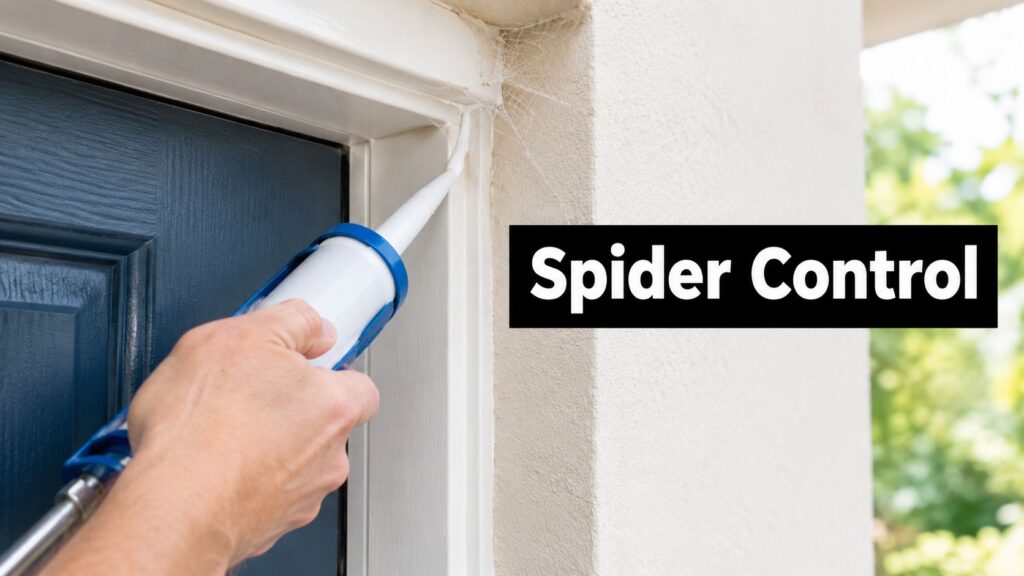
The best pest control for spiders isn't one spray. It's an integrated program that combines exclusion with targeted treatments, because one identified female can establish a new infestation and egg sacs can contain hundreds of young spiders. For severe or persistent infestations in Crown Point, professional pest control delivers safer, longer-lasting results than repeated whole-room spraying.
Finding a spider in the basement, garage, or a quiet corner can make your home feel uncomfortable fast. The right response isn't to coat every baseboard with insecticide. The best pest control for spiders in Crown Point, IN, starts by blocking entry points, reducing the insects spiders feed on, and treating hidden harborages precisely.
That approach fits homeowners, landlords, and businesses searching for pest control near me, an exterminator near me, or reliable residential pest control in Northwest Indiana. The Green Advantage serves Crown Point and nearby Northwest Indiana communities with inspection, prevention, and treatment options for spider problems and other seasonal pest issues.
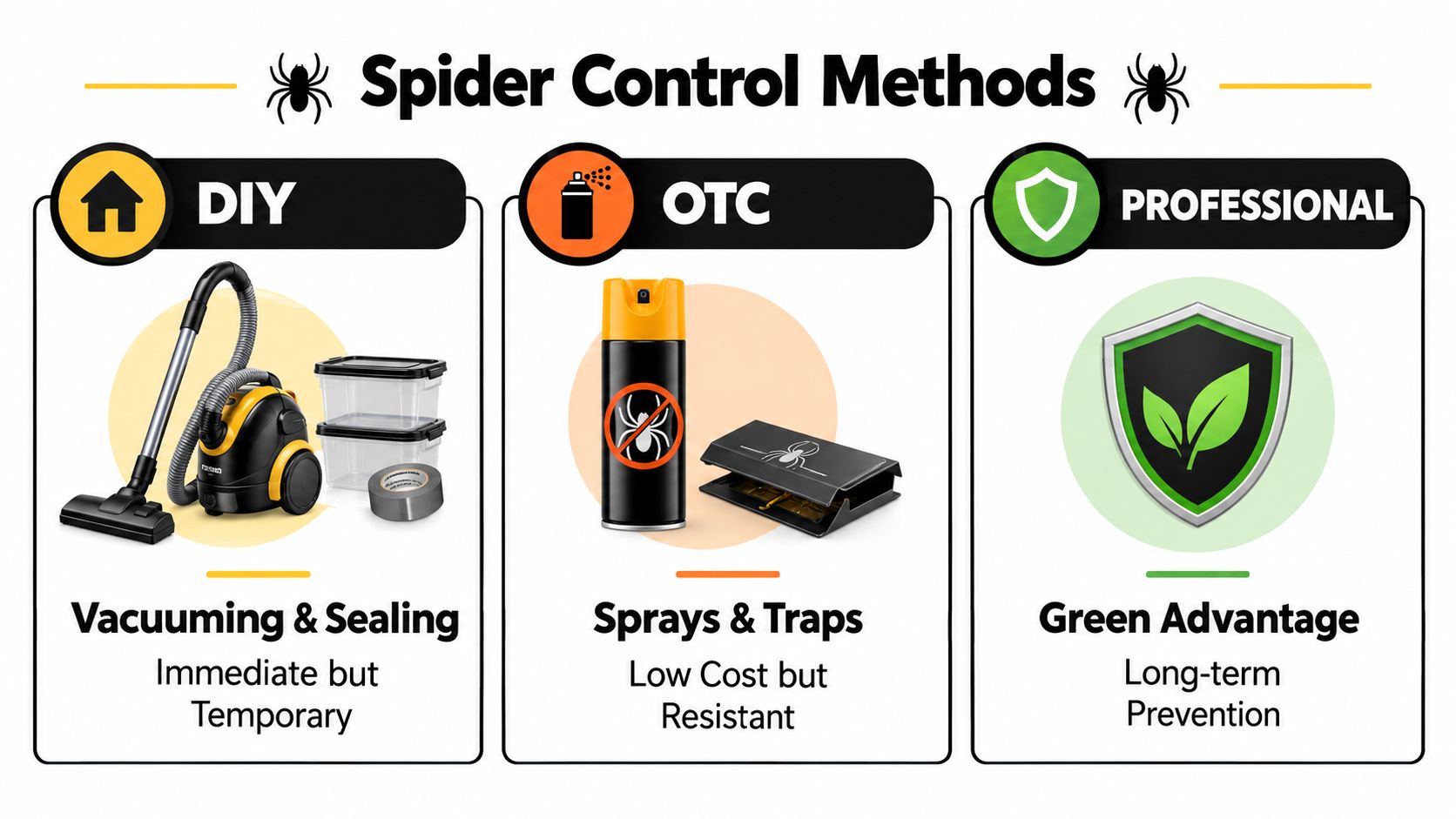
| Approach | Best use | Main strength | Main limitation |
|---|---|---|---|
| DIY cleaning and exclusion | Occasional spiders or a small number of webs | Immediate, low-risk prevention | Requires consistent follow-through |
| Over-the-counter products | Spot treatment when the hiding place is known | Convenient and accessible | Broad spraying and fogging often miss the source |
| Professional spider control | Persistent activity, egg sacs, recurring entry, or commercial needs | Diagnosis, targeted treatment, and prevention planning | Requires scheduling an inspection and service |
Why Spraying Spiders Often Fails at Home
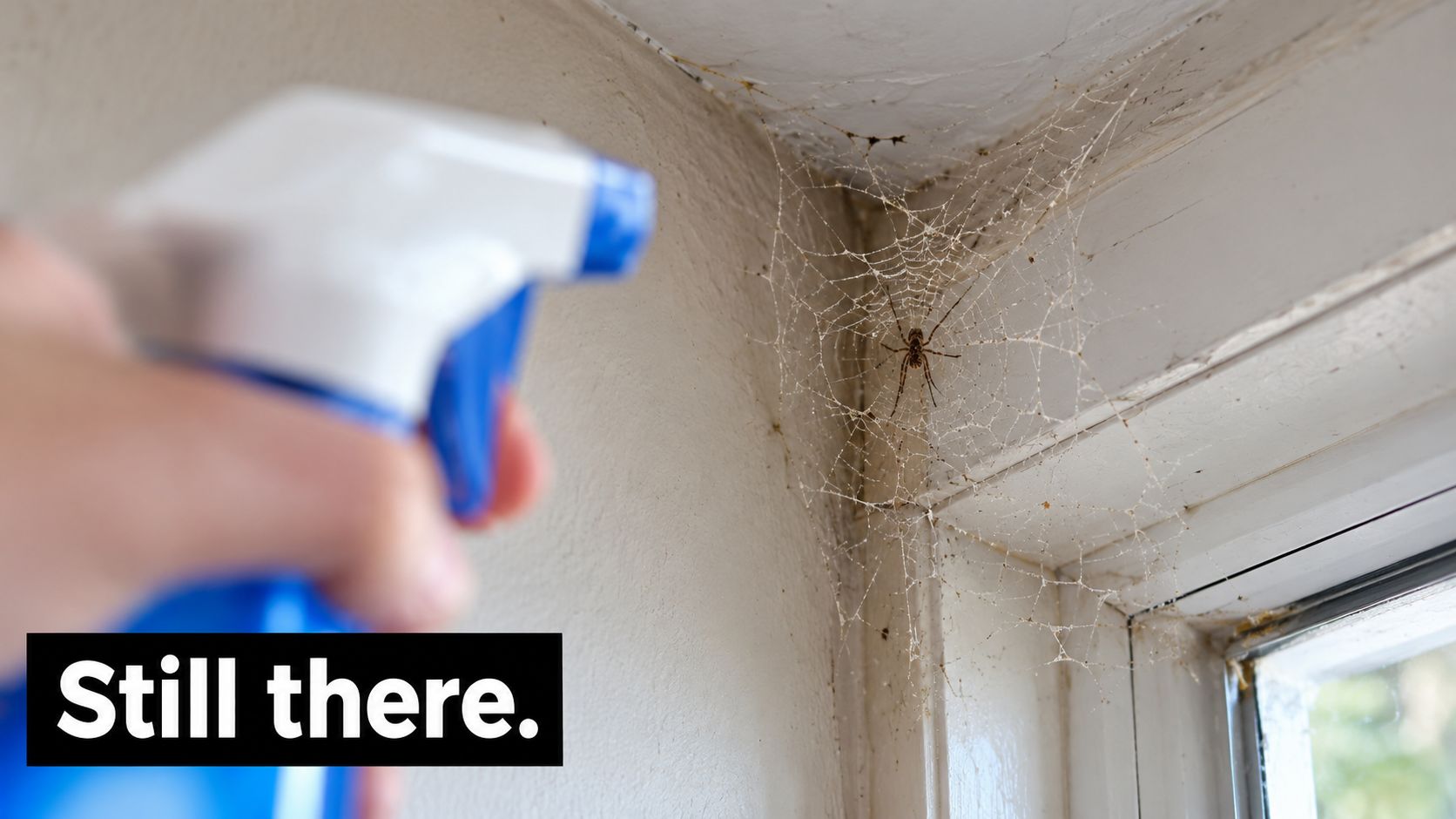
A Crown Point homeowner sees a spider drop from a ceiling corner, grabs a spray bottle, and treats the baseboard. The spider disappears, but new webs show up near the window, another spider appears in the basement, and the same cycle starts again. The problem isn't that the homeowner failed to spray enough. The problem is that the spray addressed the sighting instead of the conditions creating repeated activity.
Spiders can enter through small openings, hide in undisturbed areas, and follow a supply of insects into a home. A surface application may kill a spider if the product contacts it, but it won't necessarily seal the gap, remove an egg sac, or reduce the insects attracting more spiders. Fogging an entire room creates the appearance of action without placing treatment where spiders actually rest.
The entry point matters more than the web
University and extension guidance recommends sealing cracks and gaps around windows, doors, sill plates, vents, and utility penetrations, while also removing clutter, webbing, and egg sacs through regular vacuuming or sweeping. Those recommendations treat the cause, not just the visible spider. Chemical products remain secondary because spider pressure often comes from entry and food supply, not from spiders appearing without a reason. See the Texas A&M spider IPM guidance for the underlying prevention framework.
Practical rule: If spiders keep returning to the same room, inspect the room's edges and nearby prey insects before buying another spray.
The Green Advantage approaches spider concerns as a property problem rather than a single-insect problem. That can include checking foundations, doors, crawl-space access, basements, and other entry zones, then matching treatment to the location and severity. Homeowners looking for a broader pest control spray service should still expect the work to include more than spraying. A useful service identifies where spiders enter and why they're finding enough shelter or food to remain active.
Common Spiders in Crown Point Homes and What Severity Looks Like
Most indoor spider complaints fall into three practical groups. Web-building spiders stay near corners, ceilings, windows, garages, and other areas where a web can remain undisturbed. Wandering hunters move across floors, walls, basements, and storage areas instead of relying on a large visible web. A third group consists of seasonal or foundation-area visitors that enter around doors, screens, cracks, and utility openings.
You don't need to identify every spider perfectly before taking sensible action, but identification can prevent the wrong response. A single visitor after a door opens is different from recurring activity in a basement with webs, egg sacs, and insects. A clear photo, the location where the spider was found, and the pattern of sightings can help a professional narrow the treatment path. The spider identification guide can also help you organize what you're seeing before contacting an exterminator in Crown Point, IN.
Use the pattern to judge severity
Mild activity usually means an occasional spider, an isolated web, or activity limited to an entry area. Start with vacuuming, inspect screens and door sweeps, and look for visible gaps. Sticky traps placed along baseboards or in low-traffic areas can help show whether movement is isolated or ongoing.
Moderate activity looks different. You may find recurring webs in quiet corners, several spiders in the same basement or garage, or insects gathering near windows and exterior lights. This pattern suggests that the property offers both access and food. Cleaning alone may reduce what you see, but exclusion and prey reduction need attention.
Severe activity includes repeated sightings throughout the property, multiple egg sacs, activity in wall or ceiling voids, or spiders entering through the same structural areas despite basic sealing. Large or concerning spiders, commercial facilities, and homes with children, pets, or sensitive occupants also deserve a professional assessment.
The wrong severity assessment creates two problems. Some homeowners overapply products to a mild issue, while others ignore a persistent pattern until webs and hidden harborages spread through storage areas. Treat the pattern, not the most alarming single sighting.
DIY, Over-the-Counter, and Professional Spider Control Compared
DIY measures make sense when activity is limited and the source is visible. Vacuuming webs and spiders, sweeping quiet corners, placing sticky traps, and sealing obvious gaps can make a noticeable difference. These tasks remove what's present and help reveal where movement continues, but they won't solve concealed entry points or widespread activity on their own.
Over-the-counter products offer convenience, but convenience isn't the same as control. Aerosols can work when they directly contact a spider. Dusts and residual products may help in cracks, voids, and other hidden areas when the label allows that use. Broad interior applications and foggers are poor choices for spider management because they don't reliably reach the places spiders rest. University of Minnesota Extension guidance emphasizes targeted placement over broadcast spraying.
Choose based on the problem you can actually control
| Option | Speed | Safety considerations | Durability | Best fit |
|---|---|---|---|---|
| DIY cleaning and sealing | Immediate visible improvement | Low product exposure | Depends on maintenance | Small, isolated activity |
| OTC spot treatment | Can act quickly at direct contact | Requires strict label compliance | Limited if entry remains open | Known cracks or hidden harborages |
| Professional service | Begins with diagnosis | Precise, labeled applications | Stronger when paired with exclusion | Persistent or difficult activity |
A homeowner who can safely reach a web, remove it, and seal the nearby opening may not need a service call. That's especially true when traps show little continuing activity. The trade-off is time. DIY prevention works only when someone keeps checking quiet areas, repairs screens, manages storage, and watches for recurring prey insects.
OTC treatment becomes riskier when people use more product than the label permits, apply it near food or children's areas, or spray repeatedly without knowing where spiders are hiding. More product doesn't compensate for poor placement. If the treatment can't reach a crack, void, crawl-space edge, or foundation opening, it may do little beyond treating the visible surface.
Professional service is the better choice when the cause is concealed or the activity returns after cleaning and sealing. A technician can inspect likely harborage areas, distinguish spider activity from an underlying insect issue, and apply labeled dusts or residuals only where appropriate. For homeowners weighing those trade-offs across home services, Groen's Fine Furniture comparison of DIY and professional work offers a useful general perspective on convenience, expertise, and long-term value.
Spider Prevention Strategies That Actually Reduce Returns
Durable spider control begins outside the spray bottle. Walk the property's edges and look for the small transitions spiders use to enter: foundation cracks, gaps around windows and doors, vent openings, utility penetrations, damaged screens, and spaces beneath doors. Seal suitable gaps with durable caulk or expandable foam, install weather-stripping and door sweeps, and repair screened openings.
The goal isn't to make a home airtight. The goal is to remove the easy routes that let spiders and their prey insects move inside.
Work from the foundation outward
Exterior conditions influence what happens indoors. Vegetation touching the structure, piles of debris, and firewood stored against the foundation create shelter and can support insect activity near walls. Move those materials away from the home, trim growth back from doors and windows, and keep foundation areas accessible for inspection.
Cornell's spider prevention guidance recommends exclusion measures such as caulk, expandable foam, weather-stripping, door sweeps, and repaired screens. Those repairs are more durable than repeatedly treating the same threshold after spiders have already entered.
Inside, vacuum around windows, corners, closets, basements, garages, and other quiet areas. Remove webs and egg sacs as soon as you find them, and reduce clutter that gives spiders protected places to stay. Store seasonal items in sealed containers instead of leaving loose cardboard and fabric in dark storage areas.
Exterior lighting also deserves attention. Lights near doors and windows can draw insects, and those insects provide a reason for spiders to remain nearby. Use only the outdoor lighting you need, keep fixtures clean, and ask a professional to investigate if insect activity stays heavy around an entry.
A lasting fix is usually layered: close the route in, remove shelter, reduce prey, then consider a targeted treatment where activity persists.
Treat prevention as a routine rather than a one-time project. Recheck screens, sweeps, vegetation, storage, and foundation edges as seasonal conditions change in Crown Point and surrounding Northwest Indiana. If the same location produces webs again, the property needs a closer inspection instead of another quick spray.
Safety, Pets, Family Considerations, and Seasonal Cost Expectations
Families often continue using an ineffective product because they've already paid for it, or they stop using a useful product because they're unsure how to apply it safely. Both reactions are understandable. The safer decision comes from matching the product and placement to the label, keeping children and pets away from treated areas as directed, and avoiding applications that reach food surfaces, bedding, toys, or accessible floors.
Repeated indoor spraying can increase product use without improving control. Independent expert guidance notes that residual insecticides have limited direct impact on spiders compared with insects, and that egg sacs are relatively resistant to pesticides. Success should be judged by fewer sightings, less entry pressure, and reduced supporting insect activity, not by an unrealistic promise that every spider or egg sac will disappear immediately. The independent discussion of spider control evidence explains why chemical control alone has limits.
Think about value, not just the checkout price
DIY appears inexpensive when the problem is small. The hidden cost rises when a homeowner buys multiple sprays, traps, dusts, and replacement tools while leaving the entry point open. A professional inspection can bring more predictable value when activity is persistent because the service focuses on diagnosis, placement, and prevention rather than repeated guesses.
Seasonal activity can also change what makes financial sense. Spiders may become more noticeable around foundations, garages, basements, and entry zones as outdoor conditions shift and insects move toward shelter. Preventive exclusion and monitoring generally offer better long-term value than waiting for heavy activity and then treating every visible surface.
For homes with pets, young children, allergy concerns, or occupants who are especially uncomfortable around spiders, targeted work also reduces unnecessary exposure. The right treatment is not the strongest-looking treatment. It's the narrowest effective approach combined with repairs and sanitation that keep the problem from returning.
When to Hire The Green Advantage for Spider Control
DIY has a clear place, but persistent activity is where professional pest control earns its value. Contact The Green Advantage when spiders return after cleaning and visible sealing, when you find egg sacs in hidden areas, when activity appears throughout a basement or crawl space, or when a commercial property needs a documented pest management approach. A professional inspection is also sensible when you can't safely reach the treatment area or you're uncertain what species you're seeing.
The Green Advantage serves residential and commercial properties in Crown Point and nearby Northwest Indiana communities. Customers communicate directly with knowledgeable office staff for questions and scheduling, while field technicians focus on diagnosing the site and creating a treatment plan suited to the property. That can include inspection of entry zones, basements, crawl spaces, foundation edges, and areas where spiders or their prey insects are active.
Professional service should address more than spiders
A recurring spider problem can point to a broader pest issue. A customized plan may connect spider control with ant control, rodent exclusion, termite inspections, mosquito reduction, or other seasonal pest services when the property calls for it. Commercial facilities may need ongoing commercial pest control, while homeowners may prefer a broader residential pest control plan that covers several recurring concerns.
Because spiders are natural pest controllers, removing them without addressing the insects supporting them can leave the underlying pressure unchanged. Guidance from the Burke Museum on spider infestations supports focusing on sealed gaps, reduced prey insects, sticky traps, and targeted residuals at likely harborages instead of routine blanket spraying.
A technician should explain what was found, where treatment is appropriate, what you need to do before or after service, and how follow-up will work. That transparency matters whether you're protecting a family home, preparing a property for sale, or managing a business where pests can disrupt employees and customers.
The following video offers additional context on how inspection and targeted pest management fit together:
Next Steps for Spider Control in Crown Point
You don't need to choose between ignoring spiders and spraying every room. Use a practical sequence that addresses the property in the right order.
Schedule an inspection or request a quote. Ask for an assessment of recurring webs, egg sacs, foundation edges, basements, crawl spaces, screens, doors, and nearby insect activity. This gives you a treatment plan based on the site rather than a generic product recommendation.
Complete a quick self-check while you wait. Inspect baseboards, window frames, door sweeps, vents, utility openings, and foundation cracks. Vacuum webs and egg sacs around windows, corners, closets, garages, and other quiet areas. The University of Kentucky's cleaning guidance identifies thorough vacuuming or sweeping as a primary spider-control measure because it removes spiders, webs, and egg sacs.
Record what keeps returning. Note the room, time, location, web pattern, and whether insects are present. Photos can help a technician understand the pattern before arriving, especially when spiders hide during the inspection.
The best pest control for spiders combines prevention, targeted treatment, and professional oversight when the problem persists. Clear communication and a property-specific plan are more useful than repeated applications that never address the entry route.
If you're searching for an exterminator near me, pest control in Crown Point, IN, or dependable service for a home, rental, or business, contact The Green Advantage for a spider inspection and practical next steps.
The Green Advantage offers spider inspections, targeted pest treatments, residential pest control, commercial service plans, and prevention support for properties in Crown Point and surrounding Northwest Indiana communities. Visit The Green Advantage to request a quote or schedule service instead of continuing an ineffective spraying cycle.