
Carpenter Ant Identification: A Homeowner’s Guide for 2026
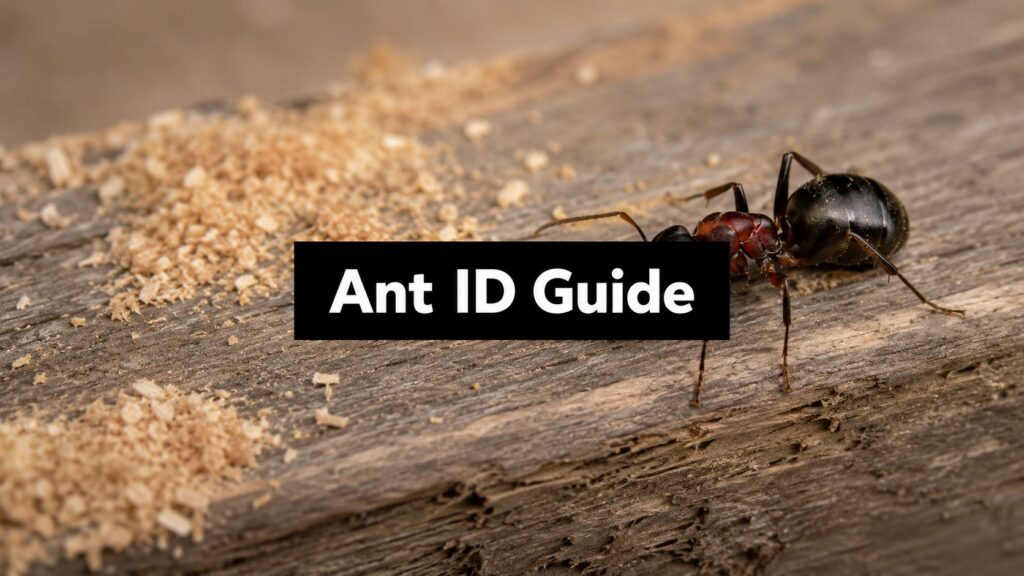
You notice them first along the basement window frame in your Crown Point home, large ants moving in a steady line. The next morning, a small pile of coarse sawdust appears behind the baseboard. That combination is unsettling, but it doesn't answer the most important question by itself: are you seeing a few outdoor foragers, a satellite colony, or an active nest inside the structure?
Carpenter ant identification requires more than looking for a big black insect. Body structure, size differences, wings, debris, moisture, and trail location all help tell the story. The Green Advantage helps homeowners and businesses in Crown Point, IN and nearby Northwest Indiana communities move from uncertainty to a practical plan, whether the next step involves ant control, termite control, or a broader residential pest control inspection.
Why Carpenter Ant Identification Matters for Northwest Indiana Homes
A large ant near a Crown Point window may be an outdoor forager that wandered inside. A repeated trail beside damp wood, especially with coarse debris below it, points to a different concern. Carpenter ants do not eat wood. They excavate smooth galleries for nesting, and the removed material can look like sawdust or coarse frass. Ohio State University Extension explains the structural traits used to identify carpenter ants, while public-health guidance on carpenter ant debris notes that these piles may contain shavings, ant parts, and wing fragments.
The useful question is whether you found a stray forager or a colony signal. One ant on an exterior wall does not show that a nest is inside. Repeated activity near a basement rim joist, window frame, roofline, or wall void suggests a connection between the structure and a nesting site. Moisture often makes wood softer and easier to excavate, so inspect leaking areas, poorly sealed windows, damp sill plates, and wet plumbing locations.
Why a wrong identification creates the wrong response
Termites and carpenter ants call for different control decisions. Termites can leave mud-associated evidence, while carpenter ants may leave excavated wood debris and smooth galleries. Treating the wrong insect can delay the inspection that matters.
Spraying the ants in view may create a false sense of progress. Those workers could be traveling from a hidden satellite nest, a parent colony outdoors, or a damp section of the building. The visible trail is like a road sign. It shows where ants travel, not necessarily where the colony is located.
Practical rule: Treat the first ant as a clue. Treat repeated trails, debris, and winged adults as evidence that deserves a complete inspection.
Start with one specimen, then compare its features with likely lookalikes. After that, examine the nearby wood, moisture, debris, and travel route. This sequence helps Crown Point homeowners choose between monitoring, correcting a moisture problem, and contacting a local exterminator with a clear description of what they found.
The Physical Features That Confirm a Carpenter Ant
A black ant crossing a basement sill can look convincing, but color alone is weak evidence. Carpenter ants may be black, reddish-brown, or red-and-black. Start with body structure instead, then compare several features before deciding what you found.

For a dead specimen, place the ant on white paper beside a coin for scale and use your phone camera's close-up setting. A hand lens can make the waist and antennae easier to see. Check the body in this order:
The waist has one node. Look between the thorax and abdomen, the middle and rear sections of the body. Carpenter ants have one petiole node, visible as a raised, pinched segment. Pavement ants and many other ants may have two nodes, so their waists appear more divided.
The thorax is evenly rounded. View the ant from the side. Its thorax should form a smooth, dome-like curve instead of a sharply uneven or bumpy profile. This clue helps when another large ant has a similar color or size.
The antennae are elbowed. Each antenna bends clearly. Its first segment extends from the head, followed by the remaining segments at an angle that resembles a small bent arm. This feature is especially useful when you are comparing a winged insect with a termite.
Why the combination matters
One feature cannot confirm the identification by itself. A large, dark ant with an uneven thorax may belong to another species. A reddish ant with one waist node still deserves a closer look. When the single node, rounded thorax, and elbowed antennae appear together, the identification becomes much more convincing.
Under magnification, a fringe of hairs around the anal opening can help confirm the Formicinae subfamily. Most homeowners do not need to make that fine distinction alone. Take a clear photo or save the specimen for a technician, especially if you plan to have the basement, window frame, or nearby wood inspected soon.
Size, Castes, and Winged Swarmers Explained
A trail along your basement wall may contain ants of noticeably different sizes. That pattern does not automatically mean two species are present. Carpenter ant colonies include minor workers and major workers, so a small ant beside a much larger one can still belong to the same colony. Common workers are often around 3/8 to 1/2 inch, although some species are smaller. University of Minnesota Extension explains the major and minor worker difference, including why a larger worker may provide a better specimen for identification.
Size helps, but one worker cannot show the whole colony picture. A small worker alone cannot confirm the species or indicate how serious the activity is.
Read the colony roles in plain language
- Minor workers handle routine foraging and travel along established trails.
- Major workers are larger and better suited to excavation, defense, and other physically demanding tasks.
- Queens are much larger than workers and can reach about 1 inch.
- Winged reproductives leave mature colonies during mating activity and are larger than ordinary workers.
Winged ants indoors deserve closer attention. University of Kentucky entomology guidance explains that reproductives emerge with wings and queens shed them after mating and establishing a nest. A pile of detached wings near a window, door, or light can indicate activity connected to the structure, rather than a single ant that wandered in from outdoors.
One winged ant does not pinpoint the nest. Several winged adults indoors, particularly during spring activity, make an indoor colony more plausible. Look for a pattern: repeated activity near a window frame, attic edge, basement, or light source may help a technician decide where to inspect first.
For a Crown Point homeowner, save the insect or shed wings and photograph the exact location. Note the ant sizes and whether activity keeps returning. Those details connect a single specimen to the larger colony question and help determine whether a local inspection is warranted.
Carpenter Ants Versus Termites and Other Large Ants
Winged insects create the most stressful identification moment because carpenter ants and termites can appear during similar seasonal periods. The fastest reliable comparison starts with the antennae and waist, then moves to the wings and debris.
| Feature | Carpenter ant | Termite | Other large ants |
|---|---|---|---|
| Waist | Pinched, with one node | Thick, without a pronounced pinch | Varies by species |
| Antennae | Clearly elbowed | Generally straight | Often varies |
| Thorax | Evenly rounded in side view | Body appears more uniform | May be uneven or differently shaped |
| Wings | Reproductive forms have wings, with differences in length | Swarmers have wings of equal length | Depends on species and caste |
| Wood evidence | Smooth galleries and coarse wood debris | Soil or mud-associated evidence may be present | Usually no carpenter-ant gallery pattern |
A quick rule helps, but it isn't a substitute for a close look: bent antennae and a pinched waist point toward a carpenter ant, while straight antennae and a thicker, less constricted body point toward a termite. Color still shouldn't decide the matter.
Pavement ants are often smaller and may show two waist nodes. Odorous house ants tend to form nuisance trails around food and moisture without the same carpenter-ant body profile. Field ants can be larger or differently colored, which is why the thorax and waist are more dependable than a casual size comparison.
For a deeper visual comparison before you choose ant control or termite control, review The Green Advantage's guide to the difference between carpenter ants and termites. The correct identification affects the inspection target, treatment method, and urgency. Buying a general ant spray for a termite issue, or treating a visible carpenter-ant trail without locating its nest, can waste time while the underlying problem continues.
Reading the Evidence Around the Nesting Site
A single ant near a basement window is a clue, not a diagnosis. Follow the activity to the place where workers vanish, then examine the wood, moisture, and debris nearby. Window frames, baseboards, rim joists, attic edges, and other damp wood are useful starting points.
Carpenter ant frass is material removed from an excavated gallery. It can resemble fine or coarse sawdust, but may also contain shredded wood, insulation pieces, dead ants, or wing fragments. Latah County public-health information describes carpenter ant debris and distinguishes it from termite evidence.

What to inspect near the debris
- Find the opening. Look for a small kick-out hole or smooth slit where ants can remove gallery material.
- Study the texture. Coarse shavings and insect fragments support carpenter-ant activity more than an ordinary household dust pile.
- Check the gallery surface. Carpenter ants leave smooth interior galleries. Termite evidence is more often rough and associated with soil or mud.
- Trace the moisture. Check leaking gutters, bath fan vents, plumbing areas, roof edges, and window frames for dampness or softened wood.
Position helps separate useful evidence from loose debris. Material directly below a likely exit opening carries more meaning than sawdust that has moved along a baseboard. Photograph the pile before cleaning it. Its color, texture, location, and nearby wood condition can help a technician identify the activity.
The indoor nest question
A trail inside the house may lead to a satellite colony, while the parent colony remains outdoors in a stump, tree, or damp wood. Treating only the visible indoor gallery can reduce activity for a while, yet workers may keep entering from outside.
The next question is therefore location: does the structure contain the main colony, a satellite colony, or only a route used by foragers? A professional inspection can connect those clues and assess possible structural effects. Review The Green Advantage's carpenter ant damage resource for further information on excavation-related damage. In Crown Point, persistent activity near damp wood, repeated frass, or several indoor trails warrants a local inspection rather than repeated surface spraying.
A Room-by-Room Homeowner Inspection Checklist
Choose a dry morning and inspect without opening walls or probing questionable structural wood. Start outside, because an exterior nest or travel route can explain indoor activity.

Exterior first
- Foundation perimeter: Look for ant trails, damp soil, wood contact, and gaps near siding or utility penetrations.
- Firewood stacks: Check for ants, soft wood, and direct placement against the building.
- Mulch edges: Examine the transition between mulch, foundation walls, porches, and door thresholds.
- Tree and shrub contact points: Follow branches or dense vegetation that touches siding, eaves, or rooflines.
- Roof vents and eaves: Watch for winged adults, discarded wings, moisture staining, and damaged trim.
Basement and lower levels
- Rim joists and sill plates: Use a flashlight to check for frass, water marks, softened wood, and trails along seams.
- Window frames: Inspect corners, trim joints, and the space behind baseboards.
- Wall voids: Stand and listen for faint rustling where activity is concentrated. Don't cut into the wall to investigate.
Main living areas
- Bathrooms and kitchens: Check beneath sinks, around plumbing penetrations, behind appliances, and near bath fan vents.
- Bedrooms: Examine window frames and doors, particularly where you notice activity near daylight or light sources.
- Attic: Inspect eaves, roof penetrations, insulation edges, and framing for wings, frass, or ant movement.
Write down the room, location, time, and direction of travel. Photograph the insect, trail, wings, and debris beside a familiar object for scale. Preserve suspicious material in a small container if you can do so safely, and don't apply a spray before the technician sees the evidence.
For a visual walkthrough of common inspection points, watch this short video:
What DIY Can Handle and When to Call a Local Pro
Homeowner action helps when the problem is limited and visible. Seal gaps around windows and doors, trim vegetation away from siding, correct accessible moisture sources, vacuum stray ants, and place gel bait where trails are active. These steps reduce routes and visible foraging, but they don't prove that the colony has been eliminated.

DIY is reasonable when
- The entry point is accessible: You can safely seal a small exterior gap after confirming that moisture isn't entering through it.
- The attractant is clear: Drying a minor plumbing area or moving firewood away from the structure removes a condition that supports activity.
- The ants are isolated: A few surface foragers appear briefly, with no frass, wings, recurring trail, or evidence of damaged wood.
Use caution with bait. Spraying an active trail can interfere with baiting and may scatter workers into less visible areas. Keep any product away from children and pets, and follow the product label exactly.
Professional inspection becomes the practical choice
Call a local pro when ants recur after baiting, trails appear in multiple rooms, sawdust piles return, or the suspected nest lies inside a wall, roofline, masonry space, or electrical or plumbing void. A technician can evaluate moisture, map movement, distinguish a satellite gallery from an outdoor route, and select treatment access that doesn't depend on guessing.
The Green Advantage provides Northwest Indiana pest inspections that can connect identification with a targeted treatment plan. That same diagnostic approach can also clarify whether you need residential pest control, commercial pest control, termite control, rodent control, spider control, or another service rather than a generic ant product.
The value of a professional visit isn't only removing visible ants. It's finding the hidden connection that keeps sending them back.
Scheduling a Carpenter Ant Inspection in Crown Point
Once you've photographed the insect and surrounding evidence, contact a pest professional with a concise report. Share the room, approximate location, time of activity, number of ants observed, presence of wings or frass, and any moisture concern. Those details help the technician prepare before arriving.
During an inspection, the technician should confirm the species, map trails, examine likely nesting points, and determine whether activity is inside the structure or coming from outdoors. A moisture meter can help identify damp wood or concealed moisture conditions, while a borescope may help examine an inaccessible void when the situation calls for it. The inspection should also consider entry points and conditions that could support future activity.
Prepare the property before the visit
- Clear access: Make the basement, garage, attic, window frames, plumbing areas, and exterior perimeter reachable.
- Preserve evidence: Don't clean away frass, wings, dead ants, or trails before the appointment.
- Share your record: Keep photos, dates, rooms, and observations together on your phone.
- Ask for a written plan: Confirm whether the recommendation addresses the colony location, moisture, entry points, baiting, and void treatment.
A free identification-only visit and a full treatment quote aren't necessarily the same service. Ask what the inspection includes, whether the technician will assess likely nest locations, and what findings would change the treatment recommendation.
The Green Advantage serves Crown Point, IN and nearby Northwest Indiana communities, including Merrillville, Hobart, Lowell, Schererville, St. John, Dyer, Griffith, and Cedar Lake. If you see winged ants indoors during swarm season, ask whether a same-week visit is available, and request an integrated plan that addresses moisture and entry points alongside bait and void treatment.
Schedule a carpenter ant inspection with The Green Advantage for help confirming the insect, locating likely nesting activity, and planning targeted residential or commercial pest control in Crown Point and surrounding Northwest Indiana. Contact the team to request an inspection or quote before recurring trails and returning frass become a larger property concern.
Pest Control for Carpenter Ants & Termites in Crown Point, IN

Finding damaged wood in your Crown Point home is always a cause for alarm. As homeowners, it’s easy to jump to conclusions, but figuring out what caused the damage is the most critical first step. The fundamental difference between carpenter ants and termites is simple: termites eat wood, while carpenter ants just excavate it for nesting.
This single distinction makes all the difference for your home and family. A termite infestation presents a much more severe and immediate threat to your home's structural integrity, making correct identification essential. At The Green Advantage, we're here to help our neighbors in Northwest Indiana understand the risks and find the right solution to protect their property.
Identifying Wood-Destroying Pests in Your Home
For homeowners across the Crown Point area, spotting a strange bug or a small pile of what looks like sawdust can be nerve-wracking. Is it a carpenter ant or a termite? They’re both common pests here, and while both can be found in and around the wood in your home, the risk they pose couldn't be more different.
One pest carves out galleries in damp wood to build its home, while the other silently consumes your house from the inside out, contributing to billions in property damage every year. Guessing wrong can lead to using the wrong treatment, which only gives the real culprit more time to cause serious, expensive problems. Knowing what you're up against is the only way to effectively protect your investment with professional pest control services.
Quick Comparison: Carpenter Ants vs Subterranean Termites
Getting a positive ID can be tricky, as you're often just dealing with the evidence left behind. This quick table breaks down the key visual differences between carpenter ants and the subterranean termites we see most often in the Crown Point, IN area.
| Characteristic | Carpenter Ants | Termites (Subterranean) |
|---|---|---|
| Primary Diet | Other insects, sweets, and honeydew. They do not eat wood. | Cellulose, which is found in wood, paper, and other plant materials. They do eat wood. |
| Waist | Narrow and distinctly pinched, like you'd expect on an ant. | Broad and uniform; there's no clear separation between their mid and lower body. |
| Antennae | Bent or "elbowed." | Straight and bead-like. |
| Wings (Swarmers) | Two pairs of wings, but the front pair is noticeably longer than the back pair. | Two pairs of wings that are equal in length. |
| Wood Damage | Smooth, clean, and almost polished-looking galleries. Looks like it has been sanded. | Rough, messy galleries that are caked with mud, soil, and debris. |
| Visible Evidence | Piles of coarse, sawdust-like material called "frass" near small holes in wood. | Pencil-sized mud tubes on foundation walls, hollow-sounding wood, and shed wings. |
If you spot any of these signs, don't wait for the problem to get worse. Your next step should be to get a professional opinion from a local exterminator in Crown Point to confirm what you're dealing with and map out a plan.
How to Identify Winged Ants and Termite Swarmers
Spotting a swarm of winged bugs inside your Crown Point home can be alarming, and for good reason. This event, called a nuptial flight, is how new ant and termite colonies get started. Knowing how to identify these "swarmers" is one of the best ways for homeowners in Northwest Indiana to catch an infestation before real damage sets in.
At first glance, they might look the same. But if you know what to look for, the physical differences between winged carpenter ants and termite swarmers are surprisingly clear.
The Anatomy of a Swarmer
The easiest way to tell them apart is by looking at their body shape.
- A carpenter ant has a very defined, narrow waist, giving it a classic "hourglass" figure that separates its thorax and abdomen.
- A termite, on the other hand, has a thick, straight body with no obvious waist.
Their antennae are another dead giveaway. Carpenter ants have bent or "elbowed" antennae, while termites have straight, bead-like antennae.
Finally, check out the wings. Both have two pairs, but a carpenter ant's front wings are clearly longer than its back wings. A termite swarmer's wings are all the same size and length.

Shed Wings: A Telltale Sign
Finding a pile of discarded wings on a windowsill, in a cobweb, or near a light is a huge red flag. More often than not, this points directly to termites. After their mating flight, termites land, break off their wings, and try to start a new colony, leaving all that evidence behind.
Carpenter ants don't typically shed their wings so readily. Finding a single, intact winged ant indoors is still concerning—it likely means a nest is somewhere nearby—but piles of identical, shed wings almost always scream "termites."
Key Insight: A termite swarm is a clear indicator that a mature colony is already established nearby—potentially inside your home’s walls, floors, or foundation. The swarmers themselves don't eat wood, but their presence means a hidden, destructive force is actively at work.
For more information on the habits of these pests, you can find additional details at Amdro.com. If you see any signs of swarmers, winged or not, don't wait. The first step should be calling The Green Advantage for a professional pest inspection.
Comparing Carpenter Ant Damage vs. Termite Damage
It’s easy to get caught up in telling the insects themselves apart, but the real story is in the damage they leave behind. One is a messy carpenter, carving out a home, while the other is a silent, voracious eater. For homeowners in Crown Point, knowing what to look for can mean the difference between a small repair and a structural nightmare.

Think of carpenter ants as excavators. They do not eat wood. They tunnel through it to create living quarters, carving out intricate galleries for their nests. They’re like tiny construction crews hollowing out a space, not diners having a meal.
Carpenter Ants: The Meticulous Builders
Because carpenter ants don't actually consume the wood, they have to get rid of the shavings somehow. They push all the excavated material out of their tunnels, which creates one of the most obvious signs of their presence: small piles of sawdust-like material called frass.
If you spot little mounds of what looks like wood shavings below a window, along a baseboard, or in your basement, you've likely found a carpenter ant calling card. The galleries they create are surprisingly clean and almost look sanded smooth on the inside. They tend to follow the grain of the wood, creating a network of tidy, empty passageways.
These ants are opportunistic. They much prefer wood that’s already been softened by moisture or decay, which is why infestations often start in areas with existing water issues, such as:
- Around leaky pipes under sinks
- Near poorly sealed windows or doors
- Inside damp, unventilated wall voids
- Behind siding that has trapped rainwater
Termites: The Hidden Consumers
Termites are the opposite. They are true wood-destroying organisms because they actually eat wood to extract the cellulose. Their mission is consumption, not construction, and the damage they inflict is messy, chaotic, and often hidden from view.
Instead of clean, empty galleries, termite damage looks like a disaster zone. The tunnels are rough, jagged, and typically filled with a mixture of mud, soil, and their own feces. This is because subterranean termites—the most common culprits in Northwest Indiana—bring dirt and moisture into the wood to create the humid environment they need to thrive.
A key physical distinction between carpenter ants and termites is visible in their damage patterns and waste, which can help Northwest Indiana homeowners catch problems early. Carpenter ants chew galleries that are smooth, clean, and free of mud or debris, often pushing out piles of frass. In contrast, termites eat the wood and line their tunnels with mud, leaving packed, hollowed-out areas. Subterranean termites, responsible for about 95% of U.S. termite damage, stay hidden and can strike homes throughout our region.
If you tap on a piece of wood damaged by termites, it will often sound hollow or papery. The inside has been eaten away, leaving just a thin veneer of wood or paint on the surface. When you break open the damaged area, you'll often see a distinct layered or "rippled" pattern where they have devoured the softer parts of the wood grain.
While both pests are a serious threat, the silent, relentless eating habits of termites can lead to far more extensive and costly structural damage. To get a better sense of what it takes to stop them, you can learn more about our professional termite treatments.
The Financial Risk of Termite vs. Carpenter Ant Infestations
While finding any wood-destroying pest in your home is alarming, the financial threat posed by termites versus carpenter ants is in a completely different league. For homeowners in Crown Point, IN, understanding this difference is key to protecting your biggest asset. One pest might lead to a manageable repair, while the other can cause catastrophic, bank-breaking damage.

A carpenter ant issue, while serious, tends to cause more localized damage. They don't eat wood for food; they tunnel through it to build nests. They also have a strong preference for wood that's already damp or rotting. This means the destruction, while costly if ignored, often grows slowly and is confined to specific areas like a soggy window frame or a damp corner of the basement.
Termites are a whole other story. They aren't just excavators—they are voracious consumers. A subterranean termite colony can have hundreds of thousands of hungry workers silently eating away at your home's structural timbers 24/7.
The Staggering Cost of Termite Damage
The economic scale of termite damage in the U.S. is just massive. These pests are responsible for issues in roughly 600,000 homes every year. All told, homeowners end up spending an estimated $5 billion annually on termite control and repairs. Carpenter ant damage, by comparison, is only measured in the hundreds of millions.
For a single homeowner, an average termite repair bill often lands around $3,000. But that's just an average. If they’ve compromised critical structural supports, the cost can easily skyrocket into the tens of thousands.
A comprehensive property damage assessment is often the first step in understanding the true scope of the problem. This evaluation is critical for planning repairs and dealing with any potential insurance claims.
Key Takeaway: Think of it this way: carpenter ant damage is often additive, building up in specific, noticeable spots over time. Termite damage is exponential, spreading silently and undermining the very foundation of your home before you even know it's there.
Why a Professional Response Is a Smart Investment
The real danger with termites is that the damage happens completely out of sight. A huge portion of your home’s wooden structure can be hollowed out before a single outward sign appears.
This hidden destruction is precisely why professional termite control isn't just another expense—it's a crucial investment in your home's future. Catching an infestation early with an expert inspection is the single most effective way to head off devastating repair bills down the road.
For anyone in Northwest Indiana, seeing signs of wood damage should trigger immediate action. The potential cost of delaying is far, far greater than the cost of calling The Green Advantage for a professional inspection.
Professional Treatment for Ants and Termites in Crown Point
Figuring out whether you have ants or termites is a big step, but effective, long-term removal comes down to using the right treatment. Carpenter ants and termites are worlds apart, and so are the strategies needed to get rid of them. At The Green Advantage, we tailor our eco-friendly pest control approach to the specific pest, ensuring we protect your Crown Point home efficiently and safely.
When dealing with a carpenter ant problem, our number one goal is finding the nest. Just spraying the few ants you spot foraging in your kitchen is like putting a bandage on a broken bone—it doesn't address the real issue. The main colony and its queen are almost always hidden somewhere else, like inside a wall void or a piece of damp wood.
Carpenter Ant Control: A Targeted Approach
Our technicians essentially become detectives. We're trained to trace the ant trails back to their source, whether it's a primary "parent" nest outdoors or a satellite colony that has set up shop inside your home.
Once we've pinpointed the nest, our ant control service gets to work:
- Targeted Nest Treatment: We apply eco-friendly, low-impact products directly into the nesting sites. This is a surgical strike designed to eliminate the entire colony, queen and all, without broadcasting chemicals all over your house.
- Addressing Moisture Issues: We don’t just treat the ants; we identify the damp wood or water leak that attracted them in the first place. Fixing this root cause is the key to making sure they don't come back. For more in-depth tips, you can read our guide on how to prevent carpenter ants.
Termite Treatments: A Comprehensive Defense
Termite control is a completely different ballgame. It's a much more intensive process because the entire colony lives underground, launching hidden attacks on your home from below. A quick spray won't even make a dent in a colony that can number in the hundreds of thousands.
Our professional termite treatment is all about creating a complete, unbroken protective barrier around your property.
A termite infestation demands a robust, continuous defense. Our method involves applying an advanced liquid termiticide into the soil along your home's foundation. This creates an undetectable zone that termites travel through, unknowingly carrying the treatment back to the rest of the colony and eliminating it right at the source.
This service isn't just a pest control measure; it's a critical investment for any homeowner in Northwest Indiana. Because termites cause such hidden and widespread damage, a professional barrier is the only truly reliable way to stop them and safeguard your home's structural integrity. The solutions we use are carefully chosen for their effectiveness against termites while being responsible for your family, pets, and the environment.
Why The Green Advantage Is Crown Point’s Go-To for Pest Control
When you suspect you have a wood-destroying pest, the clock is ticking. You can't afford a misdiagnosis or a treatment that doesn't work, which is why getting it right the first time is so important. This is where having a true local expert in your corner makes all the difference, and for homeowners in Crown Point, IN, that expert is The Green Advantage.
We’re a family-owned business, not a faceless national chain. Our roots are planted firmly right here in Northwest Indiana. This means we have decades of direct, on-the-ground experience with the exact pest challenges our neighbors face, from the carpenter ants that show up every spring to the hidden termite colonies that can compromise a home’s foundation.
What to Expect When You Work With Us
We keep things straightforward and transparent because we know how stressful a pest infestation can be. When you contact us for pest control near you, you’ll talk to someone who genuinely understands your situation and is ready to help.
- The First Call: We'll actually listen to what you've seen and heard around your home. From there, we’ll set up a convenient time to come out for a comprehensive inspection.
- A Pro-Level Inspection: One of our licensed technicians will conduct a meticulous investigation. We’re trained to spot the subtle differences between pests, find where they’re nesting, and accurately gauge the scope of the problem.
- A Clear Action Plan: We’ll walk you through exactly what we found and lay out a clear, targeted treatment plan. We specialize in effective, eco-friendly pest management solutions that prioritize the safety of your family and pets.
"Choosing a local exterminator in Crown Point means choosing a partner who understands the unique ecosystem of Northwest Indiana. Our technicians aren’t just certified; they are your neighbors, dedicated to protecting our community one home at a time with reliable, effective pest management."
Whether you need immediate ant control, a robust termite treatment to stop ongoing damage, or preventative pest treatments to secure your home for the future, we have you covered. Our commitment is to protect your biggest investment with dependable service and honest communication, so you can feel completely secure in your home again.
Got Questions? We've Got Answers
Even with all the details, it's natural to have a few more questions. Homeowners in Crown Point and across Northwest Indiana often ask us about specific situations they're facing. Here are some of the most common ones we hear at The Green Advantage, answered straight from our experts.
Is It Possible to Have Carpenter Ants and Termites at the Same Time?
Unfortunately, yes. While it isn't the most common scenario, it's entirely possible for a home to be infested by both pests at once. The root cause is almost always the same: moisture.
Damp, decaying wood is the perfect real estate for a carpenter ant looking to carve out a nest. It’s also an all-you-can-eat buffet for a hungry termite colony. If you've got a moisture problem, you're essentially putting out a welcome mat for both. A professional pest inspection is the only way to know for sure what you're up against.
Can I Handle a Carpenter Ant Problem Myself?
Tackling a carpenter ant issue with a can of store-bought spray might feel productive, but it rarely gets the job done. You're only eliminating the foragers you can see, not the hidden main nest or any satellite colonies that might be lurking elsewhere.
Professional ant control is about more than just spraying. We focus on finding and destroying the source of the infestation. Just as importantly, our team identifies the moisture issues that attracted the ants in the first place, giving you the power to prevent them from coming back.
What's the Best Way to Prevent Termites and Carpenter Ants?
Your best defense is always a good offense. Being proactive is far less stressful and expensive than dealing with a full-blown infestation. Here are the most effective steps you can take to protect your home:
- Get a Handle on Moisture: Immediately fix any leaky faucets, dripping pipes, or roofing issues. Make sure your gutters and downspouts are clean and channeling water far away from your foundation.
- Keep Your Yard Tidy: Stack firewood at least 20 feet from your home and keep it elevated off the damp ground. Trim back tree limbs and overgrown shrubs that are touching your siding or roof, as these act as bridges for pests.
- Seal Up Your Home: Use caulk to fill cracks in your foundation. Pay close attention to gaps around utility lines, vents, and pipes where pests can easily slip inside.
- Schedule Annual Inspections: The single most effective thing you can do is have a professional pest inspection every year. It’s the best way to catch a small problem before it turns into a structural nightmare.
Don't gamble with the safety of your home. When you need a definitive answer and genuine peace of mind, turn to the local experts who know Northwest Indiana pests inside and out.
Contact The Green Advantage today to schedule your professional pest inspection in Crown Point, IN.