
A quiet house in Crown Point can change fast. One night it is scratching in the wall. The next morning it is ants crossing the kitchen counter, wasps starting a nest under the eaves, or mosquitoes pushing everyone off the patio before sunset.
In Northwest Indiana, those problems usually start for a reason. Rain drives pests toward dry shelter. Temperature swings push insects and rodents indoors. Damp crawlspaces, mulch beds, clogged gutters, and small gaps around siding or utility lines give them exactly what they need to settle in and keep coming back.
That is why recurring pest issues here rarely improve with a one-time treatment alone. A spray may knock activity down for now, but the lasting solution is finding what is attracting pests, where they are getting in, and how seasonal conditions around the property keep the cycle going.
Homeowners in Crown Point usually want clear answers, steady protection, and fewer surprises. A locally tuned pest control plan does more than respond to an active problem. It helps prevent the next one, which is often the difference between another service call in a few weeks and real peace of mind. For homeowners comparing outside advice, even topics like spotting rodent problems in Miami can show how early warning signs develop before an infestation becomes obvious.
Your Trusted Local Exterminator in Crown Point IN
A Crown Point homeowner usually doesn't call at the first single ant or one spider in the basement; they call when the pattern changes. The ants keep returning after store-bought bait. The garage starts smelling musty and something is moving near the insulation. The patio that should be relaxing turns into a mosquito zone by evening.
That stress is real because pests don't just feel unpleasant. They change how you use your home. People start avoiding parts of the house, worrying about damage, or wondering whether the problem is bigger than what they can see.
In Northwest Indiana, the hardest part for homeowners is that recurring pest problems often look small at first. A few clues can hide a larger issue behind walls, under concrete, around a crawlspace, or along the roofline. That's why a calm, methodical approach matters more than panic buying another can from the hardware store.
What local homeowners usually need most
Most calls come down to a few practical concerns:
- Clear identification: You need to know whether you're dealing with ants, rodents, wasps, spiders, or a wood-damaging pest before any treatment makes sense.
- A reason pests are returning: Good service should explain the cause, not just apply product and leave.
- A plan that fits the property: Families with pets, older homes, detached garages, and wooded lots all create different pest pressures.
- Straight communication: Homeowners want to know what was found, what was treated, and what needs to happen next.
The most effective exterminator in Crown Point, IN isn't the one who sprays the fastest. It's the one who finds where the pressure is starting.
That's the local difference. In a place like Crown Point, homes deal with spring moisture, summer insect activity, fall rodent movement, and winter sheltering behavior. The right service approach protects the house as a system, not just the one room where the pest happened to show up.
Identifying Common Pests in Northwest Indiana by Season
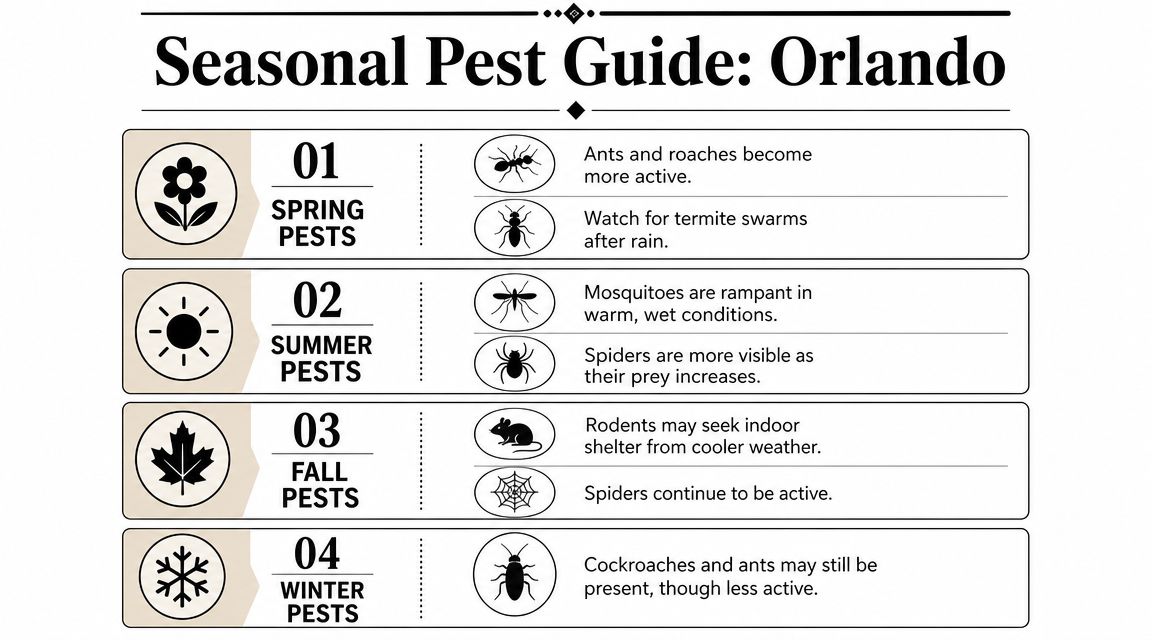
Seasonality matters because pests don't behave the same way in April that they do in October. If you know what tends to show up and why, you can catch activity earlier and make better decisions about residential pest control.
Spring and early summer activity
As temperatures rise, insects become more active. Ants start foraging more aggressively, especially around kitchens, bathrooms, and foundation lines where moisture and food are easy to find. You may also see increased wasp activity around soffits, porch roofs, sheds, and fence lines as nesting begins.
Spiders often become more visible too, but usually that's a sign of another issue. Where spiders are building webs successfully, they're finding insect prey. If webs keep appearing around window frames, basements, garages, or exterior lights, there's usually an underlying insect population feeding that activity.
Termite concerns also enter the conversation in warmer conditions. One of the biggest mistakes homeowners make is waiting until they see obvious wood damage. In practice, signs like mud tubes, soft wood, or unusual swarm activity deserve a closer look before damage spreads.
High summer pressure around the yard and exterior
Summer tends to push mosquito complaints to the top of the list. Standing water, shaded landscaping, clogged gutters, and dense vegetation all help mosquitoes stay active around the property. This is also when one-off treatments often disappoint homeowners, because reducing adult mosquitoes without addressing resting and breeding areas rarely brings lasting relief.
Wasps become more noticeable in summer because nests are larger and easier to spot. Homeowners often try to handle nests themselves, especially around entry doors or roof edges, but that can go wrong quickly if the nest is active and the access point is awkward.
Practical rule: If you're seeing pests outdoors in the same places over and over, the condition attracting them is usually still in place.
Fall and winter indoor movement
When outdoor conditions get cooler, rodents start looking for shelter, warmth, and dependable food sources. In Crown Point, that often means garages, crawlspaces, attics, utility penetrations, and lower-level storage areas. Homeowners usually notice droppings, gnawing, scratching sounds, or disturbed insulation before they ever see the animal itself.
If you want a simple reference on early warning signs, this guide on spotting rodent problems in Miami is useful because the signs themselves are universal even though the climate is different. The lesson is the same. Rodent problems are usually discovered through evidence, not direct sightings.
Cockroaches and occasional invaders can also remain active indoors when a structure offers warmth, moisture, and hiding areas. Spiders continue to show up through fall because they follow prey, and many homeowners mistake winter sightings as a sudden infestation when the house has really been supporting pest activity for months.
Seasonal patterns at a glance
| Season | Common pressure | What homeowners often notice |
|---|---|---|
| Spring | Ants, termites, wasps | Trails, swarms, early nest building |
| Summer | Mosquitoes, wasps, spiders | Bites, nest growth, more webbing |
| Fall | Rodents, spiders | Scratching, droppings, indoor sightings |
| Winter | Rodents, roaches, ants indoors | Activity near warmth, kitchens, storage |
Residential and Commercial Pest Control Solutions
A family home and a local business can both have pest problems, but they don't need the same service plan. The goal is the same. Stop the pest activity and keep it from returning. The method has to fit how the property is used.
What homes need from residential pest control
In a residence, the focus is personal. Parents want to protect children, pets, food storage areas, and the rooms people use every day. Homeowners also want service that respects how they live. That means paying attention to where pests are active, where they're entering, and how to reduce pressure without treating the whole property the same way.
For homes in Crown Point, good residential pest control usually includes a mix of inspection, targeted application, exclusion recommendations, and follow-up based on the pest involved. Ant control, rodent control, wasp removal, spider reduction, and seasonal perimeter treatments all work better when the technician understands which part of the structure is allowing the problem to continue.
What businesses need from commercial pest control
Commercial properties have a different kind of risk. A pest issue can affect inventory, employee comfort, customer trust, and sanitation expectations. A restaurant, office, warehouse, retail storefront, and multi-unit property all have different pressure points, traffic patterns, and reporting needs.
That's where documentation and routine monitoring become more important. Business owners usually need consistent service windows, clear findings, and preventive work around doors, delivery areas, break rooms, drains, dumpsters, and storage zones. For businesses comparing service options, commercial pest control services should be built around the property's actual use, not a one-size-fits-all spray schedule.
Why IPM works better than routine blanket spraying
The strongest professional approach for both homes and businesses is Integrated Pest Management, often called IPM. That means the technician doesn't just ask, “What can I spray?” They ask, “What's allowing this pest to survive here?”
An IPM approach typically looks at:
- Entry points: Gaps under doors, pipe penetrations, damaged screens, and foundation cracks
- Food sources: Pantry spills, grease residue, trash handling, pet food, and storage habits
- Moisture: Leaks, condensation, poor drainage, damp crawlspaces, and clogged gutters
- Harborage: Cardboard, clutter, mulch buildup, dense shrubs, and undisturbed voids
A useful pest-control principle comes from commercial guidance on entry points. Common pest access areas include windows and doors, roofs, floor drains, ventilation intakes, and incoming shipments, and the bigger lesson is that exclusion plus sanitation often works better than treatment alone in preventing reinfestation in active structures (Orkin commercial guidance on pest entry points).
Good pest control solves the reason the pest can stay, not just the reason it showed up.
That difference is what separates a temporary response from lasting control.
Protect Your Property with Termite and Mosquito Programs
You walk out to the patio on a July evening in Crown Point and the mosquitoes find you before you can sit down. A few months later, you notice soft trim near the garage or a mud tube along the foundation. Different pests, same lesson. Waiting until the problem is obvious usually costs more money, more time, and more frustration.

Why termite protection can't wait for visible damage
In Northwest Indiana, termite issues usually build subtly. Subterranean termites stay connected to the soil, which means homes with wood contact near grade, moisture around the foundation, or older construction details face more risk than owners realize. By the time damage is visible, the colony has often been active for a while.
The National Pest Management Association notes that termites cause billions in property damage across the U.S. each year, and insurance policies typically do not cover that damage (NPMA termite information). That is the real trade-off for homeowners. Pay for monitoring and protection on purpose, or pay later for repairs after hidden feeding has spread.
I tell Crown Point homeowners the same thing. Termite work is not about fear. It is about catching conditions early, before a structural issue turns into a carpentry bill.
Why mosquito reduction works better as a program
Mosquito pressure in our area follows weather patterns. Warm weeks, summer rain, shaded yards, clogged gutters, low spots that hold water, and thick landscaping all give mosquitoes a place to breed and rest. A one-time spray can knock numbers down for a short period, but it does not change the pattern that keeps bringing them back.
That is why seasonal mosquito control usually makes more sense than calling only when the backyard becomes unusable. Properties near ponds, drainage areas, tree lines, or dense shrub beds often need repeated service during active months because new mosquito activity keeps developing after rain and heat cycles.
Here's a quick visual on why preventive treatments matter over time.
Reactive calls versus preventive programs
Emergency service still has a place. If you have guests coming this weekend and mosquitoes are out of control, or you found suspicious termite evidence and need an inspection fast, a targeted visit is appropriate. But for pests tied to soil, moisture, and seasonal breeding, prevention usually gives the better result.
- Reactive service: Useful for a sudden flare-up or a specific concern that needs quick attention
- Preventive program: Better for termites and mosquitoes because pressure returns with weather, moisture, and property conditions
- Property protection focus: Helps protect outdoor living time, reduces surprise costs, and lowers the odds of a bigger problem developing out of sight
The goal is not endless treatment. The goal is fewer surprises. Homeowners appreciate that same kind of consistency in service businesses generally, which is part of why this practical playbook for local businesses lines up with what works in pest control too. Clear communication, predictable follow-through, and solving the root problem are what give people peace of mind.
What to Expect During Your Service with The Green Advantage
You spot ants along the kitchen counter before work, then notice them again the next morning in the same place. A few days later, you find more activity near the garage door. That pattern matters. In Crown Point, recurring pest problems usually come from conditions around the home, not just the insects you happen to see that day.
Step one starts with the problem you noticed
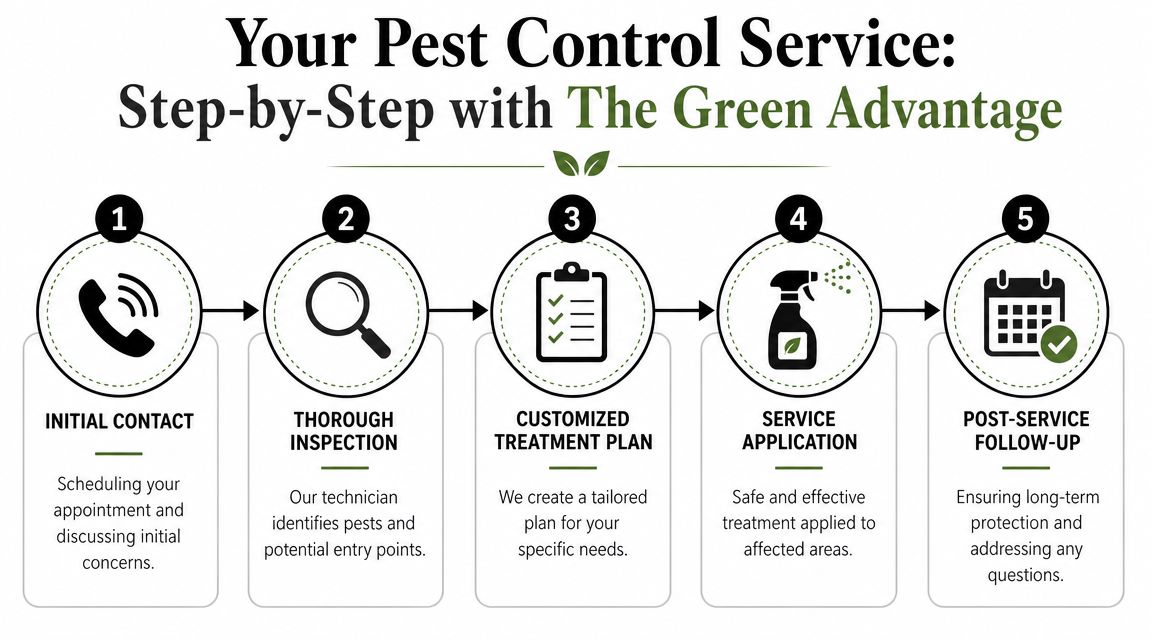
The first call usually starts with symptoms, not a firm ID. You may have seen ants in the kitchen every morning, heard scratching near the attic, or noticed mosquitoes building up near the back fence. That is enough to get the process started.
Details help us narrow things down faster. When did it start? Is the activity indoors, outdoors, or both? Does it get worse after rain, at night, or around pet food and trash areas? Good intake questions save time on site and help the technician know where to begin looking.
Inspection comes before treatment
A solid pest service starts with inspection. Spraying first and asking questions later usually misses the reason the problem keeps returning.
The Green Advantage follows the same basic approach experienced pest professionals use everywhere. First confirm what pest is active. Then look for the source, access points, moisture issues, nesting areas, and other conditions that support it. Once those pieces are clear, treatment can be focused where it will do the most good.
That matters in Northwest Indiana because our weather keeps changing the pressure on a property. Rain pushes some pests inward. Dry spells send them looking for water. Warm stretches can speed activity up, then colder snaps change where they hide. If a technician finds gaps at door sweeps, damp mulch against the foundation, droppings in a utility area, or frass near damaged wood, the plan becomes more accurate and usually more effective than a generic spray around the house.
What happens on site
Once the inspection is done, service should follow a clear sequence:
Confirm the active pest
The technician identifies what is present and explains the evidence behind that call.Show the contributing conditions
You should hear why the pests are there, where they are getting in, and what is helping them stay.Treat the right areas
Product is applied to the problem zones and likely travel paths, based on the inspection findings.Recommend practical corrections
That may include sealing gaps, reducing standing water, trimming vegetation, adjusting storage, or fixing moisture issues.Set realistic follow-up expectations
Some problems improve quickly. Others need monitoring, a second visit, or seasonal service because the conditions that drive them do not disappear overnight.
Ask what the technician found and why the treatment was chosen. Clear answers are a good sign you are getting real pest management, not guesswork.
Safety and communication matter
You should know what was applied, where it was applied, and whether any reentry or prep instructions matter for children and pets. Good service is clear, specific, and easy to follow.
The Green Advantage provides pest inspections and customized residential and commercial service. That means the visit should leave you with more than a treatment receipt. You should come away understanding what caused the issue, what was done to address it, and what steps will help keep it from returning.
A Homeowner's Checklist for Choosing a Pest Control Provider
Choosing a pest company gets easier when you stop looking for slogans and start looking for signals of competence. The right provider should help you feel informed, not pressured.
Start with the basics that protect you
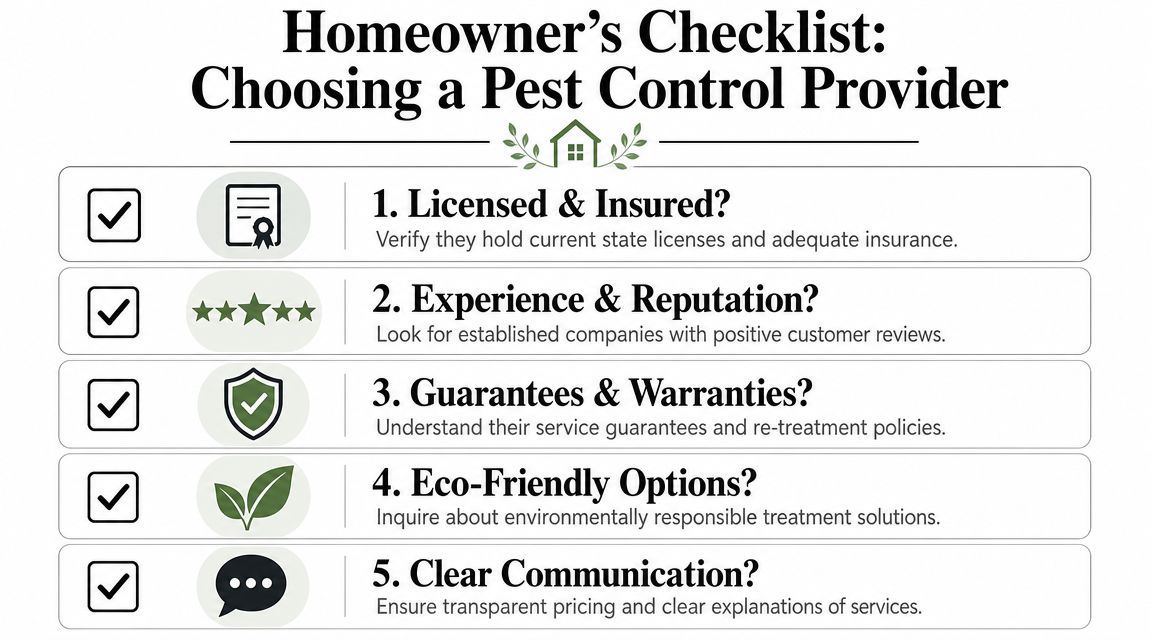
A reliable company should be properly licensed and insured for the work it performs in Indiana. That isn't just paperwork. It tells you the company is operating as a legitimate service provider and can stand behind its work professionally.
You should also look for local experience. A company that understands Crown Point and nearby Northwest Indiana communities will usually diagnose seasonal patterns, construction styles, and property-specific risks more accurately than a generic call-center operation.
Use this checklist before you book
- Licensing and insurance: Ask directly whether the company is licensed for pest-control work in Indiana and carries appropriate insurance.
- Inspection quality: Find out whether they inspect before recommending treatment, or if they jump straight to a generic program.
- Communication style: Notice whether they explain findings in plain language or hide behind vague promises.
- Service scope: Ask what is included, what is excluded, and what follow-up looks like if the first visit doesn't fully resolve the issue.
- Local reputation: Read reviews with attention to detail. Look for comments about responsiveness, professionalism, and whether the explanation made sense.
- Environmental fit: If you want eco-friendly pest control or lower-impact options, ask how they balance targeted treatment with exclusion, habitat reduction, and prevention.
What separates a useful estimate from a weak one
A weak estimate sounds simple but tells you very little. It might promise general spraying without discussing the pest, the source, the access points, or the conditions that are supporting activity.
A strong estimate usually includes:
| What to look for | Why it matters |
|---|---|
| Specific pest findings | Treatment only works well when the pest is correctly identified |
| Notes about entry points or conditions | Prevention depends on fixing what allowed the problem |
| Clear follow-up expectations | Some infestations need monitoring, not just one visit |
| Straight answers on pricing | Ambiguity often leads to frustration later |
The best question a homeowner can ask is, "Why is this happening on my property?" The answer tells you whether the company is thinking like an exterminator or just a salesperson.
If you manage a business property, customer experience and communication standards matter there too. This practical playbook for local businesses is useful because it reinforces a broader truth that applies to pest service as well. Clear communication, responsiveness, and consistent follow-through shape trust before and after the work is done.
Your Questions Answered About Pest Control in Crown Point
How much does pest control in Crown Point, IN usually cost
Pricing depends on the pest involved, the size and condition of the property, how severe the activity is, and whether you need one-time service or an ongoing preventive plan. A wasp nest removal, a recurring ant issue, and a rodent exclusion problem won't be priced the same because they don't require the same labor, materials, or follow-up.
For homeowners searching exterminator near me or pest control near me, the better question is often what the service includes. Inspection quality, targeted treatment, and follow-up support matter more than getting the lowest number first.
How often should a home get pest control service
That depends on the pest pressure around the property and your goals. Some homes only need treatment when a specific issue appears. Others benefit from preventive service because the lot, moisture conditions, nearby woods, detached structures, or past history make recurring problems more likely.
If pests keep returning season after season, routine prevention usually makes more sense than repeated emergency calls.
Are eco-friendly pest control options available
Yes, but it's important to understand what that usually means in practice. Responsible pest control often combines lower-impact treatment choices with non-chemical methods such as exclusion, sanitation improvement, habitat reduction, and moisture control. That approach tends to be more effective than relying on product alone.
If eco-friendly service matters to you, ask how the company decides where to treat, what alternatives they use, and what changes you can make around the property to support long-term control.
What should I do before the technician arrives
Start by writing down what you've seen and where. Note whether activity happens at certain times of day, after rain, near food, or in a particular room. Clear access to sinks, baseboards, utility areas, attic hatches, garage corners, and crawlspace entries if possible.
You don't need to know exactly what pest you have before calling. You just need to describe the signs clearly so the inspection starts in the right place.
If you're dealing with recurring pest activity in Crown Point or nearby Northwest Indiana communities, The Green Advantage can help you move from guesswork to a practical plan. Whether you need an inspection, a quote, or ongoing protection for your home or business, the next step is simple. Reach out, describe what you're seeing, and get clear guidance on what's causing the problem and how to address it.