
The first cold snap arrives in Northwest Indiana, and you hear light scratching inside the kitchen wall after dark. Then you find a few droppings behind the pantry shelf, or notice a chewed bag of birdseed in the garage. That doesn't mean your home is dirty. Mice look for warmth, food, water, and shelter, and a well-kept house can still offer all four.
The practical answer to how to prevent mouse infestation is to work from the outside in. Find the pencil-sized openings, repair them with materials mice can't defeat, remove outdoor food and shelter, and verify that activity has stopped. The Green Advantage serves Crown Point, IN and surrounding Northwest Indiana communities with licensed residential and commercial pest control, including inspections and rodent prevention.
Why Mice Target Homes in Crown Point and Northwest Indiana
A mouse doesn't need a wide-open door to enter a home. It follows warmth along a foundation, investigates a gap around a pipe, or slips beneath a poorly sealed garage door. Once indoors, wall voids, cabinets, closets, crawl spaces, and stored materials provide protected routes and nesting areas.
Fall and winter make those routes more appealing. Outdoor food becomes less reliable, temperatures drop, and buildings offer dependable shelter from wind and cold. A home may also provide water through a leaking plumbing connection, condensation, a pet bowl, or damp storage areas. These conditions can exist in a clean kitchen and still support mouse activity.
Practical rule: Treat the first scratching sound, dropping, or gnaw mark as an inspection signal, not something to ignore until you see a mouse in the open.
Prevention is easier before mice establish travel paths and nesting sites. Traps may remove individual animals, but they won't close the opening that allowed entry or remove the food source that keeps attracting replacements. A property manager faces the same issue in a different setting, especially around shared garages, utility rooms, trash areas, loading doors, and food-service spaces.
The Green Advantage approaches Crown Point pest control as a property-maintenance problem as well as a pest problem. The company is family-owned and licensed, serves homeowners and businesses throughout the area, and focuses on practical measures that keep pests outside. That may include a detailed pest inspection, targeted rodent control, exclusion work, sanitation recommendations, and follow-up monitoring.
A homeowner can begin this weekend with a flashlight, a notebook, and a slow walk around the building. The goal isn't to seal every crack indiscriminately. It's to identify openings, attractants, and maintenance failures that give mice a reason and a route to stay.
Inspect Your Home Like an Exterminator
The most useful inspection is systematic. Start outdoors in daylight or use a strong flashlight, then work around the structure without skipping areas that seem unlikely. A mouse can use an opening about 1/4 inch wide, roughly the diameter of a pencil, so gaps at least that size deserve attention. The CDC rodent guidance recommends inspecting both interior and exterior walls and sealing openings of this size with durable materials.
Begin at the foundation-to-ground joint. Look for separation, cracked mortar, damaged siding, and places where soil, landscaping, or a porch conceals the lower wall. Check the foundation where it meets attached steps, patios, crawl-space doors, and porches. A gap that disappears behind a shrub is still an entry point.
Work around doors, garages, and windows
Inspect every exterior door threshold, not just the main entrance. Pay close attention to doors leading from the garage, basement, mudroom, kitchen, and garbage area. Check the bottom corners, weather-stripping, frame joints, and garage door bottom seal. A worn sweep or uneven threshold can leave a continuous route into the building.
Move to windows, screens, and vents. Damaged screens, loose vent covers, and openings around dryer vents or HVAC intake points can connect the outside directly to interior voids. Look at attached garages and outbuildings as part of the same inspection, because mice can enter there and later move through shared walls or stored materials.
Follow utilities instead of stopping at the wall
Utility penetrations deserve deliberate attention. Use the flashlight around:
- Pipes and plumbing chases: Check under sinks, behind toilets, near water heaters, and wherever plumbing passes through floors or walls.
- Sill cocks and service lines: Inspect exterior faucets and the places where supply lines enter the foundation.
- Sewer lines and conduits: Look for loose collars, missing sealant, or gaps around service openings.
- Vents and HVAC openings: Check covers, screens, duct connections, and wall penetrations.
- Cabinets and closets: Look behind kick plates, inside corner cabinets, and around stored items where wall gaps are easy to miss.
Indoors, inspect closets, garages, crawl spaces, basements, attics, and outbuildings. Look for droppings, gnawing, dark rub marks, nesting material, and odor, but don't assume a quiet room is clear. Mice often travel inside walls or under stored materials where signs remain hidden.
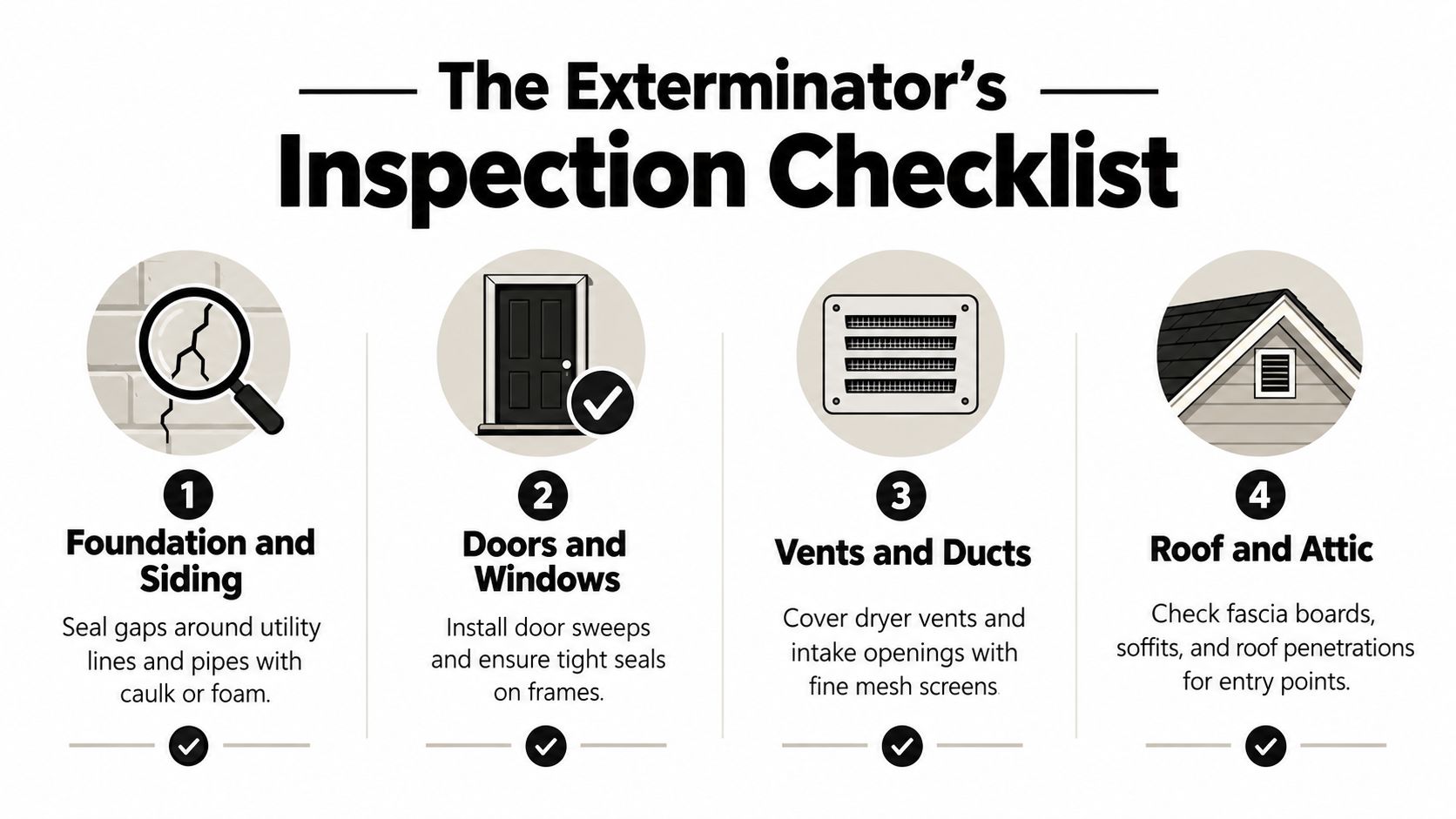
Write down every opening on a simple room-by-room map. Note its location, approximate size, surrounding material, and whether it is indoors or outdoors. A map prevents the common mistake of repairing the obvious hole in a kitchen cabinet while overlooking the foundation gap, garage door, or pipe entrance that remains the actual route.
Sealing Entry Points the Right Way
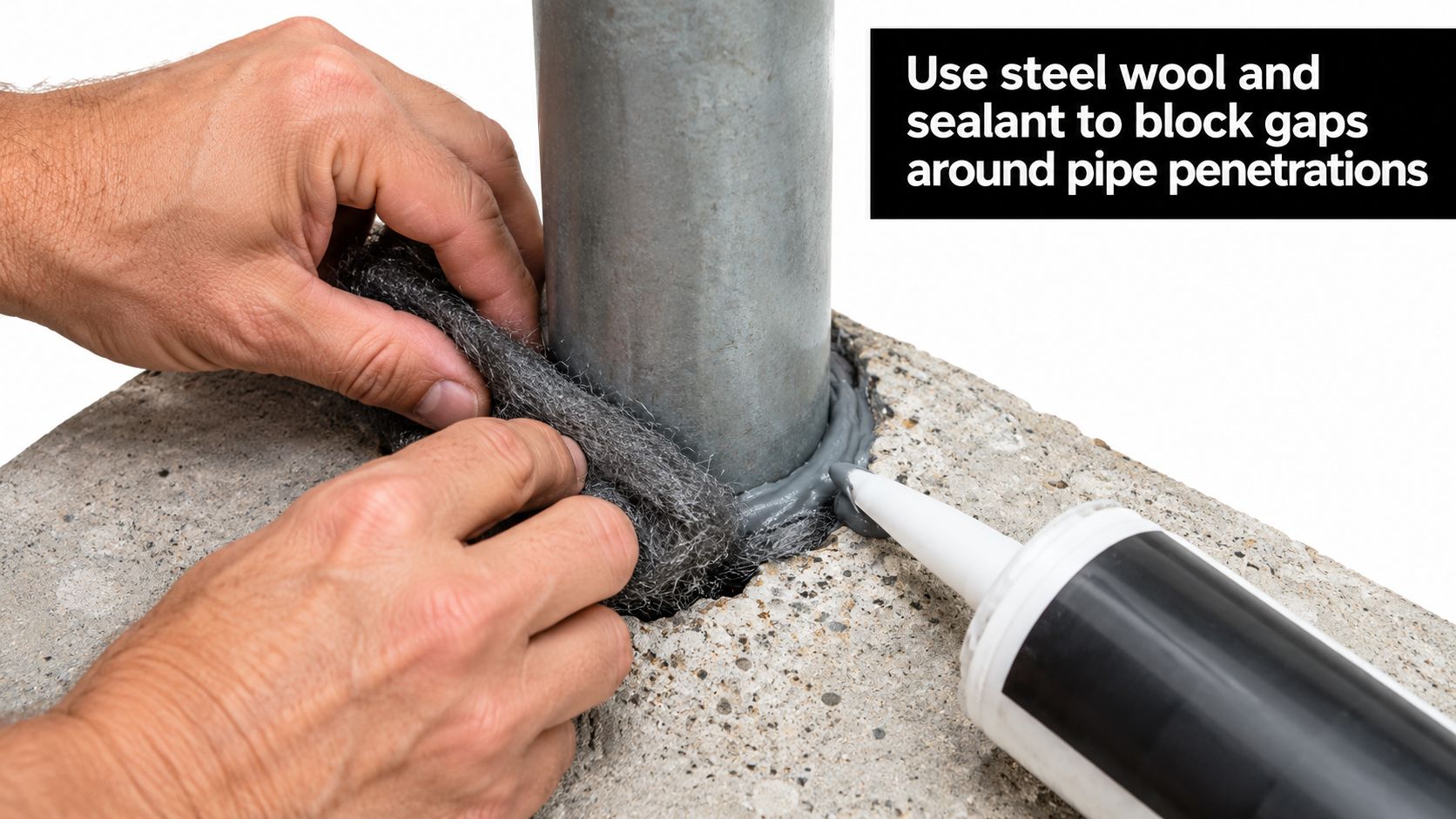
A repair holds up when it combines a material mice can't chew with a seal that keeps the material in place. Small gaps often respond well to steel wool packed tightly into the opening and secured with caulk or compatible expanding foam. The foam is a binder and air seal, not the rodent-resistant barrier by itself.
Larger openings need a structural repair. Depending on the location, use hardware cloth, metal sheeting, cement, or lath screen. The right choice depends on whether the opening is in masonry, siding, a vent, a door assembly, or a utility chase. A thin bead of household caulk over a wide hole may look finished, but it won't withstand movement, moisture, or chewing.
Match the repair to the failure
Expanding foam alone is a frequent short-term fix. It fills an irregular cavity quickly, but mice can chew through exposed foam and reopen the route. If you use foam around a small opening, place steel wool or another compatible durable barrier within the gap first, then finish the repair so the barrier stays protected.
For foundation cracks and masonry gaps, cement or a suitable mortar repair generally provides a more durable surface. For larger penetrations, metal sheeting or hardware cloth can close the opening without blocking necessary drainage or ventilation. Vent covers should remain functional, and screens need to be fine and firmly attached rather than loosely placed over the opening.
Door maintenance often determines whether an otherwise careful exclusion succeeds. Repair broken windows, screens, vent covers, and exterior-wall holes promptly. Install weatherproof door sweeps where doors don't seal at the bottom, and keep the remaining gap below 1/4 inch, as recommended in EPA housing-manager guidance on rodent entry points.
Garage doors deserve the same attention as house doors. Check the bottom seal across its full width, including the corners where the seal can curl or lift. In older Crown Point homes, seasonal movement, worn weather-stripping, and uneven slabs can create openings that appear only after the door closes.
A frequently used door near a kitchen, garbage area, dumpster, or food-preparation space may also need an automatic closer. The purpose is simple: reduce the time the door remains open and prevent staff, residents, or visitors from propping it open. For a property with recurring entry problems, rodent exclusion services can help identify which repairs require chew-resistant materials and which are ordinary maintenance.
Use the inspection map to mark each completed repair. Then inspect the work from both sides. If daylight remains visible through a joint, if mesh can be pulled loose, or if a door still leaves a wide bottom gap, the work isn't finished.
Removing Outdoor Attractions That Invite Mice
A clean kitchen can still have a mouse problem when outdoor food, water, and shelter sit near the foundation. Mice only need a pencil-sized opening, about 1/4 inch, to move from those attractants into a wall, garage, crawl space, or utility area. Inspect the property room by room from the outside, checking the foundation beside the kitchen, garage, basement, and utility entries.
Start with bird feeders. Spilled seed creates a dependable food source close to the house, even when indoor counters are spotless. Move feeders away from walls, sweep up seed regularly, and consider huskless feed during active rodent control because it leaves less residue. Read our full breakdown of what attracts mice to your home to see which outdoor features deserve attention first.
The EPA guide to preventing rodent infestations recommends removing leaf piles and deep mulch, securing garbage and compost, and stopping outdoor bird feeding during active control or choosing feed that creates less waste.
Audit the habits around the property
- Pet feeding: Store pet food in thick plastic, metal, or glass containers with tight-fitting lids. Bring food and water bowls inside overnight.
- Compost and garbage: Keep containers closed, and clear loose material from beside the building. Covered compost is easier to manage than an open pile.
- Landscaping: Remove leaf piles and deep mulch next to the foundation. Keep plants and mulch from creating a damp, sheltered route toward the wall.
- Firewood and stored materials: Keep woodpiles away from the structure and raised off the ground. Do not stack them against siding or foundation walls.
- Leaks and standing moisture: Repair outdoor leaks and indoor plumbing problems, especially near utility entries, crawl spaces, and basement walls.
The CDC recommends placing compost at least 100 feet from the structure and keeping woodpiles at least 100 feet away and raised at least 1 foot, according to CDC guidance on sealing homes and reducing rodent attractants. On a typical Crown Point lot, a woodpile 15 feet from the back door remains an attractant even if it is neatly stacked. Move it farther away when the property allows, while preserving safe access and practical storage.
You do not need to remove every feature from a healthy yard. Reduce the food, moisture, and shelter beside the building so mice have less reason to test each small repair around the home.
Monitoring for Activity and Safe Cleanup Practices
Prevention continues after the last gap is sealed. Walk the areas where signs are most likely to appear, including along walls, behind appliances, inside cabinets, in garages, near utility rooms, and around stored food. Record fresh droppings, gnaw marks, odor, rub marks, and sightings so you can distinguish old evidence from current activity.
One caught mouse isn't the same as a solved problem. An active infestation needs a measured treatment-and-verification cycle. Establish a baseline map, remove competing food, place appropriately sized snap traps perpendicular to walls in active travel routes, and reinspect at regular intervals. If the map shows new signs, the property still has activity or an unresolved access point.
A controlled field study of house-mouse treatments reported infestation rates of 2% after 12 months in two treatment groups, compared with 44% in the untreated control. The field study on sustained house-mouse treatment supports integrated, sustained intervention rather than placing a few traps and stopping.
Catching a mouse is an event. Repeated inspections with no new evidence are the verification.
Clean contaminated material carefully
Don't dry sweep or vacuum potentially contaminated droppings. That action can disturb material in a way that spreads contamination through the air. Ventilate the area first, wet droppings and nesting material with disinfectant, allow the appropriate contact time, and remove the material while wearing gloves and respiratory protection consistent with public-health guidance.
Don't reach into an unseen wall void or move heavily contaminated insulation casually. Keep children and pets away from the area, and avoid handling nesting material until it has been properly wetted. Persistent odor, fresh droppings, repeated gnawing, or new sightings after exclusion and sanitation indicate that the next step should be professional rodent control.
When to DIY and When to Call The Green Advantage
DIY prevention is reasonable when activity is limited, entry points are accessible, and you can inspect the property methodically. Start with a room-by-room check: kitchen cabinets and plumbing penetrations, basement utilities, garage doors, attic vents, and foundation joints. Mice can use quarter-inch, pencil-sized gaps, so a clean kitchen does not rule out an exterior access problem. Seal suitable openings, remove outdoor food sources, and schedule follow-up checks rather than treating the first repair as the finish line.
Professional service fits better when signs return, activity is inside inaccessible voids, or an attached garage has slab gaps and several utility routes. Multi-unit buildings, restaurants, warehouses, offices, and rental properties also need coordinated access management. One untreated unit, door, storage area, or waste location can keep the problem active elsewhere.
| Factor | DIY Prevention | Professional Service |
|---|---|---|
| Inspection | Check accessible rooms, doors, cabinets, garages, foundation areas, and utility openings. | A technician assesses entry points, travel routes, nesting areas, penetrations, and site conditions. |
| Repairs | Handle suitable small repairs with steel wool, caulk, or other appropriate materials. | The service can coordinate exclusion, chew-resistant repairs, and door measures. |
| Active signs | Track droppings, gnawing, odor, and sightings, then use correctly placed traps. | The technician can combine treatment, monitoring, sanitation guidance, and follow-up verification. |
| Property type | Best for an attentive homeowner facing limited, accessible activity. | Better suited to recurring infestations, hidden voids, rentals, and commercial properties. |
The work fails when homeowners stop at the first evidence rather than completing a full verification cycle over several weeks. A common DIY failure is sealing only visible interior holes while leaving exterior penetrations, garages, bird feeders, pet bowls, compost, mulch, or other food sources untreated. CDC sealing guidance supports closing access points and reducing attractants around the home.
Customers working with a local technician should receive direct communication, a site-specific diagnosis, and clear follow-up from the first call through the final walk-through. The Green Advantage provides residential and commercial pest control in Crown Point, IN and nearby Northwest Indiana communities. Its services can also address ant, termite, mosquito, spider, and wasp concerns affecting the property.
Schedule a pest inspection with The Green Advantage to identify pencil-sized entry points, outdoor attractants, and active mouse travel. Request a quote for rodent control, exclusion, and follow-up monitoring.