
Wasp Exterminator Near Me: How to Handle Aggressive Nests Safely
There is nothing quite like the panic that sets in when a relaxing afternoon in the backyard is interrupted by the aggressive buzz of a stinging insect. For many homeowners, spotting a single wasp is a nuisance, but discovering a nest attached to the eaves or hidden within a shrub transforms that nuisance into a genuine safety hazard. While bees are generally docile and crucial for pollination, their wasp cousins—particularly yellow jackets, paper wasps, and hornets—can be unpredictable, territorial, and downright dangerous when they feel their colony is threatened.
If you are currently noticing increased activity around your property, you might be tempted to handle it yourself. However, understanding the specific risks and the biology of these pests will show why searching for a “wasp exterminator near me” is often the safest first step. This guide allows you to identify what is buzzing around your home, understand the dangers of DIY removal, and learn how professional intervention protects your family and the ecosystem.
Identifying Common Aggressive Wasps in Our Area
Understanding Yellow Jackets
Yellow jackets are perhaps the most notorious of the stinging insects due to their highly defensive nature and tendency to ruin outdoor gatherings. These wasps are easily identified by their sleek, hairless bodies with distinct black and bright yellow markings. They are unique because they often nest in the ground, utilizing abandoned rodent burrows, but they are just as happy to build nests inside wall voids or attics.
Recognizing Paper Wasps
If you look up at the eaves of a house, the overhang of a porch, or the ceiling of a shed and see an open, umbrella-shaped nest, you are likely looking at the work of paper wasps. These insects have long legs that dangle when they fly and are typically brown with yellow or reddish markings.
Spotting Hornets (and Why They’re a Concern)
Hornets, particularly the bald-faced hornet, represent a significant threat due to their size and the sheer number of defenders in a colony. Actually a type of yellow jacket, the bald-faced hornet is black with white markings on its face and builds large, enclosed, football-shaped paper nests that hang from tree branches or sturdy structures.

The Dangers of DIY Wasp Nest Removal
The Risk of Multiple Stings
One of the most dangerous aspects of dealing with social wasps is their ability to communicate through chemistry. When a wasp is threatened or killed, it releases a specific alarm pheromone that acts as a distress signal to the rest of the colony. This scent triggers a frenzy, causing the other wasps to emerge from the nest ready to attack the perceived threat.
Allergic Reactions and Anaphylaxis
For a significant portion of the population, a wasp sting is more than just painful; it is a potential medical emergency. Insect sting allergies can develop at any time, meaning that someone who has never had a reaction before could suddenly experience anaphylaxis, a severe and potentially life-threatening condition that restricts breathing and causes a drop in blood pressure.
Ineffective Treatments and Lingering Problems
Many over-the-counter wasp sprays rely on contact killing, which requires the user to get dangerously close to the nest and often fails to penetrate the colony’s core. If the treatment does not kill the queen, the colony will simply rebuild, often in a more difficult-to-reach location.
Why Professional Extermination is the Safest Choice
Proper Safety Gear and Equipment
Licensed professionals at The Green Advantage arrive at a property equipped with specialized protective suits that cover them from head to toe, including thick gloves and veiled hoods. This gear allows technicians to approach a nest calmly and effectively without the fear of being stung, which is essential for a thorough job. Beyond the suit, they utilize extending poles and specialized dusting equipment that allows them to treat nests high in the eaves or deep in the ground while maintaining a safe distance.
Targeted and Effective Treatment Methods
Store-bought chemicals are often diluted and rely on broad-spectrum ingredients that can be harmful to the surrounding environment if misused. Professionals have access to industry-leading, restricted-use products that are specifically formulated to target the biology of wasps.
Guaranteed Results and Peace of Mind
Hiring a service like The Green Advantage means investing in a solution rather than a temporary fix. There is a profound peace of mind that comes with knowing a knowledgeable, licensed professional has assessed the situation and handled the removal. Unlike a DIY attempt which might leave you wondering if the wasps will return the next day, professional services come with the assurance that the job is done correctly, and if the pests persist, the technicians will return to make it right.
Understanding the Wasp Life Cycle and Nesting Habits
Spring Awakening: The Queen’s Role
The wasp life cycle begins in early spring when the fertilized queens emerge from their winter hibernation spots, such as under bark or in attics. At this stage, the queen is solitary and vulnerable as she begins to build a small paper nest and lay her first batch of eggs. This is the absolute best time for preventative measures and early extermination because eliminating the queen at this stage prevents a colony of thousands from forming later in the year.
Summer Growth: The Colony Expands
As the weather warms and the first generation of worker wasps matures, the queen stops foraging and remains in the nest solely to lay eggs. During the summer months, the colony’s population explodes exponentially, with workers tirelessly foraging for insects and protein to feed the developing larvae. This is when nests grow rapidly in size, and while the wasps are busy, they are generally focused on food gathering, though the sheer number of insects flying in and out can become intimidating for homeowners.
Late Season Aggression: Why Wasps Get Angry
By late summer and early autumn, the colony has reached its peak size, and the natural food sources begin to decline. The queen stops laying worker eggs and produces new queens and males for the next season, changing the colony’s dynamic. The workers, now with less sugar and protein available to them, become “hangry” and scavenge more aggressively for human food and sweet drinks, leading to increased conflict with humans and a much higher likelihood of stinging incidents.
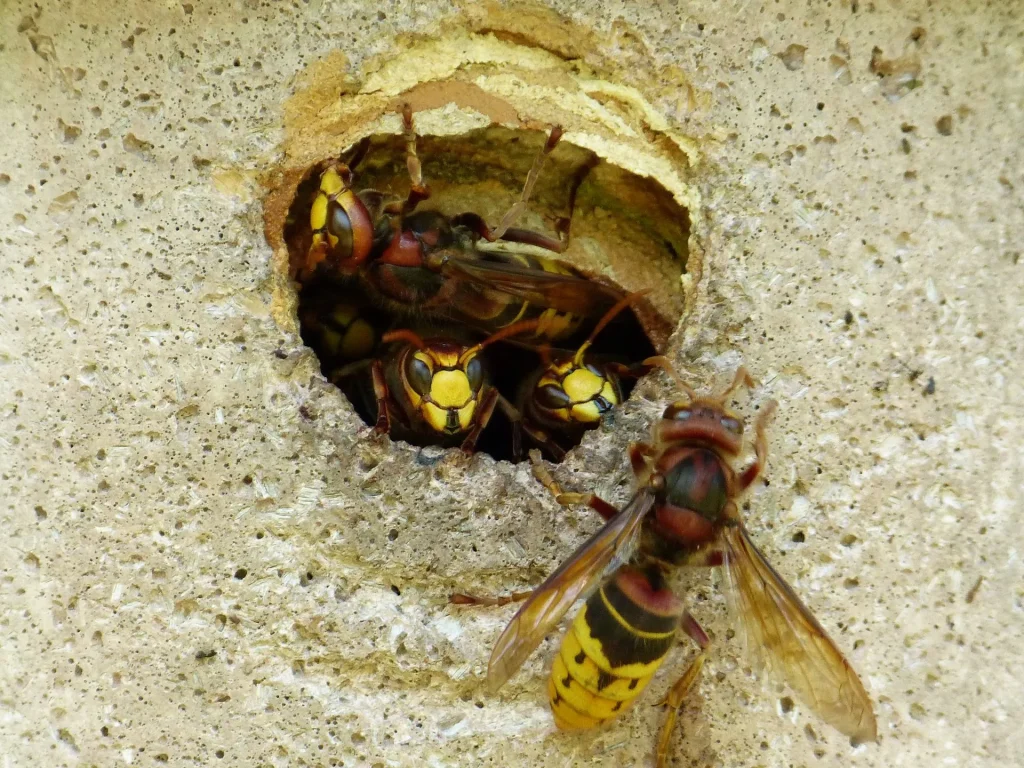
Locating Hidden Wasp Nests Around Your Property
Observing Flight Patterns
One of the most reliable ways to locate a hidden nest is to spend a few minutes simply watching the flight paths of the wasps in the yard. Wasps generally travel in a direct line when returning to the colony; if you see a consistent stream of insects flying toward a specific shrub, a gap in the siding, or a hole in the ground, you have likely found the “highway” to their home.
Common Outdoor Hiding Spots
A visual inspection of the property should focus on areas that offer shelter and structural support for a nest. Common locations include the underside of roof eaves, the corners of porch ceilings, the interior of dense hedges or ornamental shrubs, and the inside of infrequently used sheds or playhouses. Ground-nesting yellow jackets often choose spots near the base of trees or under piles of firewood, so looking for small holes in the earth with activity around them is a good practice during yard work.
Nests Inside Your Home: Wall Voids and Attics
Sometimes, the call for a “wasp exterminator nearby” is prompted by a scary discovery inside the house. Wasps can enter through small cracks in the exterior and build nests inside wall voids, attics, or behind chimneys. The signs of an indoor infestation can be subtle, such as a faint scratching or tapping sound coming from a wall or ceiling, or the sudden appearance of sluggish wasps inside living spaces, which often indicates they are finding their way in from a hidden nest structure nearby.
What to Expect During a Professional Wasp Extermination Service
Initial Inspection and Assessment
The service visit begins with a detailed conversation and a thorough inspection by a knowledgeable technician who knows exactly what to look for. They will identify the specific species of stinging insect, locate all active nests—including those that might be hidden from plain view—and assess the risk level to the household and pets.
The Treatment Process Explained
Once the nests are located, the technician will walk through the treatment plan, explaining the specific products that will be utilized and the safety protocols that need to be followed. This ensures the family and pets remain indoors and safe while the treatment is applied. The Green Advantage prioritizes transparency, so the homeowner understands how the chosen method will effectively neutralize the colony while minimizing any unnecessary exposure to the surrounding environment.
Nest Removal and Post-Treatment Advice
After the treatment has successfully eliminated the colony activity, the physical removal of the nest takes place, provided it is accessible. Removing the nest structure is important to prevent secondary pests, like carpet beetles, from moving in to feed on the debris. Following the removal, the technician provides valuable post-treatment advice, such as how long to stay away from the area and tips on spotting early signs of rebuilding to prevent future headaches.
How The Green Advantage Prioritizes Eco-Friendly Solutions
Our Commitment to Responsible Pest Control
The Green Advantage operates with a philosophy that prioritizes working with nature rather than fighting against it. The goal is always to solve the pest problem with the minimum amount of product necessary, using targeted applications that deal with the specific threat without blanketing the entire property in chemicals.
Integrated Pest Management (IPM) Techniques
Beyond immediate wasp extermination, The Green Advantage utilizes Integrated Pest Management (IPM) strategies to provide long-term solutions. This involves looking at the root causes of the infestation—such as available food sources or structural vulnerabilities—and recommending habitat modifications.
Protecting Pollinators While Targeting Pests
One of the most critical aspects of professional service is the ability to distinguish between a dangerous pest and a beneficial pollinator. Experienced technicians can instantly tell the difference between aggressive yellow jackets and gentle honeybees or bumblebees. By strictly targeting the aggressive species and avoiding flowering plants during treatment, The Green Advantage ensures that the vital pollinators in the garden are protected, maintaining the ecological balance of the backyard.

Preventative Measures to Keep Wasps Away for Good
Sealing Entry Points on Your Home
To prevent wasps from moving into wall voids or attics, a physical barrier is the best defense. Homeowners are encouraged to inspect the exterior of their house and seal cracks in the foundation, caulk gaps around utility lines and window frames, and repair any holes in window screens. Installing fine mesh covers over attic vents and soffits can also effectively block access to the warm, sheltered spaces that queens love to use for overwintering or nesting.
Managing Food and Trash Sources
Wasps are essentially scavengers, and they will happily set up shop near an easy buffet. Keeping garbage can lids tightly secured and regularly washing out bins to remove sticky residue reduces the attractants that draw wasps in. Additionally, cleaning up fallen fruit from trees, covering food during outdoor meals, and managing compost piles properly will ensure that the yard does not become a prime feeding ground for foraging yellow jackets.
Landscaping Tips to Deter Nesting
Strategic landscaping can make a yard less hospitable to nesting insects. Regularly trimming back dense shrubs and trees allows for better visibility and reduces the secluded spots that paper wasps prefer. Removing rotting wood or old stumps eliminates potential nesting sites for ground-dwelling species, and simply maintaining a tidy yard makes it much harder for a colony to establish itself unnoticed.
Conclusion
Dealing with aggressive wasps is a serious matter that impacts the safety and comfort of your home. While the DIY route might seem tempting, the risks of multiple stings, allergic reactions, and ineffective results make it a gamble that is rarely worth taking. Understanding the behavior of these insects and the complexities of safe removal highlights why professional intervention is the standard for responsible homeownership.
At The Green Advantage, your safety is the top priority. With a commitment to eco-friendly practices, deep knowledge of local pests, and a dedication to customer satisfaction, you can trust that the problem will be handled with care and expertise. Do not wait for a sting to happen or for a small nest to become a massive colony. If you have spotted a wasp nest or aggressive activity, contact your local, knowledgeable professionals at The Green Advantage today for a consultation and let the experts help you reclaim your outdoor space safely.
The Green Advantage
https://maps.app.goo.gl/wzz1BewPEdKx96pQ6
14451 Reeder Rd, Crown Point, IN 46307, United States
(219) 779-9815
https://thegreenadvantage.biz/