
On a humid Crown Point evening, the grill is ready, the kids are headed toward the patio, and mosquitoes start finding every exposed ankle. Shaded landscaping, damp soil, birdbaths, clogged gutters, and small pockets of standing water give them places to rest and reproduce, while families are left wondering whether another round of yard spray will help.
DIY mosquito spraying can reduce adult mosquito activity, but it isn't a season-long solution by itself. Used carefully, it works as a short-window knockdown tool within a broader yard plan. Habitat removal, screens, personal protection, correct timing, and professional mosquito control all have a role.
For homeowners searching for pest control near me, pest control in Crown Point, IN, or an exterminator near me, The Green Advantage offers local guidance and mosquito reduction services for residential and commercial properties throughout Crown Point and nearby Northwest Indiana communities.
Why Mosquitoes Thrive in Crown Point Yards and What Spraying Can Do
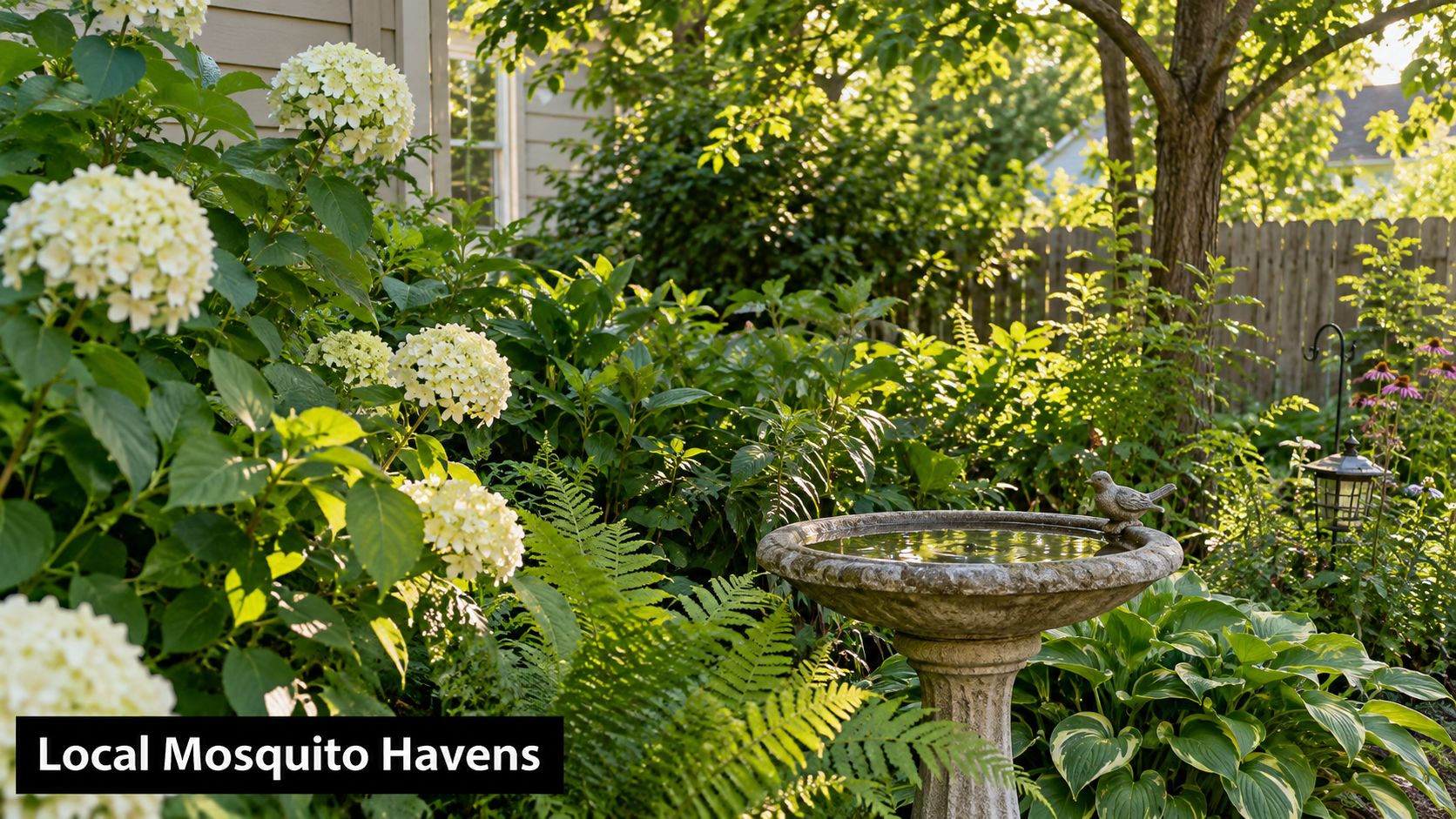
A Crown Point patio can sit beside the problem. Dense shrubs shade mosquitoes, low spots hold rainwater, and humid summer weather leaves vegetation damp after sunset. Deck undersides, fence lines, and thick ornamental plantings give adult mosquitoes protected resting places close to where people gather.
Water management often beats another spray application. A stone birdbath looks harmless, yet stagnant water can support mosquito development if it is not emptied or refreshed regularly.
What a barrier application can and cannot do
A targeted barrier application treats vegetation and sheltered surfaces where adult mosquitoes rest. In a 2015 suburban field study, weekly host-seeking mosquito collections were reduced by an average of 53.6% compared with control properties, with results ranging from 24.0% to 75.0%. A separate review found that treated properties averaged a 54% reduction, with effects reaching 74% in some trials. The field study and barrier-treatment review are available through East Carolina University.
That short-term reduction explains the appeal of DIY mosquito spraying. Applied to the right resting sites, a product can lower adult activity quickly. It cannot remove breeding water, prevent mosquitoes from arriving from nearby properties, or promise season-long control. Rain, sunlight, plant surfaces, product chemistry, and coverage determine how long the treatment remains effective.
Practical rule: Use spraying to reduce biting pressure for a limited window, then address buckets, gutters, planters, birdbaths, and shaded corners that keep the cycle going.
Mosquito-control methods have also changed over time. A review of evaluations from 1944 through 2018 documented movement away from broad applications toward more targeted barrier and residual methods. Performance varied with the formulation, mosquito species, and application method. The historical review of insecticide barrier treatments explains that evolution.
To safeguard your outdoor space, identify resting areas and water sources before choosing a DIY treatment. The Green Advantage can help Crown Point residents judge whether a focused application is reasonable or whether a custom mosquito reduction program is the better handoff.
Planning and Timing Your DIY Mosquito Spraying for Best Results
Good preparation prevents most DIY spraying mistakes. Before mixing anything, walk the property with a notepad and separate the yard into three categories: mosquito resting sites, breeding sources, and areas that shouldn't receive adulticide.
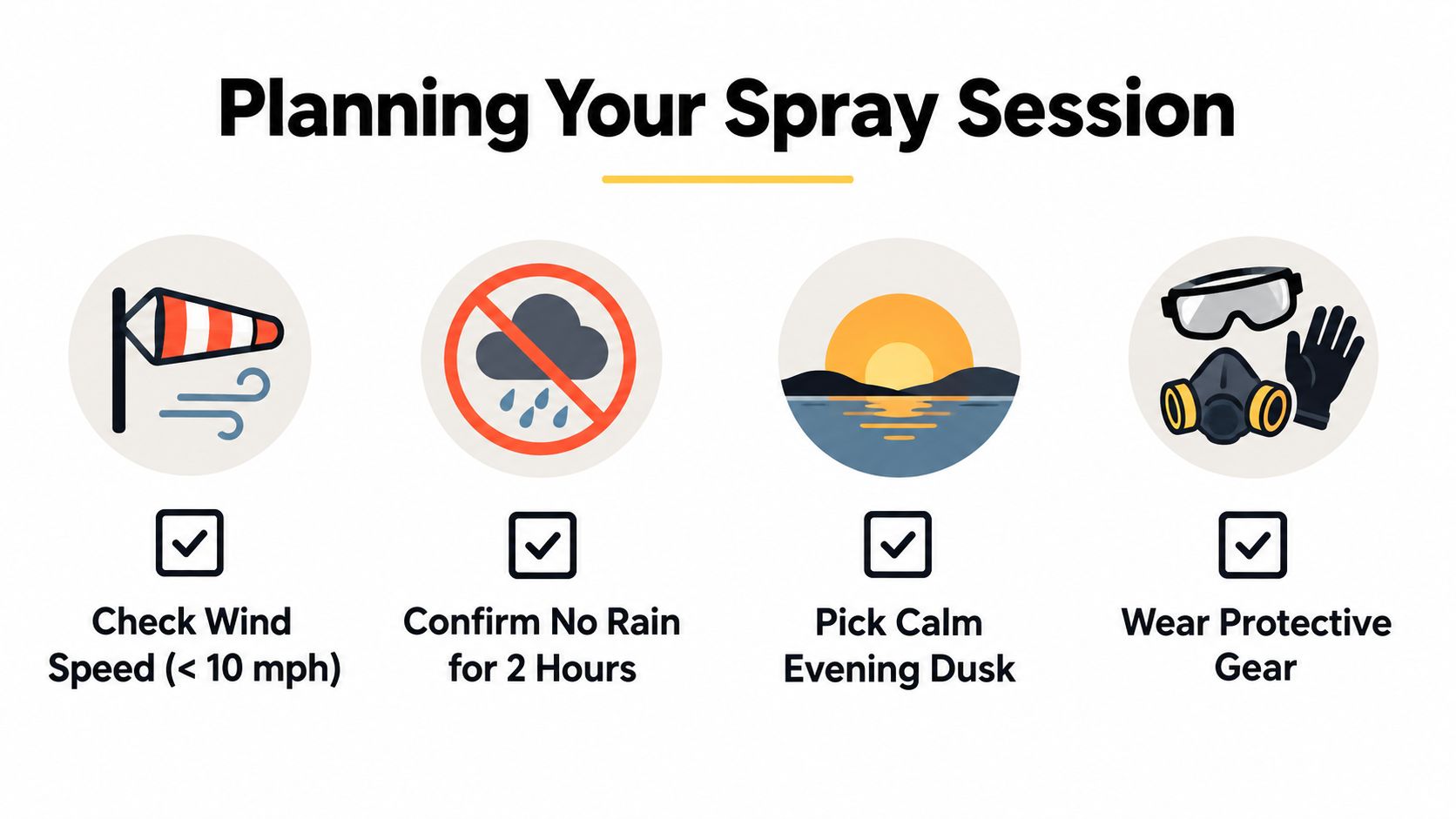
Mosquito activity is commonly highest around dusk and just after sunset. One public-health program says applications usually begin about 30 minutes before sunset and may continue for up to 4 hours afterward when wind stays below 10 mph and rain isn't imminent. Delaware mosquito-control guidance explains the weather and timing considerations.
A calm pre-spray routine
Read the entire label. Confirm that the product is approved for residential mosquito control, check the permitted application sites, and follow the listed mixing rate and reapplication limits. The label isn't a suggestion. It defines lawful use.
Check the forecast. Avoid spraying when rain is likely soon, when wind could carry mist beyond the target area, or when irrigation will immediately wet treated surfaces. Calm conditions improve coverage and reduce drift.
Map the yard. Mark dense shrubs, the underside of a deck, shaded fence lines, and sheltered vegetation. Mark flowering plants, edible gardens, ponds, streams, toys, grills, outdoor dining areas, and pet spaces as locations requiring special protection or avoidance.
Clear the people and pets. Bring pets indoors, move children's toys and food items away from the treatment zone, and tell household members when the yard will be unavailable. Keep everyone out until the product has dried and the label permits re-entry.
Plan for persistence, not habit. Don't automatically spray every weekend. Residual performance depends on the product, surface, weather, and plant retention. Reapply only when the label allows it and the problem justifies it.
If you're unsure whether morning or evening is appropriate for a particular product, review this guide to the best time to spray mosquitoes and compare it with the product label. Timing should support safe drying and mosquito exposure, not override label directions.
Choosing Equipment and Products Without Risking Safety or the Label
In a Crown Point yard, equipment should match the target area, not the size of the property alone. The right sprayer applies an even amount to approved mosquito resting surfaces. Extra reach or volume can increase over-application and drift.
Comparing common equipment
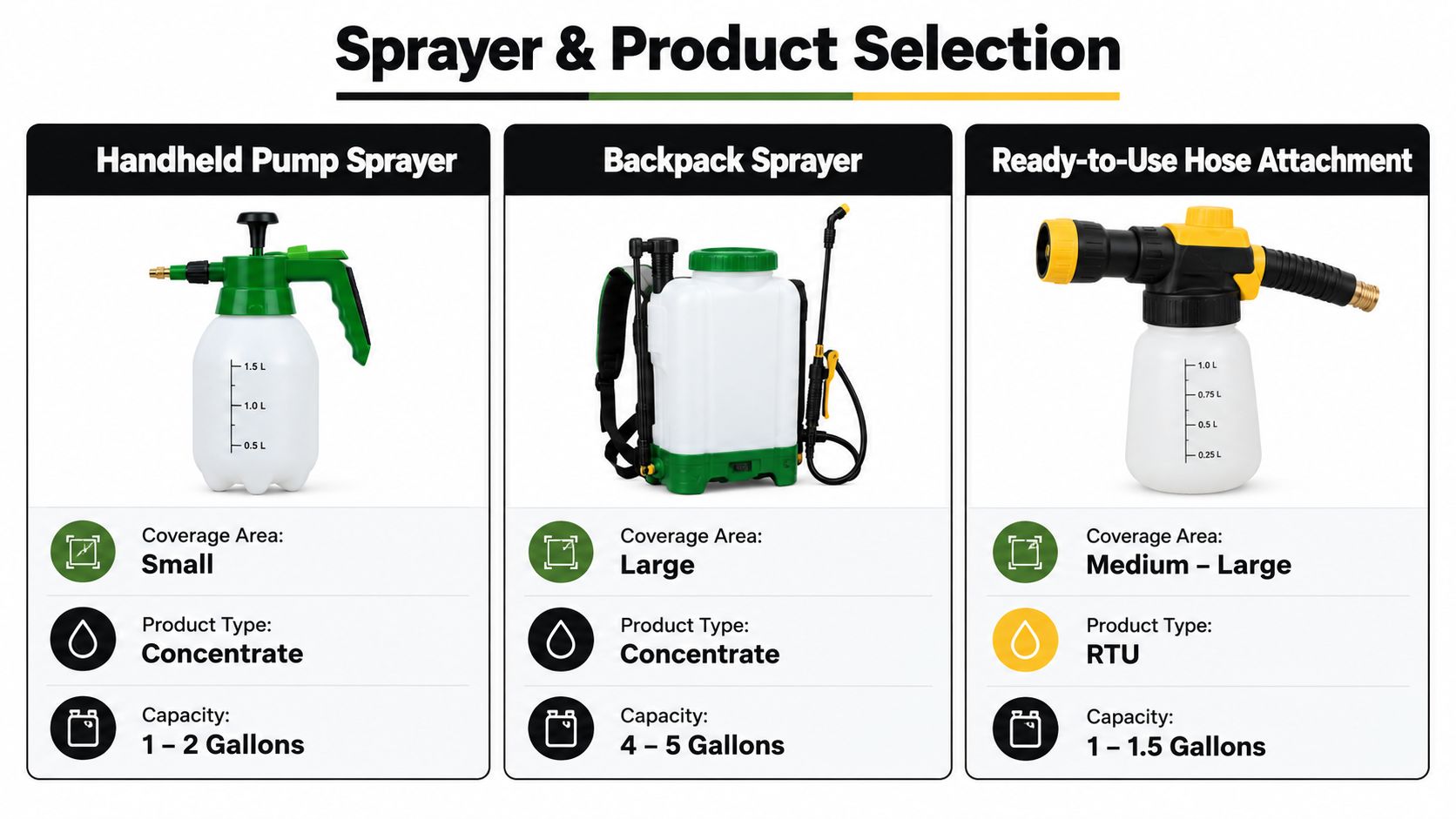
| Equipment | Best fit | Main advantage | Main concern |
|---|---|---|---|
| Handheld pump sprayer | Small patios and limited shrub beds | Precise control and low product volume | Slow coverage across a large property |
| Backpack sprayer | Larger yards with mature shrubs | Better reach and steady application | Easier to over-apply if pressure and pace aren't controlled |
| Ready-to-use hose attachment | Simple perimeter work when the label permits it | No separate mixing step | Less precision and greater drift potential |
For a small Crown Point yard, a handheld pump sprayer is often the easiest unit to control because the nozzle stays close to the target. A backpack sprayer suits extensive vegetation only when you can keep a steady walking pace and controlled spray pattern. Hose-end products save mixing time, but they offer less precision, so convenience should not determine whether a site is treated.
Let the label decide
Before buying, check the active ingredient, approved use sites, required protective equipment, mixing directions, environmental restrictions, and reapplication interval. A front-label promise of long residual control is not enough. Product chemistry, weather, and plant-surface retention affect how long a short spray window lasts.
The CDC advises treating mosquito resting areas, avoiding flowering plants and edible crops, keeping people and pets away until treated surfaces are dry, and never applying more product or reapplying more often than the label permits. CDC adulticide guidance provides these application and safety limits.
Skip products that do not clearly authorize your intended site. Do not broadcast adulticide across open turf just because mosquitoes are visible there. Ponds, streams, rain barrels, and other water sources require separate label authorization. For standing-water larvae, select a product labeled for that water site and life stage.
Spraying can provide a short-window knockdown around resting areas, while removing habitat often delivers the more durable improvement. If the label, equipment, or target area leaves you uncertain, hand the job to The Green Advantage rather than guessing.
How to Apply DIY Mosquito Spray to Yards and Problem Areas
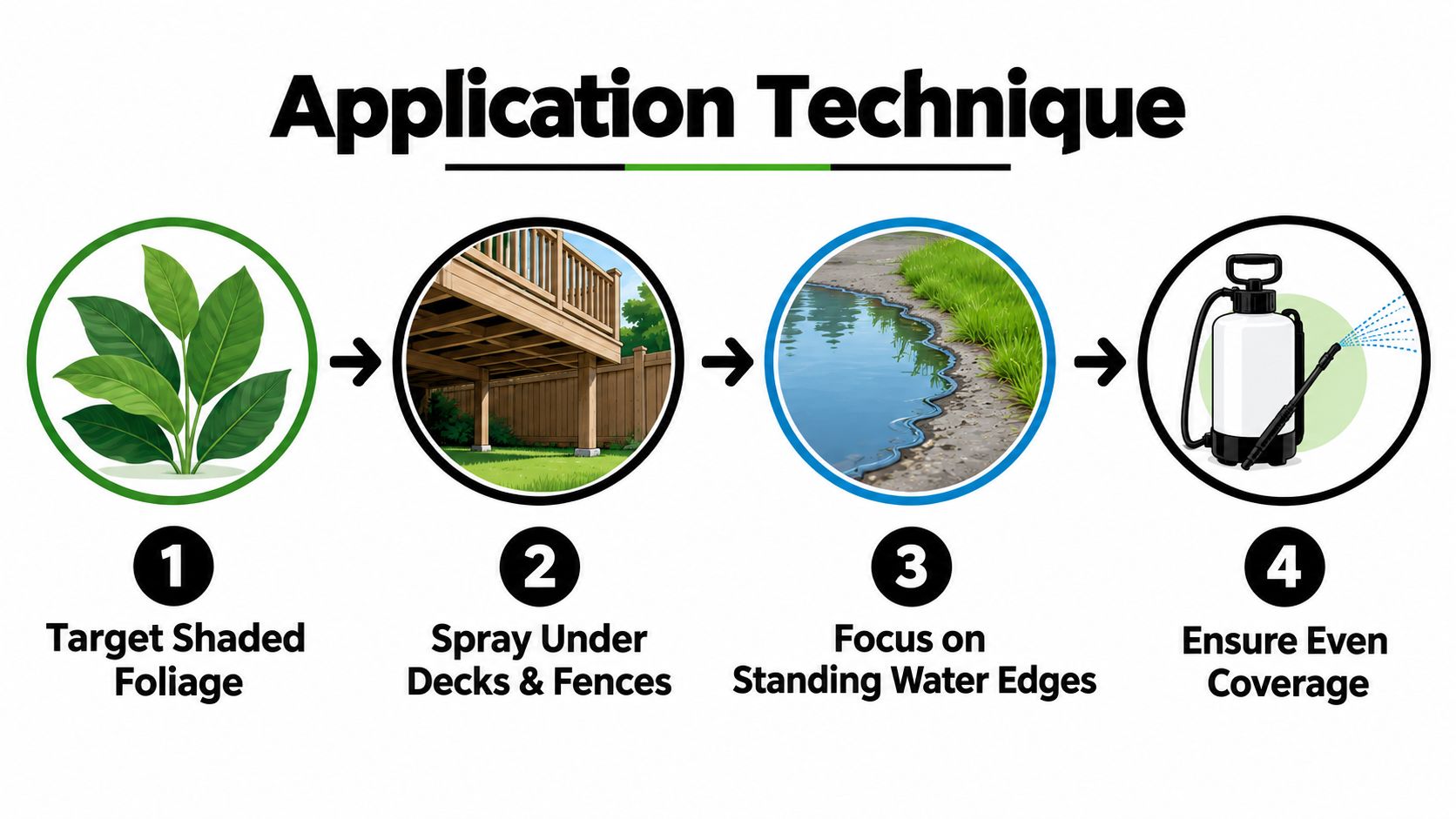
Start at the property edge and work toward the areas where people gather. Keep the nozzle low, move steadily, and apply a fine, controlled spray to the surfaces where mosquitoes rest. The goal is even coverage, not runoff.
Follow the resting structure
Focus on the underside and interior of dense vegetation rather than exposed lawn. Shaded shrubs, low tree branches, fence lines, under-deck areas, and sheltered plants near patios often offer better targets than sunlit turf.
A backpack-sprayer field study found that permethrin, d-phenothrin, and resmethrin produced 100% mortality in test cages at 24 hours. Adult mosquitoes caught in CDC traps were reduced by 70% to 100% from 48 hours through one week after treatment, while permethrin maintained about 90% mortality in leaf bioassays up to one week. The other products declined to residual windows of under 48 hours. The study is indexed by PubMed.
That comparison matters because it shows why product selection and surface coverage can't be separated. A product may perform well on one plant surface and fade faster on another. A spray applied only to exposed grass may miss the sheltered foliage where mosquitoes spend much of their resting time.
Keep the application away from flowering plants, edible crops, food-preparation areas, toys, pet bowls, and any water feature unless the label specifically permits treatment. Don't spray while people or animals are nearby, and don't re-enter until the treated surfaces are dry and the label allows it.
Afterward, rinse and store equipment according to the label. Keep leftover concentrate secured, wash protective clothing separately when required, and record the product, date, weather conditions, and areas treated. If you can't apply without drift, runoff, or uncertainty about sensitive areas, stop and get help.
Non Chemical Ways to Reduce Mosquitoes and Make Spraying Last Longer
The most durable mosquito plan starts before an adulticide enters the sprayer. Every adult mosquito removed from the yard matters less if fresh adults keep emerging from containers, gutters, and plant trays. Source reduction lowers the number of mosquitoes available to bite, while targeted spraying addresses adults resting around outdoor living areas.
EPA guidance recommends an integrated approach that combines habitat removal, structural barriers, larval control, and adult control. It specifically lists rain gutters, old tires, buckets, toys, and covers as places to check, and recommends emptying or changing water in birdbaths, fountains, wading pools, rain barrels, and plant trays at least once a week. EPA mosquito-control guidance outlines this layered approach.
Make the property less suitable
Walk the yard after rain, not just on spray day. Turn over containers, clear blocked gutters, refresh birdbaths, and correct items that hold water. If a container can't be emptied, determine whether a labeled larval product is appropriate for that specific water source.
Dense landscaping also deserves attention. Trim vegetation where practical to improve airflow, keep patios from becoming enclosed by damp foliage, and repair screens around porches and doors. Fans can make patios less comfortable for mosquitoes by disturbing their flight, while long sleeves and an appropriate personal repellent add another layer when outdoor activity can't wait.
Plants may contribute to a pleasant outdoor setting, but no plant-based approach should replace water removal and physical barriers. Homeowners researching outdoor options can review mosquito-repelling plants as one part of a broader prevention plan.
Reduce pressure without overusing chemicals
Repeated broad spraying can create unnecessary exposure and may contribute to reduced effectiveness as mosquito populations develop resistance. The better trade-off is targeted adult control only where needed, combined with water management and personal protection. That approach reduces the number of treatments a yard may need while protecting pollinators and limiting contact with treated surfaces.
Larval control can be particularly useful when standing water can't be eliminated, but the product must match the site and label. A professional assessment can also identify drainage problems, hidden containers, and boundary conditions that a quick walk-through misses.
Staying Safe and Knowing When to Call The Green Advantage in Crown Point
Mosquito treatment becomes a poor DIY project when the safety decisions are harder than the spraying itself. Families with young children, pets, asthma, or chemical sensitivities need a clear plan for inhalation, drying time, toys, food, and treated surfaces. Keep people indoors during application, close windows, turn off outdoor-air intake systems when appropriate, and bring pets inside.
Don't spray near edible gardens, flowering plants, ponds, streams, livestock areas, or drainage routes unless the label explicitly supports that use. Cover or remove food, utensils, toys, and pet supplies before treatment. If spray contacts skin or eyes, follow the product label and seek medical guidance when needed.
Public-health guidance emphasizes staying indoors during spraying, closing windows, turning off outdoor-intake fans or air conditioners, and bringing pets inside. It also explains that products used in organized mosquito-control programs generally break down quickly, but those instructions don't replace the label for a homeowner's specific product or application method. Massachusetts guidance addresses practical exposure questions around mosquito spraying.
Know when DIY has reached its limit
Call for professional help when biting pressure returns quickly, when mosquitoes remain heavy after a careful targeted treatment, or when the property includes wooded edges, drainage challenges, large planted areas, or standing water you can't manage. Persistent activity may also reflect conditions beyond your lot, including nearby habitat or untreated resting structure along a property boundary.
A professional mosquito service should begin with an inspection, not an automatic spray. The technician should identify resting sites, breeding sources, sensitive areas, and the treatment approach that fits the property. For homeowners comparing residential pest control, commercial pest control, ant control, termite control, rodent control, spider control, or wasp removal, the same principle applies. Diagnosis comes before treatment.
The Green Advantage provides mosquito reduction programs in Crown Point, including seasonal and one-time service options that use targeted barrier treatment and larval treatment for standing water. Its licensed and certified team serves residential and commercial clients, communicates directly with customers, and provides follow-up based on site conditions. That makes it a practical handoff when DIY mosquito spraying no longer provides reliable comfort or when eco-friendly pest control and preventative pest treatments require more careful planning.
Schedule a mosquito inspection with The Green Advantage if your Crown Point yard continues producing heavy biting pressure despite habitat removal and careful DIY mosquito spraying. The team can assess resting sites, standing water, and property-specific risks, then provide a clear quote for residential or commercial pest control in Crown Point, IN.