
You're settling in for the evening in Crown Point, IN, and the first mosquito appears near the bedroom window. Then another bite shows up the next morning. Swatting the adults may bring short-term relief, but it doesn't explain why mosquitoes keep returning. Indoor mosquito prevention works best as a layered home system: remove water sources, block entry points, and use targeted treatment only when the first two steps aren't enough.
The Green Advantage serves homeowners, landlords, and businesses throughout Crown Point and nearby Northwest Indiana communities with practical mosquito control, residential pest control, commercial pest control, and pest inspections. The right solution starts by identifying whether mosquitoes are breeding inside, entering from outdoors, or using your home as a protected resting place.
Why Mosquitoes Keep Appearing Inside Your Crown Point Home
A homeowner may notice mosquitoes in a bathroom, laundry room, or bedroom and assume the insects drifted in through an open door. That can happen, especially during warm, humid evenings. But repeated indoor bites often point to a predictable combination of water, access, and shelter rather than a random nuisance.
Mosquitoes lay eggs in or near standing water, and small containers can support development. The CDC's home mosquito-control guidance specifically calls out items such as vases and flowerpot saucers, while also recommending screens, repaired openings, and air conditioning to limit indoor entry.
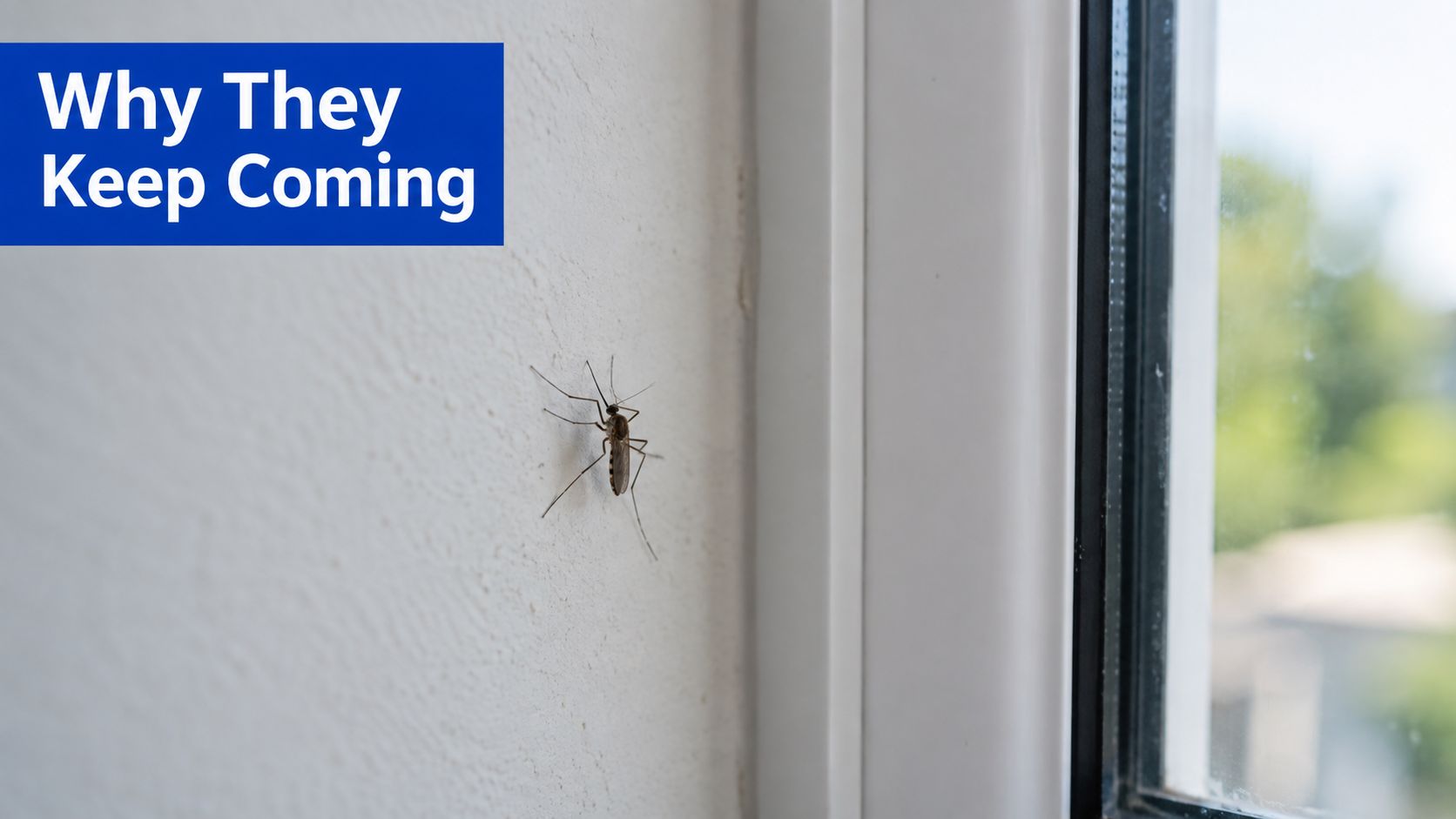
The three causes behind recurring indoor bites
An indoor water source can keep producing new mosquitoes. Overwatered plants, a forgotten vase, a tray beneath an appliance, or water collecting in a poorly draining area may be easy to overlook during ordinary cleaning.
An entry problem creates a steady supply from outdoors. A torn window screen, a loose screen door, or a gap around a door frame can give mosquitoes access whenever people open the home to outside air.
A resting area lets adult mosquitoes remain inside after entering. Dark, humid spaces under furniture, inside closets, beneath sinks, in showers, and around laundry areas offer shelter during the day. The CDC identifies these types of locations as areas where indoor insecticide may be directed if mosquitoes remain after prevention steps.
Crown Point's seasonal humidity can make these conditions more noticeable, but indoor activity isn't necessarily proof of an indoor breeding site. A few mosquitoes appearing after a door stays open may indicate occasional entry. Bites continuing across multiple rooms, or mosquitoes appearing day after day, deserves a closer inspection of water-holding items and hidden gaps.
Practical rule: Killing the adult you can see doesn't remove the water source or the opening that brought it inside.
That's why The Green Advantage treats an indoor mosquito complaint as a home-system problem. The technician looks for the source first, then evaluates exclusion and resting locations. This approach gives homeowners a clearer answer than spraying every room and hoping the problem stays away.
Eliminate Indoor Breeding Sites With a Weekly Routine
The most important indoor mosquito-control habit is a weekly water audit. The CDC advises homeowners to empty and scrub, turn over, cover, or discard water-holding items inside the home once a week. EPA guidance similarly recommends emptying or changing water in containers such as bird baths, fountains, wading pools, rain barrels, and potted plant trays at least weekly, and its technical guidance identifies stagnant or shallow water that persists for at least 7 days as primary mosquito breeding habitat (EPA technical guidance).
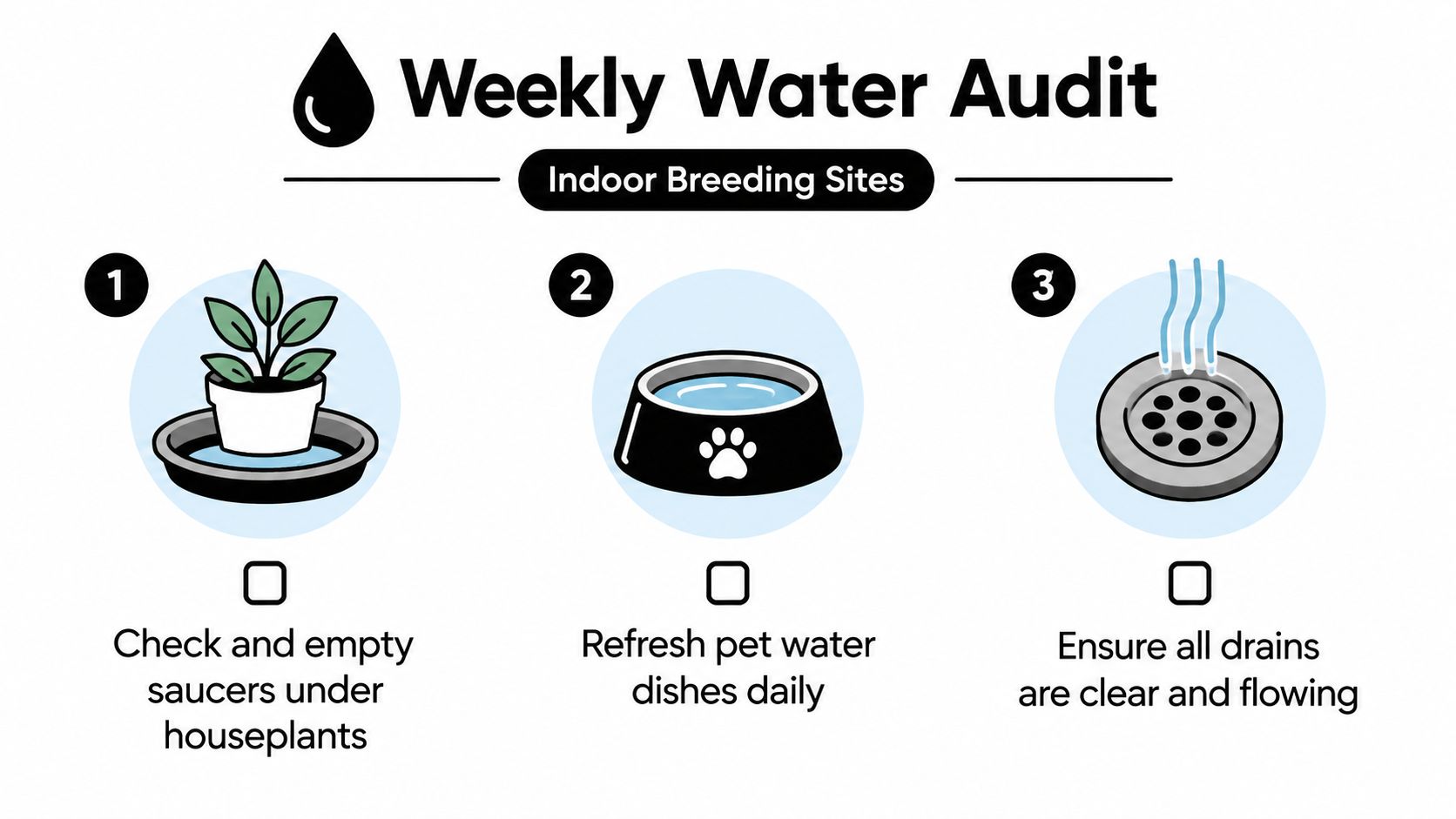
Work room by room
Start with houseplants. Empty saucers beneath pots, rinse them, and scrub the surfaces before replacing them. If a plant is frequently overwatered, move it to a container that drains properly and avoid leaving water beneath the pot. A quick wipe isn't always enough because eggs can cling to a container's surface.
Then check decorative and utility items:
- Vases: Empty them, scrub the inside, and replace the water on a weekly schedule.
- Pet bowls: Refresh drinking water daily, and clean the bowl regularly rather than topping it off.
- Under-sink areas: Look for drip trays, plumbing leaks, and containers that collect condensation.
- Bathrooms: Check shower areas, buckets, floor-level containers, and drains that don't flow properly.
- Laundry rooms: Inspect trays beneath equipment, utility sinks, and damp corners.
- Condensation pans: Check air-conditioning or dehumidifier collection areas for standing water and drainage problems.
A drain that's slow or holding water needs attention beyond mosquito control. Clear the obstruction safely, confirm that water flows freely, and contact a qualified plumber when the problem involves a persistent leak or drainage failure. Don't mix household chemicals while trying to clean a drain.
Why scrubbing matters
Pouring out water removes the immediate liquid, but scrubbing helps remove residue from the container's surface. That matters for plant saucers, vases, pet dishes, and other items that stay damp. Turn over anything that doesn't need to remain upright, cover containers that must hold water, and discard cracked items that repeatedly collect moisture.
The weekly routine also applies to water that looks clean. Mosquitoes don't need a visibly dirty container, and a small amount of water can be enough to restart the problem. Homeowners who want more background on the larval stage can review what kills mosquito larvae, but source removal remains the first indoor step.
Seal Entry Points and Make Your Home Mosquito Proof
Once indoor water sources are under control, inspect the home's barriers. Screens and sealed openings can prevent mosquitoes from entering, but only when they fit correctly and residents use them consistently. A review published in Philosophical Transactions of the Royal Society B found that intact screens, no gaps around eaves, doors, or windows, and keeping openings closed from evening through morning can reduce indoor mosquito densities to very low levels under realistic household conditions.
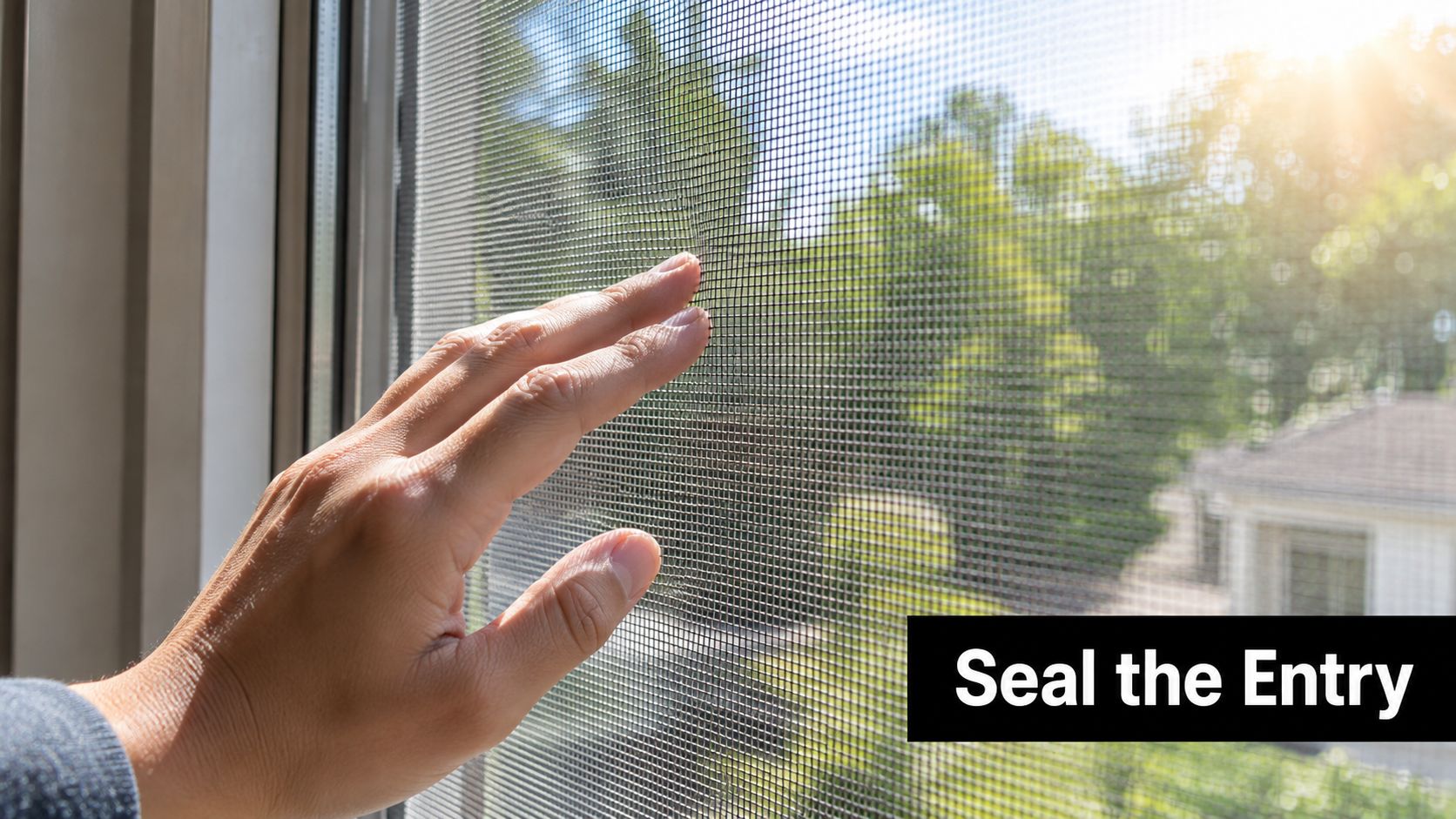
Check barriers from the outside and inside
Run your fingers along window screens and look for tears, loose edges, and gaps where the frame meets the window. Pay close attention to basement windows, porch enclosures, and rooms where people frequently open windows during summer.
Next, inspect exterior doors. A screen door should close fully without a visible gap at the bottom or sides. Replace worn door sweeps, adjust loose hinges, and make sure the latch pulls the door tightly against its weatherstripping.
Sealing also includes less obvious openings:
- Window frames: Look for deteriorated caulk and openings at corners.
- Door frames: Check where trim meets siding or masonry.
- Eaves: Inspect areas where roof edges and walls meet.
- Utility penetrations: Examine gaps around pipes, vents, and cables.
- Basement openings: Check window wells and access doors for damaged seals.
Installation quality matters more than buying a screen and leaving it loosely fitted. A small gap around a frame can defeat an otherwise intact mesh panel. Daily behavior matters, too. If a door remains open during the evening, mosquitoes can enter even when every screen is in good condition.
For homeowners cleaning screens before repairing them, this resource on a streak-free window screens technique can help keep the mesh visible during inspection.
Air conditioning adds another layer by reducing the need to leave windows open. The CDC recommends using air conditioning when available, along with repairing screens and removing indoor standing water. Those measures work together, not as substitutes for one another.
The following video provides a visual reminder of the types of household barriers worth checking:
If mosquitoes continue appearing after screens are repaired and water sources are removed, the next question is location. Look for resting adults in dark, humid spaces rather than treating the entire home automatically.
Choosing Traps Devices and Safe Indoor Treatments That Work
Indoor devices can help, but they solve different problems. A fan trap may capture mosquitoes drawn toward airflow and a collection chamber. A UV trap may attract some flying insects, but light alone isn't a complete mosquito-control plan. Plug-in devices vary by product design, placement, and how well they address the species present in the home.
The practical choice depends on whether you're dealing with occasional entry, a persistent adult population, or an unresolved breeding source.
Indoor mosquito options at a glance
| Option | Best Use Inside Home | Key Limitation |
|---|---|---|
| Fan trap | Capturing adult mosquitoes in a regularly used room | It removes adults but doesn't eliminate breeding water or entry gaps |
| UV trap | Supplementing monitoring in a darker indoor location | Light-based attraction may not target every mosquito effectively |
| Plug-in device | Providing product-specific deterrence or control in a selected room | Performance depends on label directions, placement, ventilation, and the product |
| Surface insecticide | Treating approved resting areas such as closets, under sinks, showers, laundry rooms, and beneath furniture | It may require reapplication and won't keep a home mosquito-free by itself |
| Fogger or aerosol | Rapid adult control when residents can follow the product's evacuation directions | People and pets must leave until the product is dry, according to the CDC |
The CDC states that indoor insecticides work immediately, but products should be selected for adult mosquito control and used according to the label. Surface sprays may be applied while people remain inside when the label allows it. Foggers and aerosols require residents and pets to leave until the treated area is dry.
When spraying makes sense
Spraying becomes more reasonable after source reduction and exclusion have been completed, especially when adult mosquitoes are still resting in identifiable areas. It's less useful as a first response when a vase, plant saucer, leaking tray, or open screen continues to supply mosquitoes.
A second consideration is the desired outcome. Indoor residual spraying can reduce mosquitoes inside a structure, but a lower indoor count doesn't always produce the same health result in every setting. A 2025 randomized trial found that targeted indoor residual spraying lowered indoor mosquito densities but did not significantly reduce Aedes-borne disease incidence in that setting (trial details). A separate 2025 community study reported that a once-per-season indoor surface treatment cut household mosquitoes by 60% and reduced chikungunya, dengue, and Zika cases by 24% at the community level, also reported in that source.
Those contrasting findings support a careful decision framework. Consider species, local transmission patterns, treatment coverage, and whether the work addresses the whole pathway from entry to exposure. WHO identifies indoor residual spraying as one of only two large-scale malaria-control interventions recommended for prevention, alongside insecticide-treated nets, and its indoor residual spraying guidance explains why interior resting surfaces can be important control points.
For a home-specific option, review interior mosquito control. General home-maintenance ideas, including practical pest-control observations, are also available through Bear Valley Plumbing's pest control tips. The central rule remains simple: use devices and chemicals as targeted layers, not replacements for water removal and exclusion.
Seasonal Indoor Prevention Tips for Northwest Indiana Homes
Indoor mosquito prevention should follow Northwest Indiana's changing conditions rather than stop when outdoor activity seems quieter. Crown Point homes face different maintenance priorities during spring thaw, humid summer weather, and the fall shoulder season. A calendar-based routine keeps small problems from becoming recurring indoor calls.
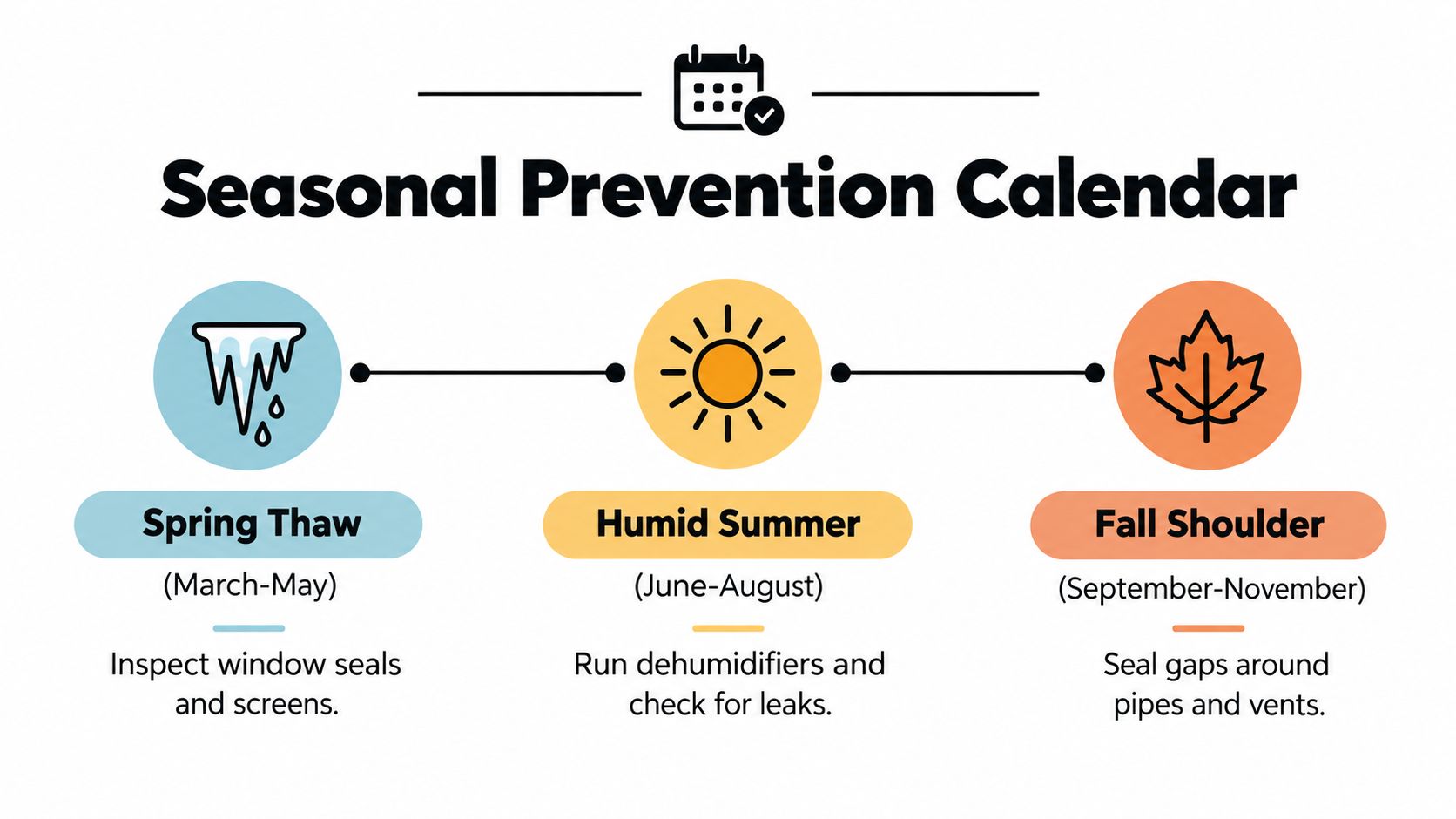
Spring thaw
As snow and ice melt, inspect window seals, screens, basement windows, and door sweeps before regular warm-weather ventilation begins. Look for damp areas around foundations, utility rooms, sump systems, and dehumidifiers. Repairing access points early makes it easier to keep mosquitoes outside once doors and windows start opening more often.
Spring is also a good time to establish a weekly indoor water audit. Choose a consistent day and check plant saucers, vases, pet bowls, under-sink areas, drains, and condensation pans.
Humid summer
Summer requires consistency. Keep air conditioning running when available, close doors promptly, and repeat the water audit every week. Use fans to improve airflow in occupied rooms, but don't treat airflow as a substitute for correcting a screen, leak, or breeding source.
Outdoor pressure can make an indoor problem seem worse, but indoor prevention still begins inside the structure. If mosquitoes continue appearing after routine maintenance, a professional inspection can separate outside entry from indoor amplification.
Fall shoulder season
Before colder weather arrives, seal gaps around pipes, vents, windows, and doors. Check screens for late-season damage and make sure basement access points close tightly. Indoor mosquitoes may remain noticeable after outdoor activity declines if the home still offers warmth, moisture, resting areas, or an easy entry route.
Seasonal planning matters: Schedule preventative pest treatments before a recurring pattern becomes an emergency, especially for properties with frequent door traffic, rental turnover, or commercial activity.
The Green Advantage offers mosquito reduction programs designed around seasonal mosquito activity, along with one-time mosquito treatment for events and gatherings. Homeowners and property managers can also combine mosquito planning with broader preventative pest treatments, ant control, spider control, rodent exclusion, or termite inspections when the property calls for a wider review.
Protect Your Home and Family With The Green Advantage
A mosquito inside the house may be a minor annoyance, or it may be a sign that the property needs a closer look. The difference becomes clearer when someone checks the water sources, entry points, resting areas, and treatment history together. That layered assessment protects comfort without turning every indoor mosquito into a reason to spray indiscriminately.
The Green Advantage is a family-owned pest control company serving Crown Point, IN and the broader Northwest Indiana community. Customers communicate directly with knowledgeable office staff for questions and scheduling, while licensed, certified technicians diagnose the specific property and tailor residential pest control, commercial pest control, mosquito reduction programs, and pest inspections to the site.
What customers can expect
A service visit should provide more than a quick application. Homeowners can expect clear communication about likely sources, practical recommendations for screens and water management, and follow-up guidance when additional treatment is appropriate. Property managers and businesses can request commercial plans that account for employee areas, customer access, recurring pest pressure, and operational needs.
Related concerns can also be evaluated, including rodent exclusion, ant control, spider control, wasp removal, and termite control. For homeowners working on broader comfort improvements, guidance about whole-home air quality may complement moisture and ventilation decisions, although it doesn't replace mosquito-specific inspection and control.
Indoor mosquito prevention works best when each layer supports the next. Remove breeding water, seal entry points, reduce favorable resting conditions, and reserve targeted treatment for mosquitoes that remain after those corrections. That method gives families, landlords, and local businesses a more dependable path to a comfortable property.
For recurring bites or mosquitoes that keep appearing after your weekly checks, schedule a pest inspection or request a quote from The Green Advantage. The team provides mosquito control, residential pest control, commercial pest control, and preventative pest treatments for Crown Point, IN and nearby Northwest Indiana service areas.