
You turn on the kitchen light in your Crown Point home and see a small roach disappear behind the toaster. The instinct is to grab a spray can, wipe the counter, and hope the problem is over. In practice, that sighting often means the conditions supporting cockroaches are already present somewhere nearby.
Learning how to prevent cockroaches means treating your home like a four-season maintenance project. Food, moisture, shelter, and entry routes all matter, whether you own an older ranch home, live in a newer subdivision, manage rental housing, or operate a business in Northwest Indiana. The Green Advantage helps Crown Point homeowners and local businesses pair practical prevention with targeted pest control when an infestation has moved beyond do-it-yourself measures.
Why Cockroach Prevention Matters in Northwest Indiana Homes
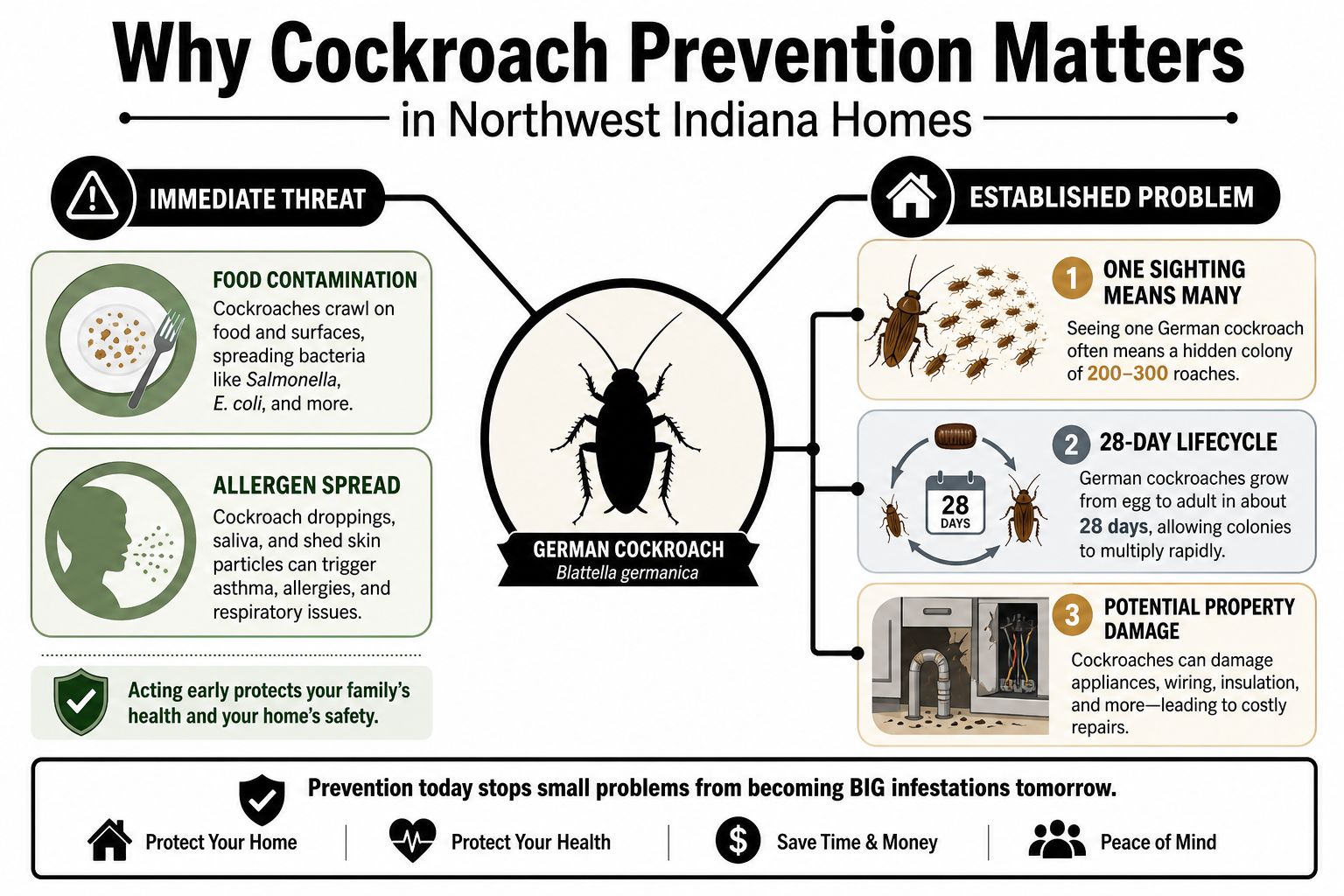
A late-night German cockroach sighting in a Crown Point kitchen rarely happens because the insect made a random visit. German cockroaches commonly remain indoors, where kitchens, bathrooms, appliances, and wall voids provide warmth, water, and food. Larger American and oriental cockroaches may approach from damp exterior areas, sump pump spaces, foundation gaps, or other sheltered locations during humid weather.
Cockroaches can contaminate food-contact surfaces and contribute to allergen exposure. Their droppings, shed material, and body parts may aggravate asthma symptoms, particularly when an indoor population becomes established. The broader scale of the issue is clear from U.S. Census housing data on reported roach sightings, which records that about 14 million of roughly 124 million occupied U.S. housing units reported seeing roaches during the previous 12 months, or about 11% of occupied homes.
A local home can offer year-round shelter
Northwest Indiana homes face different pressure points through the seasons. Older houses may have foundation cracks, aging weatherstripping, open utility penetrations, or damp basement areas. Newer subdivisions can still have shared plumbing chases and utility openings that connect living spaces to garages, neighboring units, or mechanical areas.
Lake-effect humidity, summer storms, finished basements, sump pits, and warm interior rooms create harborage opportunities even when a home is tidy. Cleaning matters, but prevention can't stop there. The EPA's cockroach prevention guidance centers on integrated pest management, or IPM, which means identifying the pest, monitoring activity, removing resources, sealing access points, and treating only where treatment is justified.
Practical rule: One sighting deserves inspection. Repeated sightings deserve a plan that addresses the whole building, not only the place where the roach appeared.
That plan rests on four connected tasks: sanitation, exclusion, moisture control, and monitoring with targeted treatment. Spray-only control may kill an exposed insect, but it doesn't remove the food, water, hiding places, or movement routes that allow the next generation to persist.
Sanitation Habits That Starve Cockroaches Out
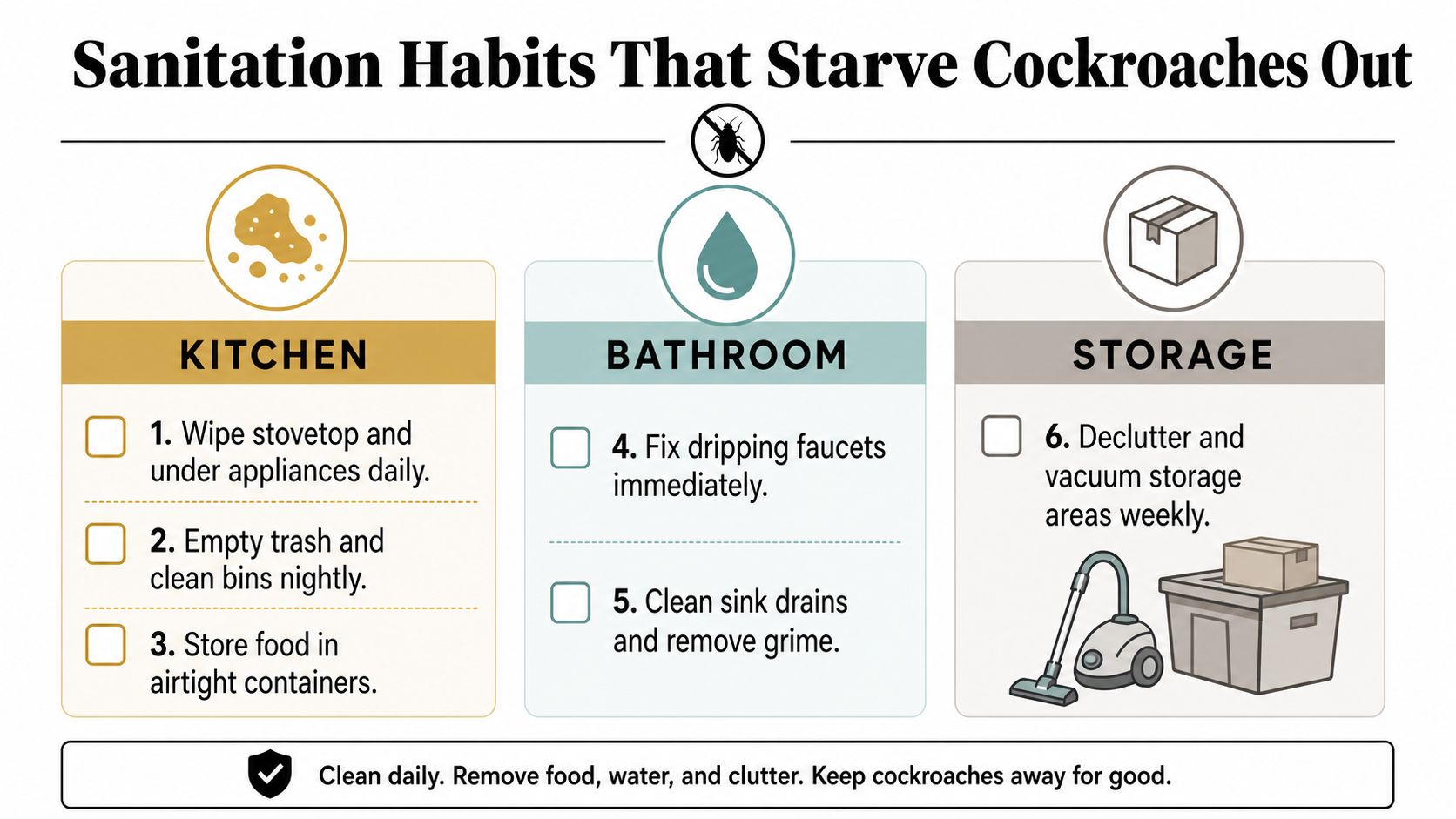
Sanitation isn't a judgment about housekeeping. It's a set of repeatable actions that removes the resources cockroaches use. EPA and university IPM guidance recommends cleaning spills promptly, storing food in sealed containers, managing garbage, removing cardboard, and reducing clutter. The German cockroach IPM action plan provides a useful practical model for kitchens, bathrooms, and storage areas.
Start where crumbs and grease collect
In the kitchen, wipe the stovetop, counter edges, and the area under toaster drip trays every night. Empty lidded trash cans in the evening, especially after cooking or feeding pets. Store pet food in sealed metal bins rather than leaving it in an opened original bag.
Once a month, vacuum crumbs and debris from under and around refrigerator coils. Pull out the garage refrigerator when practical, since seldom-cleaned appliances can provide both residue and shelter. In a finished Crown Point basement, check the area around the sump pump for debris. Detached sheds and garages also need attention if they hold snack boxes, bird seed, pet food, or recyclable containers.
Keep bathrooms and storage dry and orderly
Squeegee tub walls after evening use, clean grime from sink drains, and keep toothbrushes in closed containers. Launder damp bath mats weekly, and don't leave wet towels or clothing in a heap near a utility room.
For pantries and storage rooms, transfer opened food into sealed glass or hard plastic containers. Rotate older boxes and discard damaged packaging. Paper grocery bags, corrugated cardboard, and stacked boxes can serve as both food residue sources and hiding places, so use them briefly rather than storing them under sinks or against walls.
A simple habit ladder makes the work manageable:
- Daily: Wipe cooking surfaces, clear dishes, dry sinks, and manage food waste.
- Weekly: Sweep floors, clean bathroom surfaces, inspect pet-food areas, and remove unnecessary bags or boxes.
- Monthly: Pull or shift appliances safely and vacuum concealed debris.
- Quarterly: Reset pantry storage, inspect basement and garage clutter, and review monitor activity.
These actions remove the three essentials emphasized in EPA cockroach-control materials, food, water, and shelter. For a focused explanation of household attractants, see what attracts cockroaches to your home.
Sealing Entry Points and Hiding Spots
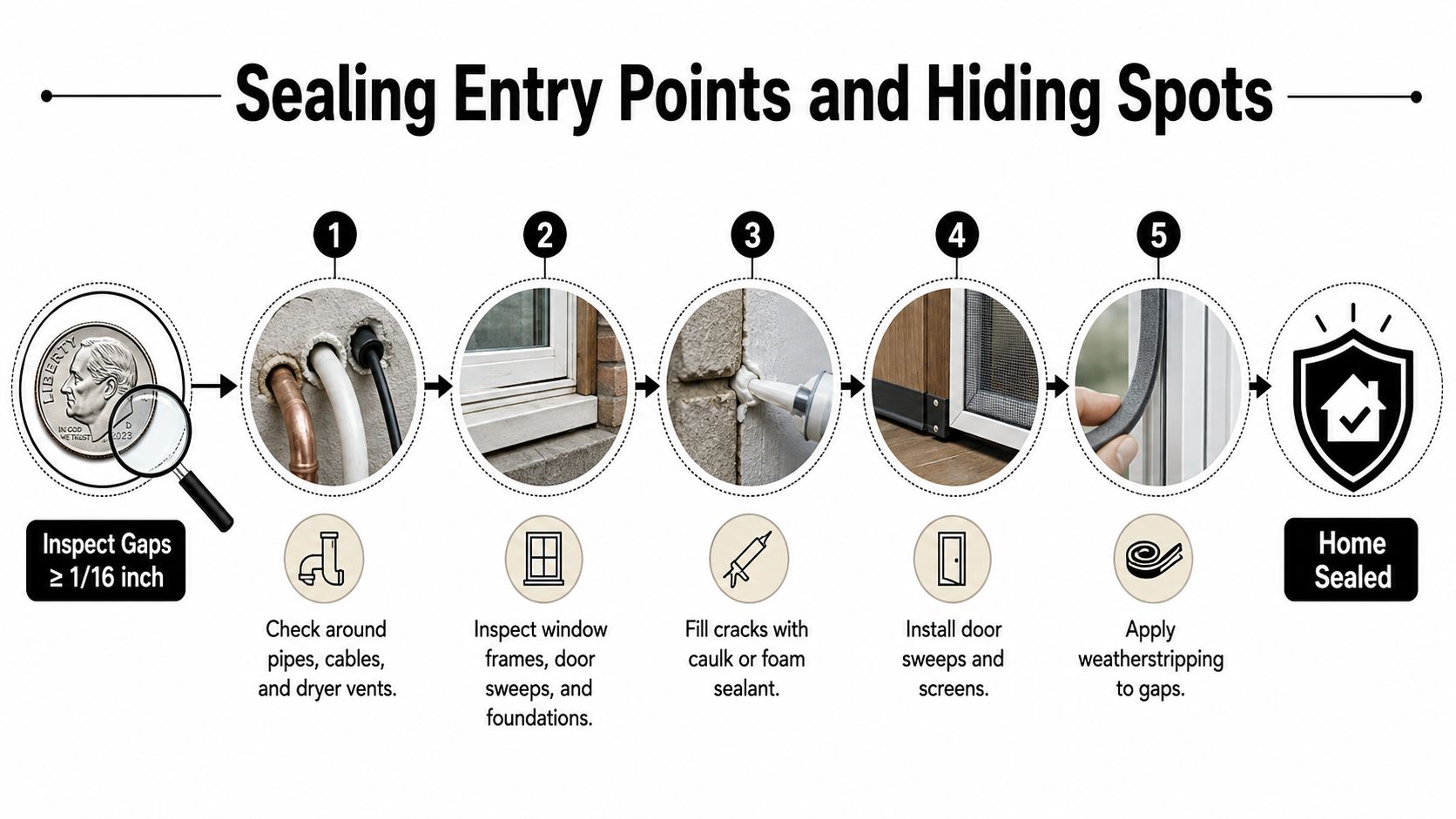
Cockroaches don't need a large opening to move between spaces. EPA guidance explains that young roaches can squeeze through a crack as thin as a dime, which is why small gaps around plumbing and trim deserve attention. A sealant project that ignores narrow penetrations can leave an easy route into cabinets, wall voids, and mechanical rooms.
Walk the home with a bright flashlight and a screwdriver. Look for movement, droppings, shed skins, grease marks, and daylight around openings. Focus first on locations where utilities enter walls or floors.
Inspect the places technicians check first
In the kitchen, examine sink escutcheons, dishwasher hose penetrations, refrigerator water lines, and the joint where the baseboard meets the cabinet toe-kick. Under-sink cabinets deserve special attention because pipes, warmth, moisture, and clutter often meet in one confined space.
Outside and in the garage, inspect dryer vents without secure covers, gaps around gas meters, foundation cracks in poured basements, and garage-to-house doors with worn weatherstripping. Check window screens, foundation vents, utility lines, and basement penetrations before assuming the issue is limited to the kitchen.
Use the right material for the opening
Use silicone caulk around interior plumbing penetrations. Install door sweeps with a brush seal where the garage or exterior door meets the threshold. For exterior gaps, pack copper mesh into the opening first and then seal over it. Fine stainless-steel mesh works well over foundation vents when airflow must remain available.
Don't overlook harborage. Stacked cardboard, paper grocery bags, and crowded under-sink cabinets create protected spaces even when no exterior entry point is obvious. Remove or reorganize those materials while sealing.
Sealing works best after sanitation has removed food and moisture. Otherwise, survivors can remain inside a food-rich home and rebuild activity behind the new barrier.
For a visual walkthrough of common sealing locations, use the following embedded guide:
Moisture Control and Fixing Leaks
Cockroaches can survive on small, overlooked water sources, so moisture control deserves the same attention as food storage. Northwest Indiana basements, sump pits, crawl spaces, older bathrooms, and laundry areas can provide damp conditions long after a visible leak seems minor. Guidance from the Armed Forces Pest Management Board moisture-control resource recommends correcting leaks and reducing damp environments as part of pest prevention.
Map every source of water
Check under-sink cabinets, around water heaters, behind toilets, near washing-machine hoses, and along basement rim joists. Tighten or replace fittings that drip, even when the amount seems insignificant. Run bathroom exhaust fans during and after showers, and use a dehumidifier in damp basements or crawl spaces.
A sump pump crock needs routine inspection too. Keep it clear, confirm the pump operates properly, and use a sealed cover where the system allows one. Open or poorly covered sump areas can attract moisture-seeking pests and provide a route into the basement.
Keep runoff away from the foundation
Clean gutters and extend downspouts at least six feet from the foundation. Grade soil away from the house so snowmelt and heavy summer rain don't pool beside the slab or basement wall. Caulk around tub spouts, escutcheons, and pipe penetrations, and consider gaskets behind outlet covers in kitchens and bathrooms where drafts or gaps connect to wall cavities.
If a suspected plumbing leak extends into the structure, repair costs can vary by location and access. A homeowner researching the issue may find this guide to San Antonio slab leak repair cost useful for understanding why early leak detection matters, even though the service area differs from Crown Point.
DIY Baits and Traps vs Professional Service
Most homeowners begin with sticky traps, grocery-store bait stations, a vacuum, or a can of spray. Those tools can help when activity is light and limited to one room, but they have different jobs. A monitor tells you where movement occurs. A vacuum removes visible insects and debris. Bait reaches foraging roaches. Exclusion blocks routes. Spray alone usually does none of those things fully.
The verified urban IPM data show why the combination matters. Individualized IPM that included cleaning food residues, removing nutrient sources, and sealing cracks reduced the proportion of infested households from 80.5% to 39.0% after six months, while the control group changed from 78.1% to 81.3%, as reported in this urban cockroach IPM study. A public-housing intervention also reduced cockroach populations from 24.7 per unit before treatment to 3.9 per unit by month four, with counts remaining below five per unit for the next eight months.
What a homeowner can reasonably handle
For limited activity, place small gel-bait placements behind the refrigerator, under the sink, and inside cabinet hinge areas where airflow is low. Follow the product label and keep bait inaccessible to children and pets. Add sticky monitors along wall edges behind the stove and near the water heater, then record what they catch instead of guessing from one sighting.
Vacuum cracks, appliance edges, and cabinet corners with a crevice tool. Avoid spraying repellent insecticide over or near bait placements, because the spray can discourage roaches from feeding on the bait. In attached housing, tell the property manager early. Shared plumbing chases and wall voids can move activity between units.
| Approach | Avg. Effectiveness | Best For |
|---|---|---|
| Gel bait and sticky monitors | Can help with light, localized activity when placement and sanitation are consistent | Early signs confined to one room |
| Vacuuming and exclusion | Removes visible activity and reduces shelter or movement routes | Maintenance and prevention after inspection |
| Bait, sanitation, vacuuming, and exclusion together | The strongest homeowner-led approach because it addresses several survival needs at once | A small population with clear harborage |
| Licensed professional IPM | Appropriate when activity is widespread, persistent, or connected to other units | Daytime sightings, multiple rooms, recurring infestations, and commercial facilities |
Know when DIY has reached its limit
Professional service becomes the sensible choice when you see roaches in daylight, find droppings in multiple rooms, locate egg cases or nymphs, or continue seeing activity after sanitation and baiting. A licensed technician can inspect wall voids, appliance cavities, plumbing chases, and other areas a flashlight may not reveal. Treatment may include targeted commercial baits, insect growth regulators, residual dusts in suitable voids, and follow-up monitoring.
In multi-unit buildings, cooperation matters. A building-wide cockroach IPM study found that education, vacuuming, sanitation, boric acid dusting, baiting, and targeted spray achieved 90% reduction by week two, 96.5% by week four, 99% by week eight, and 100% by week twelve. That kind of result comes from coordinated work, not a single aerosol application.
Read why DIY pest control can become a false economy before deciding that repeated store-bought treatments are the cheaper path.
Seasonal Cockroach Checks for Crown Point Homeowners
Crown Point homes move through sharp seasonal changes, from freezing winter conditions to humid summer storms. Cockroach prevention works better when inspections follow those changes instead of waiting for a surprise sighting.
Spring
As soon as frost leaves the ground, walk the foundation with a flashlight. Look for new cracks, displaced joints, gaps around utility lines, damaged screens, and openings near the garage. Warm rain can make damp exterior areas more attractive, so clear debris and confirm that drainage moves water away from the structure.
Summer
Check basement and crawl-space dehumidifiers, clean gutters, and inspect sump pump areas. Sweep garages, porches, sheds, and outdoor storage spaces for pet food, bird seed, recyclables, and damp cardboard. Keep doors closed and repair torn screens before humid weather increases indoor activity.
Fall
Fall deserves the closest inspection. As outdoor temperatures fall, cockroaches sheltered in drains, utility areas, and exterior harborage may move toward warm interior walls. Before sustained cold arrives, replace worn weatherstripping, install or adjust door sweeps, inspect attic and foundation vents, and check plumbing penetrations.
Winter
Focus indoor attention on the furnace room, water heater closet, basement, and plumbing chases. Warm, moist air leaking into wall cavities can support hidden activity even when outdoor conditions are harsh. Place sticky monitors in these areas and log counts monthly so you can identify a population increase before it spreads.
A seasonal log should include the date, location, monitor findings, leaks, clutter, and any repairs completed. That record helps homeowners, landlords, and commercial managers distinguish an isolated visitor from a recurring building condition.
Working With The Green Advantage for Lasting Prevention
Long-term cockroach prevention is a coordinated routine, not a single cleaning day or spray visit. Sanitation removes food and shelter. Exclusion limits movement. Moisture repairs remove dependable water sources. Monitoring shows whether those changes are working and identifies the locations that still need targeted treatment.
The Green Advantage can turn that framework into a service plan for Crown Point homes, rental properties, and commercial facilities in Northwest Indiana. A first visit should focus on diagnosis rather than a quick pass with a sprayer.
What an inspection should cover
A practical inspection includes:
- Kitchen: Appliances, cabinet hinges, sink plumbing, backsplashes, toe-kicks, food storage, and trash areas.
- Bathrooms: Drains, plumbing penetrations, tub and toilet areas, condensation, and cabinet interiors.
- Basement and garage: Sump equipment, water heaters, utility penetrations, cardboard, drains, and door seals.
- Exterior: Foundation gaps, vents, screens, thresholds, drainage, and openings around utilities.
Where appropriate, a technician may place gel bait, an insect growth regulator, or monitors in protected harborage zones. The service plan should identify conducive conditions, explain what the homeowner or staff needs to change, and outline follow-up touchpoints.
Why follow-up matters
A one-time treatment can reduce visible activity without resolving hidden egg cases, inaccessible harborages, or movement between connected units. Ongoing IPM uses monitoring and repeat visits to confirm suppression and adjust treatment locations. That matters in apartments, restaurants, schools, warehouses, and other commercial properties where one untreated area can reintroduce activity.
Building-wide work has produced strong results when residents or staff cooperate. In one apartment-building study, community-wide IPM reduced cockroach counts per apartment by 88% within seven weeks, and 85% of the original infestations were eliminated by seven months, according to this long-running housing IPM research. The same research supports sustained monitoring and follow-up because pest levels can rebound when interventions stop.
Ask about family- and pet-conscious product choices, eco-friendly pest control options, treatment documentation, and scheduling that fits your property. The right plan may also identify related needs, such as rodent exclusion, ant control, termite control, mosquito control, spider control, wasp removal, or preventative pest treatments for seasonal risks.
If you're seeing cockroaches in your Crown Point home or business, contact The Green Advantage for a focused inspection, targeted cockroach treatment, and a prevention plan built around sanitation, exclusion, moisture control, and monitoring. Visit The Green Advantage to schedule service or request a quote before a small sighting becomes an established infestation.