
A flea problem in the yard usually starts the same way in Crown Point. The dog comes in scratching, the kids avoid the back lawn, and you start wondering whether the shaded strip along the fence is the primary problem. That's where natural flea control for yard work makes sense, because fleas build pressure in the places pets regularly use, not just in the open grass.
For homeowners looking for pest control in Crown Point, IN or searching pest control near me after a weekend spent outside, the right answer is usually not a single spray. Fleas reproduce fast enough that yard control has to be integrated. One source notes that just 10 female fleas can produce about 250,000 fleas in 30 days under favorable conditions, and another widely cited estimate says adults are only about 1% of the total flea population in the home or yard, which is why environmental management matters so much in a place like Northwest Indiana where moisture and shade can line up quickly (DoodyBug).
The Green Advantage works with that reality every day. Families who want a more environmentally mindful approach to residential pest control, or businesses looking for commercial pest control that doesn't rely on broad, reactive spraying, usually get better results when the property is treated as a system. That means the yard, the pet traffic patterns, the shaded edges, and the follow-up all matter.
Practical rule: if the yard stays damp and overgrown, fleas keep getting a place to rebuild.
Natural Flea Control for Yard in Crown Point
Crown Point yards have a lot in common with the rest of Northwest Indiana. We get the same mix of shade, wet periods, and protected corners that let fleas hang on in the spots that aren't always inspected closely. That's why homeowners searching for an exterminator in Crown Point, IN or even an exterminator near me often need a plan that starts outdoors, not just inside the house.
The strongest natural yard strategy is prevention-first. Fleas prefer moist, dark, and overgrown areas, so mowing regularly, trimming shrubs, clearing weeds, and removing thick brush or debris reduce the sheltered habitat they depend on (PetMD). That's not just routine landscaping. It's the foundation of flea pressure reduction.
Why the yard matters before the house
Fleas don't stay in one place for long. They move with pets, wildlife, and people, then settle into the cool edges of a yard where grass is taller and the soil stays protected. In practice, that means the back fence line, under decks, around dog paths, and near dense foundation plantings often become the first places to check.
The Green Advantage often approaches these jobs the same way it approaches other eco-friendly pest control problems, whether the issue involves spiders, ants, mosquito control, or rodent control. The goal is to make the property less welcoming, not just to knock back the surface activity for a day.
The most useful natural flea control is usually the least dramatic one, because it changes the habitat fleas rely on.
That's also why this guide focuses on field-tested steps instead of broad promises. Some natural methods work well in the right conditions, but they need targeted placement and repeat attention. If a yard has both pet traffic and protected shade, the best results usually come from matching the method to the microclimate, not from treating every square foot the same way.
Inspect Yard Flea Hotspots with White Socks
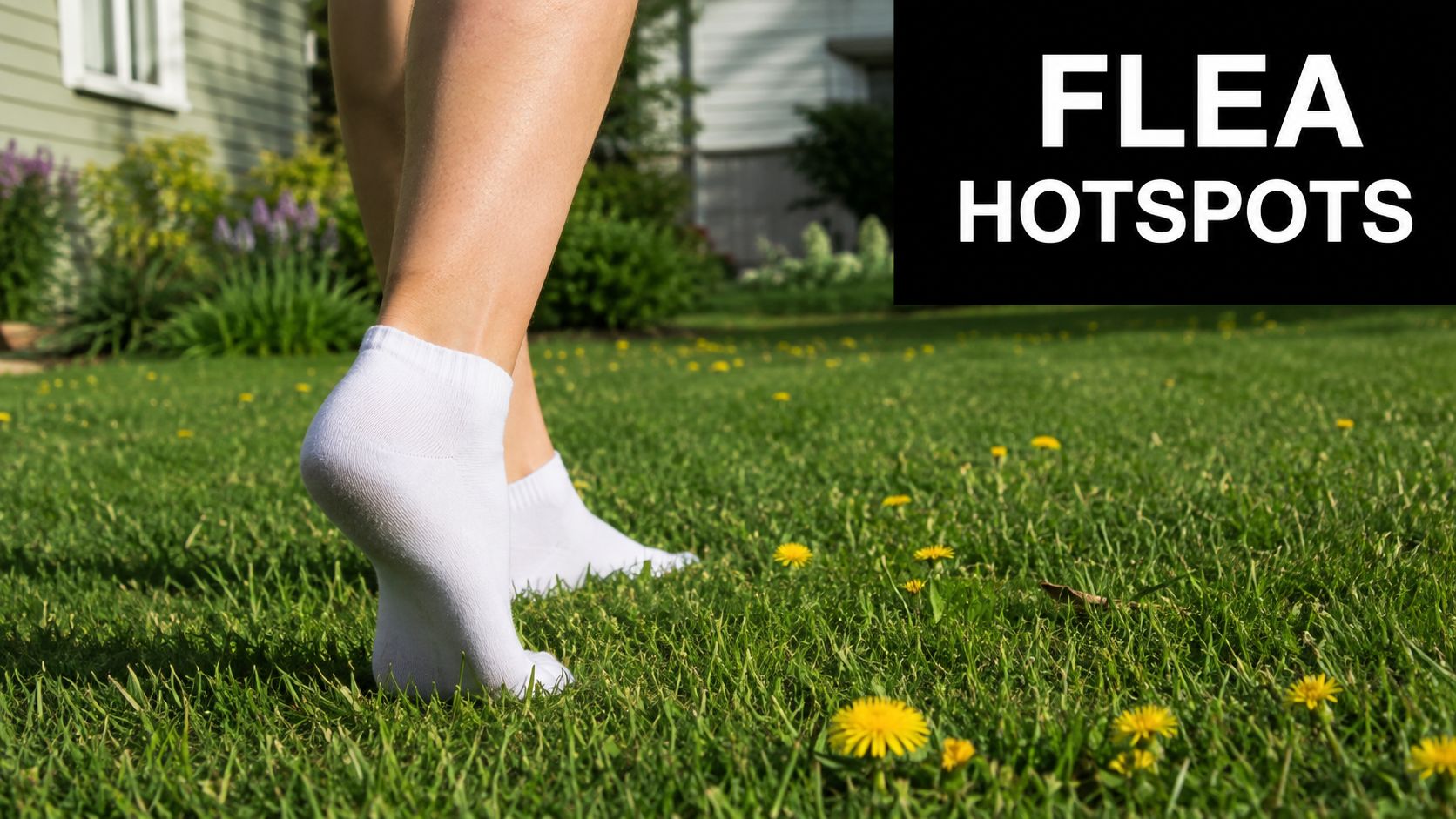
A quick white-sock walk gives you a better map than guessing ever will. WebMD and the Ecology Center both recommend walking the yard in white socks, because fleas jump onto the socks and expose the active zones. That lets you spot-treat the worst areas instead of blanketing the whole property (Ecology Center).
How to read the yard in 15 minutes
Start where pets rest, then move into the yard edges, the shaded side of the house, and any damp spots near shrubs or mulch. Wear tall white socks over pants cuffs if possible, then walk slowly through the grass and pause for a few seconds in each area. If fleas show up on the socks, that spot needs attention first.
A small test like this is useful after rain, after mowing, or any time the yard feels especially humid. It also helps in Crown Point because a lot of lots have mixed sun and shade, which can make one corner act very differently from the next. A homeowner who finds the worst zone quickly can conserve product and protect beneficial insects by avoiding a broad, unnecessary treatment.
For readers who want to understand why fleas spread so fast, the internal guide on the flea reproduction cycle is a good companion piece. It reinforces why the socks check matters. One visible flea often means the yard or nearby interior spaces are already supporting a much larger cycle.
Field note: the socks test works best as a scouting tool, not as the cure itself.
What to do with the results
Use the socks check to create a simple hit list.
- Heaviest flea activity: target these zones first with habitat cleanup and a focused treatment.
- Light activity under shade: trim back cover and improve sunlight exposure.
- No activity in open turf: leave it alone unless pets spend time there.
That targeted approach is what keeps natural flea control practical. It avoids overspraying and helps you focus on the parts of the yard that support flea survival.
Modify Habitat to Starve Fleas Out
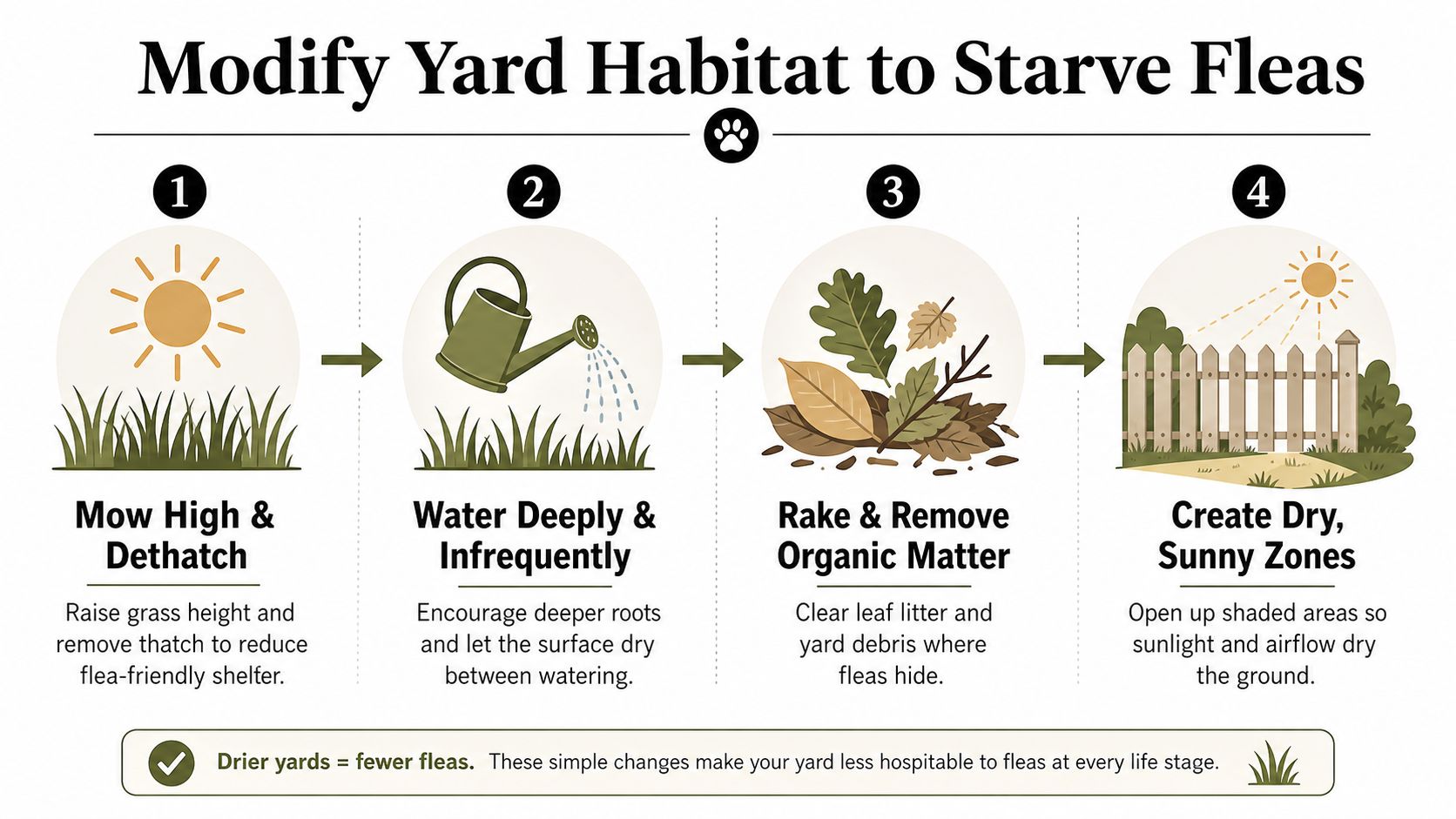
Habitat work comes first because fleas do not need much help to keep going once they find shade, cover, and steady moisture. In Crown Point, that usually means the problem shows up fastest in the same places you already avoid after a rain, near dense foundation plantings, under low branches, and along edges that stay damp longer than the rest of the yard. If you keep those spots open and drier, you make the yard less forgiving for fleas without spraying every square foot.
Keep the yard open and less forgiving
The goal is to take away the protected places fleas use between hosts. Mow regularly, trim weeds, clear brush, and remove leaves or other debris that hold moisture and block airflow. If irrigation is running long enough to keep shaded areas damp, cut that back too.
A steady maintenance pattern works better than a rescue effort after fleas spread. Cut grass, rake out organic matter, and open air movement near fence lines and foundation beds. When one corner stays thick and wet, it keeps acting like a shelter, especially in Crown Point yards where sun and shade can change quickly across a single property.
That same plant growth can also hide other health problems in beds and borders. If the yard needs more than pest cleanup, Prestonwood Commercial Landscape Services plant care can be a useful reference for keeping plants healthier while you cut back the dense cover fleas prefer. Healthy beds still need restraint, because crowded growth and trapped moisture work against flea control.
Where the weather works for fleas
Crown Point summers and shoulder seasons can create damp, sheltered pockets that fleas use well. The practical answer is moisture control. Reduce overwatering, shorten the time soil stays wet, and avoid letting shaded spots stay packed with mulch, leaves, or tall grass.
For homeowners who want the biology behind that approach, biological pest control basics explain why changing the habitat matters as much as treating the pest itself. Fleas stay active where the environment keeps giving them cover. When the yard dries faster and sees more light, the cycle has a harder time rebuilding in the same spots.
If the shade stays thick and the soil stays wet, fleas keep rebuilding in the same spots.
For homeowners balancing residential pest control with day-to-day yard care, the lesson is straightforward. A dryer, sunnier yard puts steady pressure on flea survival, and that often does more than a single broad treatment that fades before the next warm spell.
Apply Beneficial Nematodes the Right Way
Beneficial nematodes are one of the most practical natural tools for flea pressure in the soil. Texas A&M AgriLife Extension says they can be applied to heavily infested yard areas, and the Ecology Center recommends using them in soil where fleas have been found rather than spraying the whole yard (Texas A&M AgriLife Extension). That makes them a good fit for shaded pet hotspots.
The protocol that protects the treatment
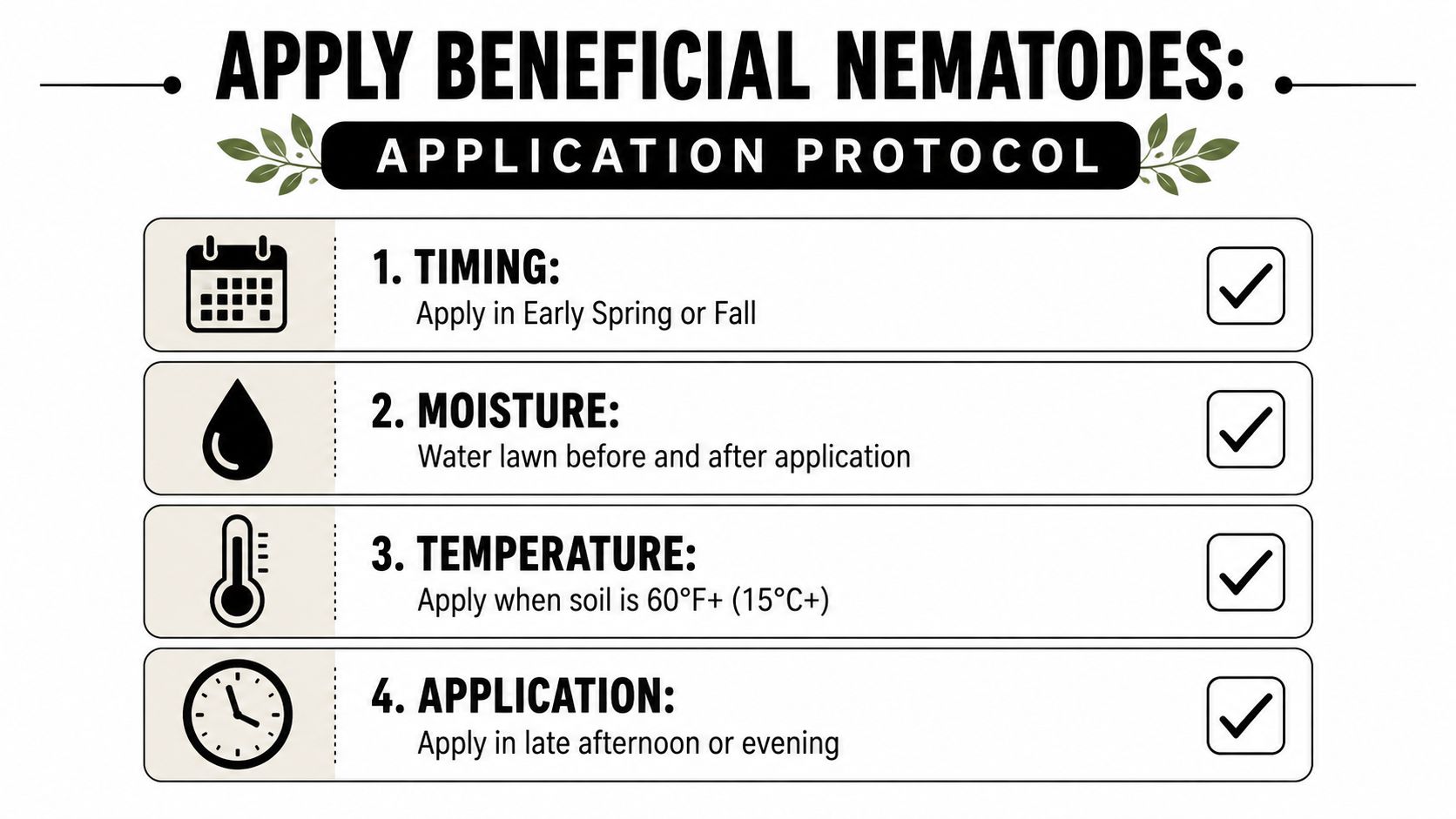
The workflow is consistent across independent guides. Lightly pre-wet the soil, apply the nematodes in the evening or on a cloudy day to avoid UV damage, then keep the treated zone lightly moist for several days to two weeks so the nematodes remain active and do not dry out (LeafyZen). A dry, hot application window wastes the treatment. So does saturated soil.
That moisture balance matters in Crown Point yards with mixed drainage. Too much water can wash the nematodes away or reduce placement accuracy. Too little water can kill them before they do their job. The best target is shaded, pet-used soil after mowing and debris removal, where fleas tend to concentrate in cool, protected microhabitats.
For homeowners who want to understand the biology behind this kind of treatment, the internal guide on what is biological pest control gives broader context. Nematodes fit into that category because they use a living control agent instead of relying only on a chemical barrier.
Practical rule: apply late, keep the soil lightly moist, and focus on the flea hotspots instead of the entire lawn.
Where nematodes help most
They are most useful when the yard has already been cleaned up and you're trying to reduce larvae in the remaining problem areas. That means they work best after mowing, edging, and removing debris. They're not a shortcut around maintenance, they're a biological follow-up that fits into a larger plan.
Mechanical Removal and Diatomaceous Earth
Mechanical cleanup has a different role from living controls. It doesn't chase fleas with biology, it removes the places where they shelter. That includes dethatching, raking leaf litter, and clearing the dense edges where debris collects under shrubs, porches, and fences.
Use dry-contact dust only where it can stay dry
Diatomaceous earth, or DE, only works when the yard surface is dry and rain is not expected for 24 to 48 hours, because moist DE loses effectiveness (LawnStarter). That makes it most useful in sheltered, low-moisture zones like under porches, along fence lines, and in dense ground cover. Open turf is usually a poor place for it.
The best workflow is straightforward. Clean first, then spot-treat. Dethatch the problem area if buildup is heavy, rake out leaves and clippings, and use a thin targeted layer of DE where fleas still have a refuge. Reapply after rain or heavy dew if the area stays in the treatment zone.
A lot of homeowners make the same mistake with dust products. They spread them broadly before rainfall or irrigation, then assume the yard is covered when the product has already lost its edge. That creates a false sense of control and wastes the material.
Keep the cleanup paired with sunlight
The mechanical side matters because sunlight and drying reduce egg and larval survival. The less organic cover the yard has, the faster the remaining moisture leaves the surface. That's why open, sunlit borders tend to stay more manageable than shaded, cluttered areas.
If you're already using white socks to find the worst spots, use that same map to guide your cleanup. The work doesn't need to be glamorous, it needs to be specific. Clear the exact places where fleas have shelter, then leave the open areas alone.
Botanical Sprays Pet Care and Seasonal Timing
Natural sprays can still help a Crown Point yard, but only if they are used with a clear plan. Some essential oils have been reported as effective against fleas at low concentrations, and natural options usually lose their residual effect faster than chemical insecticides, so they need more frequent reapplication. That trade-off matters in yards with mixed sun, tree cover, and pockets of trapped moisture, because the spray has to line up with the places fleas keep rebuilding.
Align the yard, the pets, and the calendar
The practical approach is to treat the yard and the pets as one system. If pets keep carrying fleas back onto the property, the yard starts over. If the yard stays active and the pets are not protected, the problem keeps moving inside.
A homeowner handling backyard care can use a simple order of operations:
- Botanical oils: use cedarwood or lemon eucalyptus around perimeters where they make sense for the site.
- Pet coordination: keep pet flea prevention aligned with yard work so one side does not undo the other.
- Follow-up timing: return to outdoor treatment on a regular schedule because natural products do not linger as long.
- Shade checks: give extra attention to cool, moist corners after weather changes.
For pet owners who want a dog-focused perspective on safer spray use around outdoor activity, our guide for Denver trail dogs gives a useful comparison for how people weigh repellents around animals. The point is simple, product choice should stay within the limits of safety, especially in yards where pets and kids use the same space.
Why moisture control keeps coming back
Moisture still drives the pattern. Damp ground helps fleas stay active longer, and that is why natural programs need repeat checks. In a Crown Point yard, the shaded north side or the low spot near a downspout usually needs more attention than the sunny center of the lawn.
Match the spray to the season
Seasonal timing also changes how far a botanical spray can go. Early in the season, a lighter touch may be enough for perimeter pressure, while later stretches with thicker shade and lingering humidity can bring faster rebound in the same places. After a wet stretch, the safest assumption is that the treated area needs another look before fleas get comfortable again.
Botanical sprays work best as part of a broader routine, not as a stand-alone fix.
Families who want a calmer outdoor season usually get better results by keeping pet care, lawn maintenance, and reapplication timing in sync. That approach is easier to manage than reacting after bites start again, and it gives you a better read on whether a natural plan is still holding or whether the yard needs a stronger response.
Trust The Green Advantage for Flea Freedom
When a yard keeps producing fleas despite mowing, cleanup, nematodes, and spot treatments, the problem has usually moved beyond a simple DIY job. Persistent bites, recurring activity in the same shaded areas, or months of pressure are all signs that the infestation is not staying contained. At that point, it makes sense to call a pest control near me provider that understands both the local property conditions and the limits of natural methods.
The Green Advantage serves Crown Point and nearby Northwest Indiana communities with residential pest control and commercial pest control that look at the whole property. That matters for fleas, but it also matters for other seasonal problems like ants, spiders, mosquitoes, rodents, termites, and wasps. A good inspection doesn't just look for what's visible. It looks for where the problem is rebuilding.
For homeowners who want an exterminator near me without a hard sell or a one-size-fits-all spray plan, The Green Advantage offers a straightforward process. The team can inspect the yard, identify the protected areas that keep harboring fleas, and recommend a practical treatment path that fits the site. That may include eco-friendly options, prevention-focused follow-up, or a broader pest plan if the property has more than one issue at once.
The biggest advantage of professional help is not speed alone. It's precision. A trained technician knows how to separate a temporary hotspot from a yard that keeps feeding the cycle, and that difference saves time, frustration, and repeated guesswork.
If the backyard still feels like it belongs to the fleas, don't wait for another round of bites. Schedule a pest inspection, ask for a quote, and get a property-specific plan from a local team that works across Crown Point and Northwest Indiana.
If you're ready to stop chasing flea activity around the yard, contact The Green Advantage for a focused inspection and a natural-minded treatment plan built for Crown Point properties. Visit The Green Advantage to request service and get help restoring comfort outside.