
Buying a home in Crown Point is exciting right up until the inspection period starts. That's usually when the questions show up. Is the basement dry. Is the roof near the end of its life. Is there anything hiding behind the walls that could turn a good deal into an expensive surprise.
For many first-time buyers in Northwest Indiana, termites fall into that last category. You can walk through a clean, well-kept house and still miss activity inside framing, crawl spaces, or other concealed areas. A standard home inspection helps, but it usually isn't built for specialized pest detection. That's why a termite inspection for home buyers matters so much when you're under contract and trying to protect your investment.
Your Guide to a Smooth Home Purchase in Crown Point
A typical buyer in Crown Point gets the accepted offer, starts lining up financing, and immediately feels the clock speed up. The to-do list gets long fast. Appraisal. general inspection. insurance. final numbers from the lender. In the middle of all that, termite inspection can feel like one more item to squeeze in.
It shouldn't be treated that way.
A termite inspection is one of the few steps in the buying process that can uncover hidden wood-destroying insect activity before the house becomes your responsibility. That matters in Northwest Indiana, where moisture, crawl spaces, wood-to-soil contact, and older construction details can all create conditions that deserve a closer look.
The moment buyers usually get uneasy
Most buyers don't worry about termites until someone mentions stained trim, soft wood near a sill plate, or old mud tubes in a crawl space. Then the concern shifts quickly from curiosity to cost. If you're financing the home, the report may affect closing. If you're paying cash, the report still affects what you should ask the seller to fix, treat, or disclose.
A termite inspection doesn't need to create panic. It gives you usable information while you still have leverage.
That's the part many buyers appreciate once they've gone through it. The inspection isn't there to kill a deal. It's there to help you make a sound decision.
A smart buyer checks more than one system
Termites aren't the only hidden issue that can change a purchase. Roof condition, drainage, and exterior moisture management also affect what happens next with a home. If you're trying to build a complete picture before closing, it also makes sense to contact HIBCO ROOF for an inspection so you can review the roof condition alongside your pest findings.
That broader approach is often what keeps a closing on track. Buyers who gather clear answers early usually negotiate better and stress less.
Why local guidance matters
In Crown Point and nearby Northwest Indiana communities, termite concerns don't always show up in obvious ways. Activity may be hidden in subfloors, low-clearance crawl spaces, or roof voids that weren't reviewed closely enough. A local pest professional understands where to look, what conditions raise concern, and how those findings may affect a real estate transaction.
That's what turns an inspection from a formality into protection.
Why a Termite Inspection Is Non-Negotiable
Skipping a termite inspection to save a small amount at closing can create a much bigger problem after move-in.
In the United States, property owners spend over $5 billion annually to control termites and repair their damage, with an average repair cost of around $3,000 for an infested home. Without a specialized Wood-Destroying Organism inspection, buyers risk inheriting these hidden costs, as standard home inspections don't typically cover them, according to PestWorld's subterranean termite guidance.
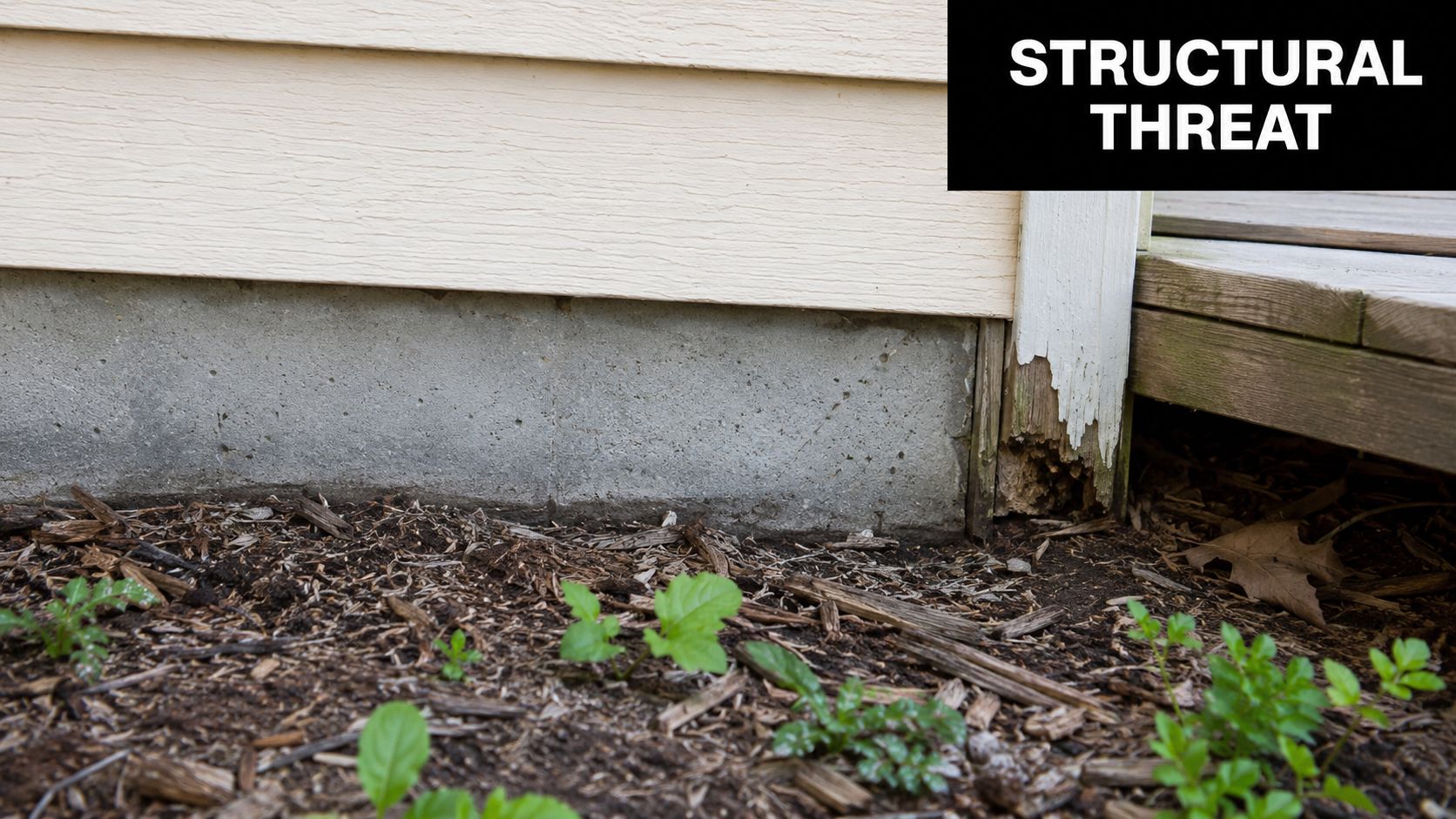
For a buyer, that's the main issue. Termite damage often stays out of sight until someone opens a wall, replaces flooring, or starts repair work in a crawl space. By then, you're no longer negotiating with the seller. You're paying contractors.
Why standard inspections aren't enough
A home inspector may note suspicious wood damage or moisture conditions, but termite activity requires a more targeted process. Real estate buyers sometimes assume the general inspection already covered pests thoroughly. In practice, that assumption leaves a gap.
A termite inspection for home buyers focuses on wood-destroying organisms, accessible structural areas, and signs that are easy to miss unless someone performs this work routinely.
Here's what makes it worth scheduling even when the loan doesn't force the issue:
- Hidden structural risk. Termites don't need a dramatic visual clue to be active. They can work inside framing members, behind finished surfaces, and in crawl spaces where buyers rarely spend time.
- Financial protection. Repair costs can start with a localized fix and grow once more compromised wood is uncovered during repairs.
- Negotiating power at closing. Findings discovered before closing can often be addressed through treatment, repair requests, credits, or contract negotiation.
- Loan protection. Some loan programs and risk zones make a clear wood-destroying insect report part of the path to funding.
In Crown Point, timing matters as much as the inspection itself
One issue many generic guides miss is the timing gap. Buyers often receive a seller's older inspection report and assume the property is still clear. That's risky. A report from months earlier may not reflect conditions near closing, especially in a market where weather, moisture, and construction details can change pest pressure.
Practical rule: In Northwest Indiana, schedule your termite inspection as close to closing as your contract and contingency period reasonably allow, and consider a re-inspection clause close to closing if conditions warrant it.
This short video gives a useful overview of why termite findings matter during a home purchase.
The cheapest mistake is the one you avoid
If a buyer asks me whether termite inspection is optional, the practical answer is simple. You can choose to skip it. You just can't choose the consequences if hidden activity is already there.
That's why this inspection belongs in the same category as title review and financing paperwork. It protects the purchase itself.
Finding and Scheduling Your Termite Inspection
The value of the report depends on the person doing the work. A rushed visual pass isn't enough, especially if the home has a crawl space, older wood components, or moisture-prone areas.
When buyers in Crown Point look for an exterminator near me or pest control in Crown Point, IN, they should focus less on the ad and more on the inspection process. You want a licensed pest professional who understands real estate timelines and knows how to document findings clearly for buyers, agents, and lenders.
What to ask before you book
A good inspection company should answer basic questions plainly. If the answers feel vague, keep looking.
Use this checklist when you call:
- Licensing and documentation. Ask whether the inspector is licensed to perform wood-destroying insect inspections and whether they can provide the reporting form needed for your transaction.
- Local transaction experience. Ask how often they handle home sale inspections in Crown Point and surrounding Northwest Indiana areas.
- Access expectations. Ask what areas must be accessible on inspection day, including crawl spaces, attics, garages, and utility rooms.
- Tool use. Ask whether the inspection relies only on visual review or also uses tools that help identify concealed issues.
- Report turnaround. Ask how quickly you'll receive the written findings so you can act before deadlines expire.
What strong scheduling looks like
Don't wait until the last days of your inspection contingency. Book early enough that you still have time to negotiate treatment, repairs, or follow-up review if the report identifies concerns.
At the same time, don't schedule so early that the report becomes stale before closing. That's where many buyers get caught. The smarter move is to place the inspection in the window where you still have contract protection, while keeping it relevant to the actual closing date.
A practical cost overview is available on The Green Advantage termite inspection cost page, which can help buyers compare whether they're booking a basic inspection, a lender form, or both.
Red flags buyers should take seriously
Not every inspection is equally thorough. Be cautious if you hear any of these:
| Concern | Why it matters |
|---|---|
| “We just do a quick visual.” | Concealed activity is the part buyers most need checked. |
| “You don't need access to the crawl space.” | Crawl spaces often hold the clearest evidence of termite conditions. |
| “The old seller report should be enough.” | Older reports may not reflect current conditions near closing. |
| “We'll explain it later if something comes up.” | Buyers need a clear written report promptly, not a vague summary. |
If an inspector can't tell you how they inspect, what they document, and when you'll get the report, that's enough reason to keep calling.
For home buyers, the best partner is the one who treats the inspection as part of your due diligence, not a quick stop between treatment appointments.
The Inspection Process What Happens On-Site
Most buyers feel better once they know what happens during a termite inspection. It's a methodical process, not a quick lap around the house.
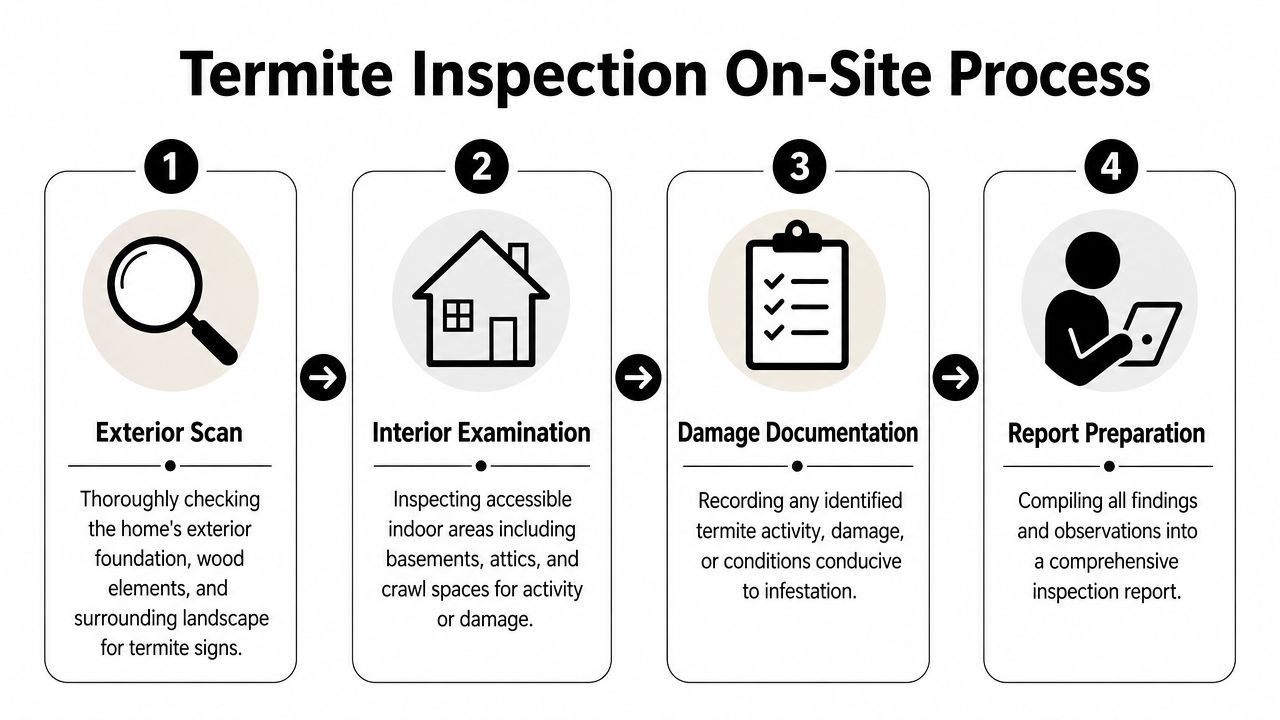
A professional inspection involves a rigorous methodology, including checking for mud tubes, tapping baseboards and joists to find hollow wood, and using tools like moisture meters and thermal imaging to find hidden colonies. A key step is breaking open mud tubes to see if they are moist, which indicates an active infestation, versus dry, which signifies past activity, as described in this overview of what a termite inspection includes for real estate.
Where the inspection starts
The exterior usually comes first. The inspector checks the foundation line, siding transitions, porch posts, steps, deck connections, and any place where wood sits close to soil. Landscaping matters too. Mulch piled against siding, heavy vegetation, and drainage issues can create conditions termites like.
Then the inspection moves inward. In homes with basements or crawl spaces, those lower structural areas often reveal the most useful information. Inspectors look at sill plates, joists, support members, subflooring, and visible penetrations where moisture or wood contact may attract activity.
What the inspector is looking for
The obvious sign is a mud tube, but that's not the only thing that matters. During a real inspection, the search usually includes:
- Live activity such as active tubes or current signs in accessible wood.
- Previous evidence such as old tubes, repaired areas, or visible treatment history.
- Damage patterns including hollow-sounding trim, blistered surfaces, or weakened structural wood.
- Conducive conditions such as leaks, high moisture, wood debris, or direct wood-to-soil contact.
Why tools matter
Visual review alone has limits. According to Evo Pest's checklist for new homebuyers, visual inspections alone miss up to 30% of infestations in concealed areas without auxiliary tools like thermal imaging or moisture meters, and roof voids and subfloor areas are among the most commonly missed locations.
That's especially important in houses with finished basements, cluttered utility areas, or tight crawl spaces where termite evidence may not be visible from a standing position.
Ask whether the inspector checks roof voids and subfloor areas. Those are easy places to skip and expensive places to miss.
What buyers can do on inspection day
You don't need to hover over the inspector, but it helps to be available for questions. If you attend, ask them to point out any active findings, older evidence, and conditions that could increase future risk even if no live termites are present today.
If access is blocked by storage, locked doors, or sealed crawl entrances, clear that up before the appointment. A report is only as good as the areas the inspector can reach.
Decoding the Report and Planning Your Next Move
The report matters most after the inspector leaves. At this point, buyers either gain an advantage or lose clarity.
An undisclosed, active termite infestation can reduce a home's value by 20% to 25%, and many government-backed loans require a clear report. The critical distinction is between an active infestation, which lenders often require to be resolved before closing, and old, treated damage, which may not impede the loan unless it affects the home's structural integrity, according to AZ Pest's guidance on questions to ask during a termite inspection.
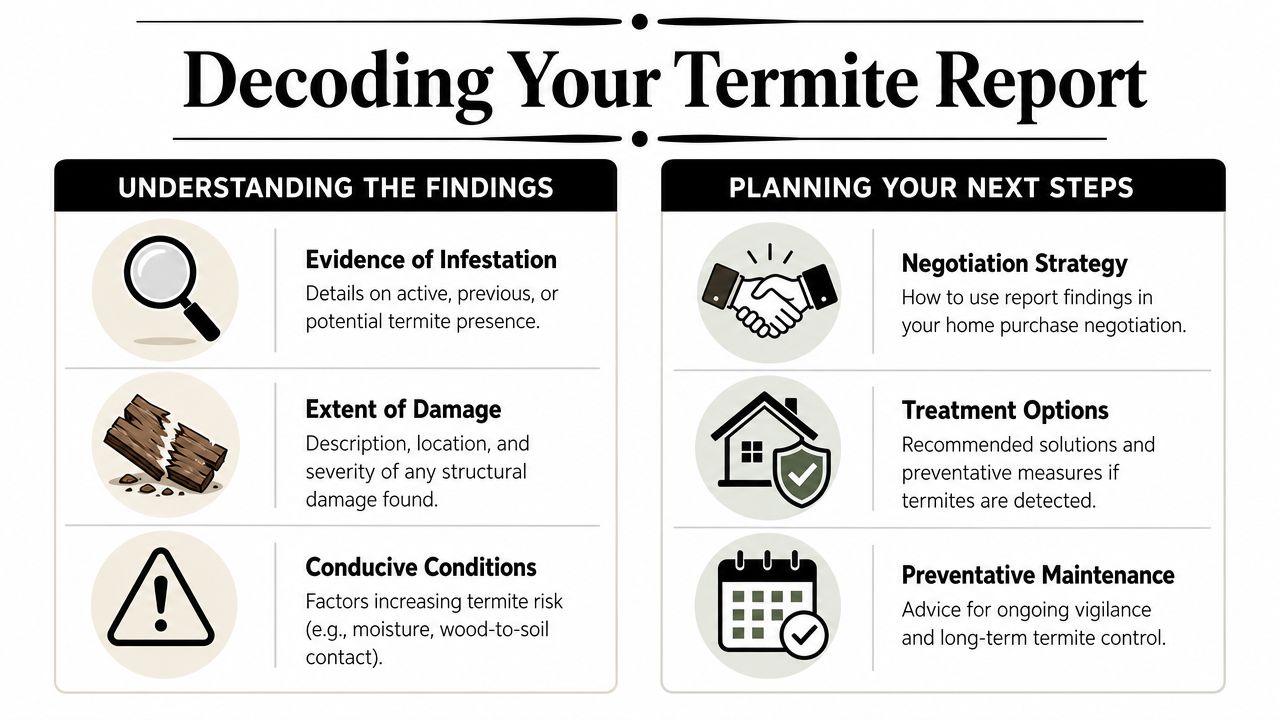
The three findings buyers need to separate
Many reports feel more alarming than they are because buyers blend different findings together. Keep them separate.
| Report finding | What it usually means for the buyer |
|---|---|
| Active infestation | This needs immediate attention. Treatment and, when needed, repair become front-line negotiation items before closing. |
| Previous infestation or old damage | This shows history, not necessarily current activity. It may still affect price, documentation, or repair requests. |
| Conducive conditions | These aren't termites themselves. They are risk factors such as moisture, wood contact, or poor ventilation that should be corrected. |
How to handle old damage without overreacting
This is one of the biggest negotiation mistakes first-time buyers make. They see old termite damage and assume the house is unfinanceable or unsafe. Sometimes that's true if structural members are compromised. Often it isn't.
If the report indicates old, treated damage, the next question is whether the wood still performs structurally and whether the damage has been repaired properly. That may call for a contractor, a follow-up pest evaluation, or repair documentation from the seller.
Old damage is not the same as active termites. Treat those as different problems with different solutions.
That distinction matters in negotiations. Active termites usually call for treatment before closing. Old damage often becomes a discussion about repair quality, replacement of affected wood, or a credit to address remaining work after closing.
A practical negotiation path
When a report comes back with findings, buyers generally have a few options:
- Request seller-paid treatment if active infestation is present.
- Request repair records for previous termite work and any structural correction already completed.
- Negotiate a credit or price adjustment when old damage exists but further repair is still advisable.
- Ask for a re-inspection after treatment or repair so the closing file reflects updated conditions.
For buyers who want help recognizing visible warning signs before the appointment, this termite damage identification guide can make the report easier to understand.
Treatment and prevention after the report
If active termites are found, treatment should match the site conditions and extent of activity. Depending on the structure, that may involve soil treatment, targeted treatment in affected areas, or broader protection around the home. The Green Advantage provides certified wood-destroying insect inspections and lender forms used in home transactions, along with termite control when treatment is needed.
If the report only identifies risk conditions, fixing moisture issues, correcting wood-to-soil contact, and improving access for future inspections may be the smarter move than chasing unnecessary repairs.
The strongest buyer response is usually calm and documented. Get the facts. Separate current activity from history. Then negotiate from the report, not from fear.
Your Partner in Pest Control After You Close
Closing day doesn't end the job. It changes it.
Once the house is yours, the focus shifts from transaction protection to long-term prevention. That applies to termites, but it also applies to the broader pest issues many homeowners in Northwest Indiana deal with over time, including ant control, rodent control, spider control, wasp removal, mosquito control, and seasonal pest issues tied to moisture and temperature swings.

What ongoing protection actually looks like
For many homes, the practical path is a preventative service plan. That can include monitoring, exterior treatment where appropriate, recommendations to reduce conducive conditions, and follow-up if activity is spotted later. Buyers searching for residential pest control or commercial pest control in Crown Point, IN are usually looking for exactly that kind of continuity.
A dependable provider should make the process simple:
- Clear communication about findings, treatment options, and next steps
- Environmentally mindful service that fits the property and pest pressure
- Reliable scheduling so inspections and callbacks don't drag on
- Local familiarity with the pest patterns common in Northwest Indiana
Peace of mind is the real product
Most homeowners don't call pest control because they want a technical lesson. They call because they want confidence in the home they just bought.
That's why prevention matters. If you've already invested in a termite inspection for home buyers, it makes sense to keep that same level of attention after closing. A clean report at purchase is a strong start. Ongoing observation and preventive pest treatments help keep it that way.
Homebuyer Termite Inspection FAQs
For VA loans, a Wood-Destroying Insect inspection is mandatory in over 35 states and territories, including areas with moderate to heavy termite risk. The loan cannot close in these designated zones without a completed NPMA-33 form and resolution of any active infestations found, according to AmeriSave's mortgage pest inspection guide.
Frequently Asked Questions
| Question | Answer |
|---|---|
| Do I need a termite inspection if I already had a general home inspection? | Yes. A general inspection and a wood-destroying insect inspection serve different purposes. The termite inspection is the specialized review. |
| Can an old seller report be enough? | It might be useful background, but buyers shouldn't assume an older report reflects current conditions close to closing. |
| Will old termite damage kill the deal? | Not always. Old damage and active infestation are different findings. The key issue is whether there is current activity and whether structural repairs are needed. |
| Are VA buyers likely to need a special form? | Yes, in designated risk areas the lender will need the completed NPMA-33 form before funding can move forward. |
| Should I attend the inspection? | If possible, yes. It helps to hear the findings directly and ask about active signs, past evidence, and risk conditions. |
If you're buying a home in Crown Point or nearby Northwest Indiana and want clear answers before closing, The Green Advantage can help you schedule a termite inspection, review the findings, and plan the right next step with confidence.