
A calm summer evening in Crown Point should end with people lingering outside, not rushing indoors swatting at mosquitoes. You set out the food, the kids head into the yard, and within minutes everyone's slapping ankles and waving bugs away from faces. That's usually the point when homeowners start searching for pest control near me, wondering if there's a safer way to get relief without turning the yard into a chemistry project.
That's where organic mosquito control gets a lot of attention. It sounds simple, family-friendly, and low stress. Parts of it absolutely work. Parts of it disappoint people because the internet often blurs the line between real mosquito reduction and short-lived comfort measures. In Northwest Indiana, where warm weather, rain, shaded landscaping, and backyard water sources all come together, the best organic plan is practical, not trendy.
Homeowners looking for pest control in Crown Point, IN or an exterminator in Crown Point, IN usually want the same thing. They want to protect kids, pets, guests, and pollinators while still being able to enjoy the yard. They also want honest guidance. That means saying upfront that mosquito control works best when you attack the breeding cycle first, use targeted larval tools where they belong, and stay realistic about what essential oil sprays can and can't do.
Enjoy Your Crown Point Yard Without the Mosquitoes
Organic mosquito control makes sense for a lot of Northwest Indiana families because the goal isn't just killing bugs. It's creating an outdoor space that feels usable again without unnecessary exposure and without guesswork. For some properties, that means a few simple maintenance changes. For others, especially larger yards with drainage problems, heavy shade, dense shrubs, and recurring standing water, it takes a more disciplined plan.
The frustration usually starts with mixed signals. One product promises a natural barrier. Another tells you to plant certain herbs. Another recommends candles. Homeowners try several things, spend weekends on DIY fixes, and still get bit every evening. The problem isn't a lack of effort. It's that mosquitoes don't need much to keep coming back.
What makes Northwest Indiana yards so mosquito friendly
In Crown Point and nearby communities, mosquito pressure tends to build around everyday features people barely notice:
- Low spots in lawns that hold water after rain
- Clogged gutters where water sits out of sight
- Plant saucers and buckets tucked near patios or garages
- Dense landscaping that gives adult mosquitoes cool, shaded resting areas
- Bird baths and decorative containers that stay full too long
A good organic plan starts by treating mosquitoes like a property issue, not just an annoyance. If the yard keeps producing them, repellent alone won't solve it.
Practical rule: If mosquitoes are active every evening in the same areas of your yard, assume there's a nearby breeding source until proven otherwise.
That's why people searching for residential pest control often end up needing more than a bottle of spray from the store. A real solution has to match the site. It has to account for how water moves, where shade holds moisture, and which parts of the yard keep adult mosquitoes protected through the day.
The same logic applies on commercial properties. Apartment grounds, office grounds, and outdoor seating areas can all develop mosquito pressure when drainage, irrigation, or maintenance slips. That's why commercial pest control and home mosquito work often overlap in strategy. Control starts with inspection, not assumptions.
Start with the Source to Reduce Mosquito Habitats
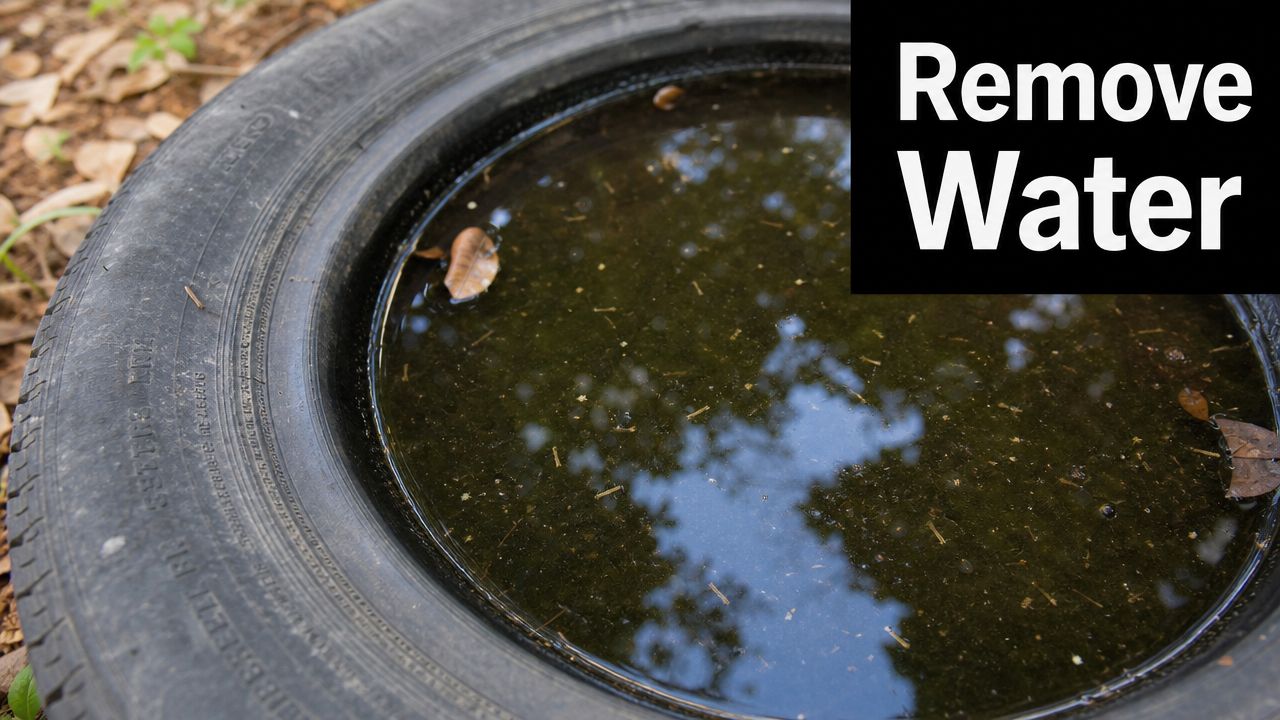
The most important step in organic mosquito control is eliminating standing water. The US EPA's guidance on integrated mosquito control explains that treating breeding habitats where eggs and larvae are concentrated is the most effective and least costly intervention, because mosquitoes require water to reproduce. For homeowners, that means source reduction isn't a side tip. It's the foundation.
What to check around your yard every week
Walk the property slowly. Don't just look at the obvious spots. Look for anything that can hold water long enough for mosquitoes to use it.
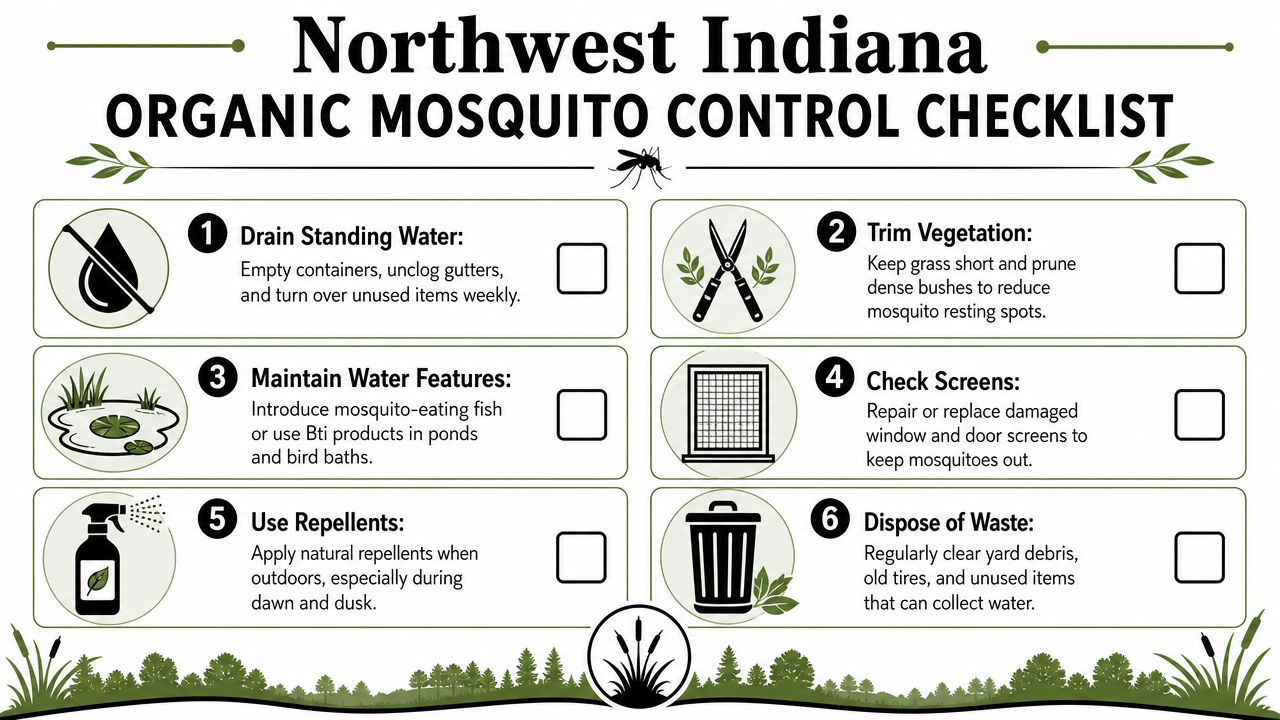
- Gutters and downspouts need to drain freely. If debris blocks flow, water settles and creates a hidden breeding site.
- Toys, wheelbarrows, buckets, and lids should be emptied or stored so they can't collect rain.
- Tarps and pool covers often sag in the middle and hold shallow water.
- Bird baths and pet dishes need regular attention. Temporary water that sits too long is the bigger concern.
- Plant trays and decorative pots are easy to miss because they collect small amounts of water near patios and entryways.
- Old tires and yard debris are major trouble spots because they trap moisture and stay shaded.
If your yard always seems wet in the same places, mosquito control and drainage work go together. A practical resource on yard drainage solutions for Northern Arizona discusses grading and runoff concepts that are useful for homeowners thinking through why water lingers in planting beds and low turf areas. The climate is different, but the core lesson is the same. Water that stays put becomes a mosquito problem.
Why this step works better than most sprays
People often start with adult repellents because they want immediate relief. That's understandable. But if the yard keeps producing mosquitoes, new adults keep replacing the ones you chased off yesterday. Source reduction attacks the cycle earlier, before the biting stage.
Here's a helpful visual on spotting and preventing breeding areas around the home:
A simple Northwest Indiana checklist
After rain, check these areas first:
- Near the foundation where splash blocks dump water into shallow depressions
- Along fences where toys, containers, or plastic items collect runoff
- Under decks where shade slows evaporation
- Beside sheds and garages where forgotten storage piles trap moisture
- At the curb or driveway edge where puddles can linger
If you only do one thing for organic mosquito control, make it a weekly standing water inspection. It's the one step that changes the whole yard.
Targeting Mosquito Larvae with Organic Solutions
Some water sources can't just be dumped out. Rain barrels, ornamental features, and certain low areas may stay wet as part of normal use. In those spots, the best organic approach is to target mosquitoes in the larval stage rather than waiting for adults to emerge.
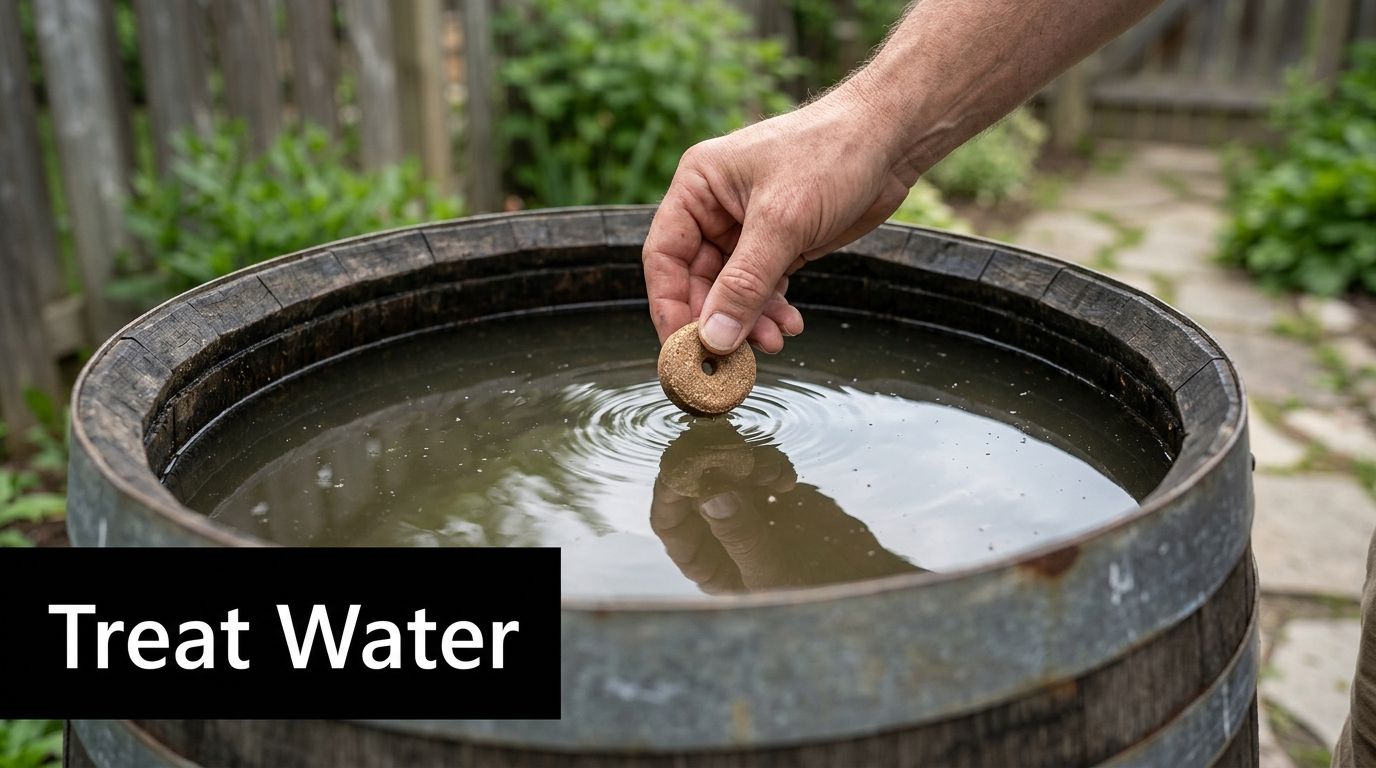
For small breeding areas under 100 sq. ft., North Carolina State Extension notes that Bti mosquito dunks are highly effective, kill mosquito larvae for approximately 30 days, and are safe for fish, birds, and other wildlife. That's why Bacillus thuringiensis israelensis, usually shortened to Bti, is one of the most useful tools in an organic mosquito plan.
Where Bti makes sense
Bti products are a good fit when water is expected to remain in place for a while. Common examples include:
- Rain barrels
- Decorative containers that hold water
- Unused low spots that stay wet
- Select water features where larvae are visible
- Other small standing-water areas on the property
This isn't a substitute for cleanup. It's a targeted follow-up for the water you can't remove.
How homeowners typically use it
Read the label of the specific product you buy and match it to the water site. Dunks are common for contained water sources. Granular products can fit other situations. The basic principle stays the same. You place the product where mosquito larvae are developing, then monitor the area and replace it as directed.
What matters most is consistency. If you treat a rain barrel but ignore buckets behind the shed, the property can still keep producing mosquitoes. Organic mosquito control works best when Bti is part of a larger plan, not a one-item fix.
Good field habit: Treat the water that must stay. Remove the water that doesn't.
Why Bti stands out from home remedies
Homeowners try all kinds of improvised solutions in standing water. The problem is that many of those approaches aren't targeted, aren't reliable, or create confusion about safety. Bti is different because it's a mosquito-specific larval tool with a well-established role in practical control programs.
That's one reason people searching for eco-friendly pest control often get the best results from a combination of sanitation, habitat correction, and selective larval treatment. It's more disciplined than tossing out a few natural products and hoping for the best.
For business properties, the same principle applies. Preventative pest treatments are always stronger when they focus on where pests develop, not just where people notice them.
Natural Repellents and Biological Controls
Natural repellents are the part of organic mosquito control that is often recognized first. Citronella candles. Essential oil yard sprays. Rosemary and thyme blends. Mosquito-repelling plants. Bat houses. More dragonflies. Some of these ideas can help a little in the right setting. None of them should be treated like a complete mosquito program.
Virginia Cooperative Extension's mosquito control guidance makes the trade-off clear. Essential oil repellents such as citronella, rosemary, and thyme often lose effectiveness after about one hour, while non-organic products can remain effective for four to six weeks. The same source notes that organic treatments often require frequent, sometimes daily, reapplication, and that no U.S. research has confirmed essential oils effectively control mosquito populations in the field.
What that means in real life
If you're using a botanical spray before dinner on the patio, it may help for a short window. If you expect that same product to keep the entire yard comfortable night after night, disappointment is likely. That doesn't make natural repellents useless. It just puts them in the right lane.
The same goes for candles. They can be part of the atmosphere. They shouldn't be the backbone of mosquito control.
For homeowners curious about predator-based ideas, this overview of mosquitoes' natural enemies is a useful look at the broader ecosystem around mosquito pressure. Biological helpers matter, but they don't replace habitat management.
Comparing Organic Mosquito Control Methods
| Method | Target | Effectiveness & Duration | Effort Level |
|---|---|---|---|
| Essential oil personal sprays | Biting adults near the user | Short-lived. Often fades after about one hour based on the guidance linked above | High, because reapplication is frequent |
| Citronella candles | Nearby adult activity | Limited and situational. Best thought of as minor comfort support | Moderate |
| Repellent plants | General yard environment | Modest at best on their own | Low once planted |
| Bti dunks or larval products | Mosquito larvae in standing water | Strong for the right sites when used correctly | Moderate |
| Bat houses and dragonfly-friendly habitat | Broader yard ecology | Supportive, not stand-alone control | Moderate to high |
| Professional mosquito management | Breeding sites, resting areas, and recurring pressure points | More reliable because the plan is tailored to the property | Lower day-to-day effort for the homeowner |
The honest takeaway
Natural repellents are best used as support tools, not as the main event. Use them when you'll be outside. Don't expect them to solve a breeding problem. If your family is still avoiding the yard after repeated DIY effort, that's usually the sign that the issue is bigger than candles, herbs, or weekend spraying.
Yard Maintenance and Safety in Northwest Indiana
You get a warm July evening in Crown Point, the patio is ready, and then the mosquitoes start finding the shady corners first. In Northwest Indiana, that usually means the problem is not one product. It is a mix of thick growth, damp hiding spots, and timing.
Keep the yard less inviting to adult mosquitoes
Adult mosquitoes rest where it stays cool, humid, and protected through the day. Around here, I see that pattern over and over near overgrown foundation beds, packed shrub lines, low tree canopies, and piles of unused yard items that hold moisture underneath.
A few maintenance habits make a real difference:
- Mow on schedule so grass does not stay thick and damp around play areas, patios, and walkways.
- Prune shrubs and low branches to open airflow and reduce shaded resting spots.
- Remove clutter such as stacked pots, old toys, unused containers, and debris piles.
- Check door and window screens so a yard issue does not become an indoor issue too.
If you are changing bed lines, drainage flow, or plant placement, landscape design software for homeowners can help you sketch ideas before you start digging. Use it to plan cleaner traffic paths, better sun exposure, and fewer soggy corners, not just a nicer look.
Organic products still need careful use
Homeowners hear "organic" and often assume "safe for everything." That is where mistakes happen. The National Wildlife Federation's warning on mosquito spraying points out that many essential oil sprays are highly toxic to bees on direct contact. Do not spray blooming plants. Do not treat while bees are active.
That trade-off matters in pollinator-friendly yards, which are common across Northwest Indiana.
If you want plants that may support a lower-pressure yard, use them as one part of the plan. This guide on what to plant to get rid of mosquitoes is a good place to start. Garden choices can help around seating areas, but they will not make up for heavy shade, poor airflow, or neglected maintenance.
Child and pet safety needs practical judgment
Families usually ask me the same question first. "If it is botanical, is it safer for kids and pets?" Sometimes yes. Sometimes no. Some oil-based repellents can irritate skin, and some are a poor fit for very young children, sensitive pets, or households that use the yard heavily every day.
Property-based control is often the safer starting point. Trim hiding areas. Reduce damp cover. Keep play zones open and dry. Use personal repellents carefully and according to the label instead of assuming every natural product belongs on skin, toys, or pet spaces.
Water features also need common-sense upkeep. Small decorative containers, neglected bird baths, and other stagnant spots need regular attention, as noted earlier in the article. Permanent ponds can behave differently when they support natural predators and proper circulation, but neglected decorative water still creates mosquito pressure fast.
The goal is a yard your family can use, with fewer bites and fewer unwanted side effects. That takes steady upkeep, honest product choices, and a plan that fits Crown Point conditions through the whole season.
When DIY Isn't Enough Call The Green Advantage
A common Crown Point pattern goes like this. You dump standing water, put Bti where it belongs, keep the grass cut, and the yard still gets rough at dusk. That usually means the pressure is coming from more than one spot, or from conditions on the property that are hard to correct without help.
I see it most on larger lots, shaded backyards, properties with drainage problems, and homes near tree lines, retention areas, or low ground that stays damp after Northwest Indiana rains. In those cases, DIY work still matters, but it often stops short of making the yard comfortable enough to use.
What professional help changes
Professional mosquito service starts with inspection, not product. The job is to find out why mosquitoes keep rebuilding on your property and which parts of the problem belong to you, the site, or the season. That includes breeding pockets, adult resting areas, irrigation habits, clogged drainage, dense foundation plantings, and the humid shade around patios and play areas.
It also means making careful treatment choices. "Organic" does not mean harmless in every setting. Some botanical materials can still irritate skin, and some can harm pollinators if they are applied carelessly around blooming plants. A good technician plans around bee activity, avoids unnecessary exposure in family-use areas, and tells you plainly what to change between visits so the treatment has a fair chance to work.
For homeowners searching for exterminator near me because the trial-and-error phase is getting old, that site-specific process is usually the primary value. Many mosquito jobs also uncover related pest issues, including spider control, wasp removal, rodent control, or seasonal perimeter work that helps the whole property feel more manageable.

What to expect in Crown Point and nearby Northwest Indiana service areas
A solid local service should be clear about what it can fix and what it cannot. If the next rain leaves water in the same low corner for days, or a neighboring area keeps producing mosquitoes, no honest company should promise a perfect yard with one visit.
What you should expect is practical guidance and a plan that fits the season:
- A property review focused on drainage, shaded resting spots, vegetation density, and likely breeding areas
- Treatment choices matched to the site with attention to family use, pets, and pollinator-sensitive areas
- Straight advice on what you need to handle between visits, such as gutter cleanup, container removal, or trimming back damp cover
- A seasonal approach that adjusts from spring buildup to midsummer pressure and late-season flare-ups
- Support for residential pest control and commercial pest control if mosquito pressure is part of a broader pest problem
That last point matters in Northwest Indiana. A mosquito plan that works in May may need adjustment by July when heat, storms, and fast plant growth change how your yard holds moisture and shade.
If you have already handled the basics and the yard is still driving people inside, professional service is usually the practical next step.
If mosquitoes are taking over your yard in Crown Point, IN or nearby Northwest Indiana communities, The Green Advantage can help you move from trial-and-error to a clear, family-conscious plan. Reach out to schedule a pest inspection, request a quote, or talk through your options for mosquito control, residential pest control, or commercial pest control with a local team that understands how Northwest Indiana properties behave season to season.