
A lot of Columbia homeowners end up in the same spot. You walk into the kitchen late at night, flip on the light, and something small moves under the dishwasher. Or you notice winged insects near a window in spring, ants showing up around the sink after a stretch of rain, or scratching in the wall once cooler weather rolls in.
That moment feels bigger than it should, because it raises immediate questions. Is this a one-time issue, or the start of a pattern? Is a spray from the hardware store enough, or are pests already nesting somewhere you can't see?
In Columbia, pest problems usually aren't random. The local climate gives many insects and rodents exactly what they need: warmth, moisture, shelter, and a long active season. That doesn't mean every home will have a major infestation, but it does mean waiting until pests are obvious usually puts you behind.
Good home pest control in Columbia SC starts with understanding why certain pests keep showing up here, and why timing matters almost as much as treatment. A smart plan isn't about spraying everything on a schedule and hoping for the best. It's about fixing the conditions pests use, staying ahead of seasonal pressure, and knowing when a home problem has crossed the line from nuisance to structural or sanitation concern.
Your Guide to a Pest-Free Home in Columbia SC
Columbia is the kind of place where pest pressure can develop unnoticed. A little moisture under a sink, a gap where utility lines enter the wall, mulch holding moisture near the foundation, or tree limbs touching the roof can all turn into easy opportunities for pests.
That local pattern isn't new. Columbia's pest control market is a long-established one, not a temporary trend. One Columbia-area provider listed on ZoomInfo was founded in 1962, reflecting more than six decades of continuous operation in this market, which points to a mature service industry shaped by recurring local pest issues over generations of housing growth and turnover (ZoomInfo listing for Home Pest Control LLC).
Why Columbia homes stay under pressure
The challenge here isn't just that pests exist. It's that many of them stay active longer than homeowners expect. Warm, humid conditions help insects develop faster and stay active longer, especially around moisture-prone areas indoors and shaded areas outside.
That changes the way a homeowner should think about prevention. In a cooler climate, you might get away with reacting only when something pops up. In Columbia, it's usually more effective to treat pest control like routine home maintenance, similar to checking drainage, sealing openings, and managing moisture before visible activity gets worse.
Practical rule: If pests are finding water, food, and a hidden entry point, they'll keep testing your home even after a one-time treatment.
What actually works
The homes that tend to stay calmer over time usually have the same basics in place:
- Dryer conditions: Leaks get fixed, crawl spaces and foundations stay monitored, and drainage moves water away from the structure.
- Tighter entry points: Gaps around doors, windows, vents, and utility penetrations don't stay open for long.
- Less outdoor pressure: Vegetation isn't pressed against the house, and debris doesn't collect near the foundation.
- A plan, not guesswork: Homeowners don't wait until they have a large interior problem to decide what to do.
That approach lowers the odds of sudden surprises and makes treatments more effective when professional help is needed.
Columbia's Most Unwanted Household Pests
Columbia homes deal with a broad pest mix, and the local climate is a big reason why. Warm, humid conditions accelerate insect development and extend seasonal activity, which means ants, cockroaches, termites, and mosquitoes can stay active longer here than they do in cooler markets, making prevention especially important (Orkin Columbia pest control page).
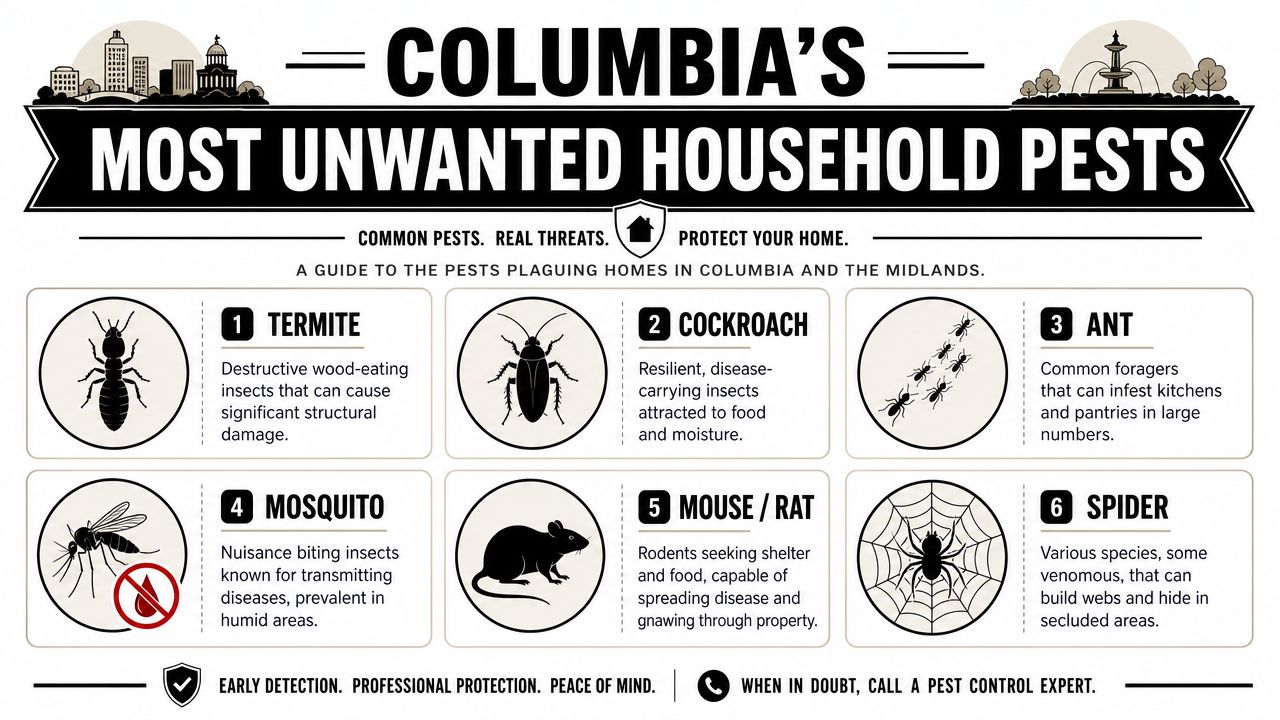
Termites
Termites worry homeowners for good reason. They don't usually announce themselves with a dramatic scene. More often, people notice discarded wings, mud tubes, or wood that sounds thin or hollow when tapped.
In Columbia, moisture and warm ground conditions make termite pressure a year-round concern. Homes with wood-to-soil contact, damp crawl spaces, or drainage issues tend to be more vulnerable.
Cockroaches
Cockroaches thrive where food residue, moisture, and shelter come together. In this area, kitchens, laundry rooms, bathrooms, garages, and utility spaces all create strong opportunities.
Two problems make roaches frustrating. First, they hide extremely well. Second, homeowners often underestimate how much water access matters. A home can look clean and still support roach activity if plumbing leaks, condensation, or humid voids behind appliances go untreated.
Ants
Ants are one of the most common reasons homeowners search for help. Some trail through kitchens and pantries. Others build around foundations, mulch beds, sidewalks, and patios, then move indoors when rain or heat shifts their patterns.
The reason ant problems feel never-ending is simple. Killing visible workers rarely solves the colony issue by itself. If the nest remains established outside or under slabs, activity usually returns.
Ant control works best when the trail, the nest, and the moisture source are all addressed together.
Mosquitoes
Mosquitoes are mostly an outdoor issue, but they still shape how people experience their property. Shady areas, wet spots, clogged gutters, planters, and anything that holds water can support breeding.
Columbia's humidity gives mosquitoes a long runway. If a yard stays damp and overgrown, spraying alone won't hold up for long without source reduction.
Rodents
Rodents usually become more obvious when outdoor conditions change and they start looking for shelter, food, and water indoors. Attics, crawl spaces, garages, and utility rooms are common trouble spots.
Look for signs like:
- Droppings: Often near baseboards, stored items, or pantry areas
- Gnawing: Packaging, wires, trim, or stored materials
- Noise: Scratching in walls or ceilings, especially at night
- Rub marks: Greasy streaks along repeated travel paths
Spiders
Most spider calls are really about two concerns: visible webs and fear of hidden bites. Spiders often move where prey is already present, so a spider problem can also point to another insect issue around the home.
That matters because spraying only for spiders without reducing the insects they're feeding on usually produces temporary results.
The Seasonal Pest Calendar for the Midlands
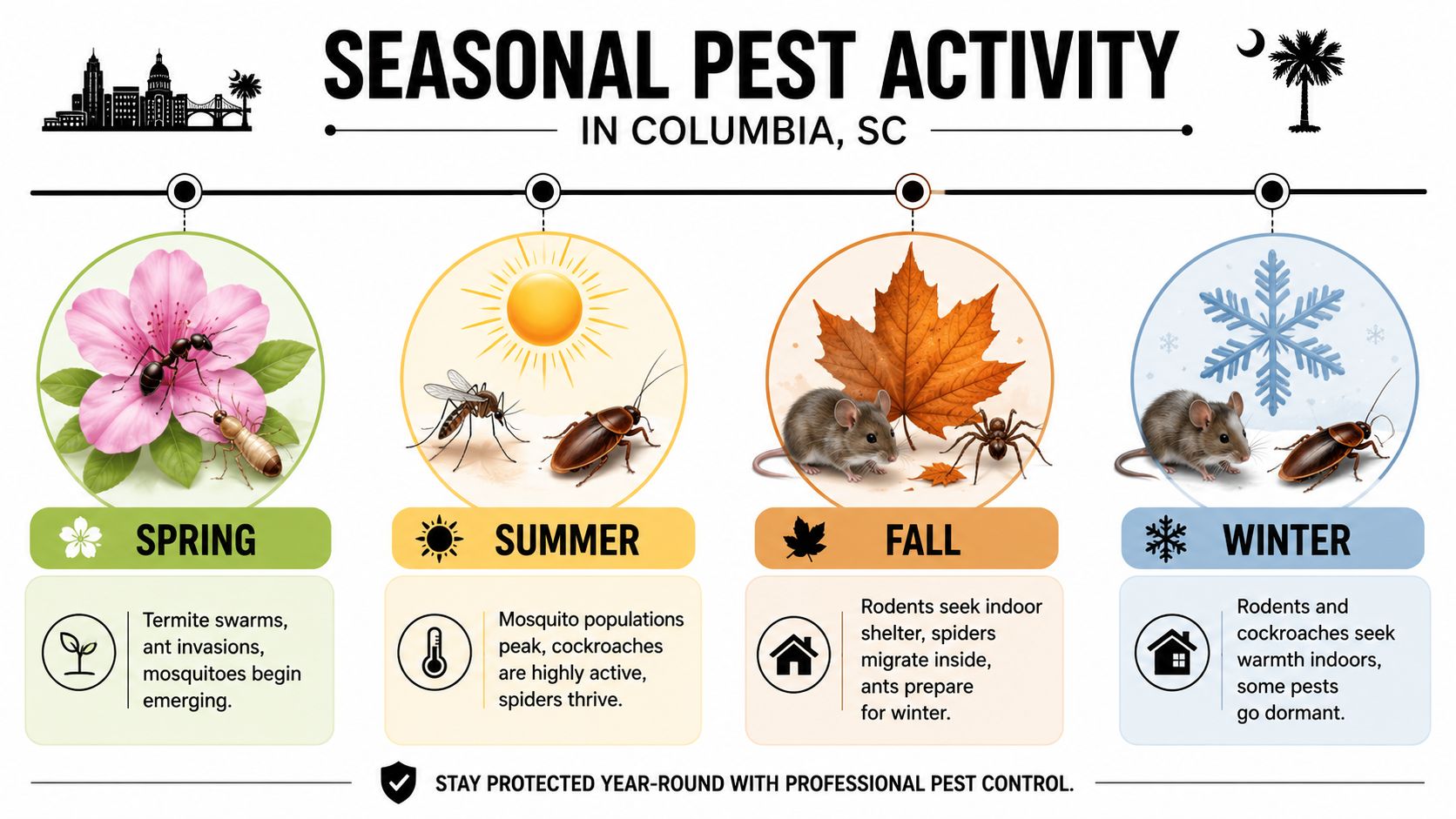
Pest activity in Columbia doesn't move in a straight line. It shifts with temperature, rainfall, humidity, and shelter availability. That's why one-time treatment often feels satisfying for a few weeks, then disappointing once the next seasonal wave starts.
A more useful way to think about home pest control in Columbia SC is as a calendar problem. Different pests become more noticeable at different points in the year, and your prevention plan should match that reality.
Spring pressure starts quietly
Spring is when many homeowners first realize winter didn't reset the house the way they hoped. Winged termite activity can show up around windows and doors, ant trails often become more active, and mosquitoes begin emerging as wet areas warm up.
This is also the season when hidden entry points matter most. A small gap that didn't seem important in colder weather can suddenly turn into a main route for foraging ants and other insects.
Summer brings the biggest visible spike
Summer in the Midlands pushes pest pressure into high gear. Heat and humidity drive mosquito activity, cockroaches stay highly active, and spiders become more noticeable because prey is abundant.
Homes with drainage issues, heavy shade, dense landscaping, or damp crawl spaces usually feel this first. The same is true for properties where outdoor lighting draws insects close to doors and windows night after night.
Summer pest control fails when treatment ignores the yard, moisture, and foundation line.
Fall changes the pattern
Fall doesn't usually mean pests disappear. It means many of them change behavior. Rodents start testing homes for shelter, spiders show up in garages and corners more often, and ants may keep moving indoors depending on food and moisture.
Homeowners often make an expensive mistake. They assume fewer bugs outside means less need for service. In reality, pest pressure is shifting from breeding and expansion to shelter-seeking and indoor survival.
Winter rewards prevention
Winter in Columbia is not a guaranteed pest shutdown. Rodents and cockroaches can continue using indoor heat, plumbing voids, attics, and storage spaces even when outdoor activity slows.
A seasonal plan makes more sense than a one-off response because pest pressure in Columbia varies significantly by season, and different pests peak at different times. Terminix's Columbia West service page notes this seasonal variation across pests such as termites, bed bugs, spiders, and rodents, which is exactly why generic treatment pitches often miss the actual problem of recurring, pest-specific risk (Terminix Columbia West location page).
DIY Prevention Tips vs When to Call a Professional
Most homeowners can do more than they think on the prevention side. The problem is that many people start with spray and skip the measures that change pest pressure: moisture control, exclusion, food storage, and habitat reduction.
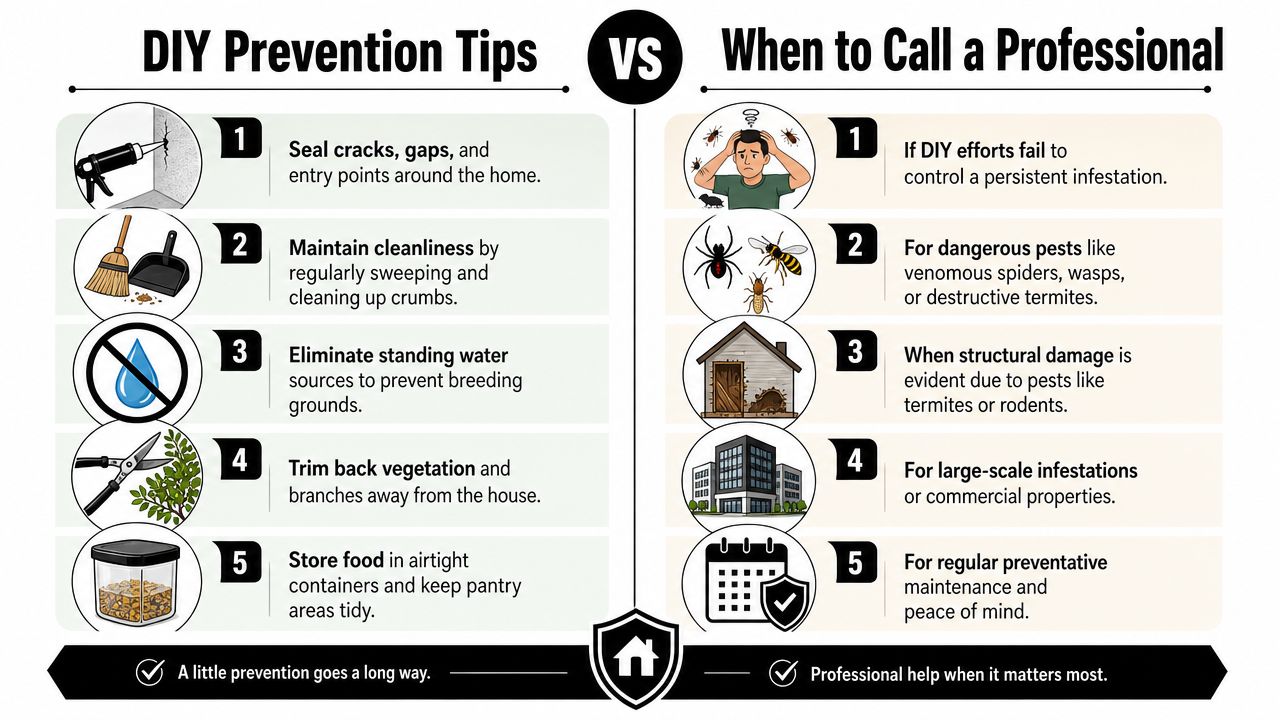
This checklist is a good first line of defense, especially because Columbia-area advice often underexplains it. A practical starting point is to seal gaps larger than about a quarter inch, store food in sealed containers, keep trash covered, trim vegetation away from the home, and reduce clutter as part of a prevention-first approach (Aruza Pest Control Columbia page).
What homeowners should handle first
A lot of recurring pest issues get easier when you start with the house itself.
- Seal openings: Check around utility penetrations, door sweeps, foundation gaps, attic vents, and pipe entries.
- Cut off food access: Use sealed containers in pantry areas and don't leave pet food out overnight.
- Manage moisture: Fix leaks, improve drainage, empty standing water, and watch damp spaces under sinks.
- Pull vegetation back: Shrubs, vines, and stacked materials tight to the wall create easy bridges and shelter.
- Reduce hiding spots: Clutter in garages, closets, and utility areas gives pests safe cover.
If you want a more detailed homeowner checklist, this DIY home pest control guide breaks down the prevention side clearly.
Where DIY usually stops working
Do-it-yourself steps are strongest at prevention and early intervention. They're weakest when pests are already established inside walls, under slabs, in crawl spaces, or across multiple rooms.
These situations usually call for professional inspection:
| Situation | Why it needs more than DIY |
|---|---|
| Repeated ant trails after cleaning and sealing | The colony may be established outside or beneath the structure |
| Roaches seen during the day | Visible daytime activity often means the population is no longer small |
| Any sign of termite activity | Structural pests require identification and targeted treatment |
| Rodent droppings or scratching in walls | Removal without exclusion usually leads to repeat activity |
| Bites, nesting, or hidden-source issues | The problem may involve areas you can't safely or fully access |
A quick visual explanation can help homeowners sort the basics from the serious warning signs.
The decision point
Call for professional help when any of the following is true:
- The problem keeps returning: You treat it, it fades, then it comes back in the same area.
- You suspect hidden activity: Walls, crawl spaces, attics, cabinets, or wood members may be involved.
- Damage is possible: Termites and rodents can affect the structure or utilities.
- Safety is part of the issue: Stinging pests, heavy infestations, and uncertain product use all raise the stakes.
That doesn't mean every pest sighting is a crisis. It means the sooner the underlying cause is identified, the less likely the problem is to turn into a drawn-out cycle.
What to Expect from Your Pest Control Service
Homeowners often worry about the unknown part of pest control more than the treatment itself. They want to know what the technician will look for, whether the process will disrupt the house, and if the plan will fit the pest they're dealing with.
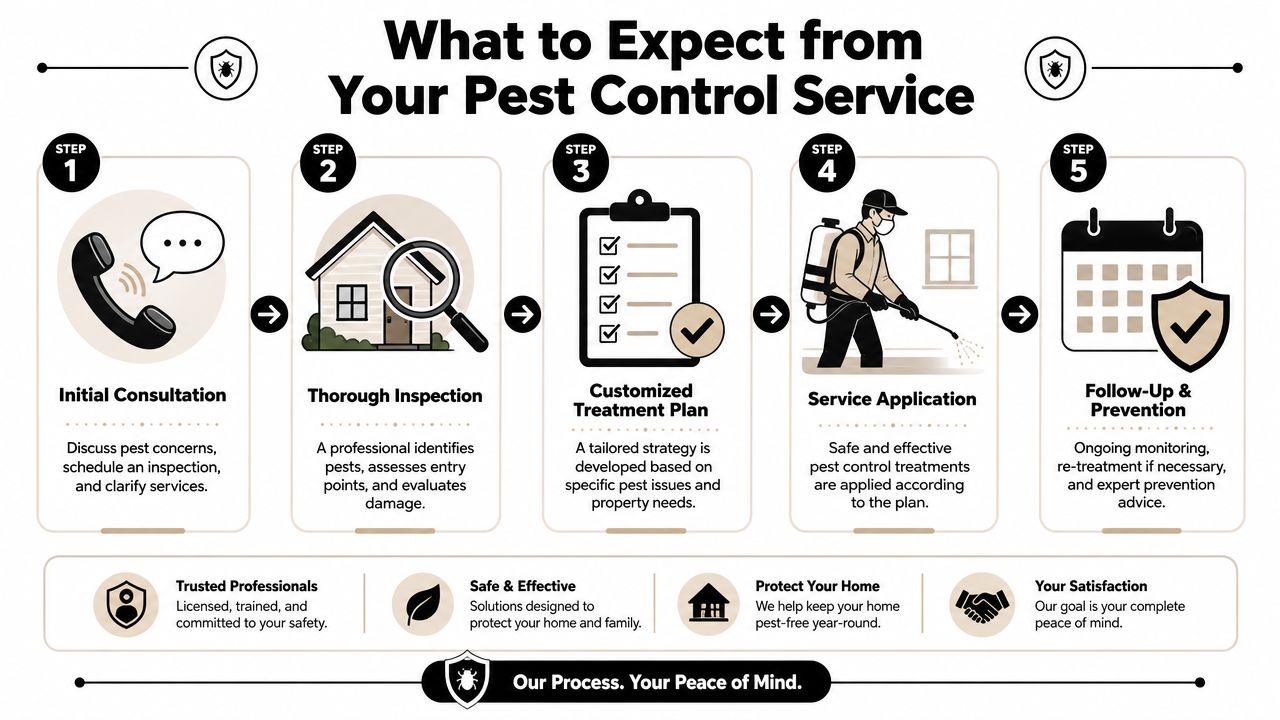
A good service visit should feel methodical, not rushed. It starts with identifying the pest correctly, then understanding why the home is supporting it.
The inspection comes first
A proper inspection isn't just a glance around the baseboards. The technician should be looking at activity signs, entry points, conducive conditions, moisture sources, harborage zones, and the parts of the structure most likely to support the target pest.
That might include kitchens, bathrooms, garage edges, attic access, crawl space indicators, exterior foundation lines, mulch beds, door thresholds, and utility penetrations. For rodents or termites, the inspection phase matters even more because surface symptoms rarely tell the whole story.
Field note: The fastest treatment isn't always the right one. Correct identification saves homeowners from paying to treat the wrong problem.
The plan should match the pest
Once the inspection is done, treatment should be specific to the issue. Ants, roaches, rodents, spiders, and termites don't respond to the same strategy.
In many homes, the most effective approach is some form of integrated pest management, which combines inspection, exclusion, habitat correction, targeted treatment, and follow-up instead of relying only on routine broad application. In practice, that means a company like The Green Advantage may pair inspection findings with exclusion recommendations and focused treatment rather than treating every home exactly the same way.
What happens during service
The actual service depends on the pest and the property, but homeowners can usually expect a few constants:
- Clear communication: The technician explains what was found and what will be treated.
- Targeted work: Attention goes to pest pathways, nesting areas, and likely access points.
- Practical recommendations: You may be asked to correct drainage, trim vegetation, repair sweeps, or improve storage.
- Follow-up guidance: Ongoing issues often need monitoring, not just one visit.
For families with children or pets, this is the right time to ask direct questions. A professional should explain where products are being applied, what precautions matter, and whether any temporary steps are needed before normal activity resumes.
What good service feels like afterward
After a solid visit, you should know three things clearly:
- What pest is being addressed
- Why your home was vulnerable
- What happens next if activity continues
That last part matters. Pest control works best when homeowners and technicians are solving the same problem together, not when the visit ends with a vague promise and no plan.
Understanding Costs Licensing and Guarantees
Most homeowners want straight answers on three things before hiring a pest control company. What will it cost, is the company properly qualified, and what happens if pests come back?
The first thing to know is that Columbia is not a small or experimental pest market. It is a mature, competitive service area with long-standing operators and broad regional coverage. One local provider's history goes back to 1962, and the Columbia service area also supports large-scale operations. Go-Forth says it serves Columbia plus 10 named nearby communities, while Modern Exterminating states it covers a 50-mile radius from downtown Columbia and serves over 11,000 customers in the greater Columbia area, all of which points to sustained demand and an established local service environment (Go-Forth Home Services Columbia pest control page).
One-time service versus recurring plans
Pricing varies by pest, property size, inspection findings, and whether treatment is corrective or preventive. Without a written inspection, broad price comparisons don't tell you much. What matters more is the service model.
Here's the practical comparison homeowners should make:
| Feature | One-Time Service | Quarterly Prevention Plan |
|---|---|---|
| Best fit | Sudden, isolated issue | Ongoing pressure and seasonal management |
| Main advantage | Immediate response for a visible problem | Consistent prevention and monitoring |
| Main limitation | May not address recurring cycles | Requires ongoing commitment |
| Inspection value | Focused on current complaint | Better for spotting patterns over time |
| Follow-up | Often limited or issue-specific | Built around continued protection |
A one-time service can make sense for a very narrow issue. But if your home has repeat ant activity, moisture-driven roaches, recurring spiders, or changing seasonal pressure, a prevention plan is usually the more practical option.
What licensing and insurance really mean
Homeowners should verify that any company they're considering is properly licensed and insured for pest control work in South Carolina. Ask directly. A reputable company should be comfortable explaining its credentials, service scope, and who will perform the work.
Good questions to ask include:
- Who performs the inspection and treatment
- Whether the company is licensed for the specific type of pest involved
- What insurance coverage they carry
- What preparation or follow-up the homeowner is responsible for
How to read a guarantee
Not all guarantees mean the same thing. Some cover retreatment within a defined service period. Others are tied to recurring plans. Some apply only to listed pests, while termite work and specialty services may carry separate terms.
Read the guarantee as a service agreement, not a slogan. The useful part is what the company will do, under what conditions, and how quickly.
A good pest control decision usually comes down to clarity. If the company can explain the problem, the plan, the license status, and the follow-up in plain language, you're in much better shape than if the conversation stays vague.
Frequently Asked Questions and Next Steps
Do I have to leave my home during treatment
Usually, not for standard general pest service. It depends on the pest, the treatment area, and the products being used. The right move is to ask before the appointment so you know whether any temporary precautions apply.
Are treatments safe for kids and pets
That depends on the treatment plan and whether directions are followed exactly. A responsible technician should tell you where materials are being applied, when treated areas are ready for normal use, and what steps matter for pets, children, or sensitive household members.
Is one bug enough reason to call
Sometimes yes, sometimes no. One ant at the sink isn't the same as repeated trails, roaches appearing in daylight, or signs of termites or rodents. The issue is whether the sighting points to a hidden population, a structural vulnerability, or a pattern that's getting established.
What's the smartest first step if I'm not sure how serious it is
Start with observation and prevention. Note where the pest was found, check for moisture, seal obvious openings, and improve food storage. If activity repeats, spreads, or suggests hidden nesting, schedule an inspection before you spend more time and money guessing.
For most Columbia homeowners, the big takeaway is simple. Pest control works better when it's proactive. Local conditions support long pest seasons, shifting activity through the year, and recurring pressure tied to moisture and entry points. The sooner you treat it like part of routine home care, the easier it is to protect the house and avoid bigger problems later.
If you're dealing with recurring pest activity or want a clearer prevention plan for your home, The Green Advantage can help you talk through the problem, schedule an inspection, and decide on the right next step without pressure.