
You hear scratching in the wall after dark. Or you flip on the kitchen light and catch ants tracking along the counter, spiders gathering around the basement windows, or mosquitoes taking over the yard before you can enjoy an evening outside. Most homeowners in Crown Point don't panic because of one bug. They panic because they don't know if one bug means a bigger problem.
That's where pest control spray gets misunderstood. A lot of people think a spray is either a quick fix or a safety risk, with nothing in between. In real homes across Northwest Indiana, the truth is more practical than that. The right spray, applied the right way, can solve a problem and prevent the next one. The wrong spray, used in the wrong place, often wastes time and puts more chemical into the home than necessary.
Your Guide to Pest Control in Crown Point Indiana
A common call starts the same way. A homeowner in Crown Point notices a few ants near the sink, buys a can from the store, sprays the trail, and feels better for a day or two. Then the ants come back from a different gap, or they show up in another room. The visible pests are gone, but the reason they were there hasn't changed.
That pattern matters because indoor pesticide use is already widespread. In the United States, 75 percent of households have used at least one pesticide product indoors within the last year, and 80 percent of pesticide exposure occurs indoors, according to the EPA's guidance on pesticides and indoor air quality. For a homeowner, that means two things. Sprays are common, and careless indoor spraying creates real concerns.
Crown Point homes deal with a mix of pest pressure that doesn't always respond to generic advice. Moisture around foundations, attached garages, crawl spaces, mulch beds, and lake-effect humidity all change how pests move and where treatments hold up. What works on one property may fail on the next street over.
Practical rule: If you're spraying the same pest again and again, the problem usually isn't the can. It's the plan.
Homeowners looking for pest control near me, exterminator near me, or pest control in Crown Point, IN usually want a straight answer. Is this something you can manage with a simple treatment, or is it time to bring in a licensed professional? The answer depends on the pest, the location, the product, and how the treatment is built around the property instead of around a label promise.
Understanding How Pest Control Sprays Work
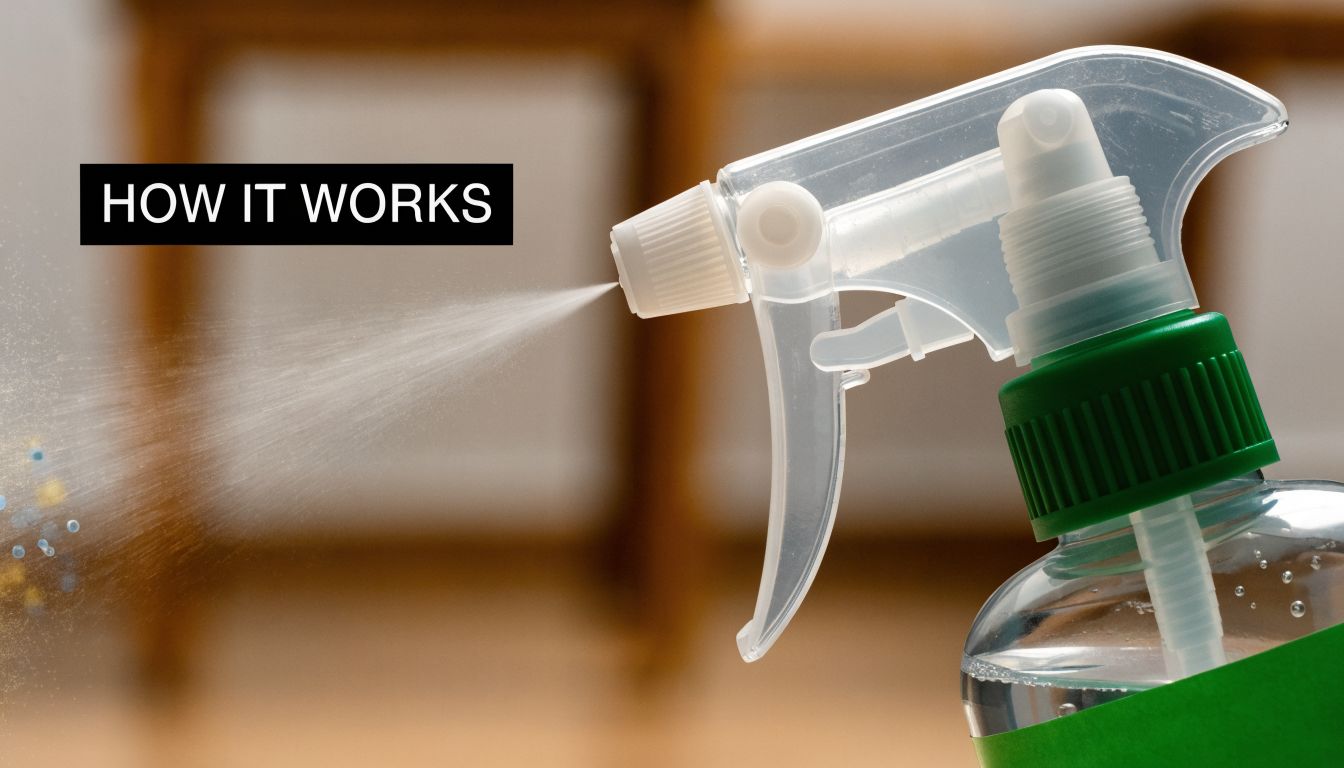
Most pest control spray products work in one of two ways. They either kill pests that contact the product directly, or they leave behind a treated surface that keeps working after the application dries.
Contact kill and residual control
A contact spray is the closest thing to immediate relief. If the insect is exposed to the treatment, it may be affected fairly quickly. That's useful when you have visible wasps, spiders, or active insects moving across a surface.
A residual spray is different. It leaves a treatment on cracks, entry points, base areas, eaves, and other travel zones so pests pick it up later. Think of contact spray as a quick hit and residual spray as a barrier. One deals with what you see right now. The other is meant to keep activity from rebuilding.
Professional surface sprays using pyrethroids can create a residual barrier that typically lasts 3 to 6 months in protected indoor areas, but sun exposure can cut effectiveness to as little as one month outdoors, according to this review of residual performance of professional insecticide sprays. That difference is why professional application isn't just about what gets sprayed. It's about where.
Why placement matters more than volume
More product doesn't automatically mean better control. In many homes, overapplication causes mess, odor concerns, and unnecessary exposure without solving the source of the infestation.
What usually works better is targeted placement:
- Entry zones: Door thresholds, utility penetrations, and foundation gaps
- Harborage areas: Crawl spaces, voids, corners, and hidden moisture areas
- Exterior transition points: Eaves, window trim, siding seams, and garage edges
A good treatment is supposed to be deliberate. It should match pest behavior.
This short video gives a useful visual on spray application and treatment basics.
A pest control spray should do one job clearly. Knock down active pests, leave a barrier, or support a bigger treatment program. When one product gets asked to do everything, it usually disappoints.
Types of Sprays for Common Indiana Pests
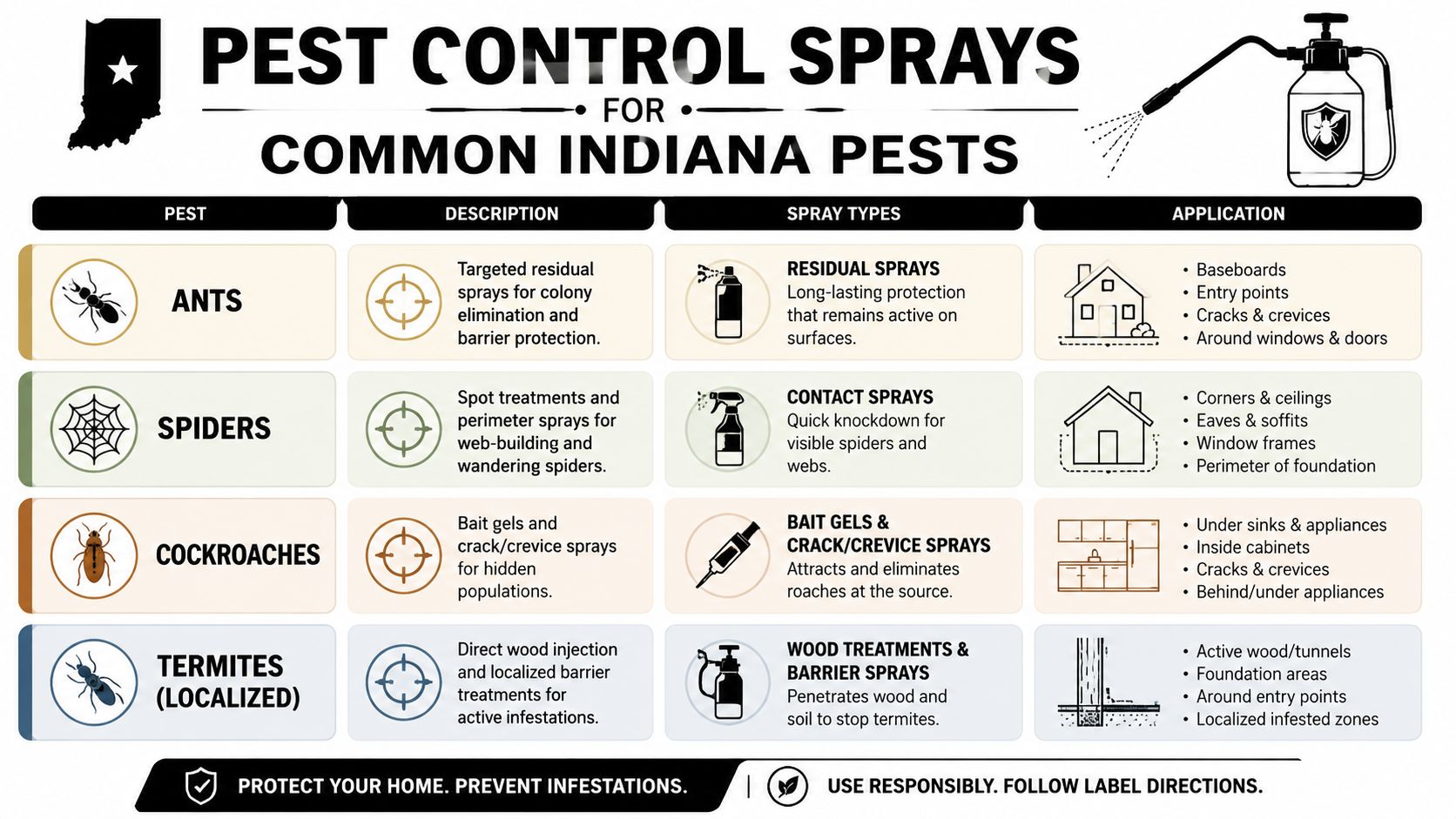
The pests around Crown Point don't all respond to the same chemistry or the same application style. Ants move in trails. Spiders rest in corners and window lines. Cockroaches hide in cracks and voids. Mosquitoes stay active in shaded, humid areas and around standing water. Localized termite issues require a much more specific approach than a perimeter spray.
What professionals match to the pest
Some treatments use synthetic pyrethroids for fast knockdown of active insects. Others add an insect growth regulator, often shortened to IGR, to interfere with immature pest development. That pairing matters because modern pest control often combines fast-acting synthetic pyrethroids for adult knockdown with IGRs that prevent larval development, a dual approach that can extend residual protection up to 60 days, as described in this mosquito control safety fact sheet.
That doesn't mean every ant, spider, or mosquito job gets the same mix. It means the technician has options beyond a one-note spray.
Professional Pest Control Spray Comparison
| Spray Type | Active Ingredient Family | Primary Target Pests | How It Works |
|---|---|---|---|
| Residual surface spray | Synthetic pyrethroids | Ants, spiders, general crawling insects | Leaves a treated barrier on surfaces where pests travel |
| Contact spray | Fast-acting insecticides | Visible wasps, exposed spiders, active insects | Affects pests on direct exposure |
| IGR-supported spray program | Pyrethroid plus insect growth regulator | Mosquitoes, fleas, some recurring insect populations | Knocks down active adults while interrupting future development |
| Crack and crevice treatment | Targeted professional formulations | Cockroaches and hidden insects | Reaches voids, seams, and hidden movement paths |
| Localized wood or void treatment | Site-specific treatment materials | Localized termite activity | Targets active areas directly rather than relying on broad surface coverage |
What that means for common Crown Point pest issues
For ant control, the goal is usually not just killing the workers you see. It's treating the routes and nesting pressure that keep replacing them.
For spider control, sprays help most when they're paired with web removal and exterior reduction around windows, soffits, and lighting.
For cockroach control, sprays alone often aren't enough. Hidden populations call for crack and crevice work, careful placement, and sanitation correction.
For mosquito control, adult reduction programs work best when the spray choice matches the season, the property layout, and the amount of shaded resting area. Homeowners comparing options can also review this page on spray solutions for mosquito control to see how targeted outdoor applications fit into a broader yard treatment plan.
Health Safety and Environmental Considerations
Safety is the first question many homeowners ask, and it should be. A useful treatment isn't just effective against pests. It also needs to be applied in a way that respects the people, pets, and daily routines inside the home.

Why drying time matters
One of the most overlooked parts of a pest control spray treatment is what happens after the application. Emerging 2025 EPA data links a 25% rise in household pesticide exposure incidents to inadequate drying periods, which supports the need for professional guidance on safe re-entry times of 4 to 6 hours, especially after indoor or perimeter treatments, as noted in this reference on post-treatment exposure concerns.
That's why a licensed technician should give plain instructions, not vague reassurance. Homeowners should know where the treatment went, when treated areas are dry, and when children and pets can re-enter those spaces.
What responsible application looks like
A careful pest program usually includes:
- Targeted placement: Applying product to cracks, crevices, and pest travel zones instead of broad, unnecessary indoor coverage
- Clear re-entry guidance: Telling the homeowner exactly when it's appropriate to return to treated areas
- Product fit: Choosing materials based on the pest, the location, and whether the treatment is indoors, outdoors, or both
- Drift awareness: Avoiding overspray onto non-target surfaces, play areas, and useful outdoor planted areas
Safety note: The safest spray program is often the one that uses less product in fewer places because the treatment is more precise.
Environmental mindfulness matters too. Outdoor applications should protect pollinators and avoid unnecessary spread into neighboring areas. That same mindset shows up in other parts of home care. If you're comparing treatment-based services, this guide to ozone treatment safety is a helpful example of why application method and post-treatment precautions matter just as much as the product itself.
Why DIY Sprays Often Fail in Northwest Indiana
Store-bought spray products promise a lot. Most of them are built to feel effective right away. You spray, the bug stops moving, and it seems handled. Then the activity returns because the product didn't reach the nest, the hidden void, the breeding cycle, or the exterior route that caused the problem in the first place.
Local weather works against short-term fixes
Northwest Indiana adds another layer. Moisture, rain, shaded foundation lines, and lake-effect humidity can break down some products faster than homeowners expect. That's especially true with many botanical or “green” over-the-counter options that sound safer because they smell more natural.
A 2025 Purdue University study found that in humid Midwest climates, natural botanical sprays can lose 70 to 80% of their efficacy after just 7 to 14 days of rain exposure, requiring 2 to 3 times more frequent application than synthetic pyrethroids, according to this summary discussing perimeter treatment durability. For a Crown Point homeowner, that usually means repeat spraying, inconsistent control, and frustration.
Common DIY mistakes
Some failures come from the product. Many come from the method.
- Spraying the wrong surface: Homeowners often treat open floors or visible baseboards when pests move through gaps, wall voids, or exterior entry points.
- Breaking the barrier: Routine washing, weather exposure, and poor placement can remove the treatment before it ever helps.
- Using one product for every pest: Ants, mosquitoes, spiders, and roaches don't all respond to the same approach.
- Mistaking “natural” for low risk: Even products marketed as gentler still need careful use indoors.
That last point comes up in other cleaning categories too. People often assume a product is automatically the better choice because the label sounds softer. Good selection takes more than label language, which is why Rubber Ducky Rug Cleaning's advice on choosing carpet cleaning products is a useful comparison. Product fit matters more than marketing.
If you're spraying every few weekends and the same pest keeps coming back, you're maintaining the frustration, not fixing the infestation.
Homeowners who want a fuller breakdown of the cost and control trade-off can also review this article on why DIY pest control can become a false economy.
The Green Advantage Solution A Localized Approach
In Crown Point, a good spray visit starts before any product comes out of the truck. A technician should ask where you are seeing activity, how long it has been going on, and what has changed around the home. In Northwest Indiana, those details matter. Lake-effect humidity, heavy spring rains, dense summer growth, and freeze-thaw gaps around foundations all change how pests behave and where a treatment needs to go.
That is one reason generic spray programs miss the mark here. A house near open drainage, tree lines, or low, damp soil usually needs a different plan than a newer subdivision lot with sun exposure and fewer harborage areas. The product matters, but placement, timing, and pressure points matter just as much.
What a service visit should include
A proper visit to a Crown Point property should involve more than showing up with a sprayer. It should include inspection, identification, and a treatment decision based on the site.

During service, homeowners should expect a few basics:
- Inspection first: The technician checks active areas, likely entry points, and the moisture or shelter conditions helping pests hold on
- Clear explanation: You should hear what product category is being used, where it will be applied, and what precautions matter for children and pets
- Localized treatment plan: The approach should match the pest, the structure, and the conditions on your lot
- Practical follow-up: You should know what activity may continue for a short time, what improvement to expect, and what changes around the home will help
Screening and exclusion often support that work, especially with flying insects and spiders around doors and windows. Homeowners who want a simple example can review Rescreen Rescue's benefits of window screens.
Where a local service fits
For homeowners comparing residential pest control, commercial pest control, or an exterminator in Crown Point, IN, The Green Advantage provides licensed pest management for homes and businesses across Northwest Indiana, including inspections, general pest treatments, mosquito reduction, and property-specific service plans.
The test is simple. Does the company treat your home like a real structure with its own pest pressures, or like the next stop on a route? In this region, local judgment matters. I have seen two homes on the same block need different spray strategies because one holds moisture near the foundation and the other draws activity from mulch beds, soffits, or detached garages.
That is the difference homeowners should look for. Safe products matter. Clear instructions matter. A technician who understands Crown Point conditions matters too, especially when repeat spraying has already failed.
Beyond the Spray Integrated Pest Management Tips
A pest control spray works better when the property stops helping the pests. That's the heart of integrated pest management, or IPM. Spray is one tool. It's not the whole job.
Practical steps that reduce pest pressure
Start outside. Trim vegetation away from siding, especially near windows, AC lines, and foundation corners. When branches and heavy shrubs touch the house, they give ants, spiders, and other pests an easy bridge.
Then deal with moisture. Clean gutters, correct drainage problems, and avoid letting water collect near the foundation. Many recurring pest issues get worse when damp conditions stay in place.
Inside the house, focus on the small openings people overlook:
- Seal utility gaps: Pipes, cable penetrations, and garage entry points often become pest highways
- Store food tightly: Pantry pests, ants, and roaches take advantage of easy access
- Reduce clutter: Cardboard, storage piles, and crowded utility areas create hiding spots
- Check screens and vents: Good screening helps cut down flying insect entry
For homeowners dealing with flies, mosquitoes, and other flying pests, intact screens make a real difference. This article on the benefits of window screens is a practical reminder that exclusion is often the cheapest fix.
Good pest control doesn't start with the spray tank. It starts with denying pests food, water, and access.
IPM is also why some properties need more than one service type. A home with mosquito pressure may also need drainage corrections. A rodent issue may call for exclusion first. A spider issue may improve most when lighting, web removal, and entry reduction are handled along with treatment.
Your Next Step for a Pest-Free Home in Crown Point
You spray the baseboards on Saturday, wipe up a few dead ants, and by Tuesday they are back in the kitchen. That pattern is common in Crown Point, especially during humid stretches when pest pressure stays high and small entry points keep getting used. A spray can help, but only when the product, placement, and timing match the actual problem.
Call a professional once the issue stops being straightforward. Repeated sightings usually mean the source was missed, the wrong material was used, or the home has conditions that keep drawing pests back.
It is time to bring in a licensed technician when:
- The problem keeps returning: You treat it, activity drops for a short time, then starts again
- Pests are spreading indoors: Ants, roaches, spiders, or other insects are showing up in more than one room
- You have safety concerns: Children, pets, sensitive areas, and product placement all need careful handling
- The pest can damage the home: Termites, rodents, and wood-destroying insects need a full plan, not a surface spray
- Your yard or patio is hard to use: Mosquitoes, stinging insects, and heavy perimeter activity are affecting daily life
Around Northwest Indiana, I often see homeowners lose time and money trying one general spray after another while the underlying driver stays in place. It might be moisture around the foundation, a hidden nest, poor exclusion, or seasonal pressure that changes fast with lake-effect weather. That is why a thorough inspection matters.
If you are searching for pest control near me, exterminator near me, or pest control in Crown Point, IN, the next step is simple. Get the property inspected, identify the pest correctly, and use a treatment plan that fits the house.
If pests are showing up around your Crown Point home or business, contact The Green Advantage to schedule an inspection or request a quote. A licensed, property-specific plan can address the current issue, reduce repeat treatments, and help your home feel comfortable again.