
A lot of Crown Point homeowners first notice a garage rodent problem the same way. You step out on a cold evening, hit the light, and see droppings near the wall, torn insulation in a corner, or a bag of grass seed that suddenly has a hole in it. Sometimes it starts with sound instead. A little scratching behind stored boxes, a quick rustle near the freezer, or movement under the workbench after dark.
That’s unsettling for good reason. Your garage sits at the edge of the house, which makes it one of the easiest places for mice and rats to test for shelter, food, and a quiet nesting spot. In Northwest Indiana, that pressure gets worse when the weather turns, the ground freezes and shifts, and snow gives rodents cover near the foundation.
Knowing how to keep rodents out of garage spaces comes down to a few practical priorities. Find entry points. Seal them with the right materials. Remove food, clutter, and nesting cover. Then pay attention to the seasonal changes that make Crown Point garages more vulnerable than generic online advice often admits.
Your Guide to a Rodent-Free Garage in Crown Point
A garage infestation rarely begins with a dramatic scene. More often, it starts with one missed gap under the side wall, one worn door seal, or one stack of cardboard in the back corner that stays undisturbed for months. Rodents don’t need much. They need access, cover, and something to feed on.
That’s why so many garage problems feel sudden even when they weren’t. A homeowner hears scratching for the first time in January, but the vulnerability may have opened up during a fall freeze-thaw cycle. Another notices droppings near the tool bench and assumes the problem started that week, when in reality the rodents may have been traveling along the wall line for a while.
Why garages get targeted first
The garage gives rodents a transition zone between outdoors and the rest of the house. It’s quieter than the kitchen, warmer than the yard, and often packed with exactly the materials they like to hide in, cardboard, paper, fabric, and stored seed or pet food.
In Crown Point and nearby Northwest Indiana neighborhoods, garages also deal with weather stress that changes from season to season. Door sweeps wear down. Foundation cracks open and close. Snow piles against the base of the structure. That’s why a prevention plan has to be local, not generic.
Practical rule: If a garage feels protected and still to you, it probably feels protected and still to a rodent too.
What actually works
Homeowners often jump straight to traps or scent-based DIY products. Those tools can play a role, but they don’t solve the core issue if rodents can still enter. Long-term control starts with exclusion, which means physically blocking access with materials rodents can’t chew through easily.
Just as important, you have to make the garage less comfortable once they arrive. Clean storage, tighter containers, less clutter, and better housekeeping are more impactful than commonly realized. When you combine structural repair with prevention habits, you stop treating symptoms and start changing the conditions that allow infestation.
For homeowners searching for pest control in Crown Point, IN, rodent control, or an exterminator near me, this is the same logic a solid residential pest control plan follows. Keep pests outside first. Respond quickly when activity appears. Fix what attracted them so the problem doesn’t repeat.
A Homeowner's Guide to Inspecting Your Garage for Rodents
A good inspection starts low and slow. Don’t stand in the middle of the garage and scan the room. Get down near the slab, use a flashlight, and check the structure the way a rodent would approach it, from the perimeter inward.
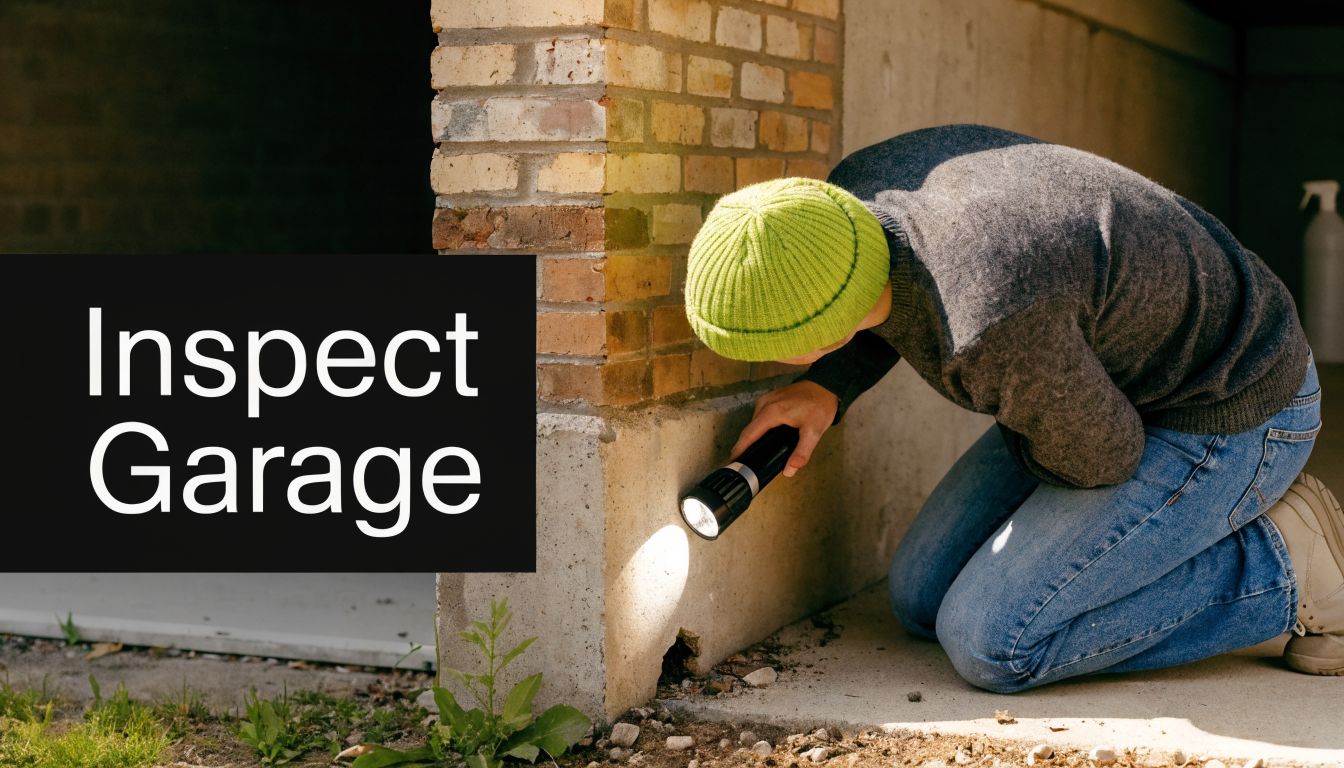
Start with the signs rodents leave behind
Look for droppings along walls, behind storage bins, near the garage door corners, and around shelves where seed, pet food, or trash may be stored. Mice leave smaller droppings than rats. Rat droppings are larger and usually point to heavier traffic or a bigger-bodied animal using the space.
Gnaw marks also matter. Check lower wood trim, cardboard boxes, plastic bags, weather stripping, and the corners of stored containers. Fresh chewing often leaves lighter-colored scrape marks or small bits of debris underneath.
Other common signs include:
- Nesting material: Shredded paper, insulation, fabric, or leaves tucked behind boxes or appliances
- Rub marks: Smudged, greasy-looking streaks along the same wall route where rodents repeatedly travel
- Odor: A stale, musky, urine-like smell in enclosed parts of the garage
- Noise after dark: Scratching, skittering, or movement in walls, ceiling voids, or behind storage
If you’re not sure whether what you’re seeing is active, compare several areas of the garage and check again after a day or two. New droppings or fresh gnawing mean the issue is current, not old.
Inspect entry points from the ground up
Most homeowners miss the small stuff because they look at the garage like a room. Rodents read it like a map. They follow edges, corners, utility penetrations, and door gaps.
Use your flashlight to inspect:
- Garage door bottom seal
- Side and top door trim
- Corners where the slab meets the wall
- Gaps around pipes, conduit, and cable lines
- Foundation cracks
- Vents and utility openings
- Interior door thresholds between garage and house
A useful trick is to inspect at dusk or dawn with the garage mostly dark inside. Exterior light leaking in through a crack often reveals openings you won’t notice in full daylight.
Rodents usually don’t cross open space unless they have to. Follow the wall lines first. That’s where signs and openings tend to show up.
Don’t ignore the hidden zones
Some of the most active rodent areas are the places homeowners rarely disturb. Pull back stacked boxes if it’s safe to do so. Look behind freezers, under shelving, around water heaters, and inside the lower corners of built-in cabinets.
If the garage is attached, pay close attention to the shared wall with the house. Rodents may enter the garage first and then move through utility lines, wall voids, or the gap under the interior access door.
Vehicles can also become part of the problem. Engine compartments offer warmth and shelter, especially in colder months. If you’ve noticed nesting material under the hood or chewed insulation in a parked vehicle, that’s a strong sign rodents are already comfortable in the garage environment.
Know when signs point to a larger issue
A few old droppings near the threshold don’t always mean a major infestation. Repeated droppings in several zones, strong odor, active noise, nesting material, and chew damage together usually mean the problem is established.
If you want a deeper checklist of what active rodent presence looks like in and around a home, this guide to signs of rodent infestation helps homeowners sort out what’s minor, what’s active, and what needs a faster response.
Garage Exclusion Your First Line of Rodent Defense
If there’s one part of garage rodent control that matters most, it’s exclusion. Traps can remove animals that are already inside. Exclusion stops the next ones from getting in.
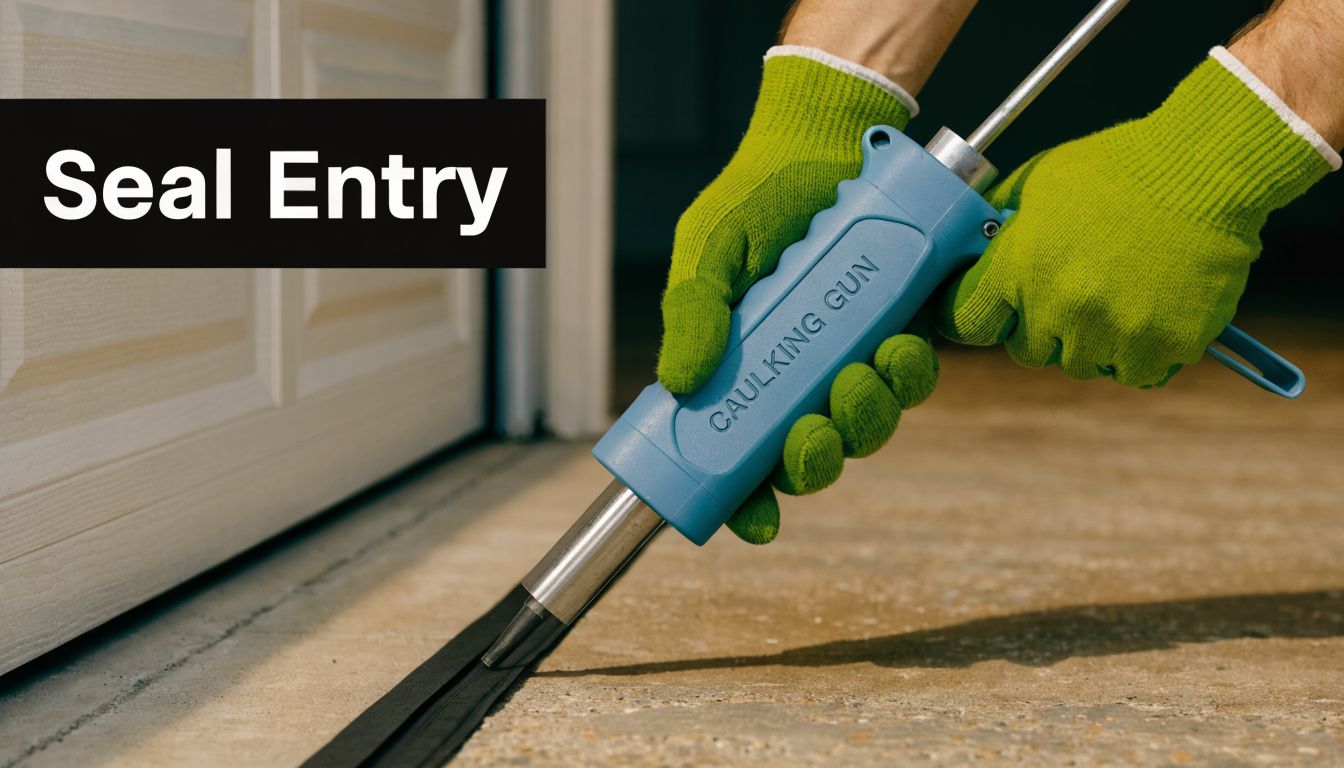
Professional guidance is very clear on one point. Rats can squeeze through gaps as small as a quarter, while mice can enter through holes as small as a dime. Sealing entry points with rodent-proof materials like steel wool and galvanized hardware cloth is the foundational strategy, capable of preventing up to 90% of invasions when implemented correctly. Garages are also primary entry highways in the 21 million U.S. homes infested annually according to the cited guidance in this rodent exclusion reference.
Seal small gaps the right way
The biggest DIY mistake is filling an opening with whatever is handy and calling it done. Plain foam alone isn’t enough. Rodents can work through weak materials, especially in places they can revisit night after night.
For smaller cracks and seams, use exterior-grade caulk where the opening is stable and narrow. Around irregular gaps, pack in steel wool or copper mesh first, then finish with a proper sealant. The metal gives the repair structure. The sealant closes air movement and helps hold the fill in place.
Good targets for this method include:
- Pipe penetrations
- Cable entry points
- Small foundation cracks
- Trim separations
- Openings where siding meets masonry
Use tougher materials on larger openings
Larger voids need stronger repairs. In such cases, galvanized hardware cloth becomes useful, especially around vents, larger utility gaps, and areas where trim has pulled back enough to create a visible opening.
Choose a rigid, chew-resistant barrier and fasten it securely so rodents can’t push around it. Loose mesh doesn’t solve much. The repair needs to be tight, anchored, and paired with surrounding sealant or trim repair so the entire area becomes harder to exploit.
What fails most often: Expanding foam by itself, soft weather stripping, loose patch jobs, and stuffing a hole without actually closing it.
Don’t overlook the garage door
The garage door is one of the most common weak points. Bottom seals wear down, corners curl, and the concrete below may not stay perfectly even through the seasons. If daylight shows under the closed door, rodents may be able to use that gap.
Inspect the bottom seal, side seals, and threshold area. Replace damaged material with a stronger sweep or weather seal, and make sure it contacts the slab evenly across the full width of the door. If the concrete is uneven, you may need both a better seal and a threshold adjustment.
Homeowners who also want to improve garage energy efficiency often benefit from this same work, because the gaps that let in drafts also invite pests.
A short visual can help if you want to see how pros think about door-edge sealing and common access points:
Follow an exclusion order that makes sense
Trying to seal everything at once usually leads to missed spots. A cleaner approach is to work in a repeatable order.
Walk the perimeter first
Start outside and inspect the entire foundation line, door frame, corners, and utility penetrations.Mark every opening before repairing any
Use painter’s tape or notes on your phone. It’s easy to forget a gap once you move tools around.Handle structural gaps before cosmetic ones
Utility openings, slab-edge cracks, and door seals matter more than minor trim imperfections.Test the repair
After sealing, close the garage and check for light leaks. Then recheck after weather changes.Monitor for fresh activity
New droppings or chewing after exclusion means one or more access points were missed.
Some homeowners handle all of this themselves. Others want help identifying every vulnerable area and closing them efficiently. In local service plans, The Green Advantage offers rodent control and exclusion that includes assessing entry points for mice and rat protection in and outside the home, which fits garages especially well when the problem is tied to multiple access points instead of one obvious gap.
Making Your Garage Uninviting to Pests
A sealed garage can still attract rodents if it gives them food, nesting material, and quiet cover. Exclusion keeps many pests out. Sanitation and storage habits make the space less rewarding to investigate in the first place.
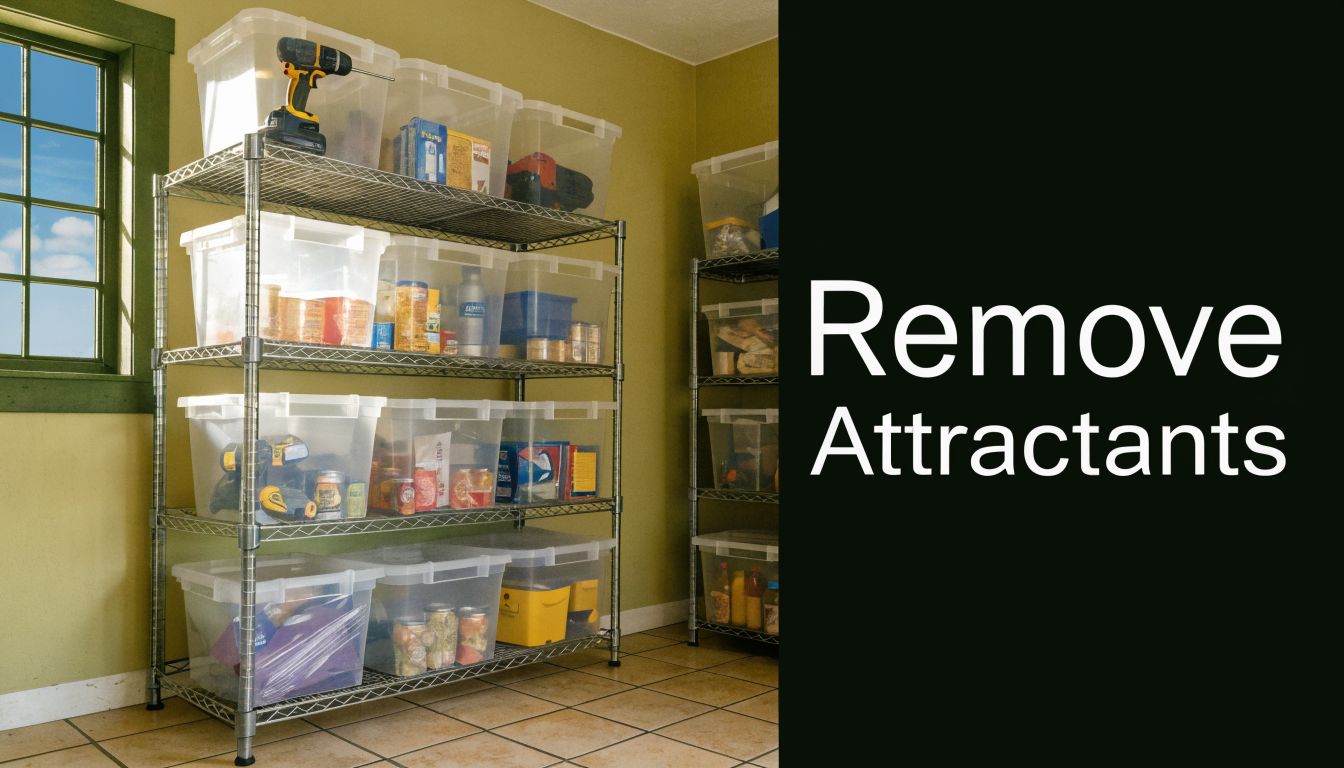
Store food and seed like it matters
Many garage infestations start with something homeowners don’t think of as food storage. Birdseed. Grass seed. Pet food. Bulk treats. Even recyclable cans with residue can draw attention.
Move anything edible, or anything that smells edible, into sturdy sealed containers. Hard plastic can work if it’s durable and tightly closed. Metal is even better for long-term storage. Don’t leave feed bags rolled over in a corner and assume they’re protected.
Cut clutter that gives cover
Rodents like edges, shadows, and undisturbed material. That makes clutter one of the easiest ways to accidentally support garage activity.
Focus on the biggest problem areas first:
- Cardboard stacks: These provide cover and nesting material
- Floor-level fabric or paper: Rags, old blankets, and paper bags are easy nesting material
- Firewood stored inside: This creates shelter and gives rodents a quiet edge zone
- Packed corners behind shelving: These areas often stay untouched long enough for nesting
Wire shelving helps because it gets items off the floor and reduces hidden voids. Clear bins help too. You can see what’s inside without tearing open a nesting area by mistake.
Clean the things people usually skip
A garage doesn’t need to be spotless, but it does need to stop offering easy rewards. Sweep up spilled seed, fertilizer residue, and pet food promptly. Rinse trash cans once in a while. Wipe down shelves where bags or bottles have leaked.
Pay attention to moisture as well. A damp corner near a utility sink, condensation around an extra fridge, or standing water from slushy boots can make the space more attractive, especially when outdoor conditions are rough.
A garage becomes much easier to protect when everything has a place and nothing edible is left in chewable packaging.
Make prevention part of your routine
Good garage prevention works best when it’s simple enough to repeat. A quick monthly reset usually does more than one big annual cleanout.
Try this rhythm:
- After grocery runs or yard work: Put pet food, seed, and supplies into sealed containers right away
- At the end of each week: Sweep edges and corners, not just the center floor
- With each season change: Thin out clutter and check what’s been sitting untouched
- After storms or snow: Look for wet spots, shifted seals, and debris buildup near the door
These are small habits, but they change the environment rodents rely on.
How Northwest Indiana Seasons Affect Garage Rodents
Generic rodent advice usually treats every climate the same. Crown Point homeowners know better. A garage in Northwest Indiana takes a beating from snow, freezing temperatures, thawing ground, spring moisture, and windy fall weather. Those shifts change both the building and the behavior of the rodents trying to enter it.
Winter pressure is different here
In Indiana, winter doesn’t just make rodents want shelter. It also changes the structure they’re trying to enter. Heavy snowfall and freeze-thaw cycles make garages especially vulnerable, and Norway rats in Northwest Indiana will aggressively burrow under snow cover to exploit gaps widened by ice. Purdue University Extension data cited in this local discussion indicates Midwest rat populations can surge by 30-50% in winter as food scarcity drives them indoors in this Northwest Indiana winter rodent reference.
That matters because a repair that seemed fine in October may not perform the same way in January. Snow banks can hide foundation-level access. Frozen ground can shift pressure around the slab. Repeated thawing can open tiny cracks just enough to become usable.
Winter in Northwest Indiana doesn’t just push rodents inward. It also exposes every weak point your garage already had.
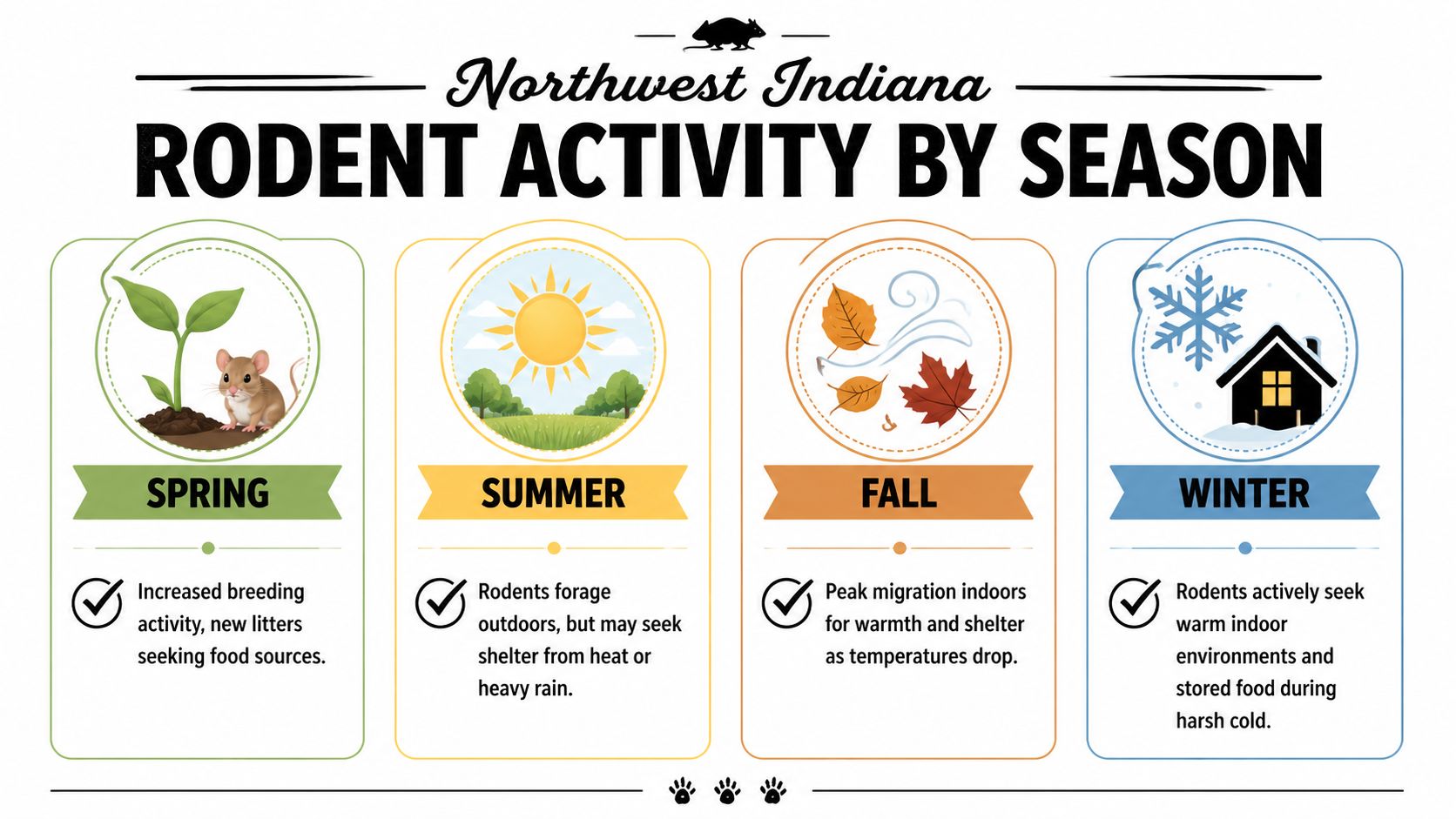
Seasonal patterns homeowners should watch
A simple seasonal lens helps you know where to look and when to act.
| Season | What changes around the garage | What to check |
|---|---|---|
| Spring | Moisture, settling, and post-winter wear show up | Foundation cracks, lower trim, door seals |
| Summer | Garages may offer shade and shelter during storms | Storage habits, clutter, hidden nesting zones |
| Fall | Outdoor food drops and temperatures cool | Full perimeter inspection before cold sets in |
| Winter | Snow cover and freeze-thaw stress weak points | Door contact, slab edges, burrowing signs near base |
Why fall and late winter deserve extra attention
Fall is often the best time to do serious exclusion work because rodents are actively looking for winter shelter and the weather still allows for easier repairs. If you wait until active winter movement is obvious, you’re reacting instead of preventing.
Late winter and early spring deserve a second inspection for a different reason. By then, Crown Point homes have already been through repeated temperature swings. That’s when garage seals, caulk lines, and foundation edges often show what survived and what didn’t.
For broader cold-weather home prep, a comprehensive winterization guide can help homeowners think through the larger envelope of the property, not just the garage itself.
Local conditions change rodent strategy
In more temperate areas, a rodent may use landscaping or exterior clutter to approach a structure. Here, snow cover can create protected travel lanes. Freeze-thaw cycles can turn a hairline opening into an active access point. That’s why homeowners in Crown Point, Valparaiso, and nearby Northwest Indiana communities can’t rely on soft sealants and one-time fixes alone.
The practical takeaway is simple. Your garage needs seasonal maintenance, not just one cleanup day. If you inspect, seal, and reset the space with Northwest Indiana weather in mind, you’ll prevent far more problems than you will with generic advice built for milder climates.
When to Call a Professional for Rodent Control in Crown Point
Some garage rodent issues are small enough for a homeowner to correct. A worn seal, an obvious utility gap, a clutter problem. Others aren’t. The trick is knowing when you’re dealing with a fixable vulnerability and when you’re chasing an active infestation that keeps rebuilding itself.
Signs the problem is beyond DIY
If you’ve sealed visible gaps and still keep finding fresh droppings, the rodents are either already established inside or using openings you haven’t found. The same applies when you hear repeated activity in walls or ceilings, notice strong odor, or discover nests in places you can’t reach safely.
Professional help makes sense when you’re seeing any of the following:
- Recurring signs after repairs: New droppings, gnawing, or noise after you’ve already sealed obvious openings
- Activity in hidden areas: Wall voids, ceiling spaces, behind finished surfaces, or around electrical and plumbing runs
- Multiple access points: The garage isn’t dealing with one gap. It has several weak zones working together
- Health or safety concerns: Heavy contamination, damaged wiring, or rodent activity around stored household items and vehicles
- Attached-garage risk: Evidence that the problem may be moving toward the interior of the home
A lot of homeowners wait too long because they think calling for service means the issue must be severe. It doesn’t. It usually means you want the inspection done correctly before the problem gets worse.
What professional service changes
Store-bought solutions tend to be narrow. A trap catches one animal. A repellent addresses smell, not access. A can of foam hides a gap without truly hardening the perimeter. Professional rodent control works differently because it connects inspection, exclusion, monitoring, and follow-up into one plan.
That matters in attached garages where the rodent route may start at the slab edge, continue behind shelving, and end inside a shared wall. Without a full site read, it’s easy to fix the wrong thing first.
The question isn’t just whether a rodent is in the garage. The question is how it got there, what’s keeping it there, and whether it has a path deeper into the property.
What homeowners can expect in Crown Point
A professional process should feel straightforward, not mysterious. Homeowners usually benefit most from a service approach that includes:
A full inspection
Not just the obvious droppings, but the perimeter, garage door condition, utility penetrations, hidden harborage, and signs of travel toward the home.A treatment and exclusion plan
This should match the structure and the level of activity. Some garages need trapping plus sealing. Others need sanitation changes and structural correction.Clear communication
You should understand what was found, what materials are being used, and what follow-up is recommended.Monitoring and recheck if needed
Rodent control is often a process, especially if the infestation is active or conditions around the property keep attracting pests.
If you’re trying to decide whether the issue has crossed that line, this guide on when to call pest control can help you judge whether you’re dealing with a simple correction or a problem that needs a pro’s eye.
Why this matters beyond the garage
Garage rodent control protects more than tools and storage bins. It protects wiring, insulation, the shared wall with the house, and your peace of mind when you walk into that space at night. For some homeowners and property managers, it also ties into larger residential pest control or commercial pest control needs, especially when multiple pest issues show up seasonally.
A company handling rodent exclusion may also spot conditions that support other pest activity, including spiders, wasps, or moisture-related insect pressure. That broader view is part of what makes professional service worthwhile. You’re not just removing rodents. You’re reducing the conditions that invite the next pest problem.
Frequently Asked Questions About Garage Rodent Control
Some questions come up in almost every conversation with Northwest Indiana homeowners. Usually, they’re about what’s worth trying, what isn’t, and how quickly to act.
Common Questions from NWI Homeowners
| Question | Answer from The Green Advantage |
|---|---|
| Will peppermint oil keep rodents out of my garage? | Scent products may smell strong to you, but they don’t fix entry points or remove what attracts rodents. They’re not a reliable stand-alone solution for an active or recurring garage problem. |
| Is expanding foam enough to block mice or rats? | Not by itself. Foam can help as part of a repair, but it isn’t the same as a chew-resistant barrier. Gaps need the right backing material and a durable finish. |
| Should I put traps out before sealing the garage? | If rodents are already inside, trapping can be useful. But if you only trap and never seal, new rodents can keep replacing the ones you remove. |
| Why does the problem seem worse in winter? | In Northwest Indiana, winter changes both rodent behavior and garage vulnerabilities. Cold drives animals toward shelter, while snow and freeze-thaw conditions can expose structural weak points. |
| Can a garage infestation spread into the house? | Yes, especially in attached garages. Rodents may use shared walls, utility lines, or interior door gaps to move farther indoors. |
| What’s the most important first step? | A detailed inspection. You need to know whether you’re dealing with an access issue, an attractant issue, active nesting, or all three. |
A few direct answers homeowners appreciate
Ultrasonic gadgets and quick-fix repellents are tempting because they sound easy. In practice, garage rodent problems are usually physical problems. Openings, shelter, food access, and hidden travel routes.
If you want to know how to keep rodents out of garage spaces for the long haul, think in this order: inspect carefully, seal correctly, clean up attractants, and respond fast when signs repeat. That approach is more dependable than relying on one product or one weekend project.
If you’re dealing with droppings, chewing, or scratching in your garage in Crown Point or nearby Northwest Indiana communities, The Green Advantage can help you sort out whether you need exclusion work, active rodent control, or a broader pest inspection. Reach out to request a quote or schedule an inspection so you can protect the garage before the problem spreads deeper into the home.